Ingredient
Garlic chives (buchu)
부추
Romanization: buchu
Flat-leaved garlic chives with a bright, garlicky perfume. Tossed raw into buchu-muchim, folded into savory pancakes and tucked into cucumber kimchi.
Flavor
Grassy and fresh, with a pronounced garlic-onion bite that mellows when cooked. The flat leaves stay tender and wilt quickly in heat.
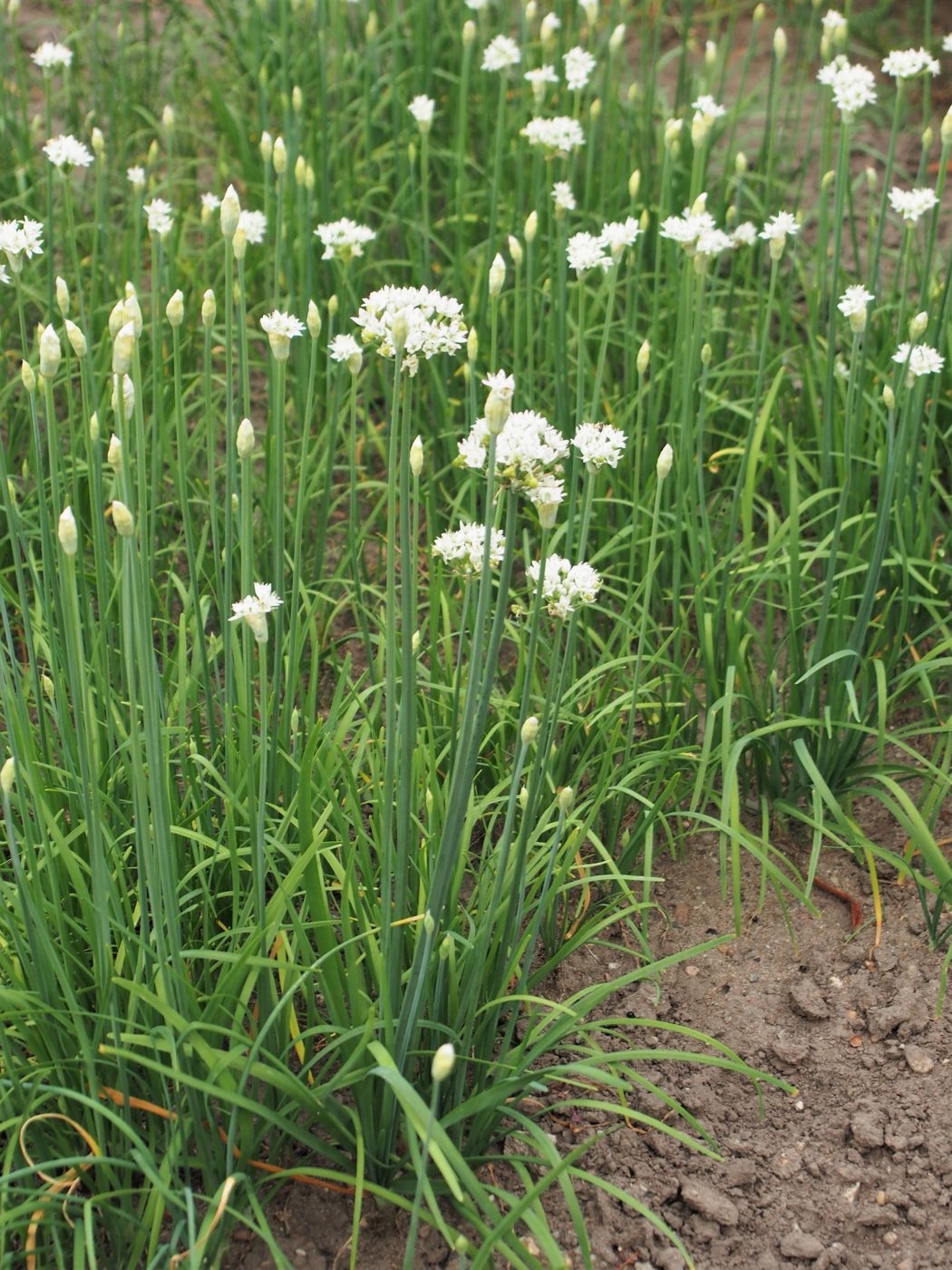 Photo: Agnieszka Kwiecień, Nova, CC BY-SA 4.0, via Wikimedia Commons
Origin & History
Buchu is garlic chive (Allium tuberosum), a perennial relative of onions and garlic. It is native to western and northern China, where the sixth-century agricultural treatise Qimin yaoshu already describes it as a vegetable. In Korea it also goes by regional names such as sol and jeongguji.
Garlic chives probably reached Korea during the Three Kingdoms period, and the earliest Korean record is in the thirteenth-century Goryeo medical text Hyangyak gugeupbang. In traditional medicine the plant was valued as a warming tonic thought to aid digestion.
As a perennial, buchu regrows after cutting, so one planting can be harvested several times. It is sown in spring or early autumn and is easily propagated by dividing clumps.
In the kitchen garlic chives are eaten raw in quick, chili-dressed salads such as buchu-muchim, blanched, stir-fried and folded into pan-fried pancakes. They are also used in kimchi, both on their own and as part of the seasoning paste for oi-sobagi.
Nutrition
| Calories | 30 kcal |
|---|---|
| Protein | 2.06 g |
| Fat | 0.33 g |
| Carbohydrates | 6.23 g |
| Fiber | 4.8 g |
| Sodium | 0 mg |
Notable forVitamin K · Vitamin A · Folate · Dietary fiber
Korean Food Composition Table entry “Chinese chive (Hobuchu), Raw”: also 91.9 µg vitamin K, 178 µg RAE vitamin A, 71 µg folate and 15 mg vitamin C per 100 g. Actual values vary with ingredients, portion size and preparation.
Health Benefits
- Allium family: Like garlic and onions, garlic chives contain sulfur compounds that give them their aroma; research on these compounds is ongoing.
- Leafy green: Per the Korean Food Composition Table, raw buchu is a good source of vitamin K and also provides vitamin A, folate and dietary fiber.
- Traditional use: In traditional Korean medicine it was regarded as a warming tonic that supports digestion; this is a traditional belief rather than an established health effect.
Informational, not medical advice. Talk to a qualified professional about your own health and diet.
Dishes with Garlic chives (buchu)
 Napa Cabbage Kimchi배추김치Salted napa cabbage layered with a red paste of chili, garlic, ginger and fermented seafood, then left to ripen: the kimchi most people picture first.
- Buchu Jeon (Garlic Chive Pancake)부추전Fragrant garlic chives held together by a thin flour batter and fried until crisp — one of the quickest and most common jeon in Korean homes.
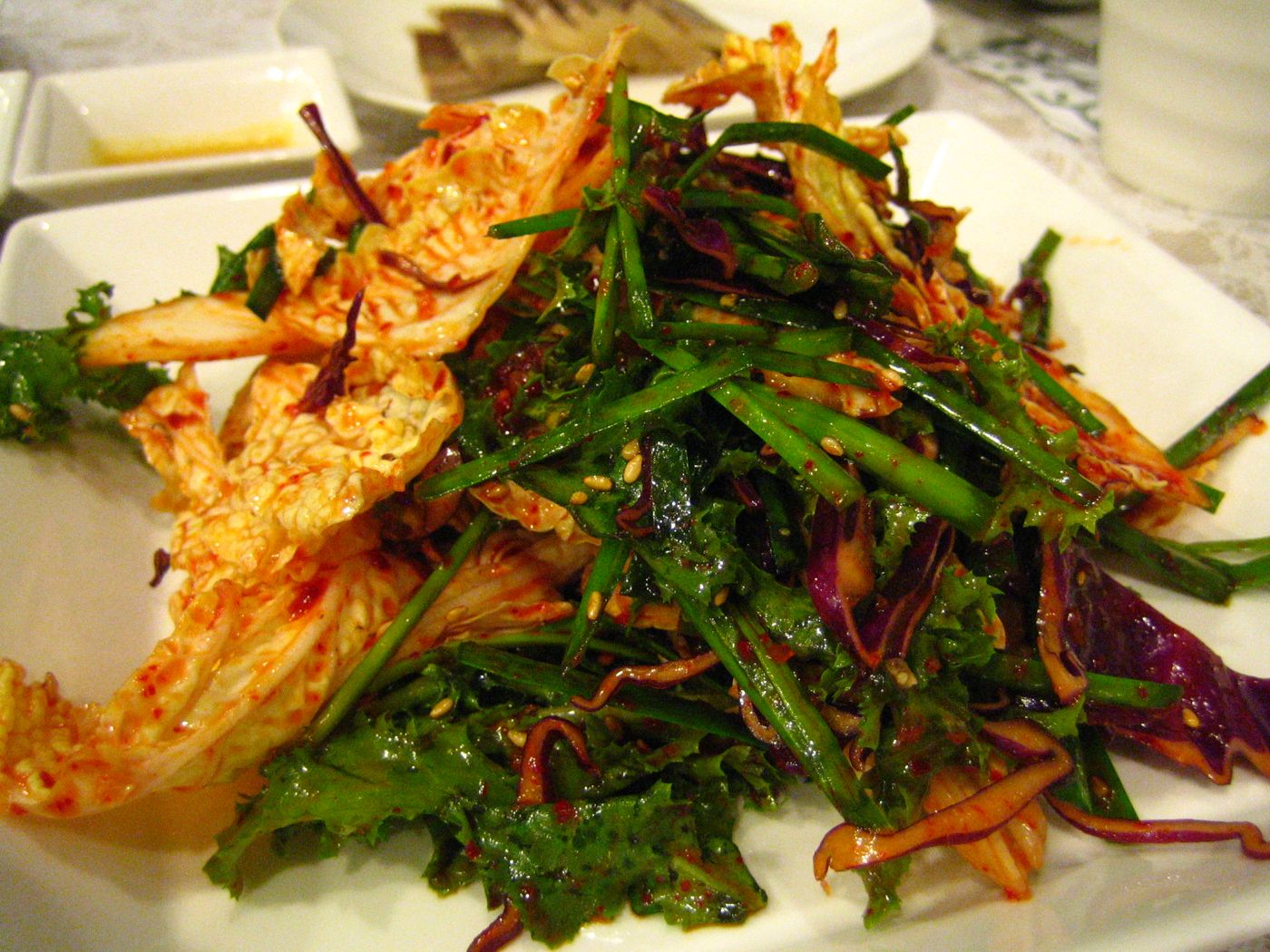 Garlic Chive Kimchi부추김치Whole garlic chives tossed with anchovy fish sauce and plenty of chili — a quick kimchi eaten fresh or ripe, known by a different name in nearly every province.
- Buchu Muchim부추무침Raw Korean chives tossed with soy sauce, chili flakes, vinegar and sesame — a pungent, garlicky salad that cuts through grilled meat and rich soups.
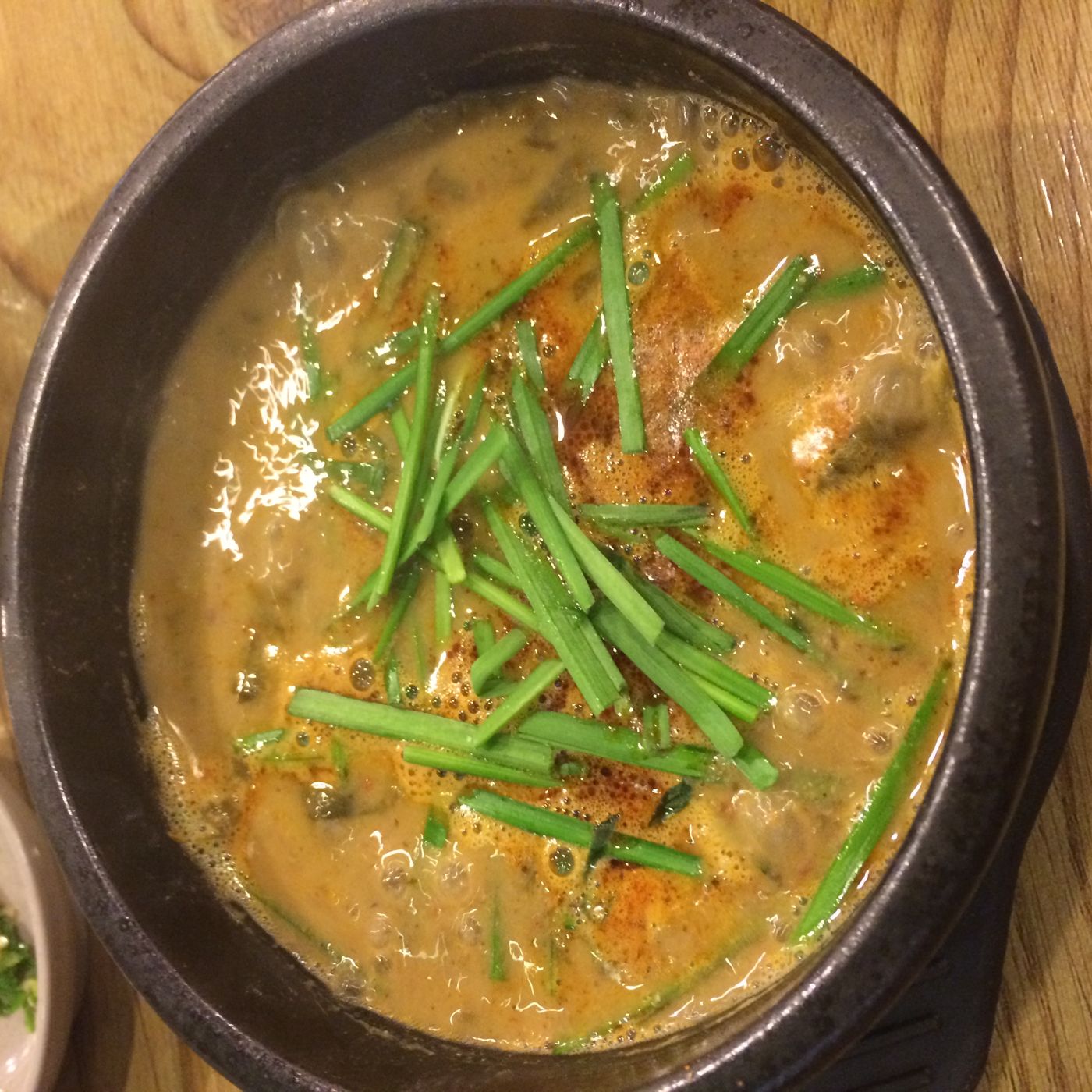 Chueotang (Loach Soup)추어탕Pond loaches simmered and ground into a thick, earthy soup with dried greens, doenjang and perilla, sharpened with chopi pepper — an autumn harvest dish turned year-round restorative.
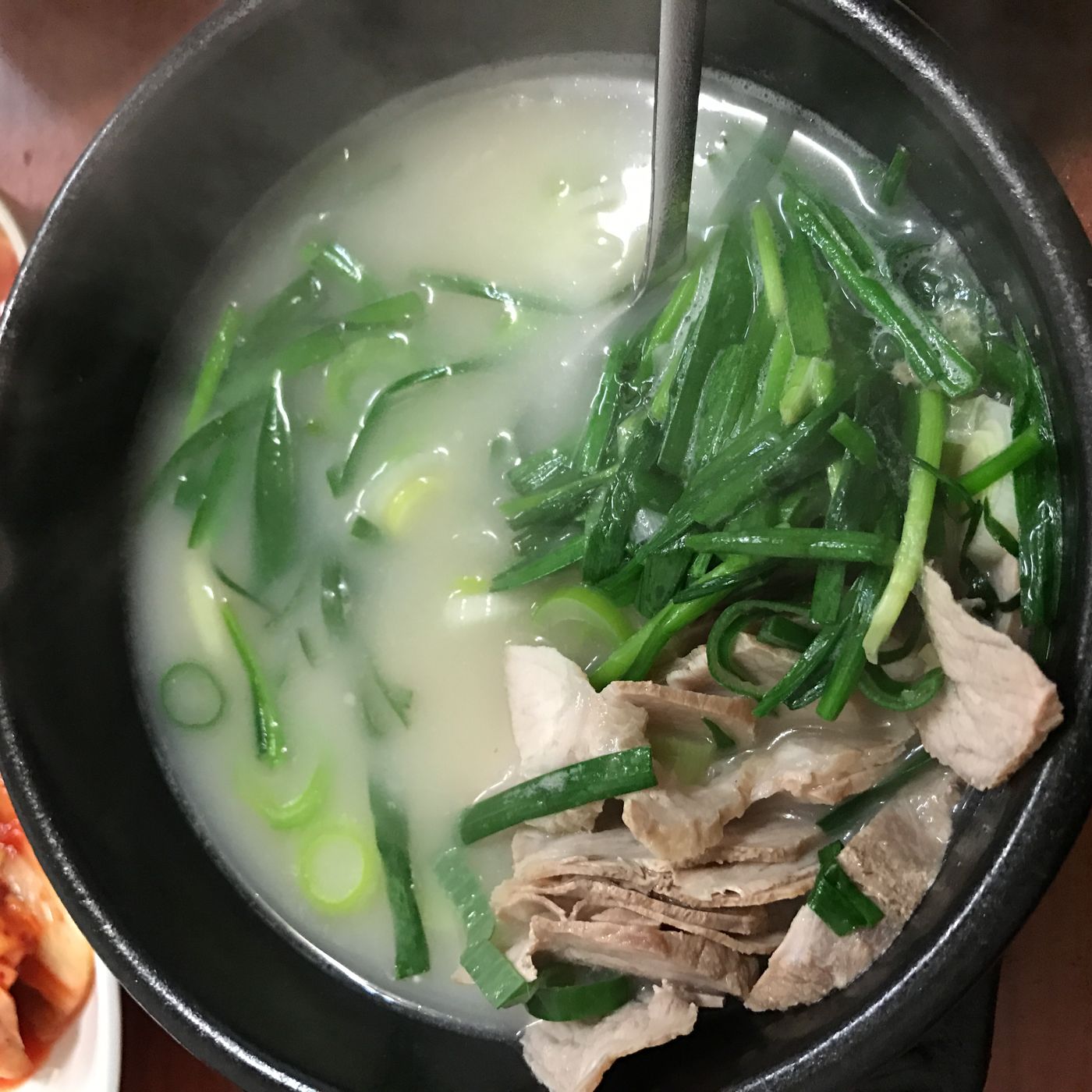 Dwaeji Gukbap (Busan Pork and Rice Soup)돼지국밥Slices of boiled pork in a milky pork-bone broth over rice, seasoned at the table with salted shrimp and garlic chives — Busan's signature everyday bowl.
- Perilla Leaf Kimchi깻잎김치Stacks of perilla leaves layered with a soy, fish-sauce and chili seasoning — fragrant, slightly bitter summer kimchi peeled off one leaf at a time over rice.
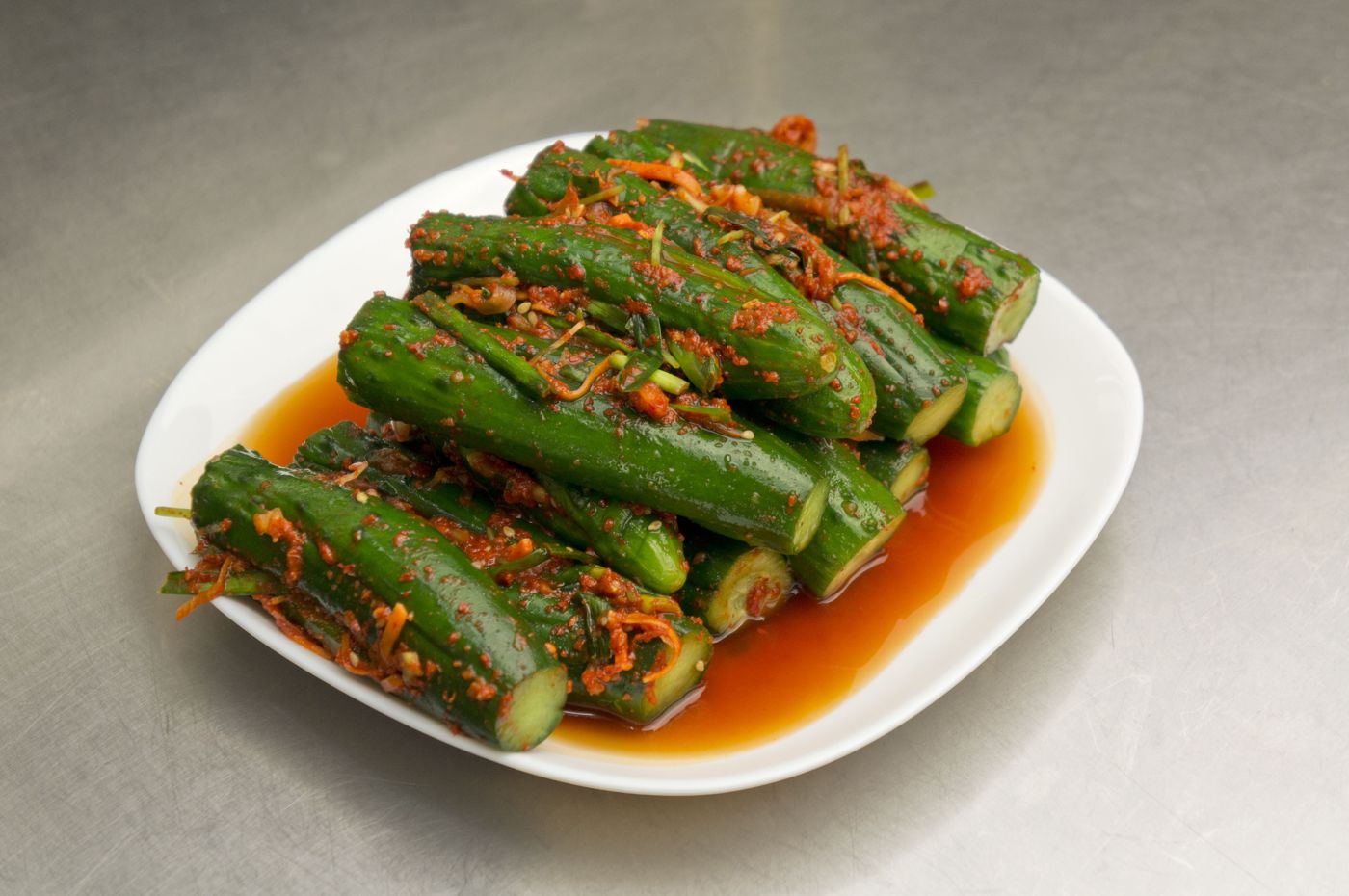 Stuffed Cucumber Kimchi오이소박이Cucumbers slit and stuffed with garlic chives, chili and garlic — a crisp, refreshing summer kimchi meant to be eaten young.
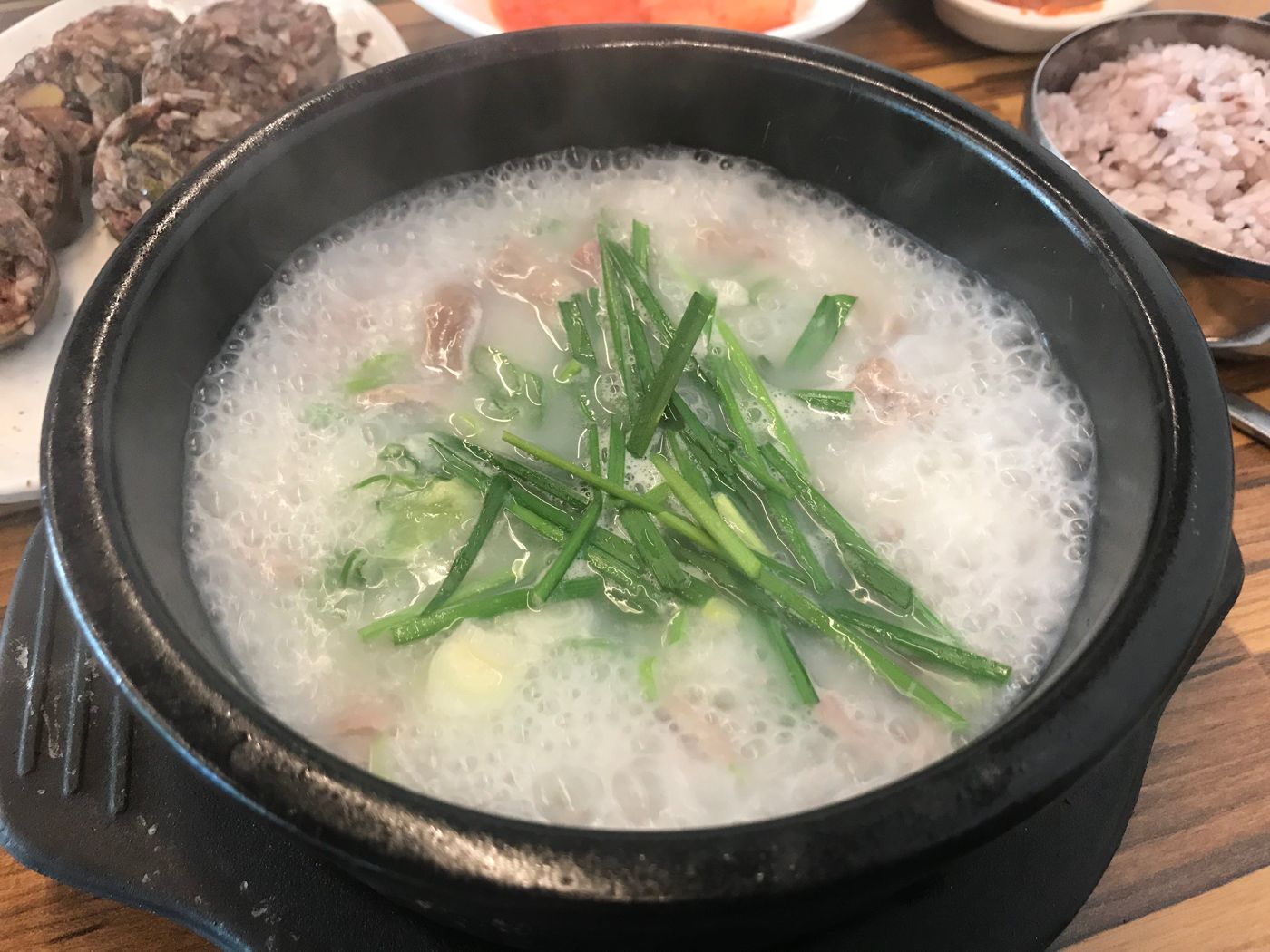 Sundaeguk (Blood Sausage Soup)순댓국Slices of Korean blood sausage and pork offal in a rich pork-bone broth, seasoned at the table with salted shrimp — a cheap, hearty market-day bowl served with rice.