Namul · Seasoned vegetables 나물
Siraegi Namul
시래기나물
Romanization: siraegi-namul
Dried radish greens soaked, simmered until tender and seasoned with doenjang and perilla or sesame oil — a deep, earthy winter namul.
- Serves
- 4
- Prep
- 20 min
- Cook
- 20 min
RegionGyeongsang
Jump to recipeRecipe
Ingredients · Serves 4
- 300 gSiraegi (dried radish greens), soaked and boiledfrom roughly 50 g dried; or use pre-boiled siraegi sold chilled or frozen
- 1 tbspDoenjang
- 1 tspSoup soy sauce (guk-ganjang)
- 2 clovesGarlicminced
- 1 tbspGreen onionchopped
- 1 tbspPerilla oil or toasted sesame oilplus 1 tsp to finish
- 100 mlAnchovy-kelp stock or water
- 1 tspToasted sesame seeds
Method
Technique: Drying and Rehydrating Vegetables, Blanching and Seasoning Namul, Bokkeum: Korean Stir-Frying
Step 1: If starting from dried siraegi, soak it in plenty of water for several hours or overnight. Simmer in fresh water for 20–40 minutes until the stems are tender, then let it cool in the cooking water.
Step 2: Peel away the tough, stringy outer film from the thicker stems (it pulls off in strips). Rinse, squeeze out the water and cut into 5–6 cm lengths.
Step 3: In a bowl, rub the doenjang, soup soy sauce and garlic into the greens and leave for 10 minutes to absorb the seasoning.
Step 4: Heat 1 tbsp perilla oil in a pan over medium heat and stir-fry the seasoned siraegi for 2–3 minutes.
Step 5: Add the stock, cover and simmer on low heat for 5–7 minutes, until the liquid is mostly absorbed and the greens are soft.
Step 6: Add the green onion, the remaining 1 tsp oil and the sesame seeds. Toss, taste and serve warm or at room temperature.
Origin & History
Siraegi is the name for dried radish tops (and sometimes dried napa cabbage leaves). After the autumn radish harvest, the green tops were braided or tied with straw rope and hung in the shade to dry, turning a by-product into a vegetable that would last all winter. The early-eighteenth-century household manual Sallim gyeongje already describes the method: dry the tops in the shade, then soak them in water before cooking and boil them once they have swelled.
Siraegi is closely tied to the first full moon of the lunar year. The Encyclopedia of Korean Culture describes mugeun-namul — "aged" namul made from vegetables dried the previous year — eaten with five-grain rice on Jeongwol Daeboreum, and lists siraegi among the nine traditional kinds. The nineteenth-century Dongguk sesigi records the belief that eating these stored greens kept people from suffering in the summer heat, and the early-twentieth-century writer Choe Yeong-nyeon praised the dark green siraegi above the others.
Beyond the holiday table, siraegi is an everyday winter banchan and a common topping for bibimbap. It appears in early modern cookbooks such as Joseon mussang sinsik yori jebeop (1924) and Joseon yori jebeop, and it is just as familiar in soups and stews, where it gives body and a nutty, rustic flavor.
Key Ingredients
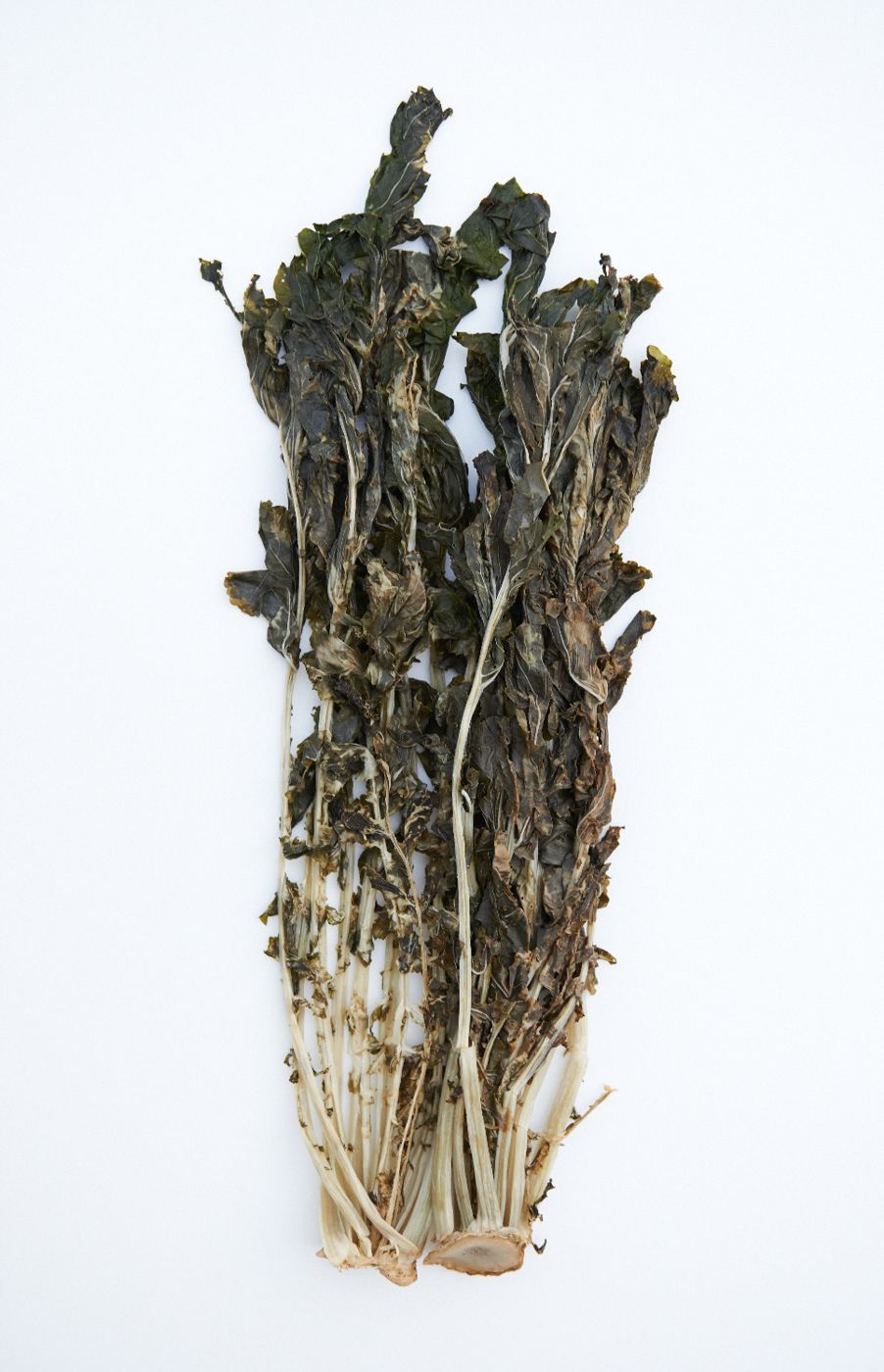 Siraegi (dried radish greens)시래기Radish tops dried in the shade until dark and brittle, then soaked and simmered back to tenderness. A winter staple for earthy namul, doenjang soups and rice cooked with greens.
 Doenjang된장Fermented soybean paste — the savory foundation of doenjang-jjigae, many soups and dressings for namul. It is one of Korea's core jang, or fermented sauces.
 Soy sauce간장Korean soy sauce, in two main kitchen forms: pale, salty guk-ganjang (soup soy sauce) brewed the traditional way from meju, and darker, sweeter jin-ganjang for braises and marinades.
 Garlic마늘Used raw, minced, pickled and roasted, garlic is one of the essential aromatics of Korean food — in seasonings, marinades, kimchi and namul.
 Green onion파Korean green onion (pa), from thick-stemmed daepa to slender scallions — chopped into nearly every seasoning sauce, soup and kimchi, and the star of pa-kimchi.
 Perilla깻잎Perilla leaves have a bold, minty-herbal scent. They are eaten fresh as a wrap, pickled in soy sauce, or layered with seasoning as kkaennip-jangajji.
 Sesame참깨Toasted sesame seeds and sesame oil (chamgireum) finish countless Korean dishes, adding a nutty aroma and gloss.
 Korean radish무A stout, heavy white radish, often tinged pale green near the top. It is cubed for kkakdugi, left whole in the clear brine of dongchimi, shredded into salads and simmered into broths.
Nutrition
| Calories | ~75 kcal |
|---|---|
| Protein | ~2.3 g |
| Fat | ~5.5 g |
| Carbohydrates | ~5.4 g |
| Fiber | ~4.1 g |
| Sodium | ~341 mg |
Notable forVitamin K · Dietary fiber · Calcium
Siraegi uses the Korean Food Composition Table entry “Radish leaf, Dried, Boiled” (27 kcal, 4.9 g fiber, 114 mg calcium and about 337 µg vitamin K per 100 g). Doenjang and soup soy sauce use Korean Food Composition Table values for the traditional products; garlic, green onion, sesame oil (also used for perilla oil, which has the same calories) and sesame seeds use USDA values. Divided by four; stock is not counted. Actual values vary with ingredients, portion size and preparation.
Health Benefits
- Fiber and minerals: the National Folk Museum's encyclopedia describes siraegi as rich in vitamins, minerals and dietary fiber, and as a traditional way to bring greens to the winter table.
- Stored greens for winter: drying let households keep leafy vegetables through months when nothing fresh grew — a practical part of Korea's seasonal eating.
- Fermented seasoning: the doenjang dressing adds savory depth, so little extra salt is needed.
Regional Variations
- Doenjang-dressed (Gyeongsang): in North Gyeongsang the dish is often called siraegi doenjang-muchim — the softened greens are dressed with doenjang, soup soy sauce, garlic, green onion, gochugaru and sesame oil, or with a doenjang sauce boiled with green chilies.
- Stir-fried namul: the Encyclopedia of Korean Culture lists siraegi among namul that are cooked by stir-frying in oil and then seasoning with soy sauce, garlic and sesame, sometimes with shredded beef added.
- Soup and rice: siraegi-guk, a doenjang soup, is called sirak-guk in Gyeongsang dialect and is often made with anchovy stock and perilla seed; siraegi-bap is rice cooked with the softened greens.
Pairings
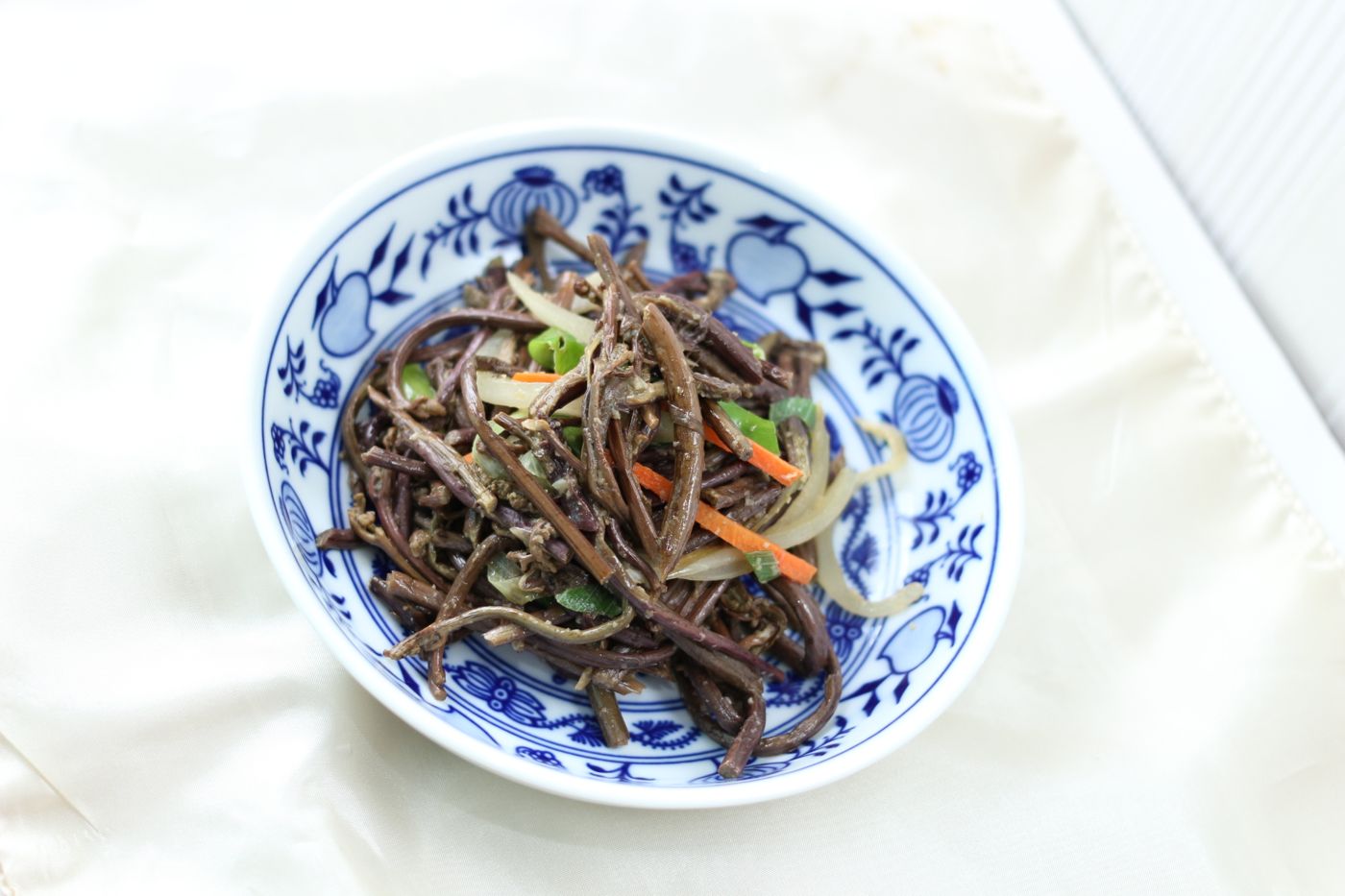 Gosari Namul고사리나물Dried bracken fern soaked, boiled and slowly stir-fried with soup soy sauce, garlic and perilla oil — chewy, earthy and central to holiday tables.
- Gaji Namul가지나물Eggplant steamed until silky, torn into strips and dressed with soy sauce, garlic and sesame — a soft, savory summer namul.
- Doraji Namul도라지나물Shredded bellflower root rubbed with salt to tame its bitterness, then gently stir-fried — the ivory-white member of the three-colored namul.
Sources
- 01Korean Food Composition Table: Radish leaf, Dried, Boiled — National Institute of Agricultural Sciences
- 02시래기 (Siraegi) — Encyclopedia of Korean Folk Culture (National Folk Museum of Korea)
- 03묵은나물 (Mugeun-namul) — Encyclopedia of Korean Culture
- 04나물 (Namul) — Encyclopedia of Korean Culture
- 05Turnip greens, cooked, boiled, drained, without salt (FDC 170466) — USDA FoodData Central
- 06Warfarin — MedlinePlus Drug Information (U.S. National Library of Medicine)
Last updated