Ingredient
Balloon flower root
도라지
Romanization: doraji
The pale, fibrous root of the balloon flower, prized for its crunch and gentle bitterness. It is tamed with salt and soaking, then served as a white namul, a tangy raw salad, or threaded onto skewers.
Flavor
Crisp and fibrous with a clean, slightly bitter, earthy finish that mellows after salting and soaking; pleasantly chewy when cooked.
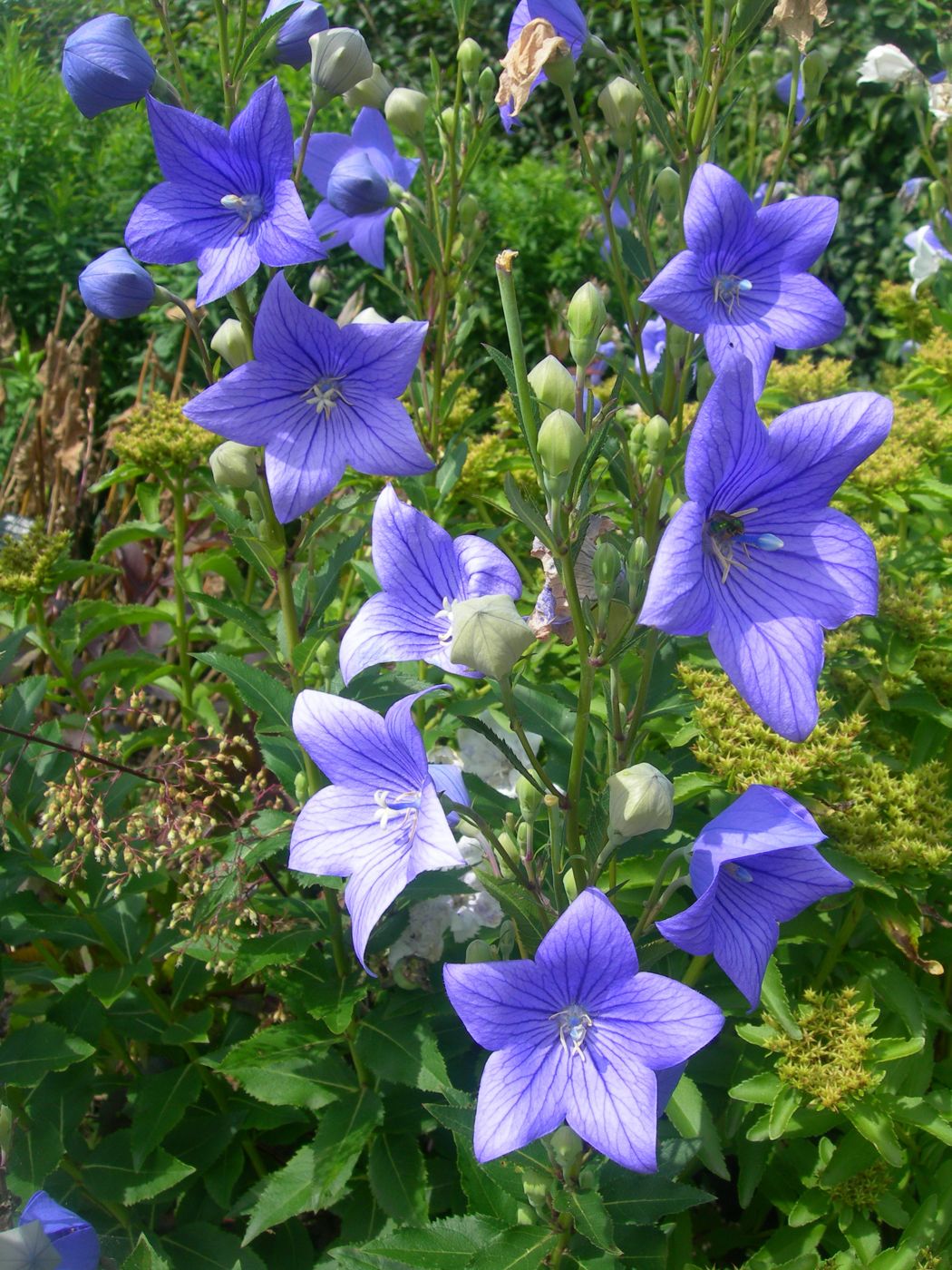 Photo: Unknown author, CC BY-SA 3.0, via Wikimedia Commons
Origin & History
Doraji is the root of the balloon flower (Platycodon grandiflorum), a perennial of the bellflower family that grows on sunny hillsides. In late summer it opens five-petaled, bell-shaped flowers, usually violet-blue and sometimes white. Roots from plants two to three years old are considered the most tender.
The root has a long history in both the Korean kitchen and the medicine chest. The mid-18th-century household manual Jeungbo sallim gyeongje describes brushing doraji with seasoning and grilling it, the late-19th-century Siuijeonseo gives a recipe for doraji namul, and Joseon court banquet records list it in skewered dishes such as hwayangjeok. Dried, it is the herbal ingredient gilgyeong, cited in classic medical texts for the throat and chest. The plant is also celebrated in Doraji taryeong, a well-known folk song from Gyeonggi Province.
Roots are dug from spring through autumn and eaten fresh or dried for storage. Because the root is naturally bitter, cooks soak it — traditionally for a day or two — and rub it firmly with salt before rinsing, which also softens its fibers.
For cooked doraji-namul, the salted strips are lightly stir-fried, rinsed in cold water and dressed with vinegar, sugar, salt and pepper; for raw doraji-saengchae, the shredded root is salted and then seasoned. Doraji is also threaded onto skewers with beef (sanjeok) and simmered with meat or kelp for soy-sauce jangajji.
Nutrition
| Calories | 65 kcal |
|---|---|
| Protein | 2.01 g |
| Fat | 0.15 g |
| Carbohydrates | 15.15 g |
| Fiber | 4.2 g |
| Sodium | 3 mg |
Notable forDietary fiber (4.2 g) · Potassium (231 mg) · Calcium (40 mg)
Values copied from the Korean Food Composition Table (Rural Development Administration / National Institute of Crop Science) for this exact food, per 100 g edible portion. Actual values vary with ingredients, portion size and preparation.
Health Benefits
- A fibrous root vegetable: Doraji is a good source of dietary fiber and provides some potassium, with almost no fat or sodium before seasoning.
- Saponins under study: The root contains triterpene saponins, chiefly platycodin D, which are the subject of extensive laboratory and animal research; a 2024 review notes that clinical evidence in people remains limited.
- Traditional use, not treatment: Dried root (gilgyeong) has long been used in East Asian herbal medicine for coughs and sore throats. That tradition is part of doraji's story, but as a food it should not be relied on to treat any condition.
- Salt in preparation: Salt rubbing is mostly rinsed away, but seasoned namul and saengchae still contribute sodium to a meal.
Informational, not medical advice. Talk to a qualified professional about your own health and diet.
Dishes with Balloon flower root
- Doraji Muchim (Spicy Raw Bellflower Root Salad)도라지무침Raw bellflower root, shredded and salt-rubbed to tame its bitterness, then dressed with gochugaru, gochujang, vinegar and sugar — crunchy, sweet, sour and hot.
- Doraji Namul도라지나물Shredded bellflower root rubbed with salt to tame its bitterness, then gently stir-fried — the ivory-white member of the three-colored namul.