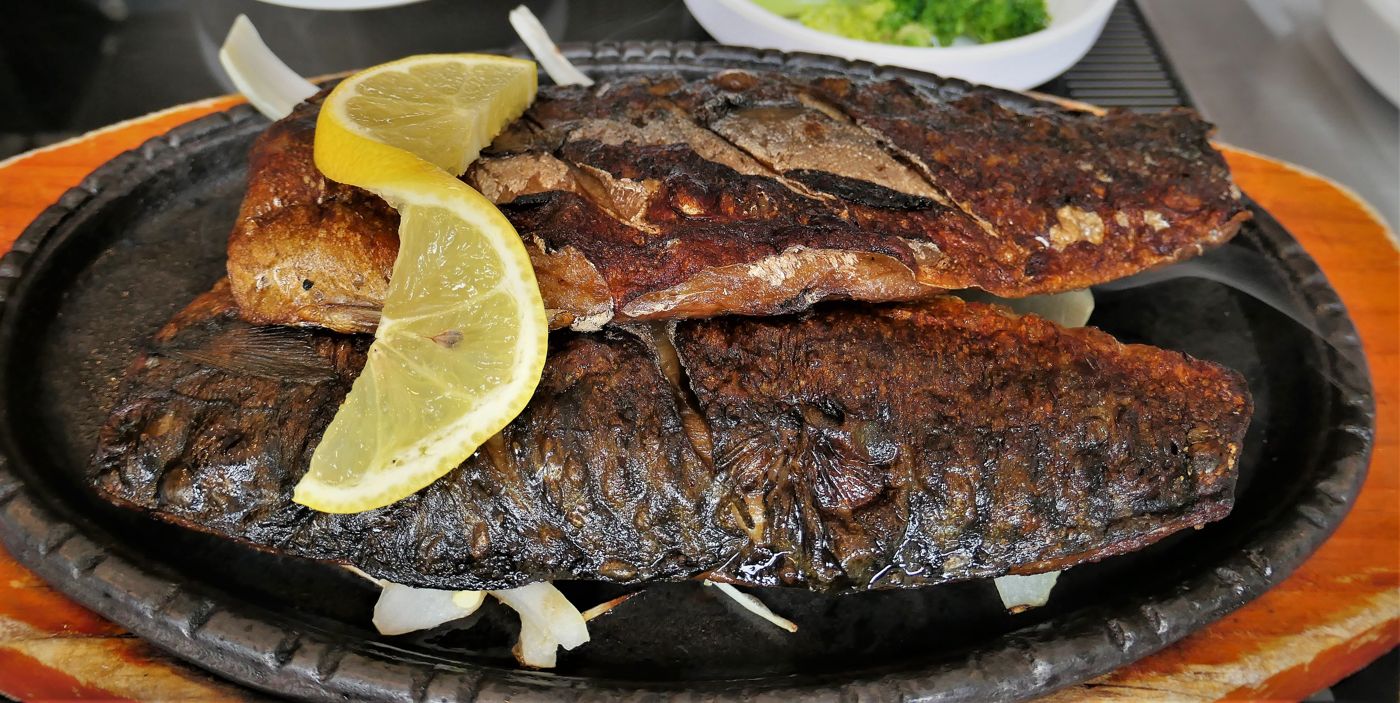
 Photo: Daniel Moskowitz, CC0, via Wikimedia Commons
Gui · Grilled 구이
Godeungeo-gui (Grilled Mackerel)
고등어구이
Romanization: godeungeo-gui
Salted mackerel grilled or pan-fried until the skin crackles and the rich flesh flakes — one of the most common fish dishes on the Korean home table.
- Serves
- 4
- Prep
- 10 min
- Cook
- 15 min
RegionAndong · Gyeongsang
Jump to recipeRecipe
Ingredients · Serves 4
- 600 gMackerel fillets, skin onfrom 2 medium fish, pin bones removed
- 1 tspCoarse sea saltomit if using pre-salted mackerel
- 1 tbspNeutral cooking oil
- 1 tbspRice wine (cheongju) or mirinoptional, to reduce fishiness
- Lemon or grated Korean radishto serve, optional
Method
Technique: Grilling Gui
Step 1: Rinse the fillets briefly in cold water and pat thoroughly dry. Score the skin two or three times so the fish does not curl.
Step 2: Sprinkle both sides evenly with the salt (and rice wine, if using) and let stand for 10–15 minutes. Pat dry again to remove the drawn-out moisture.
Step 3: Heat the oil in a nonstick or cast-iron skillet over medium heat. Lay the fillets in skin side down and cook, without moving them, for 4–5 minutes until the skin is crisp and golden.
Step 4: Turn carefully and cook the flesh side for 3–4 minutes more, until the fish is opaque and flakes easily. (Alternatively, grill skin side up under a hot broiler or over charcoal on a wire grill for 6–8 minutes per side.)
Step 5: Serve at once with rice, soup and banchan; a squeeze of lemon or a little grated radish cuts the richness.
Origin & History
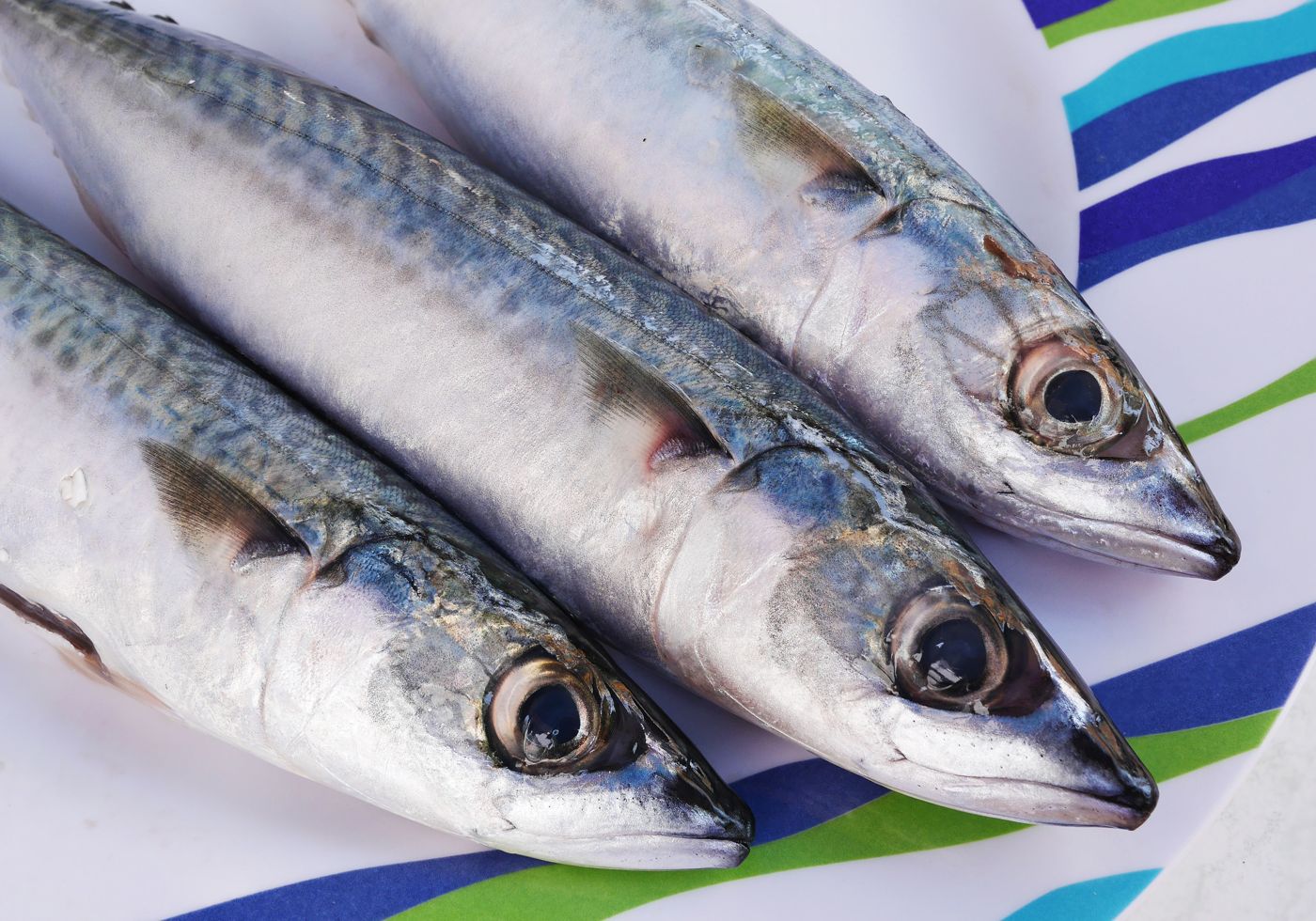
Mackerel (godeungeo, Scomber japonicus) has been caught in Korean waters for centuries. The Encyclopedia of Korean Culture notes that 15th- and 16th-century geographies list it as a local product of several coastal provinces, and that Jeong Yak-jeon's 1814 fish survey Jasan eobo recorded it under the name byeongmuneo, describing how fishermen near Heuksando caught it at night with lights — evidence that light fishing for mackerel was already in use in the early 19th century. Mackerel was eaten widely in the Joseon period, and salted mackerel split down the back was sold everywhere. See mackerel.
Salt is the key to the dish. Before refrigeration, fresh fish could not reach inland towns, so mackerel traveled salted. The encyclopedia's entry on Andong salted mackerel (Andong gan-godeungeo) describes how fish from the East Sea or the Nakdong River route took days to reach the inland city of Andong, where gutted mackerel packed with coarse salt became a valued side dish and even a ritual food. Its traditional cooking methods were grilling over charcoal on a wire grill, steaming in the rice pot and stewing. The fish became less salty as freezing spread from the 1970s, and vacuum-packed Andong salted mackerel appeared in 1999.
Today godeungeo-gui is usually made from fresh or lightly salted fillets, cooked in a skillet or under a grill, and served whole at the center of a meal of rice, soup and banchan. The encyclopedia notes that mackerel is now eaten fresh or salted and either grilled or braised — the other common preparation being godeungeo-jorim. See grilling gui.
Nutrition
| Calories | ~265 kcal |
|---|---|
| Protein | ~30 g |
| Fat | ~15 g |
| Carbohydrates | ~0 g |
| Fiber | ~0 g |
| Sodium | ~710 mg |
Notable forOmega-3 fatty acids (EPA and DHA) · Vitamin D · Vitamin B12 · Selenium
Estimated from USDA FoodData Central (SR Legacy) values for raw Pacific and jack mackerel, mixed species (FDC 173672) — the closest USDA match to Korean chub mackerel — plus table salt and soybean oil, divided by 4. Per 150 g raw fillet USDA's values give about 2.2 g EPA plus DHA, 14 µg vitamin D and 6.6 µg vitamin B12. Assumes all the salt is retained; much is patted off, so actual sodium is lower. Commercially salted mackerel can be far saltier: USDA lists heavily salted mackerel at about 4,450 mg sodium per 100 g. Fat content of mackerel varies a great deal by species and season. Actual values vary with ingredients, portion size and preparation.
Health Benefits
- Omega-3 fats: mackerel is one of the richest common sources of the long-chain omega-3s EPA and DHA, which the FDA highlights as a reason to eat fish.
- Vitamin D and B12: a single fillet supplies substantial vitamin D — rare in food — along with vitamin B12 and selenium.
- Low in mercury: the FDA and EPA place Atlantic mackerel and Pacific chub mackerel among their "Best Choices," which can be eaten two to three times a week.
Regional Variations
- Andong gan-godeungeo (Andong): mackerel gutted and salted inside with coarse salt, traditionally packed in pairs; grilled, steamed or stewed.
- Fresh mackerel gui: fresh fillets salted just before cooking, common in coastal cities.
- Jaban-godeungeo: commercially salted mackerel sold in markets and supermarkets, saltier and ready to grill.
- Restaurant grilled-fish set meals: mackerel grilled on a griddle or over charcoal and served with rice, soup and several banchan.
Pairings
 Doenjang Jjigae (Soybean Paste Stew)된장찌개A thick, savory stew of fermented soybean paste with tofu, zucchini and whatever the season offers — the everyday pot at the center of the Korean table.
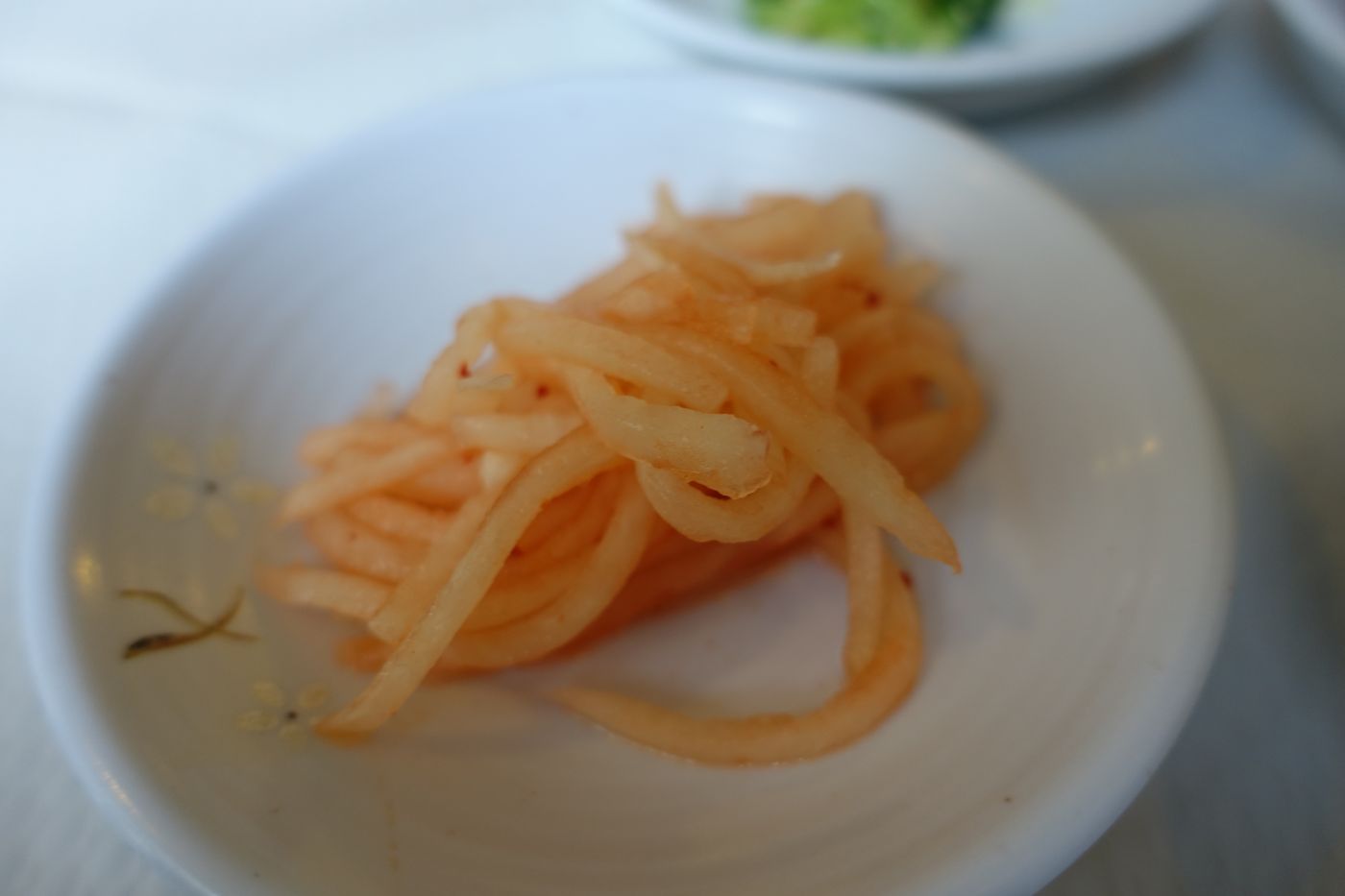 Musaengchae무생채Fine matchsticks of Korean radish dressed raw with chili flakes, a little vinegar and sugar — crisp, sweet-sharp and best made just before the meal.
 Napa Cabbage Kimchi배추김치Salted napa cabbage layered with a red paste of chili, garlic, ginger and fermented seafood, then left to ripen: the kimchi most people picture first.
Sources
- 01고등어 (Mackerel) — Encyclopedia of Korean Culture
- 02안동간고등어 (Andong salted mackerel) — Encyclopedia of Korean Culture
- 03Advice about Eating Fish — U.S. Food and Drug Administration
- 04Fish, mackerel, Pacific and jack, mixed species, raw (FDC 173672) — USDA FoodData Central
- 05Fish, mackerel, salted (FDC 168149) — USDA FoodData Central
Last updated