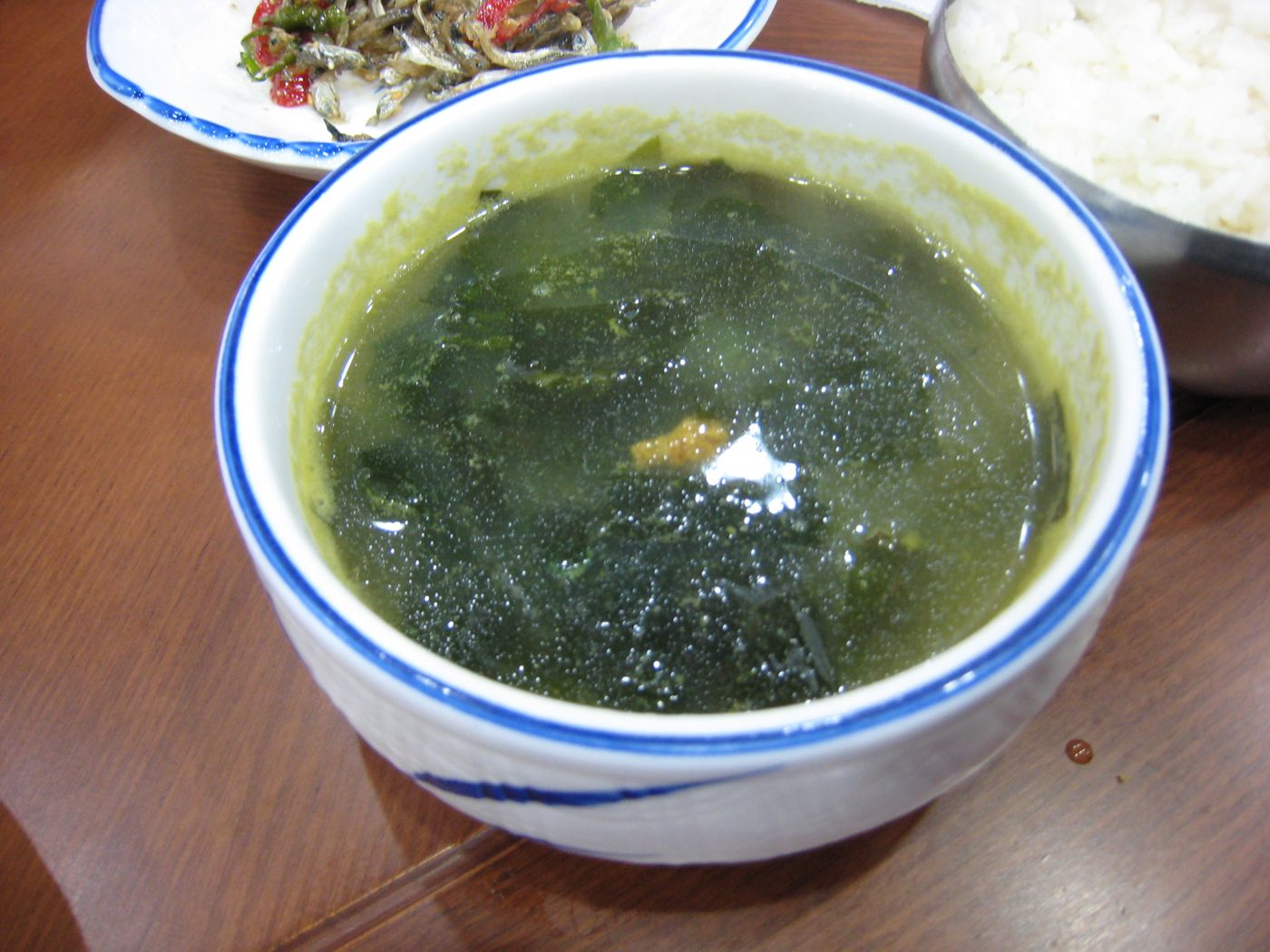
 Photo: karendotcom127, CC BY 2.0, via Wikimedia Commons
Guk & Tang · Soups 국·탕
Miyeok Guk (Seaweed Soup)
미역국
Romanization: miyeok-guk
A mild soup of sea mustard and beef seasoned with soup soy sauce and sesame oil — the first meal after childbirth and the soup of every Korean birthday.
- Serves
- 4
- Prep
- 30 min
- Cook
- 35 min
RegionGyeongsang · Jeju
Jump to recipeRecipe
Ingredients · Serves 4
- 20 gDried miyeok (sea mustard)
- 150 gBeef brisket or shankcut into thin bite-size pieces
- 1 tbspToasted sesame oil
- 1½ tbspSoup soy sauce (guk-ganjang)plus salt to taste
- 2 clovesGarlicminced
- 1.5 lWater
Method
Technique: Making Guk and Jjigae, Making Yuksu: Anchovy-Kelp Stock
Step 1: Soak the dried miyeok in plenty of cold water for 20–30 minutes; it will swell many times over. Rub it between your hands, rinse in several changes of water, squeeze dry and cut into bite-size pieces.
Step 2: Heat the sesame oil in a pot over medium heat. Add the beef and stir-fry until it is no longer red.
Step 3: Add the miyeok and ½ tbsp of the soup soy sauce and stir-fry for 3–4 minutes, until the seaweed smells nutty and turns a brighter green.
Step 4: Pour in the water, bring to a boil and skim off any foam. Lower the heat and simmer for 20–30 minutes, until the beef is tender and the broth is cloudy and savory.
Step 5: Add the garlic and the remaining soup soy sauce, simmer 5 minutes more and taste, finishing with a pinch of salt if needed. Serve hot with rice.
Origin & History
Sea mustard (miyeok, Undaria pinnatifida) went by many names in old texts, and soup made from it was written gwakgaeng. Its place in Korean life comes from childbirth. The Encyclopedia of Korean Culture describes the custom of serving a new mother white rice and miyeok-guk as her first meal, the cheotguk-bap, made without beef and seasoned only with soy sauce and sesame oil. The seaweed for it was chosen broad and long, bought without haggling, and tied with straw rather than folded — folding it was thought to bring a difficult birth.
Writers in the eighteenth century already treated the practice as distinctly Korean. The Encyclopedia of Korean Folk Culture cites Yi Ik's Seongho saseol calling seaweed a fine remedy for new mothers in the customs of the East, and Yi Gyu-gyeong recording that Chinese people his grandfather met in Beijing in 1778 did not know what dried seaweed was for. Yi Gyu-gyeong also passed on a folk tale about a man swallowed by a whale that had just given birth, who saw its belly lined with seaweed — a story, not a history. Another record describes bowls of rice and miyeok-guk first set out for Samsin, the goddess of childbirth, before the mother ate.
The folk encyclopedia concludes that the postpartum custom probably began in some regions and families and spread nationwide from the late Joseon period. Only in the twentieth century did miyeok-guk become the soup of the birthday table, a link most Koreans now take for granted. Because of the childbirth connection, "eating seaweed soup" also became slang for failing an exam; one theory ties it to the forced 1907 disbanding (haesan) of the Korean army, a homophone of the word for giving birth.
Key Ingredients
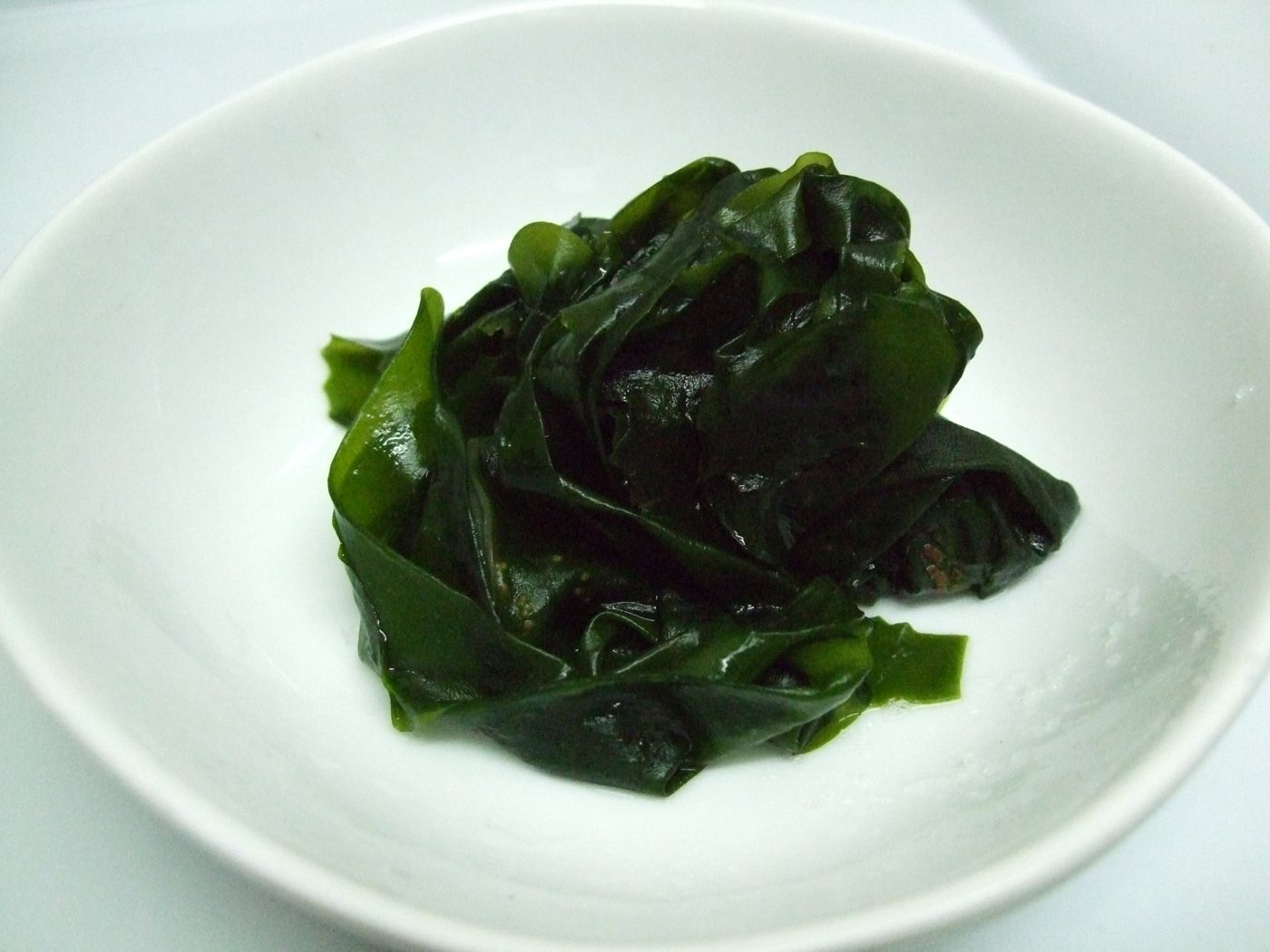 Sea mustard (miyeok, wakame)미역A tender brown seaweed sold dried in dark, crinkled strands that swell many times over in water. Simmered into miyeok-guk, it is the soup of birthdays and of a mother's first meals after giving birth.
 Soy sauce간장Korean soy sauce, in two main kitchen forms: pale, salty guk-ganjang (soup soy sauce) brewed the traditional way from meju, and darker, sweeter jin-ganjang for braises and marinades.
 Garlic마늘Used raw, minced, pickled and roasted, garlic is one of the essential aromatics of Korean food — in seasonings, marinades, kimchi and namul.
 Sesame참깨Toasted sesame seeds and sesame oil (chamgireum) finish countless Korean dishes, adding a nutty aroma and gloss.
Nutrition
| Calories | ~106 kcal |
|---|---|
| Protein | ~9.1 g |
| Fat | ~7.2 g |
| Carbohydrates | ~3.2 g |
| Fiber | ~1.9 g |
| Sodium | ~945 mg |
Notable forProtein · Vitamin K · Iodine
Estimated by summing ingredient values and dividing by four. Dried sea mustard and soup soy sauce: Korean Food Composition Table (미역, 마른것, L0130000001a; 국간장, R0010030009a); beef brisket: USDA FDC 168743; sesame oil: FDC 171016; garlic: FDC 169230. Sodium is an upper estimate, since soaking and rinsing wash some salt out of the seaweed. The composition tables do not report iodine for this dish, so it is not quantified. The MFDS analysis of home-style miyeok-guk (12 kcal and 168 mg sodium per 100 g) is lighter in beef and salt than this recipe. Actual values vary with ingredients, portion size and preparation.
Health Benefits
- Sea mustard supplies vitamin K, calcium and fiber, and seaweed is a major source of dietary iodine in Korea.
- The Encyclopedia of Korean Culture links the postpartum custom to the belief that seaweed's iodine helps milk production; this is a traditional explanation rather than an established effect.
- With beef, the soup is a light source of protein that is easy to eat.
Regional Variations
- Beef: the standard version, with brisket or shank stir-fried in sesame oil with the seaweed before water goes in, which turns the broth milky.
- Gyeongsang coast: on Geoje Island, flounder (gajami) or dodari is simmered with the seaweed and seasoned with soup soy sauce.
- Jeju and the east coast: Jeju fishing villages use tilefish (okdom); east-coast villages use dried pollock.
- Gyeonggi: some homes add glutinous-rice dumplings (saealsim) to the soup.
- Other broths: chicken stock or dried mussels are traditional alternatives to beef.
Pairings
 Japchae (Glass Noodles with Vegetables)잡채Chewy sweet potato glass noodles tossed with stir-fried vegetables, mushrooms and beef in soy sauce and sesame oil — Korea's essential celebration dish.
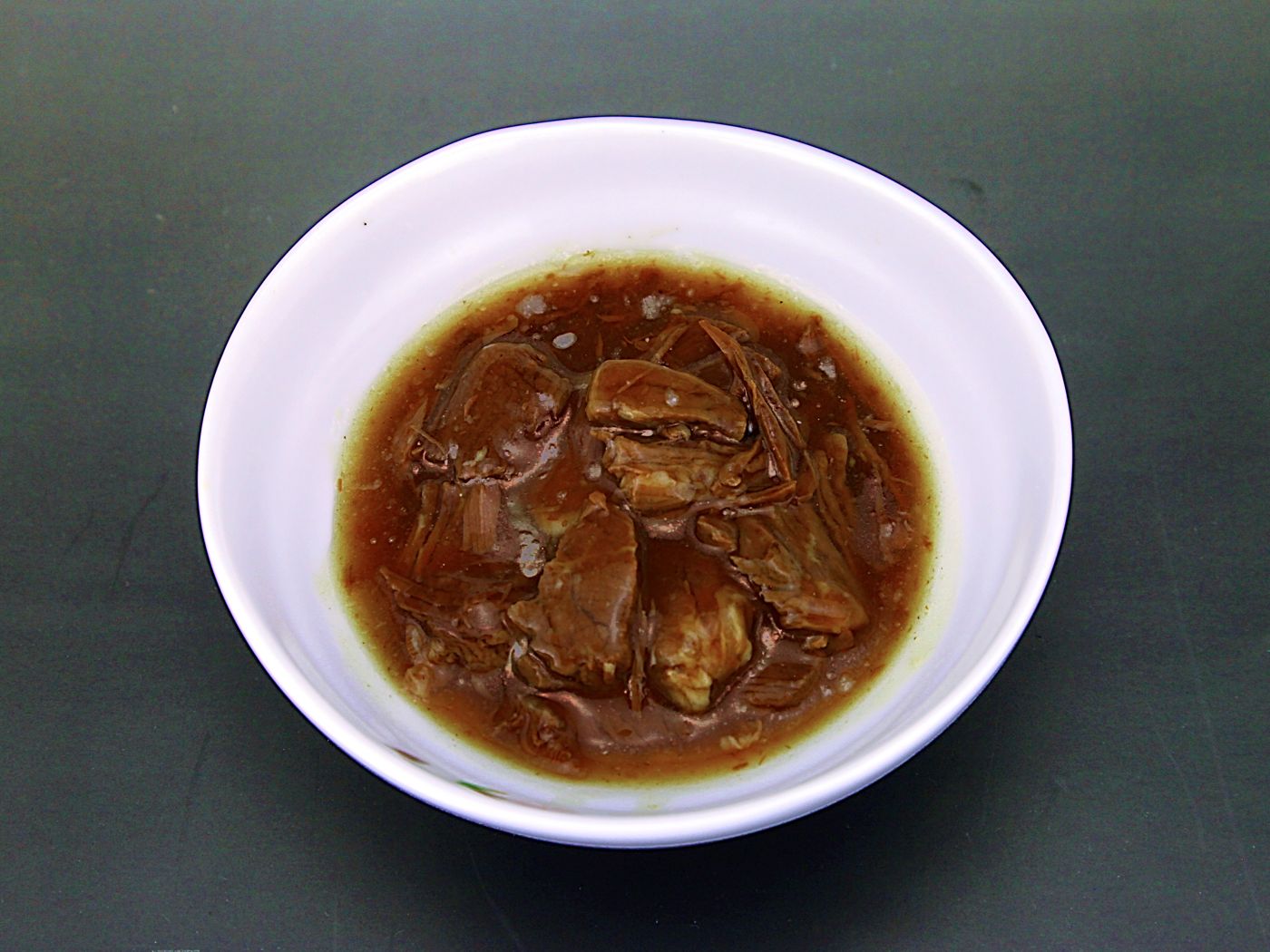 Jangjorim장조림Lean beef simmered in soy sauce until tender, then torn into strands and served in its savory broth, often with eggs, garlic and mild peppers.
 Sigeumchi Namul시금치나물Spinach blanched for a few seconds, squeezed dry and dressed with garlic, soy sauce and sesame — one of the simplest and most familiar namul.
 Napa Cabbage Kimchi배추김치Salted napa cabbage layered with a red paste of chili, garlic, ginger and fermented seafood, then left to ripen: the kimchi most people picture first.
Sources
- 01미역국 (Miyeok-guk) — Encyclopedia of Korean Culture
- 02미역국 (Miyeok-guk) — Encyclopedia of Korean Folk Culture (한국의식주생활사전)
- 03Sea mustard, Dried (미역, 마른것) — Korean Food Composition Table
- 04Seaweed-Derived Iodine Intake During the Korean Postpartum Period: A 1-Year Follow-Up Study — Healthcare (Basel), 2026
- 05Trends in sodium intake and major contributing food groups and dishes in Korea: KNHANES 2013–2017 (Jeong et al., Nutrition Research and Practice, 2021)
Last updated