
Namul · Seasoned vegetables 나물
Sigeumchi Namul
시금치나물
Romanization: sigeumchi-namul
Spinach blanched for a few seconds, squeezed dry and dressed with garlic, soy sauce and sesame — one of the simplest and most familiar namul.
- Serves
- 4
- Prep
- 10 min
- Cook
- 2 min
RegionJeolla · Gyeongsang
Jump to recipeRecipe
Ingredients · Serves 4
- 300 gSpinach1 bunch; trim the roots but keep the base so the leaves stay together
- 1 tspSaltfor the blanching water
- 1 cloveGarlicfinely minced
- 1 tbspGreen onionfinely chopped
- 1 tspSoup soy sauce (guk-ganjang)or a pinch of salt
- 1 tbspToasted sesame oil
- 1 tspToasted sesame seedslightly crushed between your fingers
Method
Technique: Blanching and Seasoning Namul
Step 1: Wash the spinach in several changes of cold water, paying attention to grit trapped around the base. Cut a shallow cross into thick bases so they cook evenly.
Step 2: Bring a large pot of water to a rolling boil and add the salt. Add the spinach, stems first, and blanch for 30–40 seconds, just until the leaves turn bright green and wilt.
Step 3: Drain and plunge immediately into cold water to stop the cooking. Swish briefly, then lift out.
Step 4: Squeeze out the water firmly, a handful at a time, and cut the spinach into 4–5 cm lengths.
Step 5: In a bowl, loosen the spinach and add the garlic, green onion and soup soy sauce. Mix gently with your fingertips so the seasoning reaches every strand.
Step 6: Add the sesame oil and sesame seeds, toss again and taste. Adjust with a little more salt if needed and serve at room temperature.
Origin & History
Namul is the Korean name for greens, roots and shoots from field and mountain that are seasoned and served as banchan. The Encyclopedia of Korean Culture distinguishes cooked namul (sukchae) from raw dressed vegetables (saengchae), and lists spinach among the vegetables that are typically blanched, wrung out and then dressed.
Spinach is not native to Korea. It is thought to have originated in Persia and to have reached the peninsula by way of China. Its first known appearance in a Korean text is the Hunmong jahoe, a sixteenth-century character primer compiled by the scholar Choe Se-jin, which suggests the plant was already being grown in the early Joseon period. Older Sino-Korean names for it include pachae and jeokgeunchae — the latter literally "red-root vegetable."
Today sigeumchi-namul is an everyday home banchan and one of the vegetables layered into bibimbap. Together with bellflower root (doraji) and bracken (gosari), it makes up samsaek namul, the three-colored namul set on the table for ancestral rites and major holidays. One popular reading of the trio links the root, the stem and the leaf to ancestors, parents and children respectively, with spinach — the green leaf — standing for the youngest generation.
Key Ingredients
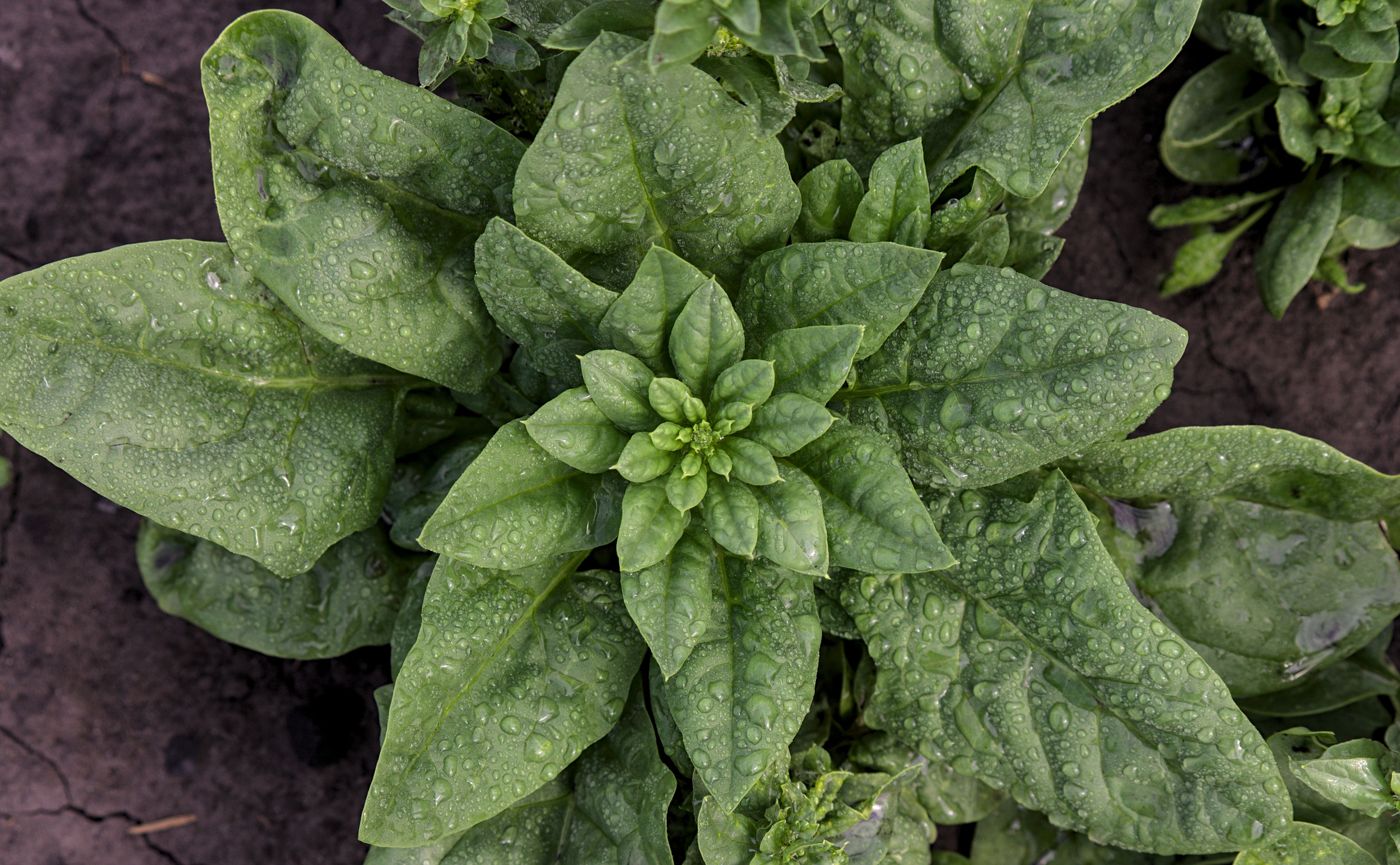 Spinach시금치Tender, deep-green spinach, most often blanched, squeezed and dressed with sesame oil as sigeumchi-namul, one of the most familiar banchan on the Korean table.
 Garlic마늘Used raw, minced, pickled and roasted, garlic is one of the essential aromatics of Korean food — in seasonings, marinades, kimchi and namul.
 Green onion파Korean green onion (pa), from thick-stemmed daepa to slender scallions — chopped into nearly every seasoning sauce, soup and kimchi, and the star of pa-kimchi.
 Soy sauce간장Korean soy sauce, in two main kitchen forms: pale, salty guk-ganjang (soup soy sauce) brewed the traditional way from meju, and darker, sweeter jin-ganjang for braises and marinades.
 Sesame참깨Toasted sesame seeds and sesame oil (chamgireum) finish countless Korean dishes, adding a nutty aroma and gloss.
Nutrition
| Calories | ~54 kcal |
|---|---|
| Protein | ~2.4 g |
| Fat | ~4.1 g |
| Carbohydrates | ~3.3 g |
| Fiber | ~1.8 g |
| Sodium | ~180 mg |
Notable forVitamin K · Vitamin A (as carotenoids) · Folate · Vitamin C
Estimated by summing USDA FoodData Central values for raw spinach, garlic, green onion, sesame oil and sesame seeds, plus the Korean Food Composition Table value for traditional soup soy sauce, then dividing by four. Salt in the blanching water is mostly discarded and is not counted; blanching also leaches some vitamin C and folate, so actual amounts may be lower. Actual values vary with ingredients, portion size and preparation.
Health Benefits
- Leafy-green nutrients: spinach is an exceptionally rich source of vitamin K and also supplies carotenoids (which the body can convert to vitamin A), folate and vitamin C.
- A little fat helps: carotenoids are fat-soluble. In a controlled study, people absorbed far more carotenoids from a spinach-containing salad eaten with a full-fat dressing than with a fat-free one — a reason the sesame-oil dressing is more than just flavor.
- Light and filling: a generous portion of greens adds fiber and volume to a meal for relatively few calories.
Regional Variations
- Winter coastal spinach: short, flat-growing winter spinach from seaside fields is prized for its sweetness. Seomcho ("island greens") comes mainly from Sinan in South Jeolla, and Pohangcho from Pohang in North Gyeongsang; both are harvested through the cold months, when the plants concentrate sugars in their leaves.
- Seasoning base: many cooks use guk-ganjang (soup soy sauce) or plain salt to keep the color bright and the flavor clean; others prefer regular soy sauce for a rounder taste.
- Doenjang version: some households dress the spinach with a spoonful of doenjang instead of soy sauce for a deeper, earthier side dish.
Pairings
 Kongnamul Muchim콩나물무침Soybean sprouts cooked under a lid until just tender, then tossed with garlic, green onion and sesame oil — crisp, nutty and on tables across Korea.
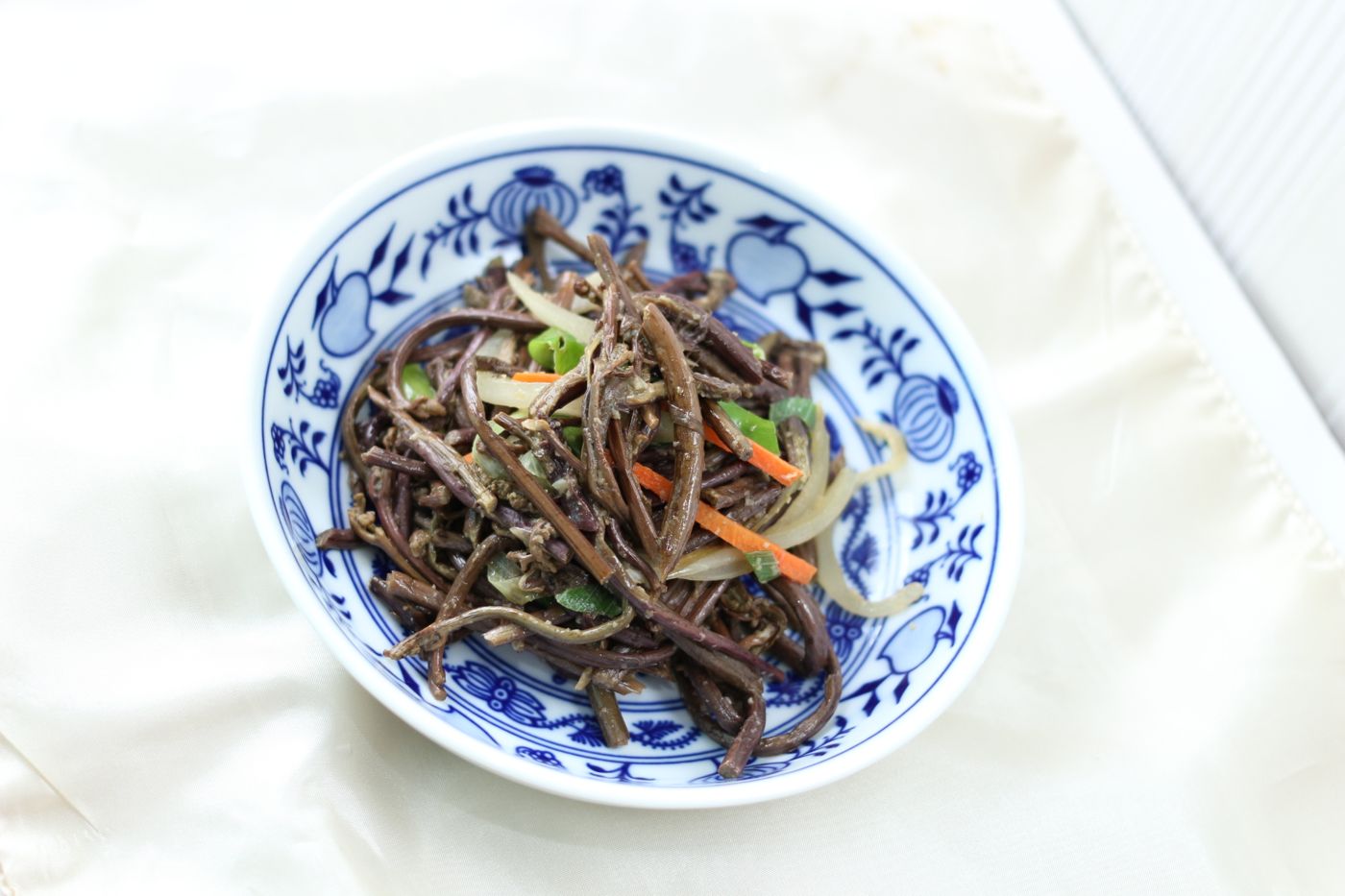 Gosari Namul고사리나물Dried bracken fern soaked, boiled and slowly stir-fried with soup soy sauce, garlic and perilla oil — chewy, earthy and central to holiday tables.
- Doraji Namul도라지나물Shredded bellflower root rubbed with salt to tame its bitterness, then gently stir-fried — the ivory-white member of the three-colored namul.
Sources
- 01시금치 (Spinach) — Encyclopedia of Korean Culture
- 02Namul, Food for People, Food That Spares — Hansik magazine (Korean Food Promotion Institute)
- 03섬초냐 포항초냐…지금 먹어야 가장 달고 진한 제철 시금치 가이드 — Lady Kyunghyang
- 04Carotenoid bioavailability is higher from salads ingested with full-fat than with fat-reduced salad dressings (Brown et al., Am J Clin Nutr, 2004)
- 05Kidney Stone Diet Plan and Prevention — National Kidney Foundation
- 06Warfarin — MedlinePlus Drug Information (U.S. National Library of Medicine)
Last updated