 Photo: Adonis Chen, CC BY 2.0, via Wikimedia Commons
Jeon · Pan-fried 전
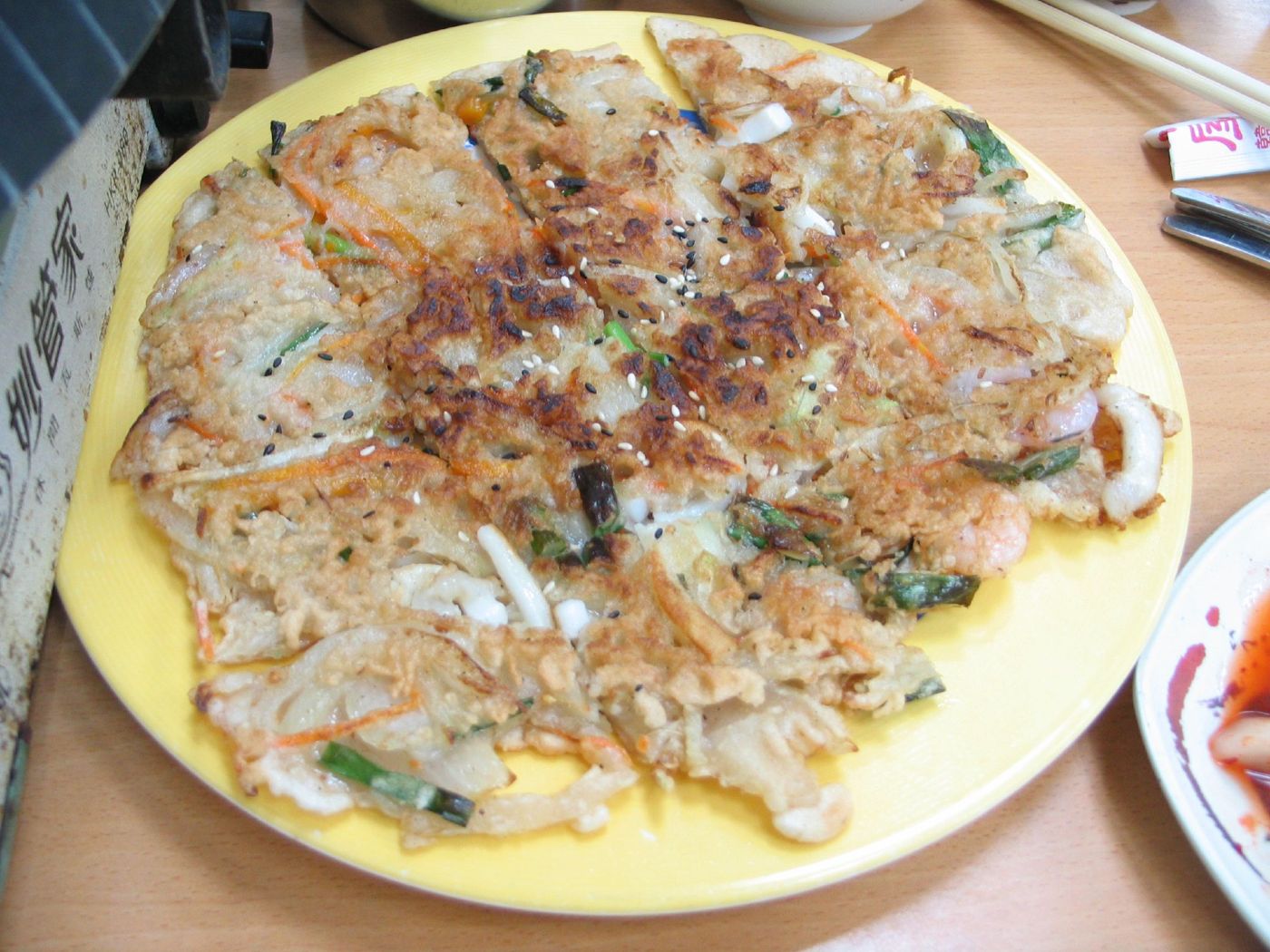
Haemul Pajeon (Seafood and Green Onion Pancake)
해물파전
Romanization: haemul-pajeon
Whole green onions bound in a light batter with squid, shrimp and clams, pan-fried until crisp — a generous jeon for sharing, closely tied to Busan's Dongnae.
- Serves
- 4
- Prep
- 20 min
- Cook
- 20 min
RegionBusan · Gyeongsang
Jump to recipeRecipe
Ingredients · Serves 4
- 200 gSlender green onions (jjokpa) or scallionsabout 2 bunches, trimmed
- 100 gSquidcleaned body, cut into thin strips
- 100 gShrimppeeled and deveined, roughly chopped
- 80 gClam meat or shucked oystersrinsed and drained
- 100 gAll-purpose flourabout ¾ cup
- 30 gRice flourabout 3 tbsp; adds crispness
- 200 mlCold water or chilled anchovy-kelp brothuse unsalted broth
- ¼ tspSalt
- 2 largeEggsbeaten
- 1 Red or green chilithinly sliced, optional
- 4 tbspNeutral cooking oilfor frying, divided
- 2 tbspSoy saucefor the dipping sauce
- 1 tbspRice vinegarfor the dipping sauce
- ½ tspGochugarufor the dipping sauce, optional
Method
Technique: Jeon: Pan-Frying in Flour and Egg
Step 1: Cut the green onions into lengths that fit your skillet (about 20 cm for a 26 cm pan); halve any thick white ends lengthwise. Pat the squid, shrimp and clams dry with paper towels.
Step 2: Whisk the flour, rice flour and salt with the cold water or broth until smooth. The batter should be thin and pourable, like heavy cream.
Step 3: Heat 2 tbsp oil in a large skillet over medium-high heat. Spoon a thin layer of batter into the pan, lay half the green onions over it side by side, then scatter half the seafood and chili on top. Drizzle a few more spoonfuls of batter over everything, just enough to bind it.
Step 4: Cook for 3–4 minutes, pressing gently with a spatula, until the underside is golden. Pour half the beaten egg evenly over the top.
Step 5: Flip the pancake, add a little more oil around the edge, and cook for another 3–4 minutes, pressing down, until the seafood is cooked through and the egg has set. Flip once more for 30 seconds to re-crisp the first side.
Step 6: Slide onto a board and repeat with the remaining ingredients.
Step 7: Mix the soy sauce, vinegar and gochugaru for dipping. Cut the pancakes into wedges or squares and serve hot.
Origin & History
Pajeon is jeon built on green onions (pa), and haemul-pajeon adds seafood (haemul). It belongs to the batter branch of the jeon family: rather than dusting each piece in flour and dipping it in egg, as for classic jeon, the cook pours a loose batter of wheat or rice flour over a layer of whole onions so that the starch glues them into a single round. The Encyclopedia of Korean Culture notes that pajeon does not appear in Joseon-era cookbooks; the earliest written recipes are in 20th-century books such as Joseon yori jebeop.
The Korean Food Promotion Institute describes haemul-pajeon as a more lavish version of plain pajeon, enriched with squid, clams, shrimp and other shellfish. Shellfish, oysters and mussels are also the additions the encyclopedia considers best suited to the dish, and its pajeon recipe lays seasoned beef or shellfish between the onions before covering them with a second ladle of batter.
The most famous version comes from Dongnae, an old walled town that is now a district of Busan. The encyclopedia attributes Dongnae's reputation to its location: close to Miryang, known for green onions, and Eonyang, known for water dropwort (minari), and next to a sea rich in shellfish. Local tradition, as told by the Dongnae district office, says a Dongnae magistrate once sent pajeon to the king for the spring festival of Samjinnal, or that it fed laborers building an inner wall of the nearby mountain fortress in 1707. The office itself treats these as oral legends and places the dish's rise as a commercial specialty in the late Joseon period, when it was served in the Dongnae market and in gisaeng houses as a delicacy for honored guests. A local-culture writer adds that the trade grew in the 1930s, after a new railway let women from Gijang bring their prized slender green onions to sell at Dongnae station.
Today haemul-pajeon is a staple of home cooking and of pubs serving makgeolli or dongdongju, and the Korean Food Promotion Institute notes that pajeon is especially craved on rainy days. See also jeon pan-frying.
Key Ingredients
 Green onion파Korean green onion (pa), from thick-stemmed daepa to slender scallions — chopped into nearly every seasoning sauce, soup and kimchi, and the star of pa-kimchi.
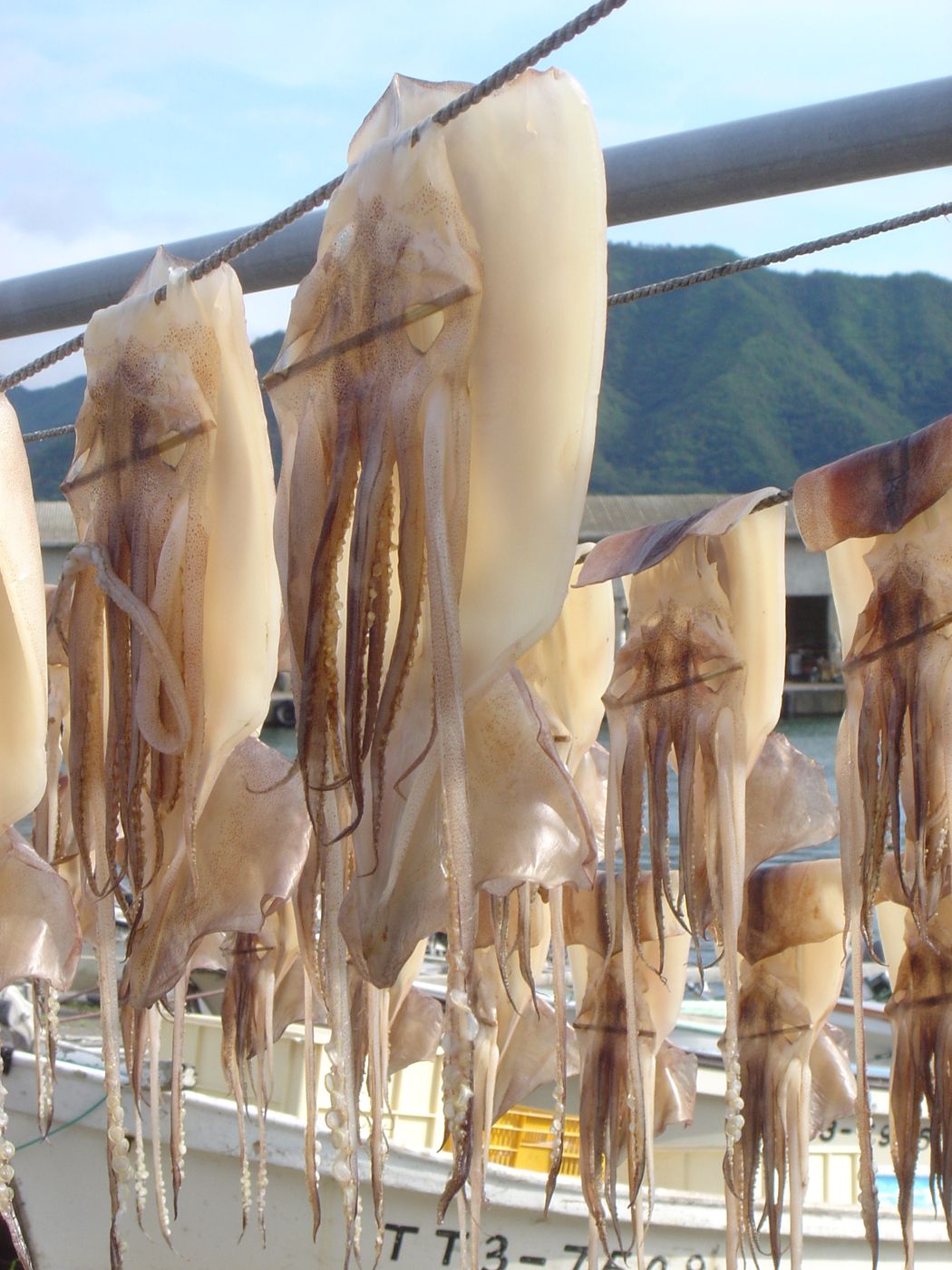 Squid오징어Fresh squid for stir-fries, pancakes and stuffed ojingeo-sundae, and dried squid — whole, sun-cured bodies or sweet-salty shredded jinmichae — that has become one of Korea's best-loved pantry foods.
- Korean Chili Peppers (Fresh)고추Fresh Korean chili peppers, eaten green (putgochu) or red (hong-gochu): from the fiery cheongyang-gochu to the small, wrinkled, mild kkwari-gochu that is braised and stir-fried as banchan.
 Soy sauce간장Korean soy sauce, in two main kitchen forms: pale, salty guk-ganjang (soup soy sauce) brewed the traditional way from meju, and darker, sweeter jin-ganjang for braises and marinades.
 Gochugaru고춧가루Korean red chili powder, made from dried red peppers ground coarse or fine. It gives kimchi, gochujang and countless banchan their color and warmth.
Nutrition
| Calories | ~350 kcal |
|---|---|
| Protein | ~19 g |
| Fat | ~17 g |
| Carbohydrates | ~31 g |
| Fiber | ~2.2 g |
| Sodium | ~350 mg |
Notable forProtein · Selenium · Vitamin B12 · Vitamin K
Estimated by summing USDA FoodData Central (SR Legacy) values for raw scallions (FDC 170005), raw squid (FDC 174223), raw shrimp (FDC 175179), raw clams (FDC 174214), enriched all-purpose flour (FDC 168894), white rice flour (FDC 169714), raw whole egg (FDC 171287), raw chili, table salt and soybean oil, divided by 4. Assumes all the oil is absorbed and water rather than broth. Excludes the dipping sauce, which adds roughly 440 mg sodium per serving if all of it is used. Most of the vitamin B12 comes from the clams and much of the vitamin K from the green onions and soybean oil. Actual values vary with ingredients, portion size and preparation.
Health Benefits
- Seafood protein: squid, shrimp and clams make this one of the more protein-rich jeon, and shellfish are a source of selenium and vitamin B12 (clams especially).
- Green onions: a generous layer of onions contributes vitamin K, vitamin C and folate along with color and aroma.
- A shared meal: a large pancake is usually divided among several people, so it can sit alongside vegetables and kimchi as part of a varied table.
Regional Variations
- Dongnae pajeon (Busan): made with slender jjokpa green onions and minari, topped with several kinds of shellfish and sometimes beef. The batter is rice flour and glutinous rice flour (or, in the encyclopedia's version, wheat and rice flour) mixed with anchovy broth; an egg is poured over near the end and the pancake is finished under a lid, then served with vinegared red chili paste (cho-gochujang).
- Everyday haemul-pajeon: a wheat-flour or ready-mixed buchim-garu batter with squid, shrimp, clams or oysters, served with soy sauce sharpened with vinegar.
- Plain pajeon: green onions alone in batter, the simplest and cheapest form.
- Crisp or soft: pubs often fry thin, oil-crisped pancakes, while the Dongnae style is thick, soft and moist, with onions that pull apart easily.
Pairings
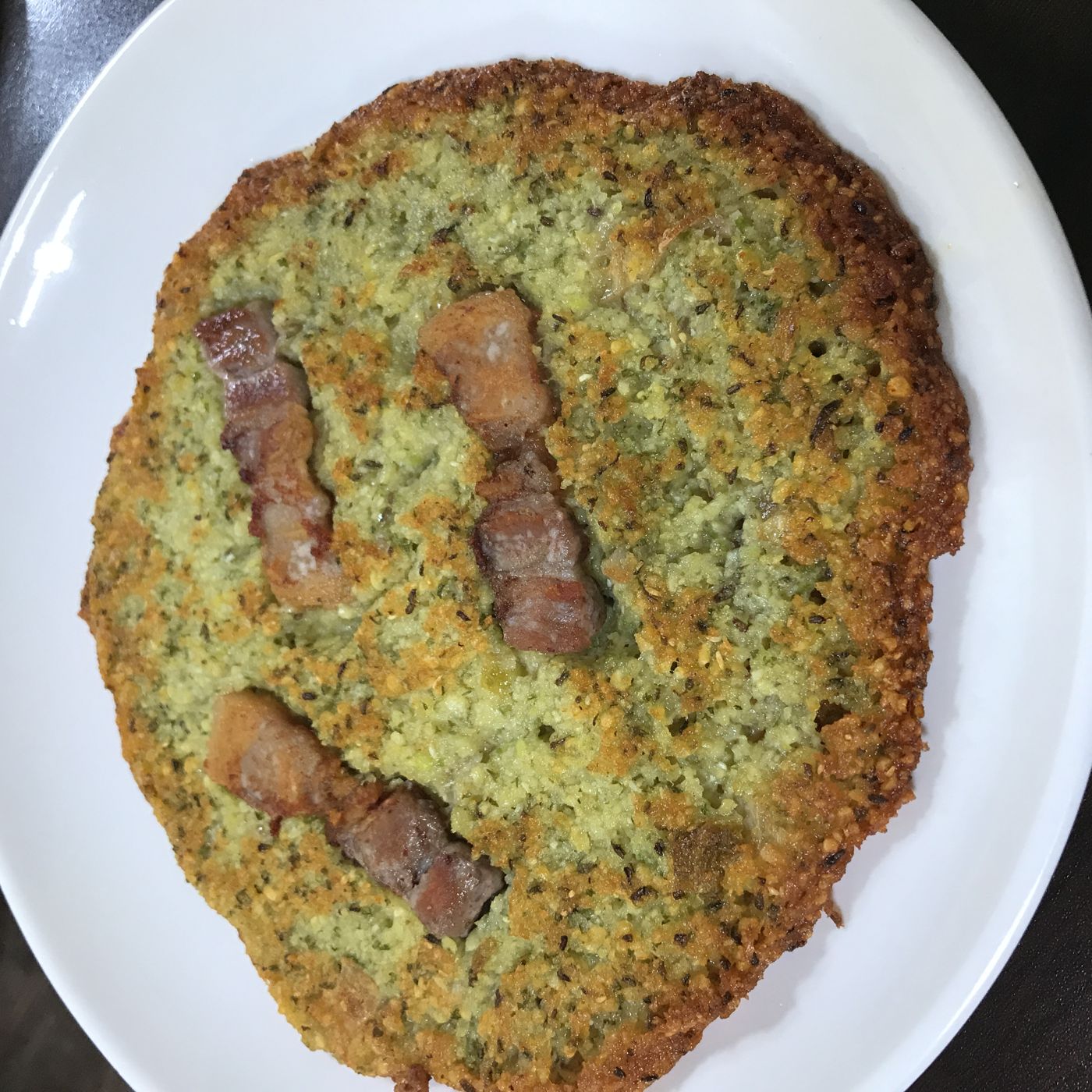 Nokdu Bindaetteok (Mung Bean Pancake)녹두빈대떡Soaked mung beans ground into a thick batter with kimchi, sprouts and pork, then fried crisp in generous oil — a northern specialty and a Seoul market favorite.
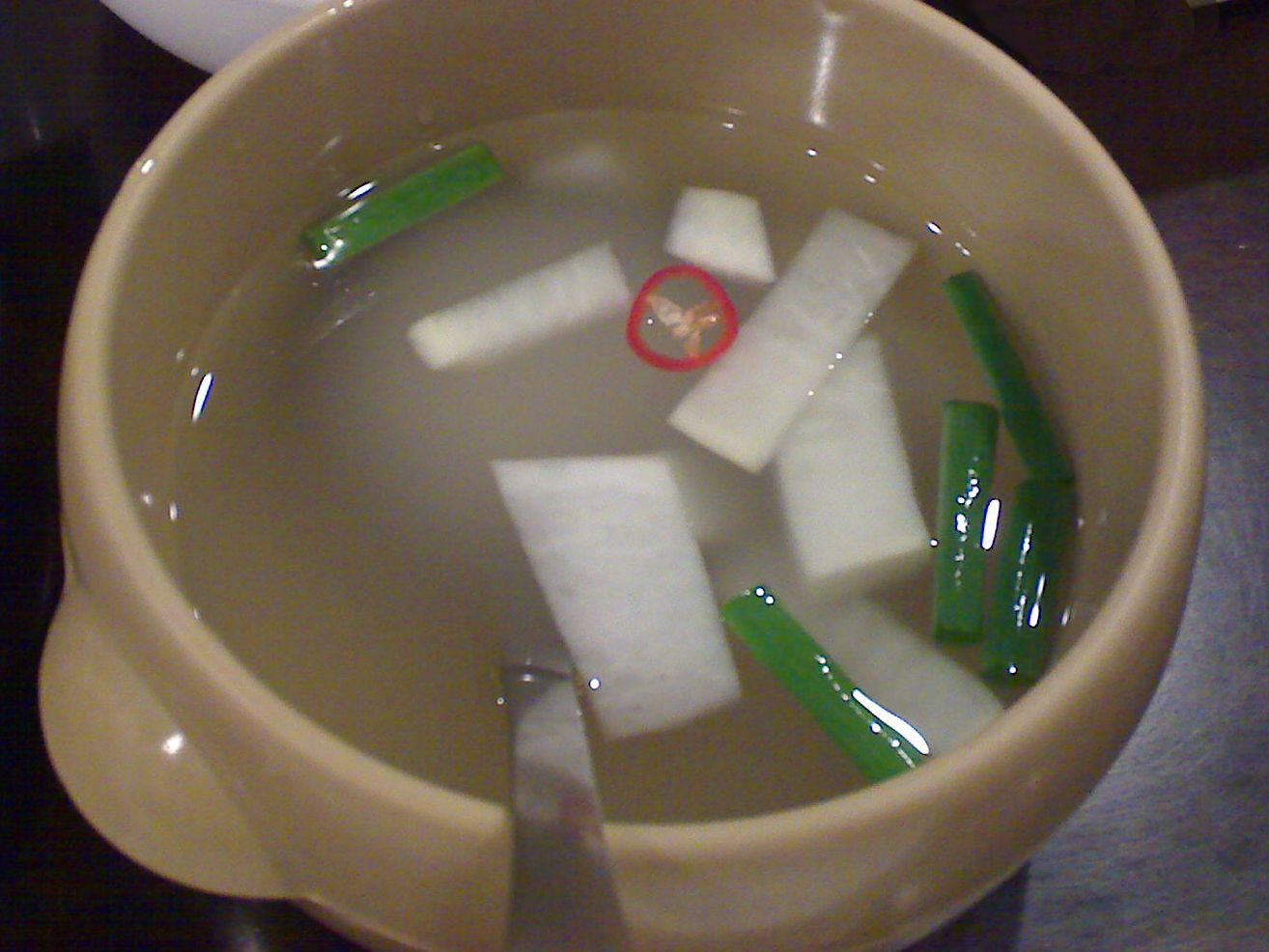 Radish Water Kimchi동치미Whole radishes steeped in a clear salt brine with pear, ginger and green chili — a winter water kimchi whose tangy broth is prized on its own.
 Napa Cabbage Kimchi배추김치Salted napa cabbage layered with a red paste of chili, garlic, ginger and fermented seafood, then left to ripen: the kimchi most people picture first.
Sources
- 01파전 (Pajeon) — Encyclopedia of Korean Culture
- 02한식이야기: 해물파전 (Korean Food Story: Haemul-pajeon) — Korean Food Promotion Institute
- 03한식이야기: 파전 (Korean Food Story: Pajeon) — Korean Food Promotion Institute
- 04동래파전 (Dongnae Pajeon) — Dongnae Eupseong History Festival, Dongnae-gu Office, Busan
- 05치열했던 역사의 현장 '동래읍성'에서 맛본 동래파전 (Dongnae Pajeon at Dongnae Fortress) — Korea.kr
- 06Mollusks, clam, mixed species, raw (FDC 174214) — USDA FoodData Central
Last updated