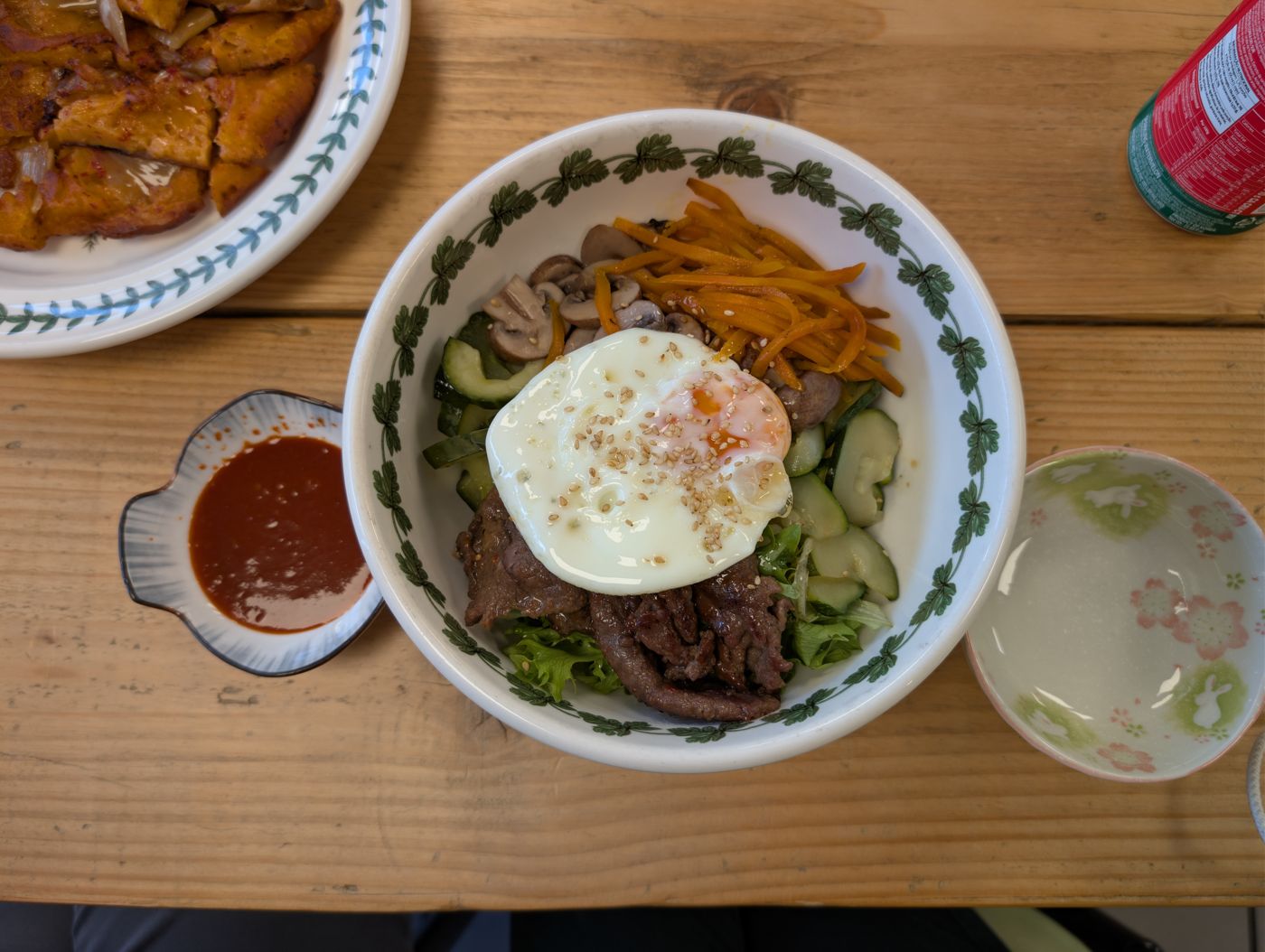
 Photo: Andy Li, CC0, via Wikimedia Commons
Bap · Rice dishes 밥
Bibimbap (Mixed Rice with Namul)
비빔밥
Romanization: bibimbap
A bowl of rice topped with seasoned namul, beef and egg, mixed at the table with chili paste and sesame oil — banchan gathered into a single meal.
- Serves
- 4
- Prep
- 40 min
- Cook
- 35 min
RegionJeonju · Jeolla · Gyeongsang
Jump to recipeRecipe
Ingredients · Serves 4
- 320 gShort-grain white riceabout 1¾ cups, cooked fairly dry
- 200 gSoybean sproutsrinsed
- 200 gSpinach1 bunch, washed
- 200 gKorean zucchini (aehobak) or zucchinijulienned
- 100 gCarrotjulienned
- 80 gFresh shiitake mushrooms, or soaked bracken (gosari)sliced
- 200 gLean beef (sirloin), minced or finely shredded
- 4 largeEggs
- 2 tbspSoy saucedivided: 1½ tbsp for beef, ½ tbsp for mushrooms
- 1⅓ tbspSugar1 tsp for beef, 1 tbsp for the chili paste
- 4 clovesGarlicminced, divided
- 2 stalksGreen onionfinely chopped, divided
- ½ tspSaltdivided among the namul
- 2 tbspToasted sesame oildivided; plus more at the table
- 1 tbspToasted sesame seeds
- 1½ tbspNeutral cooking oilfor stir-frying and eggs
- 4 tbspGochujangfor the sauce
- 1 tbspWaterfor the sauce
Method
Technique: Cooking Bap, Blanching and Seasoning Namul, Bokkeum: Korean Stir-Frying
Step 1: Wash the rice until the water runs nearly clear, soak 30 minutes, drain, and cook with slightly less water than usual so the grains stay separate. Keep warm.
Step 2: Mix the beef with 1½ tbsp soy sauce, 1 tsp sugar, half the garlic, a little green onion and 1 tsp sesame oil. Stir-fry half of it in a dry skillet until cooked through; set the rest aside for the chili paste.
Step 3: Make the chili paste (yak-gochujang): stir-fry the reserved beef until no longer pink, add the gochujang, 1 tbsp sugar and 1 tbsp water, and cook over low heat for 2–3 minutes, stirring, until glossy. Finish with 1 tsp sesame oil.
Step 4: Bring a pot of water to a boil. Blanch the spinach for 30 seconds, rinse in cold water and squeeze dry; season with a pinch of salt, a little garlic, sesame oil and sesame seeds. Cook the soybean sprouts, covered, in about 1 cm of boiling salted water for 5 minutes, drain, and season the same way.
Step 5: In a lightly oiled skillet, stir-fry the zucchini with a pinch of salt until just tender, then the carrot, then the mushrooms (seasoned with ½ tbsp soy sauce), wiping the pan between batches. Keep each vegetable separate.
Step 6: Fry the eggs sunny-side up in the remaining oil (or cook them through, as you prefer).
Step 7: Divide the rice among four wide bowls. Arrange the namul, carrot, mushrooms and beef in sections around the rim, place an egg in the center, and scatter with sesame seeds.
Step 8: Serve with the chili paste and extra sesame oil on the side; each person adds them to taste and mixes the bowl thoroughly before eating.
Origin & History
Bibimbap means simply "mixed rice": warm rice with an array of side dishes stirred into it. The Encyclopedia of Korean Culture notes that scholars also called it goldongban, and that in the royal palace it was known just as bibim. The earliest written recipe is in the late-19th-century cookbook Siui jeonseo, which describes mixing rice with marinated and stir-fried beef, pan-fried fish slices, sautéed vegetables and crumbled fried kelp, dressing it generously with sesame salt and oil, and topping it with strips of egg and tiny meatballs.
Most writers believe the habit is far older than that recipe. The encyclopedia connects it to ancestral rites (jesa) and village rituals, after which participants shared the offerings — often in a single bowl, mixing rice with the ritual dishes so that everyone ate a little of each. Households that still hold rites keep this custom, and in Jinju a bibimbap eaten late at night is called heotjesatbap, a "mock ritual meal." Two other customs point the same way: on the last night of the lunar year, leftover side dishes were mixed into rice so they would not be carried into the new year, and in farming season women carried rice and big gourds of namul out to the fields, where workers mixed their own bowls with chili paste. See jesa food.
Bibimbap is, at heart, a way of eating namul. The encyclopedia is specific that the vegetables must be cooked — boiled and dressed, blanched and stir-fried, or salted and then stir-fried — never raw. Spinach, soybean sprouts, bracken, bellflower root and zucchini are each seasoned separately, exactly as they would be for the banchan table (sigeumchi-namul, kongnamul-muchim, gosari-namul, aehobak-namul), so that when enough of them meet in one bowl little extra seasoning is needed. Chili paste stir-fried with a little water (yak-gochujang) and sesame oil are traditionally served on the side so each person can adjust the heat.
Jeonju is now the city most associated with the dish, but the Korean Food Promotion Institute points out that a 1929 issue of the magazine Byeolgeongon named Jinju as the place for bibimbap and praised Jeonju instead for its soybean-sprout soup with rice, suggesting Jeonju's reputation for bibimbap took hold later. Today the Jeonju style is defined by soybean sprouts, rice cooked in beef broth and yellow mung-bean jelly. See cooking bap and blanching and seasoning namul.
Key Ingredients
 Rice쌀Short, round grains of japonica rice that cook up glossy, soft and gently clinging. Steamed white rice, bap, is the center of the Korean table: every banchan, soup and stew is planned to be eaten with it.
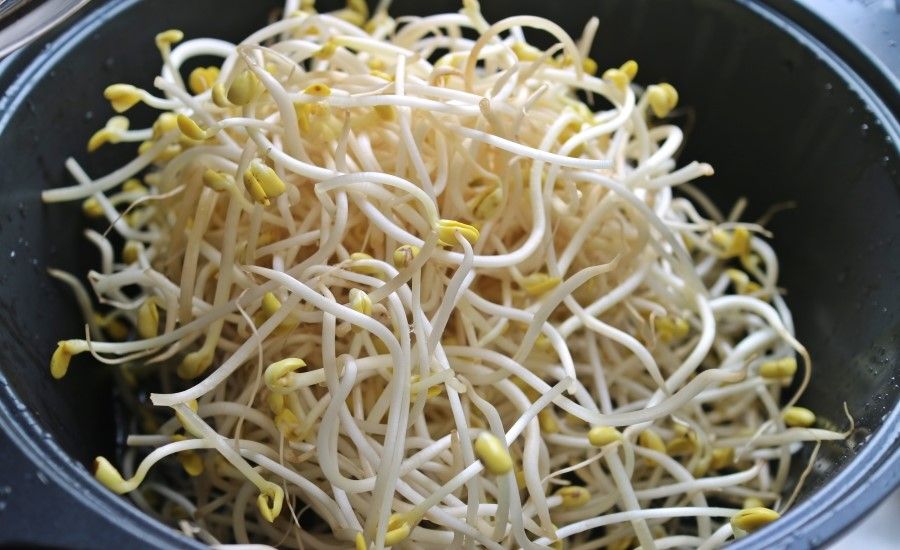 Soybean sprouts콩나물Soybeans sprouted in the dark until they grow long, pale stems topped with a yellow bean. A staple of everyday Korean cooking in kongnamul-muchim, clear sprout soup and sprout rice.
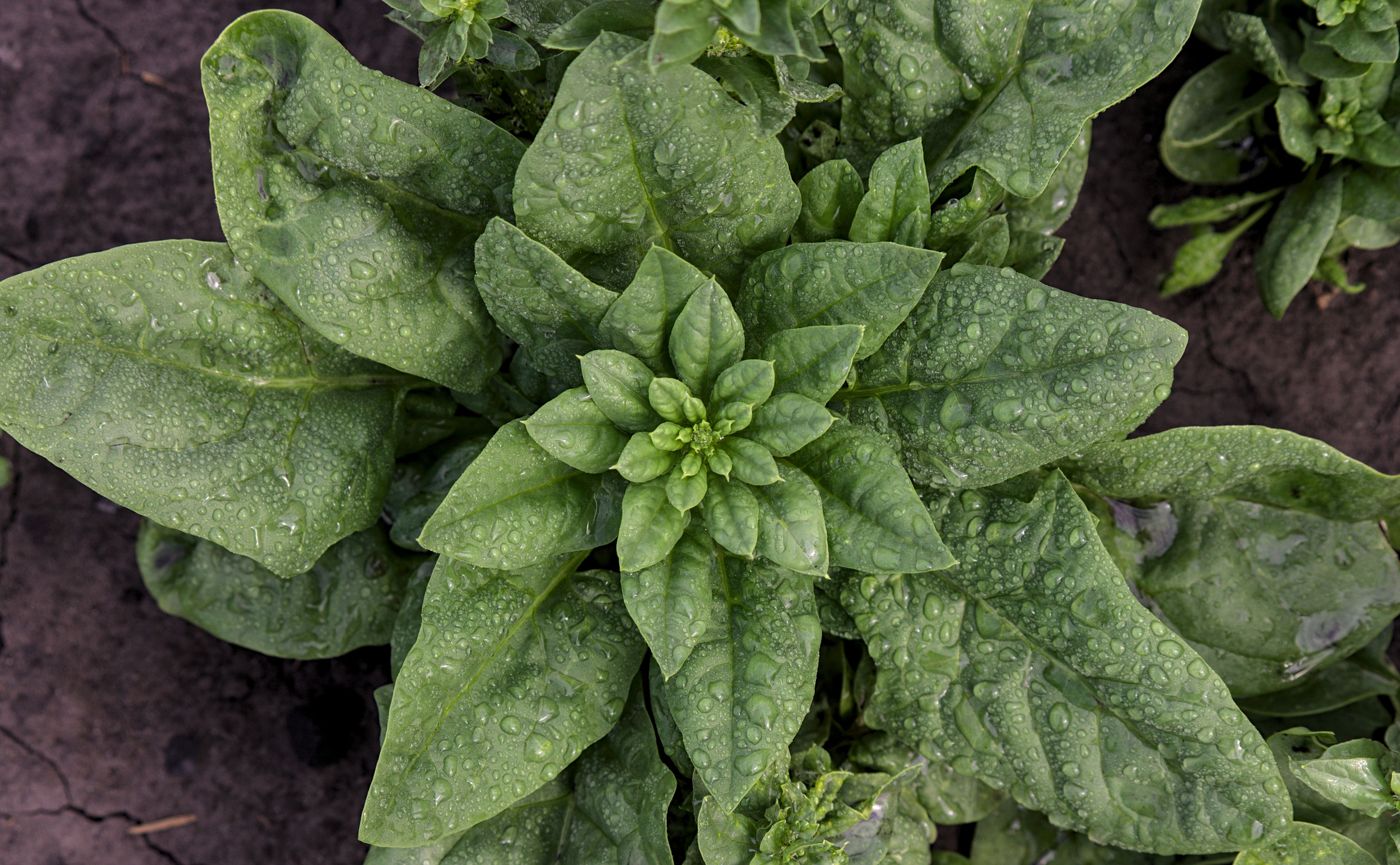 Spinach시금치Tender, deep-green spinach, most often blanched, squeezed and dressed with sesame oil as sigeumchi-namul, one of the most familiar banchan on the Korean table.
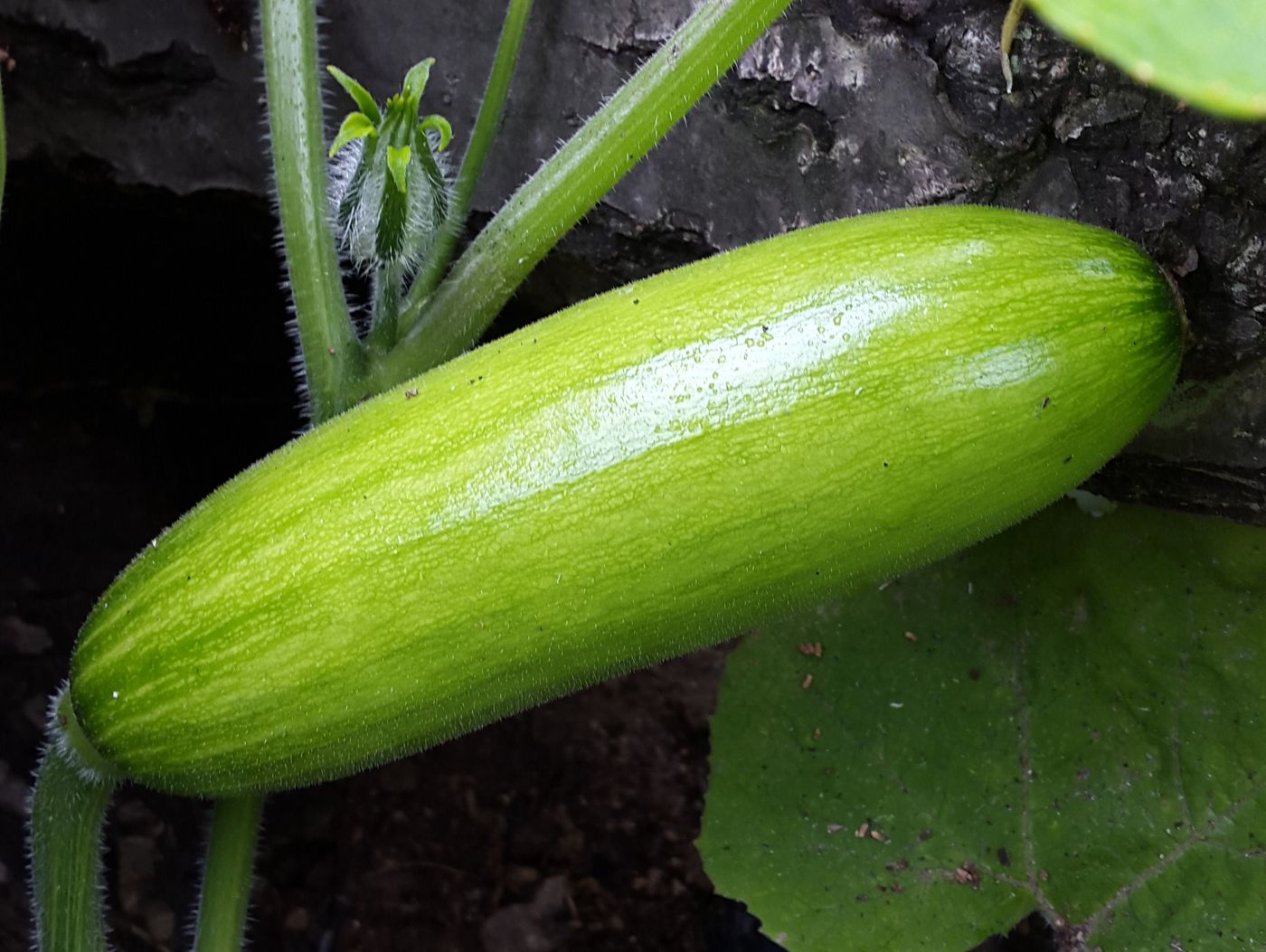 Korean zucchini애호박A pale-green young squash with thin, smooth skin and tender flesh. Sliced into rounds for hobak-jeon, sautéed as namul and added to doenjang stews.
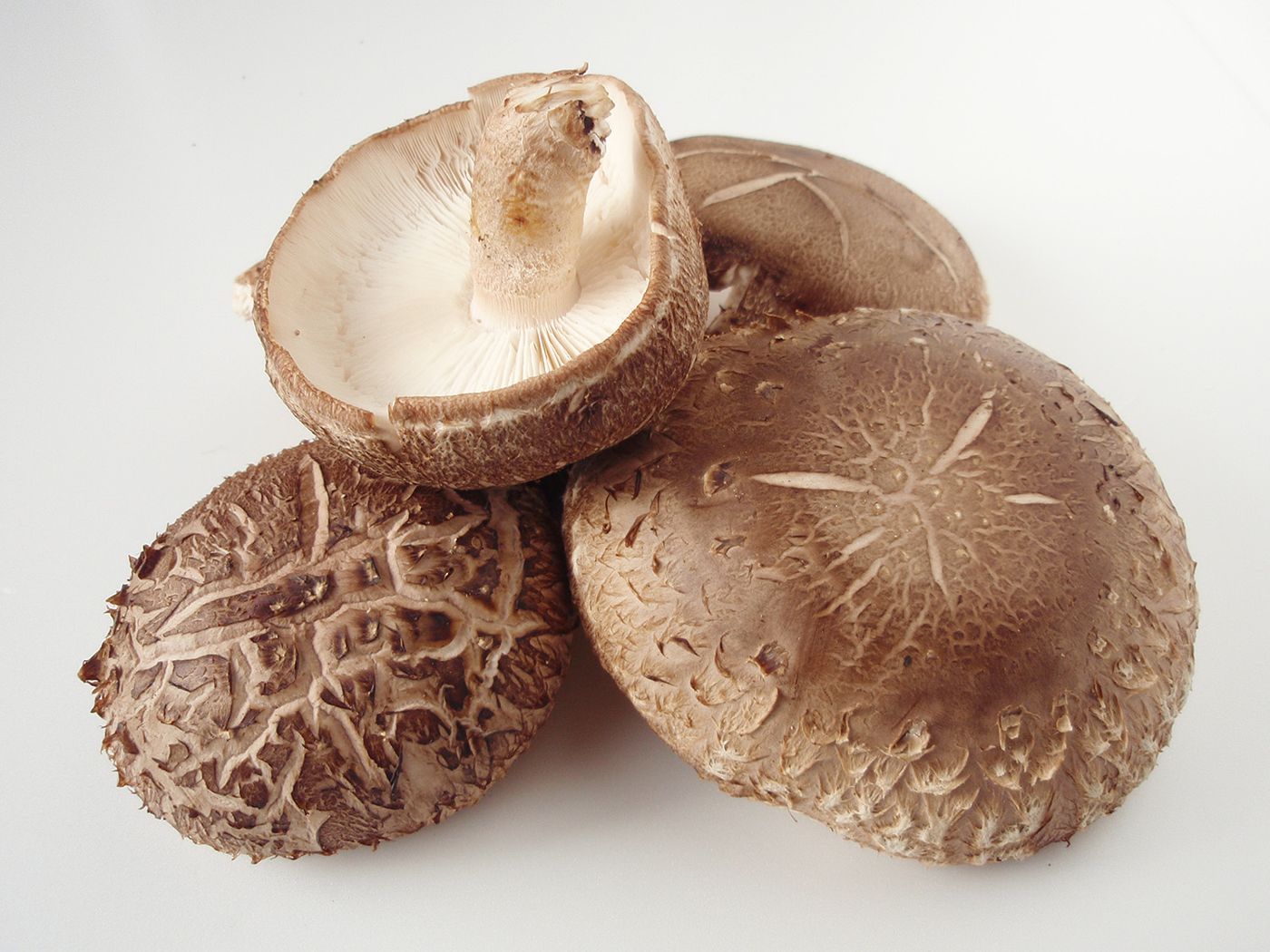 Shiitake mushroom표고Dark-capped, meaty mushrooms known in Korean as pyogo or pyogo-beoseot. Used fresh in stir-fries and pan-fried dishes, and dried for a deeply savory broth and an intensely aromatic bite.
- Bracken fern shoots고사리The young, tightly curled shoots of bracken fern, picked in spring and almost always sold blanched and dried. Once soaked and thoroughly cooked, gosari turns tender and earthy, and it is a fixture of ancestral-rite tables, bibimbap and yukgaejang.
 Soy sauce간장Korean soy sauce, in two main kitchen forms: pale, salty guk-ganjang (soup soy sauce) brewed the traditional way from meju, and darker, sweeter jin-ganjang for braises and marinades.
 Garlic마늘Used raw, minced, pickled and roasted, garlic is one of the essential aromatics of Korean food — in seasonings, marinades, kimchi and namul.
 Green onion파Korean green onion (pa), from thick-stemmed daepa to slender scallions — chopped into nearly every seasoning sauce, soup and kimchi, and the star of pa-kimchi.
 Sesame참깨Toasted sesame seeds and sesame oil (chamgireum) finish countless Korean dishes, adding a nutty aroma and gloss.
- Gochujang고추장Fermented red chili paste — sweet, savory and hot. Made from meju powder, glutinous rice, malt and gochugaru, it is a later addition to Korea's family of jang.
Nutrition
| Calories | ~745 kcal |
|---|---|
| Protein | ~33 g |
| Fat | ~29 g |
| Carbohydrates | ~91 g |
| Fiber | ~5.9 g |
| Sodium | ~1330 mg |
Notable forVitamin K · Vitamin A · Protein · Selenium
Estimated by summing USDA FoodData Central (SR Legacy) values for raw medium-grain white rice (FDC 168879), soybean sprouts (FDC 169284), spinach (FDC 168462), zucchini (FDC 169291), carrot (FDC 170393), shiitake (FDC 169242), top sirloin (FDC 168728), whole egg (FDC 171287), soy sauce (FDC 174277), sesame oil, sesame seeds, sugar, garlic, scallions, soybean oil and table salt, plus gochujang from the Korean Food Composition Table (R0050010009a), divided by 4. Assumes all the chili paste is eaten; using half of it saves roughly 220 mg sodium. USDA's rice entry is enriched, so iron and folate from the rice are overstated for unenriched Korean rice and are not listed as notable. Vitamin K comes mainly from the spinach and vitamin A from the spinach and carrot. Actual values vary with ingredients, portion size and preparation.
Health Benefits
- Many vegetables in one bowl: a typical serving combines four or five kinds of namul, so it carries the fiber, vitamin K, vitamin A (as beta-carotene) and folate of leafy greens, sprouts and carrots.
- Balanced plate: rice, vegetables, a modest portion of beef and an egg make it close to a complete meal on its own, the idea behind the balanced Korean meal.
- Adjustable at the table: because the chili paste and sesame oil are served separately, each person controls how much salt, sugar and fat goes into the bowl.
Regional Variations
- Jeonju bibimbap (Jeonju): also called kongnamul-bibimbap. The encyclopedia counts some 30 ingredients, with soybean sprouts, hwangpo-muk (mung-bean jelly tinted yellow with gardenia), chili paste, beef tartare (yukhoe) or stir-fried beef, sesame oil and egg the defining ones. The rice is cooked in skimmed beef-brisket broth and tossed with sesame oil while hot, and the bowl is always served with soybean-sprout soup.
- Jinju bibimbap (Gyeongsang): namul kneaded long and hard, then topped with botangguk, minced clams simmered in sesame oil, along with beef tartare and mung-bean jelly; the Korean Food Promotion Institute links it closely to ancestral-rite meals.
- Haeju bibimbap (Hwanghae): according to a North Korean folklore book cited by the institute, made with bracken from Suyangsan and crumbled toasted laver.
- Home bibimbap: leftover namul, a fried egg and a spoonful of chili paste on rice — the everyday form, with no fixed recipe.
- Dolsot bibimbap: served in a heated stone pot so the bottom layer of rice turns crisp.
Pairings
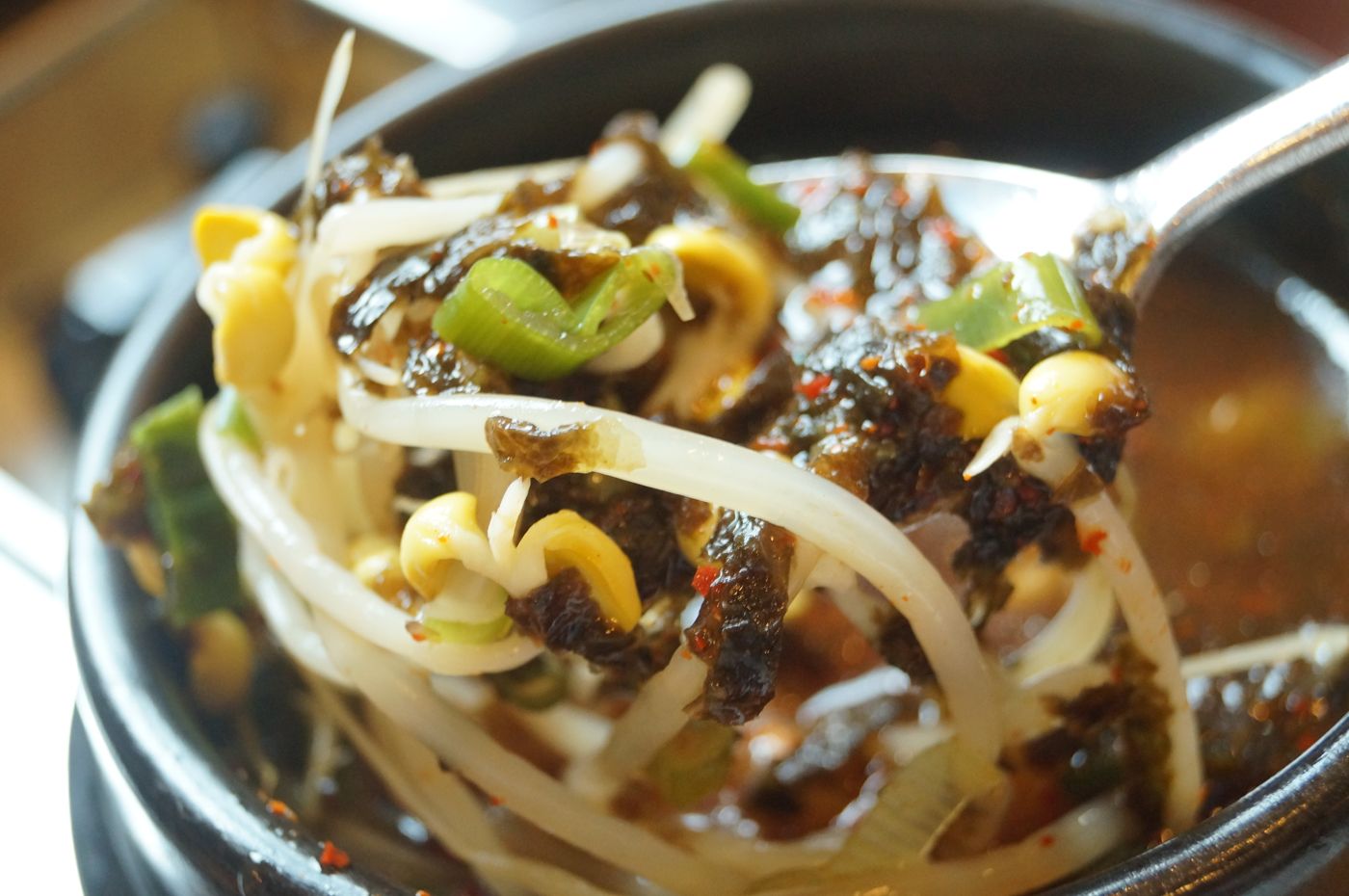 Kongnamul Guk (Soybean Sprout Soup)콩나물국A clear, light soup of soybean sprouts in anchovy-kelp stock, seasoned with salt or soup soy sauce — an everyday guk and a favorite morning-after cure.
 Napa Cabbage Kimchi배추김치Salted napa cabbage layered with a red paste of chili, garlic, ginger and fermented seafood, then left to ripen: the kimchi most people picture first.
 Cubed Radish Kimchi깍두기Korean radish cut into neat cubes and tossed with chili, garlic and salted shrimp — crunchy, juicy and a classic partner to rich soups.
Sources
- 01비빔밥 (Bibimbap) — Encyclopedia of Korean Culture
- 02전주비빔밥 (Jeonju Bibimbap) — Encyclopedia of Korean Culture
- 03한식이야기: 비빔밥 (Korean Food Story: Bibimbap) — Korean Food Promotion Institute
- 04People at Risk of Foodborne Illness — U.S. Food and Drug Administration
- 05Gochujang (R0050010009a) — Korean Food Composition Table, National Institute of Agricultural Sciences
Last updated