Regions
Seoul & Gyeonggi
서울·경기
The capital's cooking, shaped by the royal court and the yangban table, alongside the plainer, hearty food of the surrounding Gyeonggi countryside.
Seoul and the province that surrounds it are usually discussed together, but they have long cooked in noticeably different registers. Seoul, the capital since the start of the Joseon dynasty, developed a refined and formal table; Gyeonggi, with its farms, hills and stretch of the West Sea coast, kept a simpler and more filling style of everyday food.
Geography and climate
Gyeonggi sits in the middle of the peninsula, with a comparatively mild climate, mountains inland and tidal coast and islands to the west. The Encyclopedia of Korean Culture notes that the province had seafood from the West Sea, wild greens from its valleys and a broad mix of field grains, without any single crop dominating. Seoul itself produced little food of its own; what defined its cooking was access to the best of everything brought into the capital.
Historically the region also included Gaeseong, the old Goryeo capital, which the same encyclopedia treats as part of Gyeonggi's food tradition and credits with an especially elaborate, conservative style of cooking.
Character of the cuisine
According to the Encyclopedia of Korean Culture, Seoul cooking followed court customs: many small dishes rather than a few large ones, careful attention to appearance, and food built from several ingredients and generous seasoning so that flavors are layered rather than bold. Seasoning in the central region is generally described as moderate, sitting between the lighter north and the saltier, spicier south.
Gyeonggi food, by contrast, is described as plain and unfussy, with medium saltiness and restrained seasoning. Thick, rustic dishes made from pumpkin, potato, corn, wheat flour and red beans are typical, and knife-cut noodles in thick broths were preferred over clear noodle soups.
Signature dishes and banchan
- Seolleongtang: the milky beef-bone soup most associated with Seoul. Tradition holds that it began with the king's ritual plowing at the Seonnongdan altar outside the East Gate, though this origin is an oral account.
- Court-influenced dishes: sinseollo (a hot pot served in a charcoal-heated vessel), gujeolpan (nine-section platter with thin crepes) and galbi-jjim appear on the Encyclopedia of Korean Culture's list of Seoul specialties.
- Preserved side dishes: the same source notes that Seoul tables kept an unusually large range of stored mitbanchan — grilled dried fish, beef jerky, salted seafood and jangajji pickles — alongside lighter vegetables such as sukju-namul.
- Gaeseong specialties: joraengi-tteokguk, a rice-cake soup made with small cocoon-shaped pieces, and rounded pyeonsu dumplings.
- Suwon galbi: the Gyeonggi city of Suwon is known for charcoal-grilled beef short ribs seasoned with salt rather than soy sauce, a style traced to a restaurant in the city's market in the 1950s.
Kimchi styles
Kimchi here is generally milder than in the south. The Korea Herald describes Seoul and Gyeonggi baechu-kimchi as seasoned with salted shrimp (saeujeot) or salted clams, and neither very spicy nor very salty. The region is also associated with jang-kimchi, a soy-seasoned kimchi; bossam-kimchi, cabbage wrapped around a rich filling of seafood, fruit and nuts; and oi-sobagi. The Encyclopedia of Korean Culture also lists baek-kimchi (white kimchi without chili) and turnip kimchi among Gyeonggi's specialties.
Local specialties
Gyeonggi's coast supplied salted seafood such as croaker from Yeonpyeong, salted squid and salted oysters. Local rice cakes were also a point of pride: the encyclopedia mentions Yeoju's sanbyeong, Ganghwa's geundae-tteok and Gaeseong's gyeongdan dumplings among them.
Dishes from this region
- Aehobak Namul애호박나물Young Korean squash cut into half-moons and stir-fried with garlic and a little salted shrimp — sweet, tender and quick to make.
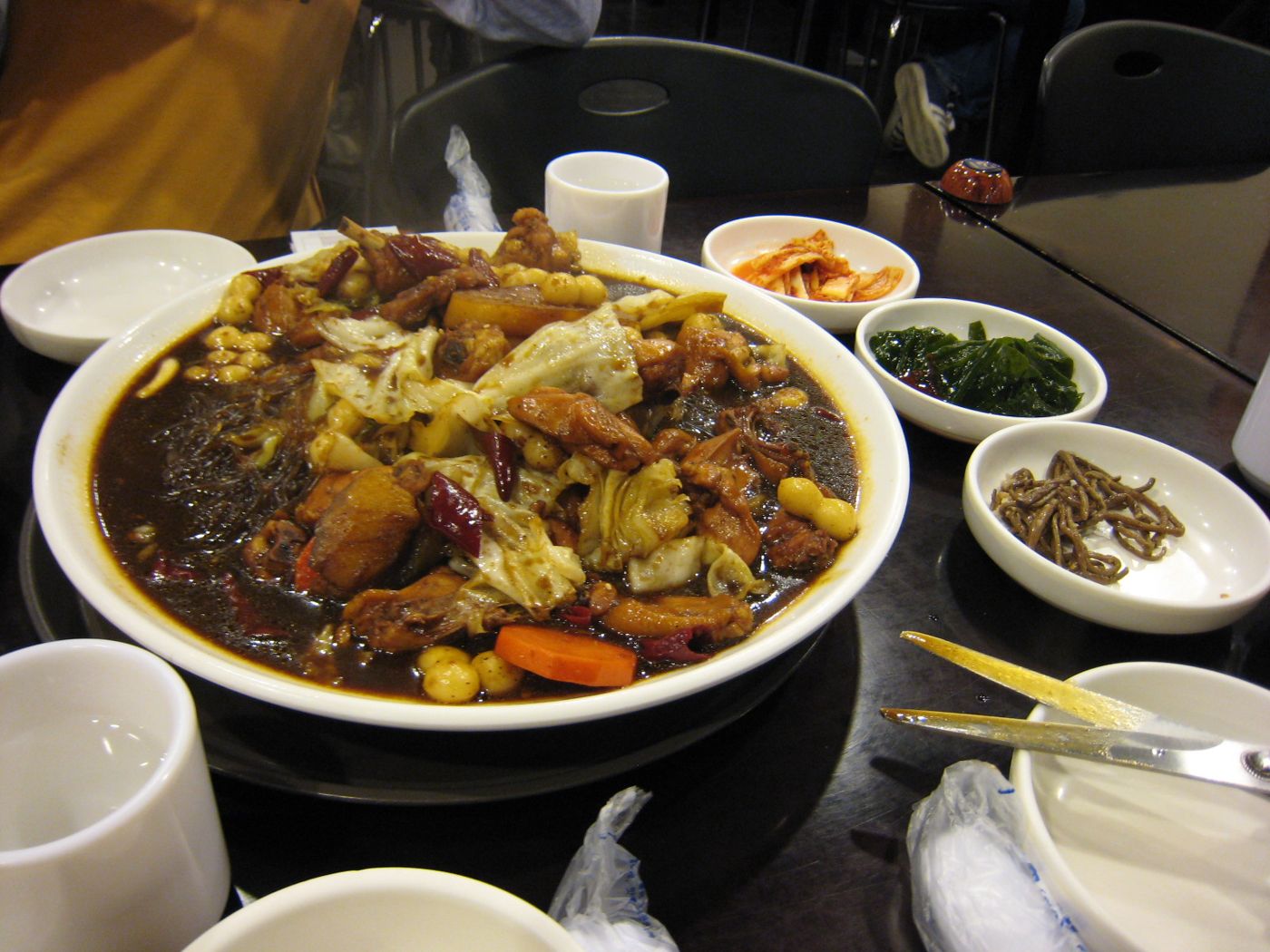 Andong Jjimdak (Soy-Braised Chicken with Glass Noodles)안동찜닭Chicken braised hard in a sweet soy sauce with potatoes, vegetables, dried chilies and glass noodles — a 1980s invention of Andong's old market, not a yangban heirloom.
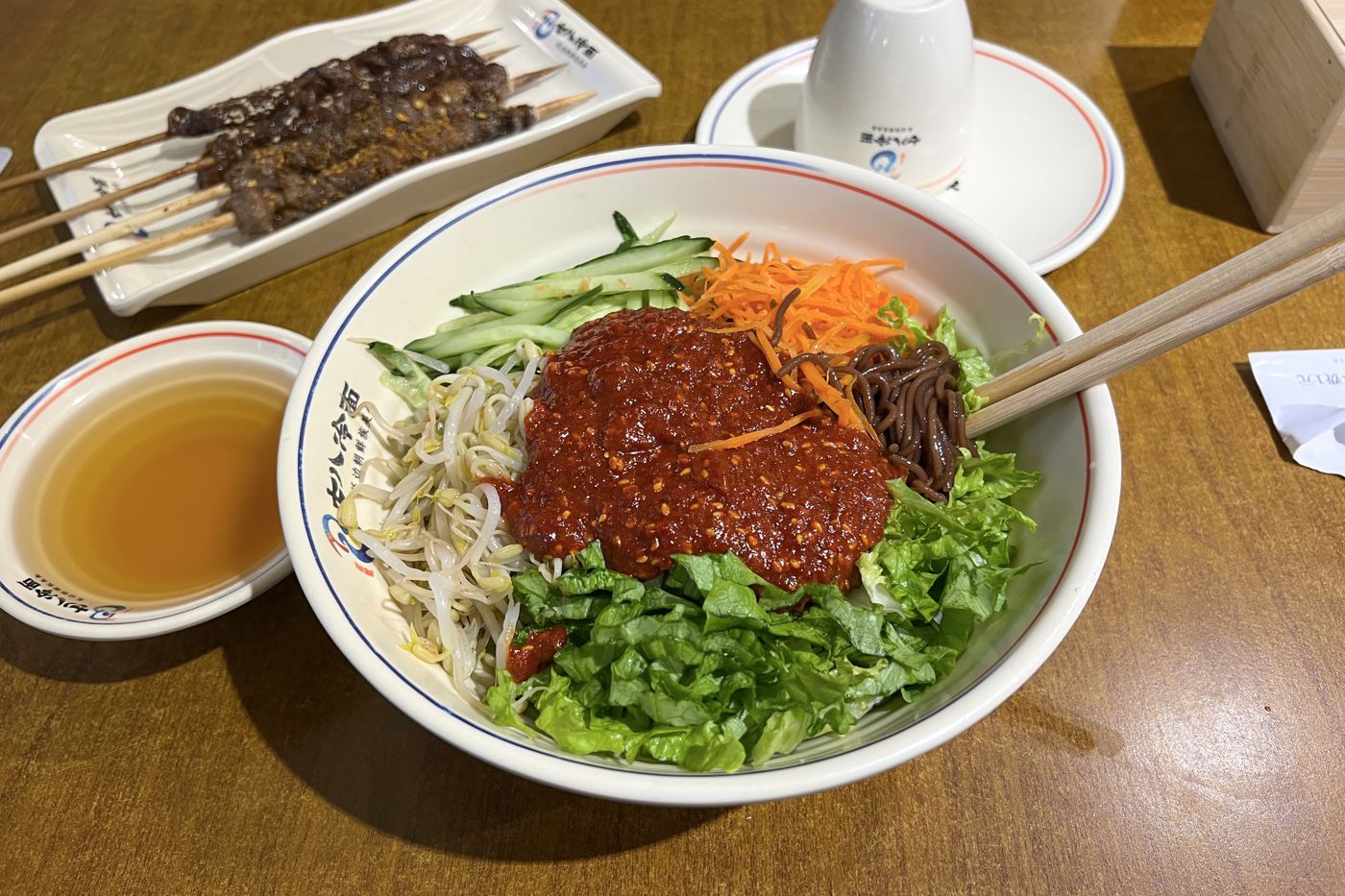 Bibim-naengmyeon (Spicy Mixed Cold Noodles)비빔냉면Chewy starch noodles tossed in a sweet, vinegary chili sauce, topped with cucumber, pear and egg — the Hamheung tradition of hoe-naengmyeon, carried south by refugees.
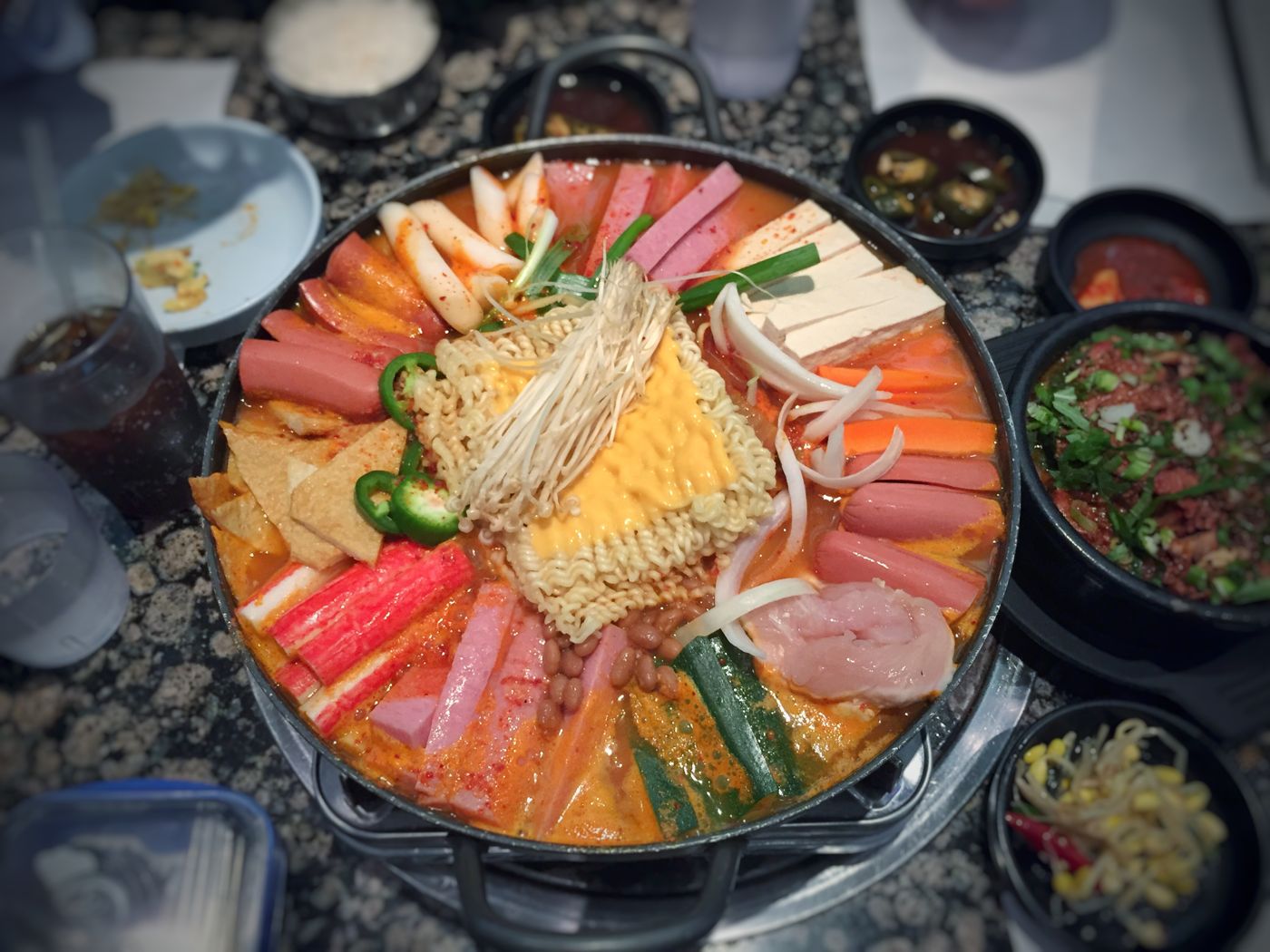 Budae Jjigae (Army Base Stew)부대찌개Ham, sausages and canned beans simmered with kimchi, tofu and a gochujang-chili broth, usually finished with instant noodles — a postwar stew born around US Army bases.
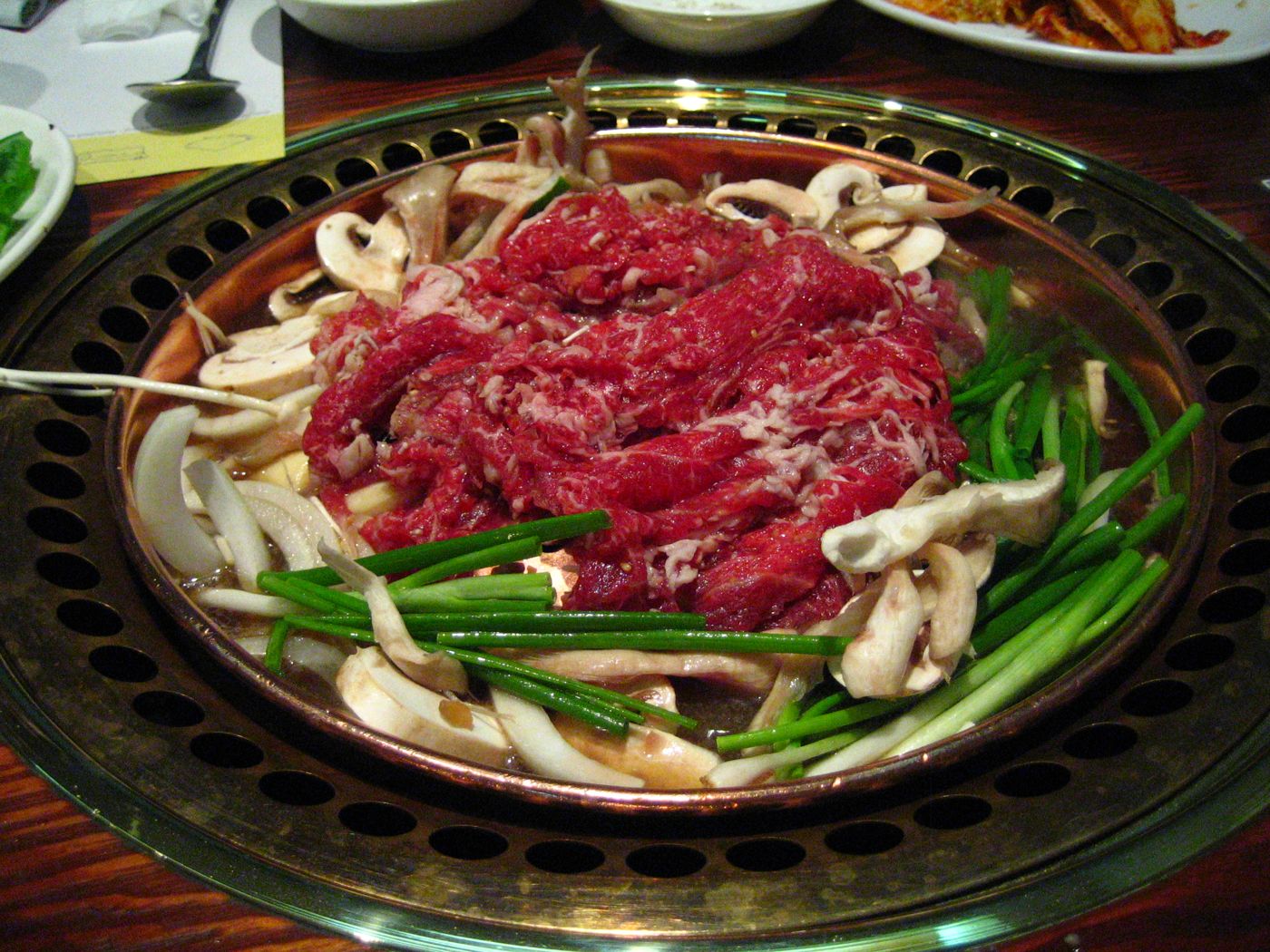 Bulgogi (Marinated Grilled Beef)불고기Thin slices of beef marinated in soy sauce, pear, garlic and sesame, then grilled or seared — descended from the court dish neobiani and Korea's best-known meat dish.
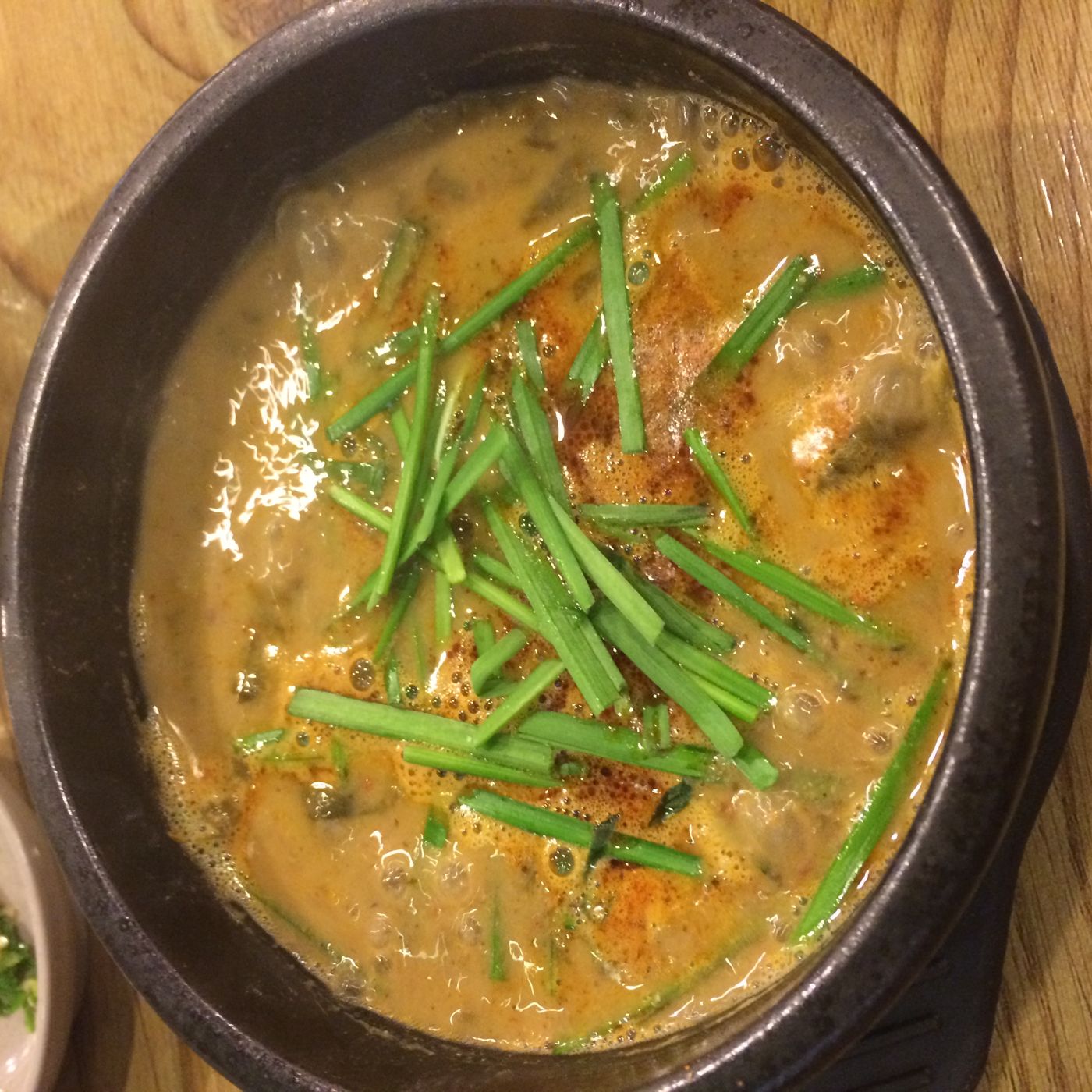 Chueotang (Loach Soup)추어탕Pond loaches simmered and ground into a thick, earthy soup with dried greens, doenjang and perilla, sharpened with chopi pepper — an autumn harvest dish turned year-round restorative.
- Chunky Radish and Cabbage Kimchi섞박지Big, flat-cut pieces of radish and cabbage mixed in one chili and jeotgal seasoning — a late-autumn “mixed” kimchi, and the name for big radish kimchi today.
- Cut Cabbage Kimchi막김치Napa cabbage cut into bite-size pieces before salting and tossed with the seasoning all at once — the quick, everyday way to make cabbage kimchi.
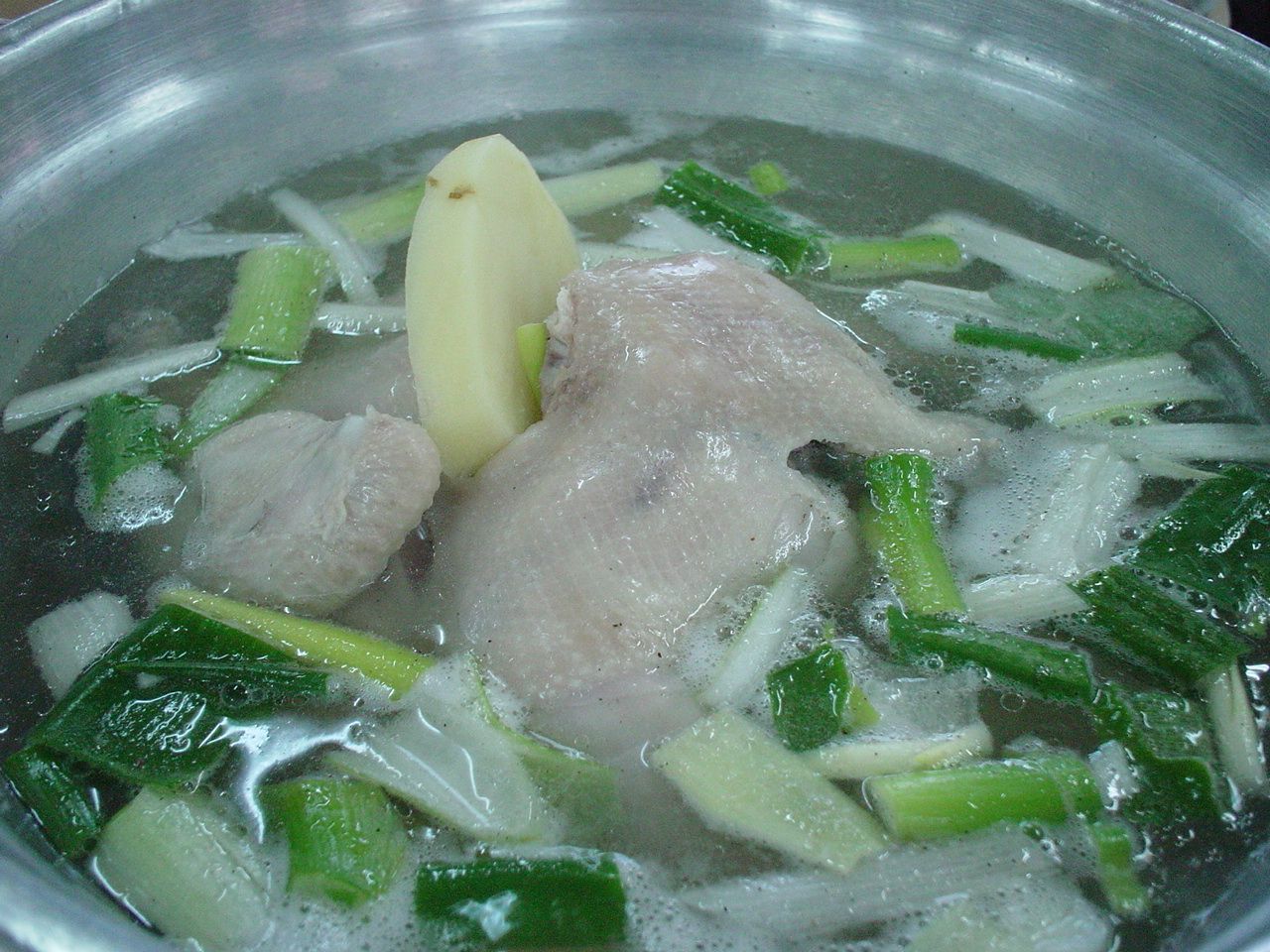 Dak Hanmari ("One Whole Chicken" Hot Pot)닭한마리A whole chicken simmered at the table with potatoes, rice cakes and green onion, dipped in a vinegar-mustard sauce, then finished with noodles in the broth — a Dongdaemun original.
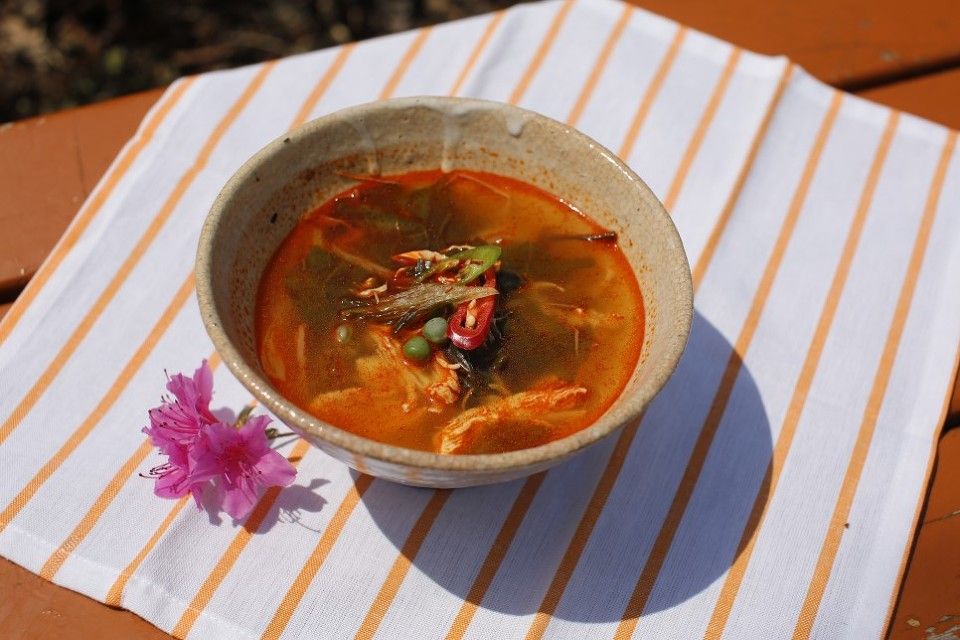 Dakgaejang (Spicy Chicken Soup)닭개장Shredded chicken simmered with bracken, taro stems and plenty of green onion in a fiery chili-oil broth — the chicken cousin of yukgaejang.
- Dureup Muchim (Seasoned Aralia Shoots)두릅무침Tender aralia tree shoots blanched briefly and dressed with a tangy gochujang sauce — a fleeting mid-spring delicacy with a resinous, slightly bitter edge.
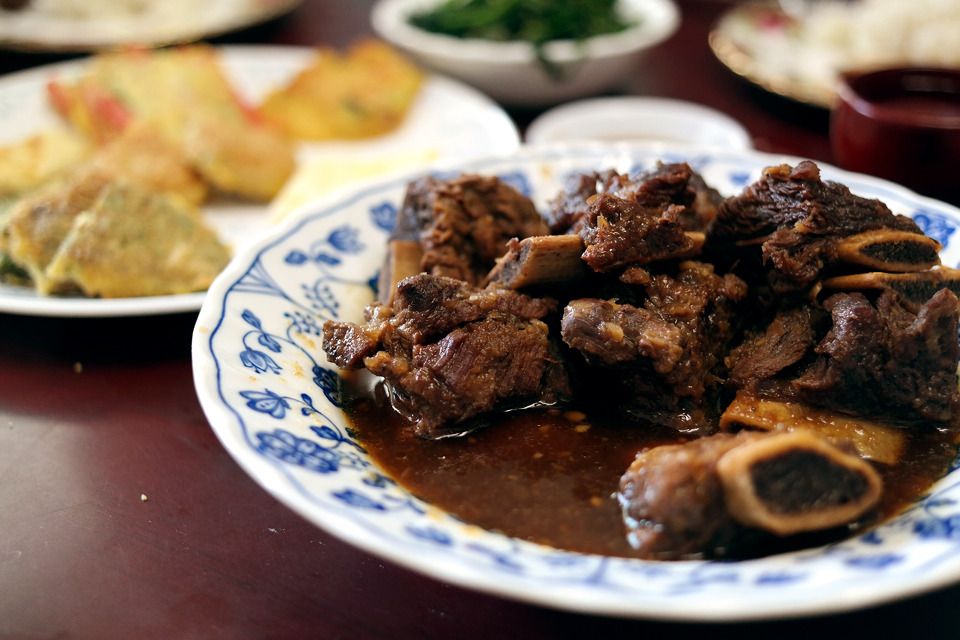 Galbi-jjim (Braised Beef Short Ribs)갈비찜Beef short ribs simmered slowly in soy sauce, pear and garlic with radish, carrot, chestnuts and jujubes until glossy and tender — a dish for holidays and honored guests.
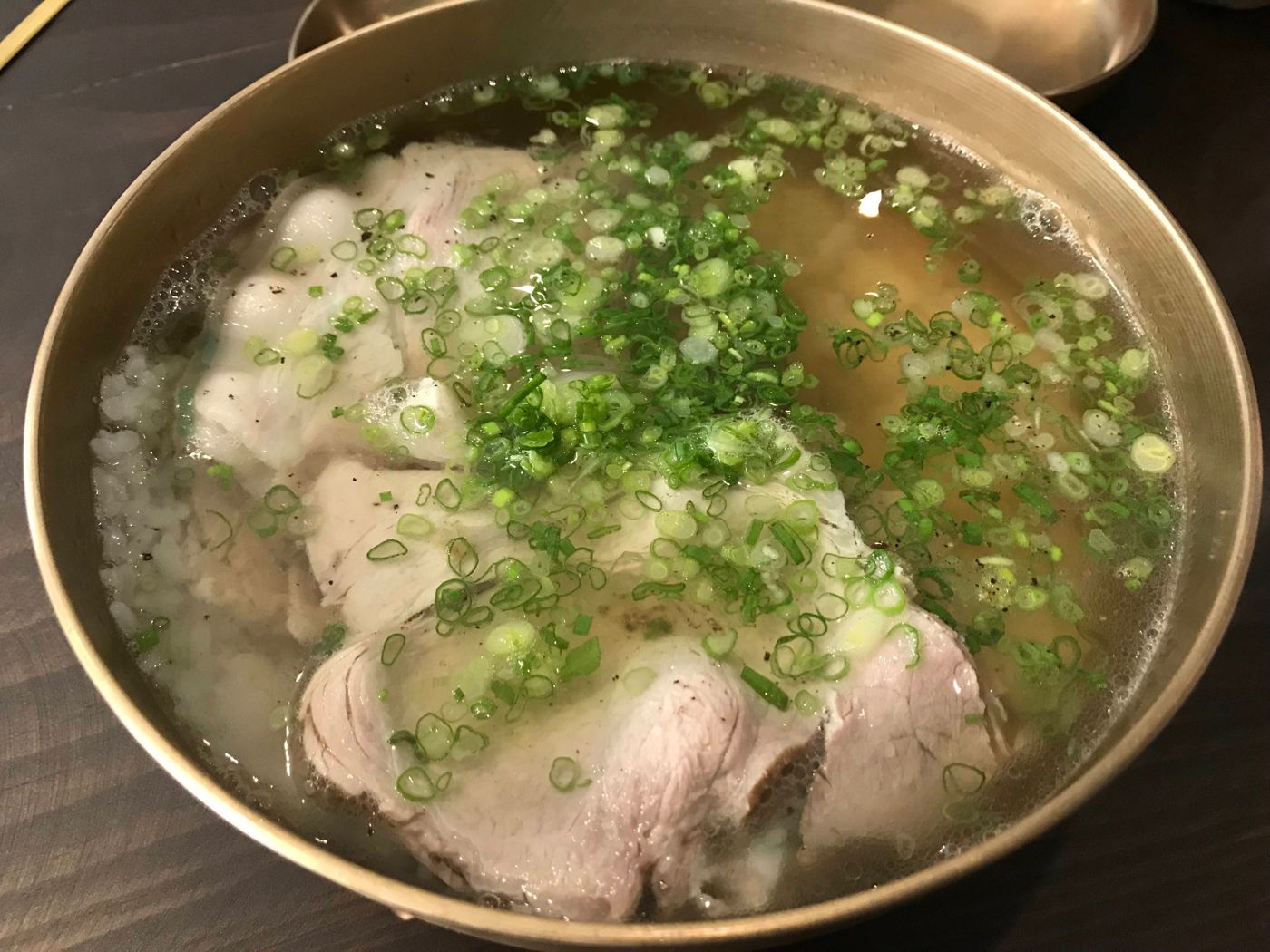 Gomtang (Beef Bone and Brisket Soup)곰탕A long-simmered beef soup, usually built on brisket, shank and offal and served over rice, with a broth that is lightly salted at the table. A pillar of the Korean gukbap tradition.
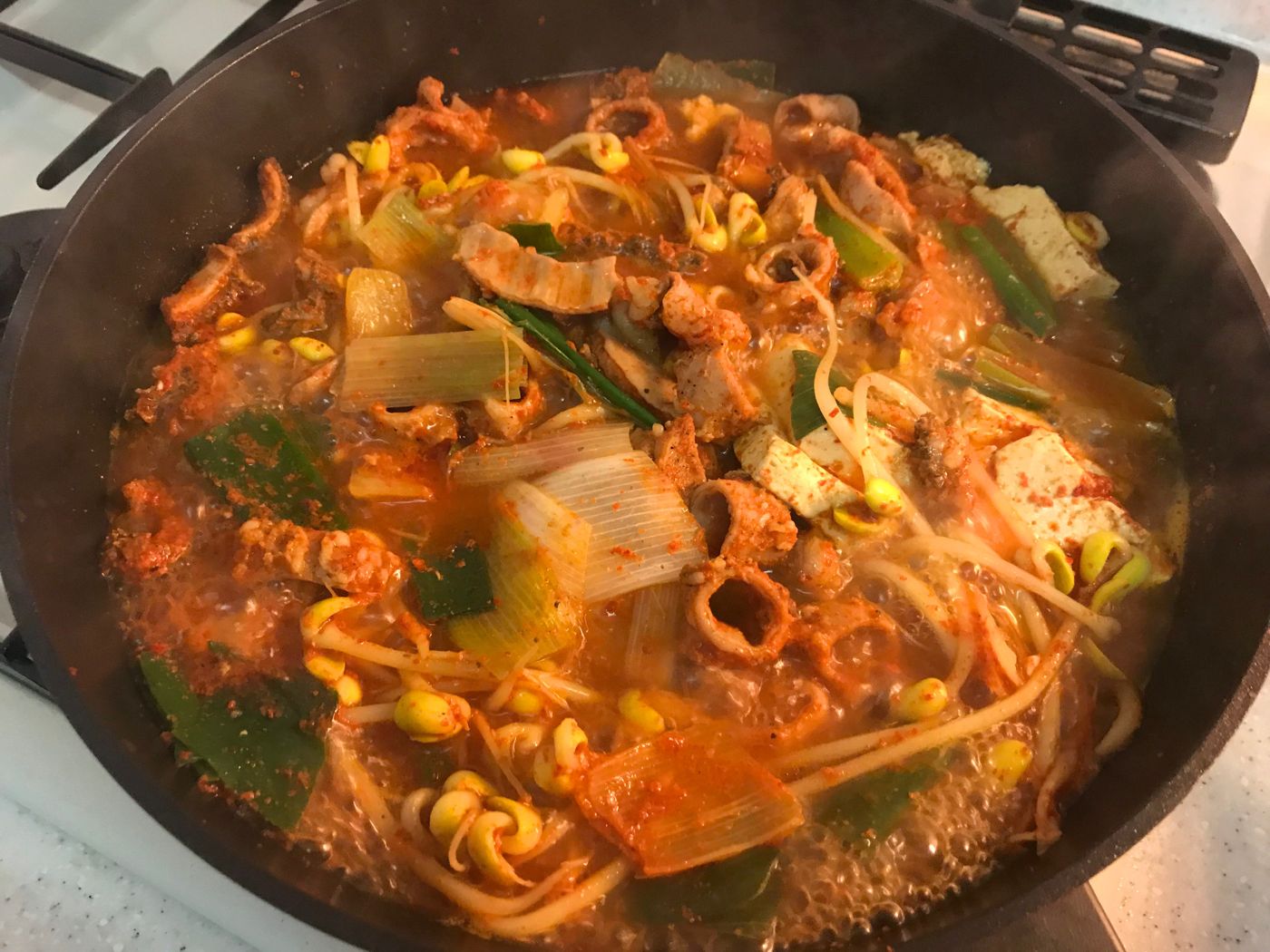 Gopchang Jeongol (Beef Intestine Hot Pot)곱창전골Cleaned beef small intestine and tripe simmered at the table with vegetables, mushrooms and glass noodles in a spicy broth — a rich, chewy hot pot for cold nights.
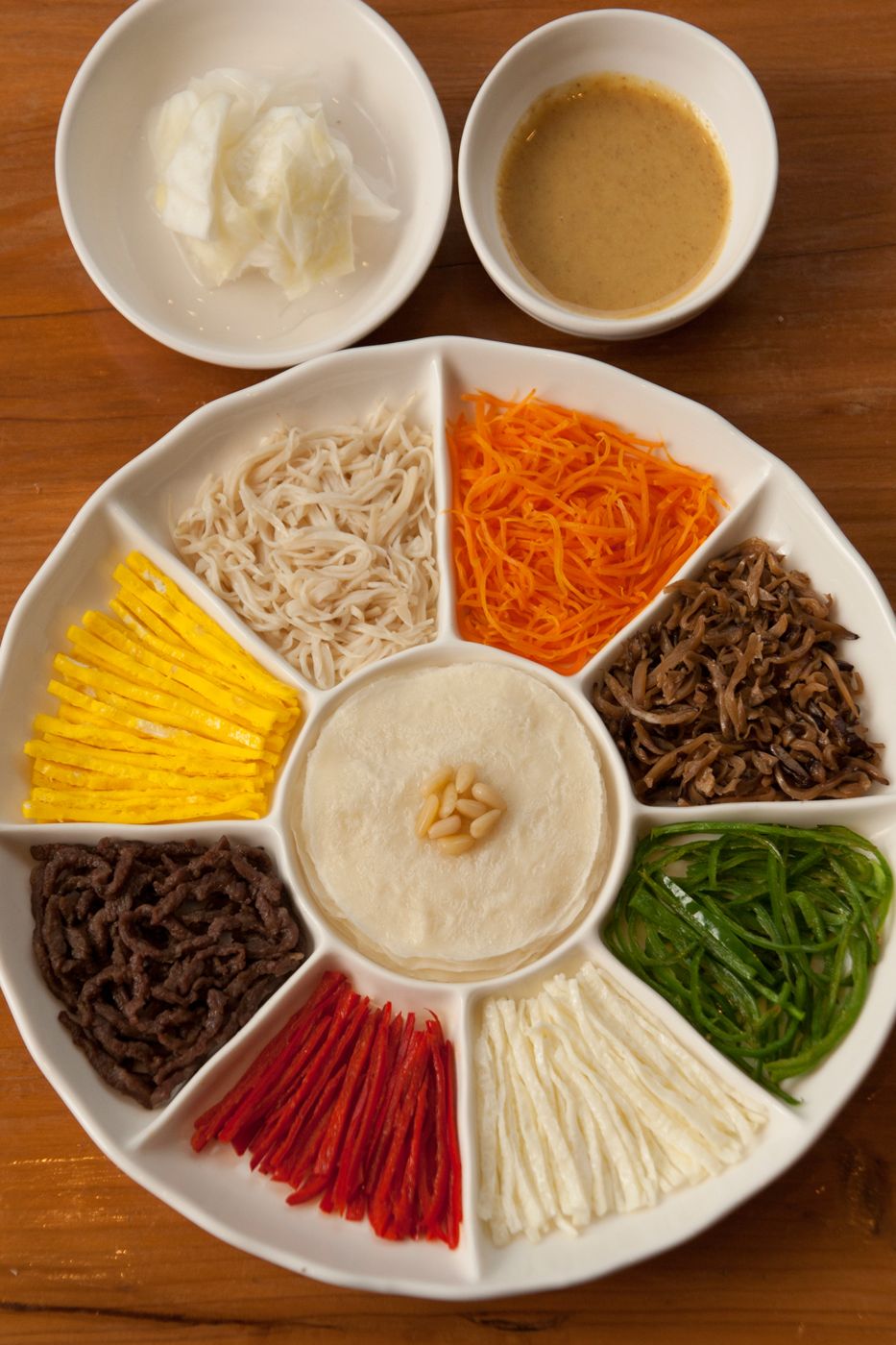 Gujeolpan (Platter of Nine Delicacies)구절판Eight finely cut fillings arranged by color around a stack of paper-thin crepes in a nine-compartment dish, wrapped at the table — an elegant banquet dish.
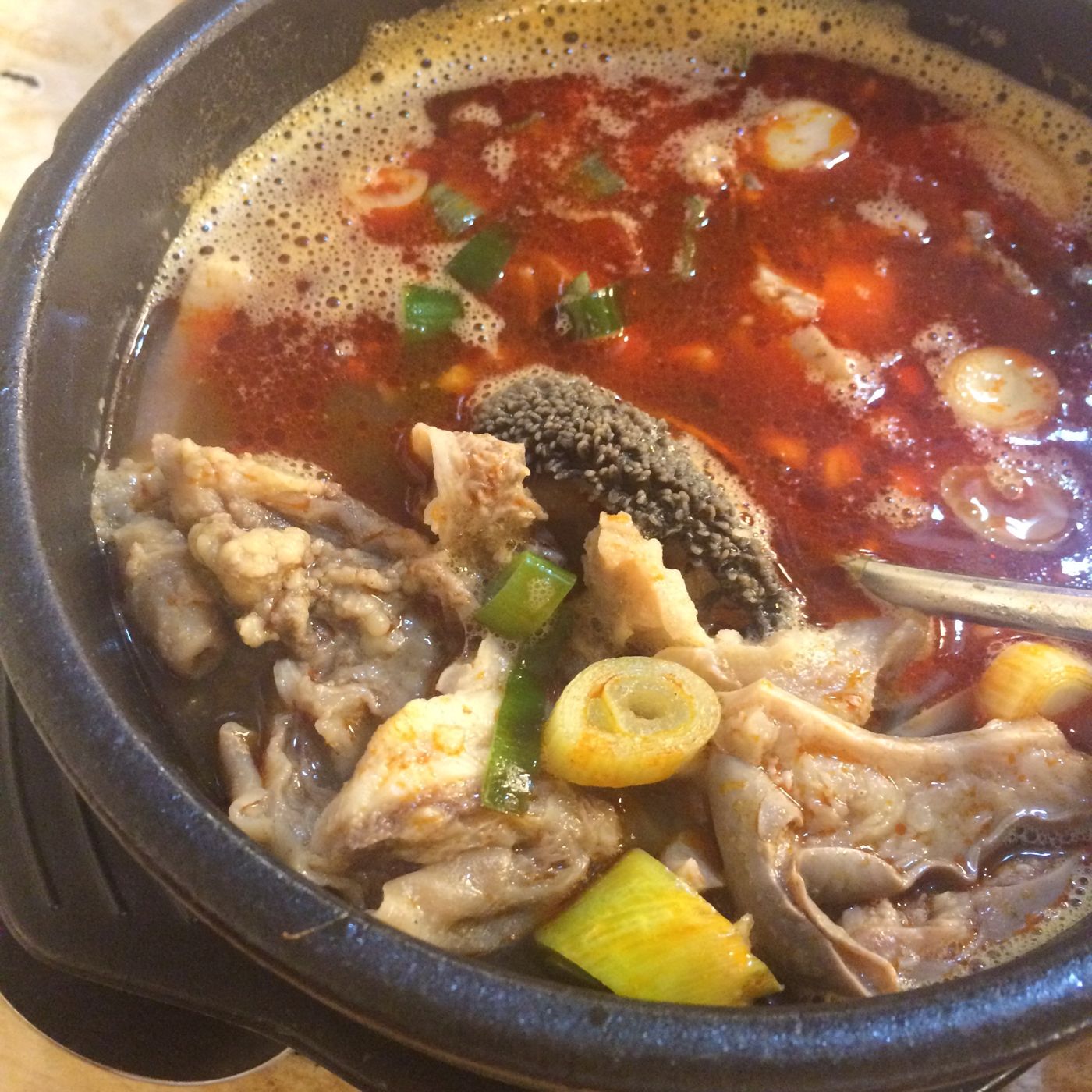 Haejangguk (Hangover Soup)해장국A hot, hearty morning soup — classically beef-bone broth with cabbage greens, bean sprouts and seonji (beef blood curd) — eaten over rice after a night of drinking.
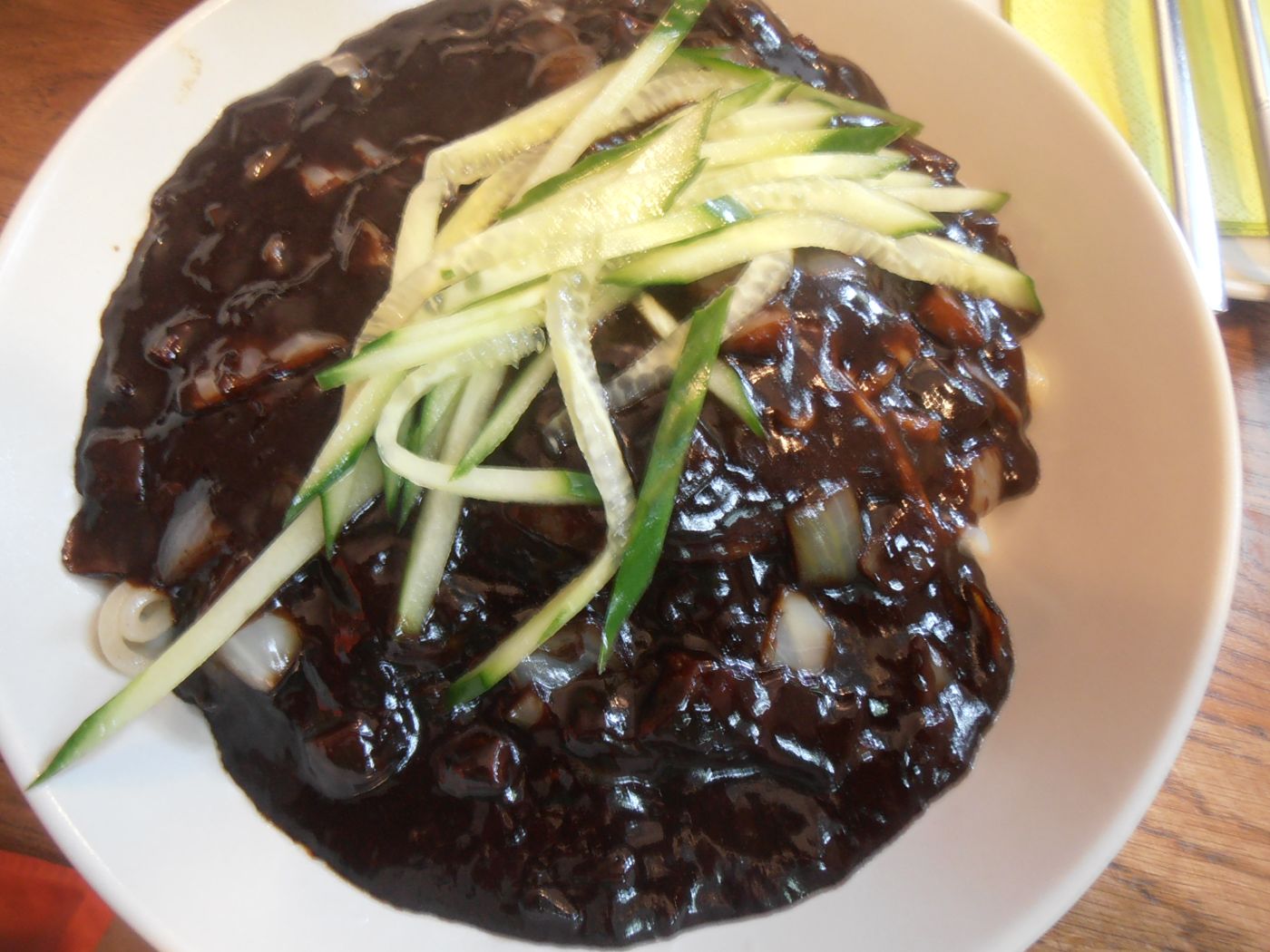 Jajangmyeon (Noodles in Black Bean Sauce)자장면Wheat noodles under a glossy sauce of chunjang fried with pork, onion and potato — the Korean-Chinese dish born among Shandong migrants in Incheon, contested origin claims and all.
 Japchae (Glass Noodles with Vegetables)잡채Chewy sweet potato glass noodles tossed with stir-fried vegetables, mushrooms and beef in soy sauce and sesame oil — Korea's essential celebration dish.
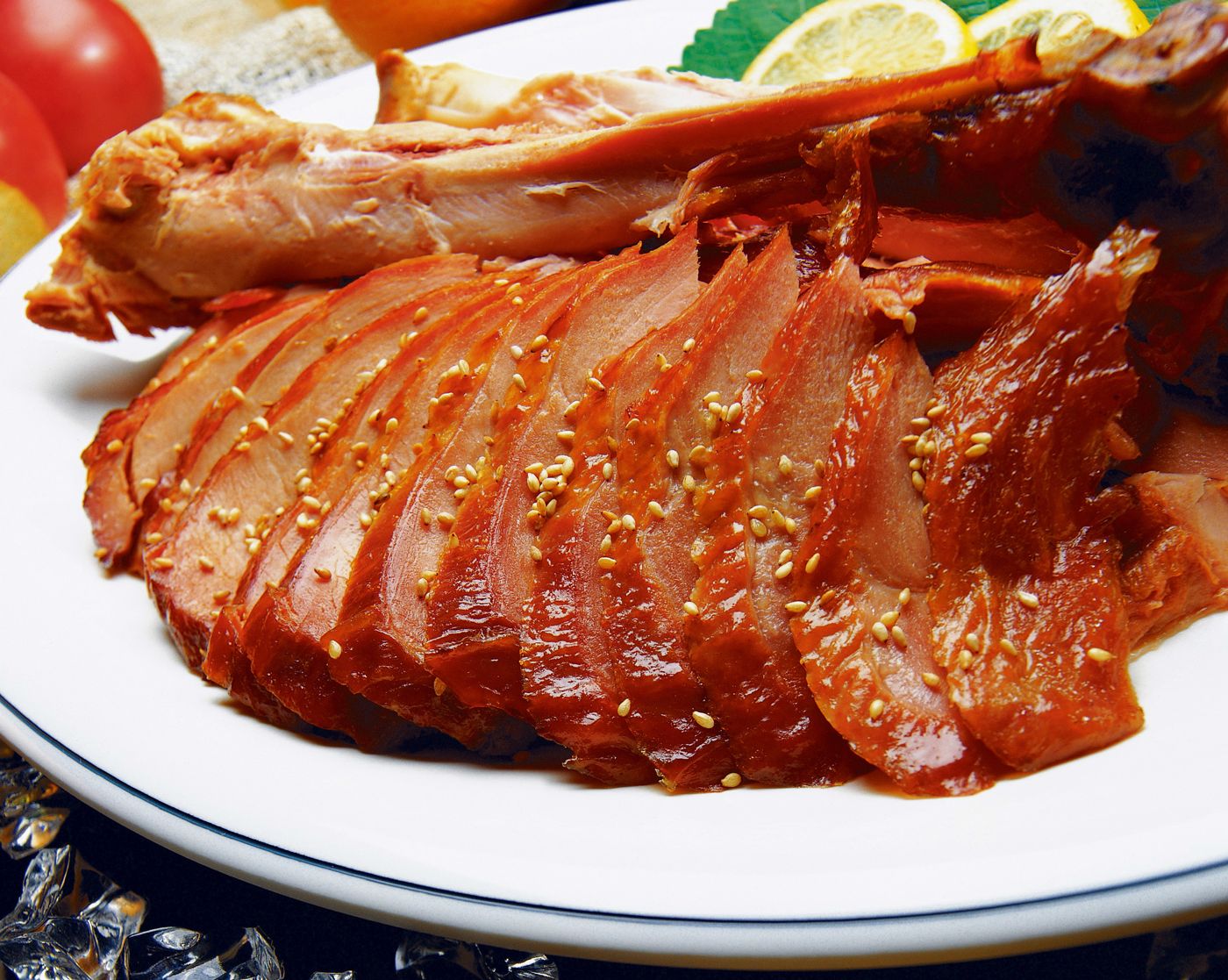 Jokbal (Braised Pig's Trotters)족발Pig's trotters simmered until tender, then braised in soy sauce and spices until glossy and sliced — a postwar Seoul specialty of Jangchung-dong.
- Kongbiji Jjigae (Okara Stew)콩비지찌개Soybean pulp left from tofu-making — or freshly ground soaked soybeans — simmered thick with pork and sour kimchi and seasoned with salted shrimp; a nutty, homely winter stew.
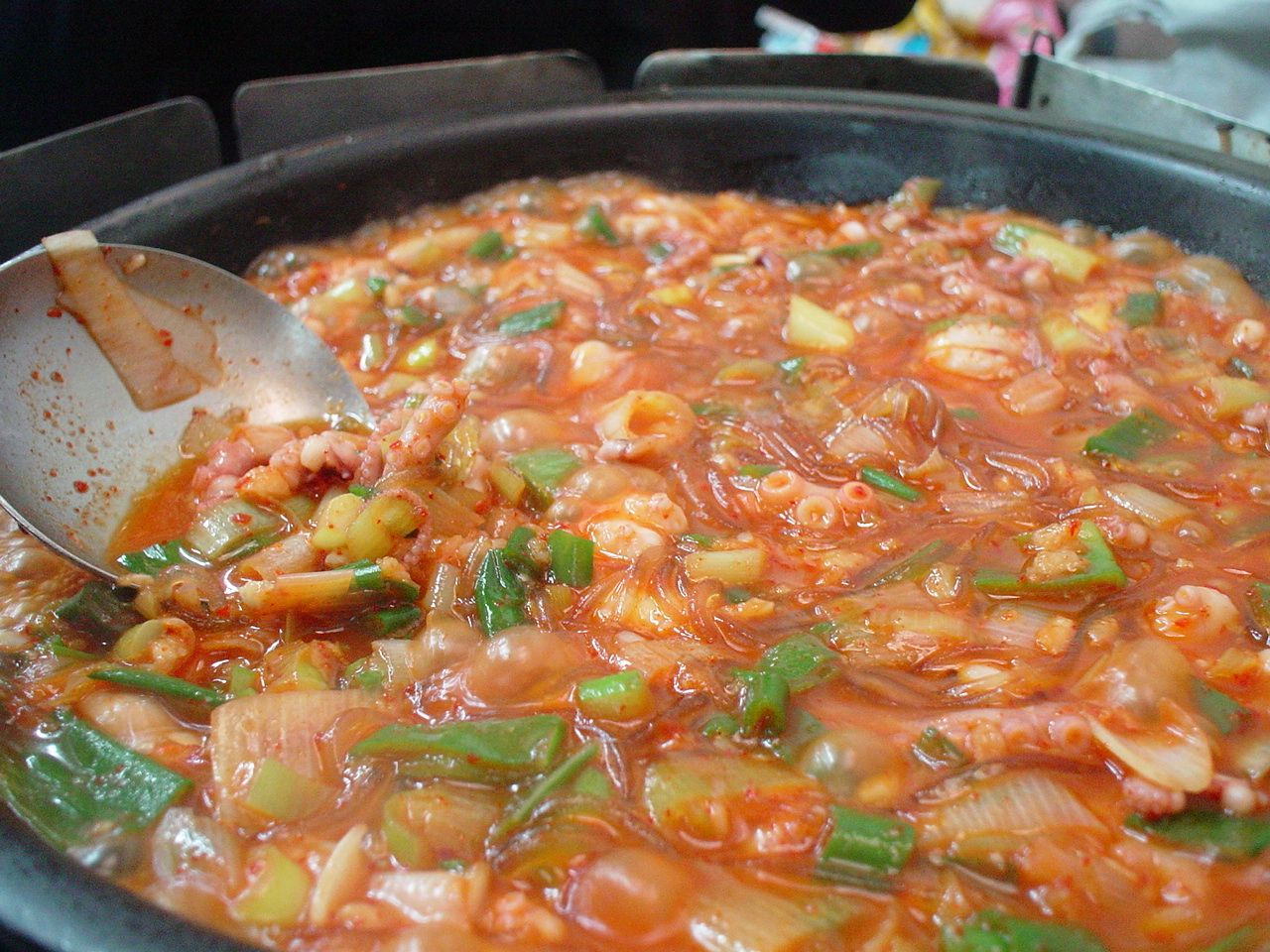 Nakji Bokkeum (Spicy Stir-Fried Octopus)낙지볶음Long-arm octopus stir-fried fast over high heat with onion and a fiery gochugaru sauce, usually served with rice and a mild soup to calm the heat.
 Napa Cabbage Kimchi배추김치Salted napa cabbage layered with a red paste of chili, garlic, ginger and fermented seafood, then left to ripen: the kimchi most people picture first.
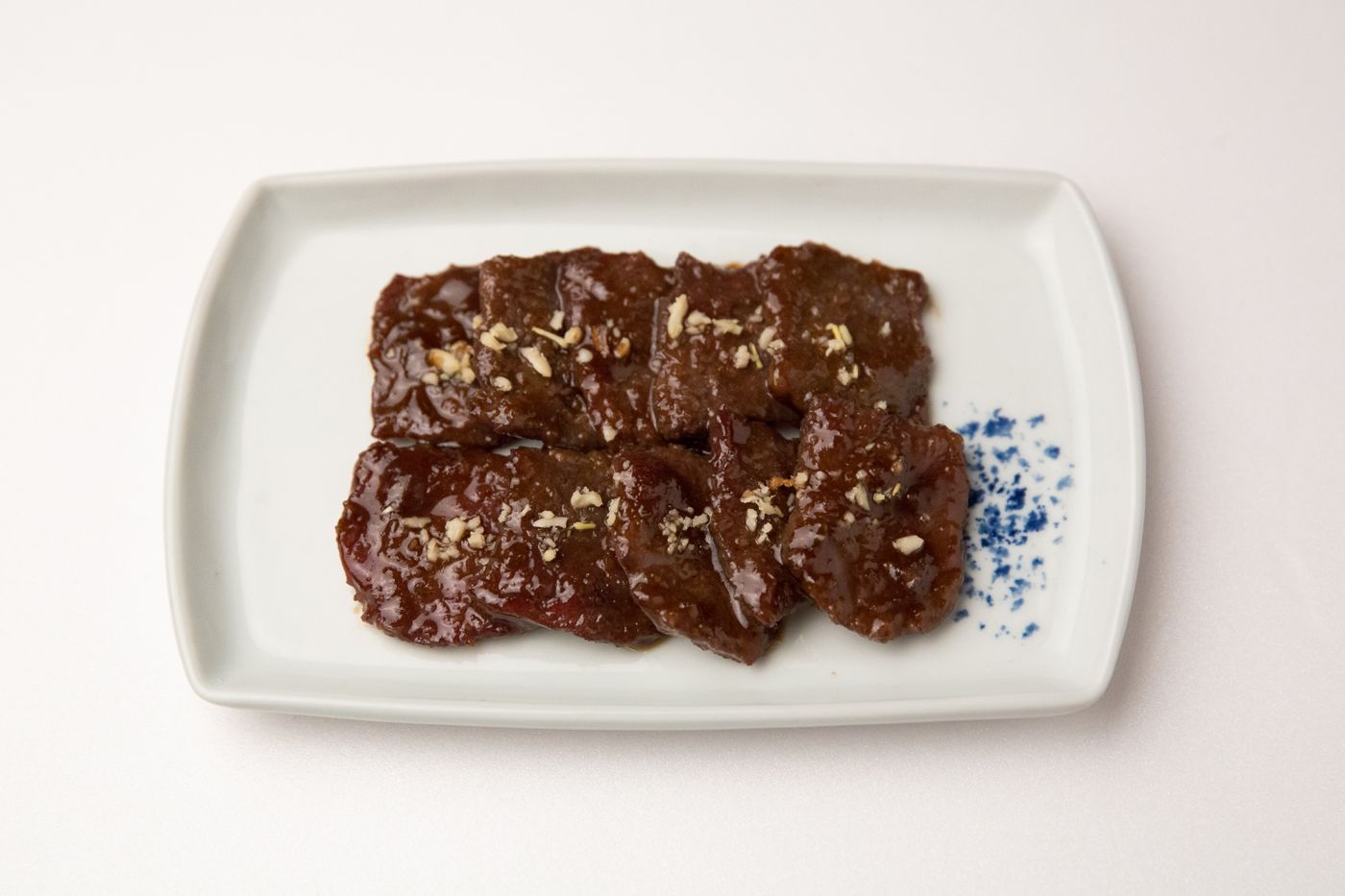 Neobiani (Court-Style Grilled Beef Slices)너비아니Broad, thin slices of beef marinated in soy, sugar, garlic and pear, then grilled lightly: the court and Seoul-household name for what is now usually called bulgogi.
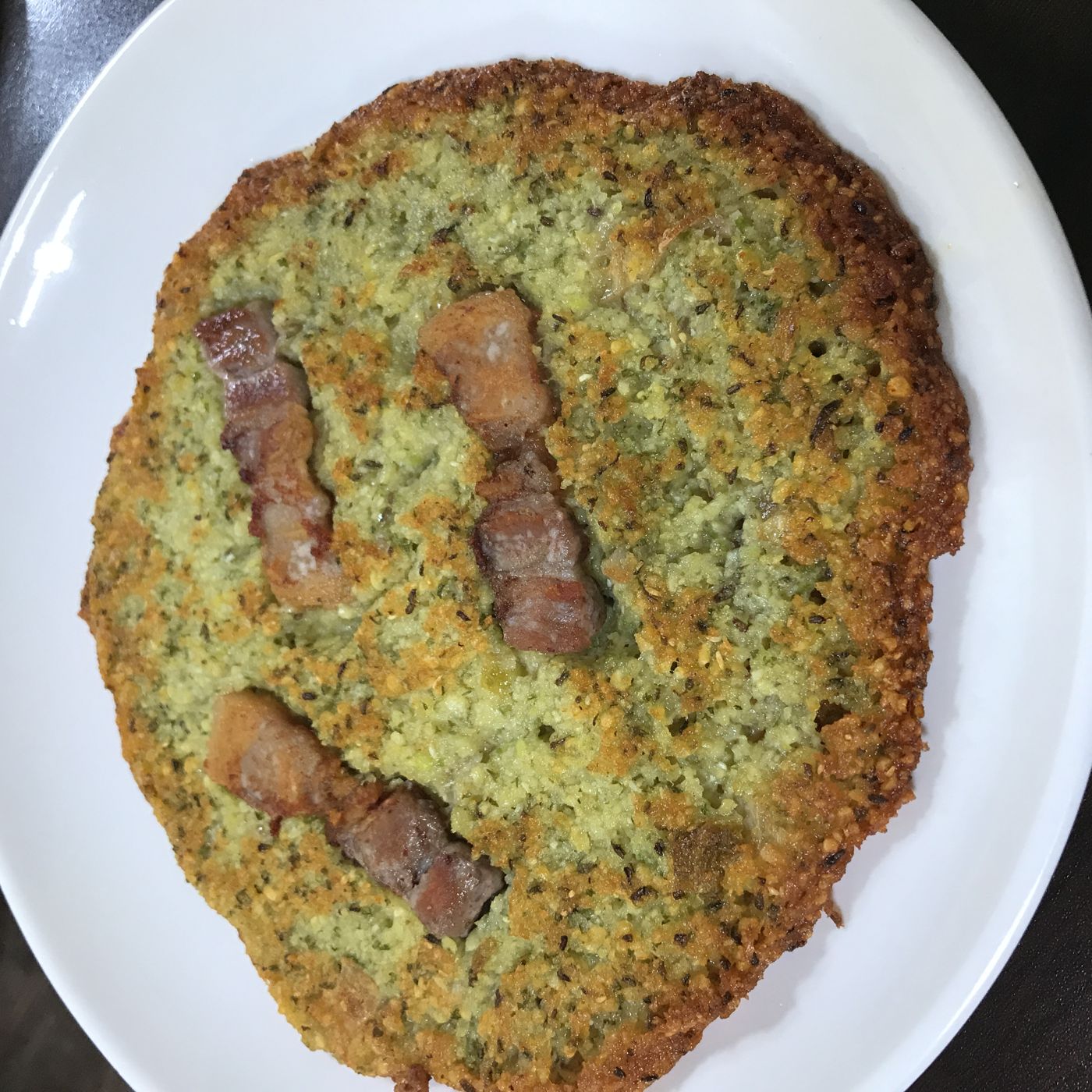 Nokdu Bindaetteok (Mung Bean Pancake)녹두빈대떡Soaked mung beans ground into a thick batter with kimchi, sprouts and pork, then fried crisp in generous oil — a northern specialty and a Seoul market favorite.
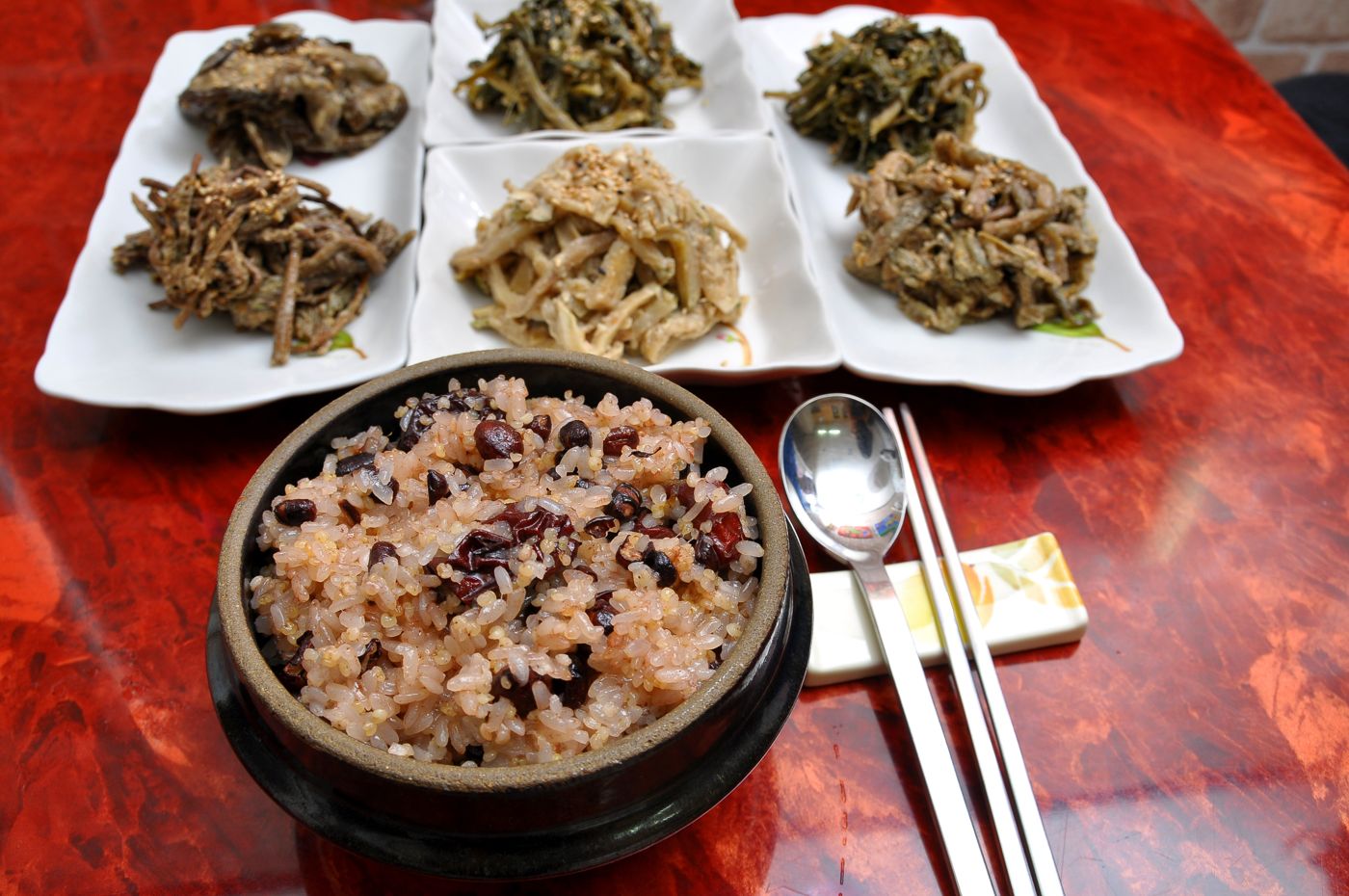 Ogokbap (Five-Grain Rice)오곡밥Glutinous rice cooked with sorghum, millet, red beans and black soybeans for Daeboreum, the first full moon of the lunar year, and shared among neighbors for a good harvest.
- Oiji Muchim (Seasoned Pickled Cucumber)오이지무침Salt-brined oiji cucumbers sliced thin, soaked, squeezed hard and dressed with chili, garlic and sesame — a crunchy, tangy summer banchan.
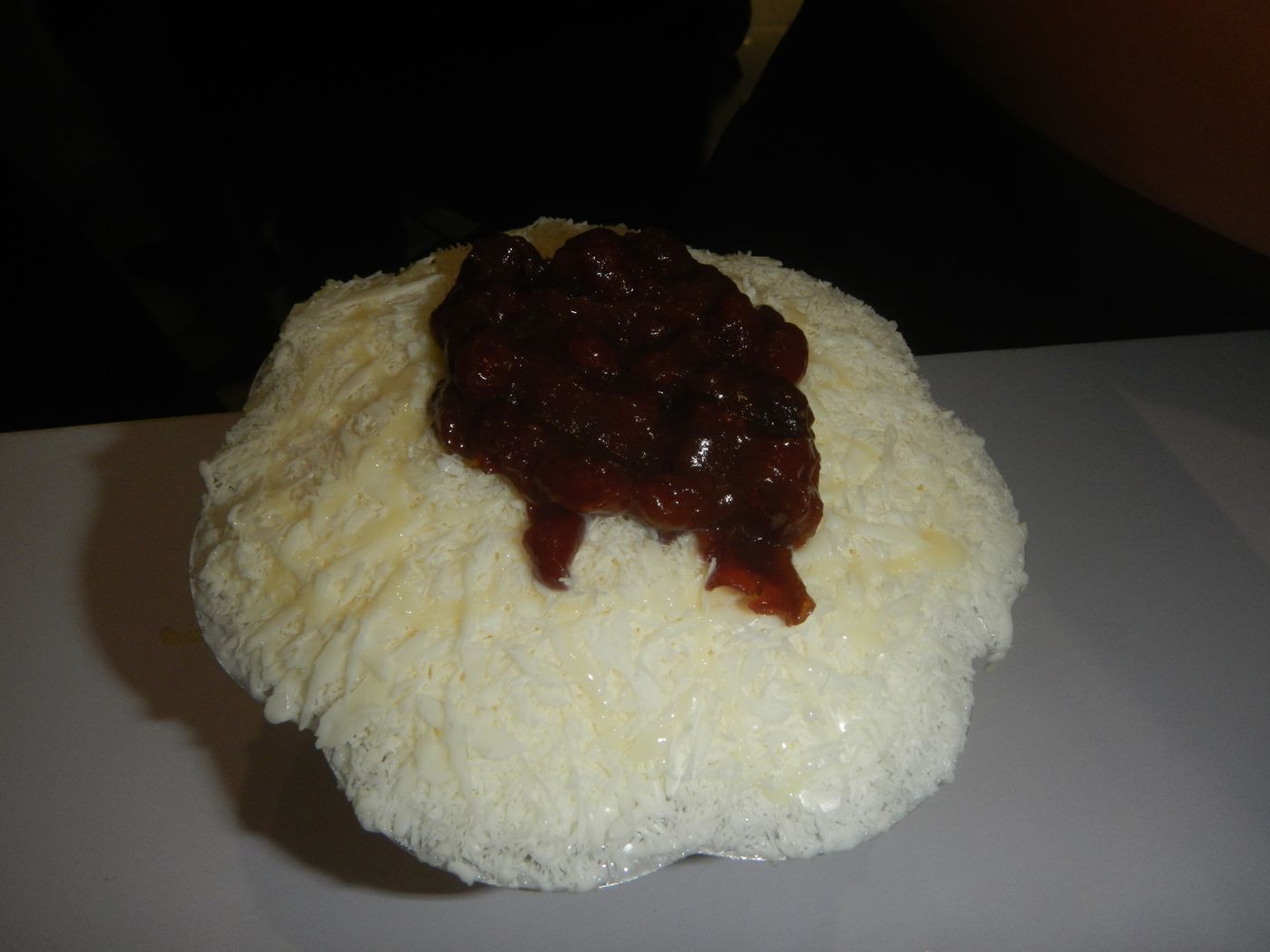 Patbingsu (Shaved Ice with Sweet Red Beans)팥빙수A mound of finely shaved ice crowned with sweetened red beans and milk: Korea's signature summer dessert, built on a centuries-old taste for ice.
- Pumpkin Kimchi for Stew호박김치Thick slices of pumpkin fermented with cabbage or young radish greens, then simmered into a mellow stew — a Hwanghae and Chungcheong cooking kimchi.
- Saengtae Jjigae (Fresh Pollock Stew)생태찌개Chunks of fresh, never-frozen pollock simmered with radish, tofu and a red chili broth, finished with water dropwort and crown daisy — a winter stew prized for its clean, bracing taste.
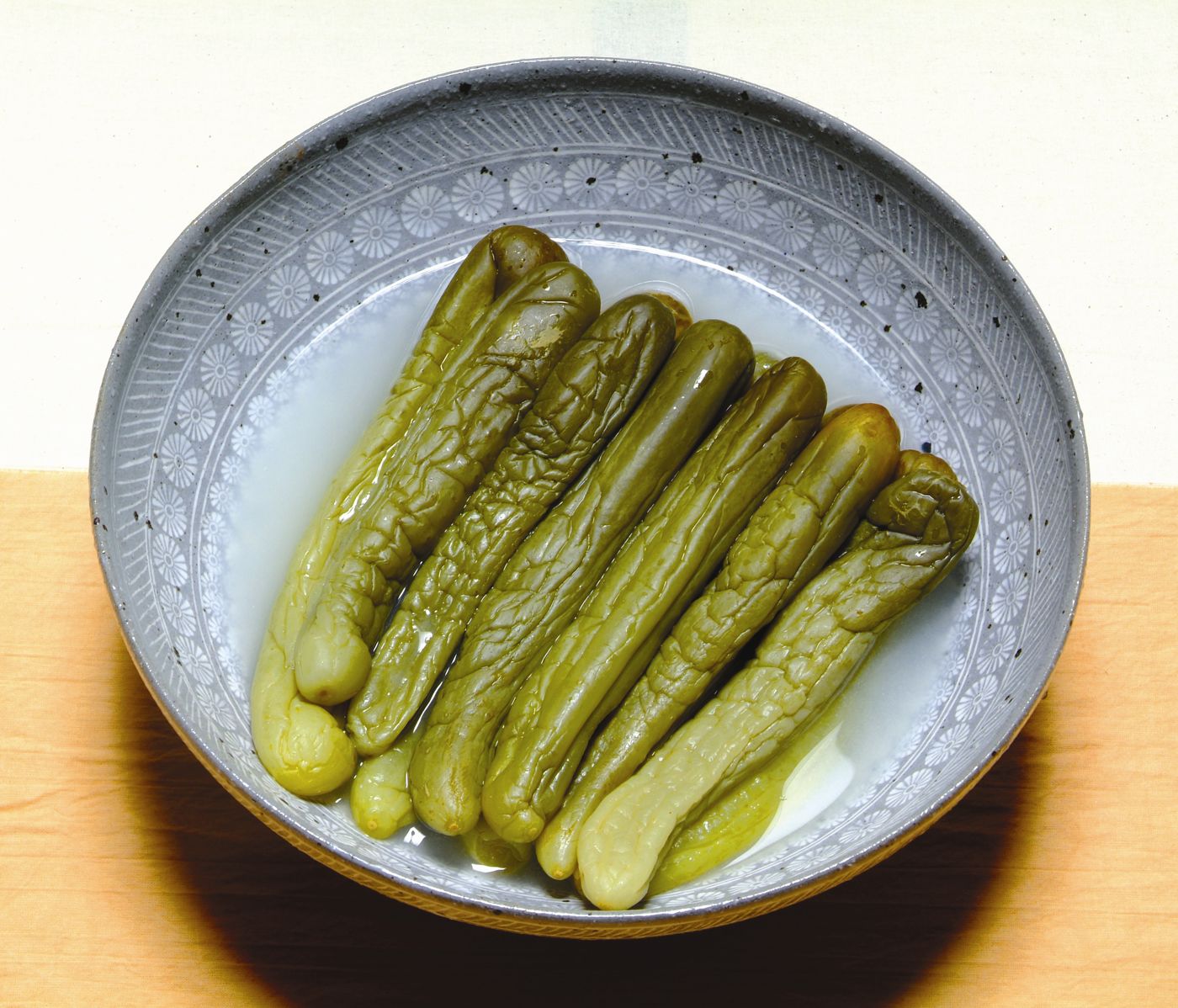 Salt-Brined Pickled Cucumbers오이지Whole cucumbers cured in a strong salt brine until golden and wrinkled — a summer staple that is soaked, sliced and served in cold water or dressed as oiji-muchim.
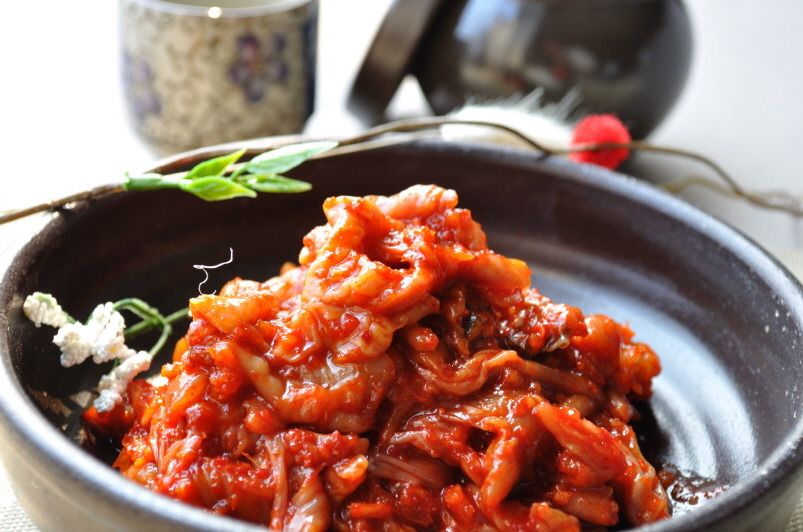 Salted Pollock Tripe창난젓Pollock intestines cured in salt, then cut and dressed with chili, garlic and green onion — a chewy, savory East Sea jeotgal, often mixed with radish.
- Salted Radish Pickle짠지Whole radishes packed in heavy salt over winter and opened in spring — soaked, sliced thin and served in vinegared cold water or dressed with chili.
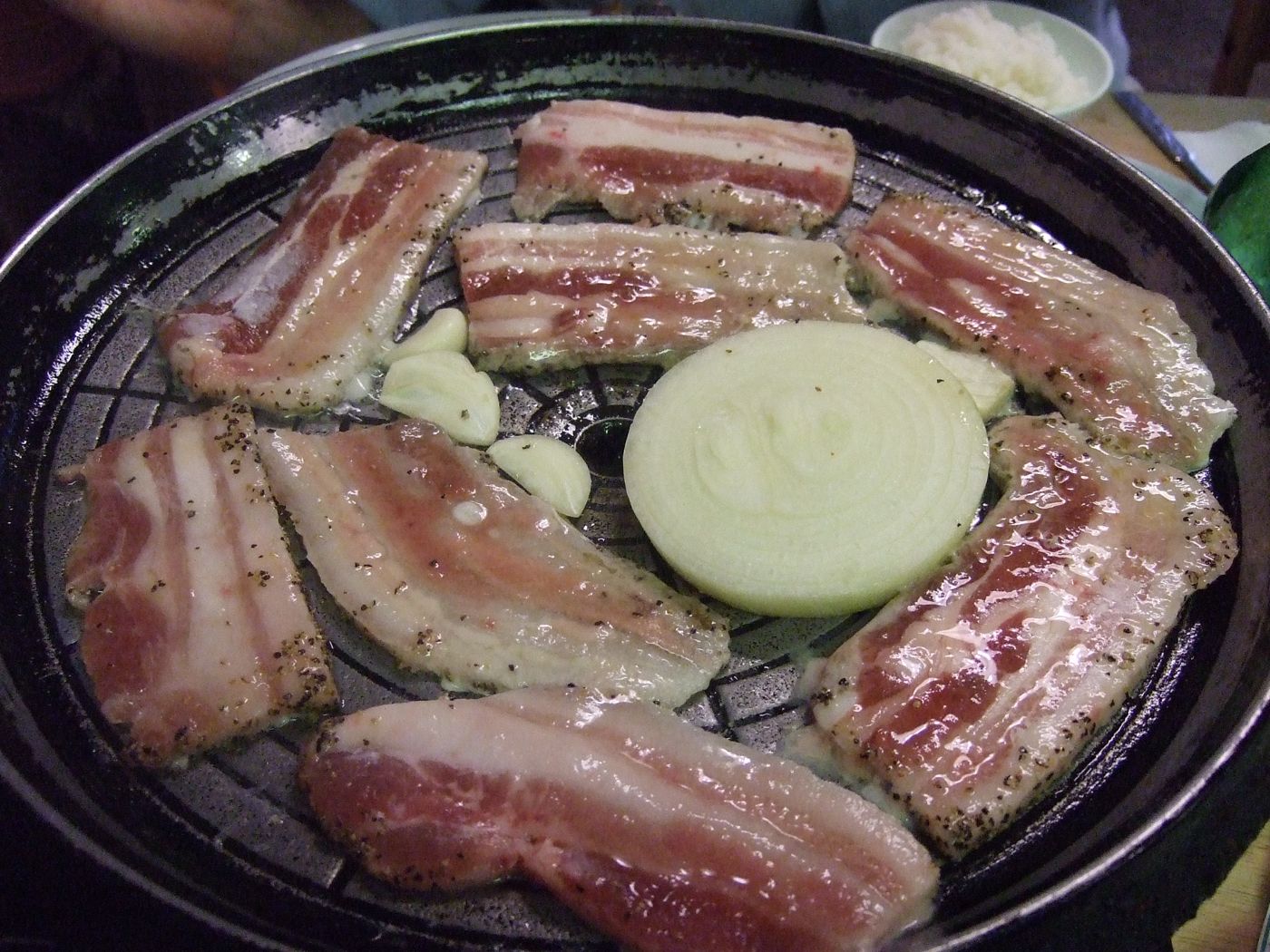 Samgyeopsal-gui (Grilled Pork Belly)삼겹살구이Thick, unseasoned slices of pork belly grilled at the table and wrapped in lettuce with garlic and ssamjang — Korea's favorite barbecue, though only since the late 1970s.
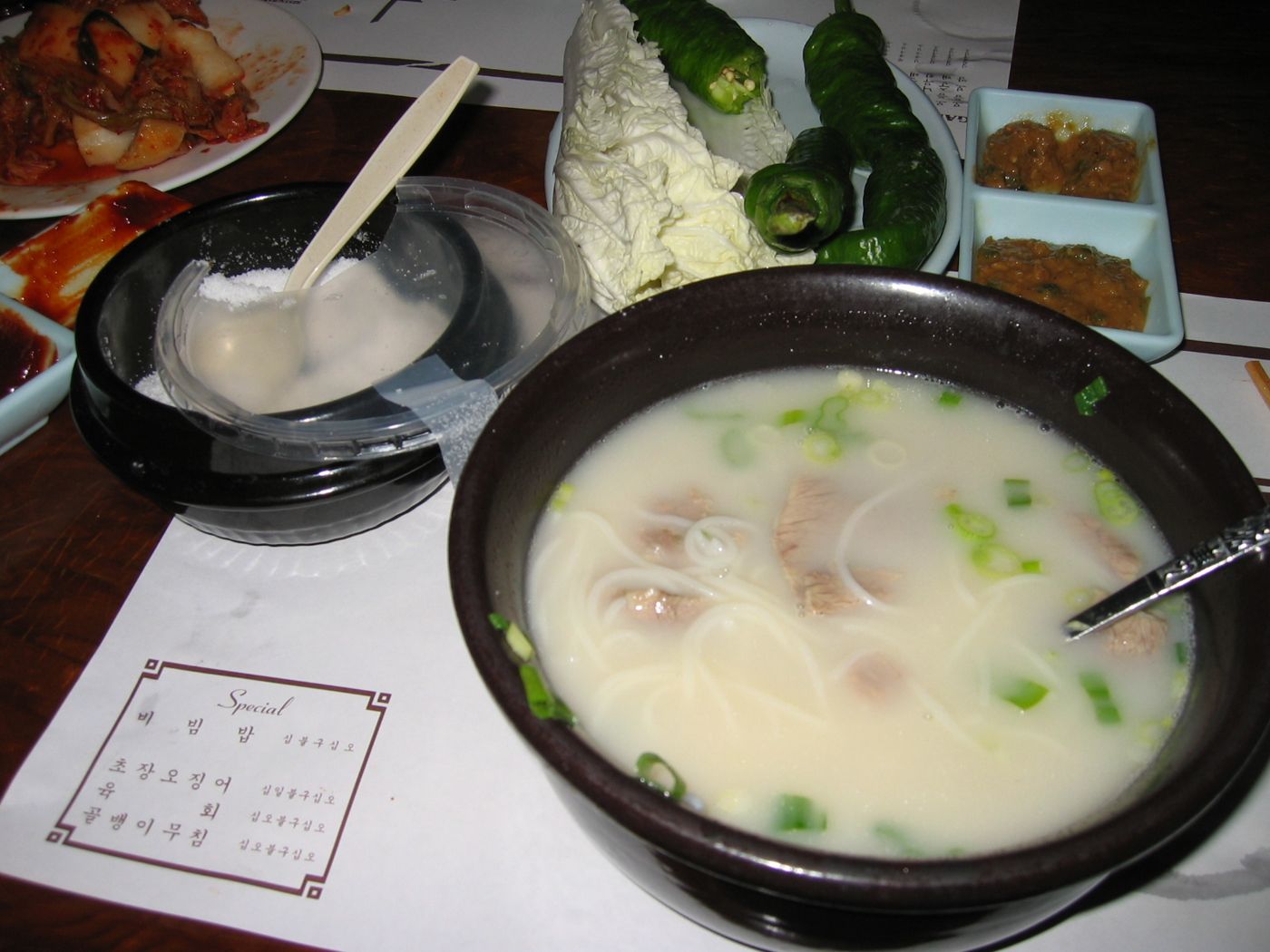 Seolleongtang (Ox Bone Soup)설렁탕Ox bones and beef simmered for hours into a milky-white broth, served unsalted over rice with sliced meat — each diner seasons it at the table.
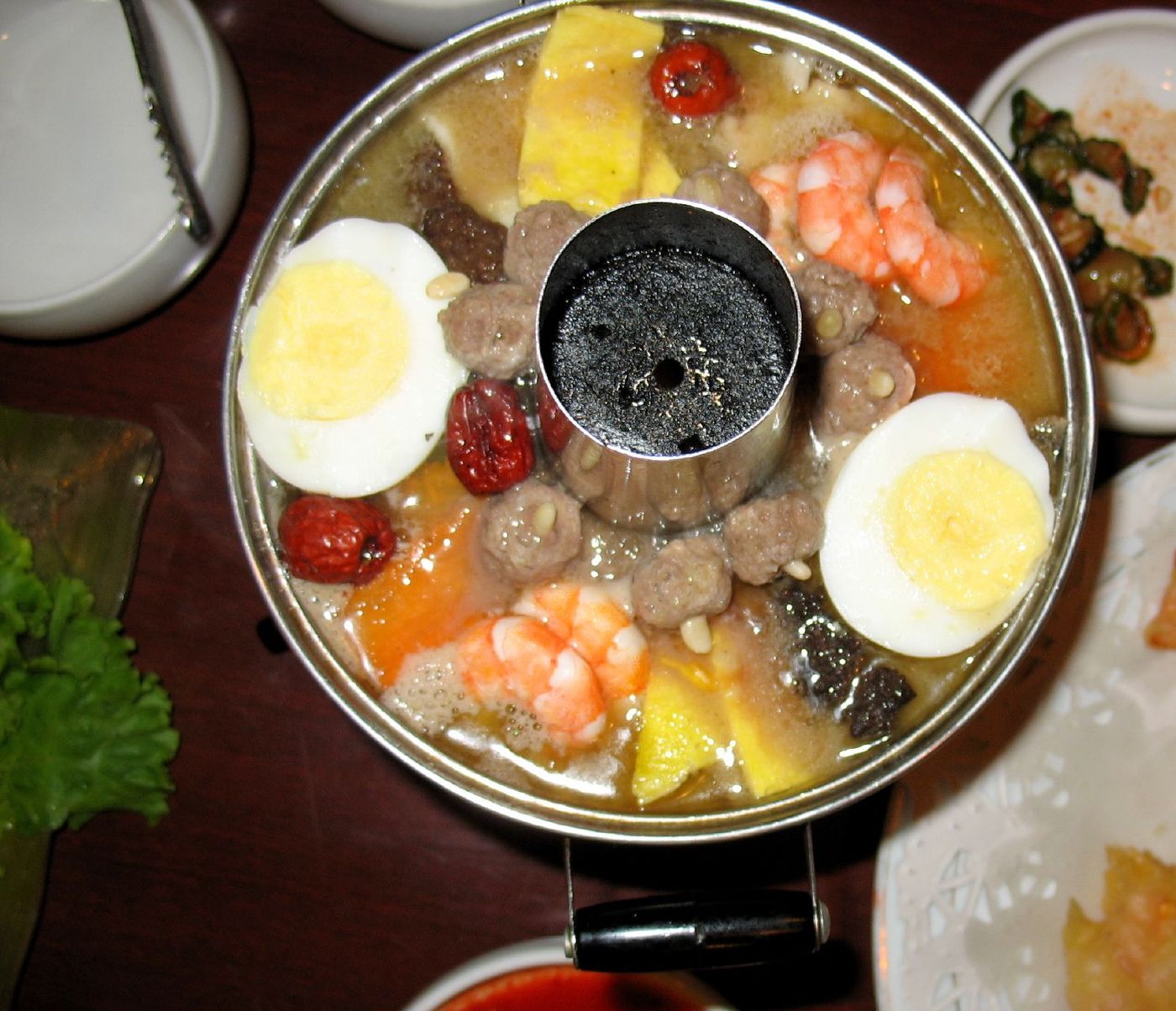 Sinseollo (Royal Hot Pot)신선로A court banquet dish of colorful beef, fish, egg, mushrooms and vegetables arranged in a chimney-centered brazier pot, with hot broth poured over and kept warm at the table.
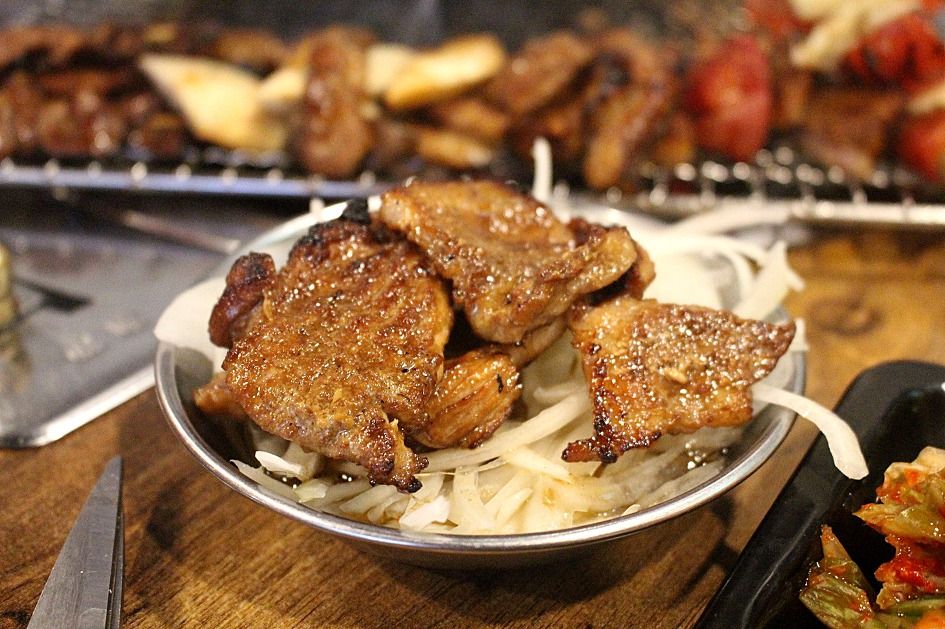 So-galbi-gui (Grilled Beef Short Ribs)소갈비구이Beef short ribs scored to the bone, marinated with soy, pear, garlic and sesame and grilled over charcoal — Korea's celebration barbecue, best known in Suwon's salt-seasoned style.
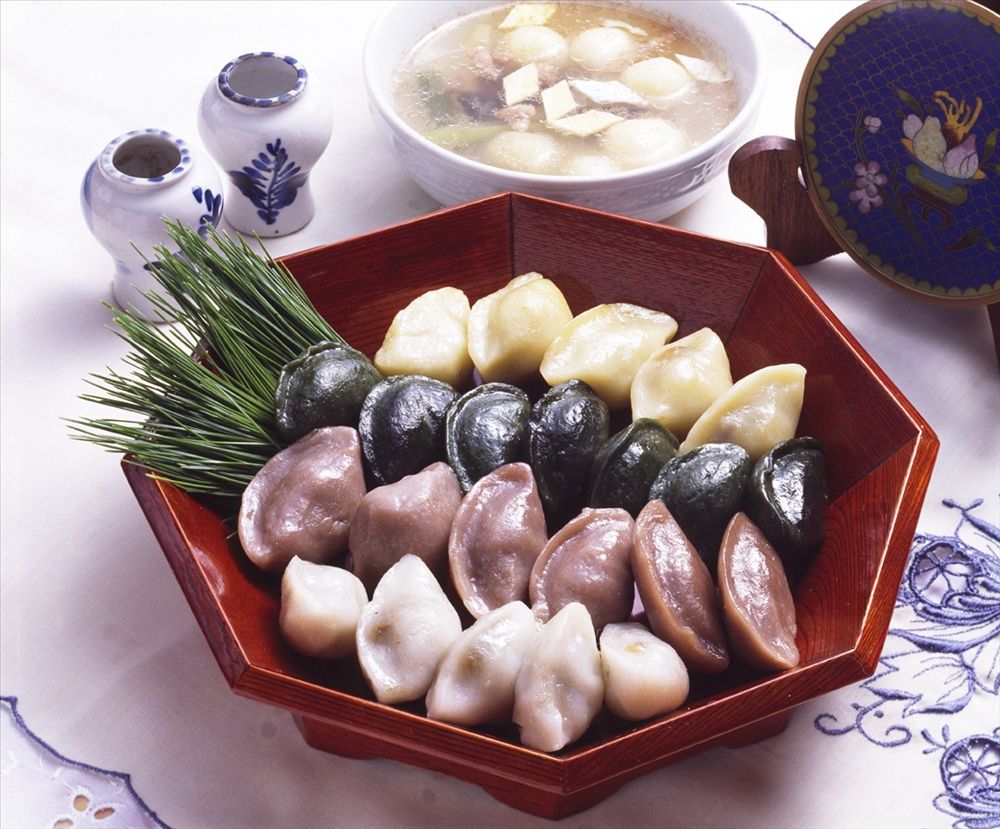 Songpyeon (Half-Moon Rice Cakes)송편Small half-moon cakes of rice dough filled with sweet sesame, beans or chestnut and steamed on a bed of pine needles — the rice cake of Chuseok, made with the new harvest.
- Soy Sauce Water Kimchi장김치Cabbage and radish cured in soy sauce instead of salt, floated in a lightly sweet soy brine with pear, chestnut and pine nuts — a court and gentry kimchi.
- Spicy Skate Salad홍어회무침Strips of raw or lightly fermented skate, firmed in vinegar and tossed with minari, radish and a sweet-sour gochujang dressing — Jeolla's feast-day salad.
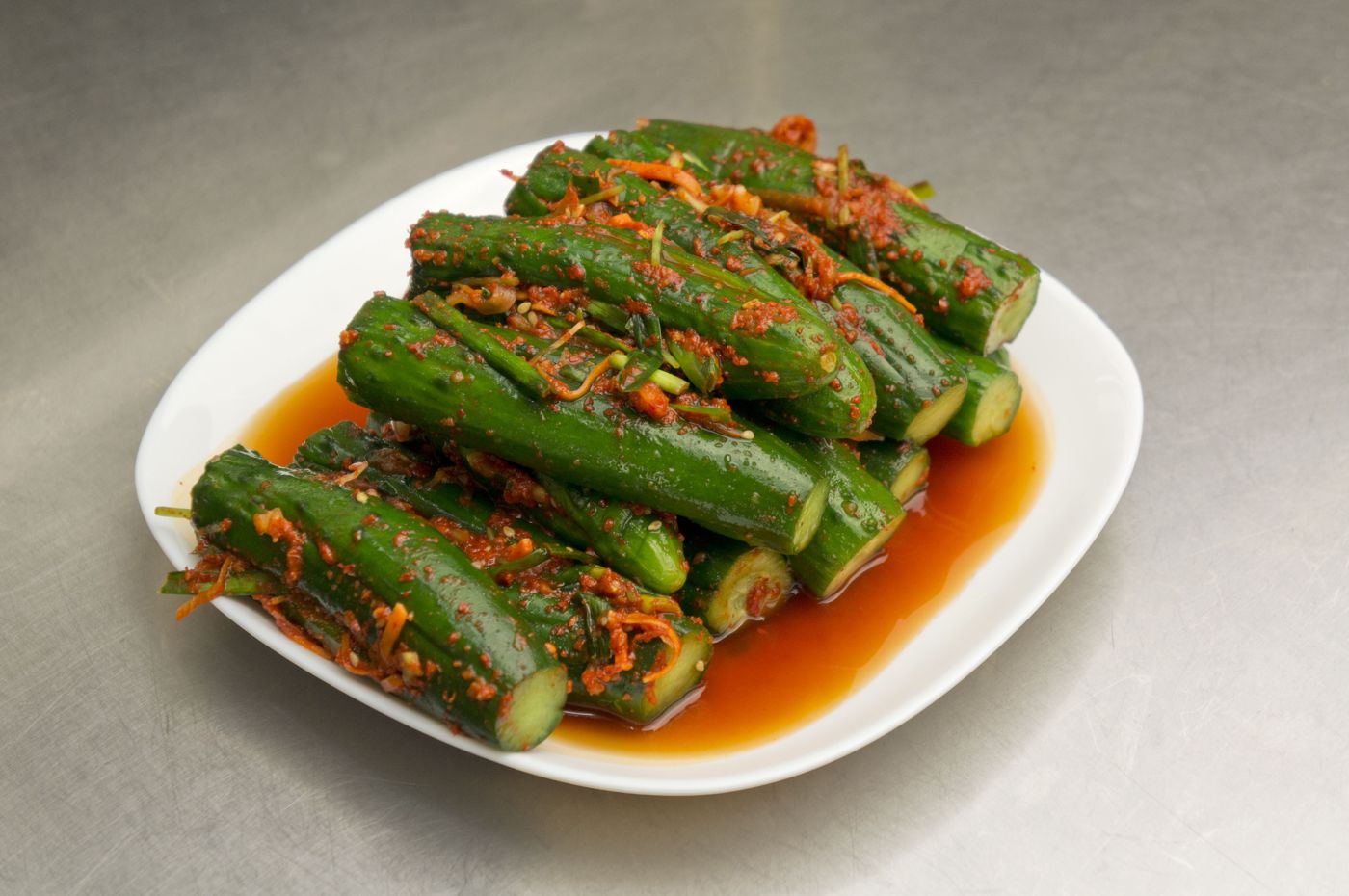 Stuffed Cucumber Kimchi오이소박이Cucumbers slit and stuffed with garlic chives, chili and garlic — a crisp, refreshing summer kimchi meant to be eaten young.
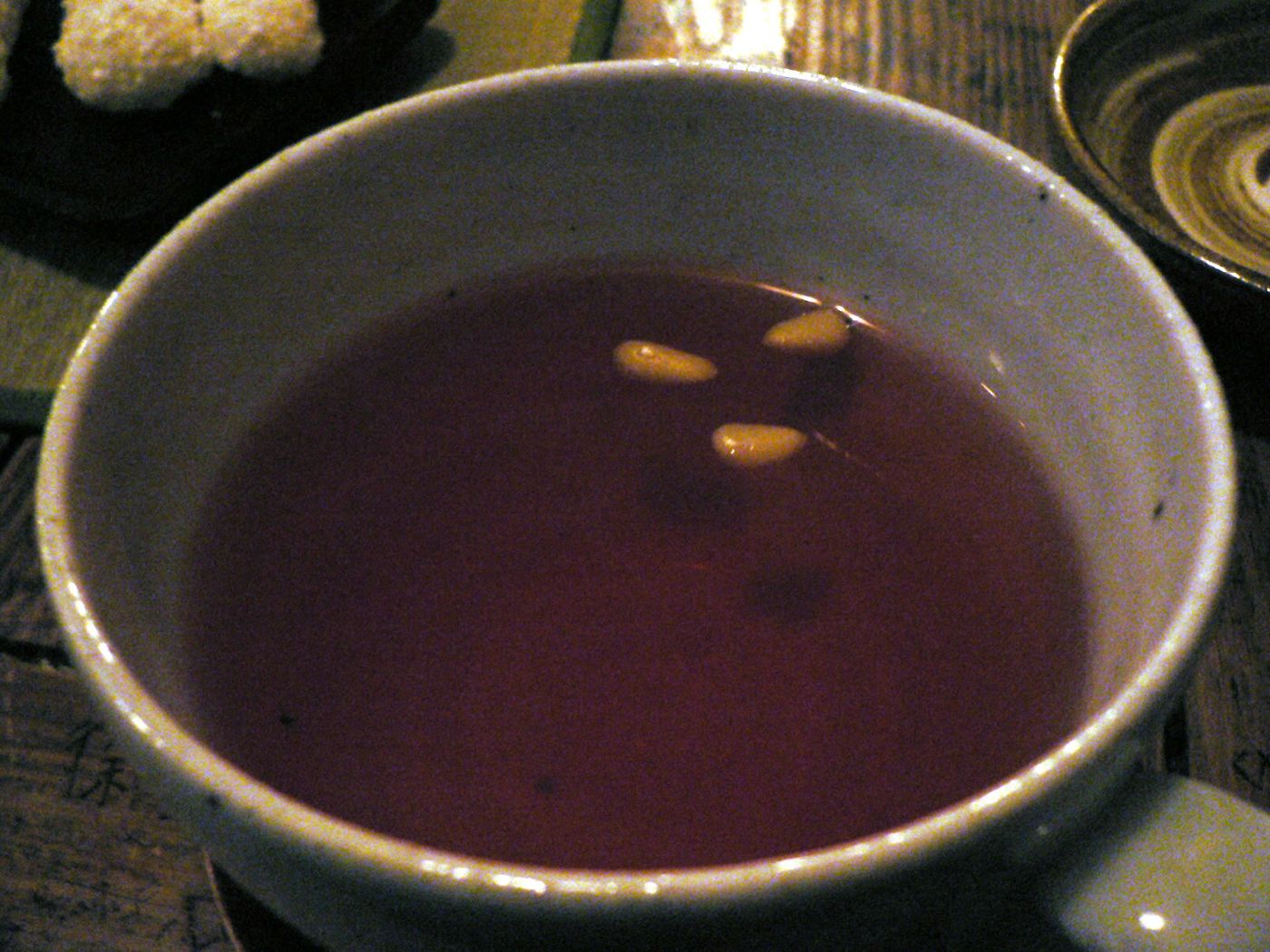 Sujeonggwa (Cinnamon-Ginger Punch with Dried Persimmon)수정과A cold, spicy-sweet punch of ginger and cinnamon simmered separately, sweetened, and served with softened dried persimmons and pine nuts — a New Year drink for guests.
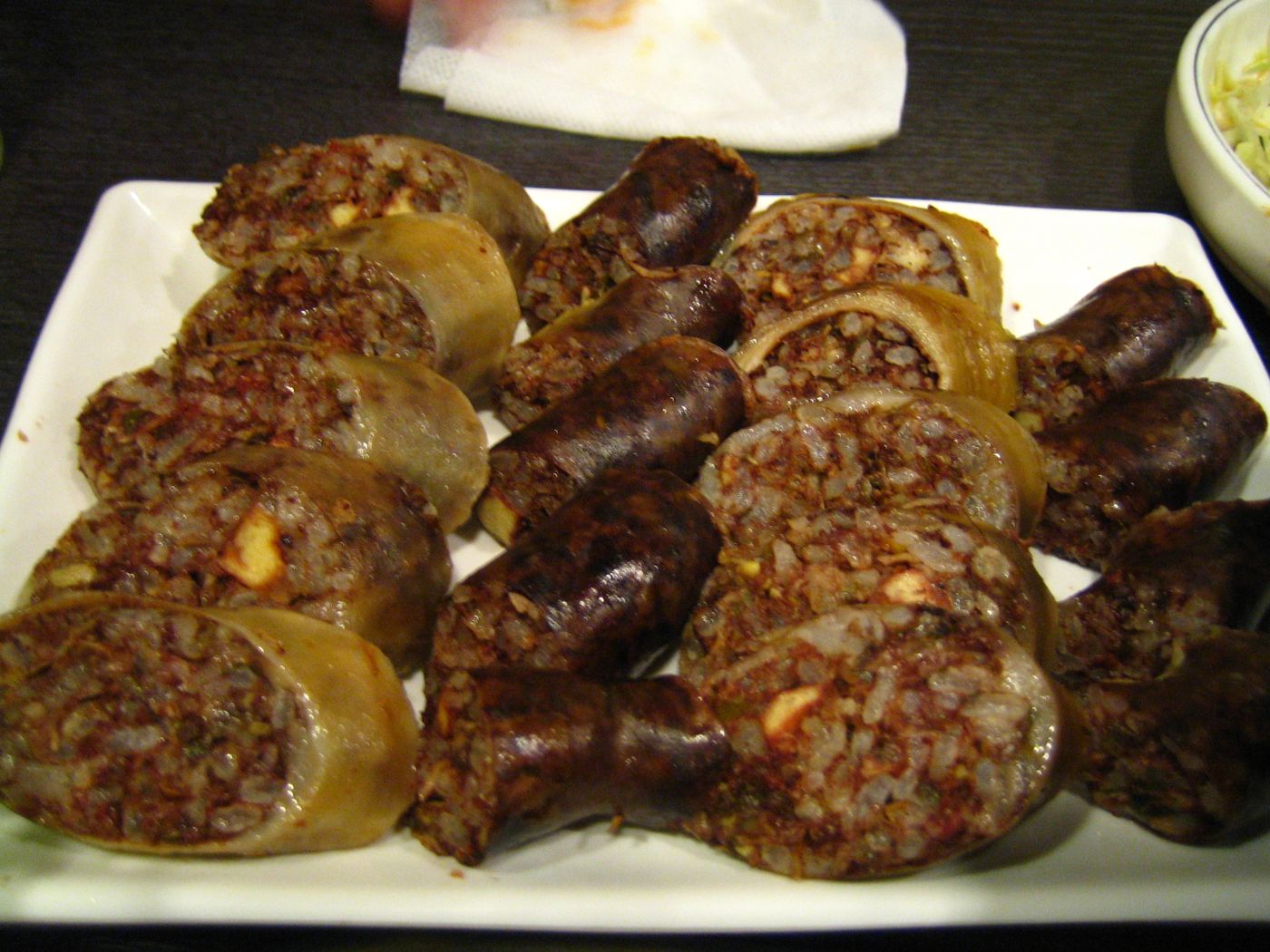 Sundae (Korean Blood Sausage)순대Pork intestine stuffed with pig's blood, glutinous rice, glass noodles and vegetables, then steamed — a northern farmhouse food that became a nationwide street snack.
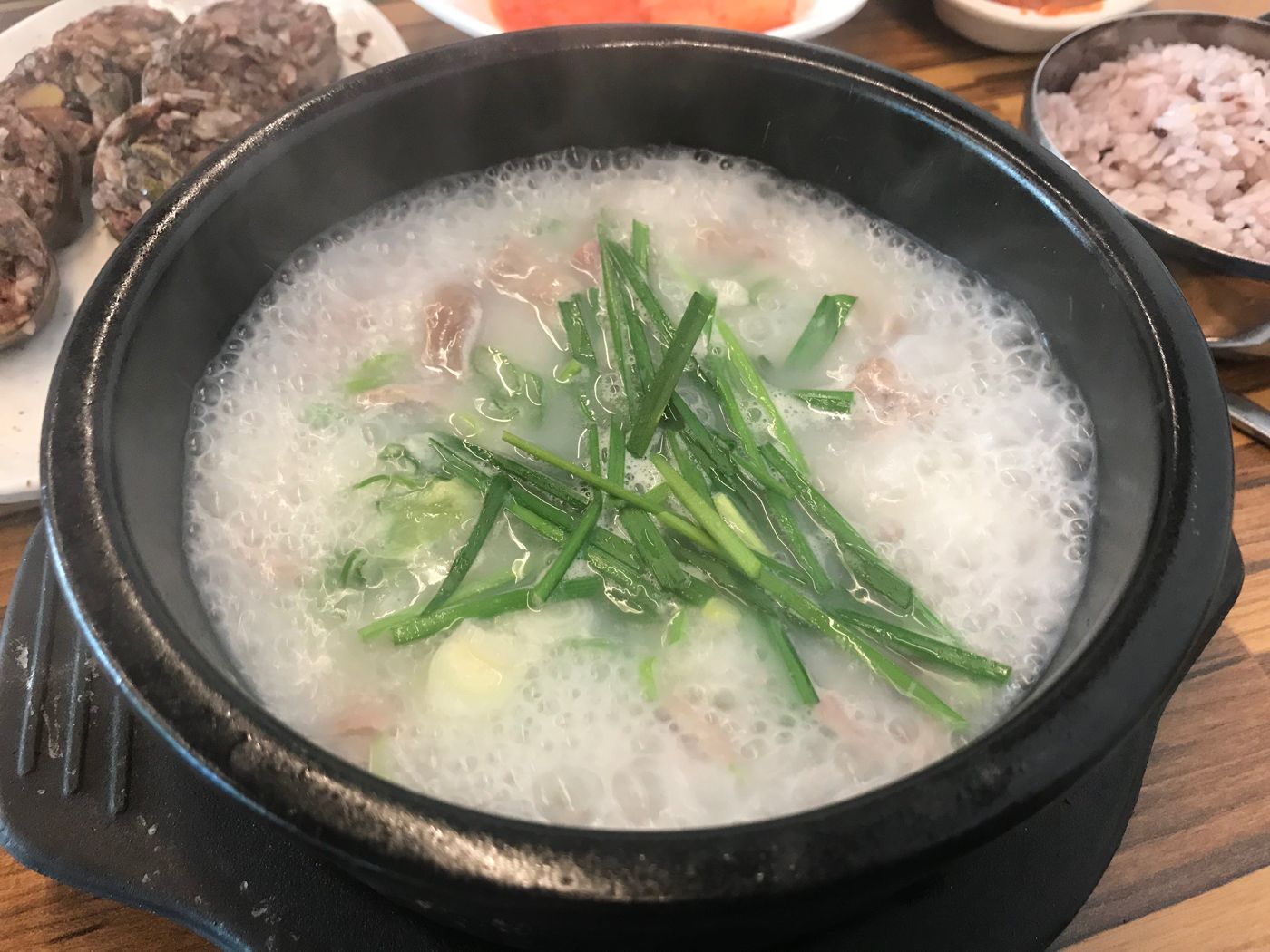 Sundaeguk (Blood Sausage Soup)순댓국Slices of Korean blood sausage and pork offal in a rich pork-bone broth, seasoned at the table with salted shrimp — a cheap, hearty market-day bowl served with rice.
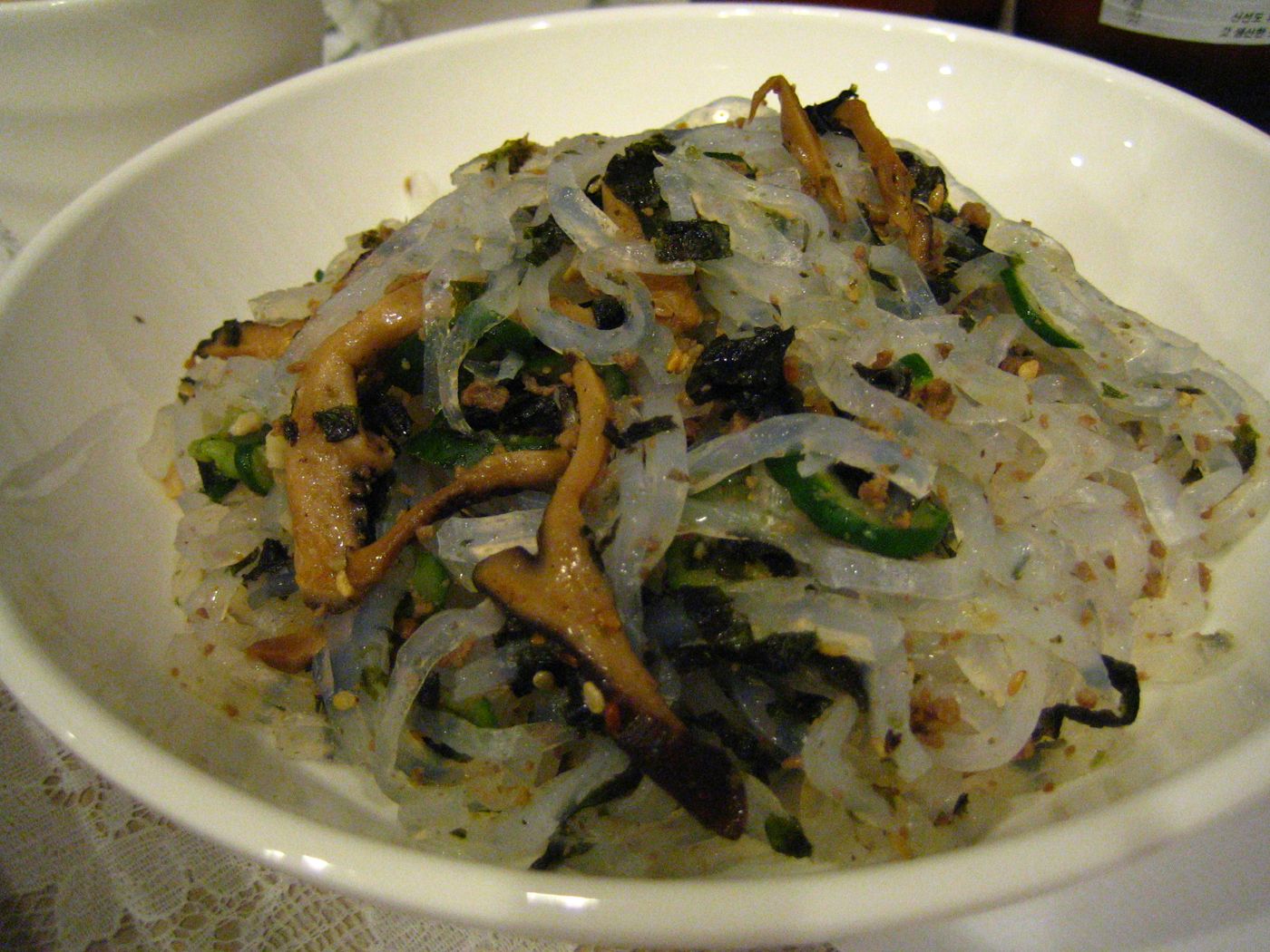 Tangpyeongchae탕평채Mung bean jelly tossed with beef, sprouts, water dropwort, egg and roasted gim in a soy-vinegar dressing — a classic spring dish named after a Joseon policy of political harmony.
- Toran Guk (Taro Soup)토란국Parboiled taro simmered in a clear beef-and-kelp broth seasoned with soup soy sauce — a soft, gently slippery soup made for the Chuseok harvest table.
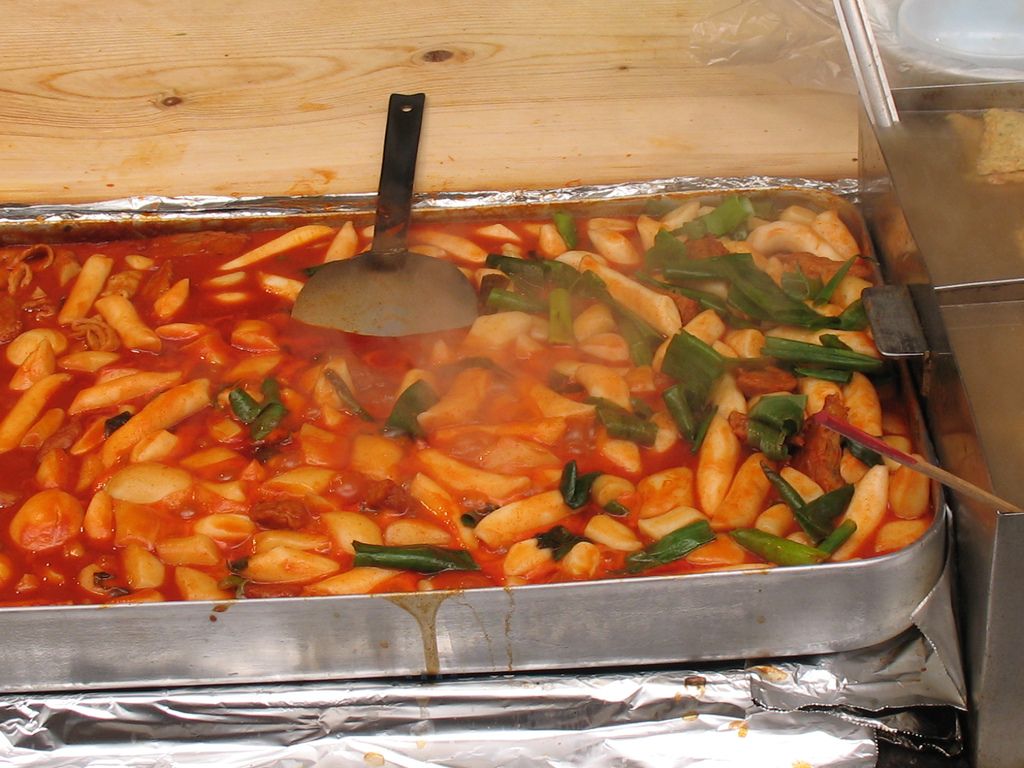 Tteokbokki (Spicy Stir-fried Rice Cakes)떡볶이Chewy rice cakes simmered in a sweet, fiery gochujang sauce with fish cake and green onion — a postwar street snack with roots in a refined soy-sauce court dish.
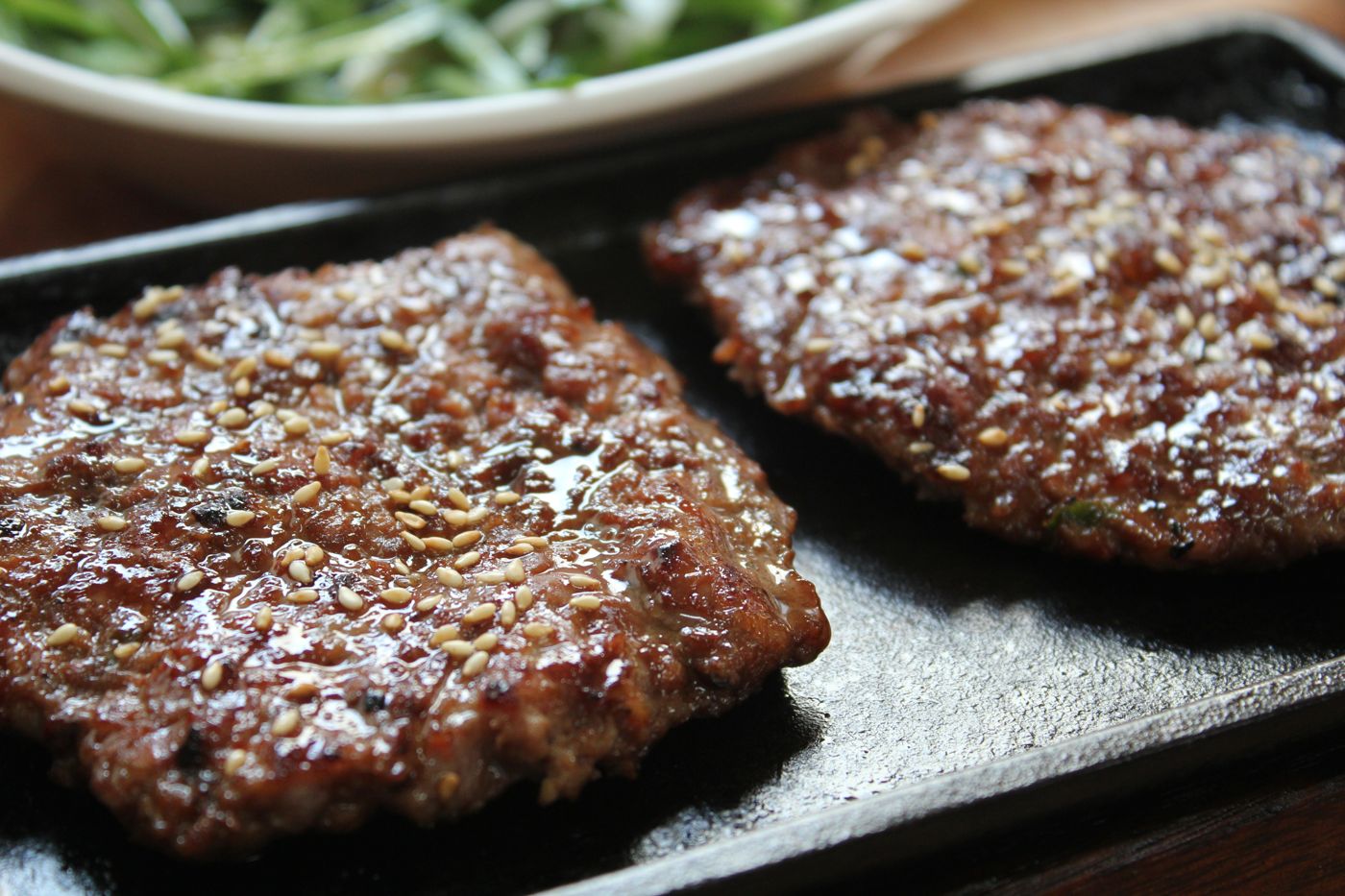 Tteokgalbi (Minced Short-Rib Patties)떡갈비Short-rib meat minced, seasoned sweet-savory and shaped into a patty, then grilled. Damyang presses it back onto the bone; Gwangju's Songjeong style is a flat boneless square.
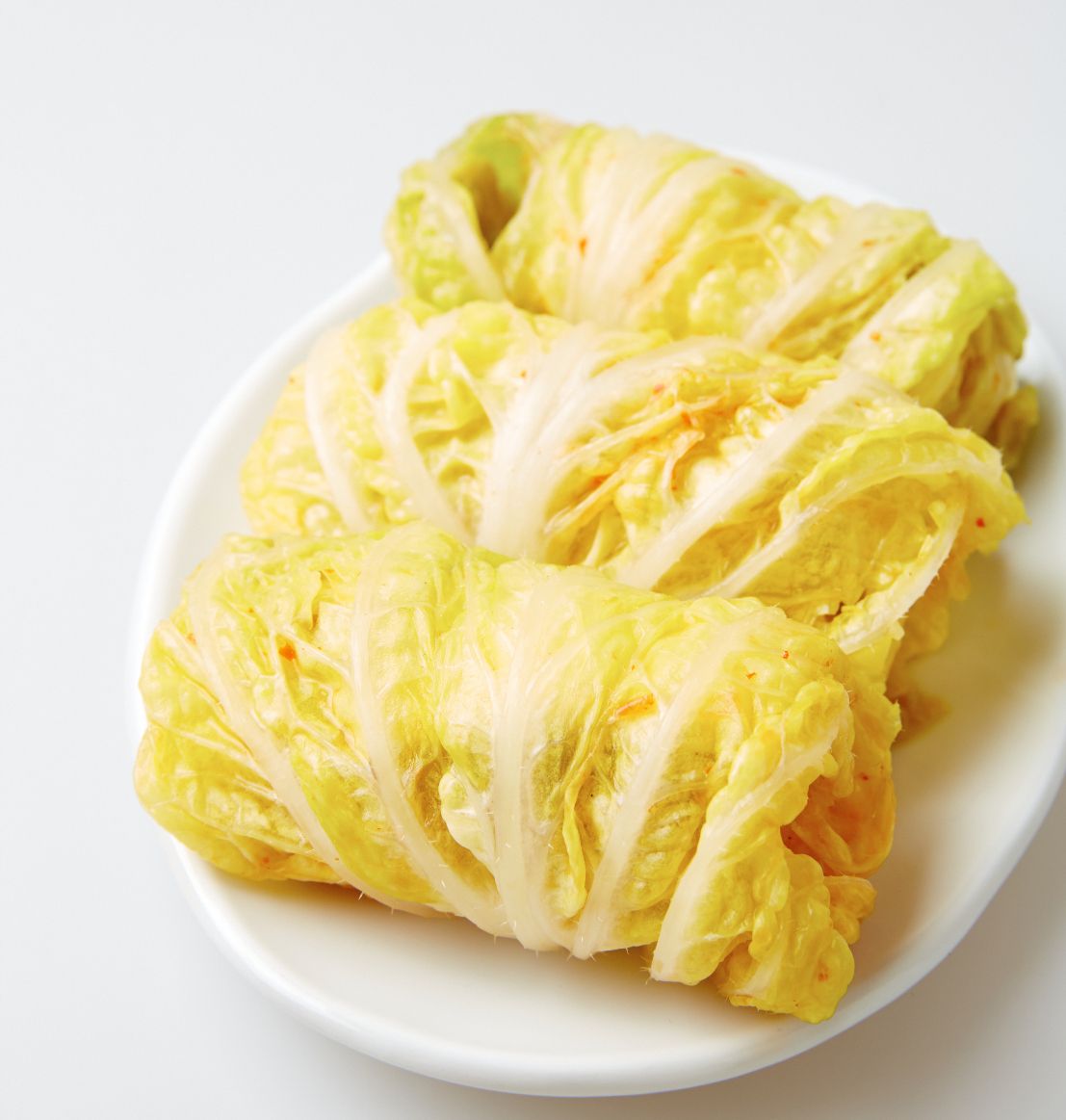 White Kimchi백김치Napa cabbage stuffed with radish, pear, chestnut and jujube and ripened in a clear, cool brine — kimchi with no chili flakes, mild and refreshing.
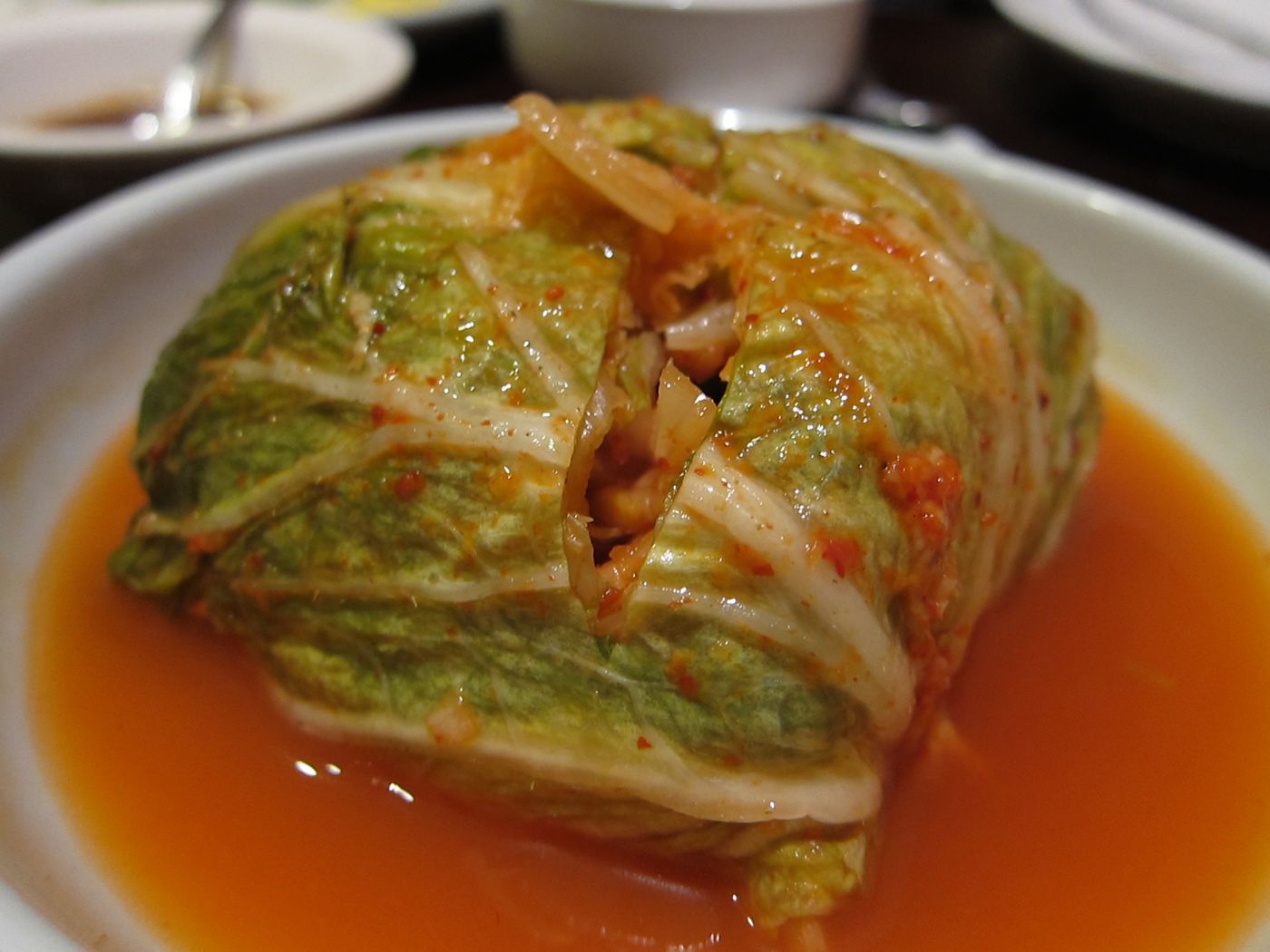 Wrapped Kimchi보쌈김치Cabbage, radish, fruit, nuts and seafood bundled inside whole cabbage leaves — the lavish wrapped kimchi of Gaeseong, made for honored guests.
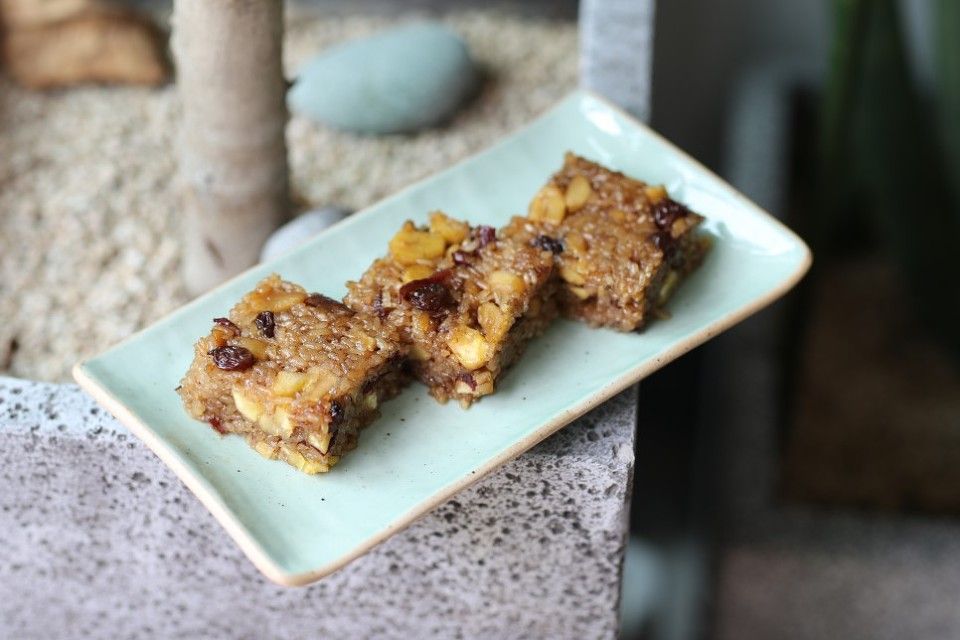 Yaksik (Sweet Rice with Chestnuts, Jujubes and Pine Nuts)약식Steamed glutinous rice darkened with soy sauce, brown sugar and honey and studded with chestnuts, jujubes and pine nuts — a full-moon festival food also called yakbap.
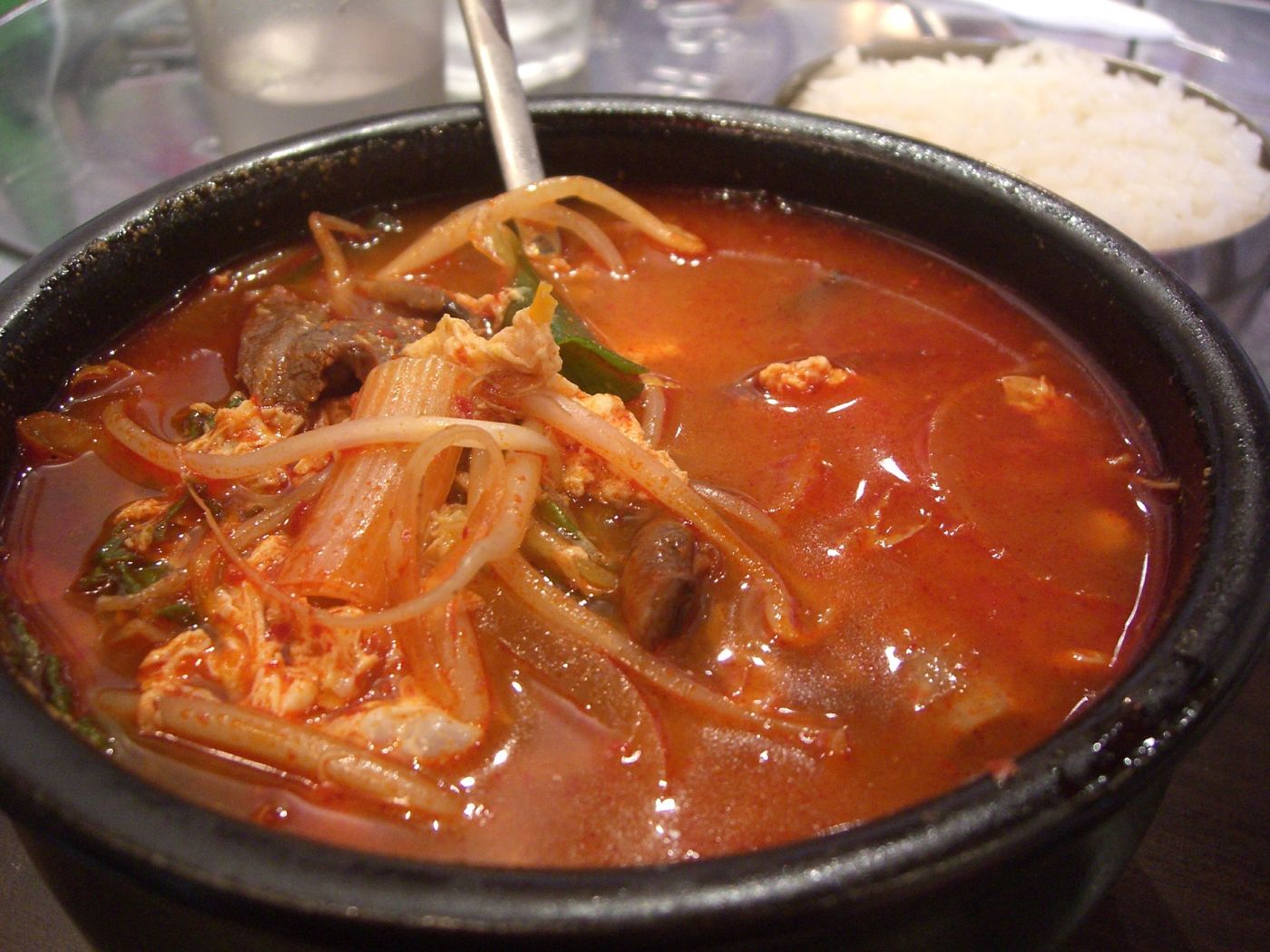 Yukgaejang (Spicy Beef Soup)육개장Shredded beef simmered with bracken, bean sprouts and plenty of green onion in a red, chili-spiked broth — a fiery summer restorative and a gathering-day soup.
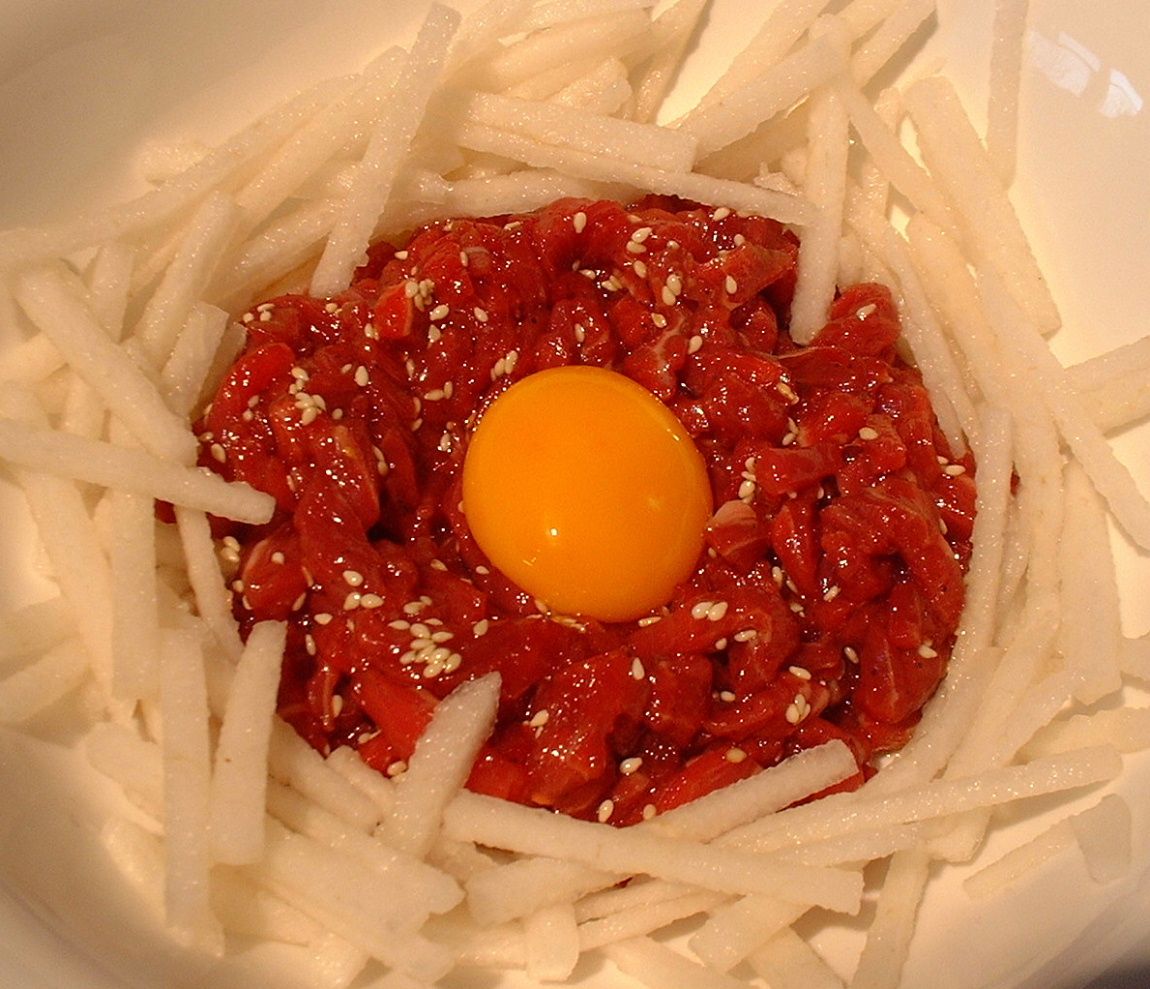 Yukhoe (Korean Seasoned Raw Beef)육회Thinly cut raw lean beef dressed with soy, sesame oil and garlic, served over Korean pear with an egg yolk. A festive, long-standing dish that needs the freshest meat and careful handling.