Namul · Seasoned vegetables 나물
Sukju Namul
숙주나물
Romanization: sukju-namul
Mung bean sprouts blanched briefly and dressed with salt, garlic and sesame oil — lighter, juicier and more delicate than soybean sprouts.
- Serves
- 4
- Prep
- 10 min
- Cook
- 3 min
Recipe
Ingredients · Serves 4
- 300 gMung bean sproutsrinsed; pick off loose green hulls and, if you like, the stringy root tips
- ½ tspSaltplus 1 tsp for the blanching water
- 1 cloveGarlicfinely minced
- 1 tbspGreen onionfinely chopped
- 1 tbspToasted sesame oil
- 1 tspToasted sesame seeds
Method
Technique: Blanching and Seasoning Namul
Step 1: Bring a large pot of water to a boil and add 1 tsp salt.
Step 2: Add the sprouts and blanch for about 1½–2 minutes, until they have just lost their raw taste but are still crisp.
Step 3: Drain and rinse under cold water to stop the cooking.
Step 4: Squeeze out the water gently — mung bean sprouts are fragile, so press rather than wring.
Step 5: In a bowl, add the ½ tsp salt, garlic, green onion, sesame oil and sesame seeds. Toss lightly with your fingertips.
Step 6: Taste, adjust the salt, and serve. Mung bean sprouts release water as they sit, so this is best eaten the day it is made.
Origin & History
Sukju are sprouts grown from mung beans (nokdu). A very similar dish — sprouted mung beans blanched and dressed with ginger, vinegar, salt and oil — is described under the name douyacai in the Yuan-dynasty household encyclopedia Jujia biyong. Because Goryeo and Yuan China were in close contact, the Encyclopedia of Korean Culture suggests the dish most likely arrived on the peninsula during the Goryeo period.
The origin of the name sukju is unclear. A widely repeated folk story ties it to Sin Suk-ju, a fifteenth-century official who sided with King Sejo, saying people named the humble sprout after him out of contempt. The encyclopedia notes that this tale appears in a twentieth-century cookbook but that there is little historical evidence for it.
In the Joseon period, sukju-namul was a favored dish for the birthday breakfast tables of elders in spring and summer, and it was served alongside noodles to guests at first-birthday (dol) celebrations. Today it is an everyday banchan.
Key Ingredients
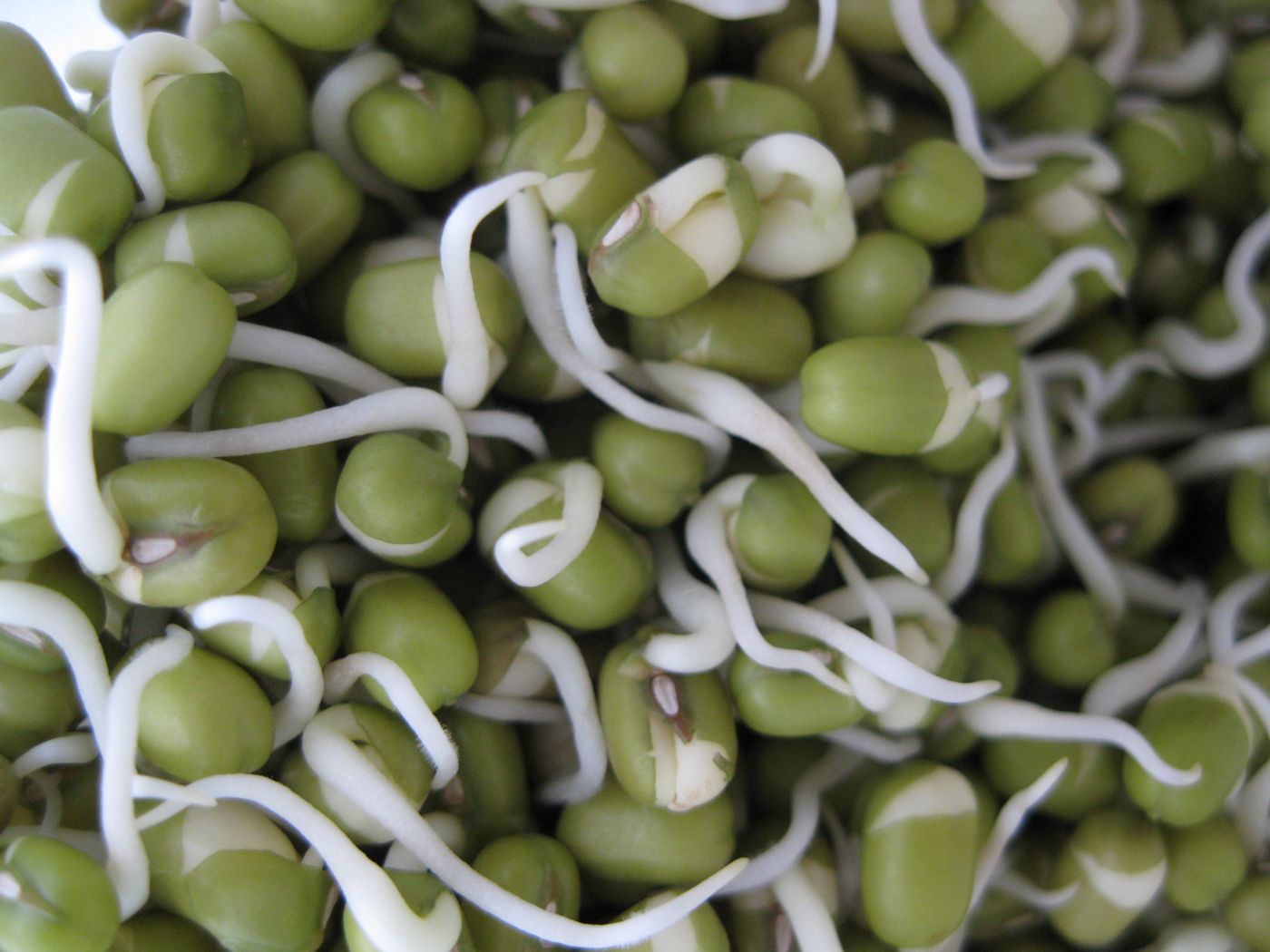 Mung bean sprouts숙주나물Short, plump, delicate sprouts grown from mung beans. Quickly blanched and seasoned as sukju-namul, they are milder and more tender than soybean sprouts.
 Garlic마늘Used raw, minced, pickled and roasted, garlic is one of the essential aromatics of Korean food — in seasonings, marinades, kimchi and namul.
 Green onion파Korean green onion (pa), from thick-stemmed daepa to slender scallions — chopped into nearly every seasoning sauce, soup and kimchi, and the star of pa-kimchi.
 Sesame참깨Toasted sesame seeds and sesame oil (chamgireum) finish countless Korean dishes, adding a nutty aroma and gloss.
Nutrition
| Calories | ~58 kcal |
|---|---|
| Protein | ~2.5 g |
| Fat | ~3.9 g |
| Carbohydrates | ~5 g |
| Fiber | ~1.5 g |
| Sodium | ~295 mg |
Notable forVitamin K · Folate · Vitamin C
Estimated by summing USDA FoodData Central values for raw mung bean sprouts, salt, garlic, green onion, sesame oil and sesame seeds, divided by four. Salt in the blanching water is mostly discarded and is not counted; blanching also reduces vitamin C somewhat. Actual values vary with ingredients, portion size and preparation.
Health Benefits
- Very light: mung bean sprouts are mostly water and are low in calories, making this one of the lightest namul on the table.
- Vitamins from sprouting: the sprouts provide vitamin K, folate and some vitamin C.
- Balance on the table: their mild, juicy crunch makes them a natural partner for richer or spicier banchan.
Regional Variations
- Plain white: the classic version is seasoned only with salt, garlic, green onion and sesame oil so the sprouts stay pale and clean-tasting.
- With vinegar: older recipes, including the one in Jujia biyong, add a little vinegar and ginger for a brighter, sharper dressing.
- Spicy: some cooks add gochugaru for color and heat.
Pairings
 Sigeumchi Namul시금치나물Spinach blanched for a few seconds, squeezed dry and dressed with garlic, soy sauce and sesame — one of the simplest and most familiar namul.
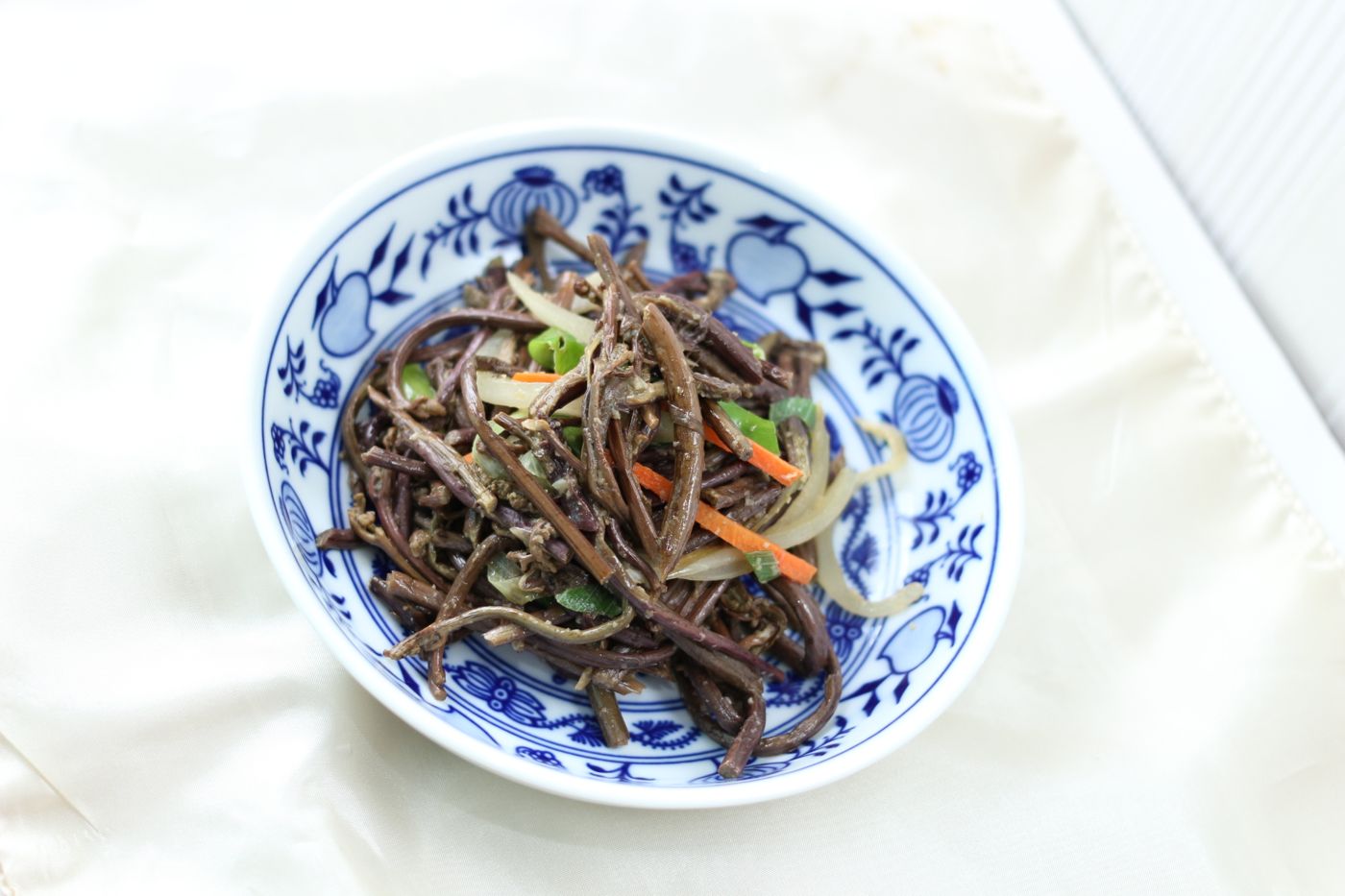 Gosari Namul고사리나물Dried bracken fern soaked, boiled and slowly stir-fried with soup soy sauce, garlic and perilla oil — chewy, earthy and central to holiday tables.
 Japchae (Glass Noodles with Vegetables)잡채Chewy sweet potato glass noodles tossed with stir-fried vegetables, mushrooms and beef in soy sauce and sesame oil — Korea's essential celebration dish.