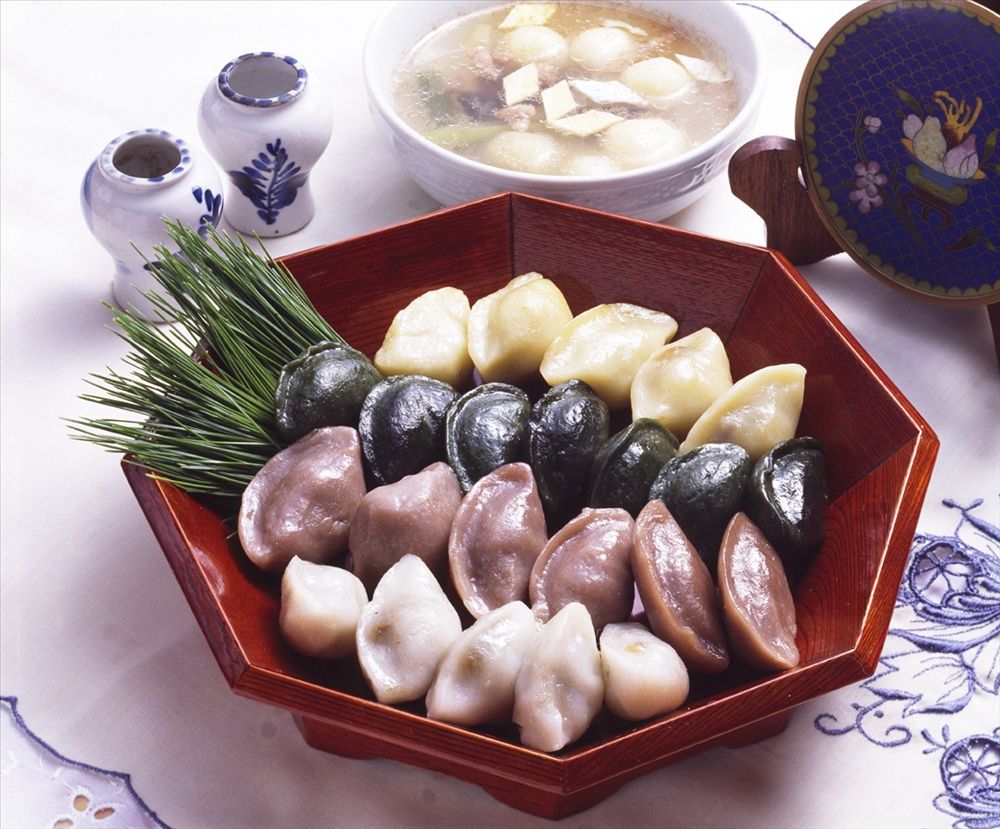
 Photo: Korea.net / Korean Culture and Information Service, CC BY-SA 2.0, via Wikimedia Commons
Tteok & Sweets 떡·과자
Songpyeon (Half-Moon Rice Cakes)
송편
Romanization: songpyeon
Small half-moon cakes of rice dough filled with sweet sesame, beans or chestnut and steamed on a bed of pine needles — the rice cake of Chuseok, made with the new harvest.
- Serves
- 8
- Prep
- 60 min
- Cook
- 25 min
RegionSeoul & Gyeonggi · Gangwon · Jeolla · Northern Provinces (Hwanghae, Pyeongan, Hamgyeong)
Jump to recipeRecipe
Ingredients · Serves 8
- 500 gWet-milled nonglutinous rice flour (maepssal-garu)salted; if unsalted, add 1 tsp salt
- 150–180 mlBoiling wateradd gradually; dry store-bought rice flour needs more
- 60 gToasted sesame seedscoarsely ground, for the filling
- 3 tbspSugarfor the filling
- 1 tbspHoneyfor the filling
- 1 pinchSaltfor the filling
- 1 large handfulFresh pine needleswashed; optional but traditional
- 1 tbspToasted sesame oilfor brushing
Method
Technique: Making Tteok, Steaming and Jjim
Step 1: Sift the rice flour into a bowl. Add the boiling water a few spoonfuls at a time, stirring with a spoon, then knead by hand for 5–10 minutes until the dough is smooth and as soft as an earlobe. Cover with a damp cloth so it does not dry out.
Step 2: Mix the ground sesame, sugar, honey and salt into a crumbly filling that holds together when squeezed.
Step 3: Pinch off a piece of dough about 20 g, roll it into a ball, and press a hollow into it with your thumb. Fill with about 1 tsp of the sesame mixture, press the edges together to seal out the air, and shape into a half-moon. Repeat to make about 40.
Step 4: Line a steamer with a damp cloth and a layer of pine needles. Arrange the songpyeon so they do not touch, add another layer of needles between layers, and steam over boiling water for 20–25 minutes, until the dough looks slightly translucent.
Step 5: Dip the hot cakes briefly in cold water, pick off the needles, drain, and brush lightly with sesame oil. Serve the same day, or freeze and re-steam.
Origin & History
Songpyeon are made from nonglutinous rice flour mixed with hot water, wrapped around a filling, pinched into half-moons and steamed in layers of pine needles; the name means "pine cake," and older names include songbyeong and songyeopbyeong. Made with the first rice of the year, they were also called oryeo-songpyeon, early-rice songpyeon. The Encyclopedia of Korean Folk Culture dates the first clear written record to the seventeenth-century cookbook Yorok, which describes plain rice-flour cakes steamed between pine needles and then rinsed in water.
Fillings came later in the record. The nineteenth-century almanac Dongguk sesigi lists soybeans, black beans, red beans, honey, jujubes and even water dropwort, while the household manual Buin pilji uses red beans, pine nuts, walnuts, ginger and cinnamon. The same almanac records songpyeon twice in the year: on the first day of the second month, when farm households gave servants as many cakes as their age at the start of the farming season (described in seasonal foods), and at Chuseok, when new-crop rice was made into songpyeon for the ancestral rite and the family visited the graves. It is the Chuseok association that survives.
Shaping songpyeon is a family activity with its own folklore. A common saying holds that a young woman who makes pretty songpyeon will marry a good husband, and that a pregnant woman who does so will have a pretty daughter; pregnant women would also bite into a steamed cake to guess the baby's sex from whether it was fully cooked. The pine needles perfume the cakes, and the folk encyclopedia notes they were believed to help keep them from spoiling. Unfilled songpyeon with puffed-up bellies were made for a baby's hundredth day and first birthday as a wish for a life of plenty. See tteok and making tteok.
Key Ingredients
 Rice쌀Short, round grains of japonica rice that cook up glossy, soft and gently clinging. Steamed white rice, bap, is the center of the Korean table: every banchan, soup and stew is planned to be eaten with it.
 Sesame참깨Toasted sesame seeds and sesame oil (chamgireum) finish countless Korean dishes, adding a nutty aroma and gloss.
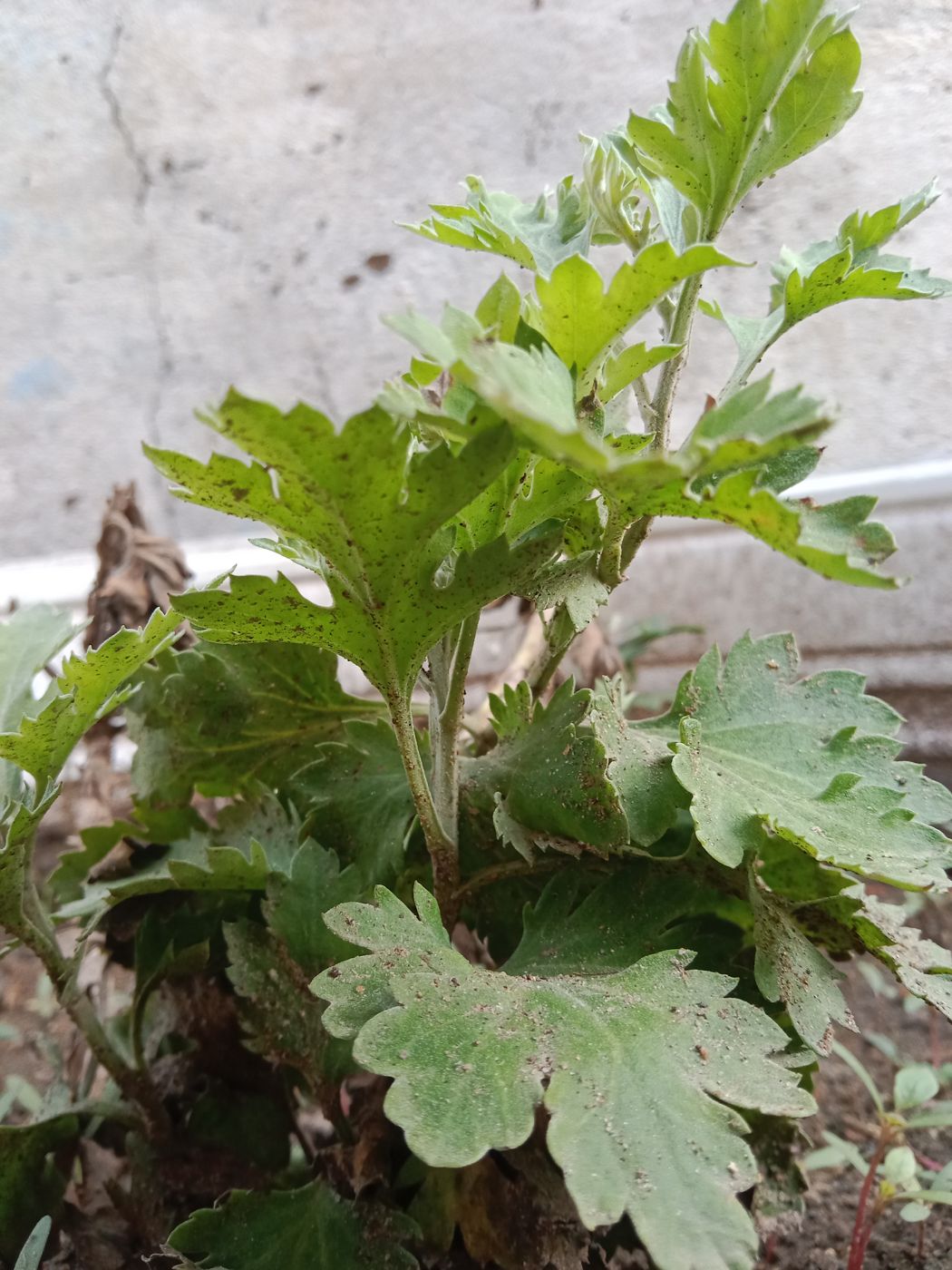 Ssuk (Korean mugwort)쑥A silvery-backed, intensely aromatic wild herb that colors rice cakes green and perfumes spring soups. Young leaves go into ssuk-tteok, ssuk-beomuri and ssuk-guk; dried mugwort has long served for moxibustion and smudging.
Nutrition
| Calories | 223 kcal |
|---|---|
| Protein | 5.7 g |
| Fat | 2.5 g |
| Carbohydrates | 44 g |
| Fiber | 1.2 g |
| Sodium | 232 mg |
Notable forManganese
From the Korean Food Composition Table entry “Rice cake, Songpyeon, Pine flavored, With sesame filling” (송편, 깨; per 100 g: 223 kcal, 44.4 g carbohydrate including 7.0 g sugars, 232 mg sodium, 0.43 mg manganese). Red-bean-filled songpyeon in the same table has slightly fewer calories but twice the sodium (466 mg per 100 g). The sodium comes largely from salt in the rice flour. Actual values vary with ingredients, portion size and preparation.
Health Benefits
- Moderate in sugar: the national food table records about 7 g of sugars per 100 g of sesame-filled songpyeon.
- Sesame and beans: the fillings add a little protein, healthy fat and minerals to what is otherwise a rice-starch food.
- Made by hand together: shaping songpyeon is one of the main family activities of Chuseok, a social part of the meal.
Regional Variations
- Seoul: small, delicate cakes in several colors (osaek-songpyeon), tinted with mugwort, gardenia, omija or cinnamon.
- Gangwon and Chungcheong uplands: potato songpyeon made with potato starch and grated potato, as well as arrowroot, acorn and pine-bark versions.
- Jeolla and southern Gyeongsang: mosinnip-songpyeon, dark green with ramie leaves, usually filled with cowpeas or beans.
- Hwanghae and Gangwon: larger, rustic cakes pressed with finger marks; coastal Hamgyeong, Pyeongan and Gyeonggi made shell-shaped jogae-songpyeon.
- Seasonal colors: mugwort songpyeon in spring and pumpkin songpyeon in autumn.
Pairings
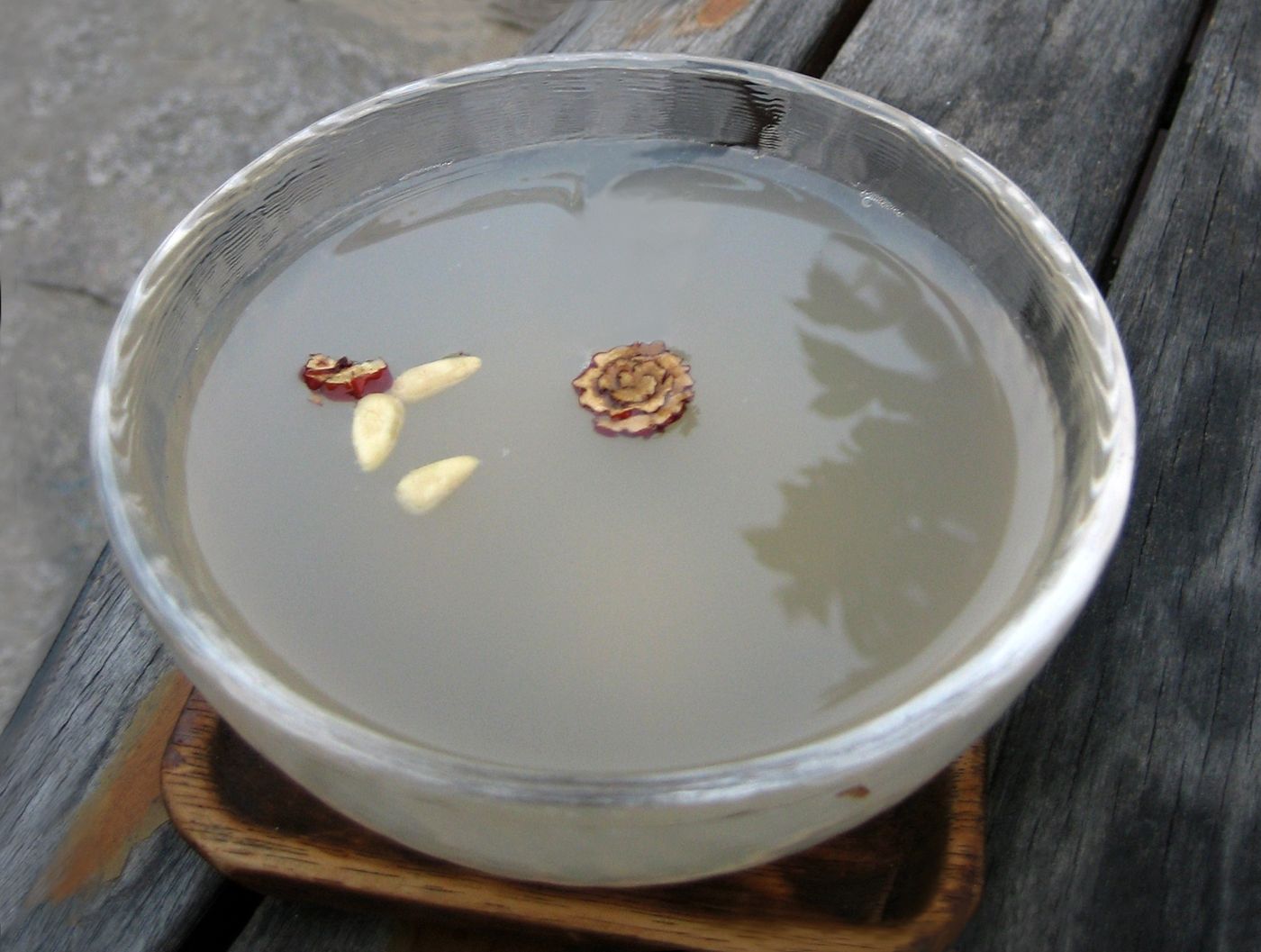 Sikhye (Sweet Malted Rice Drink)식혜Cooked rice steeped in barley-malt water until it sweetens and the grains float, then chilled — the traditional after-feast drink of Korean holidays.
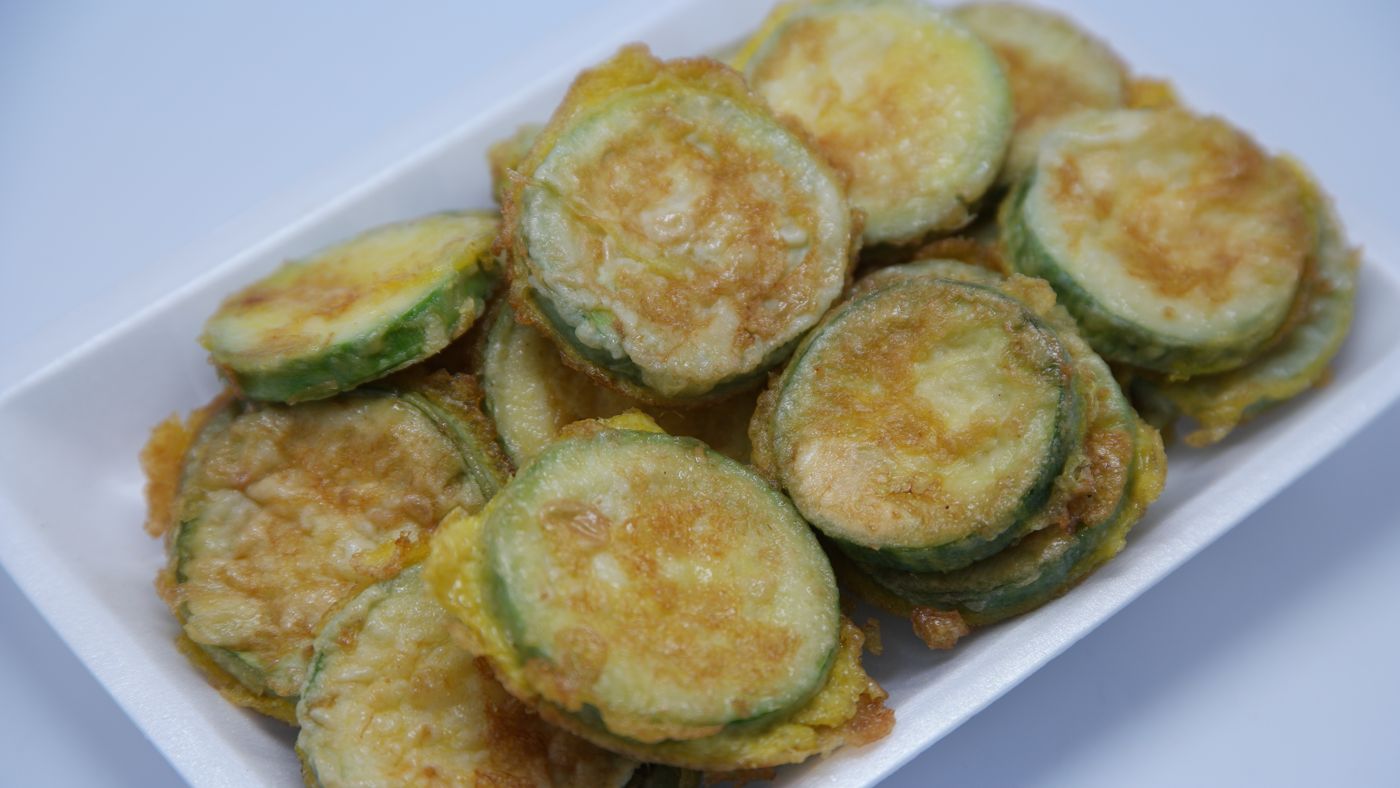 Hobak Jeon (Pan-Fried Zucchini)호박전Rounds of Korean zucchini dusted with flour, dipped in egg and pan-fried until golden — a soft, sweet jeon for holidays and everyday meals.
 Japchae (Glass Noodles with Vegetables)잡채Chewy sweet potato glass noodles tossed with stir-fried vegetables, mushrooms and beef in soy sauce and sesame oil — Korea's essential celebration dish.
Sources
- 01송편 (Songpyeon) — Encyclopedia of Korean Culture
- 02송편 (Songpyeon) — Encyclopedia of Korean Folk Culture: Korean Food and Dwelling Life
- 03Rice cake, Songpyeon, Pine flavored, With sesame filling (A0110070079a) — Korean Food Composition Table
- 04Rice cake, Songpyeon, Pine flavored, With red bean filling (A0110070069a) — Korean Food Composition Table
- 05삼킴·질식 안전사고에 대한 소비자안전주의보 발령 (Consumer safety alert on swallowing and choking accidents, May 2026) — Korea Fair Trade Commission and Korea Consumer Agency
Last updated