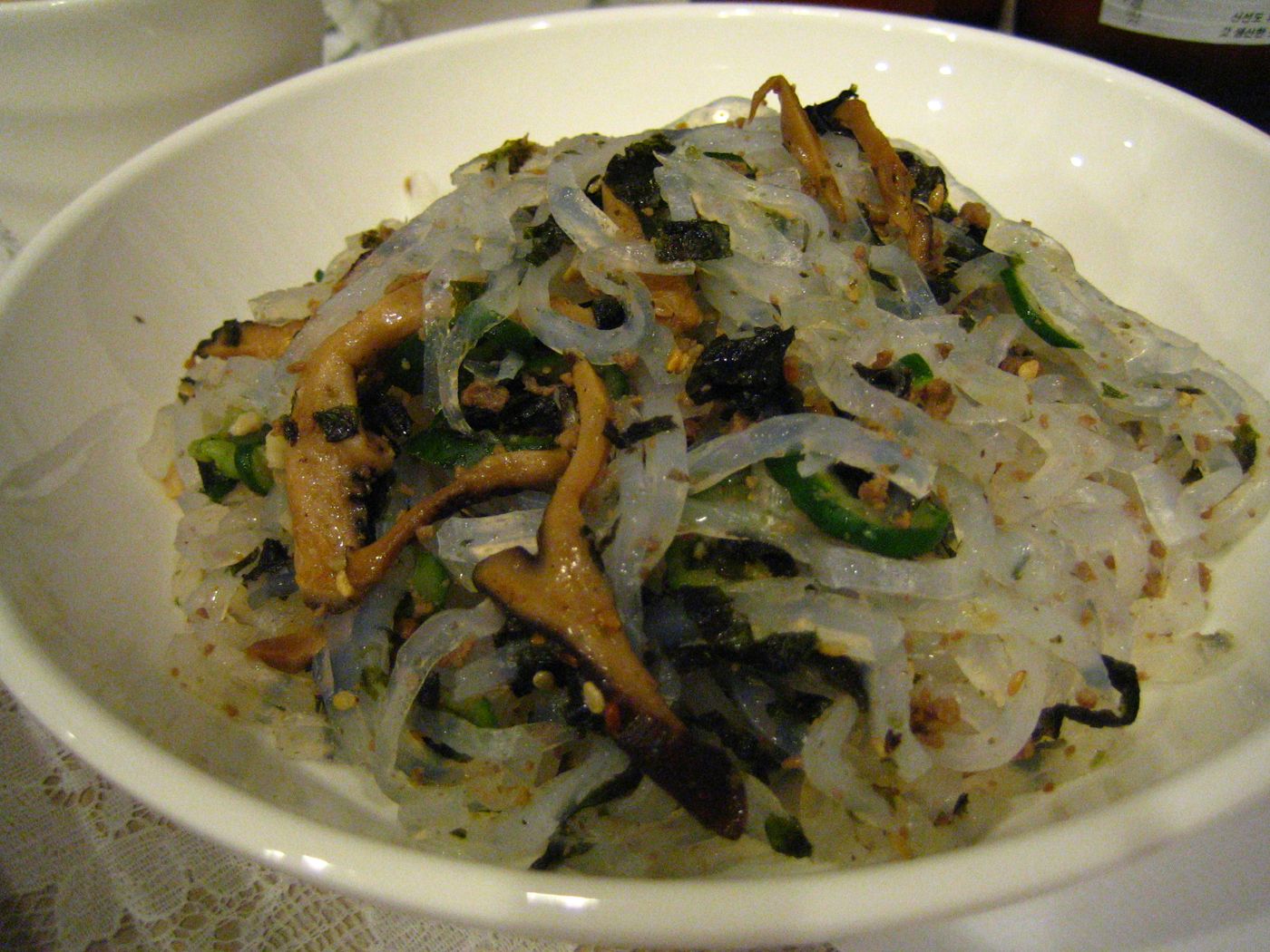
 Photo: ayustety (flickr), CC BY-SA 2.0, via Wikimedia Commons
Muchim · Dressed side dish 무침
Tangpyeongchae
탕평채
Romanization: tangpyeongchae
Mung bean jelly tossed with beef, sprouts, water dropwort, egg and roasted gim in a soy-vinegar dressing — a classic spring dish named after a Joseon policy of political harmony.
- Serves
- 4
- Prep
- 25 min
- Cook
- 10 min
RegionSeoul & Gyeonggi
Jump to recipeRecipe
Ingredients · Serves 4
- 400 gMung bean jelly (cheongpo-muk)cut into thin batons about 6 cm long
- 100 gBeef (top round or sirloin)cut into thin matchsticks
- 100 gMung bean sproutsroots trimmed if you like
- 50 gMinari (water dropwort) stems
- 1 Eggseparated
- 1 sheetRoasted gim
- 1½ tbspSoy sauce1 tsp for the beef, the rest for the dressing
- 1 tbspVinegar
- 2 tspSugar½ tsp for the beef, the rest for the dressing
- 1 cloveGarlicminced
- 1 tspGreen onionminced
- 1 tbspToasted sesame oil
- 1 tspNeutral cooking oil
- 1 tspToasted sesame seeds
- 1 pinchSalt
Method
Technique: Making Muk, Blanching and Seasoning Namul
Step 1: If the jelly is firm from the refrigerator, blanch the batons in boiling water for 30 seconds until translucent, rinse in cold water and drain well. Toss with 1 tsp of the sesame oil and a pinch of salt.
Step 2: Blanch the mung bean sprouts for 1–2 minutes and the minari for about 15 seconds; cool both in cold water, squeeze dry and cut the minari into 5 cm lengths.
Step 3: Season the beef with 1 tsp soy sauce, ½ tsp sugar, the garlic, green onion and a few drops of sesame oil. Stir-fry in a hot pan with a little cooking oil until just cooked, then let cool.
Step 4: Beat the yolk and white separately with a pinch of salt and fry each into a thin sheet in a lightly oiled pan over low heat. Cut into fine threads.
Step 5: Toast the gim briefly over a flame or in a dry pan and crumble it.
Step 6: Whisk the remaining soy sauce, vinegar, remaining sugar and sesame oil. In a wide bowl, toss the sprouts, minari and beef with half the dressing, then add the jelly and the rest of the dressing and fold gently.
Step 7: Plate, top with the egg threads, gim and sesame seeds, and serve right away.
Origin & History
Tangpyeongchae is a salad of cheongpo-muk — clear jelly made from mung bean starch — mixed with stir-fried beef, blanched mung bean sprouts and water dropwort (minari), and topped with shredded egg and roasted laver. Its name is usually traced to King Yeongjo (r. 1724–1776), who tried to end the ruinous feuding between court factions with a policy of impartial appointments called tangpyeong, a term drawn from a line in the Chinese Book of Documents describing the king's way as broad and level, favoring no party. The Encyclopedia of Korean Culture states that the dish was first served at a gathering held to discuss that policy, and a popular reading matches its colored ingredients to the four rival factions.
The written record is more complicated. In the late eighteenth century, Yu Deuk-gong's Gyeongdo japji, a record of Seoul customs, describes tangpyeongchae as mung bean jelly with shredded pork and minari shoots in a vinegared soy sauce, good on a cool spring evening; the mid-nineteenth-century Dongguk sesigi repeats this under the third lunar month and adds laver. Neither mentions politics. The first story connecting the two is in Jo Jae-sam's Songnam japji (1855), which says that Song In-myeong — later a leading tangpyeong minister under Yeongjo — heard the dish being hawked in a market as a young man and took from it the idea of mixing the four factions in government.
Food historian Joo Young-ha of the Academy of Korean Studies has pointed out that no record shows Yeongjo or his successor Jeongjo ordering the dish to be eaten, that the earliest description contains only three ingredients rather than four faction colors, and that if Songnam japji is right, the dish was already sold in Seoul before the policy borrowed its spirit. He suggests the name may simply describe an even mixture of many ingredients. Whatever its origin, the political reading has stuck, and the dish is often served today as a gesture of harmony. Late-nineteenth-century cookbooks such as Siuijeonseo record it as tanpyeongchae, and it was a seasonal food for samjinnal, the third day of the third lunar month.
Key Ingredients
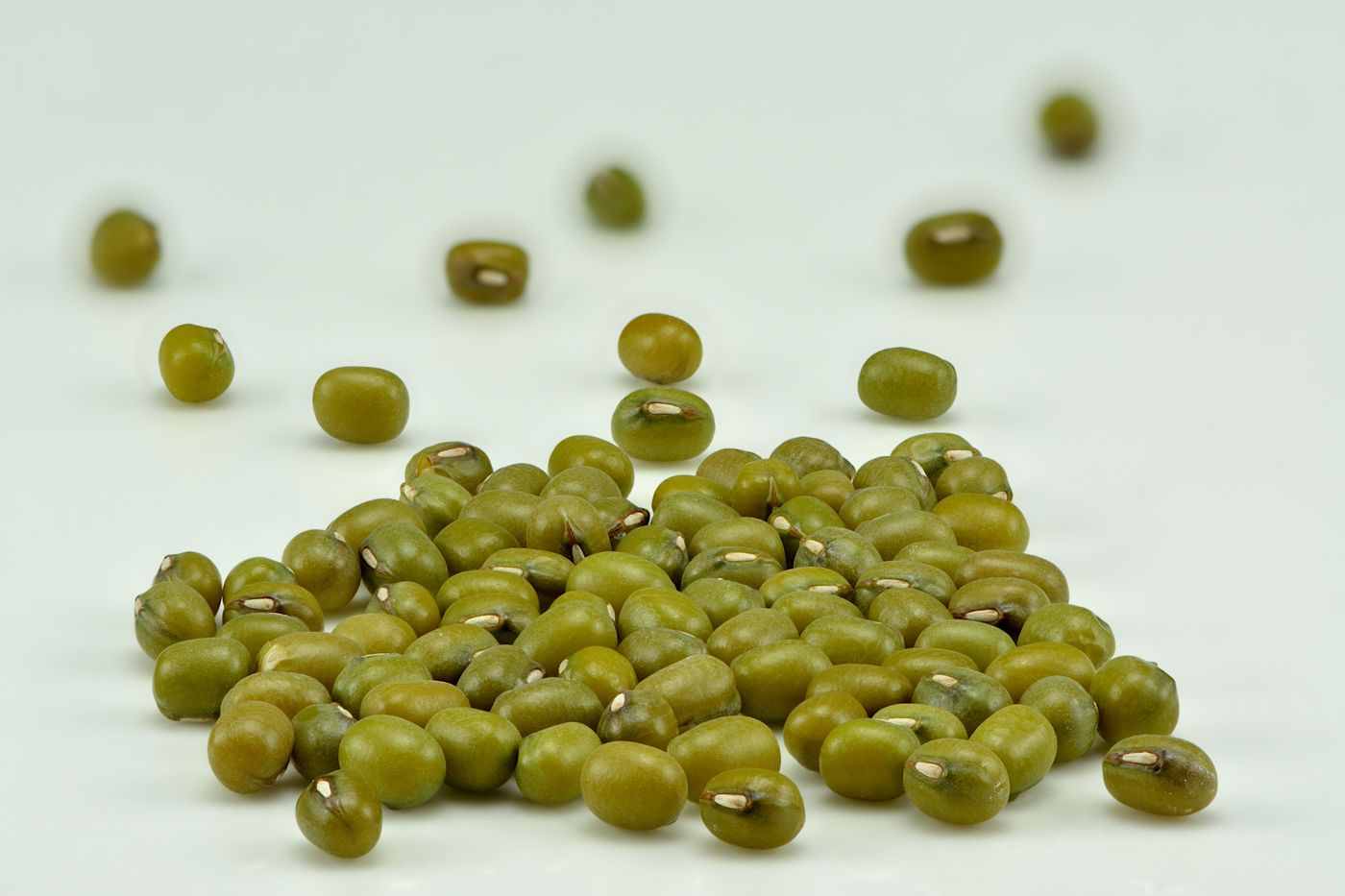 Mung beans녹두Small green beans that give Korean cooking three very different foods: crisp, golden bindaetteok pancakes from the soaked and ground beans, crunchy sukju sprouts, and clear, silky cheongpo-muk jelly from their starch.
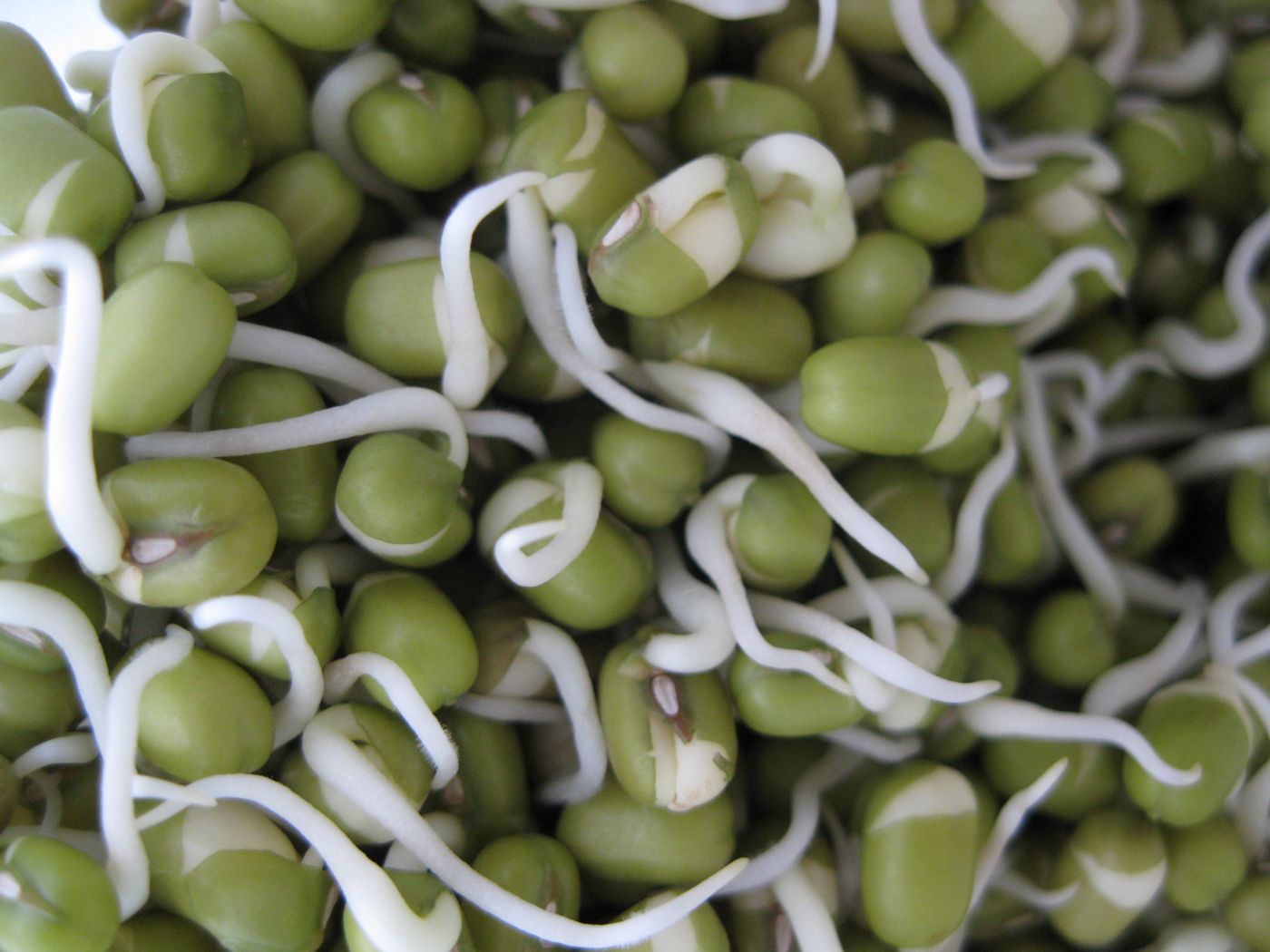 Mung bean sprouts숙주나물Short, plump, delicate sprouts grown from mung beans. Quickly blanched and seasoned as sukju-namul, they are milder and more tender than soybean sprouts.
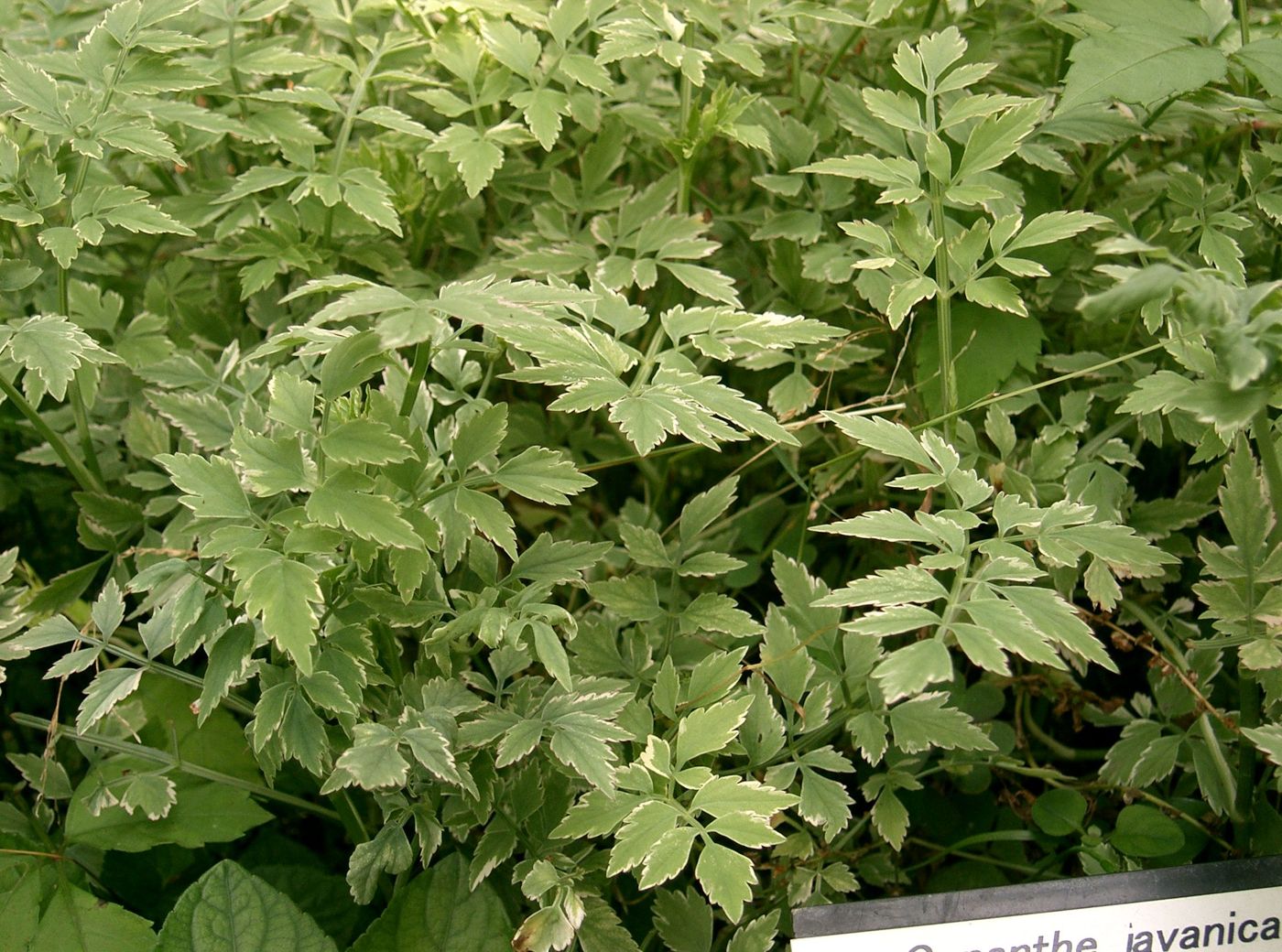 Minari (water dropwort)미나리A long-stemmed, aromatic water plant with a fresh, celery-like perfume. Blanched and dressed as minari-muchim, tucked into kimchi, wrapped into little bundles for minari-ganghoe and piled into fish stews and hot pots.
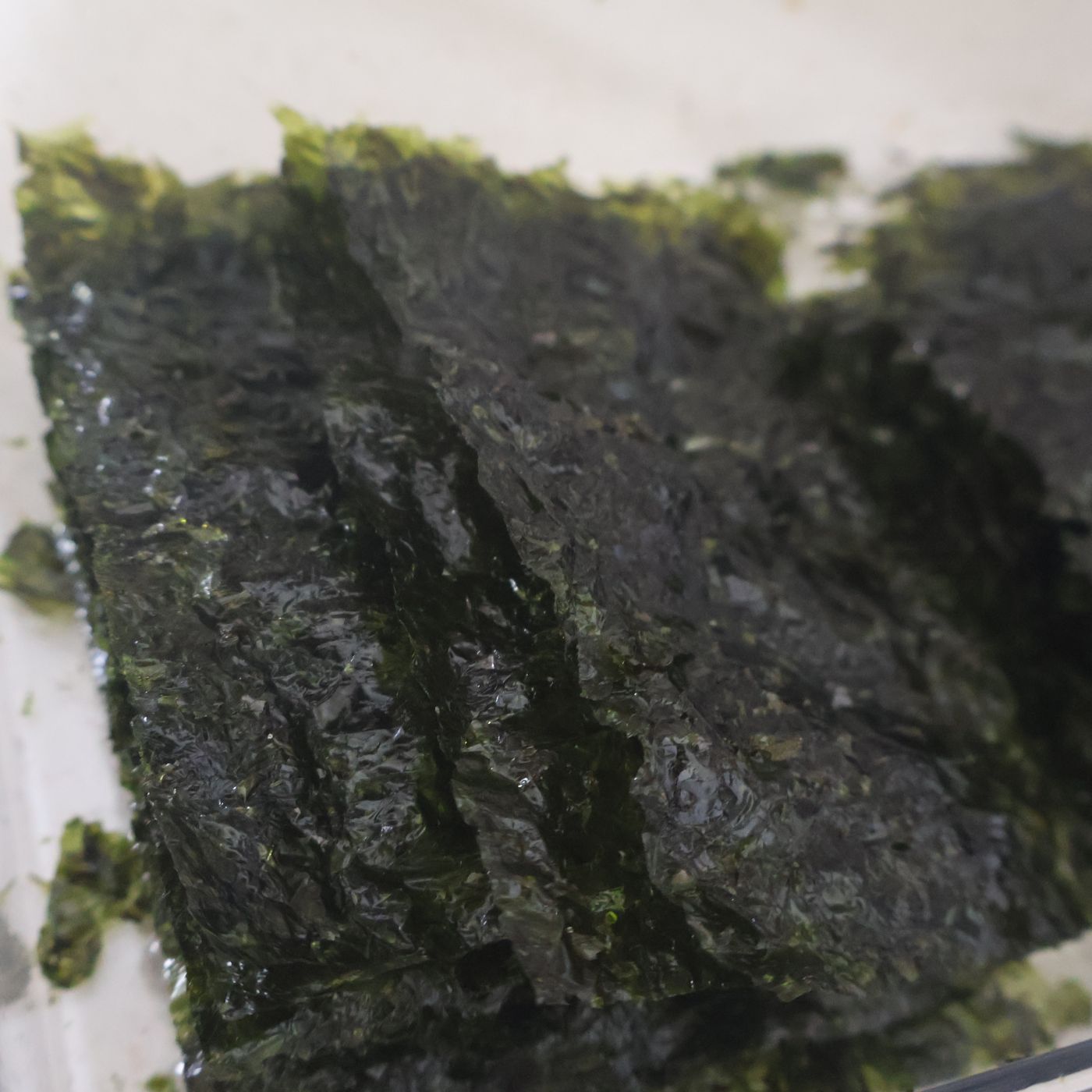 Laver (gim)김Paper-thin sheets of dried red seaweed, toasted until crisp and fragrant. Gim wraps gimbap and rice, crumbles over noodles and soups, and — brushed with oil and salt — becomes the everyday side dish gim-gui.
 Soy sauce간장Korean soy sauce, in two main kitchen forms: pale, salty guk-ganjang (soup soy sauce) brewed the traditional way from meju, and darker, sweeter jin-ganjang for braises and marinades.
- Korean Vinegar식초Vinegar in the Korean kitchen, from naturally fermented grain and fruit vinegars, such as persimmon vinegar, to everyday brewed vinegar. It sharpens muchim, pickles and the dipping sauce chogochujang.
 Garlic마늘Used raw, minced, pickled and roasted, garlic is one of the essential aromatics of Korean food — in seasonings, marinades, kimchi and namul.
 Green onion파Korean green onion (pa), from thick-stemmed daepa to slender scallions — chopped into nearly every seasoning sauce, soup and kimchi, and the star of pa-kimchi.
 Sesame참깨Toasted sesame seeds and sesame oil (chamgireum) finish countless Korean dishes, adding a nutty aroma and gloss.
Nutrition
| Calories | ~159 kcal |
|---|---|
| Protein | ~8.7 g |
| Fat | ~7.6 g |
| Carbohydrates | ~15 g |
| Fiber | ~1 g |
| Sodium | ~509 mg |
Notable forProtein · Vitamin B12 · Zinc
Mung bean jelly uses the Korean Food Composition Table entry “Nokdumuk, Mungbean starch jelly” (40 kcal and 92 mg sodium per 100 g) and minari its entry “Water dropwort (Minari), Whole, Raw”. Beef (raw top round), mung bean sprouts, egg, soy sauce, vinegar, sugar, garlic, green onion, oils and sesame seeds use USDA values. One sheet of gim adds negligible calories and was not counted. Divided by four. Actual values vary with ingredients, portion size and preparation.
Health Benefits
- A balanced plate in one dish: starch from the jelly, protein from beef and egg, and fresh vegetables from sprouts and minari make this more complete than most banchan.
- Light and refreshing: the vinegar dressing made it a favored spring dish; early sources describe it as cool and pleasant on spring evenings.
- Nutrients from beef and egg: a modest amount of meat and egg supplies vitamin B12 and zinc.
Regional Variations
- Pork or beef: the earliest records use pork; later recipes and modern versions mostly use beef.
- Mustard dressing: the 1896 cookbook Gyugon yoram dresses the dish with vinegar and cold mustard, scattering pine-nut powder and chili powder over the top, while Siuijeonseo uses soy sauce, sesame oil and vinegar.
- Seafood version: the 1924 Joseon mussang sinsik yori jebeop calls it muk-cheongpo, stresses plenty of vinegar and suggests adding briefly blanched razor-clam or other clam meat.
- Five colors: modern presentations emphasize the five traditional colors — white jelly and sprouts, green minari, red beef, black laver and yellow egg.
Pairings
 Japchae (Glass Noodles with Vegetables)잡채Chewy sweet potato glass noodles tossed with stir-fried vegetables, mushrooms and beef in soy sauce and sesame oil — Korea's essential celebration dish.
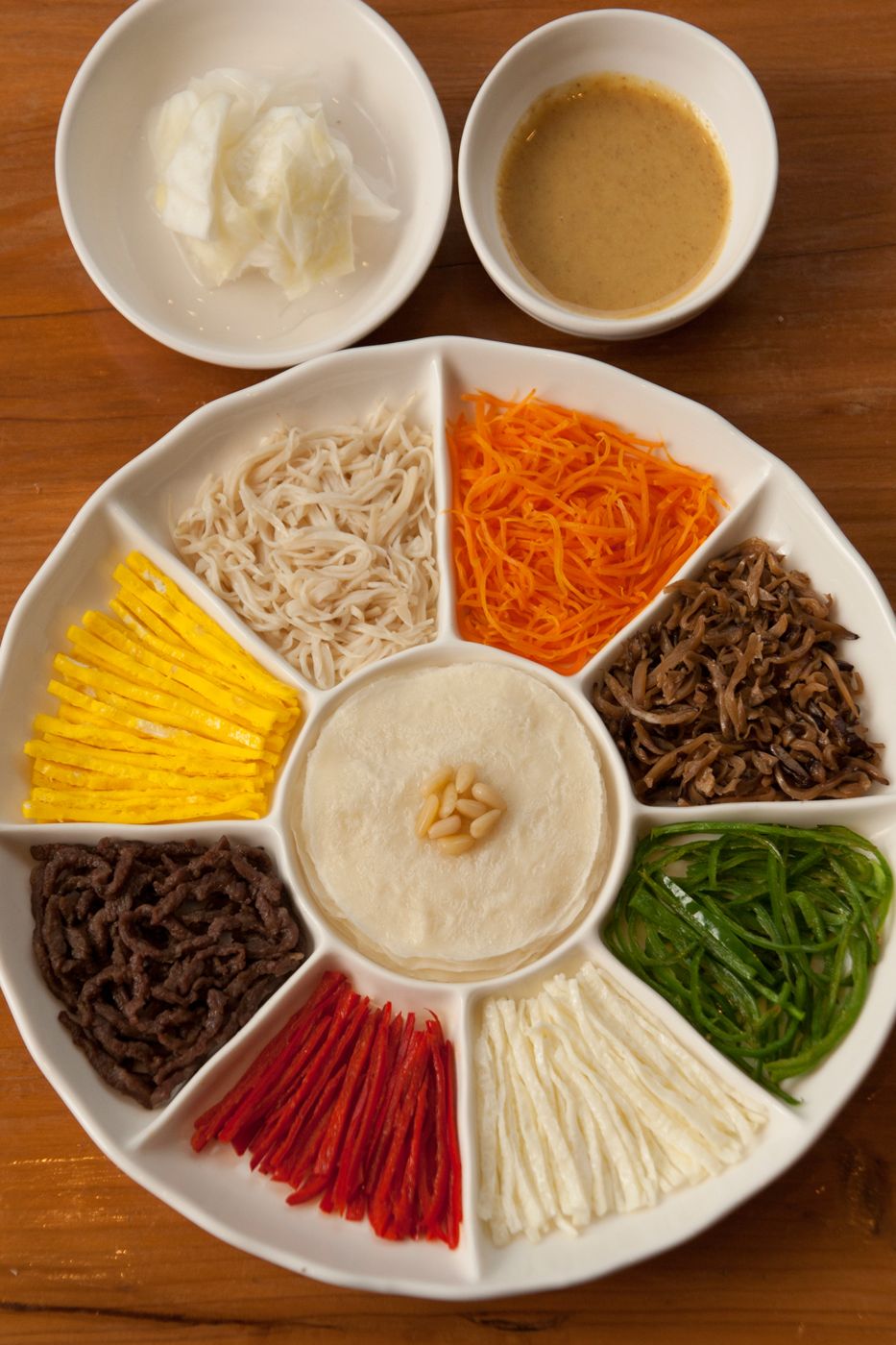 Gujeolpan (Platter of Nine Delicacies)구절판Eight finely cut fillings arranged by color around a stack of paper-thin crepes in a nine-compartment dish, wrapped at the table — an elegant banquet dish.
- Sukju Namul숙주나물Mung bean sprouts blanched briefly and dressed with salt, garlic and sesame oil — lighter, juicier and more delicate than soybean sprouts.
Sources
- 01Korean Food Composition Table: Nokdumuk, Mungbean starch jelly — National Institute of Agricultural Sciences
- 02탕평채 (Tangpyeongchae) — Encyclopedia of Korean Culture
- 03탕평채 (Tangpyeongchae) — Encyclopedia of Korean Folk Culture (National Folk Museum of Korea)
- 04[주영하의 음식 100년] (20) 탕평채 — Joo Young-ha, Kyunghyang Shinmun (2011)
- 05묵무침 (Muk-muchim) — Encyclopedia of Korean Folk Culture (National Folk Museum of Korea)
- 06Seed and Bean Sprouts — UConn Food Safety (University of Connecticut)
- 07Cornstarch (FDC 169698) — USDA FoodData Central
Last updated