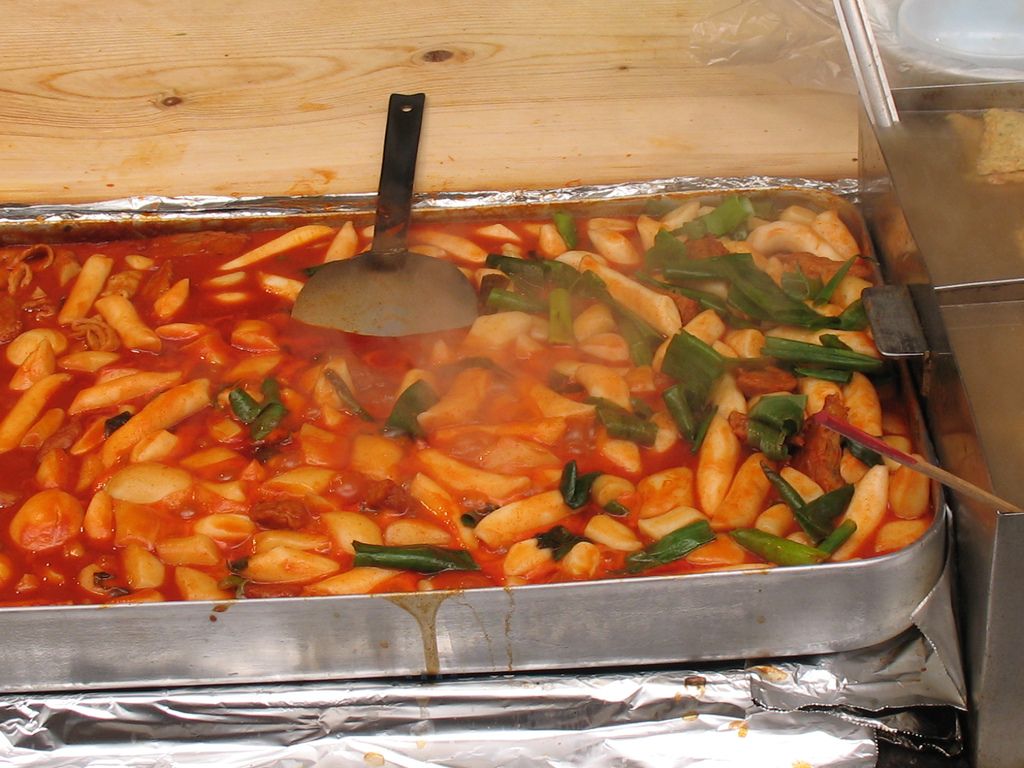
 Photo: johl, CC BY-SA 2.0, via Wikimedia Commons
More dishes 기타
Tteokbokki (Spicy Stir-fried Rice Cakes)
떡볶이
Romanization: tteokbokki
Chewy rice cakes simmered in a sweet, fiery gochujang sauce with fish cake and green onion — a postwar street snack with roots in a refined soy-sauce court dish.
- Serves
- 4
- Prep
- 15 min
- Cook
- 20 min
RegionSeoul & Gyeonggi
Jump to recipeRecipe
Ingredients · Serves 4
- 500 gRice cakes for tteokbokki (cylinders)soak in warm water 10 minutes if hard or refrigerated
- 150 gFish cake sheets (eomuk)cut into triangles or strips
- 500 mlAnchovy-kelp broth or waterunsalted; see making yuksu broth
- 3 tbspGochujang
- 1 tbspGochugaruadjust to taste
- 1½ tbspSugaror part corn syrup / mulyeot
- 1 tbspSoy sauce
- 2 clovesGarlicminced
- 150 gCabbagecut into bite-sized pieces
- 3 stalksGreen onionscut into 5 cm lengths
- 2 largeEggshard-boiled and peeled, optional
Method
Technique: Bokkeum: Korean Stir-Frying
Step 1: Separate any rice cakes that are stuck together; if they are hard, soak them in warm water for 10 minutes and drain.
Step 2: In a wide shallow pan, stir the broth with the gochujang, gochugaru, sugar, soy sauce and garlic and bring to a boil.
Step 3: Add the rice cakes and cabbage and simmer over medium heat, stirring often so the rice cakes do not stick, for about 6–8 minutes.
Step 4: Add the fish cake, green onions and boiled eggs and simmer 3–5 minutes more, until the rice cakes are soft and chewy and the sauce has thickened enough to coat them. Add a splash of water if it reduces too fast.
Step 5: Serve hot, straight from the pan.
Origin & History
Tteokbokki means "stir-fried rice cake," and its original form was nothing like the red street snack. The Encyclopedia of Korean Culture defines it as rod-shaped white rice cake (garaetteok) cut into short lengths and quartered, then stir-fried with seasoned beef, dried zucchini strips, blanched mung bean sprouts, shiitake, onion and carrot — a balanced, nourishing dish. The Korean Food Promotion Institute calls this soy-sauce version gungjung tteokbokki, "royal court tteokbokki," finished with pine nuts and egg-strip garnish. It says a similar dish of white rice cake, beef sirloin, sesame oil, soy sauce and green onion appears in the late-19th-century cookbook Siui jeonseo under names such as tteokjjim or tteok-japchae, and that the name tteokbokki is first found in a 1942 edition of Bang Sin-yeong's Joseon yori jebeop. See royal court cuisine and tteok.
The gochujang version is a product of postwar Seoul. Both the institute and the Korea JoongAng Daily credit Ma Bok-rim, who began selling spicy rice cakes from a street stall in Sindang-dong in 1953, just after the Korean War, with a sauce combining gochujang and chunjang, the black bean paste used in jajangmyeon. The institute relates her own story that the idea came when a piece of rice cake fell into a bowl of jajangmyeon at a Chinese restaurant. As her business grew, other shops opened nearby, and by the 1980s an alley of tteokbokki restaurants had formed, serving it cooked at the table with ramen, dumplings, boiled eggs and other add-ins.
The institute also cautions against treating 1953 as the moment the red version took over. Newspaper recipes around 1960 still describe soy-seasoned tteokbokki; the gochujang style seems to have spread widely only from the late 1960s or the 1970s, helped by radio coverage of Sindang-dong shops — which hired DJs to play music — and by cheap rice cakes made from wheat flour during the government's flour-promotion years. Rice-based cakes returned in the 1990s. Today the soy-sauce dish is called gungjung or ganjang tteokbokki to distinguish it, while plain "tteokbokki" means the red one. See Korean street food.
Key Ingredients
- Fish cake어묵A processed food of ground white fish, salt and starch, shaped into sheets, tubes or balls and then fried, steamed or grilled. Busan made it famous, and stir-fried eomuk is a common banchan.
- Gochujang고추장Fermented red chili paste — sweet, savory and hot. Made from meju powder, glutinous rice, malt and gochugaru, it is a later addition to Korea's family of jang.
 Gochugaru고춧가루Korean red chili powder, made from dried red peppers ground coarse or fine. It gives kimchi, gochujang and countless banchan their color and warmth.
 Soy sauce간장Korean soy sauce, in two main kitchen forms: pale, salty guk-ganjang (soup soy sauce) brewed the traditional way from meju, and darker, sweeter jin-ganjang for braises and marinades.
 Garlic마늘Used raw, minced, pickled and roasted, garlic is one of the essential aromatics of Korean food — in seasonings, marinades, kimchi and namul.
 Green onion파Korean green onion (pa), from thick-stemmed daepa to slender scallions — chopped into nearly every seasoning sauce, soup and kimchi, and the star of pa-kimchi.
Nutrition
| Calories | ~435 kcal |
|---|---|
| Protein | ~14 g |
| Fat | ~5.1 g |
| Carbohydrates | ~86 g |
| Fiber | ~3.6 g |
| Sodium | ~1200 mg |
Notable forCarbohydrate · Protein
Estimated from Korean Food Composition Table values for rod-shaped rice cake (garaetteok, A0110010009a), fried fish paste (K8000000009j) and gochujang (R0050010009a), and USDA FoodData Central (SR Legacy) values for cabbage (FDC 169975), scallions, whole egg (FDC 171287), soy sauce (FDC 174277), sugar, garlic and red pepper (FDC 170932, as a stand-in for gochugaru), divided by 4. Assumes the broth adds negligible calories and sodium and that all the sauce is eaten. About 5 g of carbohydrate per serving is added sugar, more if corn syrup is used as well. Actual values vary with ingredients, portion size and preparation.
Health Benefits
- Energy from rice: rice cakes are a dense, low-fat source of carbohydrate.
- Add-ins add nutrition: cabbage, green onions, eggs and fish cake contribute some protein, fiber and variety to what is otherwise a starchy snack.
- Court style is lighter on heat: soy-sauce gungjung tteokbokki, with beef and several vegetables, is a more balanced dish; see capsaicin and spicy food for more on chili heat.
Regional Variations
- Gungjung (court) tteokbokki: rice cakes stir-fried with beef, shiitake, vegetables and soy sauce, garnished with pine nuts and egg strips; mild and savory.
- Sindang-dong jeukseok tteokbokki (Seoul): cooked at the table in a shallow pan with fish cake, ramen or chewy jjolmyeon noodles, dumplings and boiled eggs.
- Street-cart tteokbokki: thick, sweet-spicy gochujang sauce simmered in a large griddle pan, often sold with gimbap, fried snacks and sundae.
- Modern variations: wheat-flour (mil-tteok) or rice cakes, and sauces made with curry, cream, black bean paste or extra-hot chili, plus seafood or short-rib versions.
Pairings
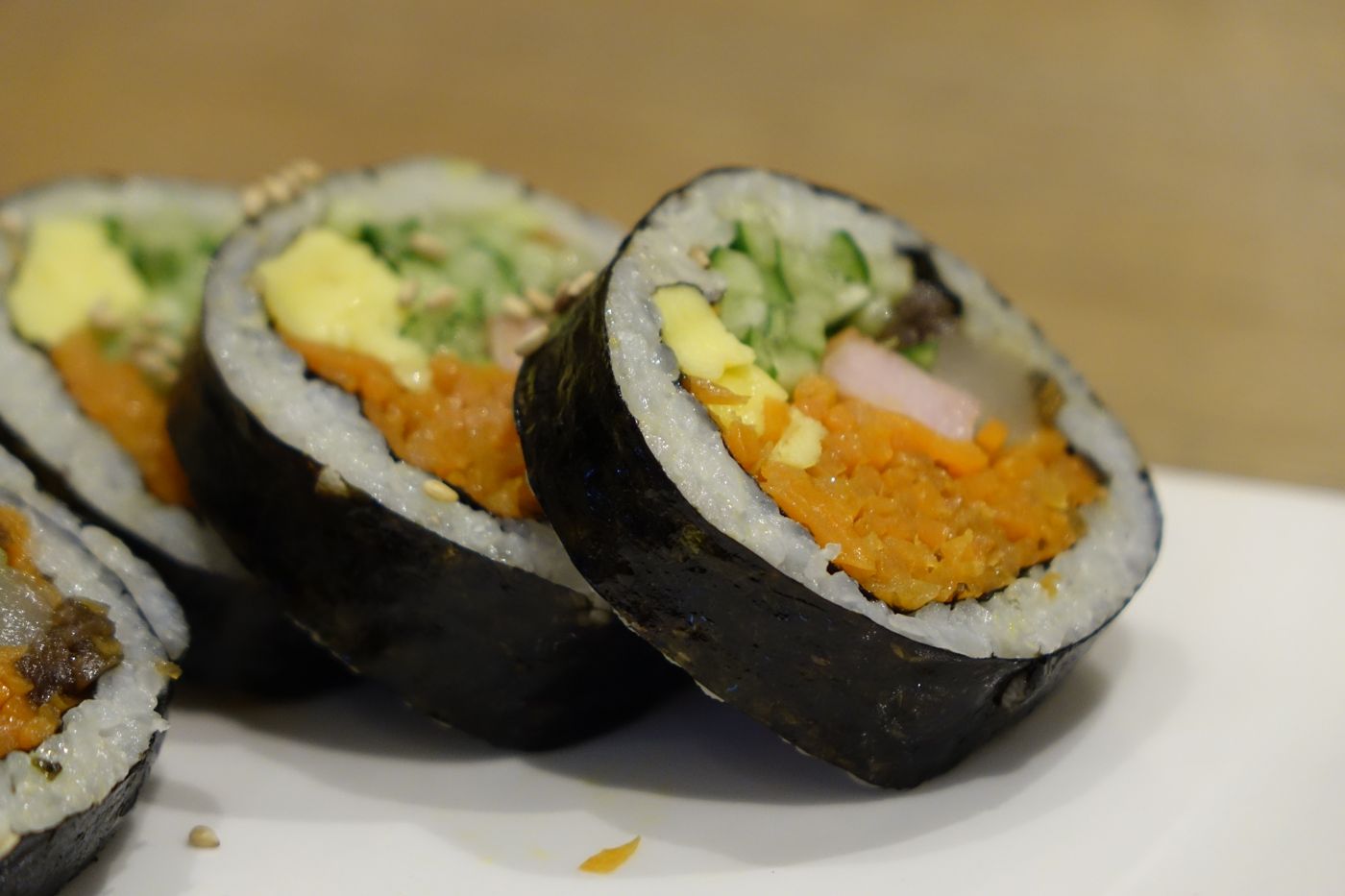 Gimbap (Seaweed Rice Rolls)김밥Rice seasoned with sesame oil and salt, rolled in laver around strips of spinach, egg, carrot and pickled radish, then sliced — Korea's classic picnic and lunchbox food.
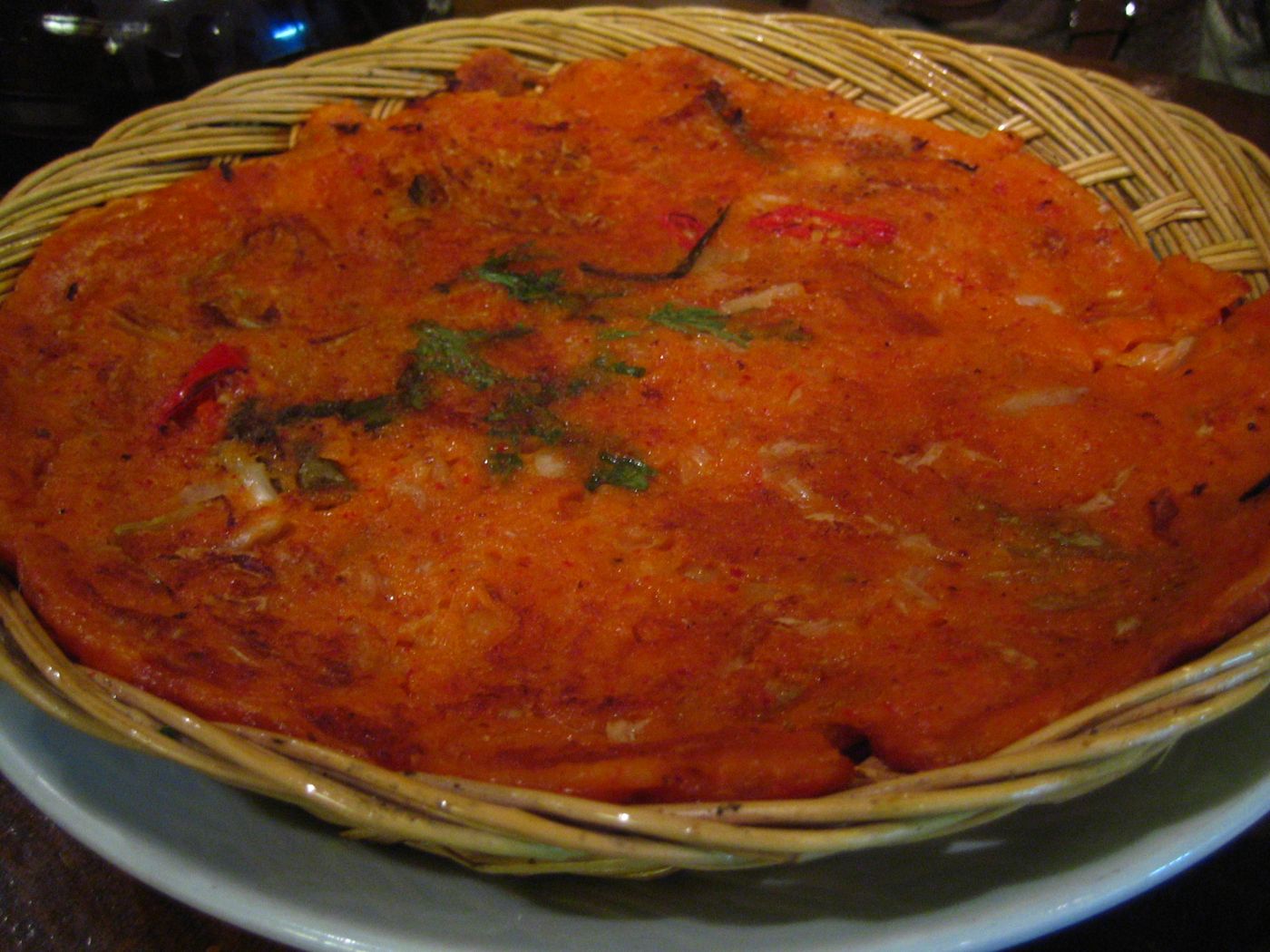 Kimchi Jeon (Kimchi Pancake)김치전Chopped, well-fermented kimchi folded into a thin flour batter and pan-fried until crisp at the edges — tangy, savory and quick to make.
Sources
- 01떡볶이 (Tteokbokki) — Encyclopedia of Korean Culture
- 02한식이야기: 떡볶이 (Korean Food Story: Tteokbokki) — Korean Food Promotion Institute
- 03한식이야기: 궁중떡볶이 (Korean Food Story: Gungjung Tteokbokki) — Korean Food Promotion Institute
- 04From the 'Gate of the Dead' to lively haunts, Sindang-dong blends the historical and hip — Korea JoongAng Daily
- 05Rice cake, Garaetteok, Rod shape (A0110010009a) — Korean Food Composition Table
Last updated