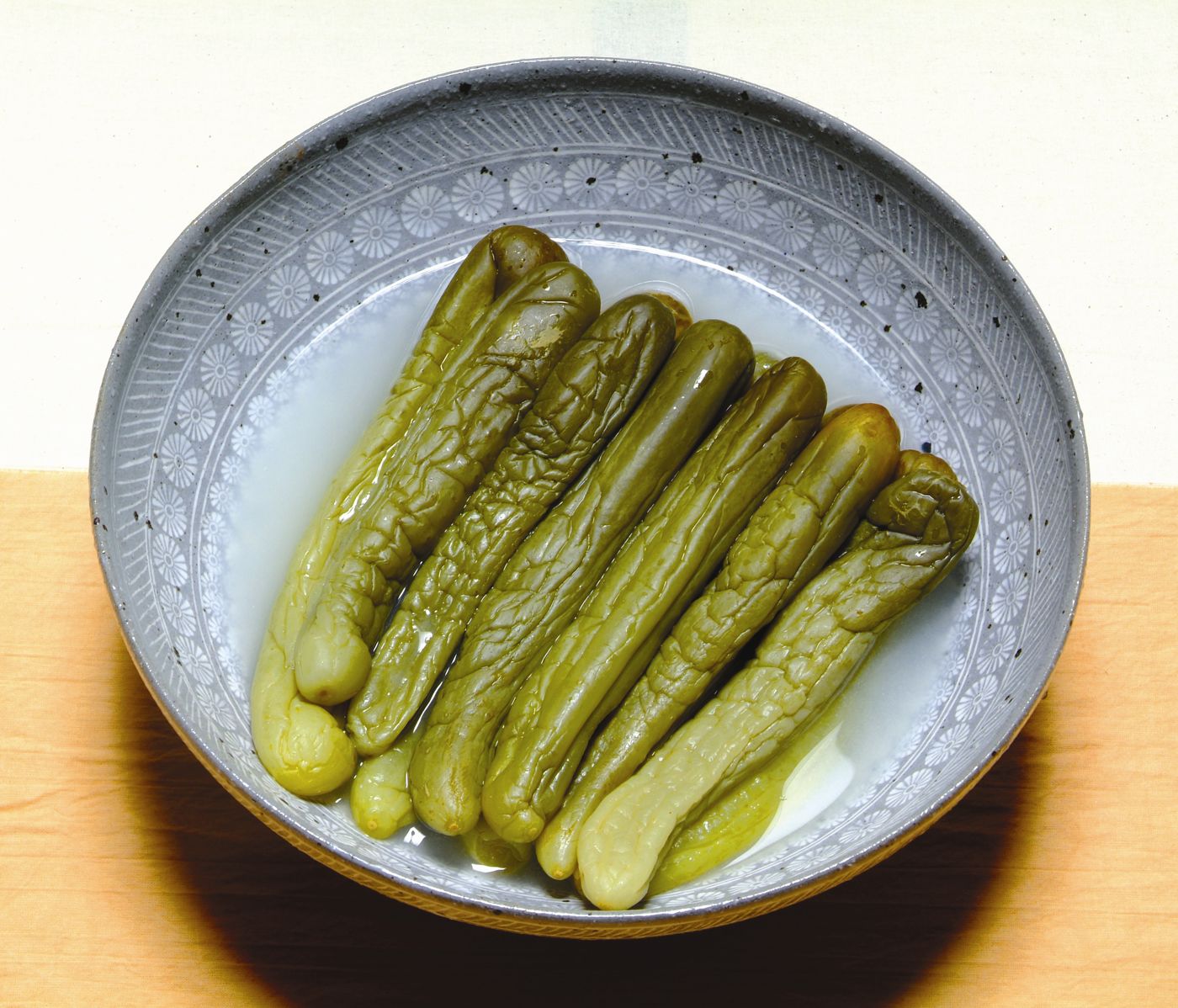
 Photo: wizdata, CC0, via Wikimedia Commons
Jangajji · Pickled 장아찌
Salt-Brined Pickled Cucumbers
오이지
Romanization: oiji
Whole cucumbers cured in a strong salt brine until golden and wrinkled — a summer staple that is soaked, sliced and served in cold water or dressed as oiji-muchim.
- Serves
- 20
- Prep
- 20 min
- Cook
- 15 min
RegionSeoul & Gyeonggi
Jump to recipeRecipe
Ingredients · Serves 20
- 10 Small, firm pickling cucumbersabout 1.5 kg, unwaxed and very fresh
- 2.5 LWaterrice-rinsing water may replace part of it
- 250 gCoarse sea salt (cheonilyeom), non-iodizedabout 1⅔ cups; a roughly 10% brine
Method
Technique: Jangajji: Pickling in Jang
Step 1: Scrub the cucumbers gently under running water and trim a sliver from the blossom end. Pack them snugly, standing or lying, in a clean crock, glass jar or food-grade container that can take boiling liquid.
Step 2: Bring the water and salt to a rolling boil, stirring until dissolved, and pour it over the cucumbers while still boiling. Weigh them down with a heavy plate or a sealed bag of brine so that they stay fully submerged, and cover loosely.
Step 3: Leave at cool room temperature (about 18–24°C). After 2–3 days, pour off the brine, bring it back to a boil, let it cool completely and pour it back over the cucumbers. Repeat once more 2–3 days later.
Step 4: The oiji are ready in 7–10 days, when they are evenly yellow-green, slightly shriveled and crisp right through. Check every day or two and skim off any white film that forms on the surface.
Step 5: Move the container to the refrigerator, keeping the cucumbers submerged. They keep for several months chilled; discard any that turn soft, slimy or bad-smelling.
Step 6: To serve, slice thinly and soak in cold water for 10–30 minutes, tasting until the salt is pleasant. Float the slices in fresh cold water for oiji-naengguk, or squeeze them dry in a cloth and dress with garlic, gochugaru, sesame oil and a pinch of sugar for oiji-muchim.
Origin & History
Oiji are whole cucumbers cured in a strong salt brine until they turn yellow-green, wrinkled and crisp. Cucumbers have a long history in Korea: the Encyclopedia of Korean Folk Culture notes that cucumber seeds turn up among finds from around the 1st century BCE at the Sinchang-dong site in Gwangju. Late-Joseon household manuals record several cucumber pickles; the 1766 Jeungbo sallim gyeongje gives recipes seasoned with garlic, ginger, chili and chives, and Imwon gyeongjeji describes a salt-cured cucumber much like today's oiji.
Yongin, south of Seoul, was especially famous for it. Jeungbo sallim gyeongje and Gyuhap chongseo both carry Yongin-style cucumber pickles, and Buin pilji (1915), a later household manual, describes the method: whole cucumbers are covered with a brine of clear rice-rinsing water, cold water and salt; the next day the brine is drained off, brought to a boil, cooled and poured back, and the process is repeated six or seven times. Yongin oiji used midsummer cucumbers, and the pickles were eaten together with their brine.
Its classification has shifted. The folk encyclopedia observes that, strictly, brine-fermented oiji is a kind of kimchi, but most Koreans today think of it — especially once rinsed and dressed with garlic, chili and sesame oil — alongside jangajji and Western-style pickles. Leftover oiji used to be rinsed, dried and turned into soy-sauce jangajji so that nothing went to waste.
Key Ingredients
- Cucumber오이Slender, thin-skinned Korean cucumbers, prized for their crunch. Stuffed and fermented as oi-sobagi, dressed quickly as oi-muchim, salted into oiji or floated in chilled summer soup.
 Sun-Dried Sea Salt천일염Coarse sea salt made by evaporating seawater with sun and wind in tidal-flat salt pans, most of it from Sinan County off Korea's southwest coast. It is the everyday salt for salting cabbage and making jang.
Nutrition
| Calories | 6 kcal |
|---|---|
| Protein | 0.3 g |
| Fat | 0.1 g |
| Carbohydrates | 1.2 g |
| Fiber | 0.7 g |
| Sodium | 824 mg |
Notable forVitamin K
From the Korean Food Composition Table entry “Cucumber, Salted” (오이지, 염절임; per 100 g: 11 kcal, 1.3 g fiber, 1,647 mg sodium, 17.9 µg vitamin K), scaled to the serving size. These figures are for oiji straight from the brine; soaking the slices before eating, as is customary, lowers the sodium by an amount the table does not report. Actual values vary with ingredients, portion size and preparation.
Health Benefits
- Very low in calories: cucumbers are mostly water, and oiji has only about 6 kcal per half cucumber.
- Summer refreshment: served in cold water, it was traditionally prized as a crisp, cooling side dish that revives the appetite in hot weather.
- Brine fermentation: the cucumbers ripen in salt brine, a slow pickling process; how much benefit fermented pickles offer is still being researched.
Regional Variations
- Yongin oiji (Gyeonggi): the historic regional style, cured in salted rice-rinsing water that is repeatedly boiled and returned to the crock.
- Oiji-naengguk: thin slices soaked to remove excess salt and floated in cold water, sometimes with green onion and chili, as a refreshing summer soup.
- Oiji-muchim: slices soaked, squeezed dry and dressed with garlic, gochugaru, sugar and sesame oil — the most common way to eat it today.
- Oiji-jangajji: rinsed, dried oiji re-pickled in soy sauce so it keeps through the year.
Pairings
- Oiji Muchim (Seasoned Pickled Cucumber)오이지무침Salt-brined oiji cucumbers sliced thin, soaked, squeezed hard and dressed with chili, garlic and sesame — a crunchy, tangy summer banchan.
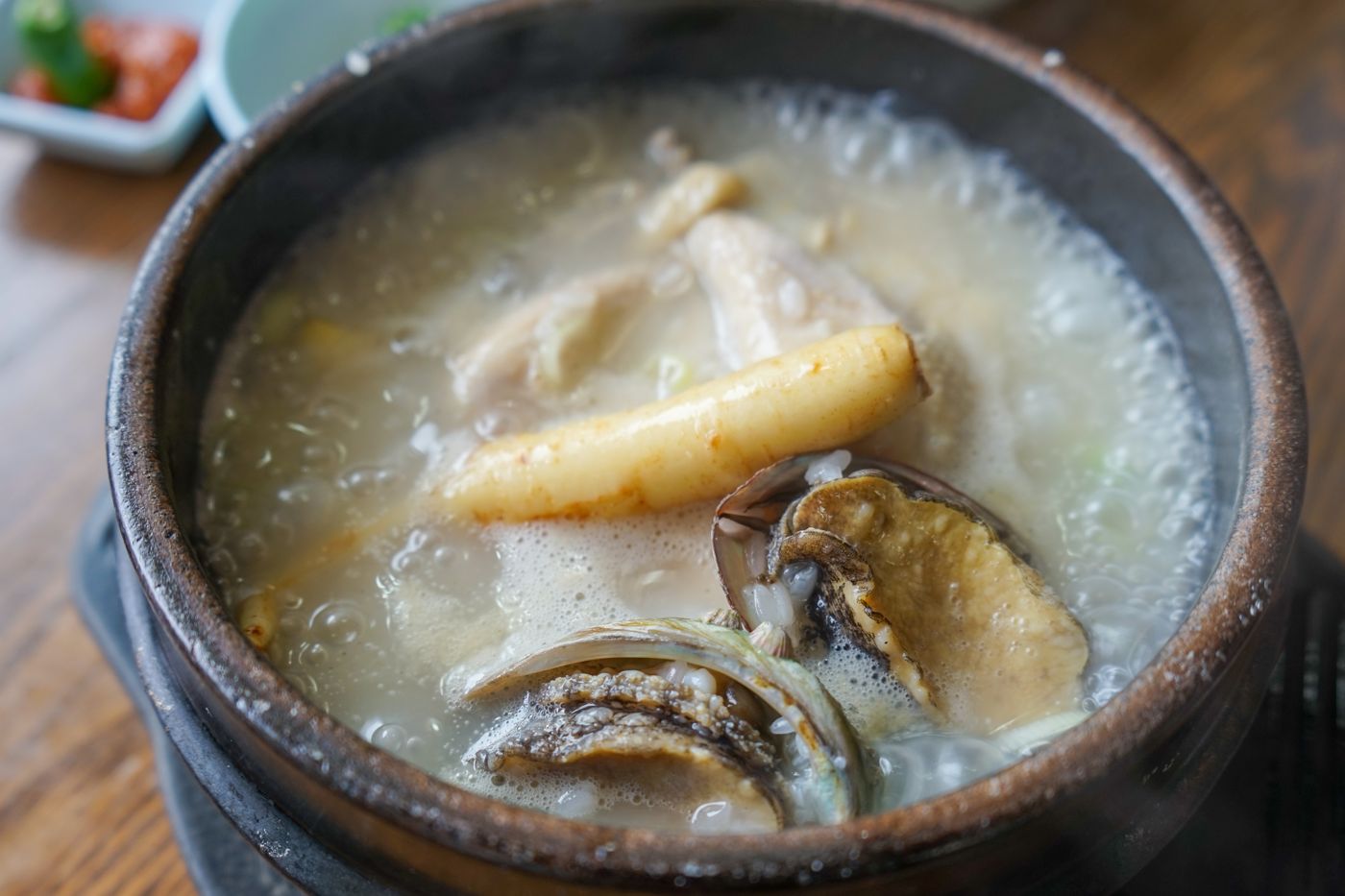 Samgyetang (Ginseng Chicken Soup)삼계탕A whole young chicken stuffed with glutinous rice, ginseng, jujubes and garlic and simmered until tender — the classic hot soup for Korea's dog days of summer.
 Doenjang Jjigae (Soybean Paste Stew)된장찌개A thick, savory stew of fermented soybean paste with tofu, zucchini and whatever the season offers — the everyday pot at the center of the Korean table.
Sources
- 01A study on the book Buinpilji (婦人必知, 1915) — ScienceON (KISTI)
- 02Korean Food Composition Table: Cucumber, Salted — National Institute of Agricultural Sciences
- 03오이지 - 한국민속대백과사전 (Encyclopedia of Korean Folk Culture)
- 04Dill Pickles (fermented) - National Center for Home Food Preservation
- 05Sodium in Your Diet - U.S. Food and Drug Administration
Last updated