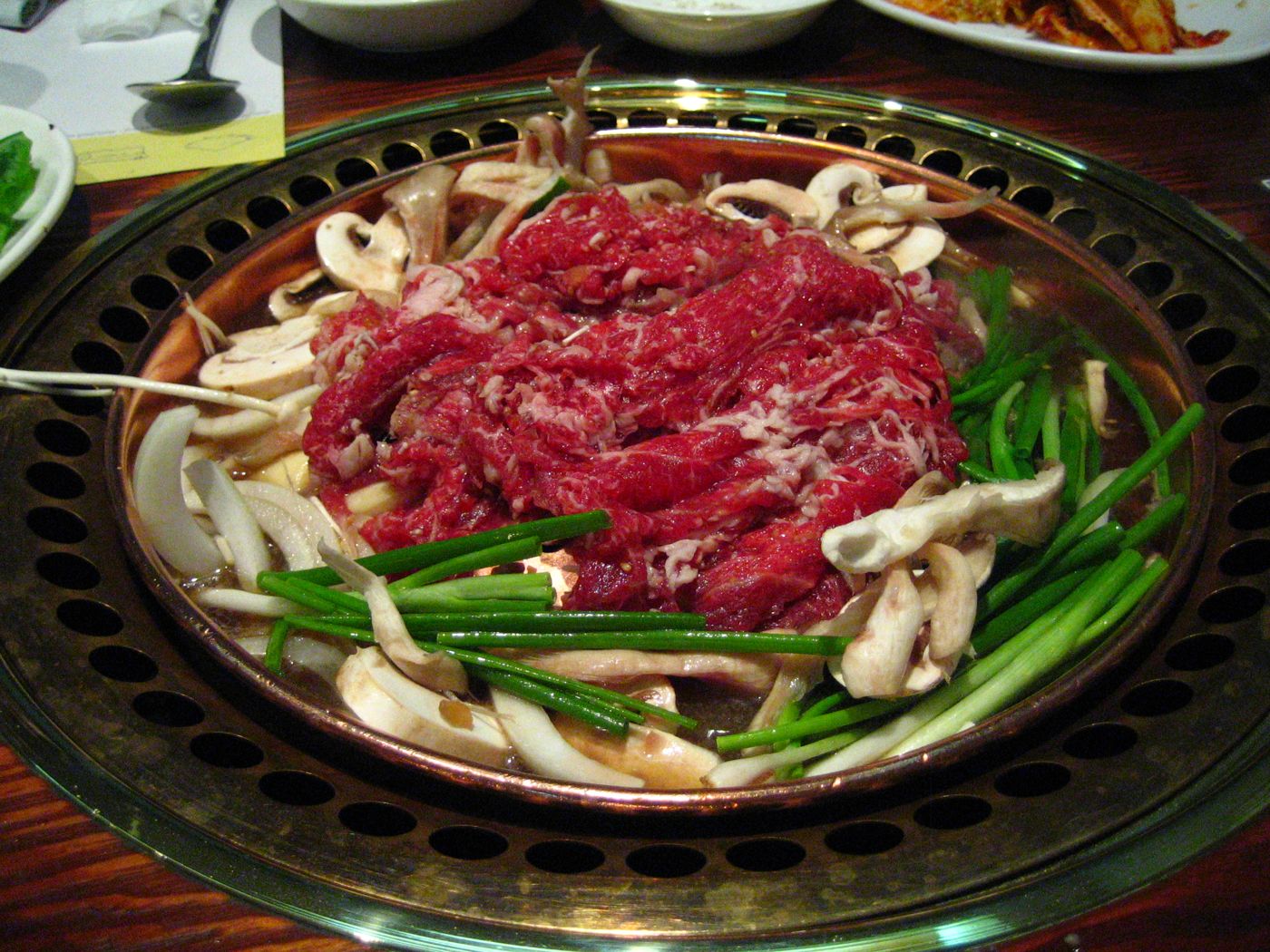
 Photo: ayustety, CC BY-SA 2.0, via Wikimedia Commons
Gui · Grilled 구이
Bulgogi (Marinated Grilled Beef)
불고기
Romanization: bulgogi
Thin slices of beef marinated in soy sauce, pear, garlic and sesame, then grilled or seared — descended from the court dish neobiani and Korea's best-known meat dish.
- Serves
- 4
- Prep
- 20 min
- Cook
- 15 min
RegionSeoul & Gyeonggi · Northern Provinces (Hwanghae, Pyeongan, Hamgyeong)
Jump to recipeRecipe
Ingredients · Serves 4
- 600 gBeef sirloin, ribeye or tenderloinsliced 2–3 mm thick (partly freeze to slice easily)
- 4 tbspSoy sauce
- 1½ tbspSugar or honey
- 100 gKorean (Asian) peargrated
- 100 gOnionhalf grated, half thinly sliced
- 5 clovesGarlicminced
- 3 stalksGreen onionschopped and cut into lengths
- 1½ tbspToasted sesame oil
- 1 tbspToasted sesame seedslightly crushed
- ¼ tspBlack pepper
- 100 gFresh shiitake or other mushroomssliced
- 1 tbspNeutral cooking oilif pan-searing
Method
Technique: Grilling Gui
Step 1: Pat the beef slices dry and cut any very large pieces into palm-sized ones.
Step 2: Mix the soy sauce, sugar, grated pear, grated onion, garlic, chopped green onion, sesame oil, sesame seeds and pepper in a bowl.
Step 3: Add the beef and massage the marinade in with your hands. Fold in the sliced onion and mushrooms. Marinate for 30 minutes at room temperature or up to 8 hours in the refrigerator.
Step 4: To grill: heat a charcoal grill or grill pan until very hot, lay the slices out flat and cook for about 1 minute per side, until browned at the edges but still juicy.
Step 5: To pan-sear: heat the oil in a large skillet over high heat and cook the beef in batches without crowding, 2–3 minutes, adding the vegetables and green onion lengths with the last batch.
Step 6: Serve hot with rice, lettuce or perilla leaves for wrapping, and ssamjang or sliced garlic and chili on the side.
Origin & History
Bulgogi literally means "fire meat." The Encyclopedia of Korean Culture defines it as beef sliced thin and wide, marinated and grilled on a wire grill, and notes that it used to be called neobiani — a term used in the palace and in aristocratic Seoul households, meaning meat sliced broad. The encyclopedia's marinade is soy sauce, honey or sugar, chopped green onion, garlic, sesame salt and black pepper, and the meat is cooked over well-lit charcoal.
Korean writers often trace the dish back to maekjeok, a skewered, pre-seasoned roast associated with the ancient kingdom of Goguryeo, with the theory that once wire grills replaced skewers the meat became bulgogi. Food historians Lee Gyu-jin and Cho Mi-sook, in a 2021 history of Korean grilled meat summarized by the Kookje Sinmun, treat that lineage more carefully: the maekjeok link was first proposed by the scholar Choe Nam-seon, maekjeok may have been a whole roast rather than sliced meat, and while the accepted outline runs from maekjeok through the Goryeo-era seolyamyeok to neobiani and modern bulgogi, every step remains debated. The Korean Food Promotion Institute adds that neobiani was cut thicker than modern bulgogi and was less sweet, since sugar was scarce.
The word itself is modern. Lee and Cho report its earliest known appearance in Hyeon Jin-geon's short story Tarakja, published in the magazine Gaebyeok in 1922, where a face is compared to a lump of bulgogi on glowing charcoal. In their account, eating grilled beef out became common under Japanese rule as meat consumption rose in Seoul and Pyongyang, with Pyongyang especially famous for it; several words — neobiani, gungogi and others — were used loosely for this Pyongyang-style grilled beef.
After the Korean War a second style became popular: thin beef simmered with vegetables and broth on a domed brass pan, often called Seoul-style bulgogi. Lee and Cho suggest it suited a time of scarce, lower-grade meat that could be stretched with vegetables. Today both the grilled and broth styles go by the same name. See grilling gui and Korean BBQ culture.
Key Ingredients
 Soy sauce간장Korean soy sauce, in two main kitchen forms: pale, salty guk-ganjang (soup soy sauce) brewed the traditional way from meju, and darker, sweeter jin-ganjang for braises and marinades.
- Korean Pear배The large, round, crisp and very juicy Korean pear (bae). Beyond eating fresh, it is grated into meat marinades and sliced into mild kimchi for natural sweetness.
 Garlic마늘Used raw, minced, pickled and roasted, garlic is one of the essential aromatics of Korean food — in seasonings, marinades, kimchi and namul.
 Green onion파Korean green onion (pa), from thick-stemmed daepa to slender scallions — chopped into nearly every seasoning sauce, soup and kimchi, and the star of pa-kimchi.
 Sesame참깨Toasted sesame seeds and sesame oil (chamgireum) finish countless Korean dishes, adding a nutty aroma and gloss.
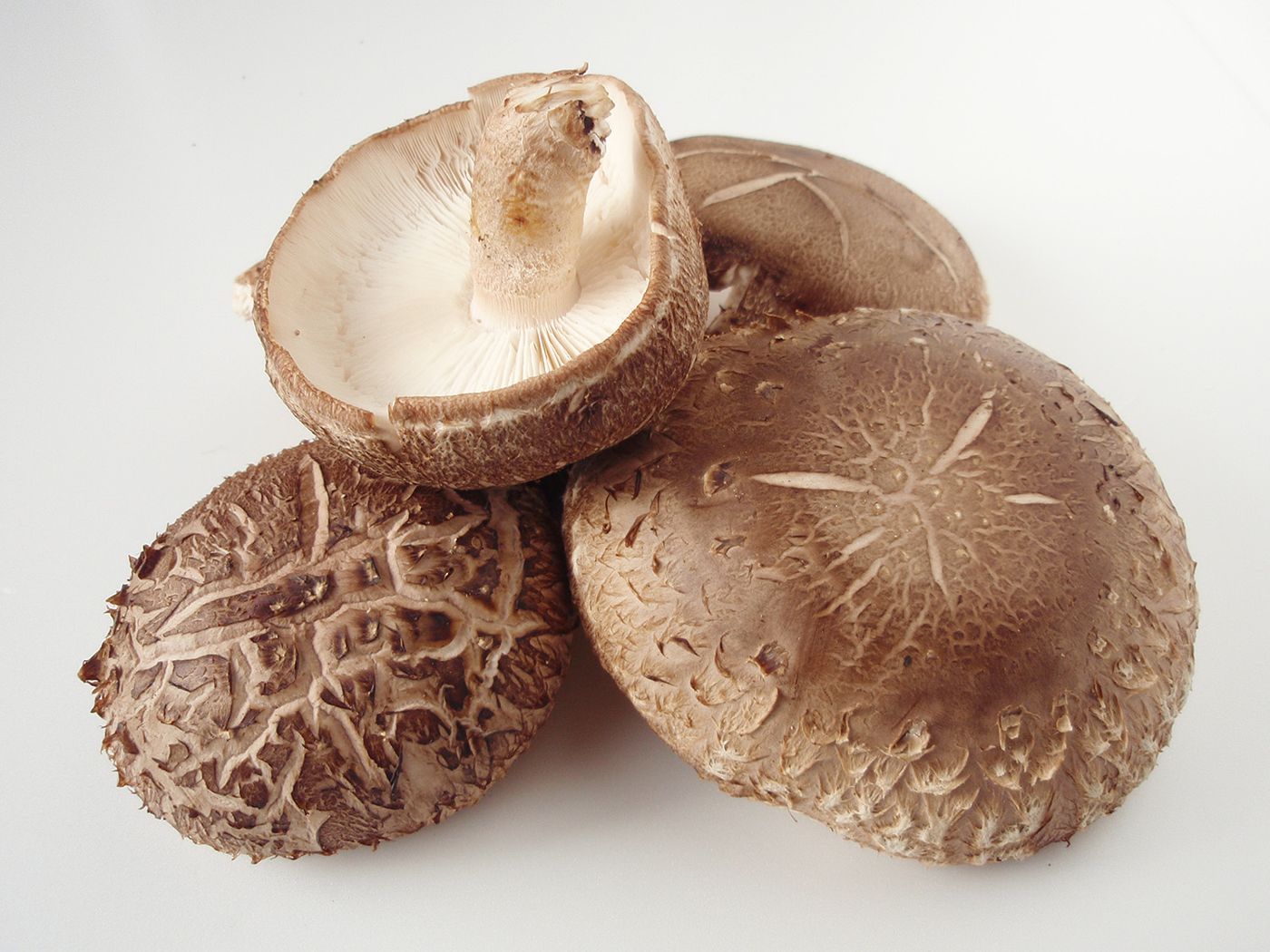 Shiitake mushroom표고Dark-capped, meaty mushrooms known in Korean as pyogo or pyogo-beoseot. Used fresh in stir-fries and pan-fried dishes, and dried for a deeply savory broth and an intensely aromatic bite.
Nutrition
| Calories | ~475 kcal |
|---|---|
| Protein | ~33 g |
| Fat | ~31 g |
| Carbohydrates | ~15 g |
| Fiber | ~2.7 g |
| Sodium | ~960 mg |
Notable forProtein · Zinc · Vitamin B12 · Selenium
Estimated by summing USDA FoodData Central (SR Legacy) values for raw top sirloin, lean and fat, choice (FDC 168728), soy sauce (FDC 174277), sugar, Asian pear (FDC 168177), onion (FDC 170000), garlic, scallions, sesame oil, sesame seeds, shiitake (FDC 169242) and soybean oil, divided by 4. Assumes all the marinade is eaten; some stays in the bowl or drips off on a grill, so sodium and sugar are likely lower in practice. Leaner cuts such as round reduce fat considerably. Actual values vary with ingredients, portion size and preparation.
Health Benefits
- Protein and minerals: beef is a rich source of complete protein, zinc, iron and vitamin B12.
- Eaten with vegetables: bulgogi is traditionally wrapped in lettuce or perilla leaves and eaten with namul and kimchi, which balances a meat-centered meal. See the balanced Korean meal.
- Fruit in the marinade: grated pear adds sweetness and helps tenderize the meat, allowing a little less added sugar.
Regional Variations
- Grilled (seokswae) bulgogi: thin marinated beef cooked over charcoal on a wire grill — closest to neobiani.
- Seoul-style (broth) bulgogi: beef, onion, mushrooms and glass noodles simmered in a shallow pool of broth on a domed brass pan; the juices are spooned over rice.
- Eonyang and Gwangyang bulgogi (Gyeongsang, Jeolla): regional styles of thinly cut or minced seasoned beef grilled over charcoal, known by their town names.
- Ttukbaegi bulgogi: bulgogi and broth cooked and served bubbling in an earthenware pot, a common lunch dish.
- Pork and other variations: spicy pork bulgogi (jeyuk-bokkeum) with gochujang, and chicken or duck versions, borrow the name.
Pairings
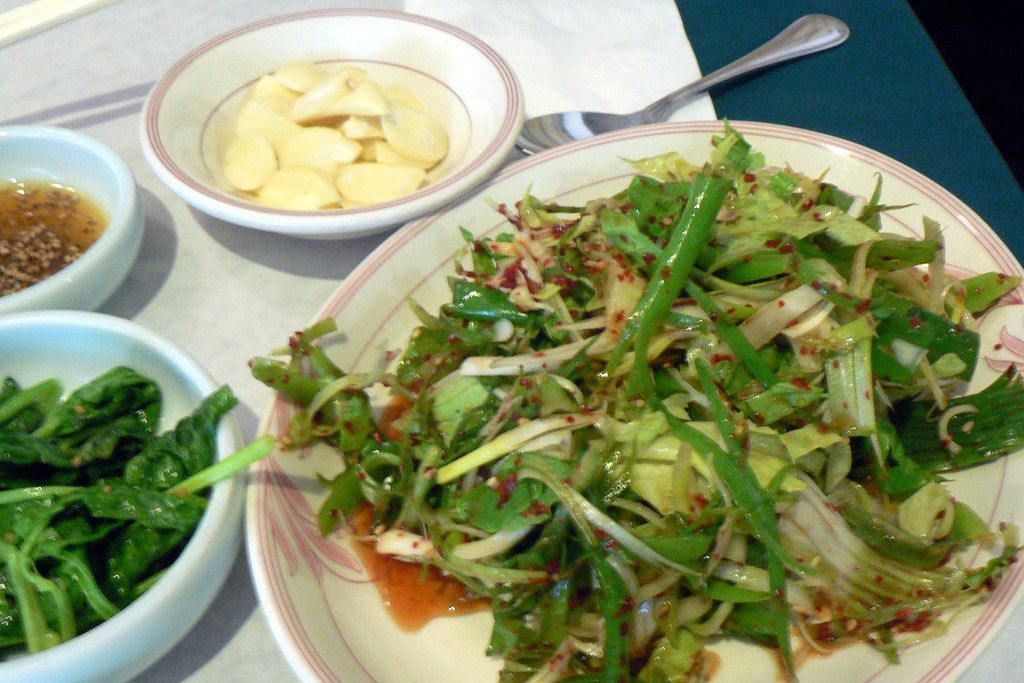 Pajeori (Green Onion Salad)파절이Fine shreds of Korean green onion tossed with chili flakes, soy sauce, vinegar and sesame oil — the sharp, bright salad that cuts the richness of grilled pork.
 Doenjang Jjigae (Soybean Paste Stew)된장찌개A thick, savory stew of fermented soybean paste with tofu, zucchini and whatever the season offers — the everyday pot at the center of the Korean table.
 Napa Cabbage Kimchi배추김치Salted napa cabbage layered with a red paste of chili, garlic, ginger and fermented seafood, then left to ripen: the kimchi most people picture first.
Sources
- 01불고기 (Bulgogi) — Encyclopedia of Korean Culture
- 02한식이야기: 불고기 (Korean Food Story: Bulgogi) — Korean Food Promotion Institute
- 03불고기라는 말, 현진건 소설서 처음 나왔네 (The word bulgogi first appeared in a Hyeon Jin-geon story; review of Lee Gyu-jin and Cho Mi-sook, Bulgogi) — Kookje Sinmun
- 04Chemicals in Meat Cooked at High Temperatures and Cancer Risk — National Cancer Institute
- 05Beef, top sirloin, steak, separable lean and fat, choice, raw (FDC 168728) — USDA FoodData Central
Last updated