 Photo: https://pixabay.com/users/ArgentumFerrum-990817/ ArgentumFerrum], CC0, via Wikimedia Commons
Gui · Grilled 구이
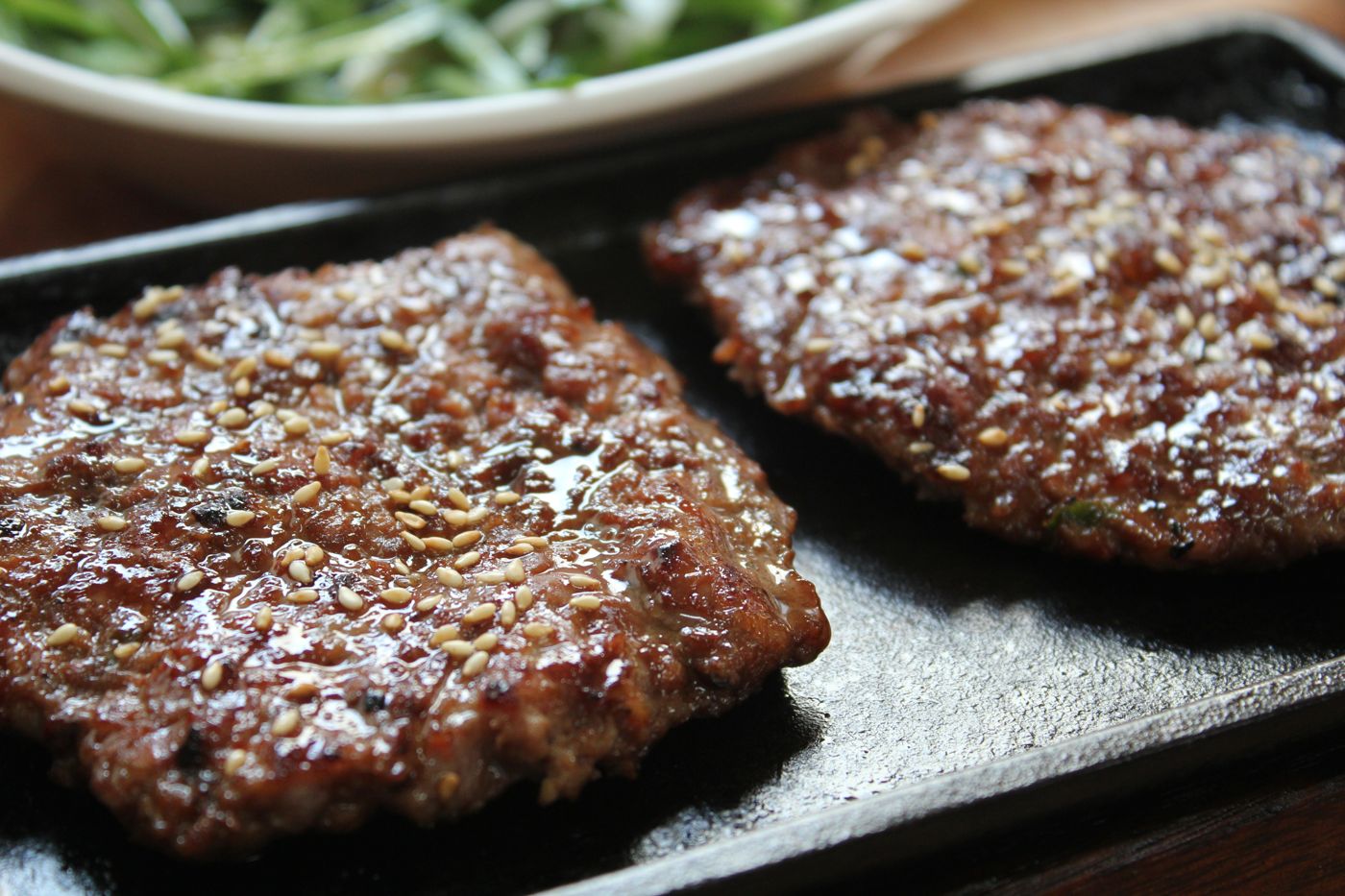
Tteokgalbi (Minced Short-Rib Patties)
떡갈비
Romanization: tteokgalbi
Short-rib meat minced, seasoned sweet-savory and shaped into a patty, then grilled. Damyang presses it back onto the bone; Gwangju's Songjeong style is a flat boneless square.
- Serves
- 4
- Prep
- 40 min
- Cook
- 15 min
RegionGwangju · Jeolla · Seoul & Gyeonggi
Jump to recipeRecipe
Ingredients · Serves 4
- 400 gBeefshort-rib meat or beef chuck, trimmed; or ground beef, 80/20
- 100 gGround porkoptional but gives a softer patty, as in Songjeong
- 100 gOnionabout ½, finely chopped
- 1 tspNeutral oilfor the onion, plus 1 tbsp for frying
- 3 tbspSoy sauce
- 2 tbspSugar
- 1 tbspToasted sesame oil
- 3 clovesGarlicminced
- 3 tbspGreen onionminced
- 60 gKorean peargrated
- 1 tspToasted sesame seeds
- ¼ tspGround black pepper
Method
Technique: Grilling Gui
Step 1: Sauté the chopped onion in 1 tsp oil over medium heat for 3–4 minutes until soft and translucent. Spread on a plate to cool completely.
Step 2: If using whole beef, chill it well and chop it with a sharp knife (or pulse briefly in a food processor) into very fine pieces. Combine with the ground pork.
Step 3: Add the cooled onion, soy sauce, sugar, sesame oil, garlic, green onion, grated pear, pepper and half the sesame seeds. Knead for 3–4 minutes, until the mixture turns sticky and holds together; slap it against the bowl a few times to bind it.
Step 4: Chill, covered, for at least 30 minutes so the seasoning settles and the meat firms up.
Step 5: With wet hands, divide into 8 portions and shape each into a flat oval about 1.5 cm thick. Press a shallow dimple into the center so the patties cook evenly.
Step 6: Heat 1 tbsp oil in a heavy pan over medium-low heat. Cook the patties 5–6 minutes per side, turning gently once, until deeply browned and cooked through to 71 °C (160 °F) in the center.
Step 7: Rest for 2 minutes, scatter with the remaining sesame seeds and serve with rice and banchan.
Origin & History
Tteokgalbi is told as a court dish made friendly. The usual story is that ribs were awkward for a king to gnaw, so palace cooks stripped the meat, chopped and seasoned it, and pressed it back onto the bone. Whether or not that happened, the idea is easy to see in the dish: meat cut so finely that anyone, young or old, can eat it without struggling. A Joseon-era name for the preparation is said to have been hyo-galbi ("filial ribs") or no-galbi ("elders' ribs"), from the habit of chopping meat small for aging parents. A 2009 newspaper survey of long-established restaurants reports that the word tteokgalbi itself is more recent: one Damyang restaurant's owner dates the name to around the early 1970s, while a Dongducheon restaurant's owner says it was already in use in the late 1960s or early 1970s.
The name has several explanations. The Digital Gwangju Culture Encyclopedia lists three: the meat is pounded for a long time like tteok (rice cake), the patty looks like tteok, or the squared shape resembles injeolmi. The meat is beaten and kneaded until it holds together, so the first explanation is easy to believe.
Three places claim the dish. In Damyang, South Jeolla, tradition holds that the diplomat Song Hui-gyeong brought a palace recipe with him when he retired there in the early fifteenth century; this is a local tradition rather than a documented history. In Gyeonggi, the Gwangju encyclopedia says, the dish is traced to court ladies who left the palace in 1911 and sold palace-style food to earn a living. Songjeong in Gwangju has the best-documented story. In the 1950s Choe Cheo-ja, who ran a small eatery near the Songjeong five-day market, made a minced, wide, thin patty for in-laws with poor teeth, using inexpensive beef from the nearby cattle market. After about forty years of her cooking, former staff opened their own restaurants nearby; in 2004 the district designated the cluster Songjeong Tteokgalbi Street. For the wider tradition of grilled meat, see Korean BBQ culture.
Key Ingredients
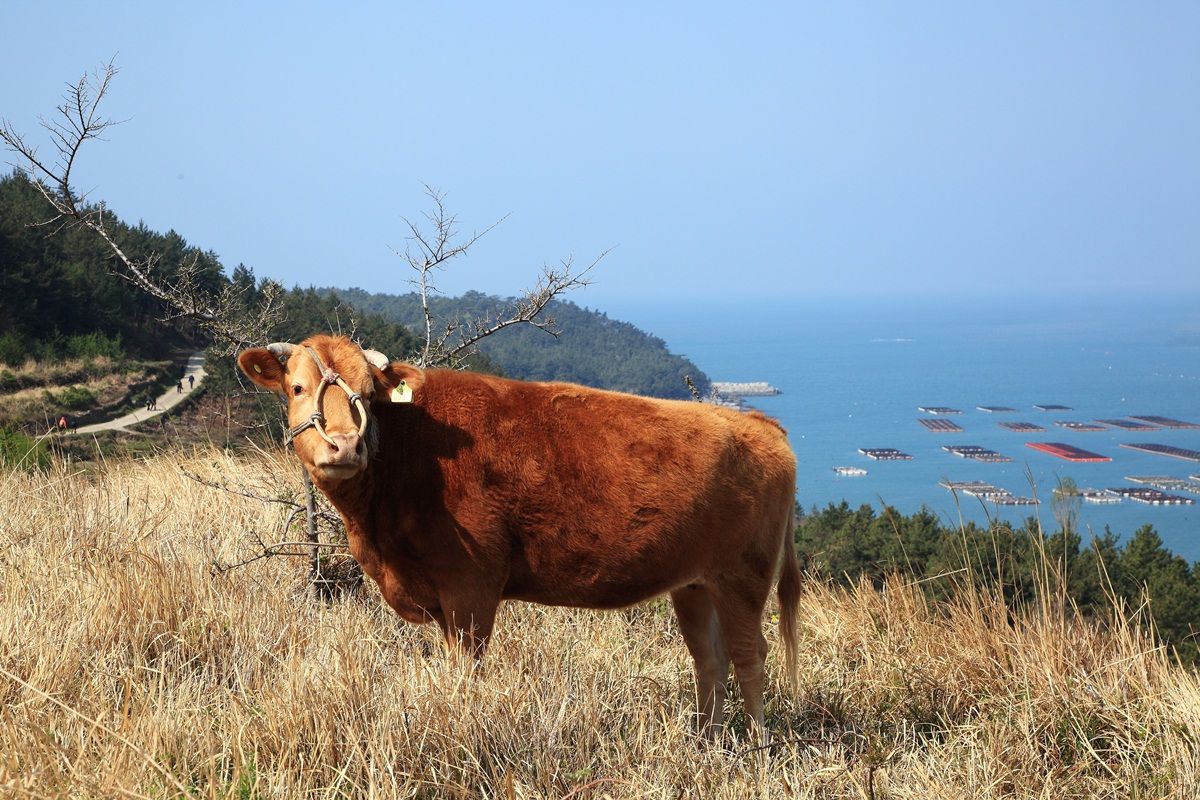 Hanu (Korean native beef)한우Beef from Korea's native cattle, most of them a warm yellow-brown, prized for rich marbling and a deep, beefy flavor. Hanu is the premium beef for grilling, braised galbi-jjim, holiday gift sets and ancestral-rite dishes.
 Pork (dwaeji-gogi)돼지고기Korea's most widely eaten meat, prized cut by cut: fatty belly for samgyeopsal, neck for the grill, lean legs for boiled suyuk and stir-fried jeyuk. Pork also anchors Jeju Island's feast cooking.
 Yangpa (onion)양파The bulb onion, literally the "Western scallion." A latecomer to Korea, it is now everywhere: sweetening stir-fries and braises, pickled in soy sauce as yangpa-jangajji, and served raw beside grilled meat.
 Soy sauce간장Korean soy sauce, in two main kitchen forms: pale, salty guk-ganjang (soup soy sauce) brewed the traditional way from meju, and darker, sweeter jin-ganjang for braises and marinades.
 Garlic마늘Used raw, minced, pickled and roasted, garlic is one of the essential aromatics of Korean food — in seasonings, marinades, kimchi and namul.
 Green onion파Korean green onion (pa), from thick-stemmed daepa to slender scallions — chopped into nearly every seasoning sauce, soup and kimchi, and the star of pa-kimchi.
- Korean Pear배The large, round, crisp and very juicy Korean pear (bae). Beyond eating fresh, it is grated into meat marinades and sliced into mild kimchi for natural sweetness.
 Sesame참깨Toasted sesame seeds and sesame oil (chamgireum) finish countless Korean dishes, adding a nutty aroma and gloss.
Nutrition
| Calories | ~440 kcal |
|---|---|
| Protein | ~23 g |
| Fat | ~33 g |
| Carbohydrates | ~13 g |
| Fiber | ~1.5 g |
| Sodium | ~824 mg |
Notable forZinc · Vitamin B12 · Protein
Estimated by summing USDA FoodData Central values for the raw ingredients and dividing by four: 80/20 ground beef (FDC 174036) standing in for short-rib meat, ground pork (FDC 167902), onion, soy sauce, sugar, sesame oil, garlic, scallion, Asian pear, sesame seeds, black pepper and canola oil for frying (all counted in full). This works out to roughly 4.7 mg zinc and 2.3 µg vitamin B12 per serving. A leaner cut or less oil lowers the fat considerably, and some fat stays in the pan. Actual values vary with ingredients, portion size and preparation.
Health Benefits
- Complete protein: beef and pork supply high-quality protein; the estimate above puts a two-patty serving at roughly 23 g.
- Zinc and vitamin B12: USDA lists 80/20 ground beef at about 4.2 mg zinc and 2.1 µg vitamin B12 per 100 g, so the beef here is a meaningful source of both.
- Easy to eat: the fine mince and soft texture suit children and older adults, which is the dish's oldest rationale.
Regional Variations
- Damyang: all-beef, from the ribs of Korean cattle. The meat is cut from the bone, finely minced, shaped into a thick square, pressed back onto the rib bone and marinated in a soy-sesame-pepper-scallion-garlic-onion seasoning; some cooks add pear or apple juice or mirin. It was once grilled over a brazier and today is grilled over oak or bamboo charcoal.
- Gyeonggi: flat and square, like steamed rice cake (siru-tteok) in shape, according to the Gwangju encyclopedia's comparison.
- Songjeong, Gwangju: boneless, flat and square, about 0.6 cm thick in the encyclopedia's recipe. It started as beef; during the late-1990s financial crisis restaurants began mixing in pork to keep prices steady, and the result was judged more tender and flavorful. It is usually served as two pieces with a bowl of pork-bone broth.
- Other meats: a Seoul restaurant in the 2009 survey makes it entirely from pork, and a Jeonju restaurant blends Korean and imported beef, though a Damyang owner says mixing in imported beef changes the aroma and puts customers off.
Pairings
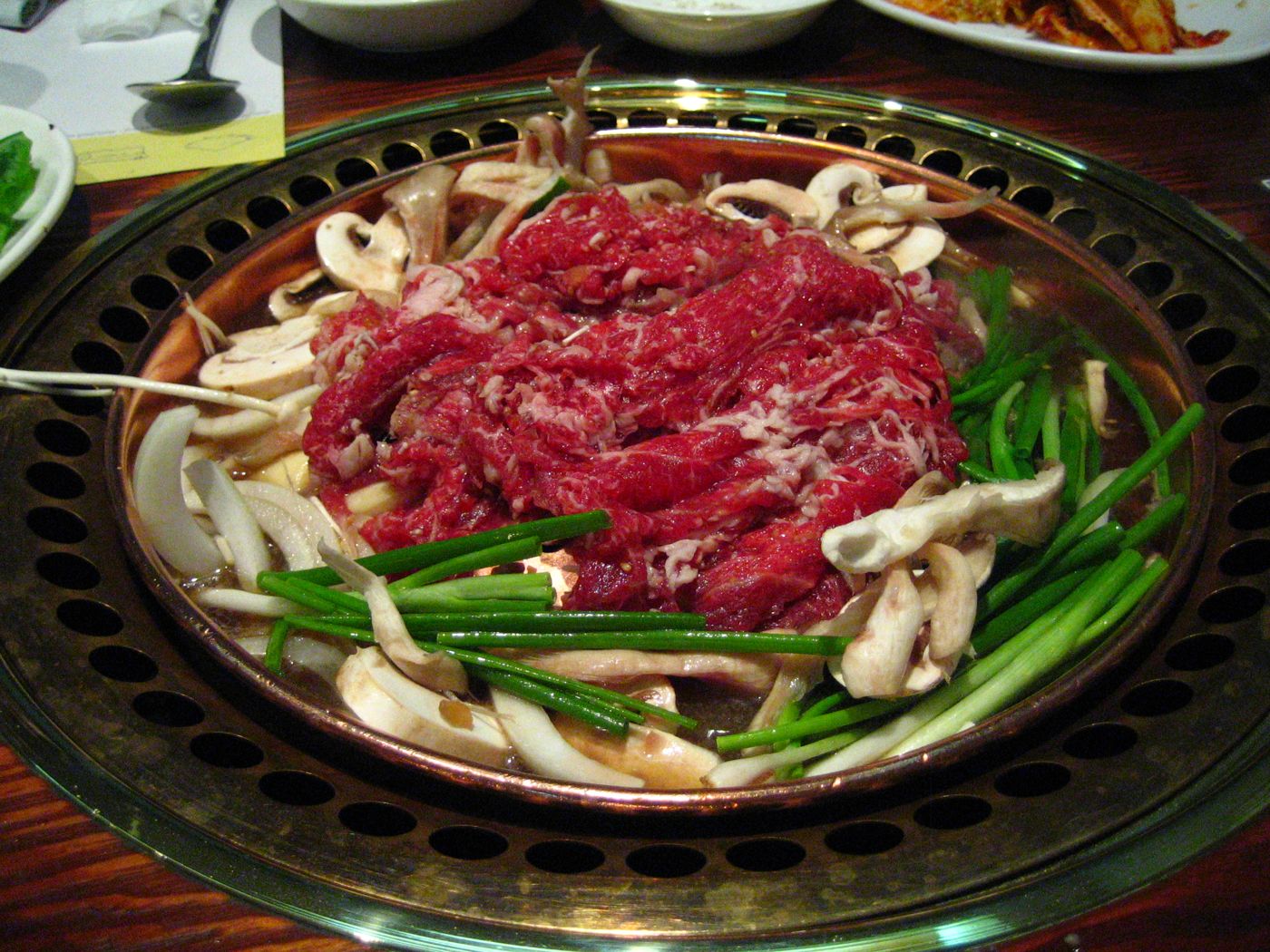 Bulgogi (Marinated Grilled Beef)불고기Thin slices of beef marinated in soy sauce, pear, garlic and sesame, then grilled or seared — descended from the court dish neobiani and Korea's best-known meat dish.
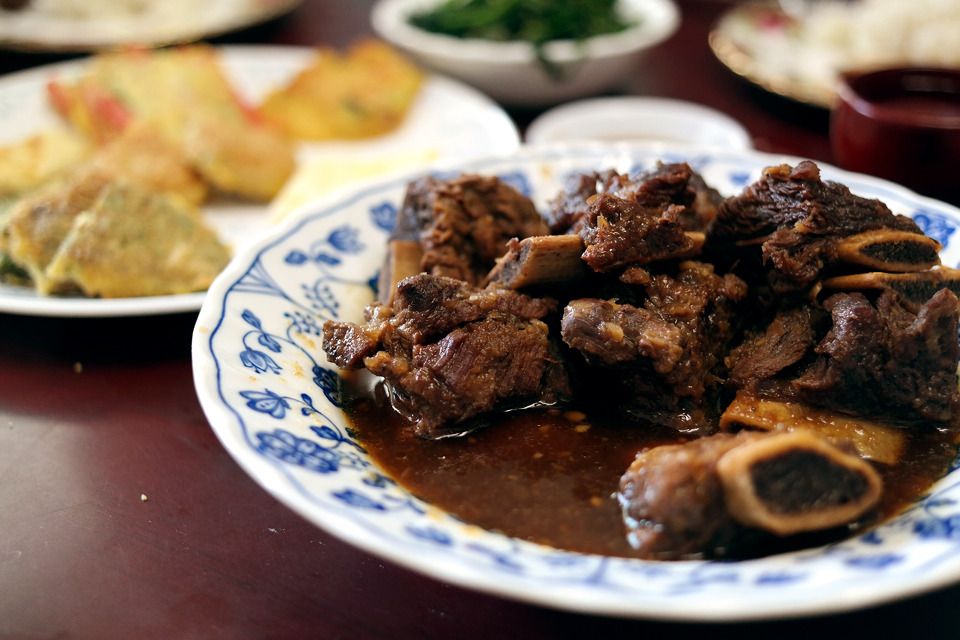 Galbi-jjim (Braised Beef Short Ribs)갈비찜Beef short ribs simmered slowly in soy sauce, pear and garlic with radish, carrot, chestnuts and jujubes until glossy and tender — a dish for holidays and honored guests.
 Kongnamul Muchim콩나물무침Soybean sprouts cooked under a lid until just tender, then tossed with garlic, green onion and sesame oil — crisp, nutty and on tables across Korea.
 Napa Cabbage Kimchi배추김치Salted napa cabbage layered with a red paste of chili, garlic, ginger and fermented seafood, then left to ripen: the kimchi most people picture first.
Sources
- 01맛있고 가격도 저렴한 송정리 떡갈비 (Songjeong-ri tteokgalbi) — Digital Gwangju Culture Encyclopedia: Gwangsan-gu
- 02㉘대를 물려 내려오는 레시피 담양 10미(味)<하> (Damyang's ten flavors, part 2) — Ajunews, 2022
- 03[백년명가②] 떡갈비, 조선시대에는 '효갈비' 라고 불렀다 — Ilgan Sports, 2009
- 04Beef, ground, 80% lean meat / 20% fat, raw (FDC 174036) — USDA FoodData Central
- 05Safe Food Handling — U.S. Food and Drug Administration
- 06Food Allergies — U.S. Food and Drug Administration
Last updated