Namul · Seasoned vegetables 나물
Aehobak Namul
애호박나물
Romanization: aehobak-namul
Young Korean squash cut into half-moons and stir-fried with garlic and a little salted shrimp — sweet, tender and quick to make.
- Serves
- 4
- Prep
- 15 min
- Cook
- 6 min
RegionSeoul & Gyeonggi · Jeolla
Jump to recipeRecipe
Ingredients · Serves 4
- 1 mediumKorean squash (aehobak)about 300 g; zucchini can be substituted
- ½ tspSaltfor salting the squash
- 2 tspSalted shrimp (saeujeot)finely chopped, with a little of its brine
- 1 cloveGarlicminced
- 1 tbspGreen onionchopped
- 2 tspNeutral cooking oil
- 1 tspToasted sesame oil
- 1 tspToasted sesame seeds
- ½ Red chilithinly sliced, optional, for color
Method
Technique: Bokkeum: Korean Stir-Frying
Step 1: Halve the squash lengthwise and slice into half-moons about 5 mm thick.
Step 2: Toss with the salt and leave for 10 minutes, then squeeze gently to remove the water that has been drawn out. This keeps the slices from turning soggy in the pan.
Step 3: Heat the cooking oil in a pan over medium heat. Add the garlic and stir for a few seconds until fragrant.
Step 4: Add the squash and stir-fry for 2–3 minutes, until it turns translucent at the edges but still has some bite.
Step 5: Stir in the salted shrimp and the chili, if using, and cook for another 30 seconds. Taste before adding any more salt — the shrimp is very salty.
Step 6: Turn off the heat, add the green onion, sesame oil and sesame seeds, toss and serve warm or at room temperature.
Origin & History
Aehobak is young, tender squash picked when it is about the size of a fist. Squash plants originated in the Americas; the Encyclopedia of Korean Culture notes that they first appear in Korean writing in the Joseon period, and the National Folk Museum's food encyclopedia places their arrival around the time of the late-sixteenth-century Japanese invasions. The squash Koreans use as aehobak is an East Asian type, botanically distinct from the Western zucchini it resembles, though it is often sold abroad as "Korean zucchini."
Recipes for stir-fried young squash appear in Joseon cookbooks. The 1809 household manual Gyuhap chongseo describes cutting a young squash into half-moons and stir-frying it quickly in plenty of oil with pork, finely pounded beef, green onion, chili and rock-tripe mushroom, finished with sesame — and, for a drinking snack, tossing in small fried glutinous-rice cakes. The 1924 Joseon mussang sinsik yori jebeop seasons sliced squash with long-aged salted-shrimp liquid, beef, green onion and green chili.
Today aehobak namul is one of the most common summer banchan and a standard vegetable in bibimbap. Young squash is also cut into thin strips as a garnish for noodle soups, and mature squash is used for porridge, rice cakes and kimchi.
Key Ingredients
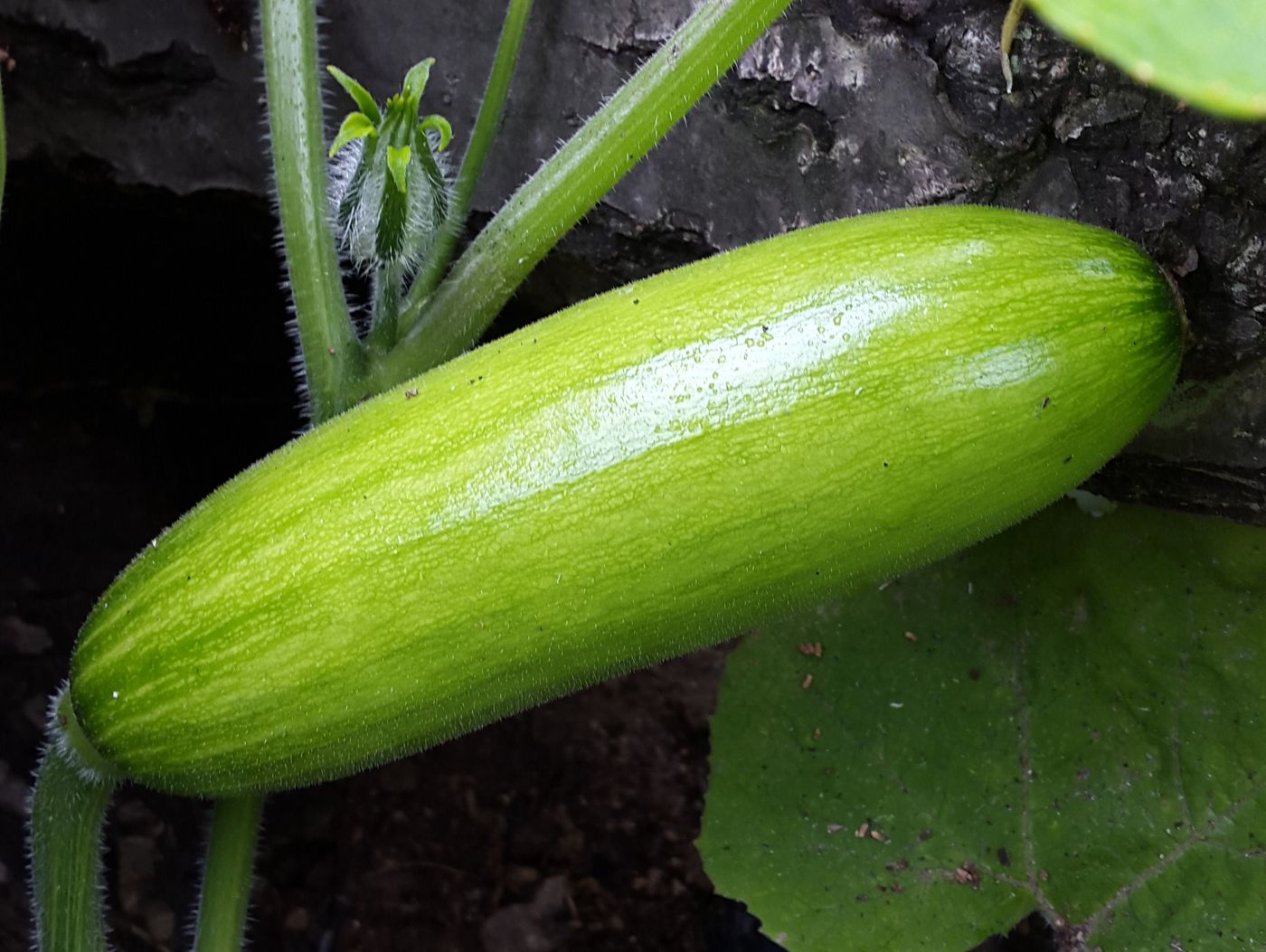 Korean zucchini애호박A pale-green young squash with thin, smooth skin and tender flesh. Sliced into rounds for hobak-jeon, sautéed as namul and added to doenjang stews.
 Salted fermented shrimp새우젓Tiny shrimp packed in salt and left to ferment — a jeotgal (salted seafood) that seasons kimchi and stews and accompanies boiled pork with briny, savory depth.
 Garlic마늘Used raw, minced, pickled and roasted, garlic is one of the essential aromatics of Korean food — in seasonings, marinades, kimchi and namul.
 Green onion파Korean green onion (pa), from thick-stemmed daepa to slender scallions — chopped into nearly every seasoning sauce, soup and kimchi, and the star of pa-kimchi.
 Sesame참깨Toasted sesame seeds and sesame oil (chamgireum) finish countless Korean dishes, adding a nutty aroma and gloss.
- Korean Chili Peppers (Fresh)고추Fresh Korean chili peppers, eaten green (putgochu) or red (hong-gochu): from the fiery cheongyang-gochu to the small, wrinkled, mild kkwari-gochu that is braised and stir-fried as banchan.
Nutrition
| Calories | ~50 kcal |
|---|---|
| Protein | ~1.3 g |
| Fat | ~4 g |
| Carbohydrates | ~3.1 g |
| Fiber | ~0.9 g |
| Sodium | ~305 mg |
Notable forVitamin C · Vitamin B6
Estimated from USDA FoodData Central values for raw zucchini (used for aehobak, which has no separate entry), garlic, green onion, canola and sesame oils and sesame seeds, plus the Korean Food Composition Table value for saeujeot, divided by four. Most of the salting salt is squeezed out; about 1 g is counted as retained. Cooking reduces vitamin C somewhat. Actual values vary with ingredients, portion size and preparation.
Health Benefits
- Light and easy to digest: young squash is mostly water with some fiber, and Korean sources describe it as gentle on digestion.
- Vitamins: summer squash supplies some vitamin C and B vitamins; the National Folk Museum's encyclopedia notes squash in general as a source of carotenoids, which are much higher in mature, orange-fleshed squash than in young green aehobak.
- Flavor from fermentation: a spoonful of salted shrimp gives the dish its savory depth without the need for soy sauce.
Regional Variations
- Seoul and Gyeonggi: the squash is salted and squeezed, then stir-fried in sesame oil with seasoned minced beef and finished with chopped saeujeot (salted shrimp) and its brine.
- South Jeolla: a coastal version stir-fries the squash with clam meat, green and red chilies, garlic and salt, finished with sesame seeds and sesame oil.
- Dried squash (hobak-goji): young squash sliced and sun-dried for winter, then soaked and stir-fried; it is one of the stored namul eaten on the first full moon.
Pairings
 Kongnamul Muchim콩나물무침Soybean sprouts cooked under a lid until just tender, then tossed with garlic, green onion and sesame oil — crisp, nutty and on tables across Korea.
- Gaji Namul가지나물Eggplant steamed until silky, torn into strips and dressed with soy sauce, garlic and sesame — a soft, savory summer namul.
 Myeolchi Bokkeum멸치볶음Small dried anchovies stir-fried until crisp, then glazed in a sweet soy and garlic syrup — a keeping banchan found in refrigerators across Korea.
Sources
- 01애호박나물 (Aehobak-namul) — Encyclopedia of Korean Folk Culture (National Folk Museum of Korea)
- 02호박 (Squash) — Encyclopedia of Korean Folk Culture (National Folk Museum of Korea)
- 03호박 (Squash) — Encyclopedia of Korean Culture
- 04Squash, summer, zucchini, includes skin, raw (FDC 169291) — USDA FoodData Central
- 05Food Allergies — U.S. Food and Drug Administration
Last updated