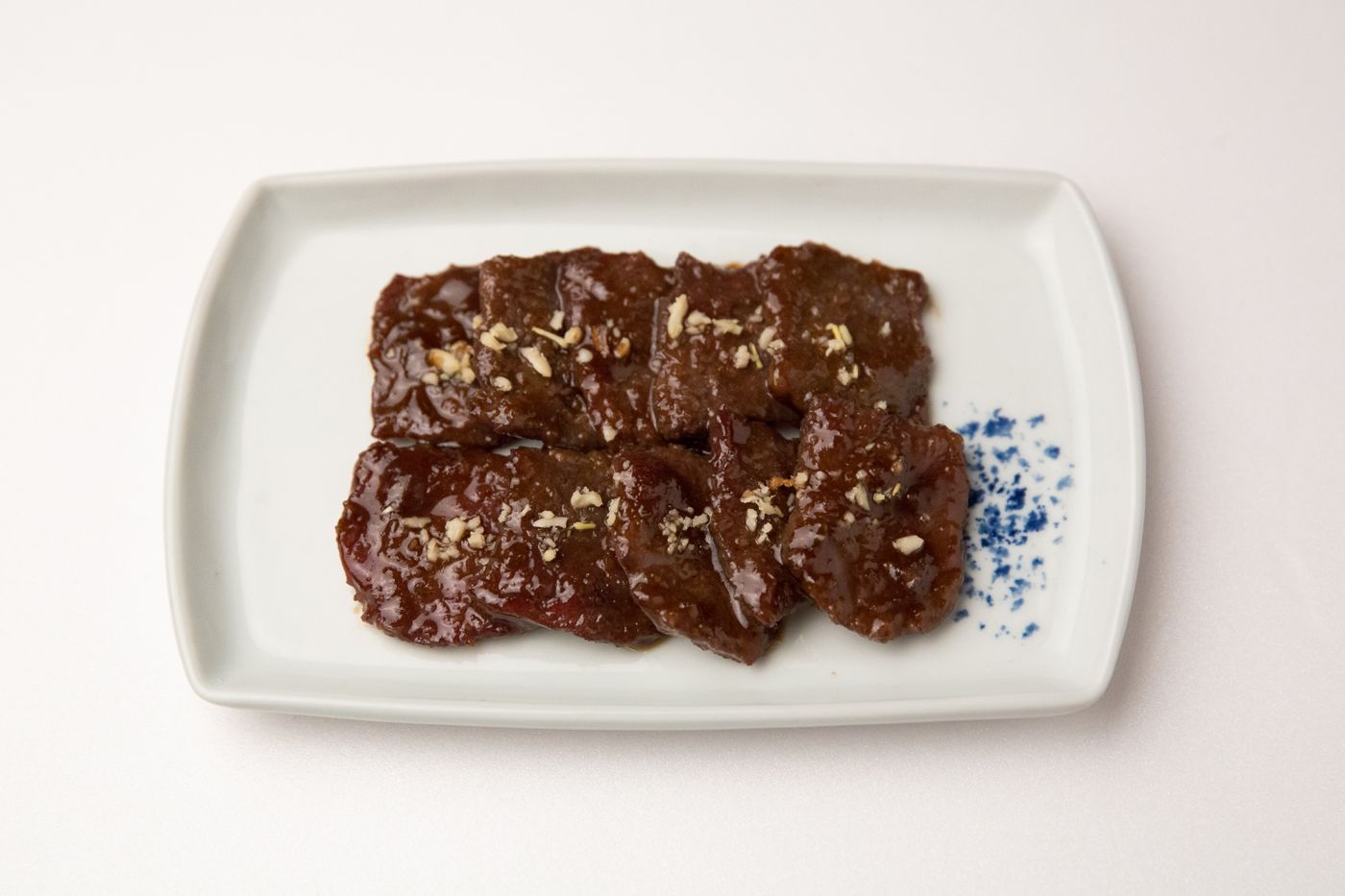
 Photo: 국립국어원, CC BY-SA 2.0 kr, via Wikimedia Commons
Gui · Grilled 구이
Neobiani (Court-Style Grilled Beef Slices)
너비아니
Romanization: neobiani
Broad, thin slices of beef marinated in soy, sugar, garlic and pear, then grilled lightly: the court and Seoul-household name for what is now usually called bulgogi.
- Serves
- 4
- Prep
- 45 min
- Cook
- 10 min
RegionSeoul & Gyeonggi
Jump to recipeRecipe
Ingredients · Serves 4
- 400 gBeef sirloin or top roundsliced about 3 mm thick across the grain, in pieces roughly 5 × 7 cm
- 60 gAsian peargrated
- 3 tbspSoy sauce
- 2 tbspSugar
- 20 gGreen onionfinely chopped
- 2 tspGarlicminced
- 1 tbspSesame oil
- ¼ tspGround black pepper
- 1 tspToasted sesame seeds
- 10 gPine nutsfinely chopped or pounded to a coarse powder
- 2 tspNeutral oilfor brushing the pan or grate
Method
Technique: Grilling Gui
Step 1: Trim any gristle or visible tendon from the beef. Lay the slices out and gently pound each with the back of a knife or a mallet to tenderize and flatten.
Step 2: Toss the beef with the grated pear and leave for 10 minutes.
Step 3: Stir together the soy sauce, sugar, green onion, garlic, sesame oil, pepper and sesame seeds. Add to the beef, turn each piece to coat, and marinate in the refrigerator for 30 minutes, no longer.
Step 4: Heat a grill, grill pan or cast-iron skillet until very hot and lightly oil it.
Step 5: Cook the slices in a single layer, about 2 to 3 minutes on the first side and 1 to 2 on the second, until browned at the edges and just cooked through.
Step 6: Sprinkle with the pine nut powder and serve straight away.
Origin & History
The name neobiani describes the cut: the Korea.net feature on the dish glosses it as beef sliced thin and broad, and the National Institute of Korean Language dictionary defines it as thinly cut beef that is seasoned and grilled. The Encyclopedia of Korean Culture adds that the word was used at the royal court and in the yangban households of Seoul, and that it is the older name for what is today called bulgogi.
The same encyclopedia traces Korean grilled meat back to maekjeok, skewered meat cooked directly over a flame. One theory it reports is that once the iron grill rack came into use, skewers were no longer needed and the dish developed into the sliced, rack-grilled form. That is a reconstruction rather than a proven chain, and the entry stresses that it is the encyclopedia contributor's own account. The same connections are discussed in royal court cuisine.
Korea.net's recipe, which describes neobiani as enjoyed at court in the Joseon period, shows how fussy the original could be: lean sirloin cut across the grain, pounded to tenderize it, soaked briefly in pear juice, then seasoned with soy sauce, honey or sugar, sesame, green onion and garlic, and finished with powdered pine nuts. It also warns against overmarinating and overcooking, both of which toughen the meat.
Key Ingredients
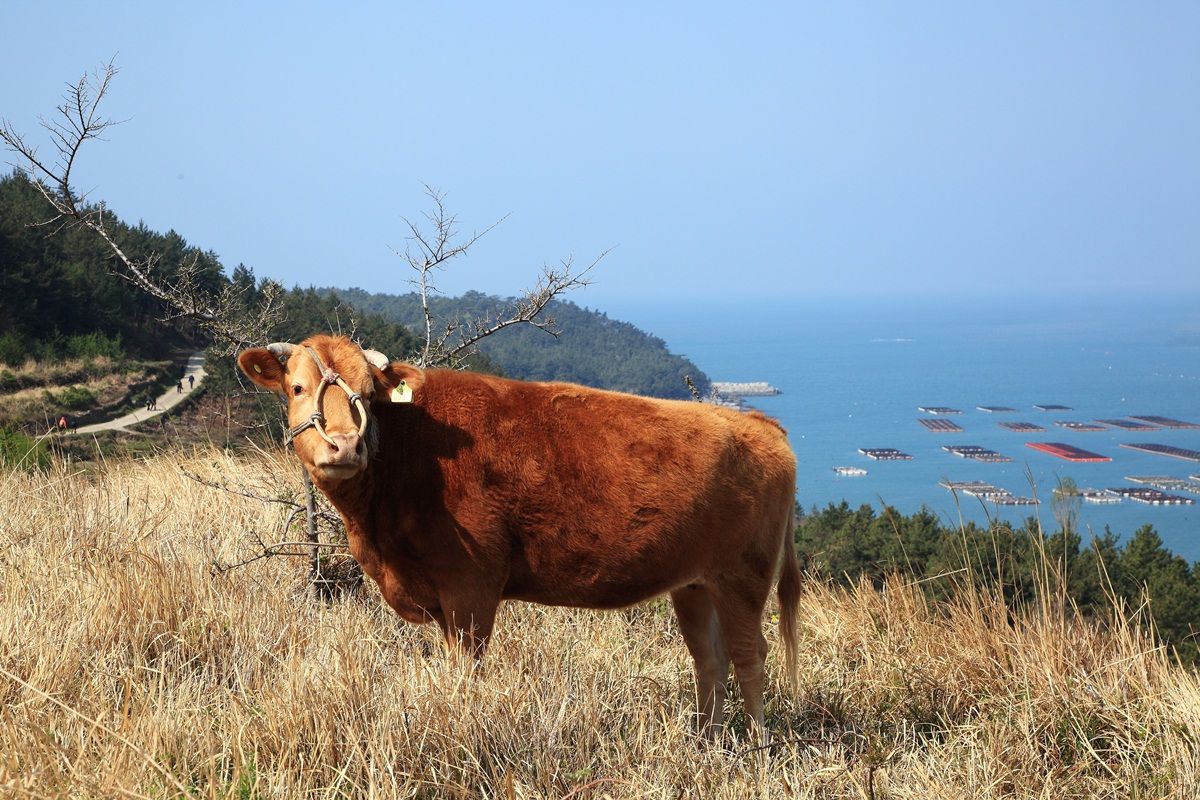 Hanu (Korean native beef)한우Beef from Korea's native cattle, most of them a warm yellow-brown, prized for rich marbling and a deep, beefy flavor. Hanu is the premium beef for grilling, braised galbi-jjim, holiday gift sets and ancestral-rite dishes.
- Korean Pear배The large, round, crisp and very juicy Korean pear (bae). Beyond eating fresh, it is grated into meat marinades and sliced into mild kimchi for natural sweetness.
 Soy sauce간장Korean soy sauce, in two main kitchen forms: pale, salty guk-ganjang (soup soy sauce) brewed the traditional way from meju, and darker, sweeter jin-ganjang for braises and marinades.
 Garlic마늘Used raw, minced, pickled and roasted, garlic is one of the essential aromatics of Korean food — in seasonings, marinades, kimchi and namul.
 Green onion파Korean green onion (pa), from thick-stemmed daepa to slender scallions — chopped into nearly every seasoning sauce, soup and kimchi, and the star of pa-kimchi.
 Sesame참깨Toasted sesame seeds and sesame oil (chamgireum) finish countless Korean dishes, adding a nutty aroma and gloss.
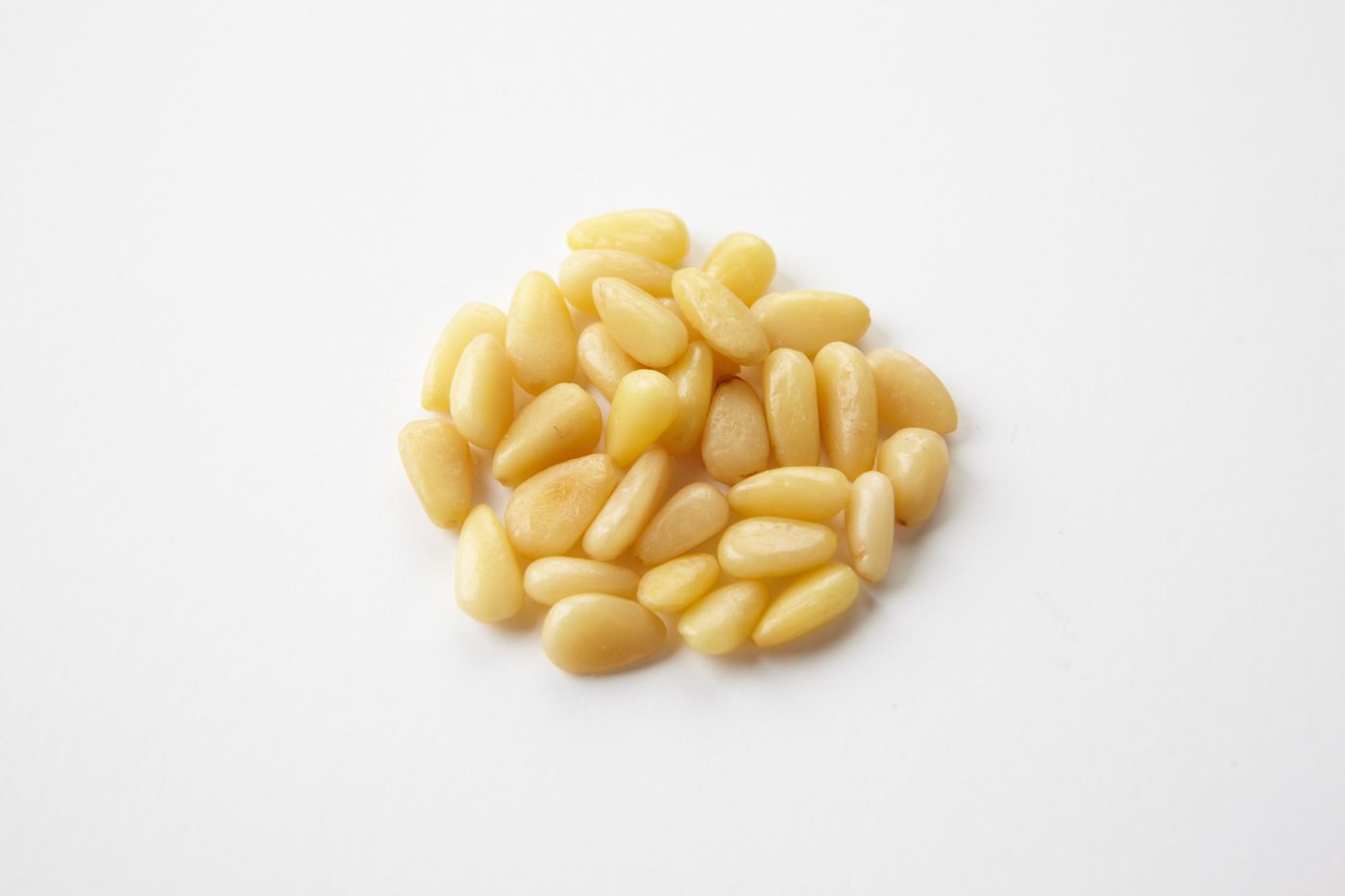 Pine nuts잣Creamy, ivory seeds of the Korean pine, scattered as a finishing garnish on punches, porridges and braises, or ground into the delicate porridge jatjuk. Gapyeong in Gyeonggi-do is the country's pine-nut capital.
Nutrition
| Calories | ~272 kcal |
|---|---|
| Protein | ~24.1 g |
| Fat | ~14.8 g |
| Carbohydrates | ~10.3 g |
| Fiber | ~1.1 g |
| Sodium | ~794 mg |
Notable forProtein
Beef top round (lean and fat) and the other ingredients use raw USDA FoodData Central values, summed and divided by four. All of the marinade is counted though some is left behind, so the real intake is probably a little lower. Actual values vary with ingredients, portion size and preparation.
Health Benefits
- A protein-rich main: the estimate above puts a serving at roughly 24 g of protein, mostly from the beef.
- Quick cooking: thin slices cook in minutes, which suits weeknight meals.
- Balanced on the table: traditionally served with rice and vegetable banchan, which adds fiber and variety; see the balanced Korean meal.
Regional Variations
- On the grill rack: the Encyclopedia of Korean Culture describes laying the marinated slices flat on a rack over well-heated charcoal and cooking them lightly or well-done to taste.
- Pounded and pear-tenderized: the Korea.net recipe pounds the sirloin and uses pear juice to soften it before the soy-based marinade.
- Pine-nut finish: Korea.net's version dusts the cooked slices with finely pounded pine nuts, a classic court garnish.
- Neobiani versus bulgogi: the encyclopedia treats them as the same dish under different names.
Pairings
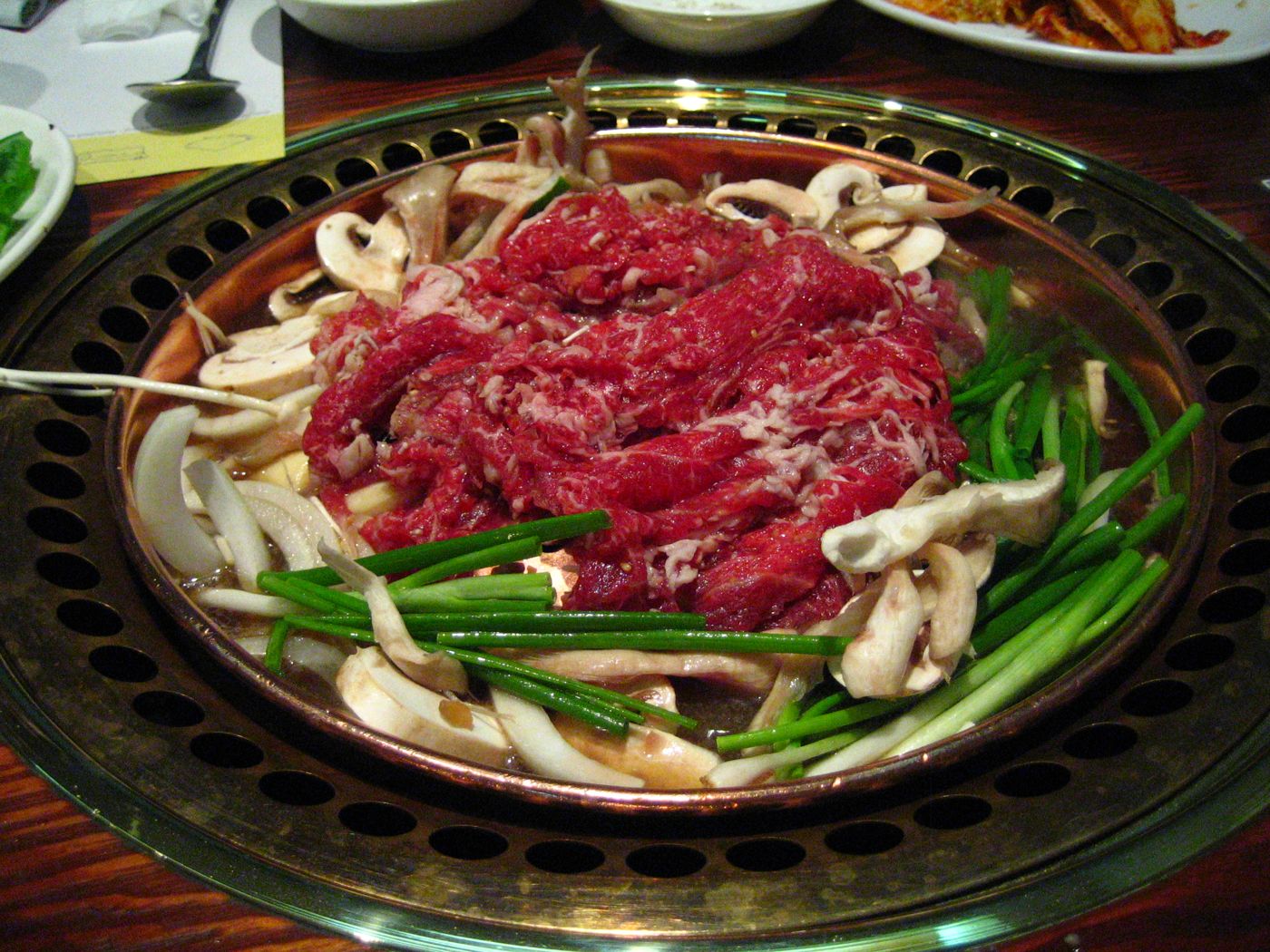 Bulgogi (Marinated Grilled Beef)불고기Thin slices of beef marinated in soy sauce, pear, garlic and sesame, then grilled or seared — descended from the court dish neobiani and Korea's best-known meat dish.
 Japchae (Glass Noodles with Vegetables)잡채Chewy sweet potato glass noodles tossed with stir-fried vegetables, mushrooms and beef in soy sauce and sesame oil — Korea's essential celebration dish.
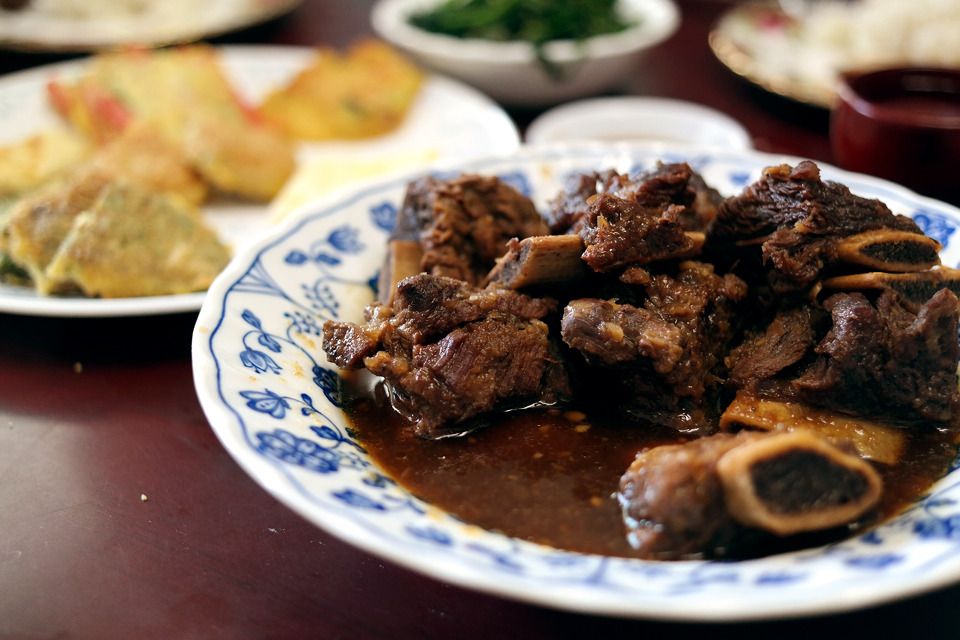 Galbi-jjim (Braised Beef Short Ribs)갈비찜Beef short ribs simmered slowly in soy sauce, pear and garlic with radish, carrot, chestnuts and jujubes until glossy and tender — a dish for holidays and honored guests.
 Sigeumchi Namul시금치나물Spinach blanched for a few seconds, squeezed dry and dressed with garlic, soy sauce and sesame — one of the simplest and most familiar namul.