Muchim · Dressed side dish 무침
Oiji Muchim (Seasoned Pickled Cucumber)
오이지무침
Romanization: oiji-muchim
Salt-brined oiji cucumbers sliced thin, soaked, squeezed hard and dressed with chili, garlic and sesame — a crunchy, tangy summer banchan.
- Serves
- 4
- Prep
- 40 min
- Cook
- 0 min
RegionSeoul & Gyeonggi
Jump to recipeRecipe
Ingredients · Serves 4
- 2 Oiji (salt-brined pickled cucumbers)about 250 g
- 1 tspGochugaru
- 1 cloveGarlicfinely minced
- 1 tbspGreen onionfinely chopped
- 1 tspSugar
- 1 tspToasted sesame oil
- 1 tspToasted sesame seeds
Method
Technique: Jangajji: Pickling in Jang
Step 1: Rinse the oiji and trim both ends. Slice into thin rounds, about 2–3 mm thick.
Step 2: Soak the slices in cold water for 20–30 minutes, tasting a slice now and then; stop when it is pleasantly salty rather than harsh.
Step 3: Drain, then wrap the slices in a cotton cloth or cheesecloth and wring out as much liquid as you can. Squeezing hard is what gives oiji-muchim its crunch.
Step 4: Loosen the compressed slices in a bowl. Add the gochugaru first and rub it in so the color takes evenly.
Step 5: Add the garlic, green onion, sugar and sesame oil and mix well. Taste — add a pinch of sugar or a drop of vinegar if you like — then sprinkle with sesame seeds.
Step 6: Serve chilled. Keeps in a covered container in the refrigerator for 3–4 days.
Origin & History
Oiji are whole cucumbers preserved in salt — either rubbed with salt and pressed under a stone, or covered with brine that has been boiled and cooled. The Encyclopedia of Korean Culture notes that the eighteenth-century Jeungbo sallim gyeongje already records several cucumber pickles close to oiji, made with garlic, ginger, chili and chives, while the nineteenth-century Imwon gyeongjeji describes the plain salt-cured oiji made today.
Yongin, south of Seoul, has been famous for its oiji since the Joseon period. The National Folk Museum's encyclopedia traces recipes linked to Yongin through Jeungbo sallim gyeongje, Gyuhap chongseo and Buin pilji; the last describes pouring off the brine, boiling it and pouring it back over the cucumbers six or seven times. Yongin oiji was made in the July–August cucumber season with brine mixed from rice-rinsing water and cold water.
Oiji itself is too salty to eat as is. In summer it is sliced, rinsed and floated in cold water as a refreshing soup, or sliced into thin rounds, soaked to draw out salt, wrung dry and seasoned — the dish here. The folk-culture encyclopedia observes that while scholars class brined oiji as a kind of kimchi, most people today think of seasoned oiji as a jangajji-style pickle side dish.
Key Ingredients
- Cucumber오이Slender, thin-skinned Korean cucumbers, prized for their crunch. Stuffed and fermented as oi-sobagi, dressed quickly as oi-muchim, salted into oiji or floated in chilled summer soup.
 Gochugaru고춧가루Korean red chili powder, made from dried red peppers ground coarse or fine. It gives kimchi, gochujang and countless banchan their color and warmth.
 Garlic마늘Used raw, minced, pickled and roasted, garlic is one of the essential aromatics of Korean food — in seasonings, marinades, kimchi and namul.
 Green onion파Korean green onion (pa), from thick-stemmed daepa to slender scallions — chopped into nearly every seasoning sauce, soup and kimchi, and the star of pa-kimchi.
 Sesame참깨Toasted sesame seeds and sesame oil (chamgireum) finish countless Korean dishes, adding a nutty aroma and gloss.
Nutrition
| Calories | ~29 kcal |
|---|---|
| Protein | ~0.7 g |
| Fat | ~1.7 g |
| Carbohydrates | ~3.5 g |
| Fiber | ~1.2 g |
| Sodium | ~1030 mg |
Notable forVitamin K
Oiji uses the Korean Food Composition Table entry “Cucumber, Salted” (오이지, 염절임; per 100 g: 11 kcal, 1.3 g fiber, 1,647 mg sodium). The sodium figure is an upper bound: it assumes unsoaked oiji, and soaking and squeezing remove an unmeasured share of the salt. Gochugaru uses the USDA red pepper (cayenne) entry as a stand-in; garlic, green onion, sugar, sesame oil and sesame seeds use USDA FoodData Central. Totals divided by four. Actual values vary with ingredients, portion size and preparation.
Health Benefits
- Very low in calories: cucumber is mostly water, and only a teaspoon of oil seasons the whole batch.
- Summer appetite: sour, salty and crunchy, oiji is a hot-weather food that the folk-culture encyclopedia describes as stimulating the appetite.
- Lightly fermented: traditionally brined oiji is left to ripen slowly in its brine, which gives it a gentle sourness.
Regional Variations
- Red and spicy: the most common dressing uses gochugaru, garlic, green onion, a little sugar and sesame oil; some cooks add a splash of vinegar or corn syrup for gloss.
- White (no chili): seasoned only with sesame oil, sesame and green onion, so the cucumber's pale green shows.
- Oiji-naengguk: thin slices floated in cold water, sometimes with a little vinegar and chili, as a summer soup.
- Yongin style: in Gyeonggi Province, the cucumbers are brined in a mix of rice-rinsing water and salt water and the pickled cucumbers are often eaten with some of their brine.
Pairings
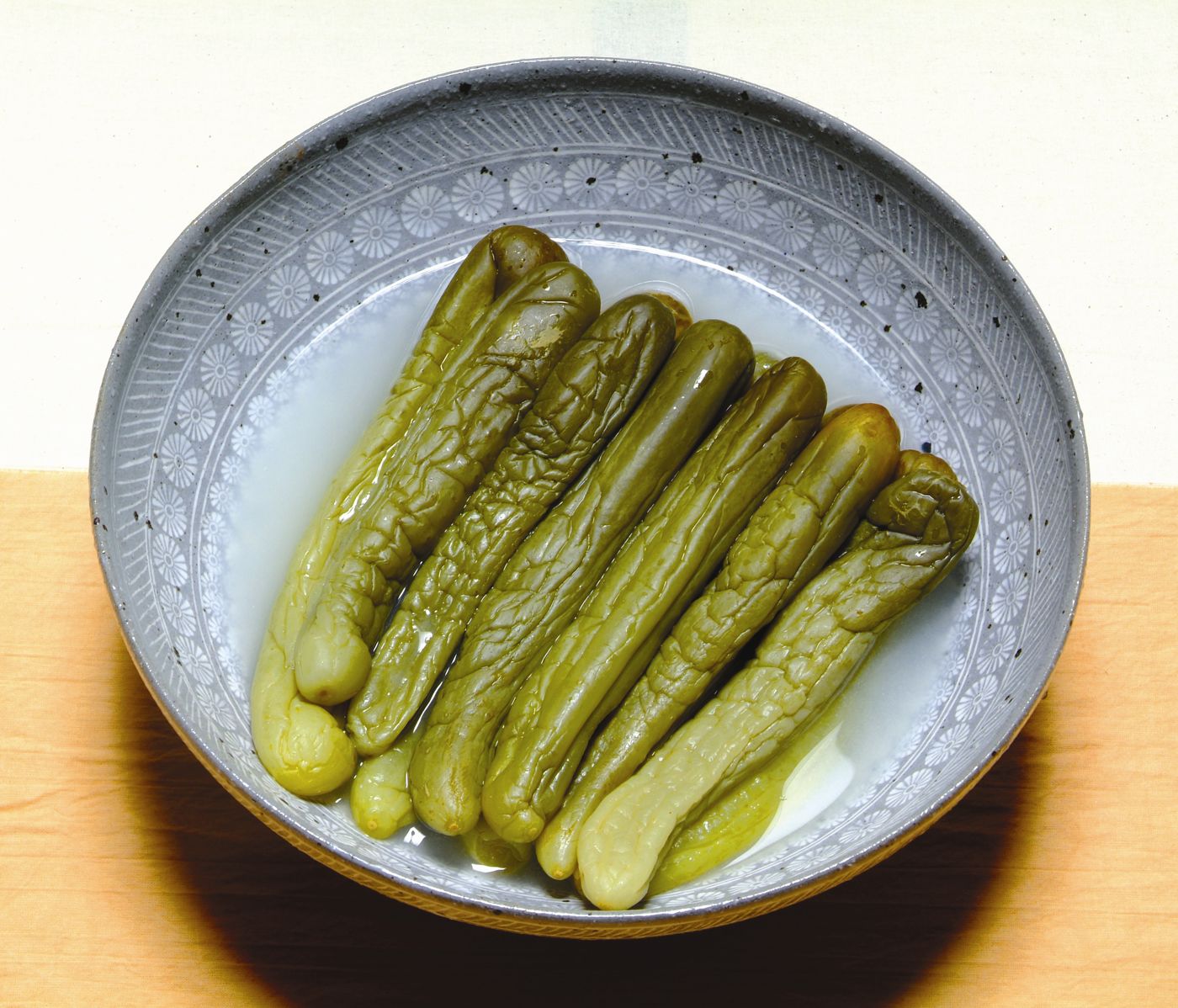 Salt-Brined Pickled Cucumbers오이지Whole cucumbers cured in a strong salt brine until golden and wrinkled — a summer staple that is soaked, sliced and served in cold water or dressed as oiji-muchim.
 Myeolchi Bokkeum멸치볶음Small dried anchovies stir-fried until crisp, then glazed in a sweet soy and garlic syrup — a keeping banchan found in refrigerators across Korea.
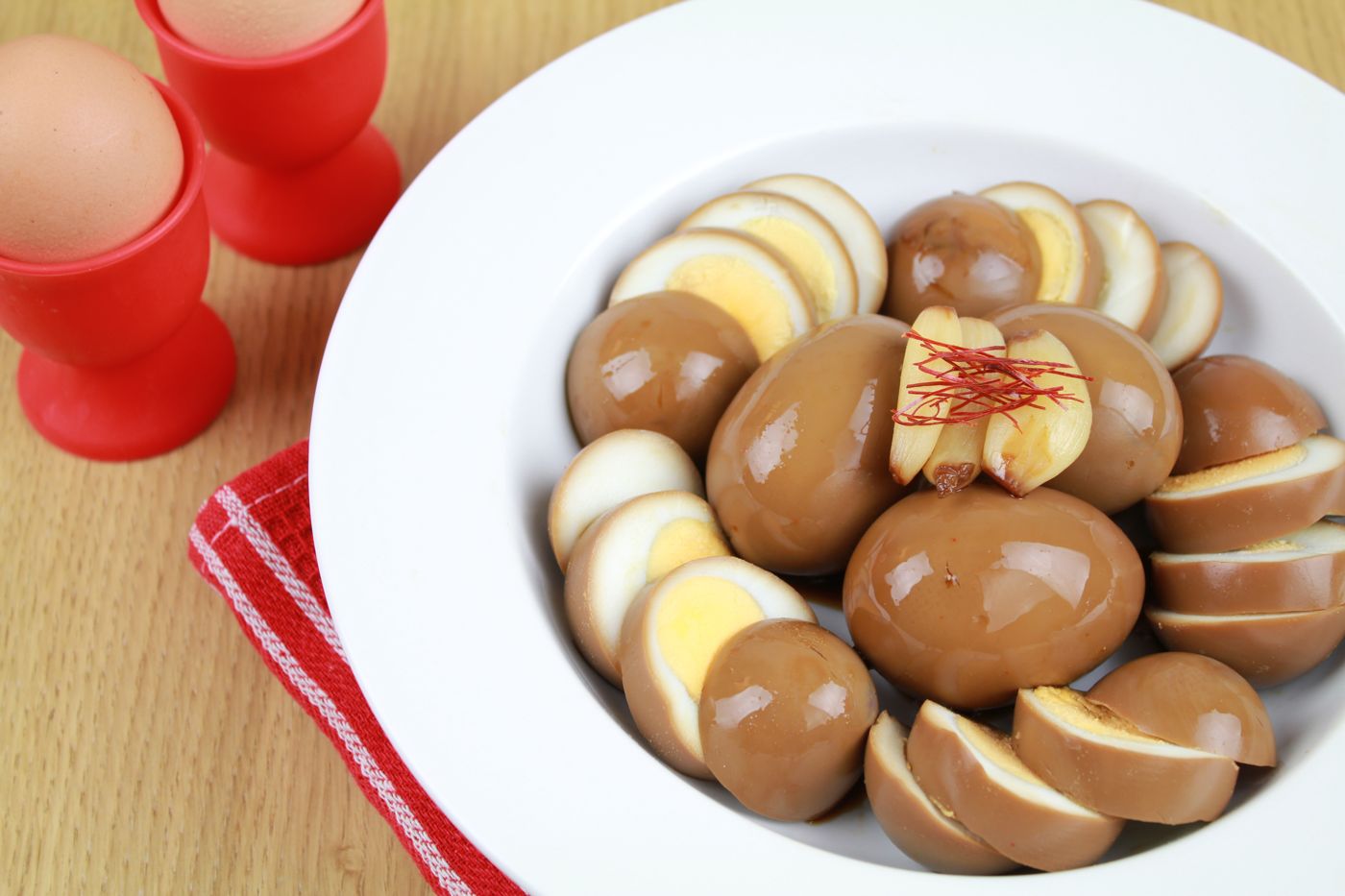 Gyeran Jangjorim (Soy-Braised Eggs)계란장조림Peeled hard-boiled eggs simmered in sweetened soy sauce with garlic and mild peppers until amber — a keep-in-the-fridge banchan for rice and lunchboxes.
Sources
- 01오이지 (Oiji) — Encyclopedia of Korean Culture
- 02오이지 (Oiji) — Encyclopedia of Korean Folk Culture (National Folk Museum of Korea)
- 03오이지무침 (Oiji-muchim) — Urimalsaem (National Institute of Korean Language)
- 04Korean Food Composition Table: Cucumber, Salted — National Institute of Agricultural Sciences
Last updated