Ingredient
Salted fermented shrimp
새우젓
Romanization: saeujeot
Tiny shrimp packed in salt and left to ferment — a jeotgal (salted seafood) that seasons kimchi and stews and accompanies boiled pork with briny, savory depth.
Flavor
Intensely salty and briny, with a clean, sweet shrimp savoriness; milder and less pungent than anchovy jeotgal.
 Photo: ayustety (flickr), CC BY-SA 2.0, via Wikimedia Commons
Origin & History
Jeotgal, seafood preserved in salt and left to ferment, is among the oldest Korean foods: the Samguk sagi lists it among Silla's royal betrothal gifts in the late 7th century. Saeujeot became especially widespread in the Joseon period, when small shrimp were plentiful. The Sejong sillok records salted shrimp sent as tribute to Ming China, and the 19th-century fisheries text Nanho eomokji describes boats carrying jars and salt to sea so the catch could be salted on board.
Saeujeot is made from small shrimp, or in some regions from tiny mysid shrimp (gonjaengi) or freshwater shrimp, and is named by the month of salting: ojeot (fifth month), yukjeot (sixth month), chujeot (autumn) and dongbaekhajeot (winter). The plump summer yukjeot is considered best for kimjang kimchi, while ojeot and chujeot suit everyday side dishes. In the shrimp's own enzymes, proteins slowly break down into amino acids, giving the paste its savory taste.
Ongampo in Gwangcheon (Hongseong, South Chungcheong) is famous for maturing saeujeot in about thirty earthen tunnels that stay at around 15–17 °C. In kimchi, saeujeot is the classic jeotgal of central and northern Korea, used in kimchi and kkakdugi, while southern provinces lean on anchovy. It also seasons stews (jjigae) and is the classic accompaniment to boiled pork.
Nutrition
| Calories | 40 kcal |
|---|---|
| Protein | 8.1 g |
| Fat | 0.3 g |
| Carbohydrates | 1.2 g |
| Fiber | 0 g |
| Sodium | 8003 mg |
Notable forCalcium · Iodine · Vitamin B12
Values from the Korean Food Composition Table (RDA, 2019 data); salt equivalent about 20 g per 100 g. Saeujeot is used a teaspoon or two at a time. Actual values vary with ingredients, portion size and preparation.
Health Benefits
- Savory without much fat: Fermentation breaks shrimp protein down into amino acids, adding umami; a recent study found that adding jeotgal to kimchi increased savory, amino-acid–derived flavor compounds.
- Minerals in small doses: The Encyclopedia of Korean Culture describes jeotgal as a traditional source of calcium in a diet with little dairy, and Korean data list calcium, iodine and vitamin B12 per 100 g — but servings are tiny.
- Very high in sodium: About 8 g of sodium per 100 g in Korean food-composition data; the FDA's daily value for sodium is less than 2,300 mg.
- Allergen: Contains crustacean shellfish, one of the nine major U.S. food allergens. Keep refrigerated once opened.
Informational, not medical advice. Talk to a qualified professional about your own health and diet.
Dishes with Salted fermented shrimp
- Aehobak Namul애호박나물Young Korean squash cut into half-moons and stir-fried with garlic and a little salted shrimp — sweet, tender and quick to make.
 Napa Cabbage Kimchi배추김치Salted napa cabbage layered with a red paste of chili, garlic, ginger and fermented seafood, then left to ripen: the kimchi most people picture first.
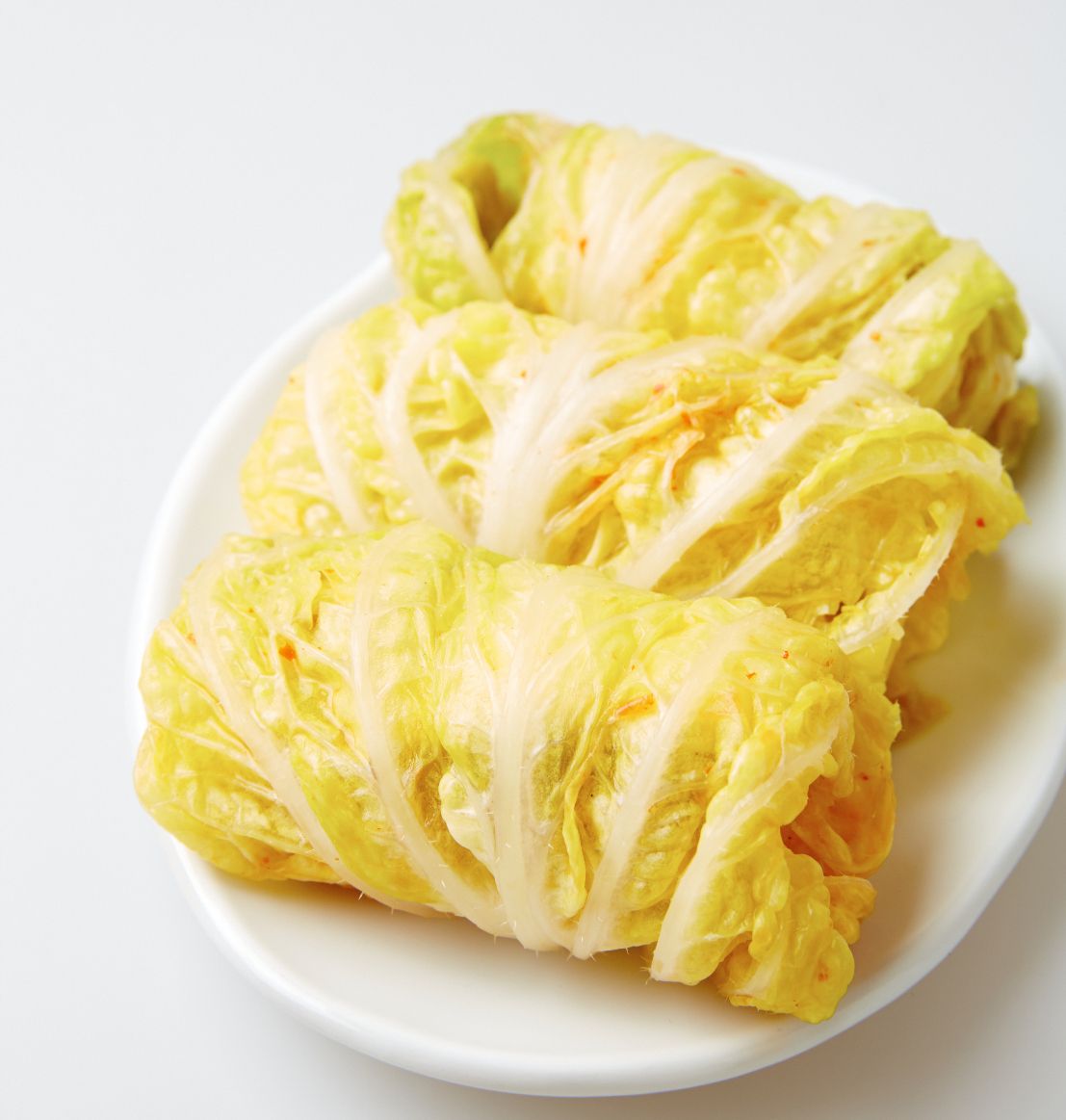 White Kimchi백김치Napa cabbage stuffed with radish, pear, chestnut and jujube and ripened in a clear, cool brine — kimchi with no chili flakes, mild and refreshing.
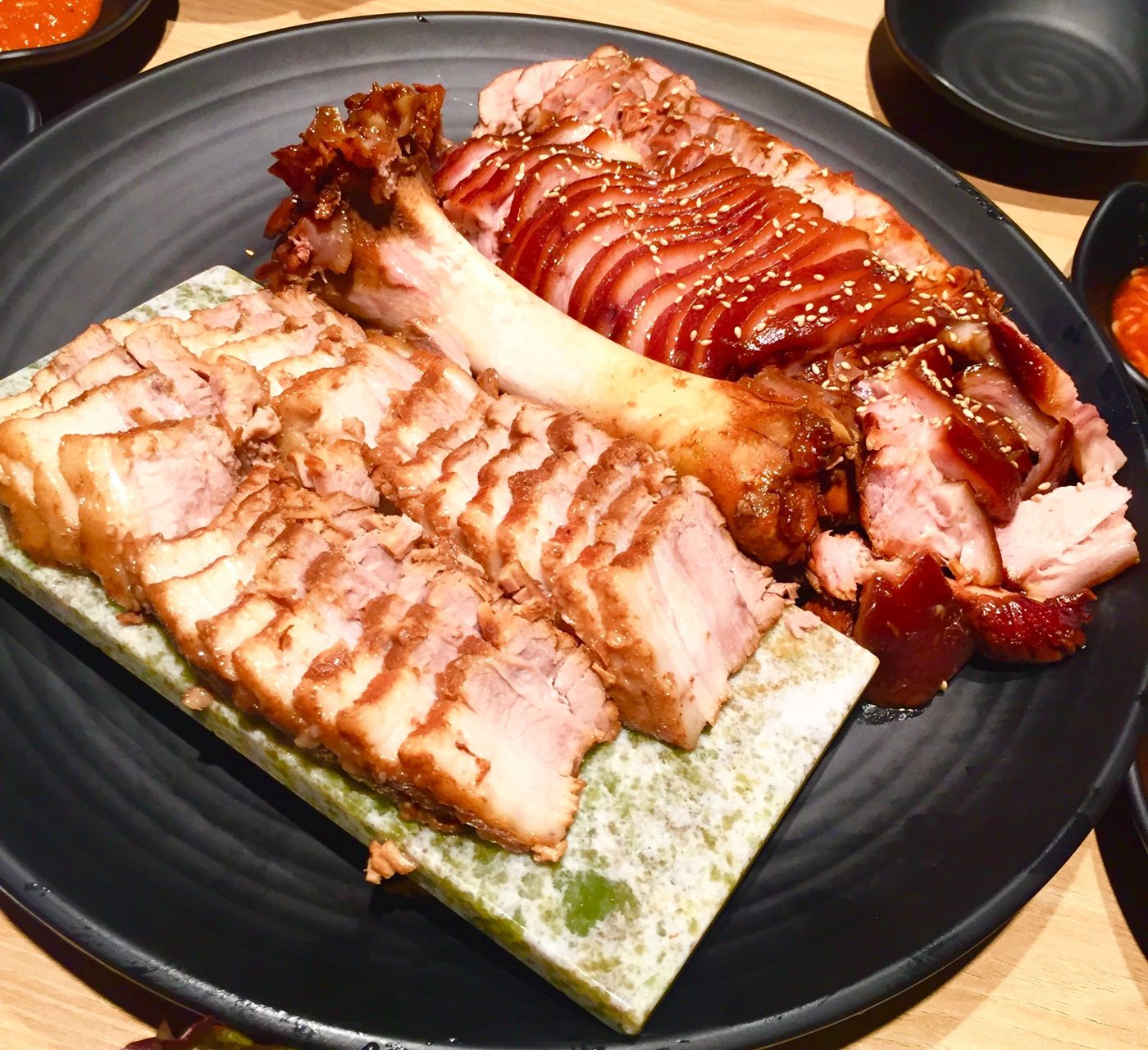 Bossam (Boiled Pork Wraps)보쌈Pork belly simmered with doenjang and aromatics, pressed and sliced, then wrapped in salted cabbage with spicy radish and salted shrimp — a feast dish built for sharing.
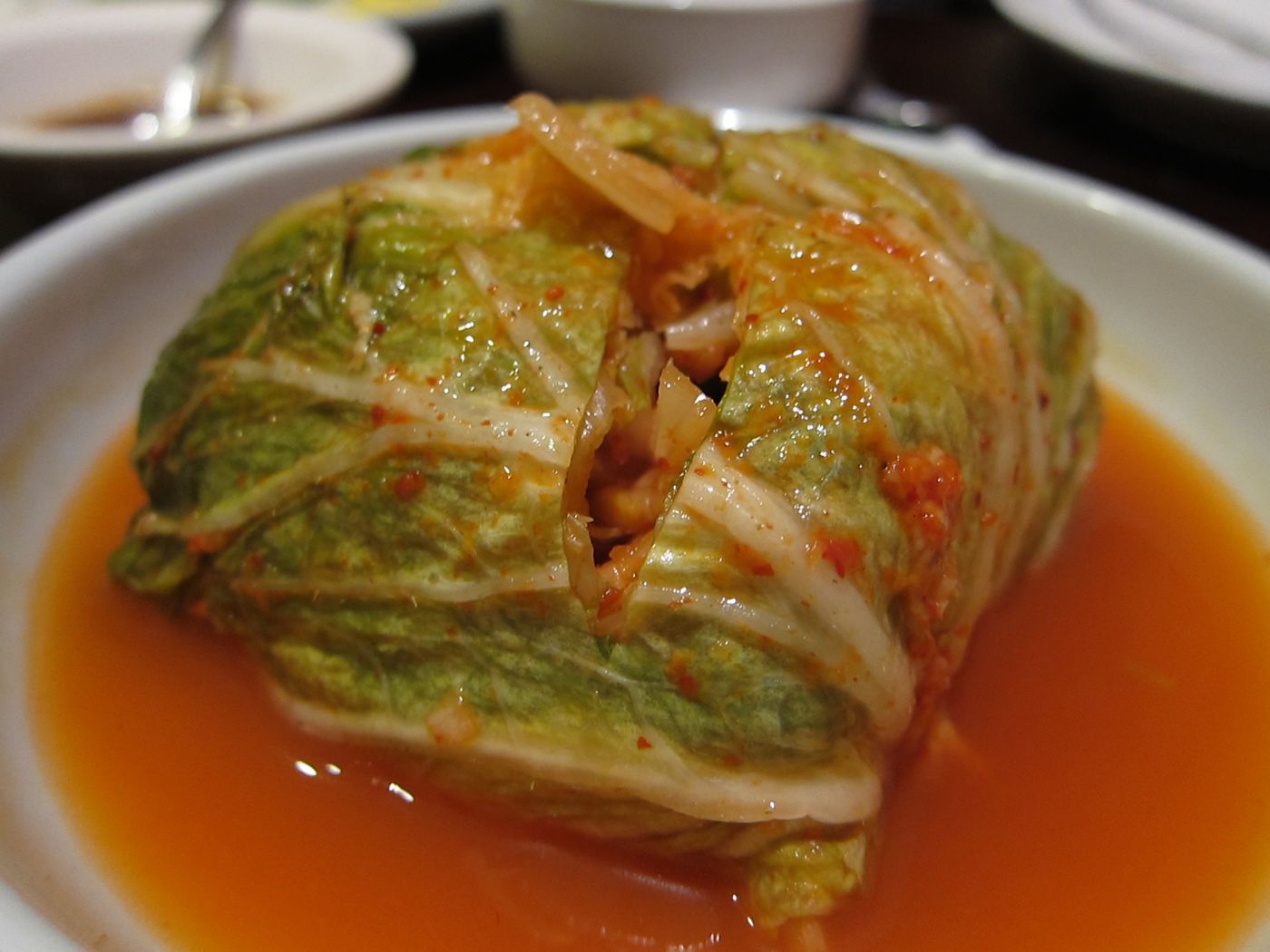 Wrapped Kimchi보쌈김치Cabbage, radish, fruit, nuts and seafood bundled inside whole cabbage leaves — the lavish wrapped kimchi of Gaeseong, made for honored guests.
- Ponytail Radish Kimchi총각김치Small, firm radishes kimchi'd whole with their green tops in a chili and salted-shrimp paste — crunchy, juicy and a fixture of the winter kimjang.
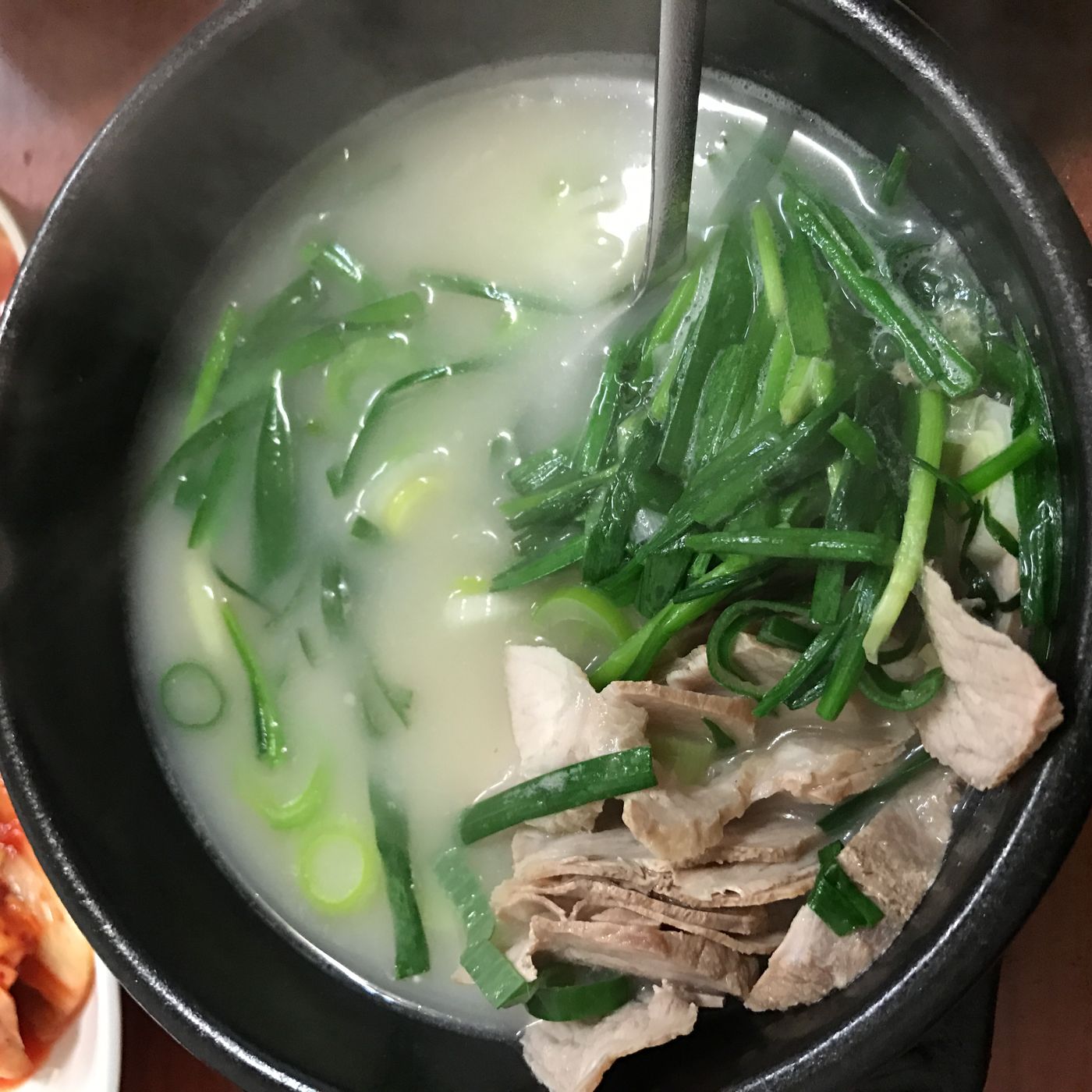 Dwaeji Gukbap (Busan Pork and Rice Soup)돼지국밥Slices of boiled pork in a milky pork-bone broth over rice, seasoned at the table with salted shrimp and garlic chives — Busan's signature everyday bowl.
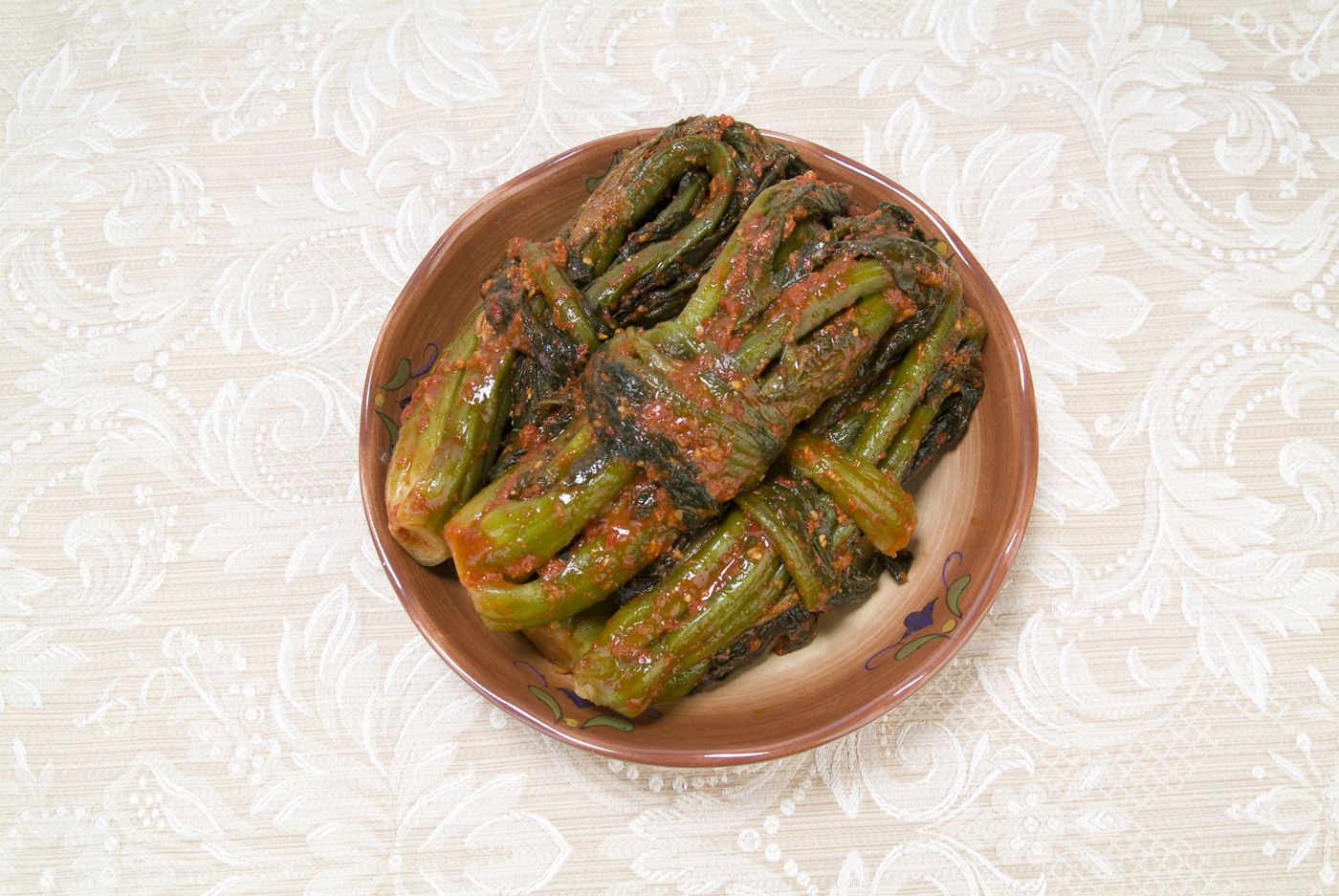 Mustard Leaf Kimchi갓김치Leaf mustard rolled in a chili and anchovy paste and fermented until its nose-tingling bite mellows — a Jeolla specialty, famously from Dolsan in Yeosu.
- Oyster Radish Kimchi굴깍두기Cubed radish kimchi folded through with fresh raw oysters — a short-lived winter kimchi, eaten within days while the oysters are still sweet.
 Gyeran Jjim (Steamed Egg)계란찜Eggs whisked with water or broth and gently steamed into a silky, savory custard, often seasoned with salted shrimp and served bubbling hot.
- Pumpkin Kimchi for Stew호박김치Thick slices of pumpkin fermented with cabbage or young radish greens, then simmered into a mellow stew — a Hwanghae and Chungcheong cooking kimchi.
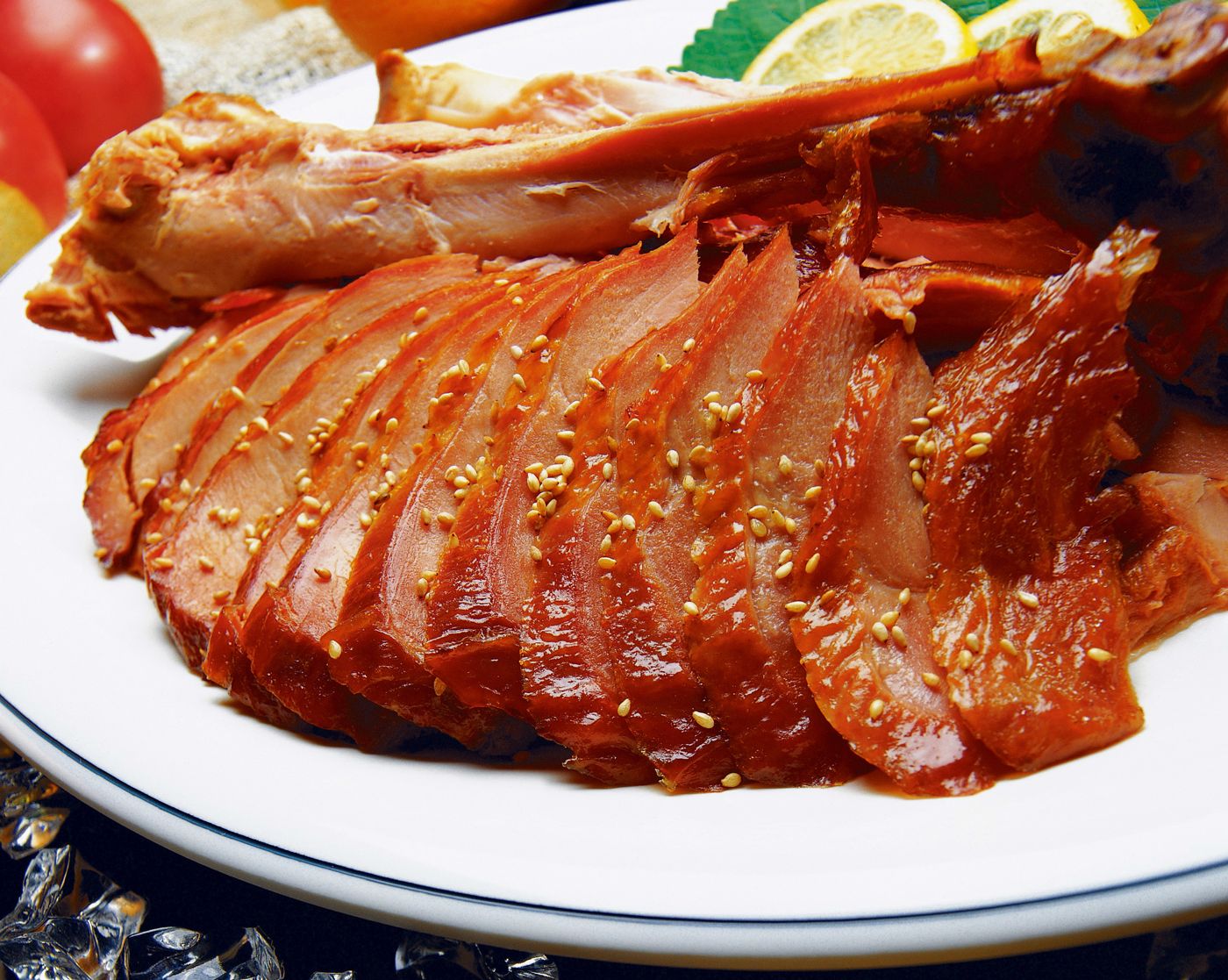 Jokbal (Braised Pig's Trotters)족발Pig's trotters simmered until tender, then braised in soy sauce and spices until glossy and sliced — a postwar Seoul specialty of Jangchung-dong.
 Cubed Radish Kimchi깍두기Korean radish cut into neat cubes and tossed with chili, garlic and salted shrimp — crunchy, juicy and a classic partner to rich soups.
- Kongbiji Jjigae (Okara Stew)콩비지찌개Soybean pulp left from tofu-making — or freshly ground soaked soybeans — simmered thick with pork and sour kimchi and seasoned with salted shrimp; a nutty, homely winter stew.
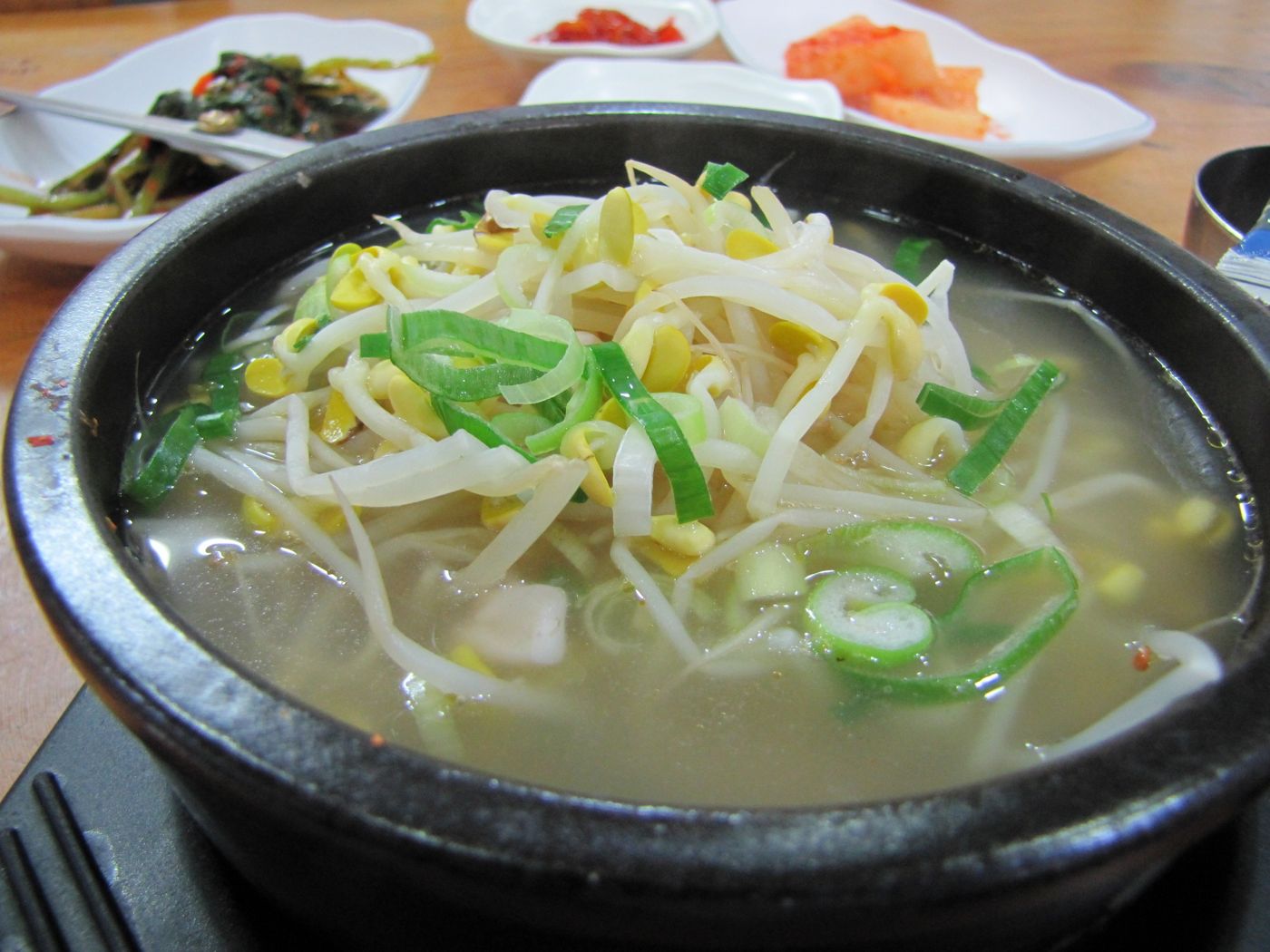 Kongnamul Gukbap (Jeonju Soybean-Sprout Rice Soup)콩나물국밥Rice and crisp soybean sprouts in a clear, savory broth, finished with egg, salted shrimp and kimchi. Jeonju's market breakfast and morning-after bowl.
- Cut Cabbage Kimchi막김치Napa cabbage cut into bite-size pieces before salting and tossed with the seasoning all at once — the quick, everyday way to make cabbage kimchi.
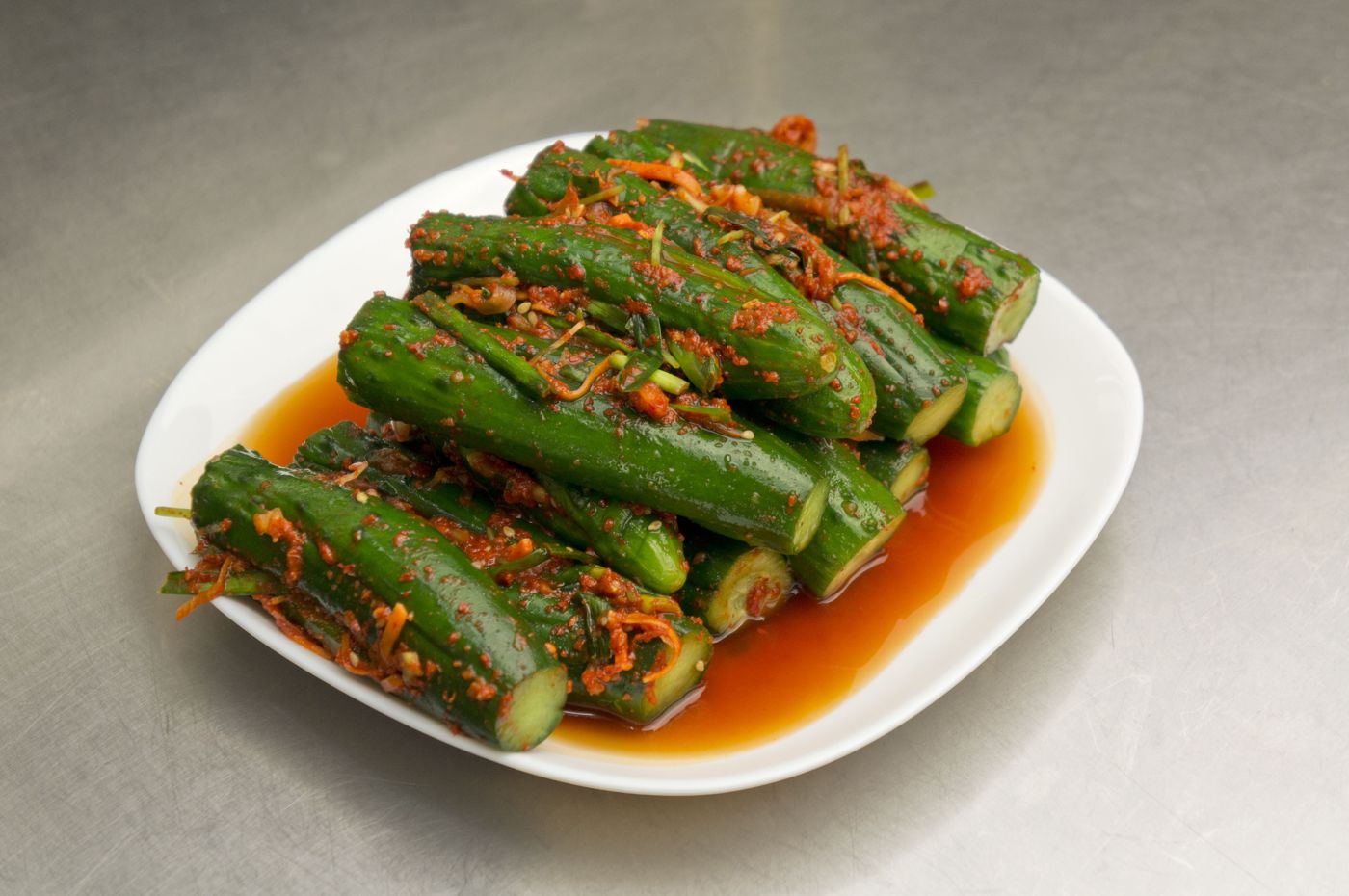 Stuffed Cucumber Kimchi오이소박이Cucumbers slit and stuffed with garlic chives, chili and garlic — a crisp, refreshing summer kimchi meant to be eaten young.
- Chunky Radish and Cabbage Kimchi섞박지Big, flat-cut pieces of radish and cabbage mixed in one chili and jeotgal seasoning — a late-autumn “mixed” kimchi, and the name for big radish kimchi today.
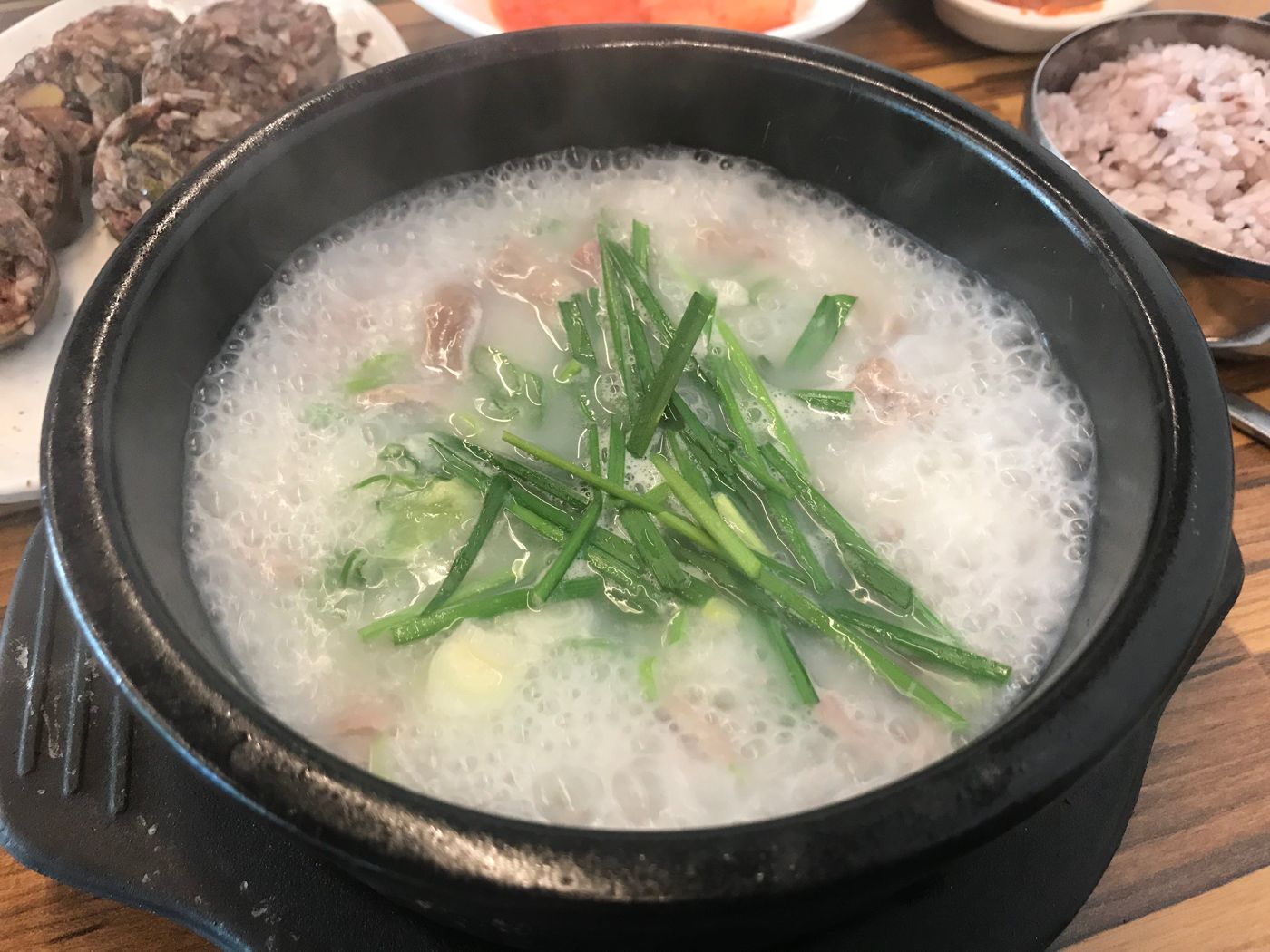 Sundaeguk (Blood Sausage Soup)순댓국Slices of Korean blood sausage and pork offal in a rich pork-bone broth, seasoned at the table with salted shrimp — a cheap, hearty market-day bowl served with rice.
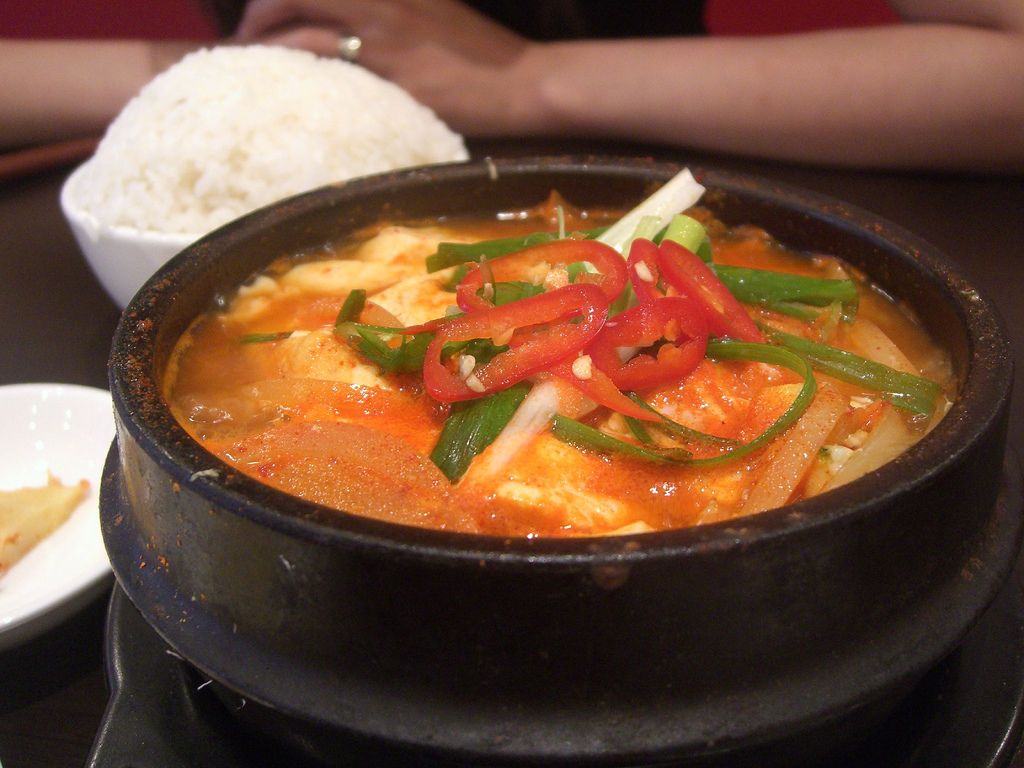 Sundubu Jjigae (Soft Tofu Stew)순두부찌개Silky, unpressed tofu simmered in a fiery chili broth with clams or pork and finished with a raw egg — served still boiling in its earthenware pot.
- Green Cabbage Kimchi양배추김치Crisp, quick kimchi of round green cabbage — once South Korea's stand-in when napa ran short, and still an everyday summer kimchi in North Korea.
Sources
- 01새우젓 (Saeujeot) — Encyclopedia of Korean Culture
- 02광천새우젓 (Gwangcheon saeujeot) — Encyclopedia of Korean Culture
- 03젓갈 (Jeotgal) — Encyclopedia of Korean Culture
- 04김치 (Kimchi) — Encyclopedia of Korean Culture
- 05Effects of adding various salted seafood (jeotgal) types on the microbial, metabolic, and sensory dynamics of kimchi during fermentation — PMC
- 06Korean Food Composition Table (National Standard Food Composition Table) search — Rural Development Administration