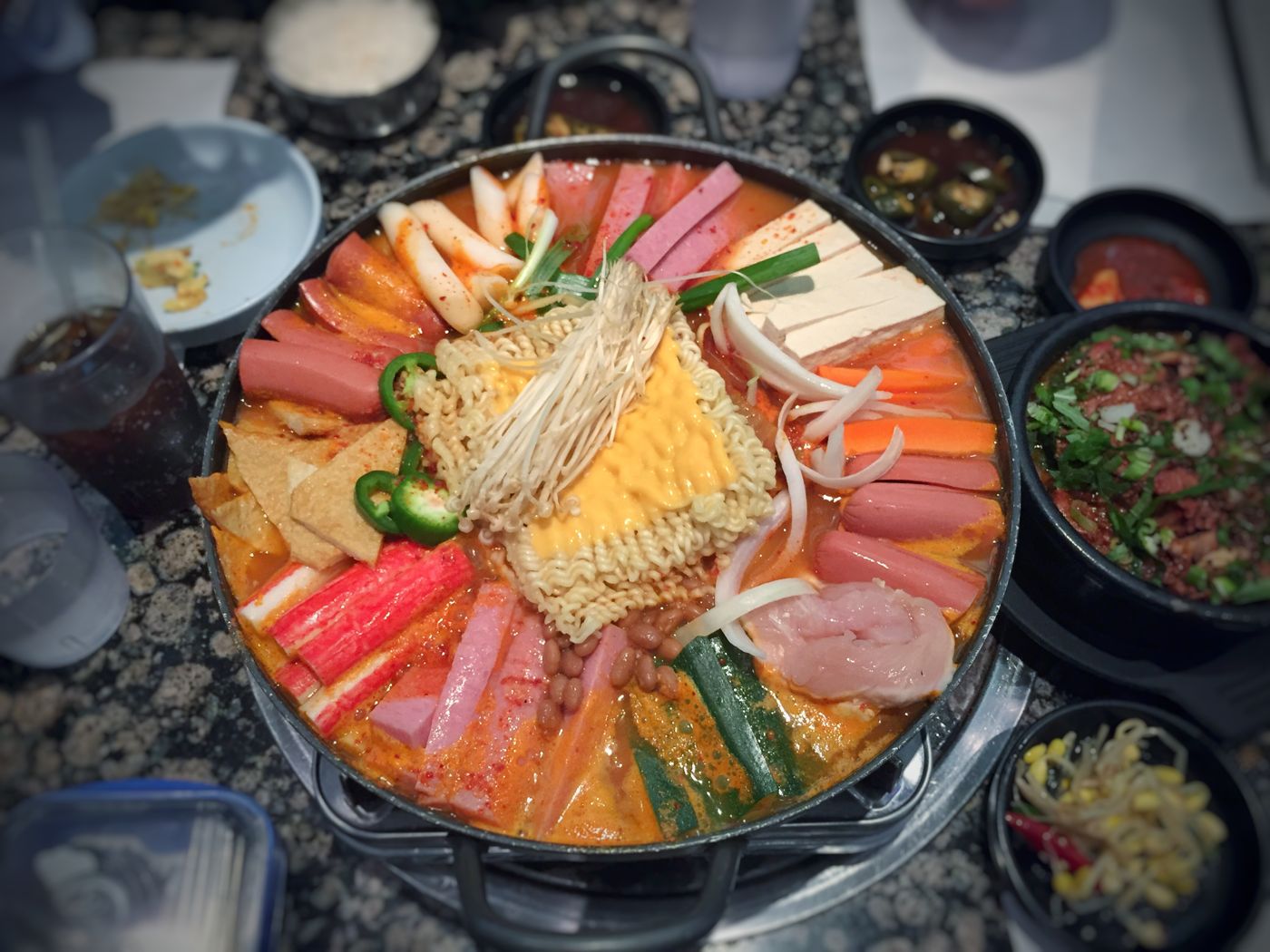
 Photo: T.Tseng, CC BY 2.0, via Wikimedia Commons
Jjigae · Stews 찌개
Budae Jjigae (Army Base Stew)
부대찌개
Romanization: budae-jjigae
Ham, sausages and canned beans simmered with kimchi, tofu and a gochujang-chili broth, usually finished with instant noodles — a postwar stew born around US Army bases.
- Serves
- 4
- Prep
- 20 min
- Cook
- 20 min
RegionSeoul & Gyeonggi
Jump to recipeRecipe
Ingredients · Serves 4
- 200 gCanned luncheon meat (e.g. Spam)sliced 1 cm thick
- 200 gFrankfurters or other sausagessliced on the diagonal
- 100 gGround or thinly sliced pork
- 200 gWell-fermented napa cabbage kimchichopped
- 150 gFirm tofusliced
- 100 gBaked beans in tomato sauce
- ½ mediumOnionsliced
- 1 stalkLarge green onion (daepa)sliced on the diagonal
- 100 gEnoki mushroomstrimmed
- 100 gRice cake slices or sticks (tteok)optional
- 1 blockInstant noodles (ramyeon)without the seasoning packet
- 1 sliceSliced processed cheeseoptional
- 1.2 lAnchovy-kelp or beef stock
- 2 tbspGochugarufor the seasoning paste
- 1 tbspGochujang
- 1 tbspSoy sauce
- 1 tbspGarlicminced
- 1 tspSugar
- ¼ tspBlack pepper
Method
Technique: Making Guk and Jjigae, Making Yuksu: Anchovy-Kelp Stock
Step 1: Mix the gochugaru, gochujang, soy sauce, garlic, sugar and pepper with 2 tbsp of the stock into a paste.
Step 2: Optional but worthwhile: pour boiling water over the sliced ham and sausages and drain, to rinse off some surface salt and fat.
Step 3: Arrange the kimchi, pork, ham, sausages, tofu, onion, mushrooms and rice cakes in sections in a wide, shallow pot. Spoon the baked beans and the seasoning paste into the center.
Step 4: Pour in the stock and bring to a boil over medium-high heat, then simmer 8–10 minutes, until the pork is cooked and the kimchi has softened into the broth.
Step 5: Add the noodles and green onion, lay the cheese on top if using, and cook 3–4 minutes more, loosening the noodles with chopsticks.
Step 6: Serve at the table straight from the pot, with rice on the side. Top up with stock if it reduces too far.
Origin & History
Budae-jjigae means "military unit stew," but it was not a soldiers' dish. Both the Encyclopedia of Korean Culture and the Encyclopedia of Korean Folk Culture place its beginnings in the hungry years after the Korean War, among Koreans living and working near US Army camps in Gyeonggi Province. Ham, sausages and other surplus foods from the bases — at first leftovers or goods slipped out of supply stores, known as budae-gogi ("base meat") — went into a pot with gochujang and kimchi, whose heat and sourness cut the unfamiliar richness of processed meat.
Uijeongbu, home to several US bases, became its best-known center. The Encyclopedia of Korean Culture credits Heo Gi-suk, who ran a street cart there from 1960 and cooked with sausages, ham and bacon from the nearby base; her shop was registered as Odeng Sikdang in 1968, and a row of competitors later formed Uijeongbu's budae-jjigae street near Uijeongbu Jungang Station. The folk encyclopedia also names Dongducheon, Yangju and Songtan as early centers. Another name, Johnson-tang, is said to come from US President Lyndon B. Johnson; a Seoul restaurant near the Yongsan base in Itaewon, opened in the late 1970s, still uses it.
The dish changed as it spread. According to the Encyclopedia of Korean Culture, early versions were closer to a drinking snack — sausage, ham, cabbage and onion fried in butter on a griddle — before stock, kimchi and gochujang turned it into a stew. Instant noodles, now almost obligatory, arrived later: ramyeon was introduced to Korea only in 1963 and was at first too expensive to add. The folk encyclopedia notes that by the 1960s and 1970s it had become a cheap meal for factory workers eating out together, and it is now served in specialist chains at home and abroad.
Key Ingredients
 Pork (dwaeji-gogi)돼지고기Korea's most widely eaten meat, prized cut by cut: fatty belly for samgyeopsal, neck for the grill, lean legs for boiled suyuk and stir-fried jeyuk. Pork also anchors Jeju Island's feast cooking.
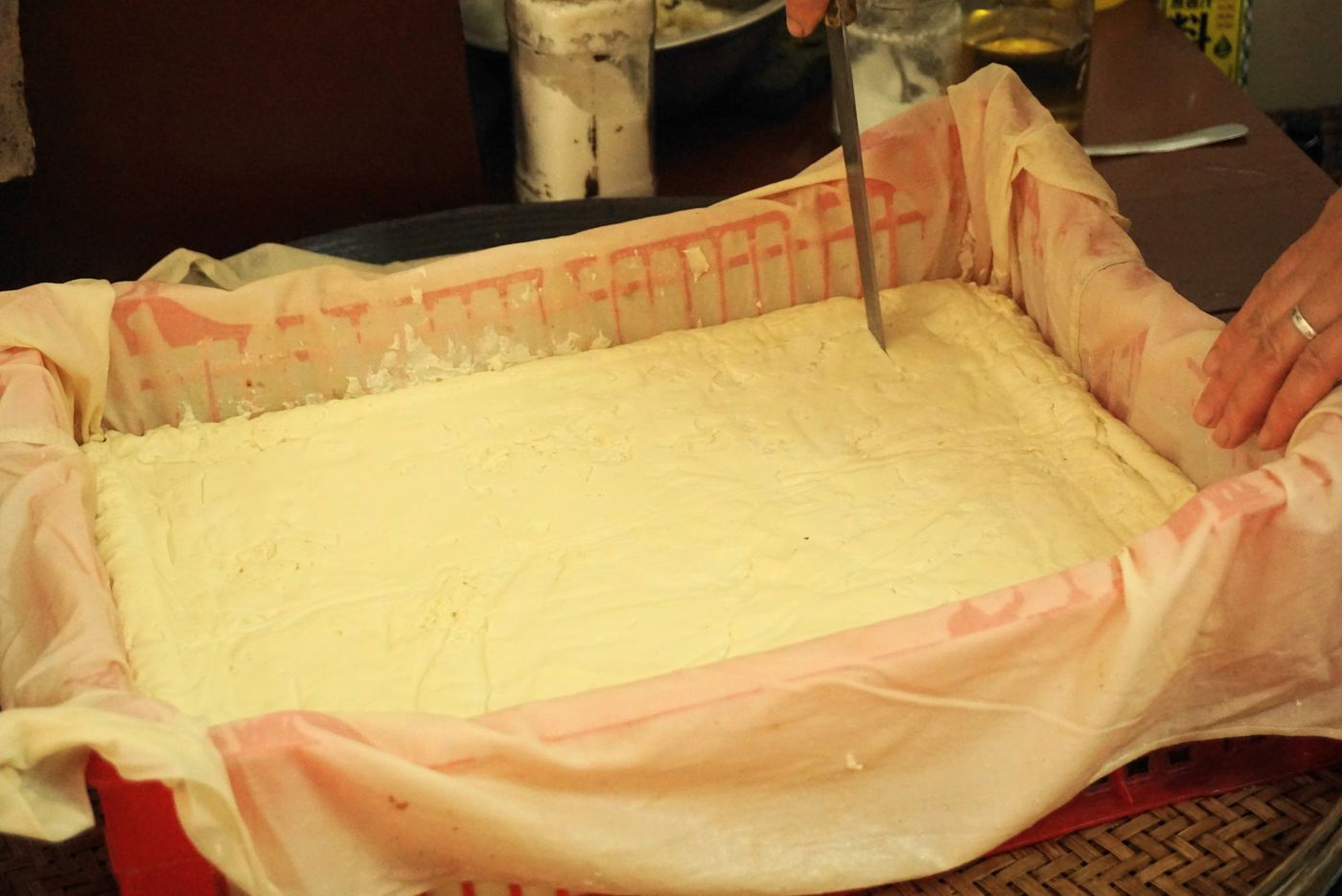 Tofu두부Fresh bean curd made by coagulating soy milk and pressing the curds. A quiet staple of Korean cooking since at least the late Goryeo period, it is pan-fried, braised in spicy soy glaze, or simmered in stews.
 Yangpa (onion)양파The bulb onion, literally the "Western scallion." A latecomer to Korea, it is now everywhere: sweetening stir-fries and braises, pickled in soy sauce as yangpa-jangajji, and served raw beside grilled meat.
 Green onion파Korean green onion (pa), from thick-stemmed daepa to slender scallions — chopped into nearly every seasoning sauce, soup and kimchi, and the star of pa-kimchi.
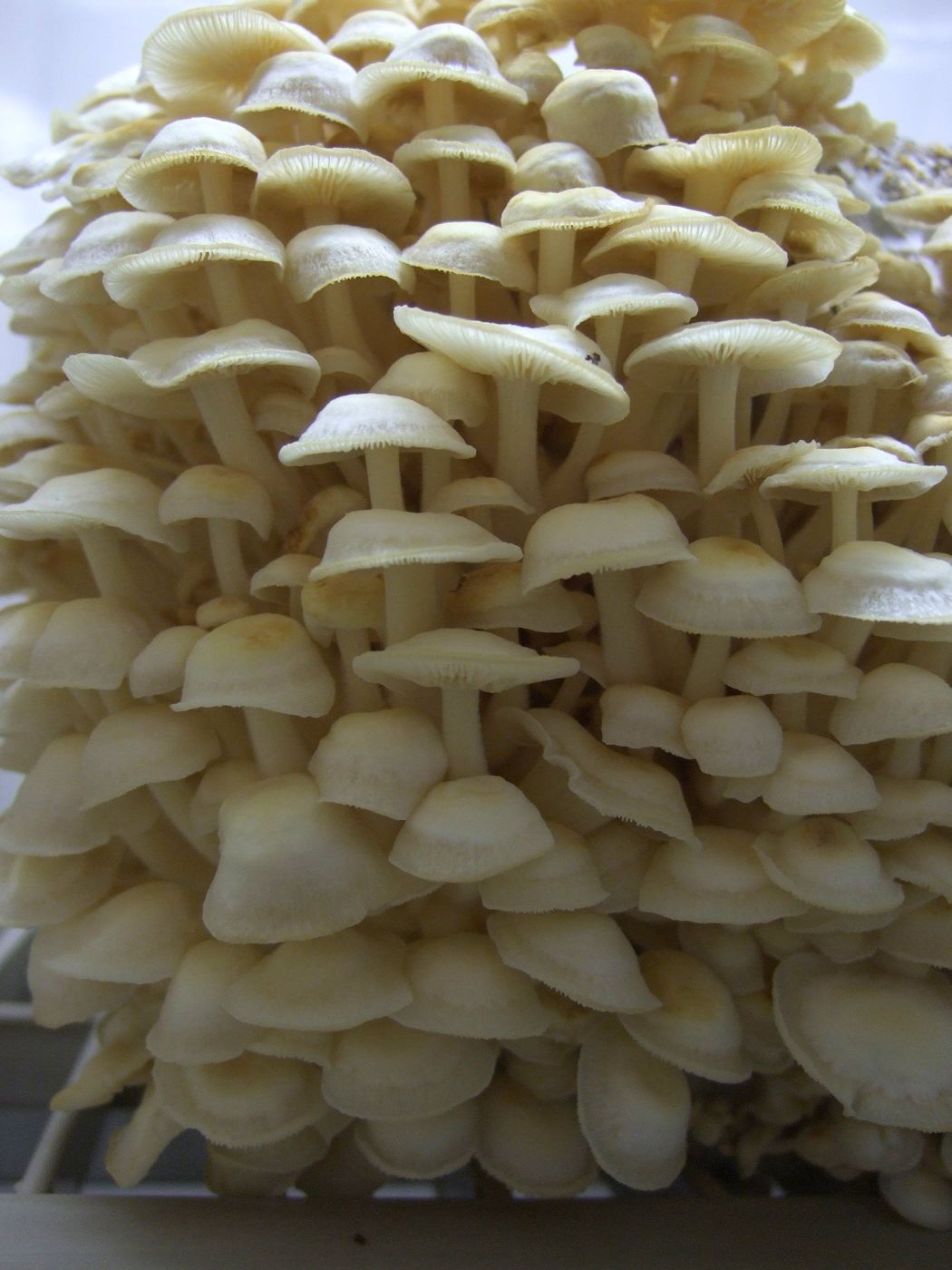 Paengi-beoseot (enoki mushroom)팽이버섯Long, slender, ivory-white stems topped with tiny caps, sold in tight bundles. Crisp-tender and mild, enoki is added at the last minute to stews and hot pots, and should always be eaten well cooked.
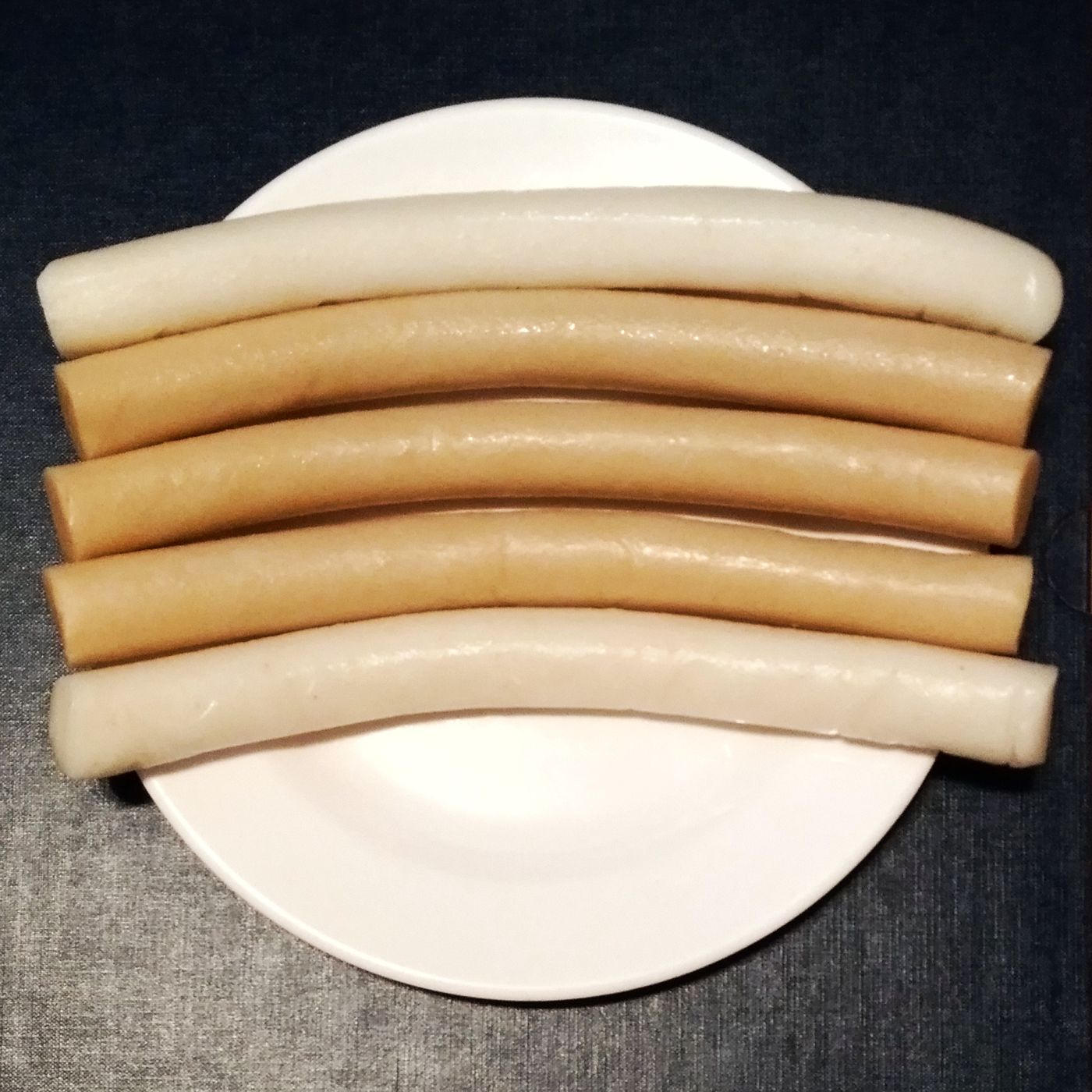 Garaetteok (Cylinder Rice Cake)가래떡Long, white cylinders of pounded non-glutinous rice, also called huin-tteok (white rice cake). Sliced into ovals it becomes tteokguk; cut into fingers it goes into tteokbokki and skewers.
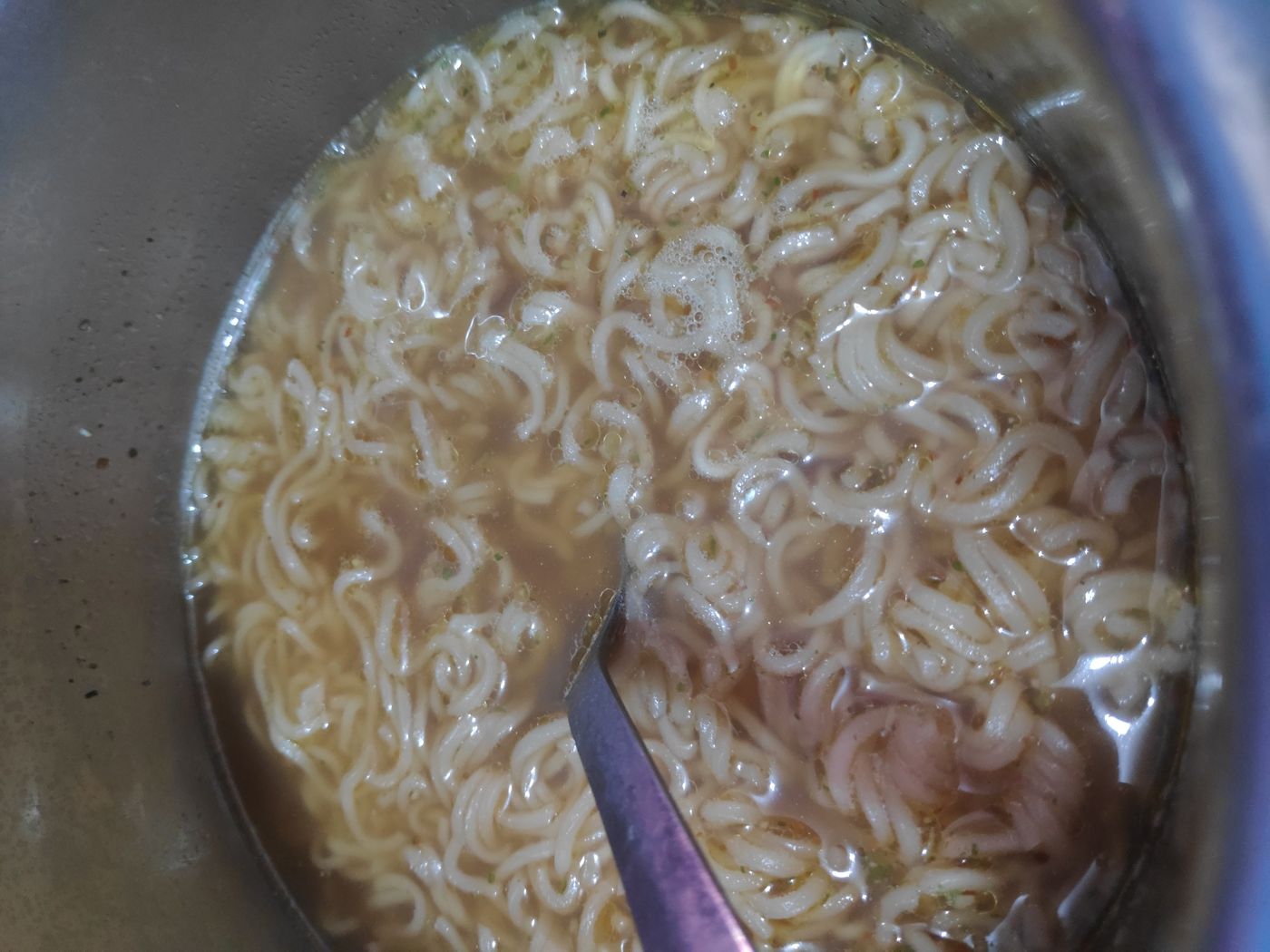 Instant noodles (ramyeon)라면Steamed and fried wheat noodles packed with a seasoning sachet, cooked in minutes. Beyond the bowl itself, the noodle block is a pantry ingredient, added as ramyeon sari to budae-jjigae.
 Gochugaru고춧가루Korean red chili powder, made from dried red peppers ground coarse or fine. It gives kimchi, gochujang and countless banchan their color and warmth.
- Gochujang고추장Fermented red chili paste — sweet, savory and hot. Made from meju powder, glutinous rice, malt and gochugaru, it is a later addition to Korea's family of jang.
 Soy sauce간장Korean soy sauce, in two main kitchen forms: pale, salty guk-ganjang (soup soy sauce) brewed the traditional way from meju, and darker, sweeter jin-ganjang for braises and marinades.
 Garlic마늘Used raw, minced, pickled and roasted, garlic is one of the essential aromatics of Korean food — in seasonings, marinades, kimchi and namul.
Nutrition
| Calories | ~738 kcal |
|---|---|
| Protein | ~35.2 g |
| Fat | ~38.9 g |
| Carbohydrates | ~61.6 g |
| Fiber | Not reported |
| Sodium | ~1434 mg |
Notable forProtein · Selenium · Saturated fat
Processed-meat brands vary too much to estimate reliably from raw ingredients, so these figures are scaled from the MFDS analysis of home-style budae-jjigae (per 100 g: 123 kcal, 5.86 g protein, 6.49 g fat, 10.27 g carbohydrate, 239 mg sodium, 1.68 g saturated fat, 6.18 µg selenium) to the database's 600 g serving, which works out to about 10 g of saturated fat. The source reports 2.3 g fiber per 100 g (about 14 g per serving), which looks high for this mix of meat, kimchi and noodles, so fiber is shown as not reported. The MFDS analysis of a restaurant version (387 mg sodium per 100 g, same 600 g serving) comes to about 2,320 mg sodium. Actual values vary with ingredients, portion size and preparation.
Health Benefits
- A filling one-pot meal: tofu, pork and ham supply protein, and kimchi, onion, mushrooms and green onion add vegetables.
- Tofu and extra vegetables can easily take the place of some of the processed meat without losing the character of the stew.
- Its history is a record of how Korean cooks adapted unfamiliar foods during postwar scarcity; see food in modern Korea.
Regional Variations
- Uijeongbu: the Encyclopedia of Korean Culture ties the city's fame to Odeng Sikdang and the restaurant street that grew up around it near Uijeongbu Jungang Station.
- Other base towns: the folk encyclopedia names Dongducheon, Yangju and Songtan, all once home to large US garrisons, as early centers with their own well-known restaurants.
- Johnson-tang: the Itaewon name for a similar pot, kept by a restaurant near the Yongsan garrison.
- Add-ins (sari): instant noodles, rice cakes, glass noodles or dumplings are added at the table; baked beans in tomato sauce, which the Encyclopedia of Korean Culture credits with softening the greasiness, are a common standard ingredient.
Pairings
 Gyeran Mari (Rolled Omelet)계란말이Beaten egg cooked in thin layers and rolled into a soft, striped log, then sliced — a gentle, everyday banchan and a lunchbox classic.
 Kongnamul Muchim콩나물무침Soybean sprouts cooked under a lid until just tender, then tossed with garlic, green onion and sesame oil — crisp, nutty and on tables across Korea.
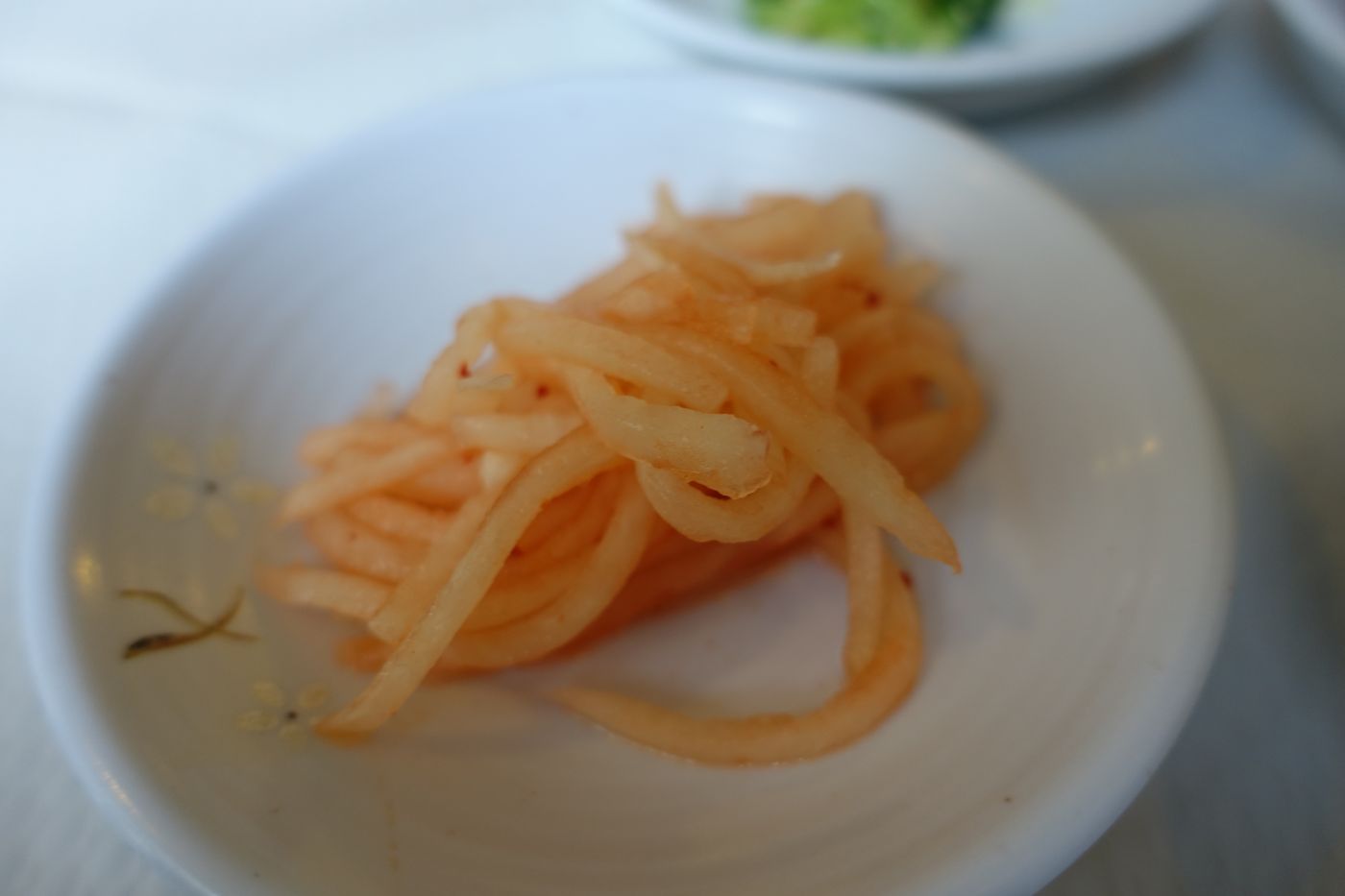 Musaengchae무생채Fine matchsticks of Korean radish dressed raw with chili flakes, a little vinegar and sugar — crisp, sweet-sharp and best made just before the meal.
Sources
- 01부대찌개 (Budae-jjigae) — Encyclopedia of Korean Culture
- 02부대찌개 (Budae-jjigae) — Encyclopedia of Korean Folk Culture (한국의식주생활사전)
- 03부대찌개 (Budae-jjigae, home-style and restaurant, analyzed) — MFDS K-FIND food composition database
- 04IARC Monographs evaluate consumption of red meat and processed meat — IARC press release no. 240 (26 October 2015)
- 05Trends in sodium intake and major contributing food groups and dishes in Korea: KNHANES 2013–2017 (Jeong et al., Nutrition Research and Practice, 2021)
- 06Global Perspectives on Allergen Labeling: Harmonization of Regulations and Practices — Allergy, Asthma & Immunology Research, 2025
Last updated