Techniques
Making Guk and Jjigae
국과 찌개 끓이기
Guk, tang, jjigae and jeongol: how Korean soups and stews differ, how their broths are built, and how ganjang, doenjang and gochujang season them.
A Korean meal almost always includes something hot and liquid next to the rice. The Encyclopedia of Korean Culture calls boiling one of the essential cooking methods of a grain-centered table, and soups and stews are the main reason. The vocabulary can confuse newcomers, but the categories are fairly logical once you know what to look for: how much liquid there is, what seasons it, and how it is served.
Guk, tang, jjigae and jeongol
- Guk (국): a brothy soup with plenty of liquid, served in an individual bowl beside the rice. The encyclopedia dates its place as a daily basic to at least the Goryeo period, citing a record in the Goryeosa of a king granting rice and guk.
- Tang (탕): the Sino-Korean word for a soup; the encyclopedia groups guk and tang together as the dishes with abundant liquid. Long-simmered bone and meat soups such as seolleongtang and samgyetang usually carry the -tang name.
- Jjigae (찌개): less liquid, more intensely seasoned, and usually built around one main ingredient or one seasoning, as in doenjang-jjigae, kimchi-jjigae or sundubu-jjigae. It is often served bubbling in its pot and shared.
- Jeongol (전골): a pot of several ingredients arranged by color, covered with seasoned broth and cooked at the table. The encyclopedia distinguishes it from jjigae by this mix of ingredients and by the communal cooking.
The word jjigae is younger than the dish. The encyclopedia notes that it does not appear in earlier Joseon cookbooks, and that the late nineteenth-century Siuijeonseo uses jochi for the same thing. In the palace, stews were called jochi and divided into clear ones seasoned with soy sauce or salted-shrimp liquid and tojang ones made with doenjang or gochujang; two were set on the royal table. The food scholar Yun Seo-seok, quoted in the encyclopedia, saw an even older distinction in an eighteenth-century text between brothy tang and the thicker gaeng.
Jeongol has a well-known origin story. A 1909 book by Jang Ji-yeon claimed that soldiers once cooked meat and vegetables in their iron helmets, and that households later copied the shape. Treat that as legend. More solid is the description in the Gyeongdo japji of a grill shaped like an upturned felt hat, with vegetables blanching in its central well and thin slices of meat searing on its brim; the encyclopedia suggests today's broth-filled jeongol evolved from this grilling pan.
The four families of guk
The encyclopedia sorts guk into four types:
- Clear soups (malgeun-janguk): seasoned with soy sauce so the broth stays clear; the formal choice for a full table. Beef, fish, vegetables or seaweed are typical, as in miyeok-guk and kongnamul-guk.
- Doenjang soups (tojangguk): doenjang dissolved in the water left from washing rice (ssal-tteumul), which gives body and is said to soften vegetables. Spring versions use wild greens such as naengi.
- Long-simmered soups (gomguk): beef bones, brisket, tail or offal simmered for hours. The milky color, the encyclopedia explains, comes from phospholipids from bone and organ meats emulsifying into the broth.
- Cold soups (naengguk): chilled and light, such as cucumber or seaweed cold soup, eaten in summer.
Building the broth
The encyclopedia recommends beef, dried anchovies, dried shrimp or clams for flavor, and notes that anchovy stock suits doenjang soups while beef-bone stock is better in winter. For method, see making yuksu broth. It also gives practical proportions: about one cup of broth per person, with solids making up roughly a third of the liquid. Cooking times depend on the ingredient; it lists about 5 to 8 minutes for soybean sprouts, 5 minutes for miyeok, 15 minutes for radish and just 2 minutes for tofu. Clear vegetable soups should not be overcooked, and fish goes into already boiling broth so it holds together.
Seasoning with jang
According to the encyclopedia, the character of a guk depends largely on the ganjang, doenjang or gochujang used to season it, and the same logic classifies jjigae. A clear shrimp-seasoned stew uses saeujeot with minced beef, sesame oil, garlic, tofu and radish, with about half a cup of water per person. Gochujang stews are fiery and especially suited to freshwater fish and crab. Doenjang stews range from plain to chili-laced, and in summer a thick gang-doenjang simmered with green chilies is a classic. For the seasonings themselves, see making jang.
The ttukbaegi
The vessel matters as much as the recipe. The ttukbaegi is a thick earthenware pot that goes straight from the flame to the table. The encyclopedia describes glazed and unglazed versions, notes that it holds heat so food stays hot while the outside stays fairly cool, and lists seolleongtang, yukgaejang and samgyetang among the dishes served in it. A tiny version, the al-ttukbaegi, is used for steamed egg. Shared stew came with manners: the eldest at the table dipped first, and younger diners paused so two spoons never entered the pot at once. For the clay tradition, see onggi.
Soups and stews are often the saltiest part of a Korean meal. Eating the solids and leaving some broth is a simple way to cut back; see sodium in Korean food.
Dishes using this technique
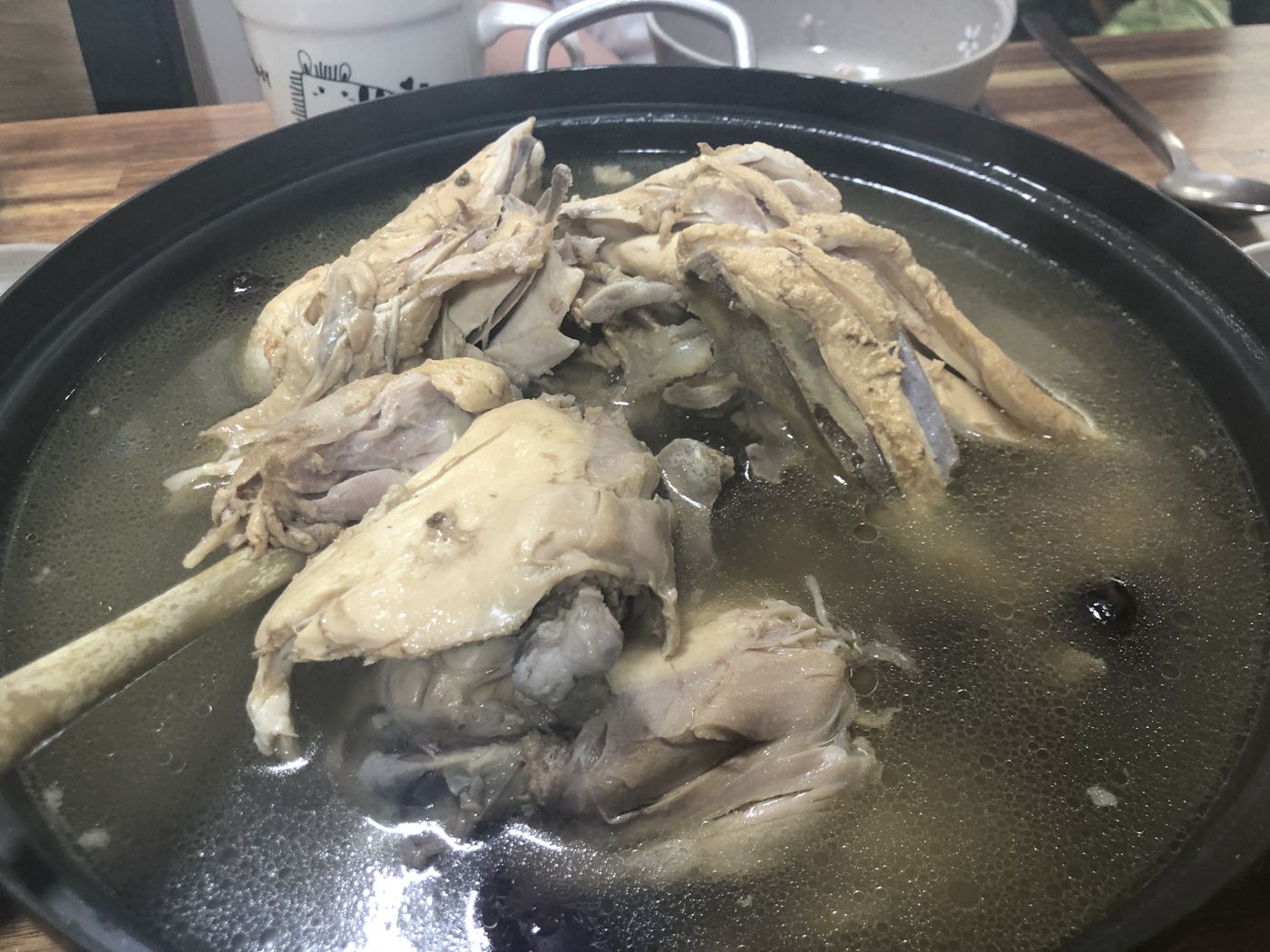 Baeksuk (Plain Whole Boiled Chicken)백숙A whole chicken simmered in plain water with garlic until falling-apart tender, eaten with salt and pepper, then followed by rice porridge cooked in the broth.
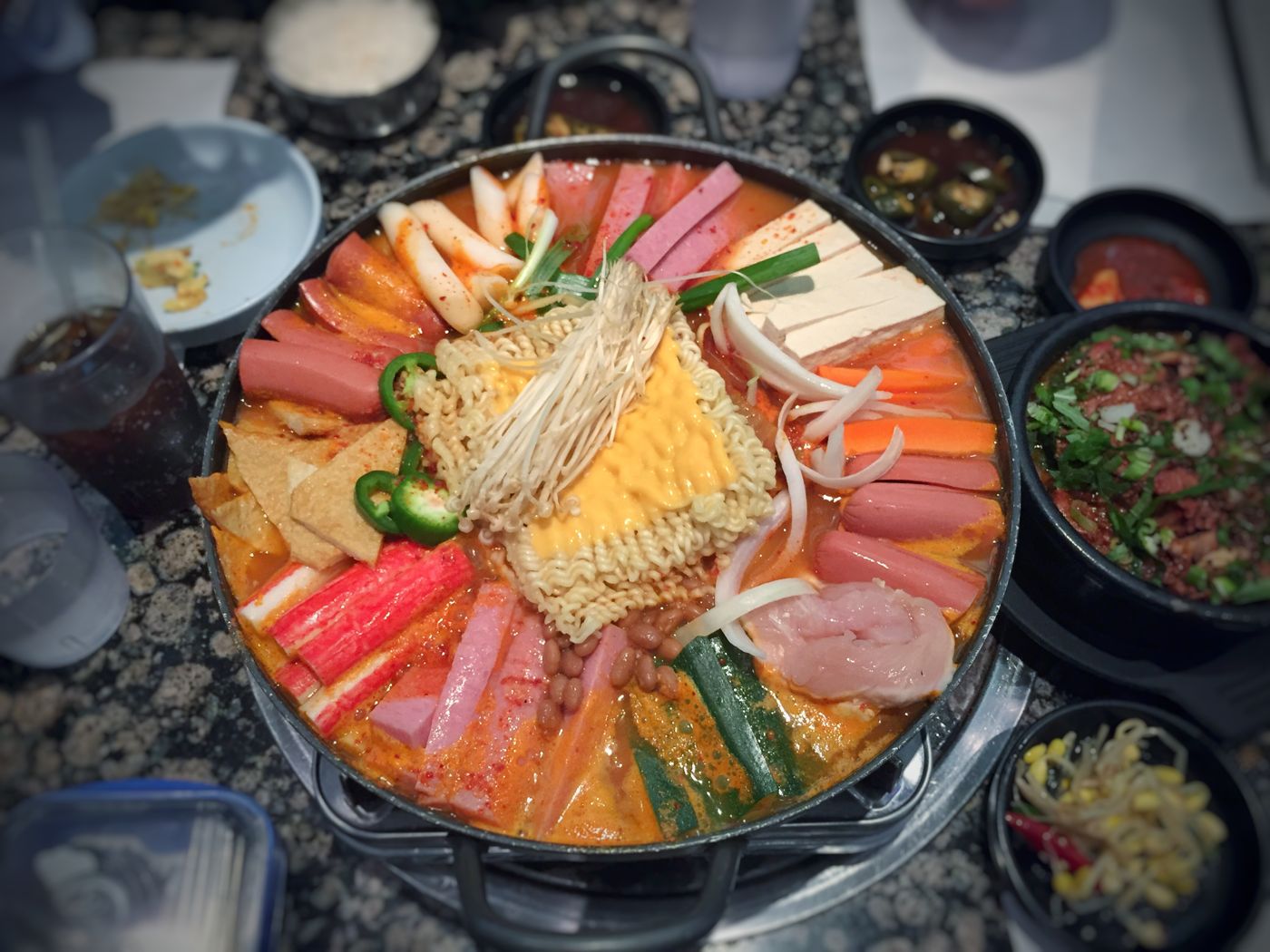 Budae Jjigae (Army Base Stew)부대찌개Ham, sausages and canned beans simmered with kimchi, tofu and a gochujang-chili broth, usually finished with instant noodles — a postwar stew born around US Army bases.
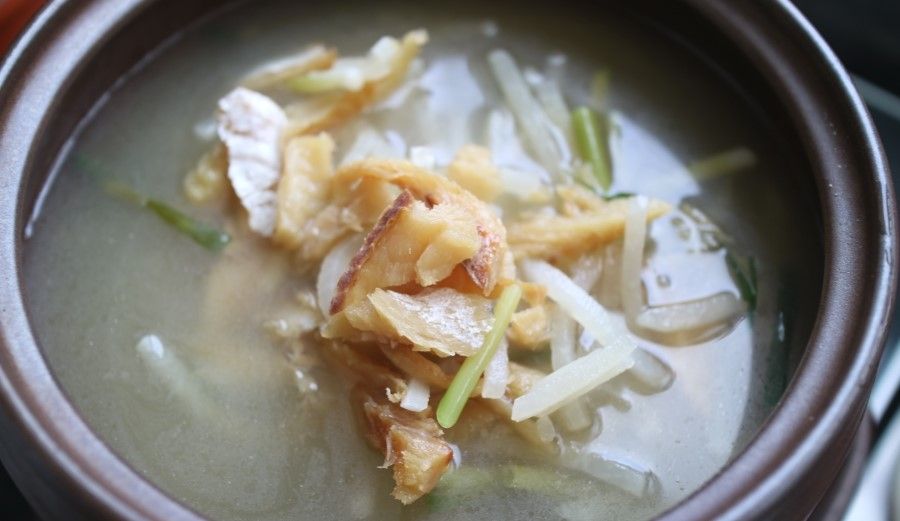 Bugeo Guk (Dried Pollock Soup)북엇국Shredded dried pollock sautéed in sesame oil and simmered into a milky, savory broth with radish, tofu and a ribbon of egg — Korea's favorite morning-after soup.
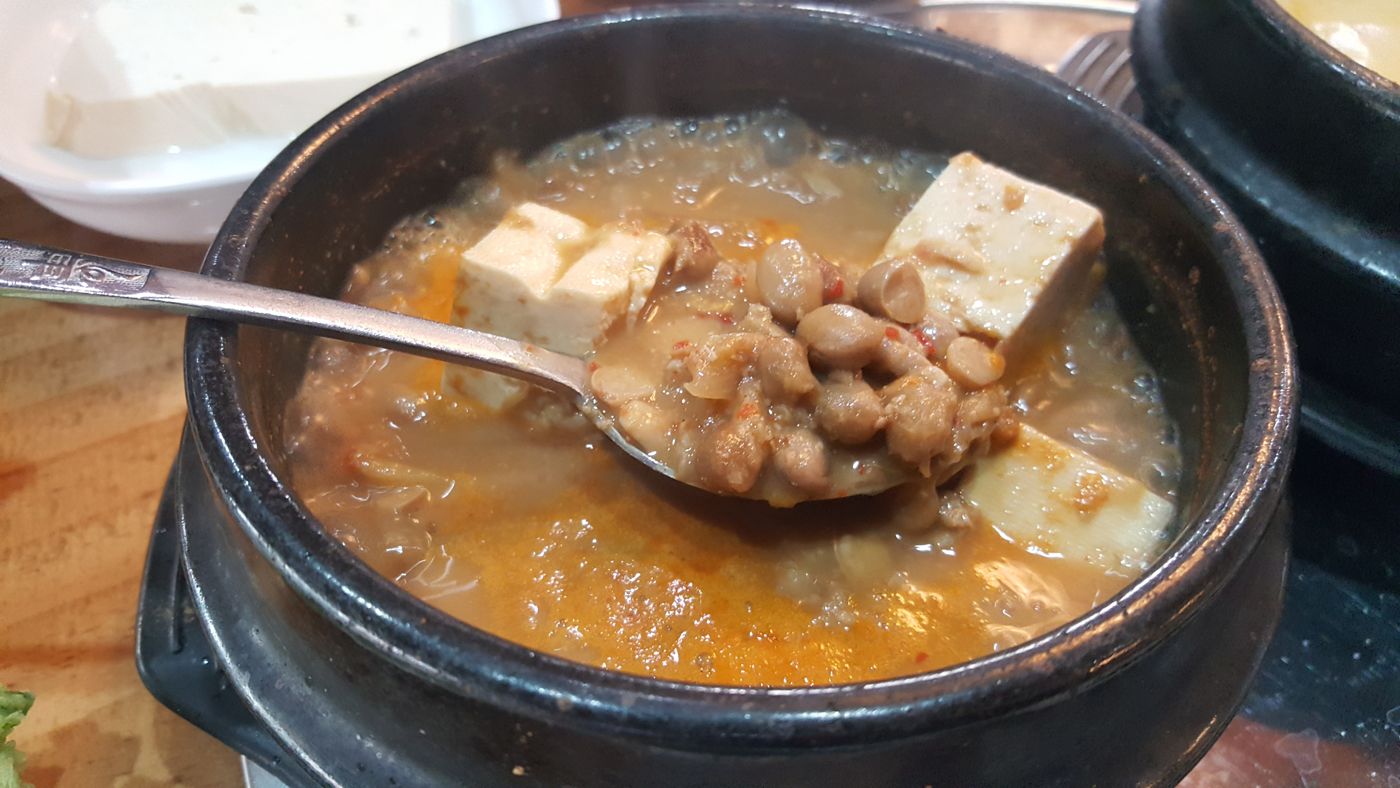 Cheonggukjang Jjigae (Quick-Fermented Soybean Stew)청국장찌개A thick, pungent winter stew of quick-fermented whole soybeans simmered with sour kimchi, tofu and a little pork or beef — loved for its earthy depth, notorious for its smell.
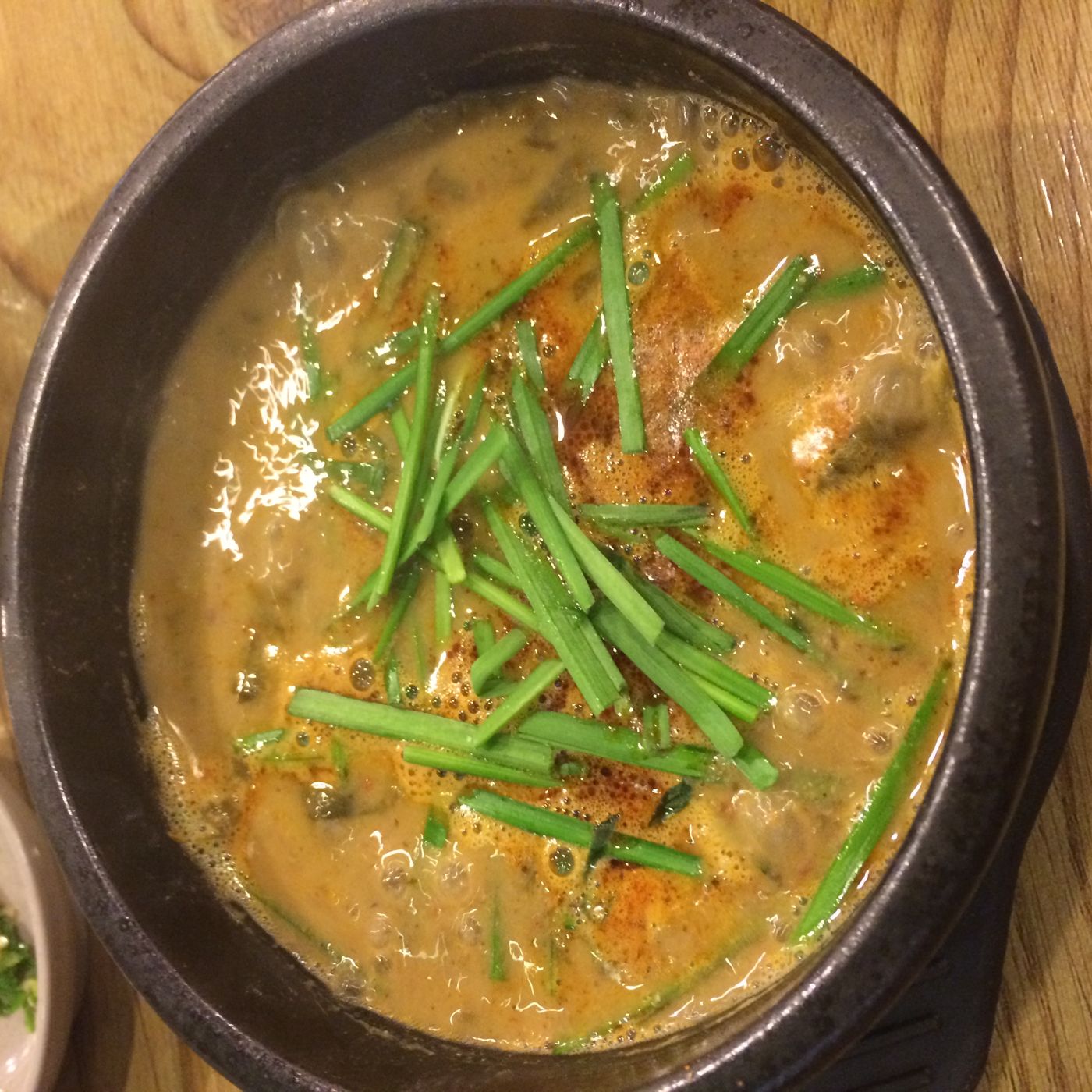 Chueotang (Loach Soup)추어탕Pond loaches simmered and ground into a thick, earthy soup with dried greens, doenjang and perilla, sharpened with chopi pepper — an autumn harvest dish turned year-round restorative.
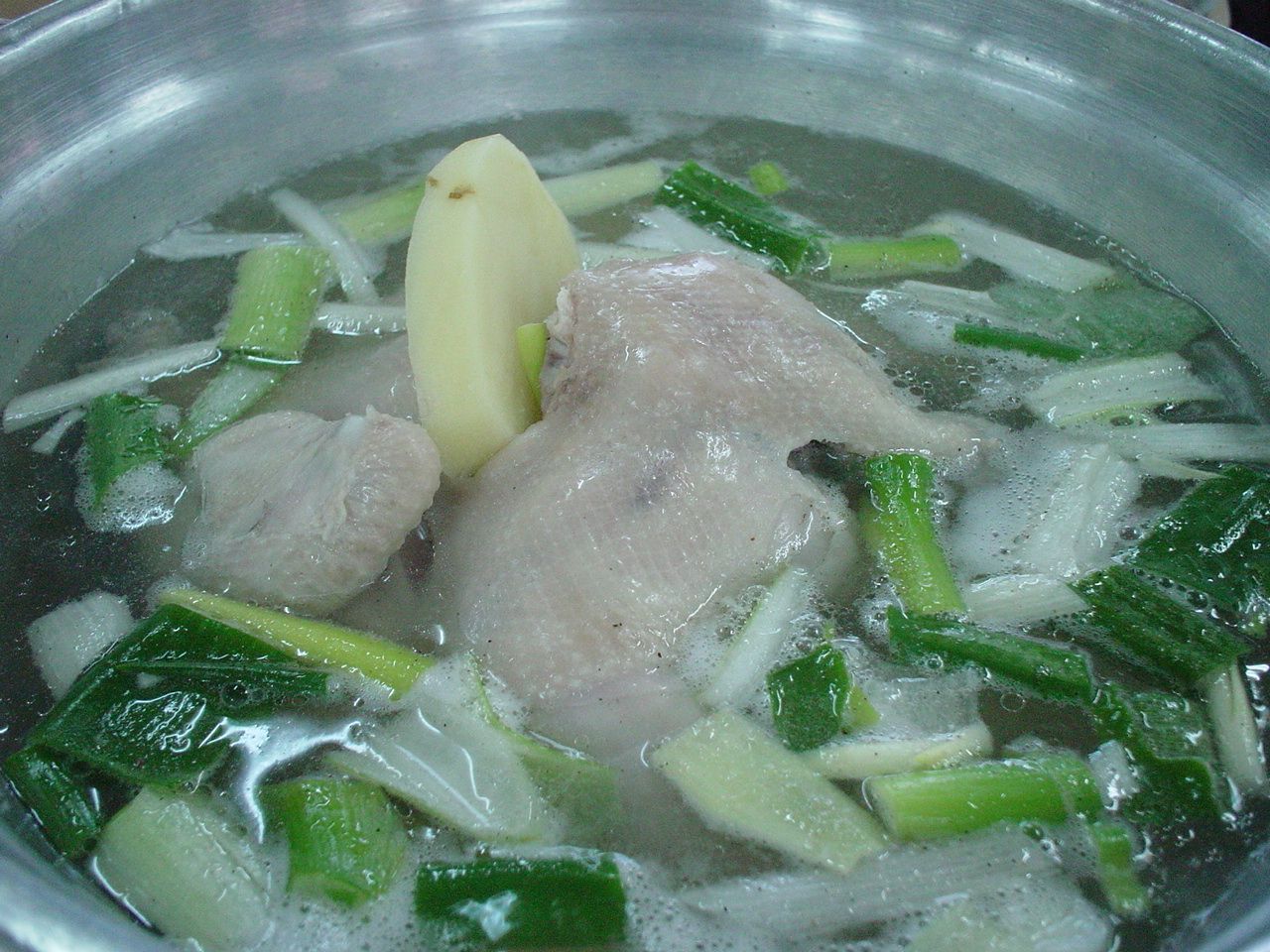 Dak Hanmari ("One Whole Chicken" Hot Pot)닭한마리A whole chicken simmered at the table with potatoes, rice cakes and green onion, dipped in a vinegar-mustard sauce, then finished with noodles in the broth — a Dongdaemun original.
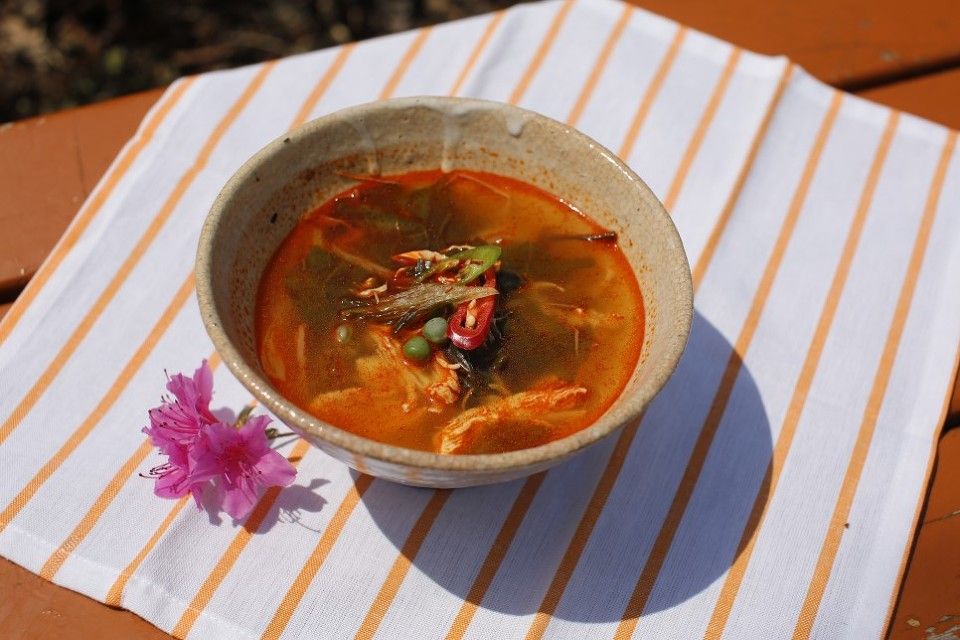 Dakgaejang (Spicy Chicken Soup)닭개장Shredded chicken simmered with bracken, taro stems and plenty of green onion in a fiery chili-oil broth — the chicken cousin of yukgaejang.
 Doenjang Jjigae (Soybean Paste Stew)된장찌개A thick, savory stew of fermented soybean paste with tofu, zucchini and whatever the season offers — the everyday pot at the center of the Korean table.
- Dongtae-jjigae (Frozen Pollack Stew)동태찌개A spicy, clean-tasting stew of frozen Alaska pollack with radish, tofu and fresh greens in a gochugaru-and-jang broth — a winter staple at the Korean table.
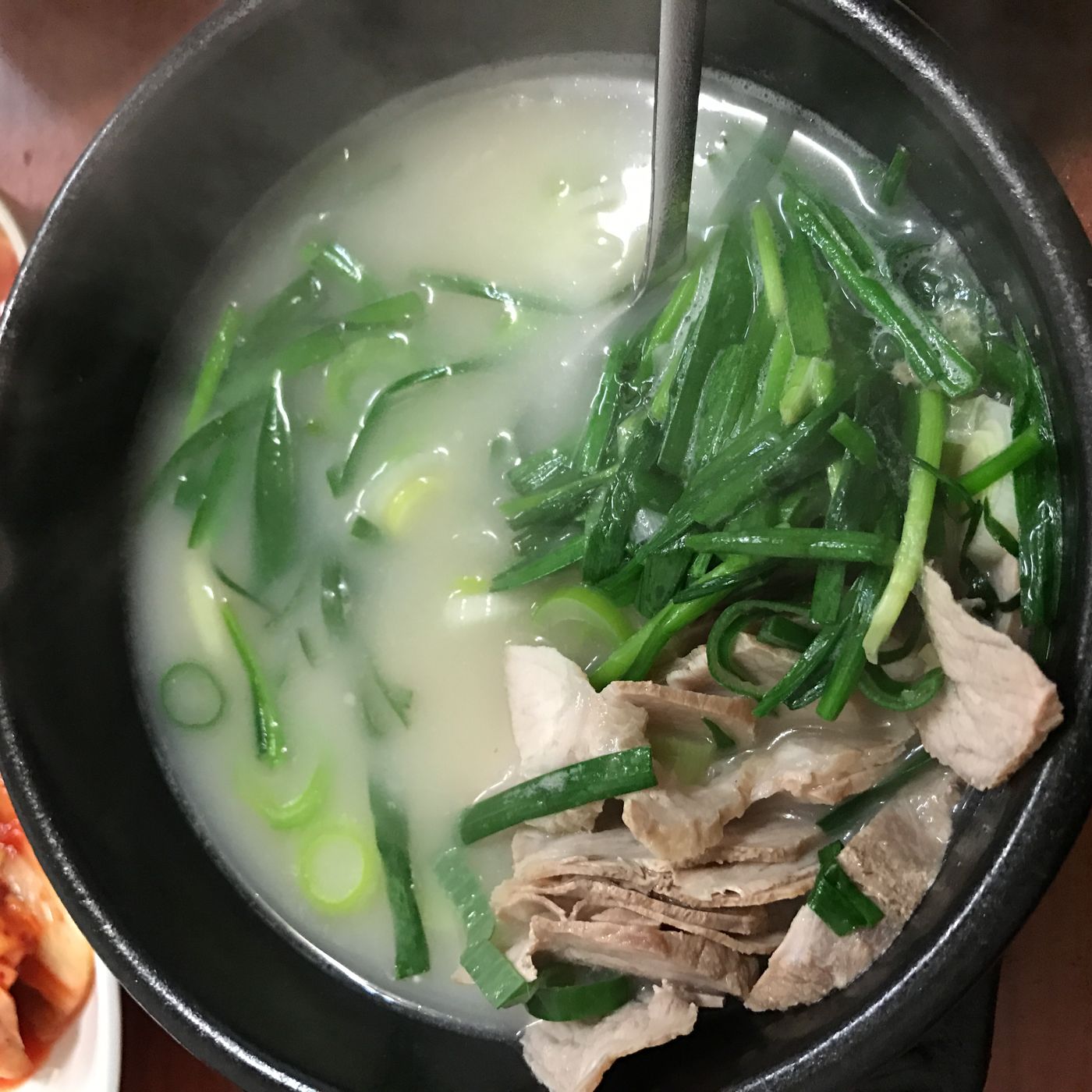 Dwaeji Gukbap (Busan Pork and Rice Soup)돼지국밥Slices of boiled pork in a milky pork-bone broth over rice, seasoned at the table with salted shrimp and garlic chives — Busan's signature everyday bowl.
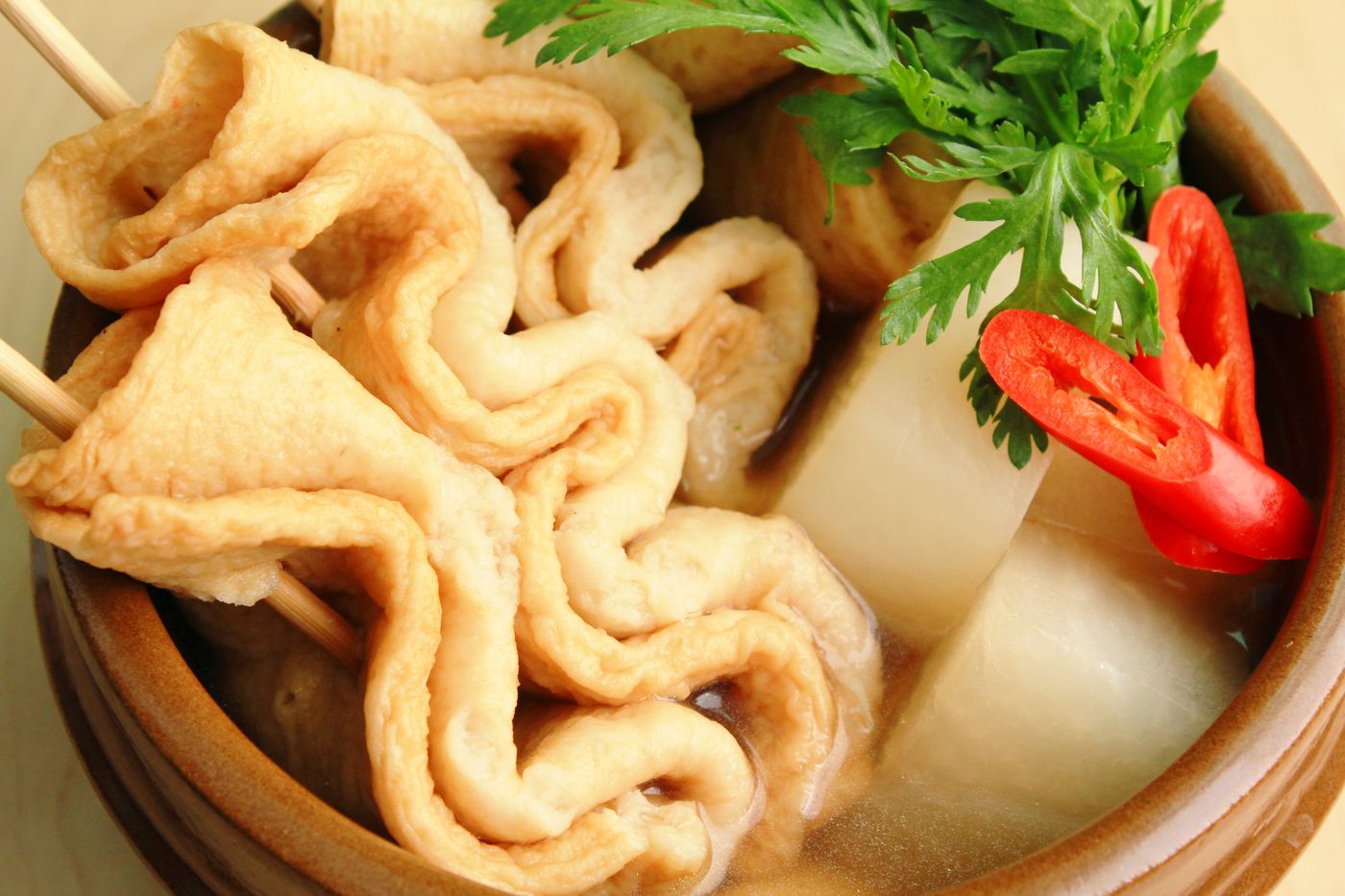 Eomuk Tang (Fish Cake Soup)어묵탕Fish cakes, often threaded on skewers, simmered in a clear anchovy, kelp and radish broth — Busan's winter street-stall soup and a quick home dish.
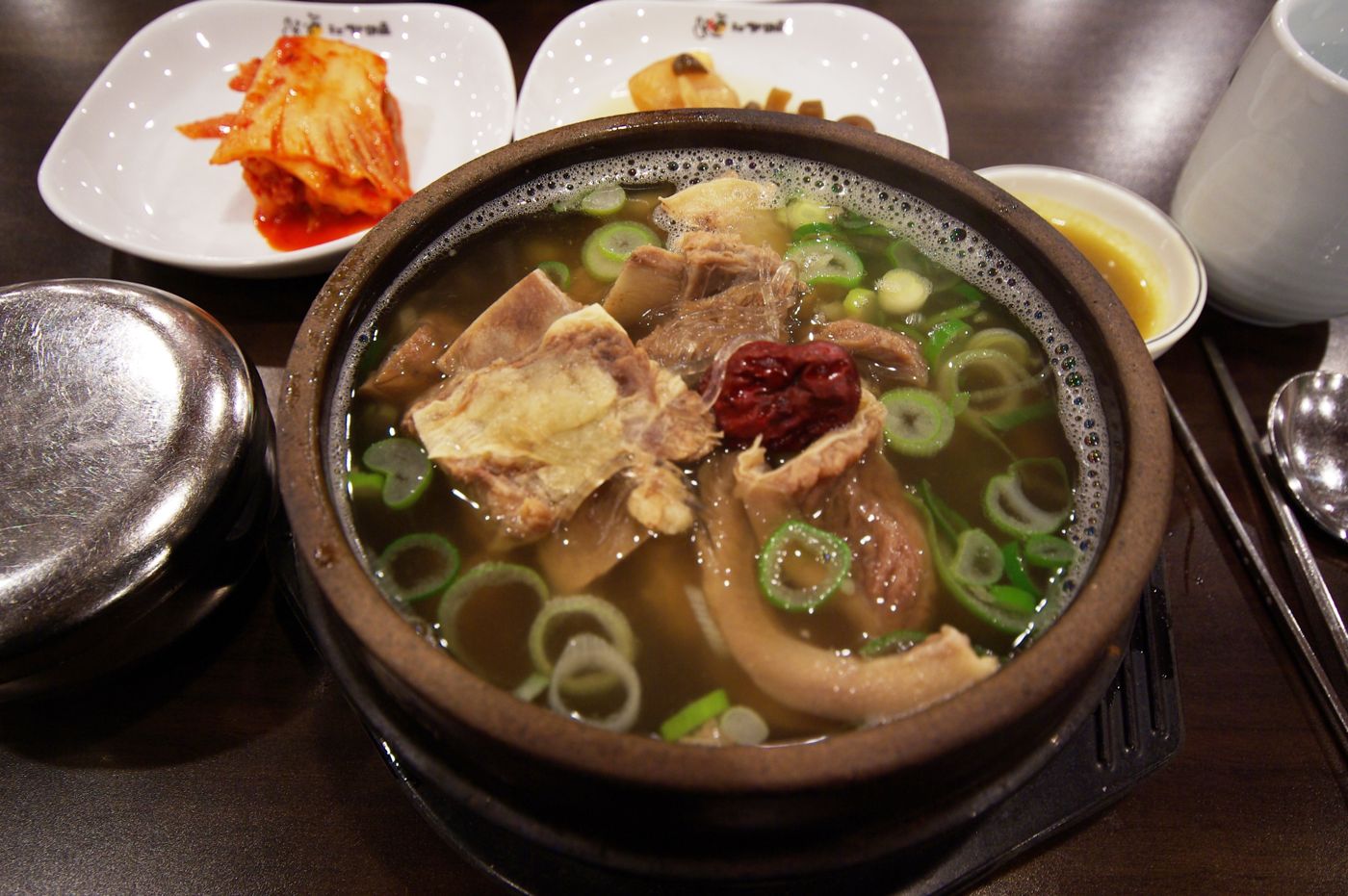 Galbitang (Beef Short Rib Soup)갈비탕Beef short ribs simmered until the meat slips from the bone, served in a clear, soy-seasoned broth with radish — a court banquet soup turned everyday restaurant bowl.
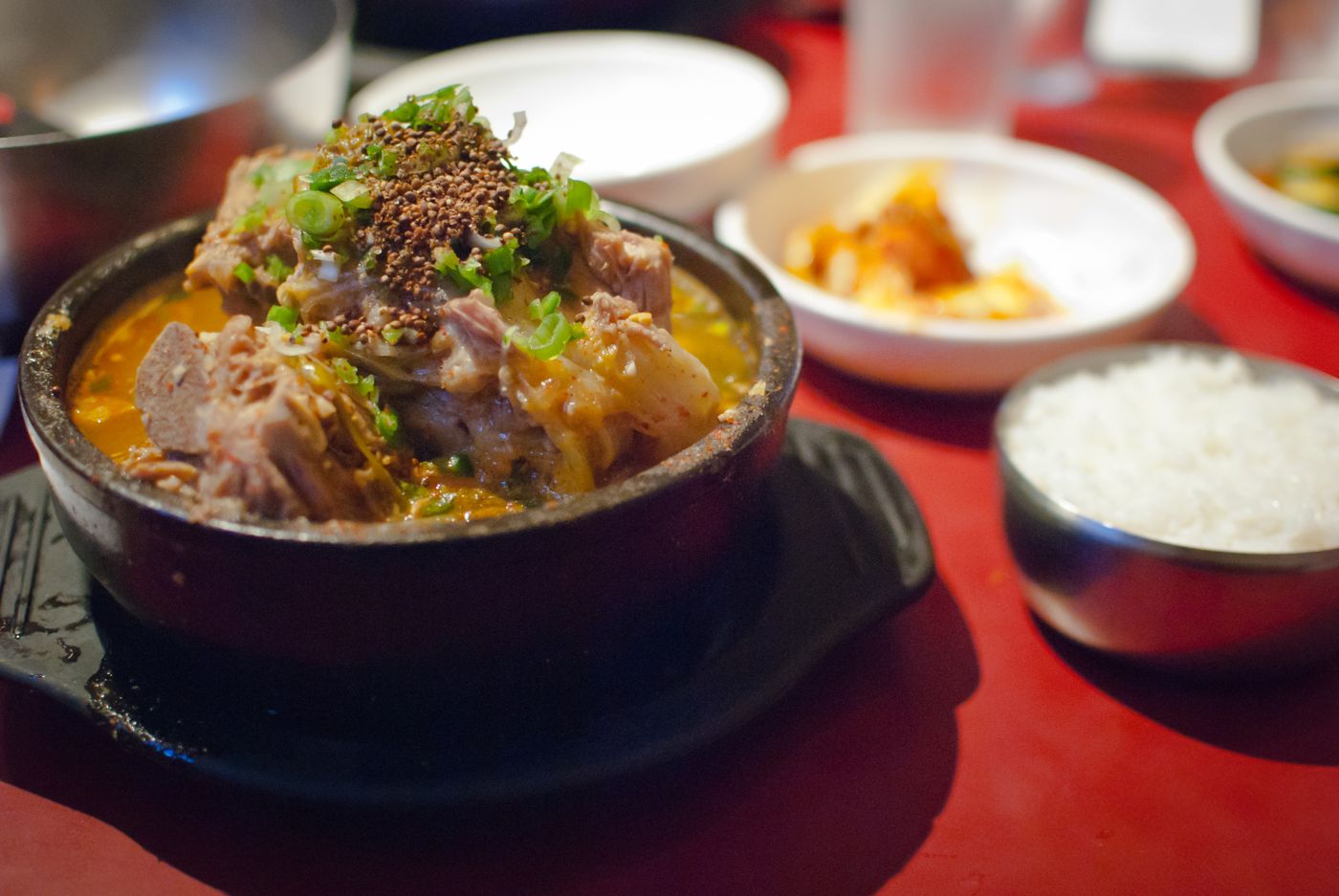 Gamjatang (Pork Bone and Potato Stew)감자탕Meaty pork spine simmered with potatoes, cabbage greens and perilla in a spicy doenjang-chili broth — a big shared pot of picking meat off the bones.
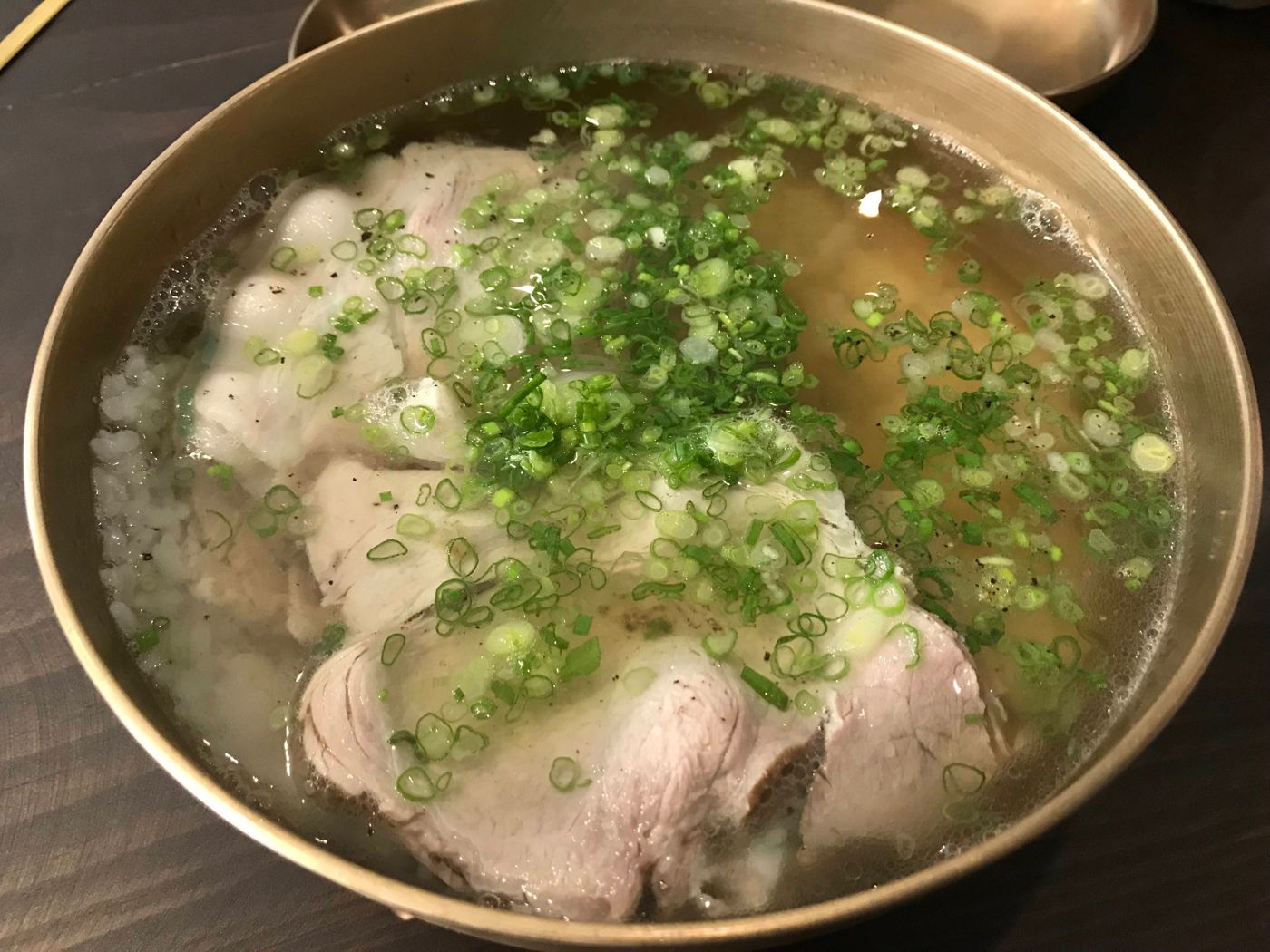 Gomtang (Beef Bone and Brisket Soup)곰탕A long-simmered beef soup, usually built on brisket, shank and offal and served over rice, with a broth that is lightly salted at the table. A pillar of the Korean gukbap tradition.
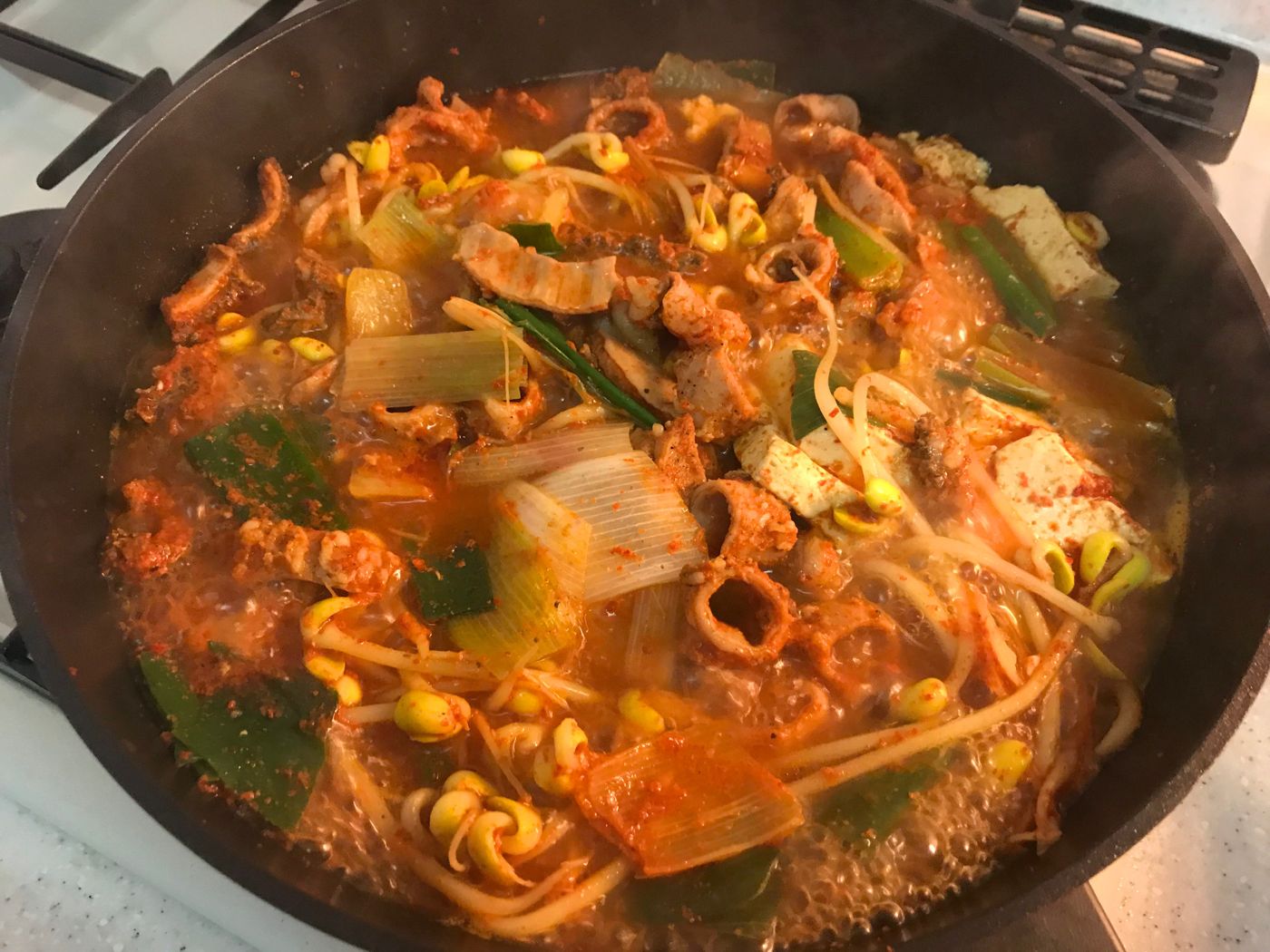 Gopchang Jeongol (Beef Intestine Hot Pot)곱창전골Cleaned beef small intestine and tripe simmered at the table with vegetables, mushrooms and glass noodles in a spicy broth — a rich, chewy hot pot for cold nights.
- Gul Guk (Oyster Soup)굴국Fresh oysters dropped into a clear radish broth with tofu and green onion and cooked for barely a minute — a delicate cold-season soup of the south and west coasts.
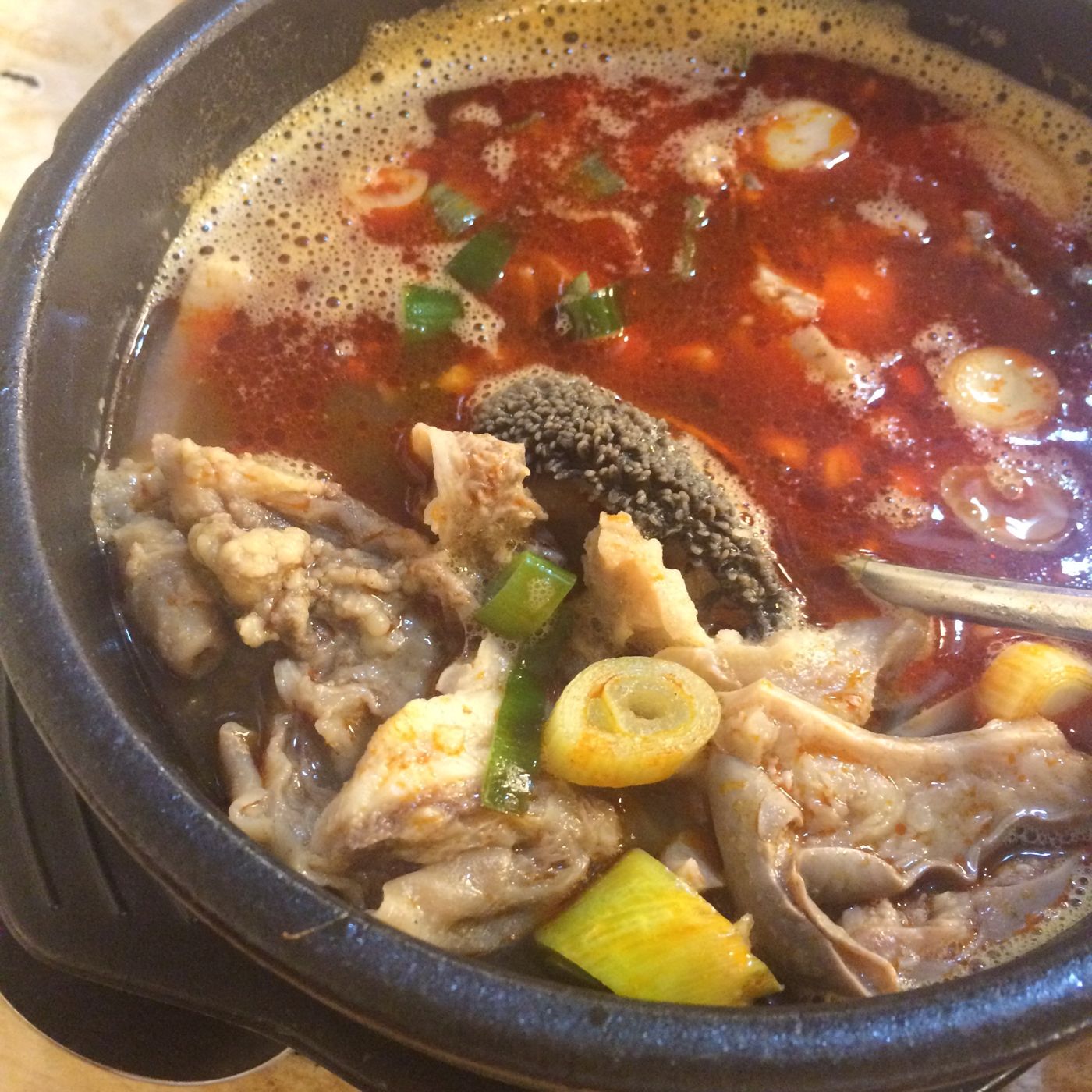 Haejangguk (Hangover Soup)해장국A hot, hearty morning soup — classically beef-bone broth with cabbage greens, bean sprouts and seonji (beef blood curd) — eaten over rice after a night of drinking.
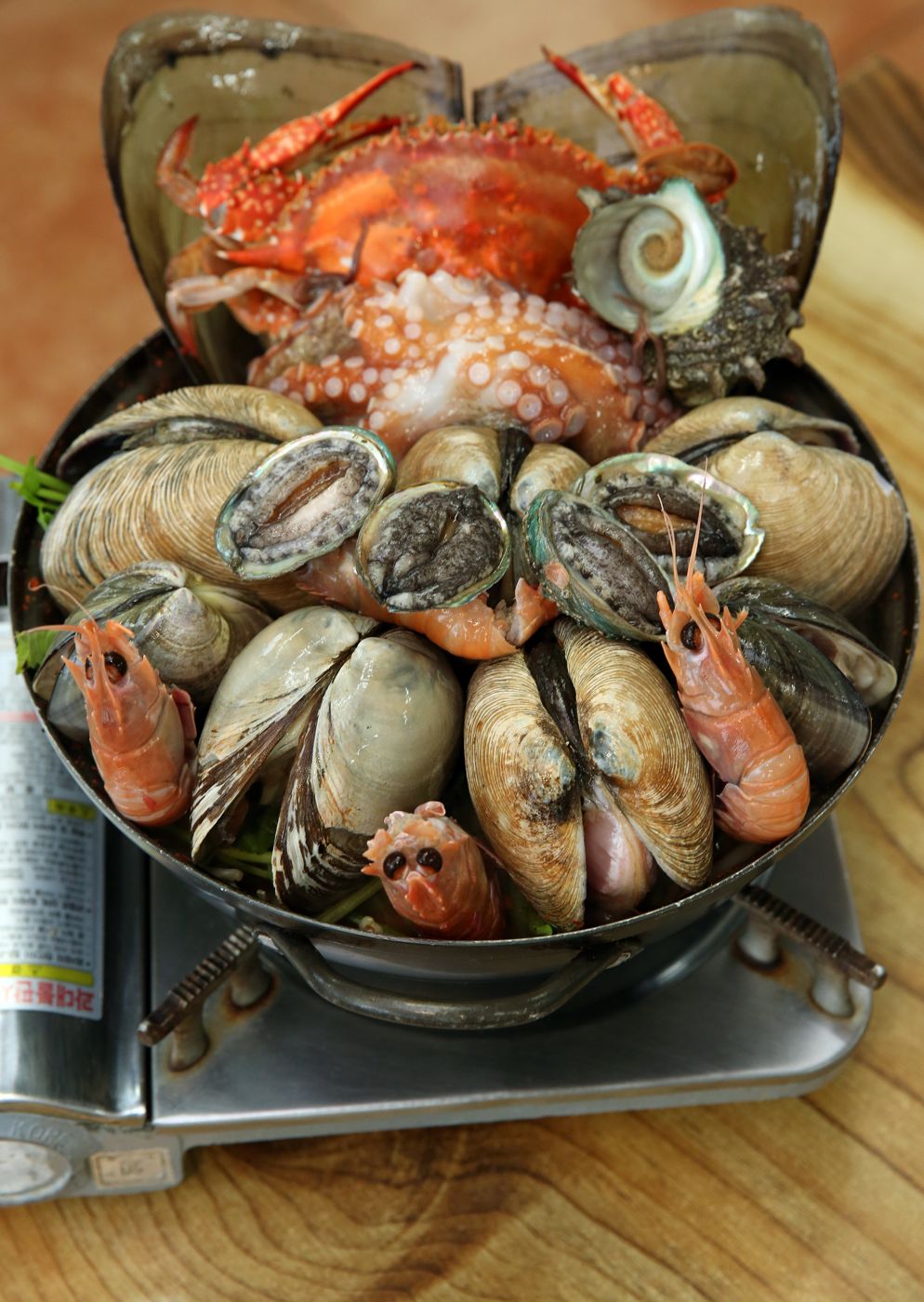 Haemul Tang (Spicy Seafood Hot Pot)해물탕Blue crab, octopus, shrimp, clams and sea squirt simmered with radish and water dropwort in a bright, spicy gochujang broth — a seafood feast in one pot.
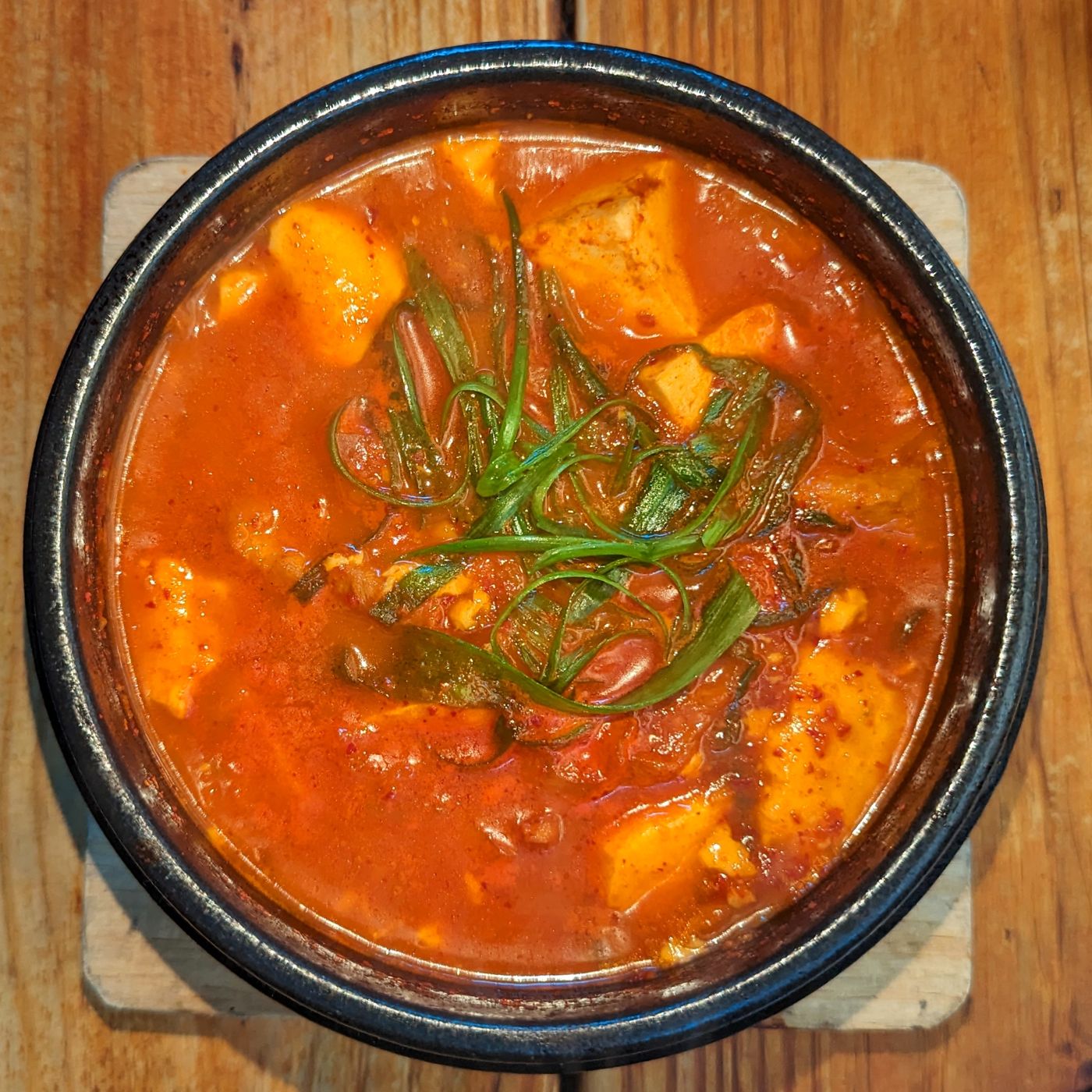 Kimchi Jjigae (Kimchi Stew)김치찌개Sour, well-aged napa cabbage kimchi simmered with pork and tofu into a tangy, spicy stew — the classic way to use up kimchi that has gone past its prime.
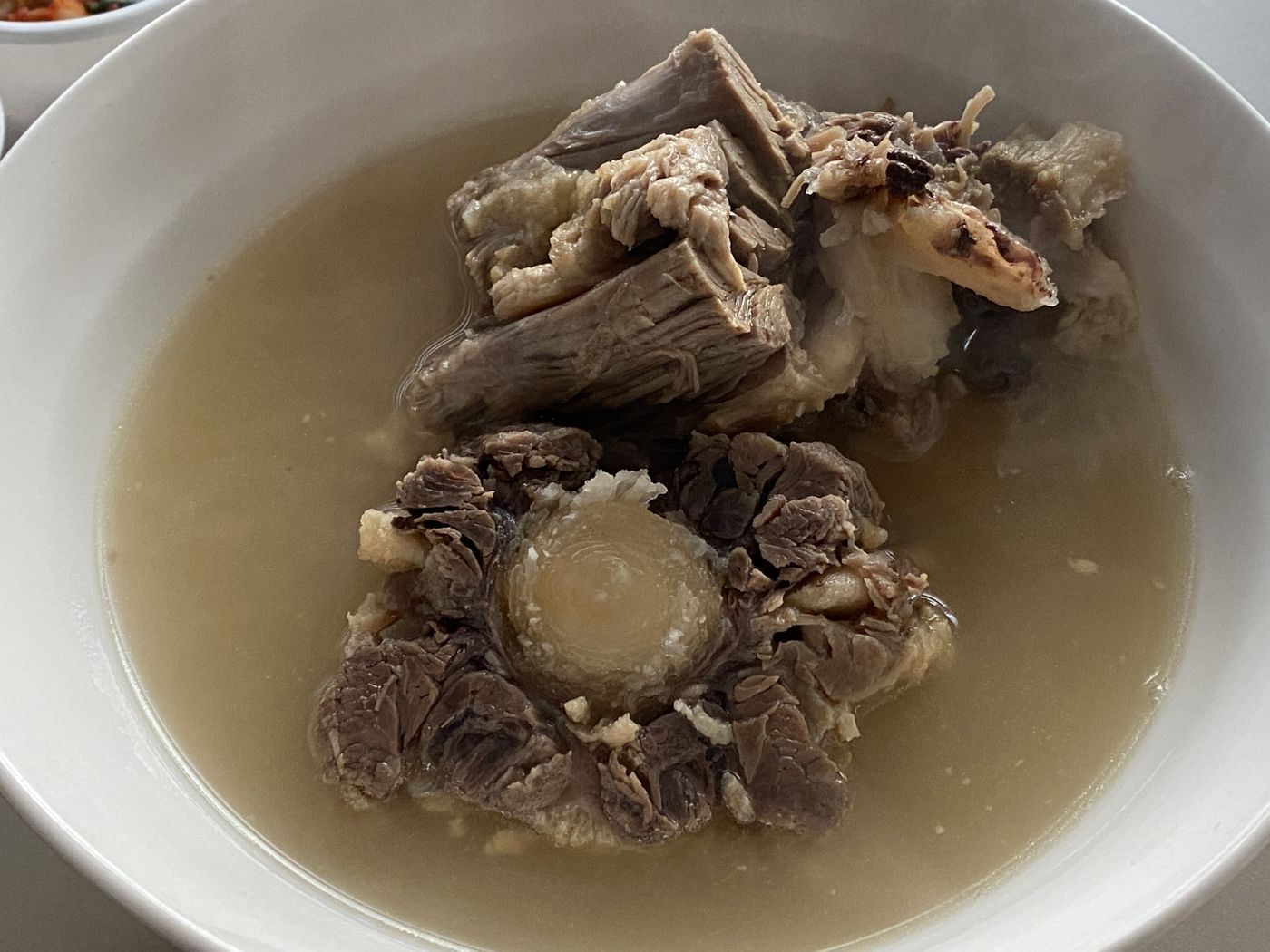 Kkori-gomtang (Oxtail Soup)꼬리곰탕Oxtail simmered for hours until the meat slips from the bone, in a rich, savory broth ladled over rice. A gomtang built on a single cut.
- Kongbiji Jjigae (Okara Stew)콩비지찌개Soybean pulp left from tofu-making — or freshly ground soaked soybeans — simmered thick with pork and sour kimchi and seasoned with salted shrimp; a nutty, homely winter stew.
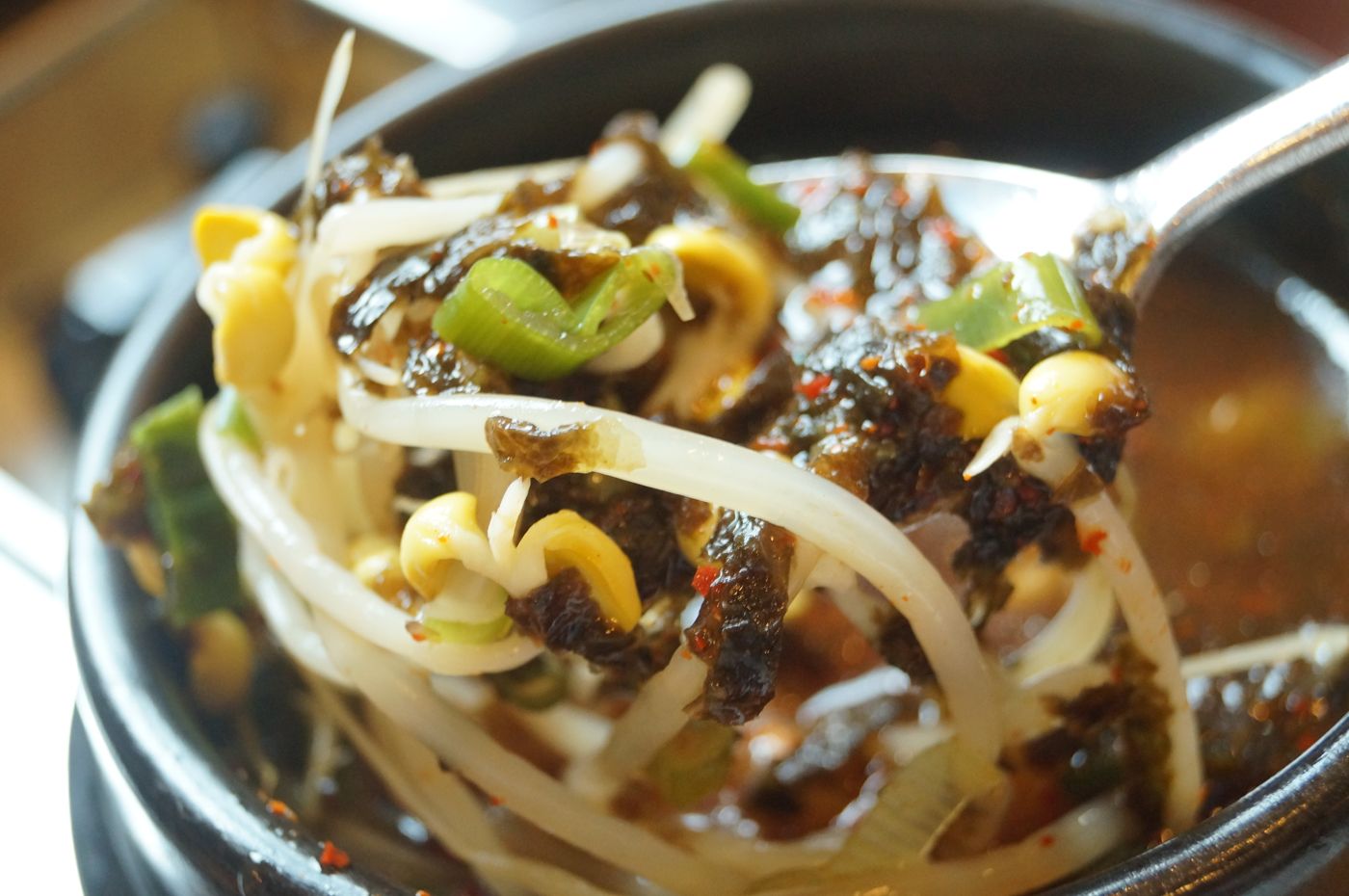 Kongnamul Guk (Soybean Sprout Soup)콩나물국A clear, light soup of soybean sprouts in anchovy-kelp stock, seasoned with salt or soup soy sauce — an everyday guk and a favorite morning-after cure.
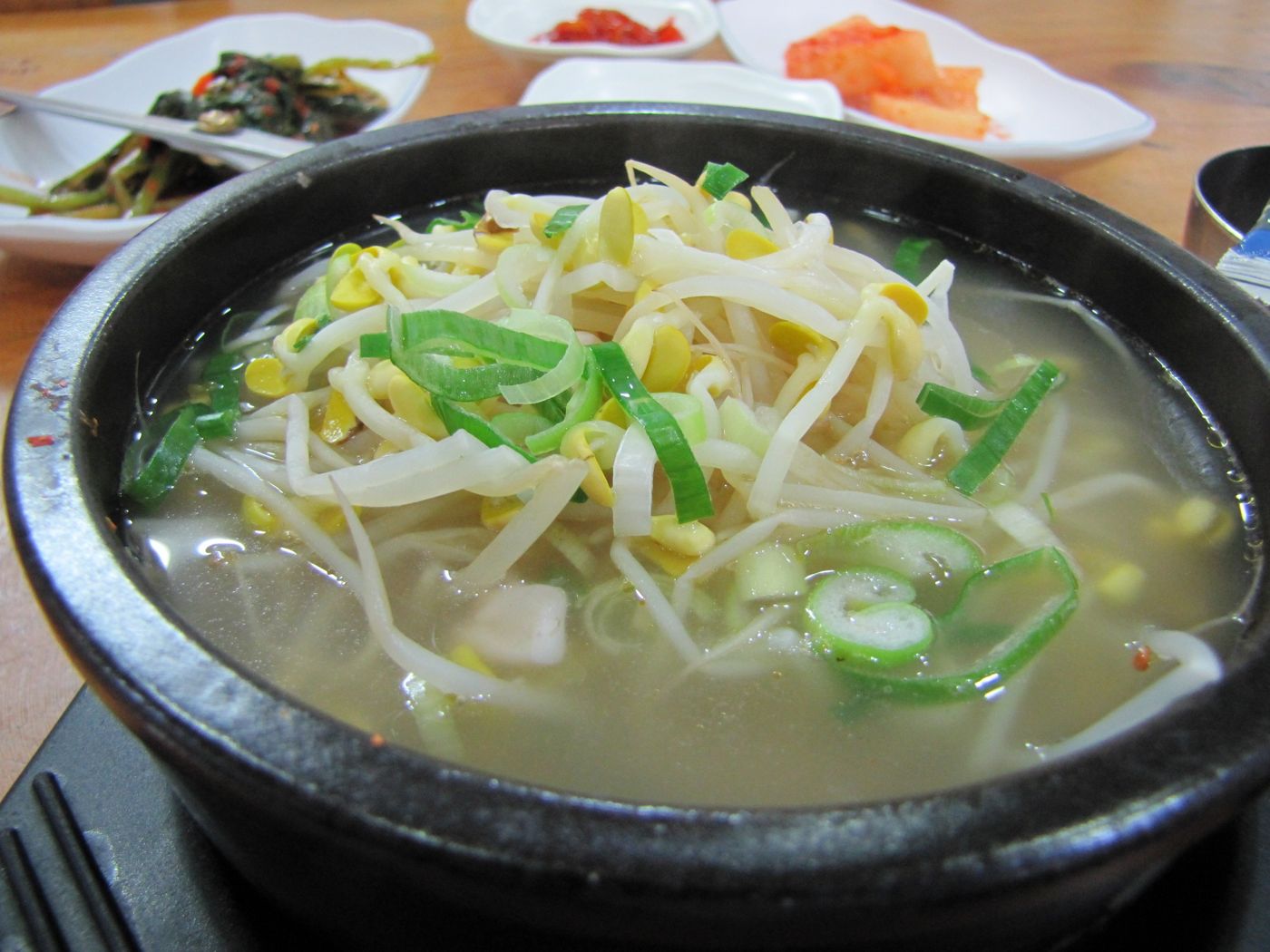 Kongnamul Gukbap (Jeonju Soybean-Sprout Rice Soup)콩나물국밥Rice and crisp soybean sprouts in a clear, savory broth, finished with egg, salted shrimp and kimchi. Jeonju's market breakfast and morning-after bowl.
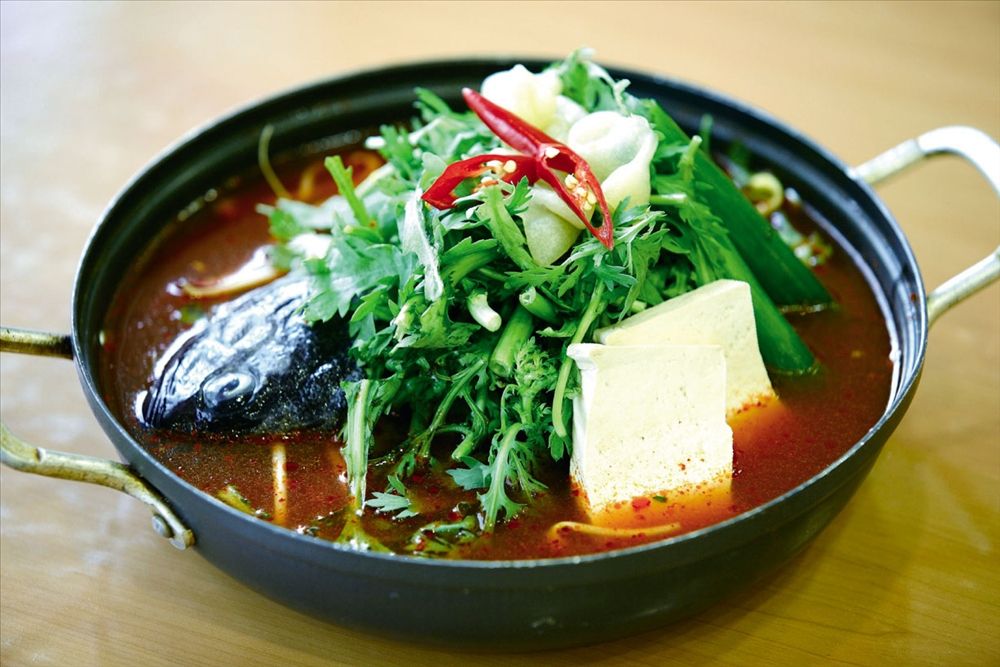 Maeuntang (Spicy Fish Stew)매운탕Fish — freshwater or sea — simmered with radish, tofu and fragrant greens in a fiery gochugaru and gochujang broth; the stew that follows sashimi and fills riverside restaurants.
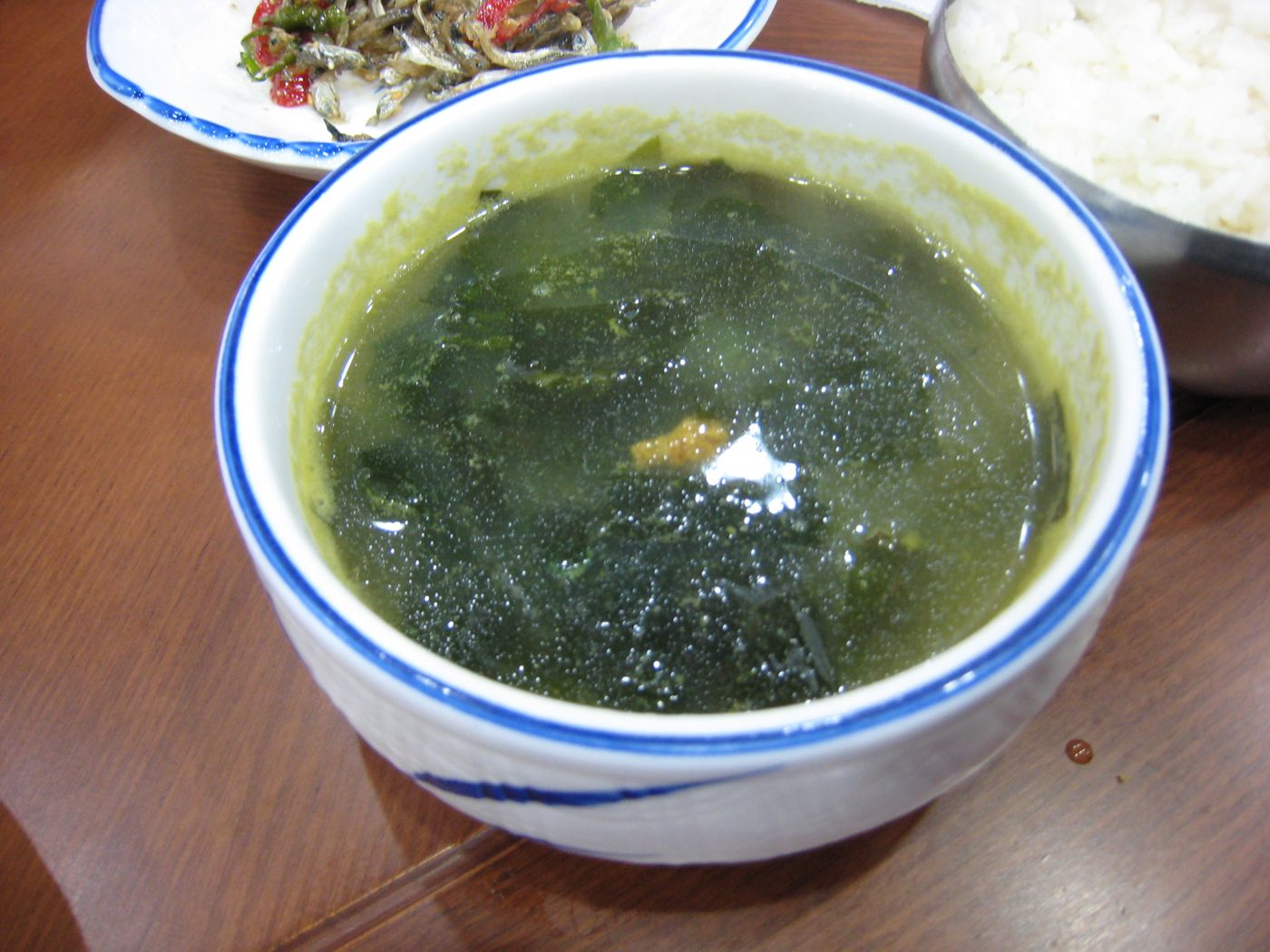 Miyeok Guk (Seaweed Soup)미역국A mild soup of sea mustard and beef seasoned with soup soy sauce and sesame oil — the first meal after childbirth and the soup of every Korean birthday.
- Mu Guk (Beef and Radish Soup)뭇국Thin squares of Korean radish and beef stir-fried in sesame oil, then simmered into a clear, gently sweet broth seasoned with soup soy sauce — a year-round everyday guk.
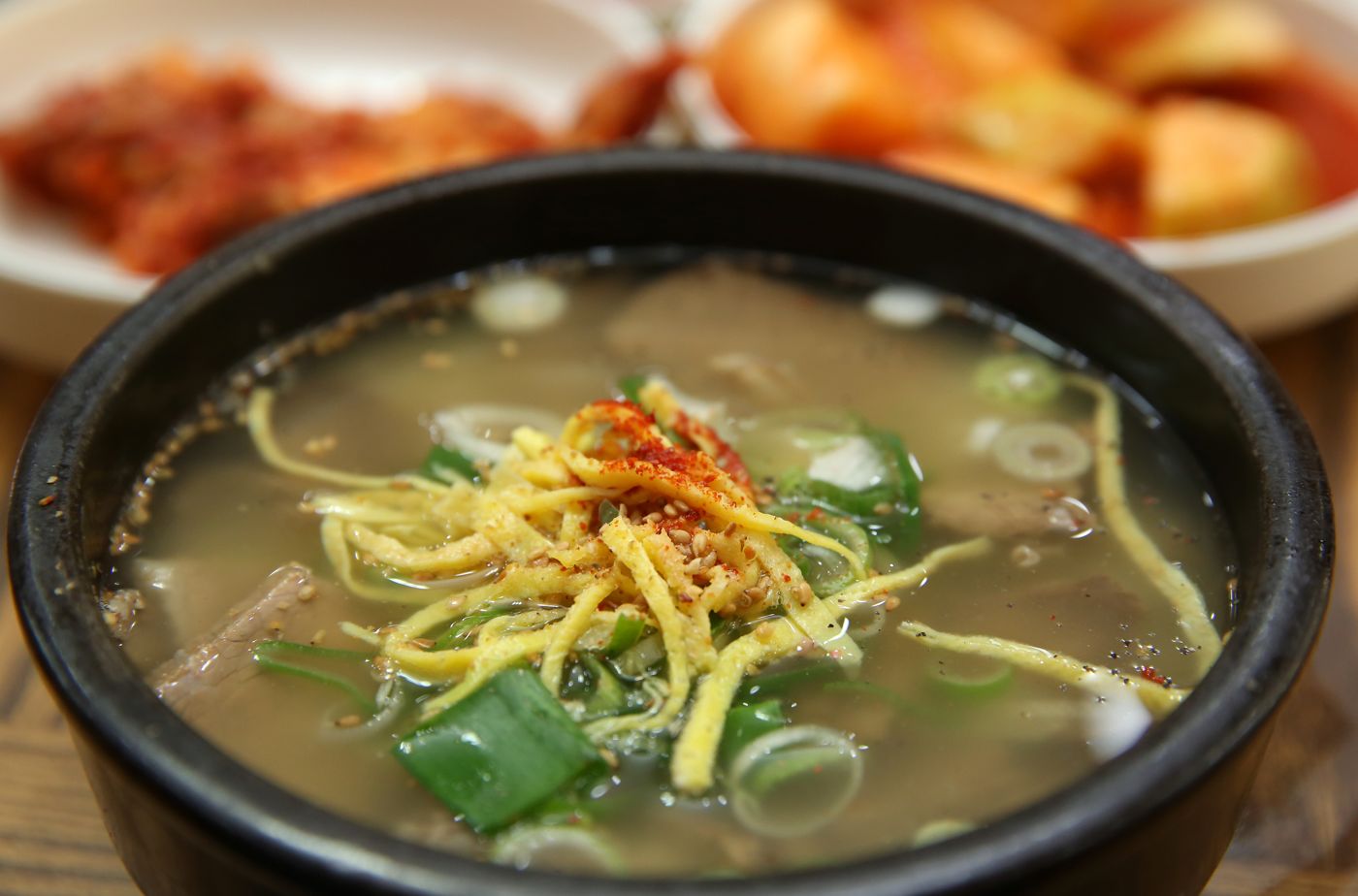 Naju Gomtang (Naju Clear Beef Soup)나주곰탕Brisket, shank and other beef cuts simmered into a clear, gently rich broth, poured over rice and topped with green onion — the market-day soup of Naju in South Jeolla.
- Pumpkin Kimchi for Stew호박김치Thick slices of pumpkin fermented with cabbage or young radish greens, then simmered into a mellow stew — a Hwanghae and Chungcheong cooking kimchi.
- Saengtae Jjigae (Fresh Pollock Stew)생태찌개Chunks of fresh, never-frozen pollock simmered with radish, tofu and a red chili broth, finished with water dropwort and crown daisy — a winter stew prized for its clean, bracing taste.
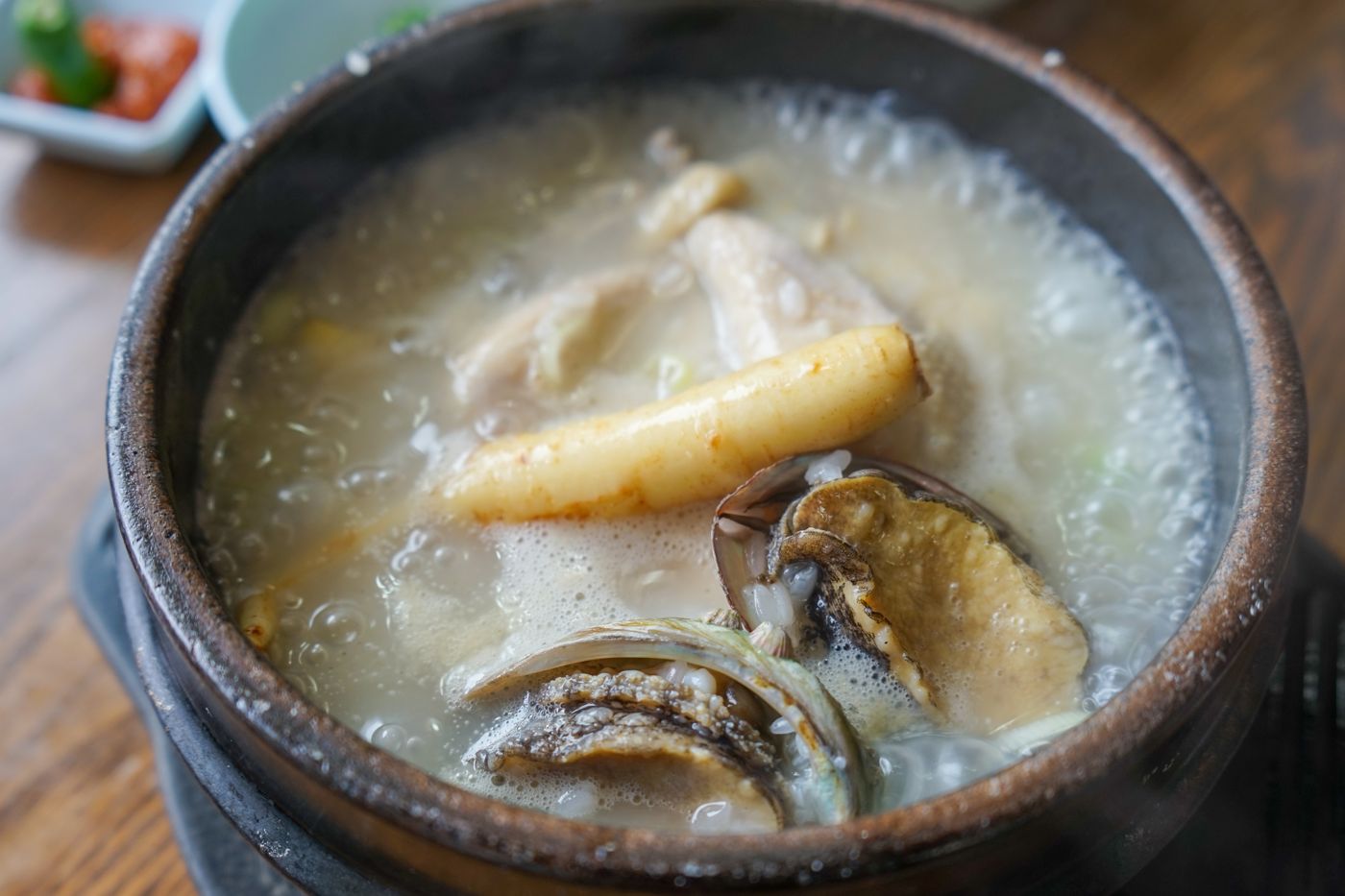 Samgyetang (Ginseng Chicken Soup)삼계탕A whole young chicken stuffed with glutinous rice, ginseng, jujubes and garlic and simmered until tender — the classic hot soup for Korea's dog days of summer.
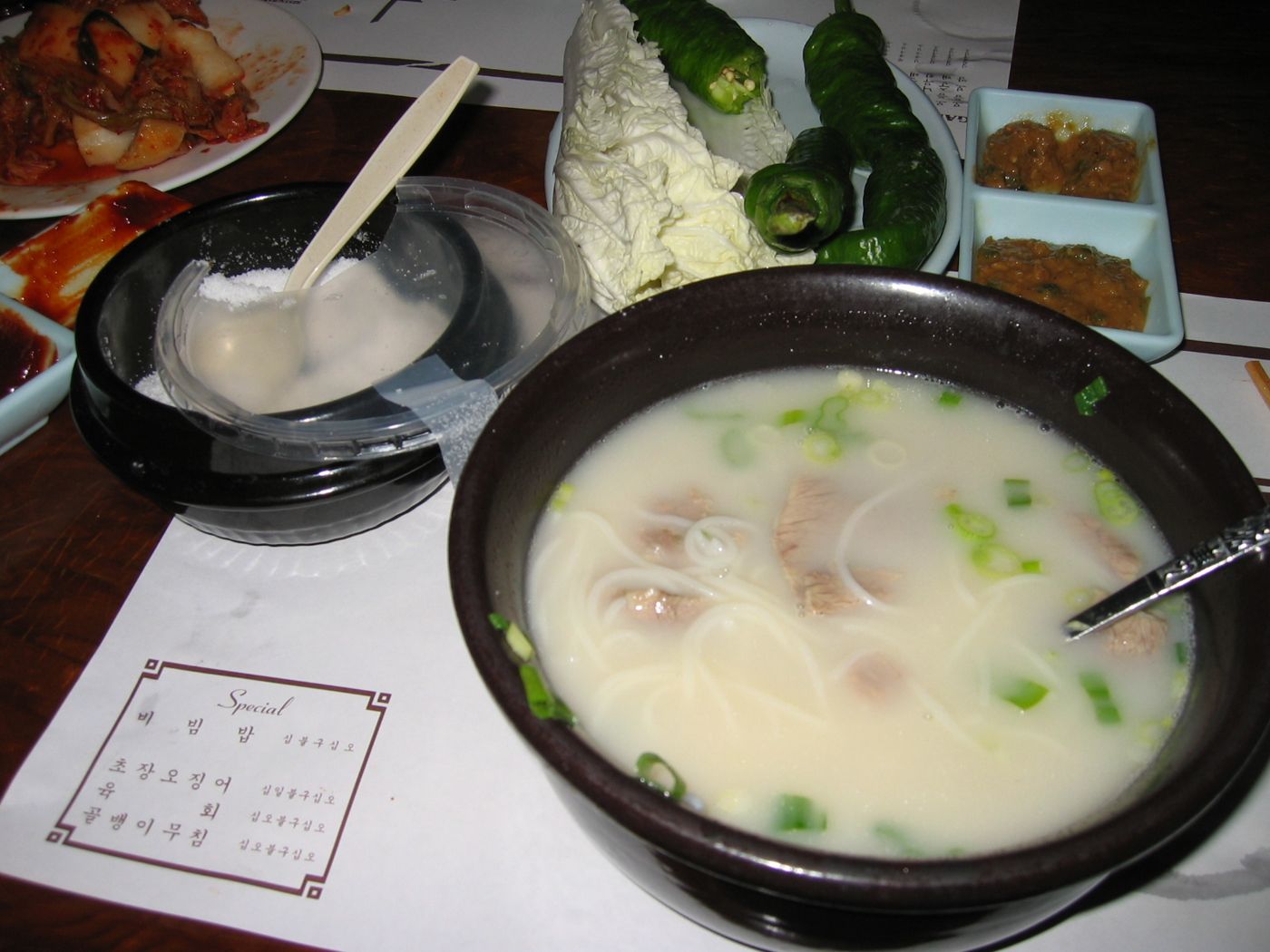 Seolleongtang (Ox Bone Soup)설렁탕Ox bones and beef simmered for hours into a milky-white broth, served unsalted over rice with sliced meat — each diner seasons it at the table.
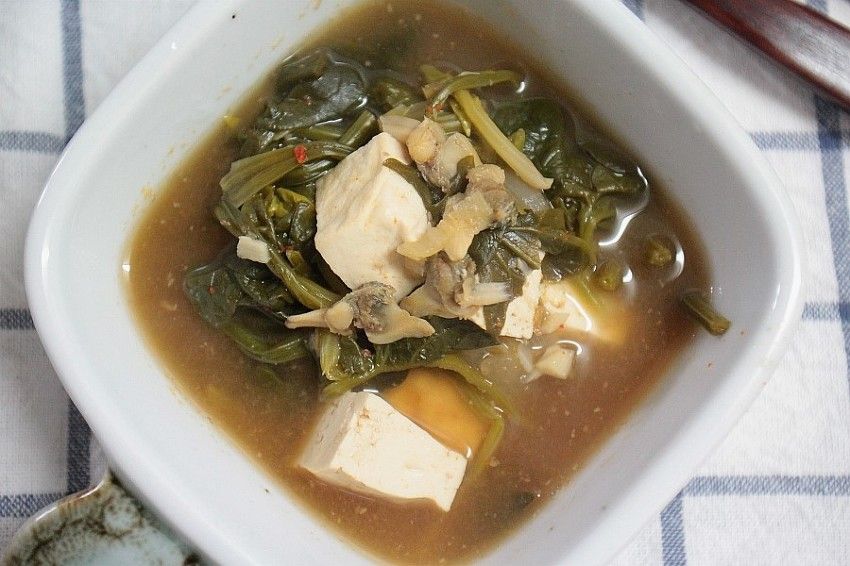 Sigeumchi Doenjang Guk (Spinach Soybean-Paste Soup)시금치된장국Tender spinach simmered in an anchovy broth seasoned with doenjang — a mild, everyday soup that is at its sweetest in winter and early spring.
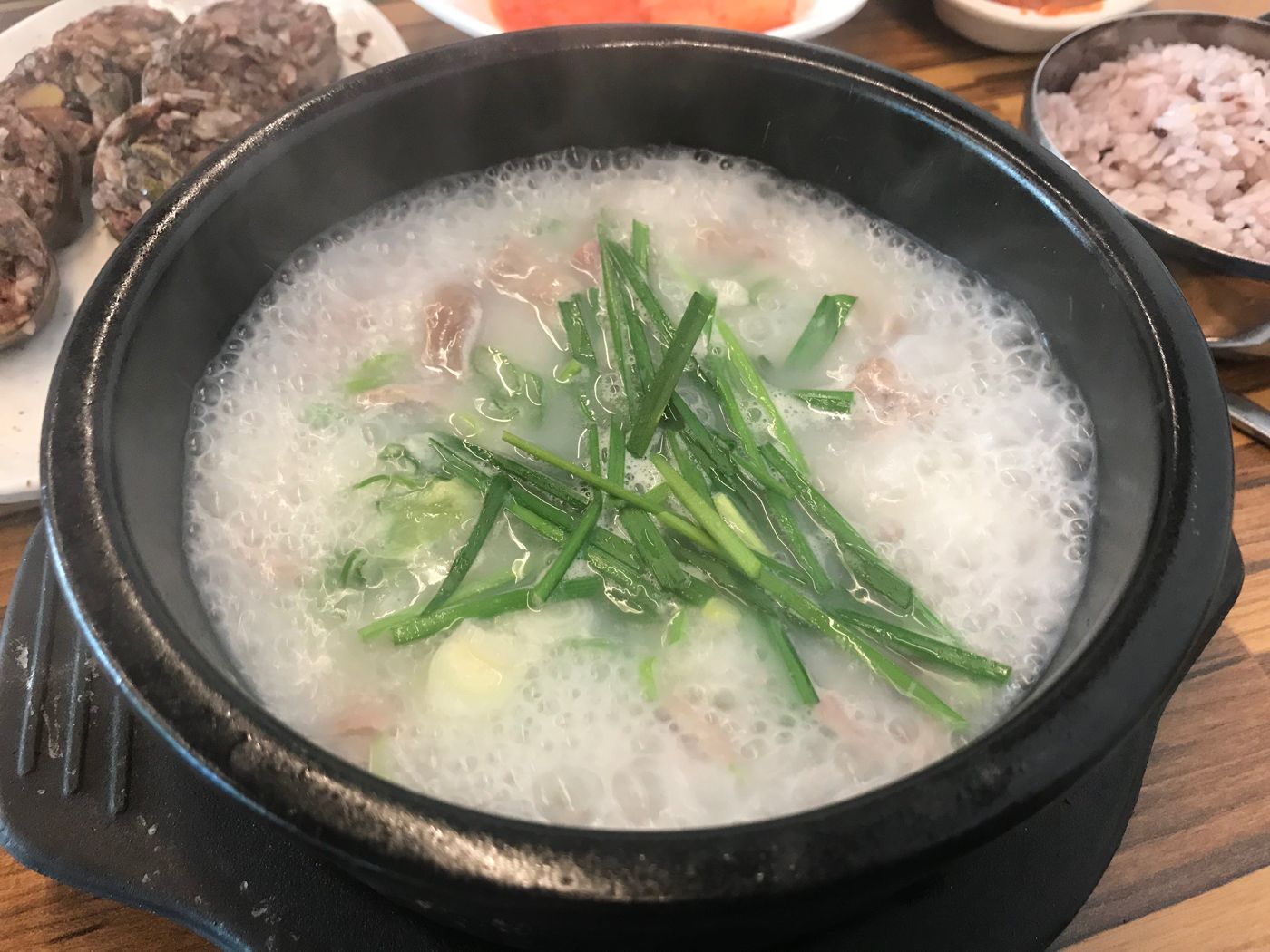 Sundaeguk (Blood Sausage Soup)순댓국Slices of Korean blood sausage and pork offal in a rich pork-bone broth, seasoned at the table with salted shrimp — a cheap, hearty market-day bowl served with rice.
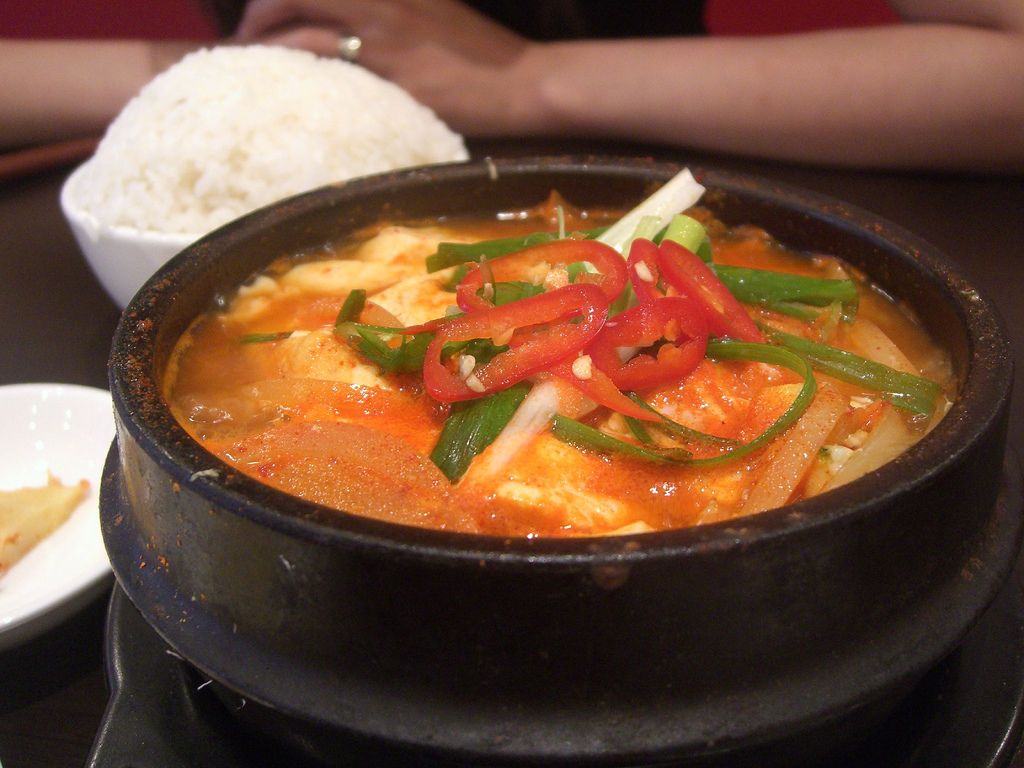 Sundubu Jjigae (Soft Tofu Stew)순두부찌개Silky, unpressed tofu simmered in a fiery chili broth with clams or pork and finished with a raw egg — served still boiling in its earthenware pot.
- Toran Guk (Taro Soup)토란국Parboiled taro simmered in a clear beef-and-kelp broth seasoned with soup soy sauce — a soft, gently slippery soup made for the Chuseok harvest table.
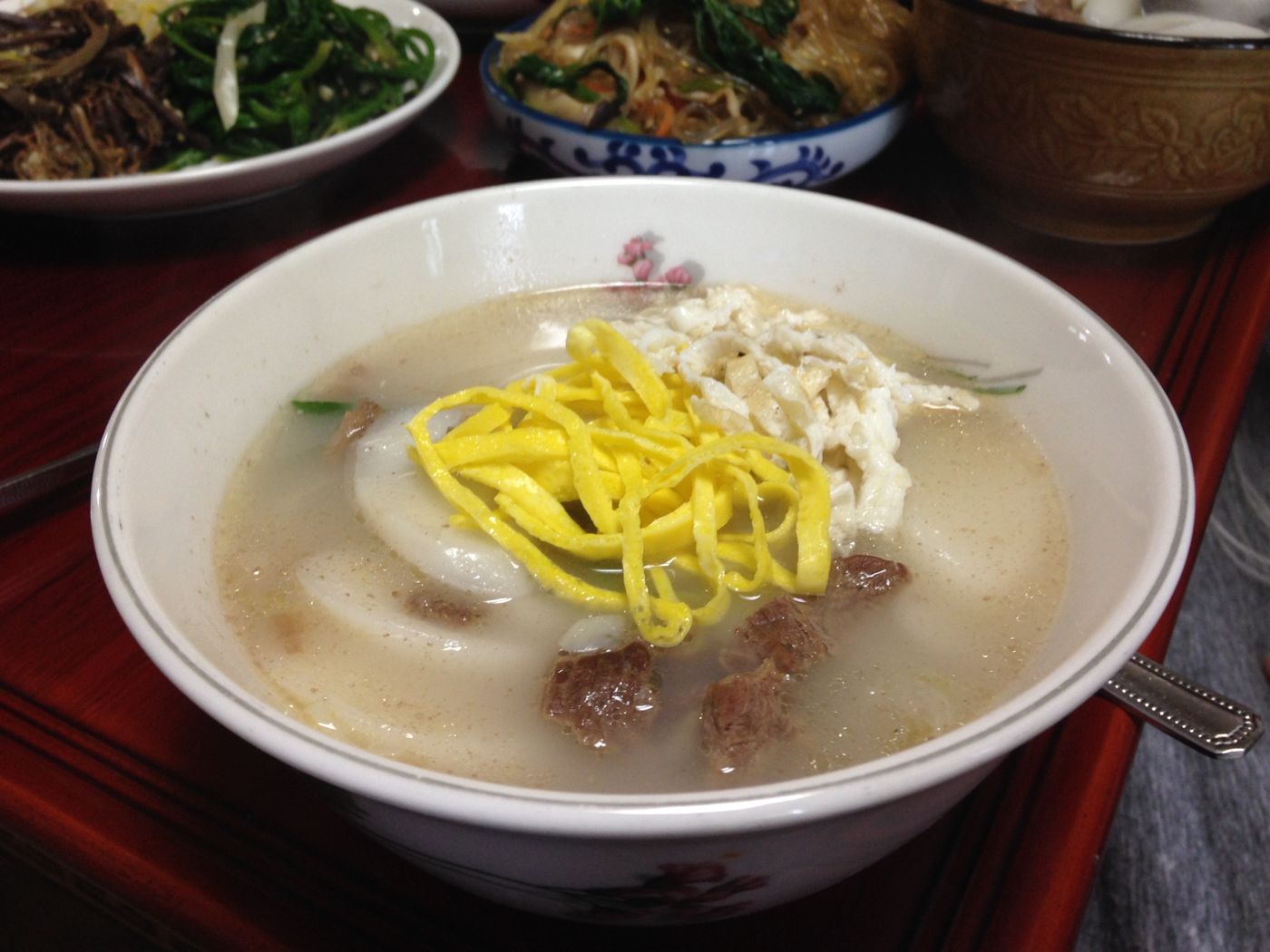 Tteokguk (Rice Cake Soup)떡국Thin ovals of white rice cake in clear beef broth, topped with egg ribbons and seaweed — the soup eaten on Seollal morning to greet the new year.
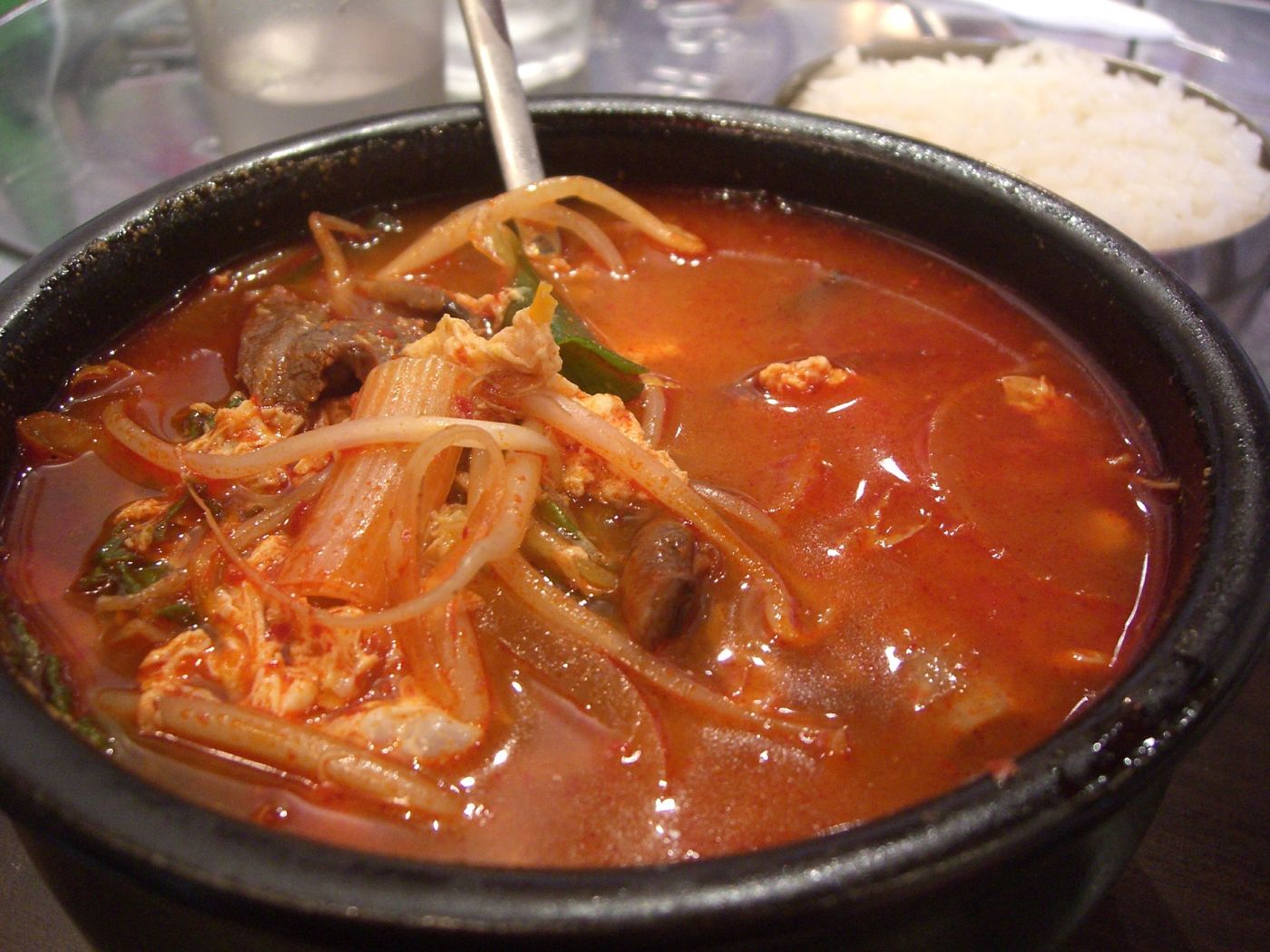 Yukgaejang (Spicy Beef Soup)육개장Shredded beef simmered with bracken, bean sprouts and plenty of green onion in a red, chili-spiked broth — a fiery summer restorative and a gathering-day soup.