Ingredient
Sea mustard (miyeok, wakame)
미역
Romanization: miyeok
A tender brown seaweed sold dried in dark, crinkled strands that swell many times over in water. Simmered into miyeok-guk, it is the soup of birthdays and of a mother's first meals after giving birth.
Flavor
Mild, briny and faintly sweet, with a silky, slippery texture once soaked; the stems are crunchy, and long-simmered miyeok turns soft and gives soup a rich body.
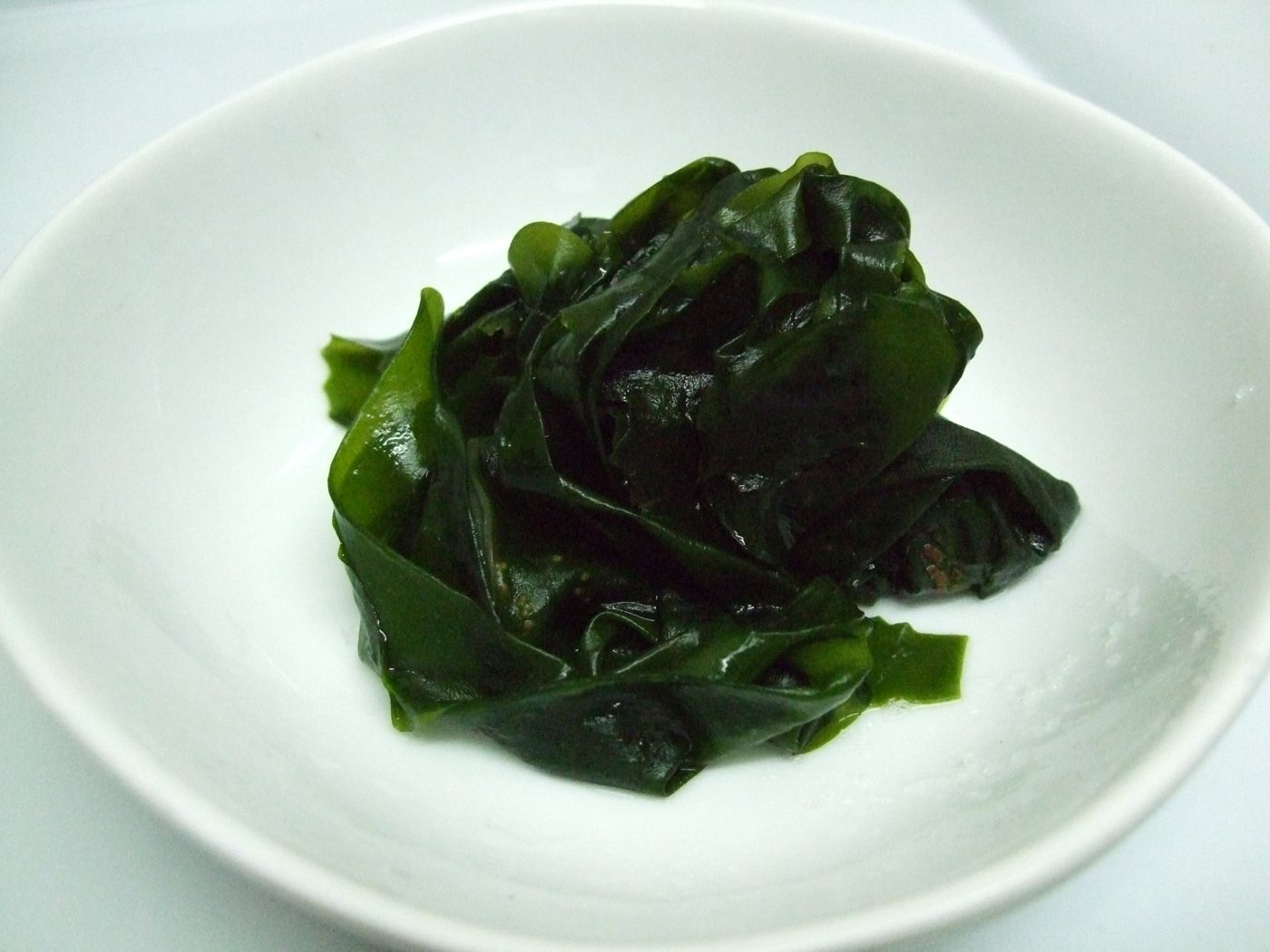 Photo: えむかとー, Public domain, via Wikimedia Commons
Origin & History
Miyeok is Undaria pinnatifida, the brown seaweed known in Japanese as wakame. It is an annual: the blade, with its central rib and feather-like side lobes, grows through autumn and winter, while frilled reproductive leaves (miyeok-gwi) form along the stem and release spores from spring into early summer. It grows wild on rocks below the low-tide line along all of Korea's coasts.
Today almost all miyeok is farmed on ropes seeded with young plants raised indoors, and wild harvests have dwindled. The Encyclopedia of Korean Culture names the southern East Sea coast and the south coast around Wando as the main farming areas. Traditionally, fronds were layered into long strips about two meters by fifteen centimeters and sun-dried; today a share is also blanched and salted, which keeps better through the humid rainy season.
Miyeok is woven into the rituals of birth. A mother's first meal after delivery was white rice with miyeok-guk, made without beef and seasoned only with soy sauce and sesame oil. Seaweed bought for a new mother was chosen broad and long, paid for without haggling, and tied rather than folded, because folding it was thought to bring a difficult birth. A 2021 study notes that the custom is recorded in texts from the Goryeo and Joseon periods. Miyeok-guk later became the customary birthday soup as well.
Beyond soup — simmered with beef brisket, mussels, flatfish or chicken — miyeok is dressed with vinegar as miyeok-muchim, its stems are stir-fried as miyeok-julgi-bokkeum, fresh fronds wrap rice as miyeok-ssam, and dried strips are fried into crisp miyeok-jaban. The 17th-century Donguibogam describes it as cold in nature and salty in taste.
Nutrition
| Calories | 150 kcal |
|---|---|
| Protein | 20.31 g |
| Fat | 4.83 g |
| Carbohydrates | 43.65 g |
| Fiber | 35.6 g |
| Sodium | 7535 mg |
Notable forIodine (14,459 µg) · Vitamin K (1,543 µg) · Calcium (1,109 mg) · Magnesium (901 mg)
Values copied from the Korean Food Composition Table (Rural Development Administration / National Institute of Crop Science) for this exact food, per 100 g edible portion. Dried miyeok expands greatly when soaked, so a bowl of soup uses only a few grams; composition, especially sodium and iodine, varies by product and processing. Actual values vary with ingredients, portion size and preparation.
Health Benefits
- Fiber and minerals: Dried miyeok is very high in dietary fiber and, per the Korean Food Composition Table, rich in calcium and magnesium.
- Very high in iodine: The table lists about 14,500 µg of iodine per 100 g of dried sea mustard. One Korean study estimated that a single bowl of miyeok-guk can supply well over 1,000 µg, against a U.S. upper limit of 1,100 µg a day for adults (Korea sets its adult limit at 2,400 µg). MedlinePlus notes that very high iodine intake can reduce thyroid function.
- The postpartum tradition and iodine: Korean mothers often eat miyeok-guk several times a day after giving birth, and a 2021 nationwide survey found average intakes far above international limits in the first weeks. Research on effects for mothers and breastfed infants is mixed and ongoing; anyone with a thyroid condition, or who is pregnant or breastfeeding, should discuss seaweed intake with a clinician.
- Vitamin K and warfarin: Sea mustard is rich in vitamin K, so people taking warfarin should keep their intake consistent from week to week.
- Sodium: The dried product itself contains notable sodium, and soups and muchim add soy sauce or salt.
Informational, not medical advice. Talk to a qualified professional about your own health and diet.
Dishes with Sea mustard (miyeok, wakame)
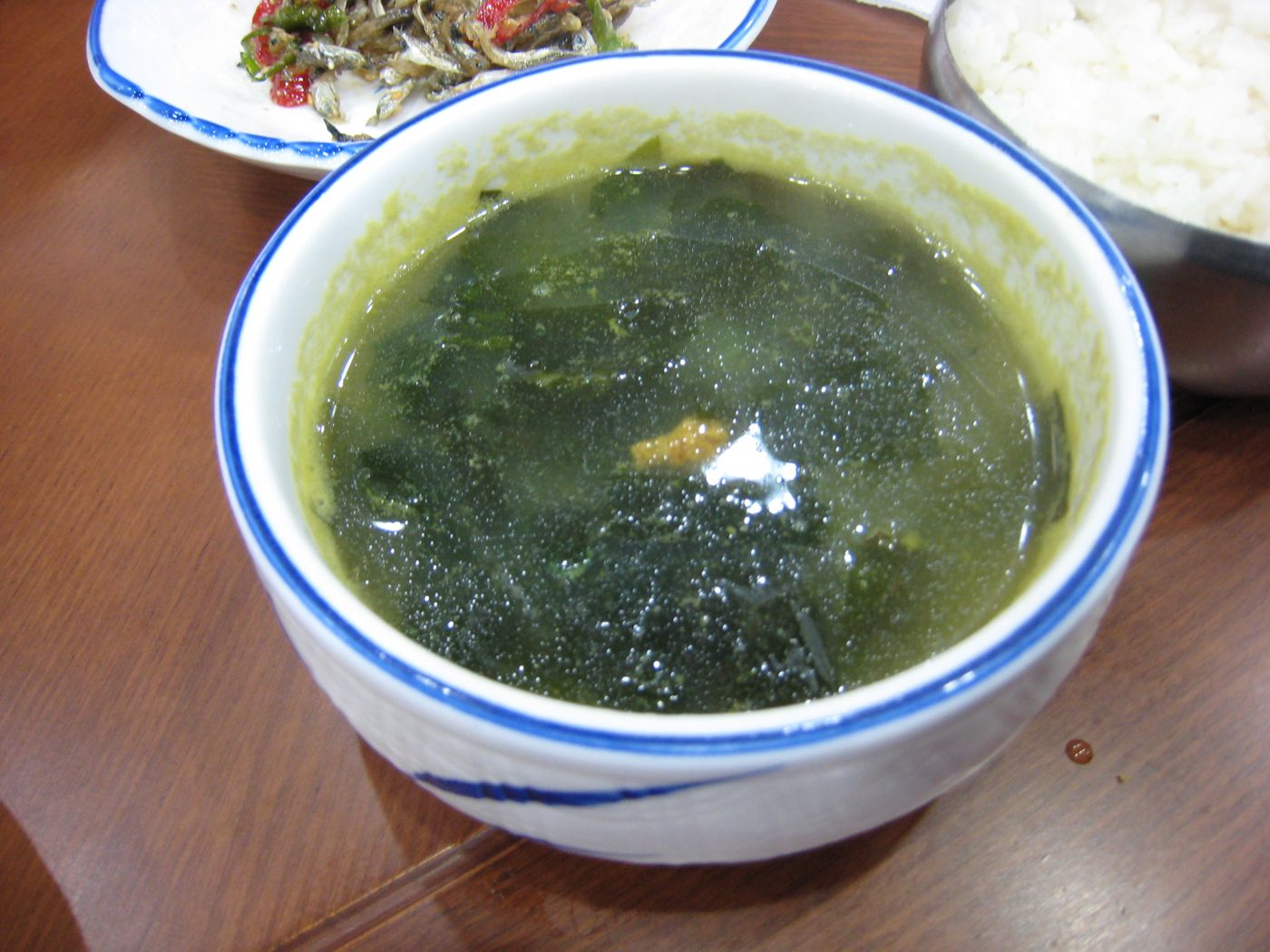 Miyeok Guk (Seaweed Soup)미역국A mild soup of sea mustard and beef seasoned with soup soy sauce and sesame oil — the first meal after childbirth and the soup of every Korean birthday.
- Miyeok Julgi Bokkeum미역줄기볶음Salted sea mustard stems, soaked and stir-fried with garlic and sesame oil until tender-crunchy — a savory, ocean-fresh banchan with a satisfying snap.
- Miyeok Muchim미역무침Rehydrated wakame seaweed and cucumber in a light sweet-and-sour soy dressing — cool, slippery and refreshing, especially in summer.
Sources
- 01미역 (Sea mustard) — Encyclopedia of Korean Culture
- 02미역국 (Miyeok-guk) — Encyclopedia of Korean Culture
- 03Nationwide Representative Survey of Dietary Iodine Intake and Urinary Excretion in Postpartum Korean Women (Nutrients, 2021)
- 04Korean Food Composition Table — Sea mustard, Dried
- 05Iodine in diet — MedlinePlus Medical Encyclopedia
- 06Warfarin — MedlinePlus Drug Information