Techniques
Making Yuksu: Anchovy-Kelp Stock
멸치 다시마 육수
The quick everyday stock of dried anchovy and kelp that underpins Korean soups, stews and braises, and why the two ingredients work so well together.
Yuksu means stock or broth. Korean cooks make it from beef, bones, shellfish or vegetables, but the everyday workhorse is myeolchi-dashima yuksu: dried anchovies simmered with dried kelp. It takes under half an hour and gives soups, stews, noodle broths and braises a clean, savory backbone.
The ingredients
- Dried anchovies (myeolchi). Anchovies are boiled and dried soon after they are caught, and the Encyclopedia of Korean Culture notes that boiled-and-dried anchovy is one of the main ways the fish is eaten in Korea. For stock, cooks use medium to large anchovies; tiny ones are reserved for stir-fries such as myeolchi-bokkeum.
- Dried kelp (dashima). Thick, dark sheets of kelp. Wipe off any grit with a damp cloth rather than rinsing; the white bloom on the surface is natural and part of the flavor.
- Optional additions. Korean radish, onion, the white parts of green onion, garlic, dried shiitake mushrooms or dried shrimp all deepen the stock.
Step by step
- Prepare the anchovies. For larger anchovies, pull off the head if you like and split the body to remove the dark gut, which can make the stock bitter. Small and medium anchovies are often used whole. Some cooks toast the anchovies briefly in a dry pot to reduce fishiness.
- Start cold. Put anchovies and kelp in cold water (a typical home ratio is about 10–12 anchovies and one or two palm-size pieces of kelp for 1.5–2 liters of water). A 20- to 30-minute soak gives the kelp a head start.
- Bring up to a boil, uncovered. Leaving the lid off lets fishy aromas escape.
- Remove the kelp early. Take the kelp out when the water comes to a boil or within about 10 minutes. Boiled too long, kelp releases a slippery, viscous substance that clouds the stock and can add bitterness.
- Simmer the anchovies. Continue at a gentle boil for about 10–15 minutes. Longer cooking does not add much and can make the stock taste harsh.
- Strain. Pour through a fine sieve and discard the solids.
Why anchovy and kelp work together
The pairing is a textbook example of umami synergy. Kelp is rich in free glutamate, the amino acid behind savory taste. Dried small fish such as anchovy are rich in inosinate, a nucleotide that, according to the Umami Information Center, can reach several hundred milligrams per 100 grams in boiled-and-dried fish. When glutamate and inosinate are tasted together, perceived savoriness is far stronger than either alone. Japanese dashi relies on the same principle with kelp and bonito flakes; Korean anchovy-kelp stock is a close cousin made with a different fish.
How it is used
- Soups and stews. The Encyclopedia of Korean Culture notes that anchovy broth suits doenjang-based soups particularly well, while beef stock is the classic base for clear soups.
- Braises. Using stock in place of water adds depth to jorim such as dubu-jorim and gamja-jorim; see braising.
- Noodles and savory custards. Anchovy stock is a common base for warm noodle soups and for steamed egg, gyeran-jjim.
History
Anchovies have long been fished off the Korean coast. The encyclopedia cites the early-19th-century natural history Jasan Eobo (1814), which describes fishermen using lights at night to attract schools, and notes that anchovy grew into a major commercial fishery in the late 19th century. Dried anchovy became an everyday ingredient on the Korean table, both as a banchan and as the foundation for stock.
Storage and tips
- Cool the stock quickly and refrigerate it in a covered container for a few days, or freeze it in portions.
- The stock is unsalted; season the finished dish rather than the stock, ideally with soup soy sauce (guk-ganjang). See making jang.
Dishes using this technique
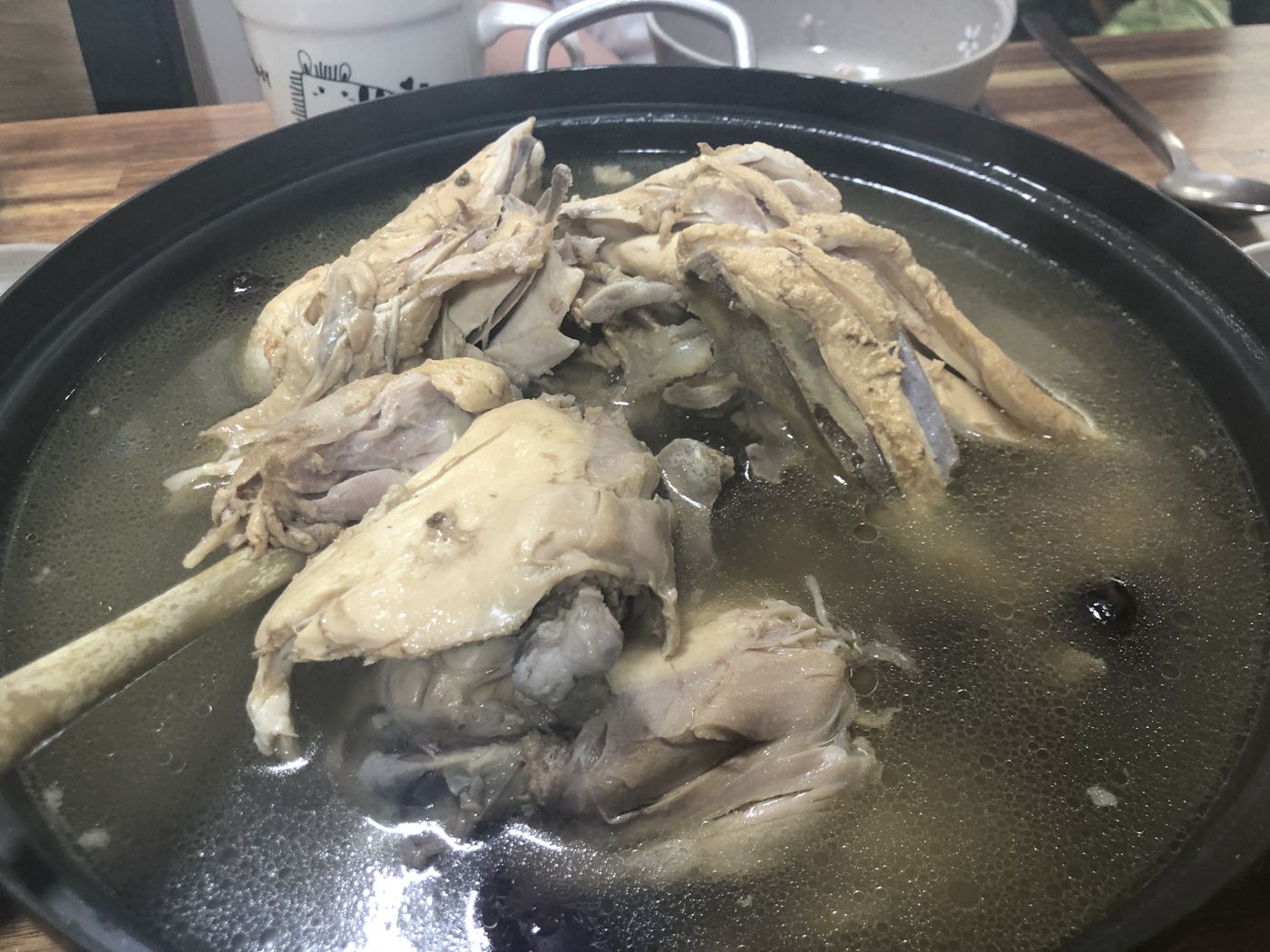 Baeksuk (Plain Whole Boiled Chicken)백숙A whole chicken simmered in plain water with garlic until falling-apart tender, eaten with salt and pepper, then followed by rice porridge cooked in the broth.
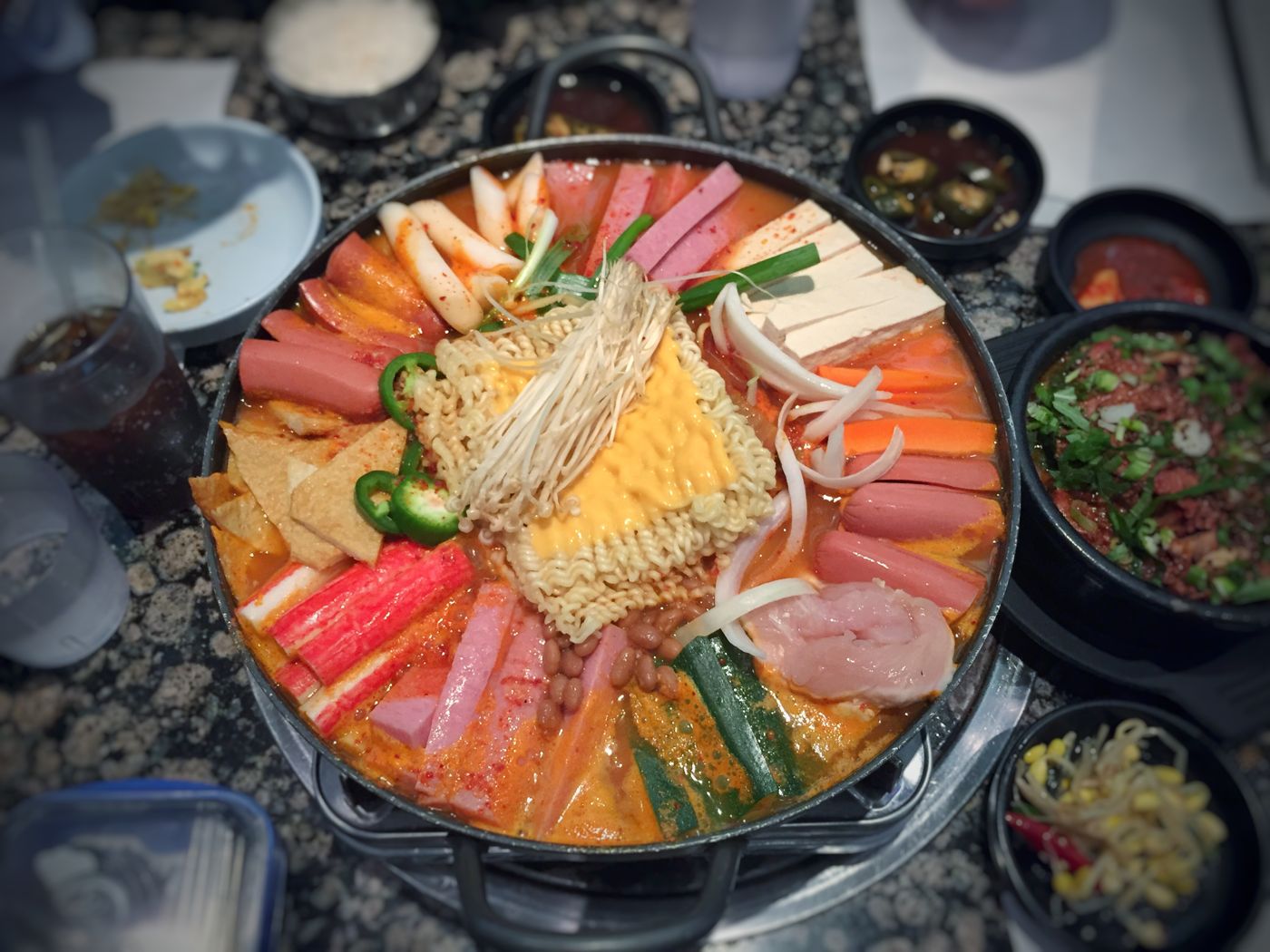 Budae Jjigae (Army Base Stew)부대찌개Ham, sausages and canned beans simmered with kimchi, tofu and a gochujang-chili broth, usually finished with instant noodles — a postwar stew born around US Army bases.
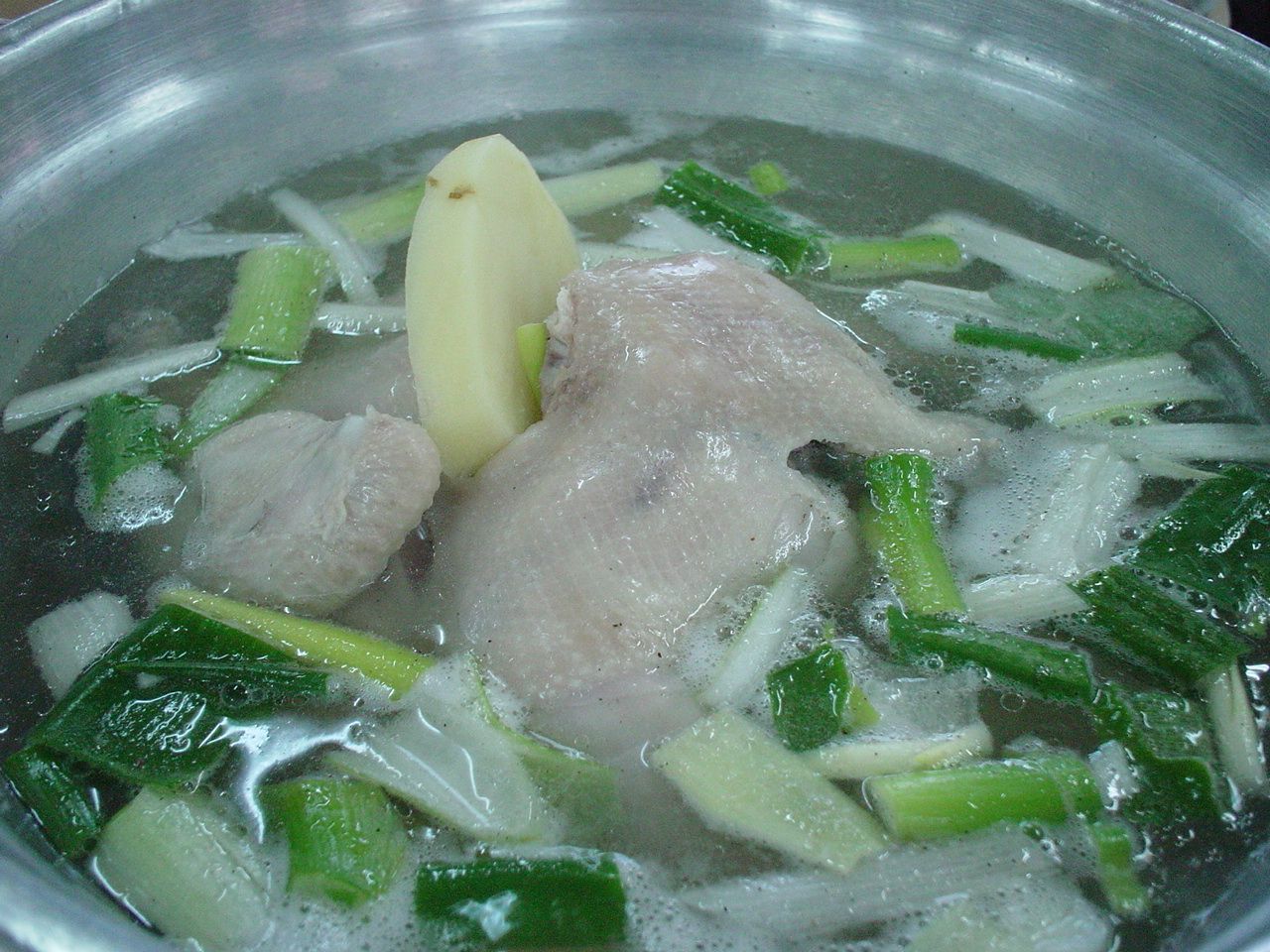 Dak Hanmari ("One Whole Chicken" Hot Pot)닭한마리A whole chicken simmered at the table with potatoes, rice cakes and green onion, dipped in a vinegar-mustard sauce, then finished with noodles in the broth — a Dongdaemun original.
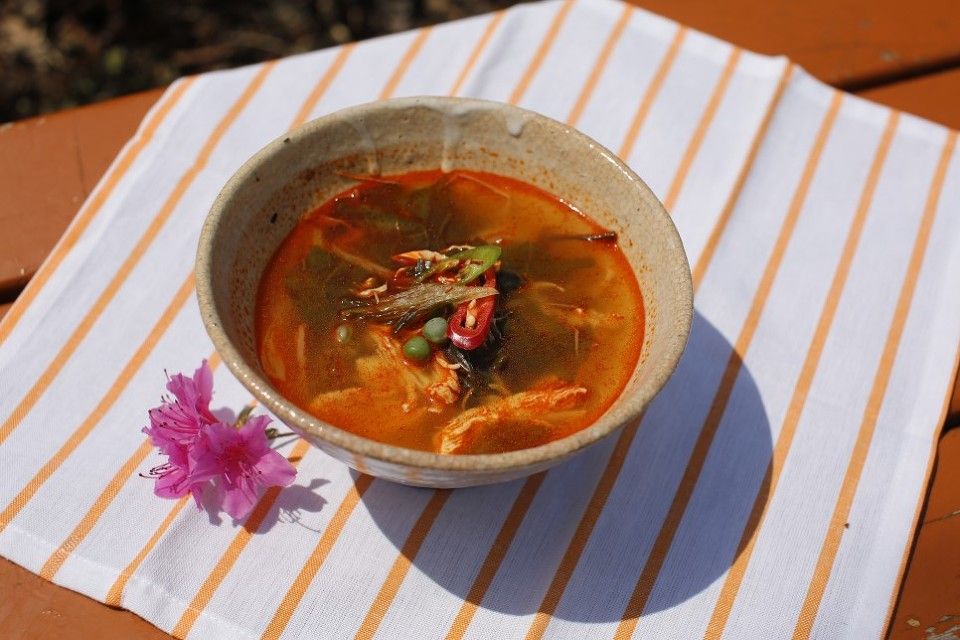 Dakgaejang (Spicy Chicken Soup)닭개장Shredded chicken simmered with bracken, taro stems and plenty of green onion in a fiery chili-oil broth — the chicken cousin of yukgaejang.
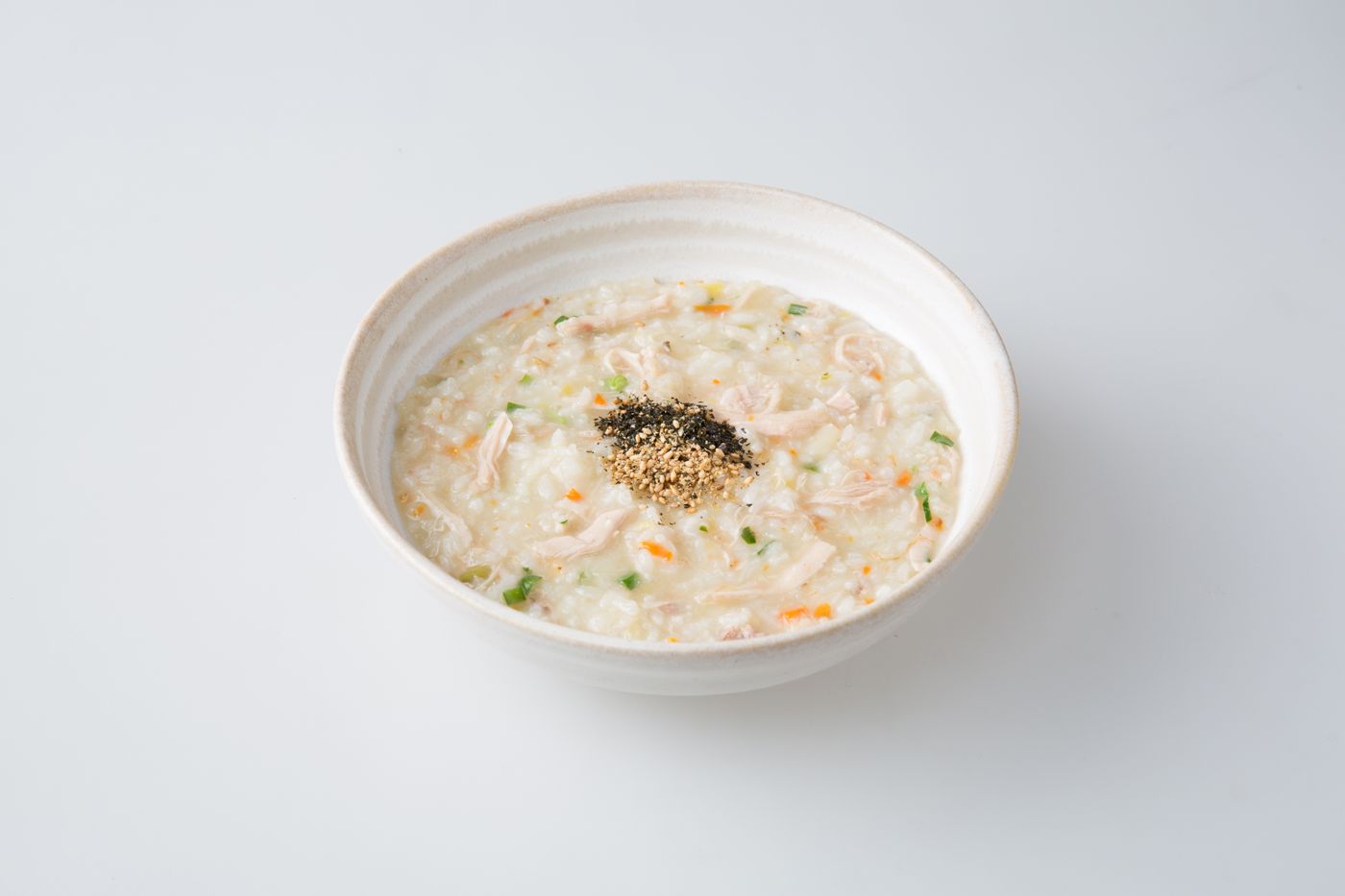 Dakjuk (Chicken Rice Porridge)닭죽Soft rice simmered in a clear chicken broth with shredded meat — a gentle, easy-to-digest porridge long served as summer restorative and sick-day food.
 Doenjang Jjigae (Soybean Paste Stew)된장찌개A thick, savory stew of fermented soybean paste with tofu, zucchini and whatever the season offers — the everyday pot at the center of the Korean table.
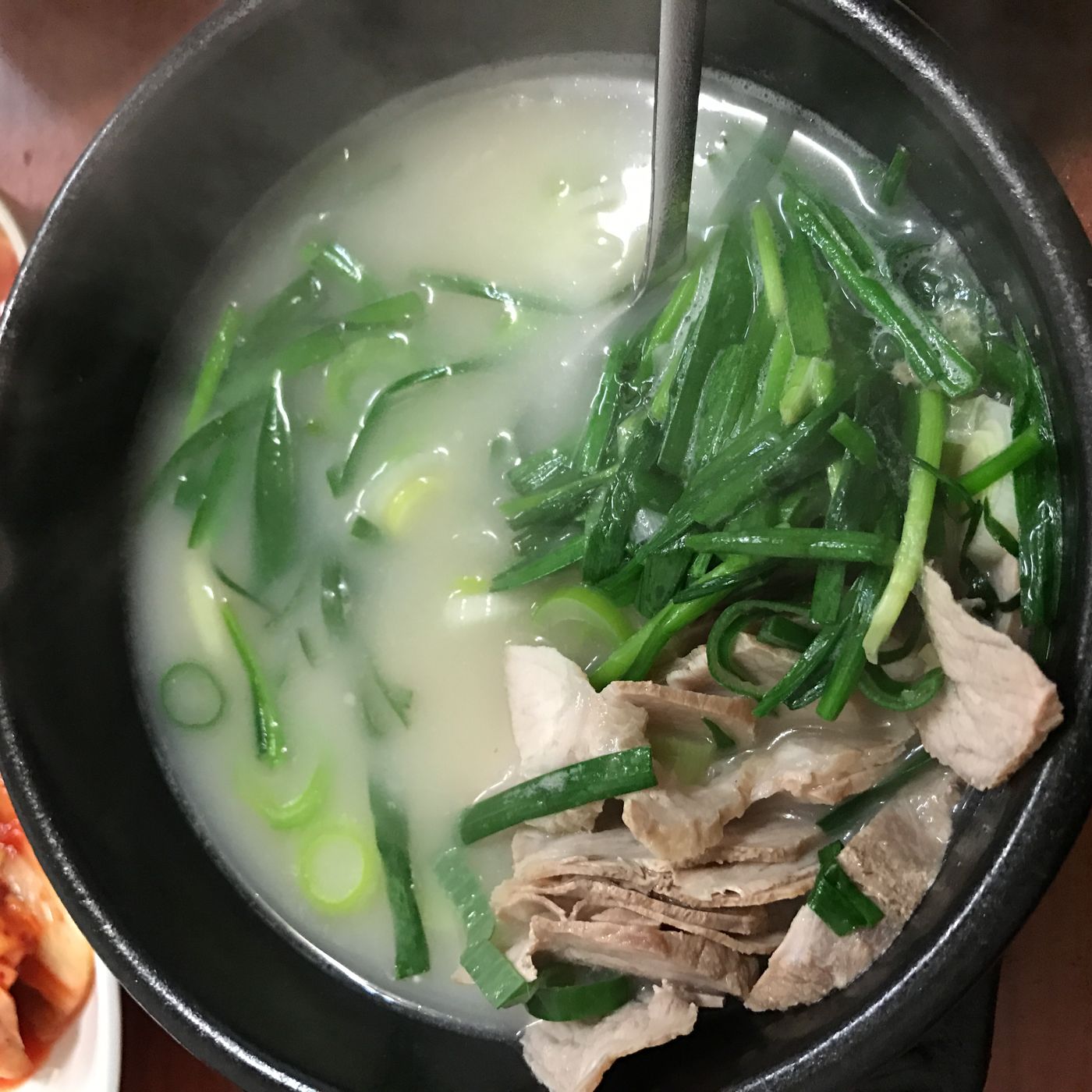 Dwaeji Gukbap (Busan Pork and Rice Soup)돼지국밥Slices of boiled pork in a milky pork-bone broth over rice, seasoned at the table with salted shrimp and garlic chives — Busan's signature everyday bowl.
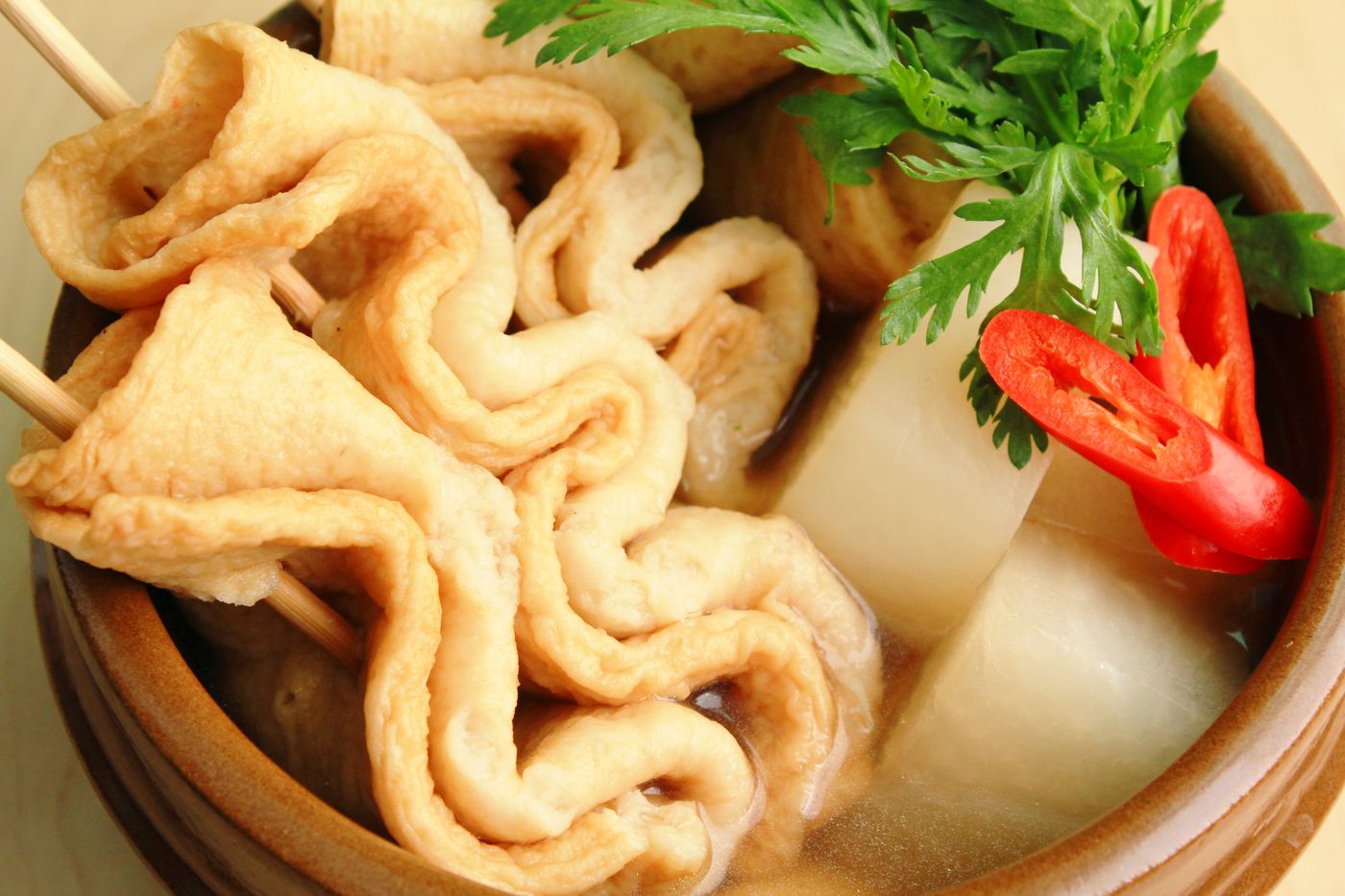 Eomuk Tang (Fish Cake Soup)어묵탕Fish cakes, often threaded on skewers, simmered in a clear anchovy, kelp and radish broth — Busan's winter street-stall soup and a quick home dish.
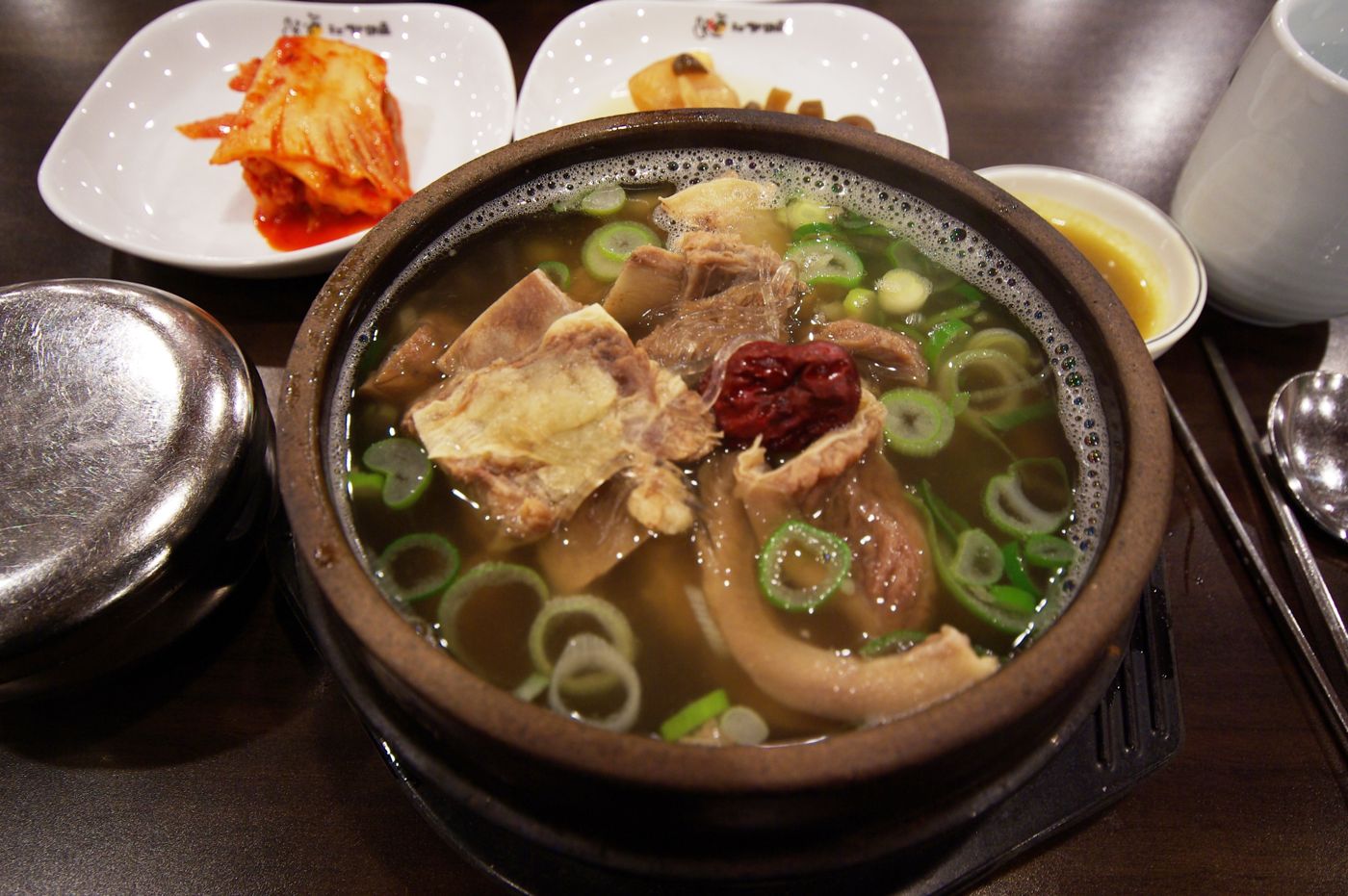 Galbitang (Beef Short Rib Soup)갈비탕Beef short ribs simmered until the meat slips from the bone, served in a clear, soy-seasoned broth with radish — a court banquet soup turned everyday restaurant bowl.
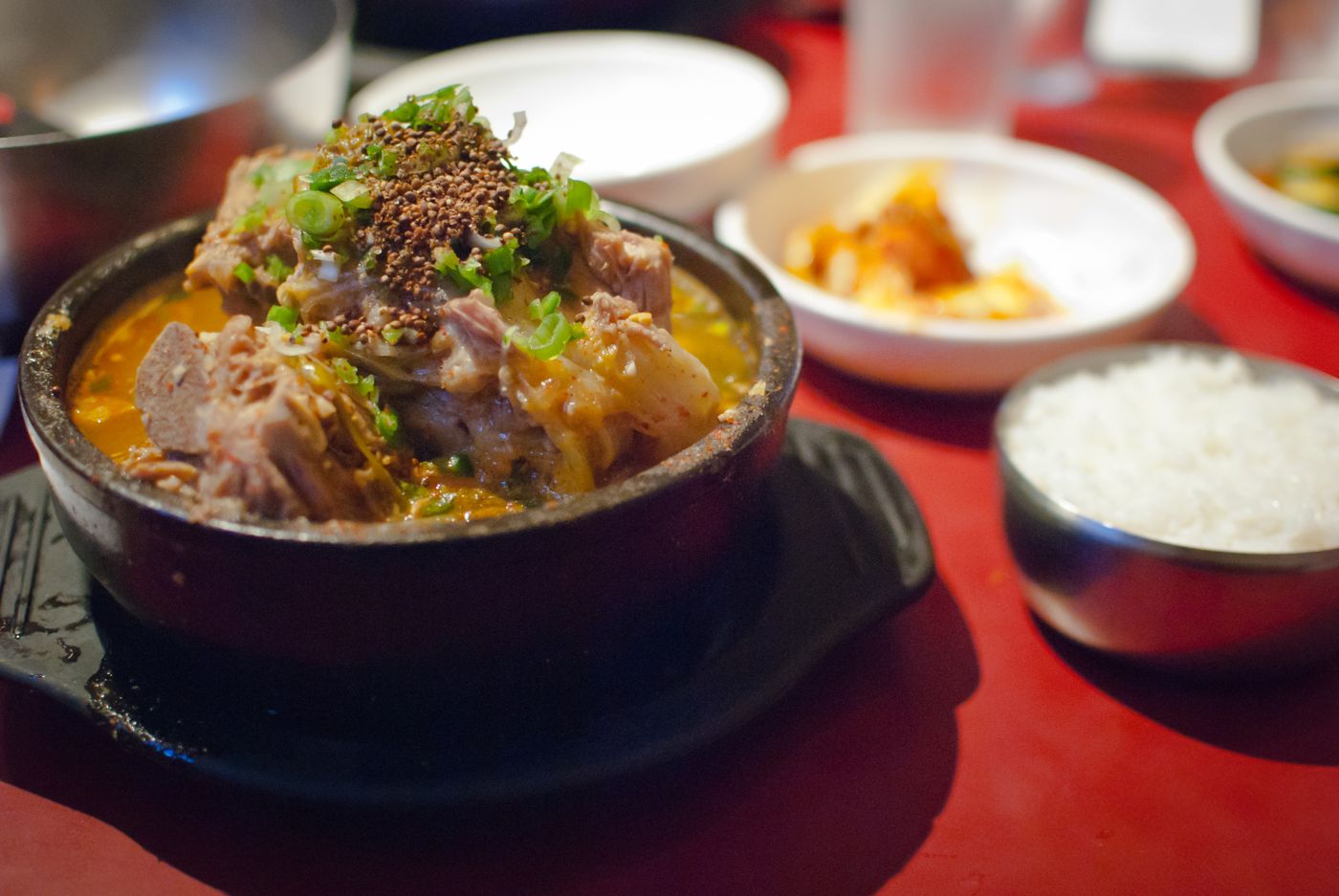 Gamjatang (Pork Bone and Potato Stew)감자탕Meaty pork spine simmered with potatoes, cabbage greens and perilla in a spicy doenjang-chili broth — a big shared pot of picking meat off the bones.
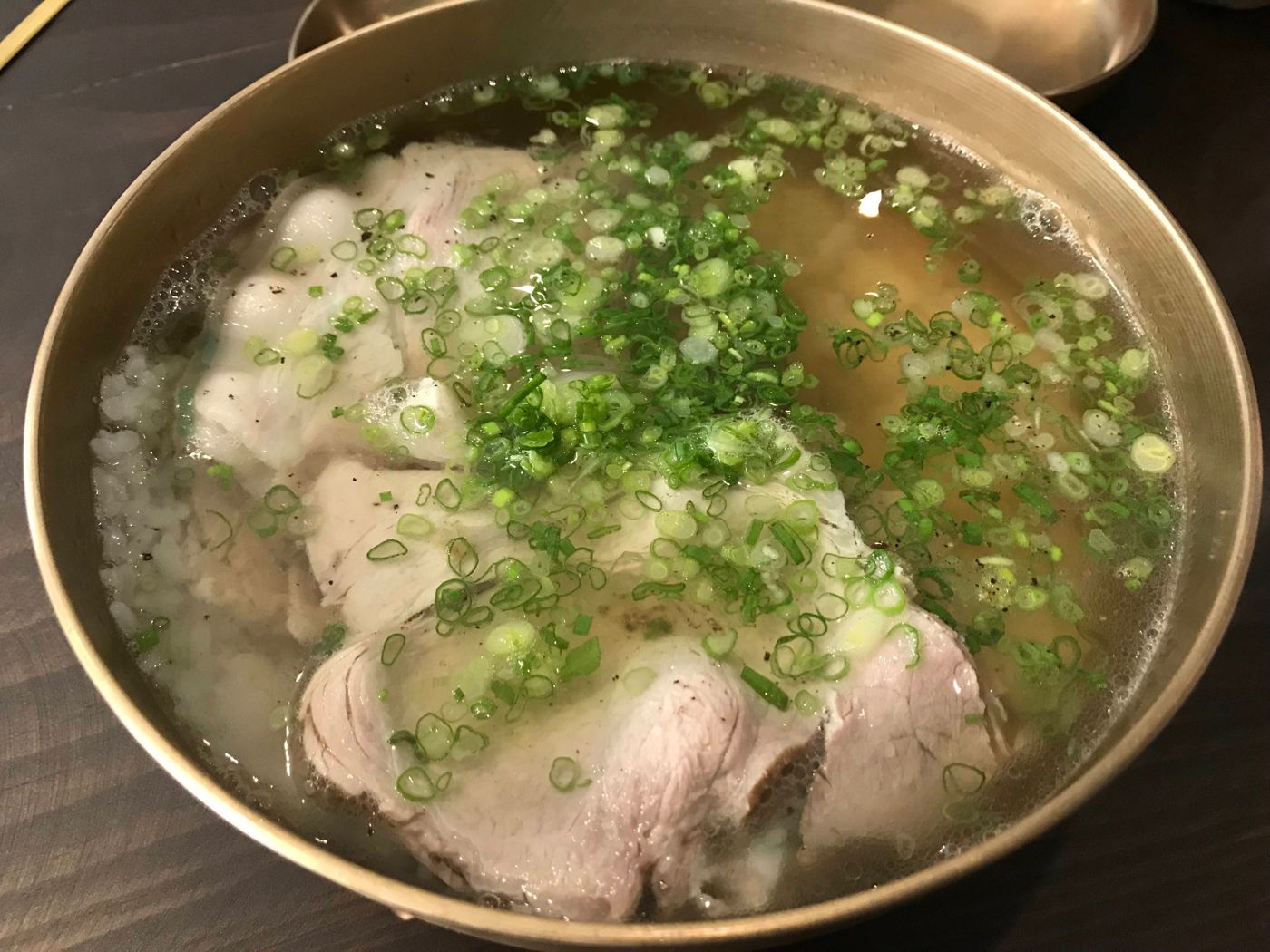 Gomtang (Beef Bone and Brisket Soup)곰탕A long-simmered beef soup, usually built on brisket, shank and offal and served over rice, with a broth that is lightly salted at the table. A pillar of the Korean gukbap tradition.
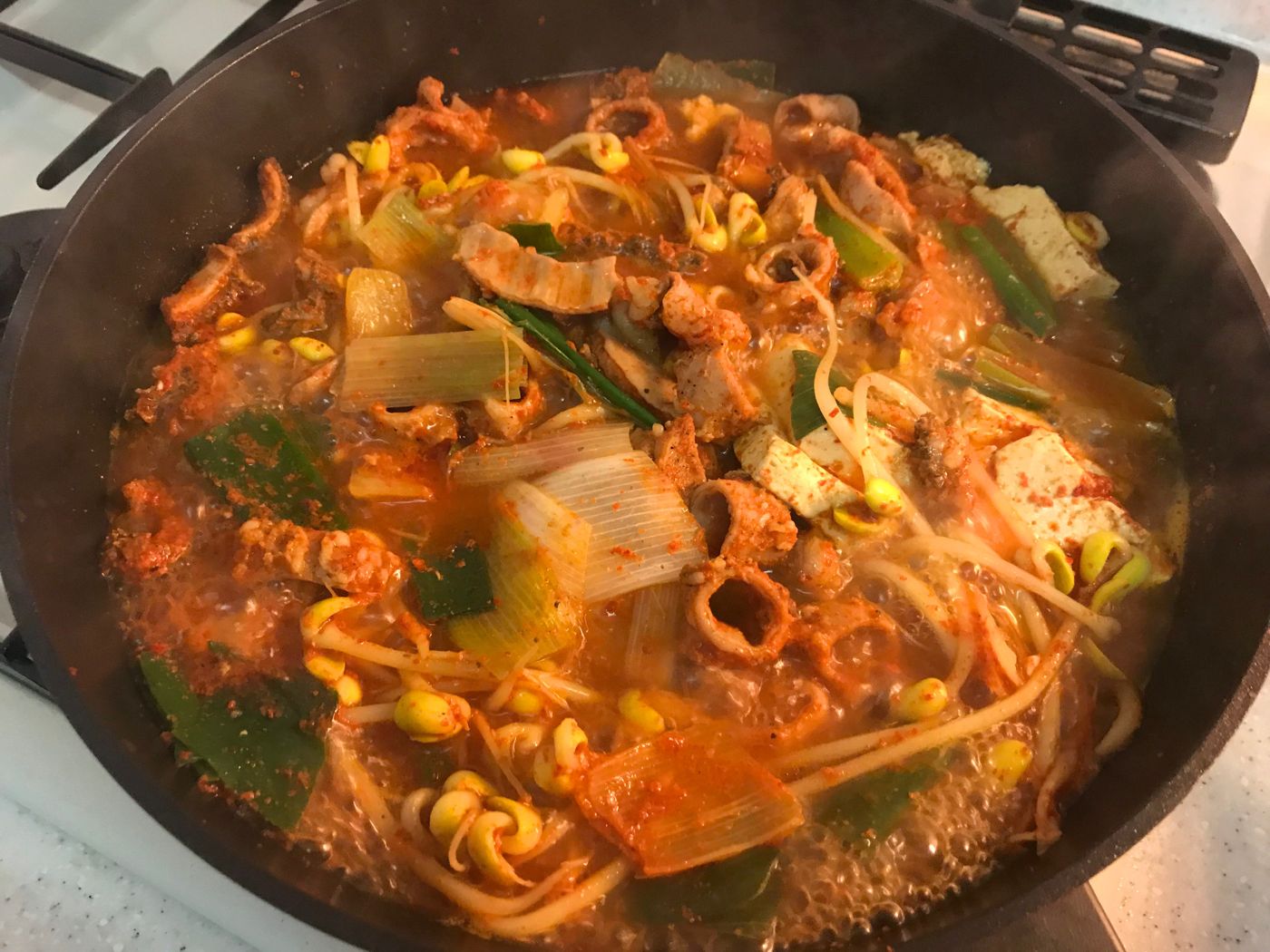 Gopchang Jeongol (Beef Intestine Hot Pot)곱창전골Cleaned beef small intestine and tripe simmered at the table with vegetables, mushrooms and glass noodles in a spicy broth — a rich, chewy hot pot for cold nights.
- Gul Guk (Oyster Soup)굴국Fresh oysters dropped into a clear radish broth with tofu and green onion and cooked for barely a minute — a delicate cold-season soup of the south and west coasts.
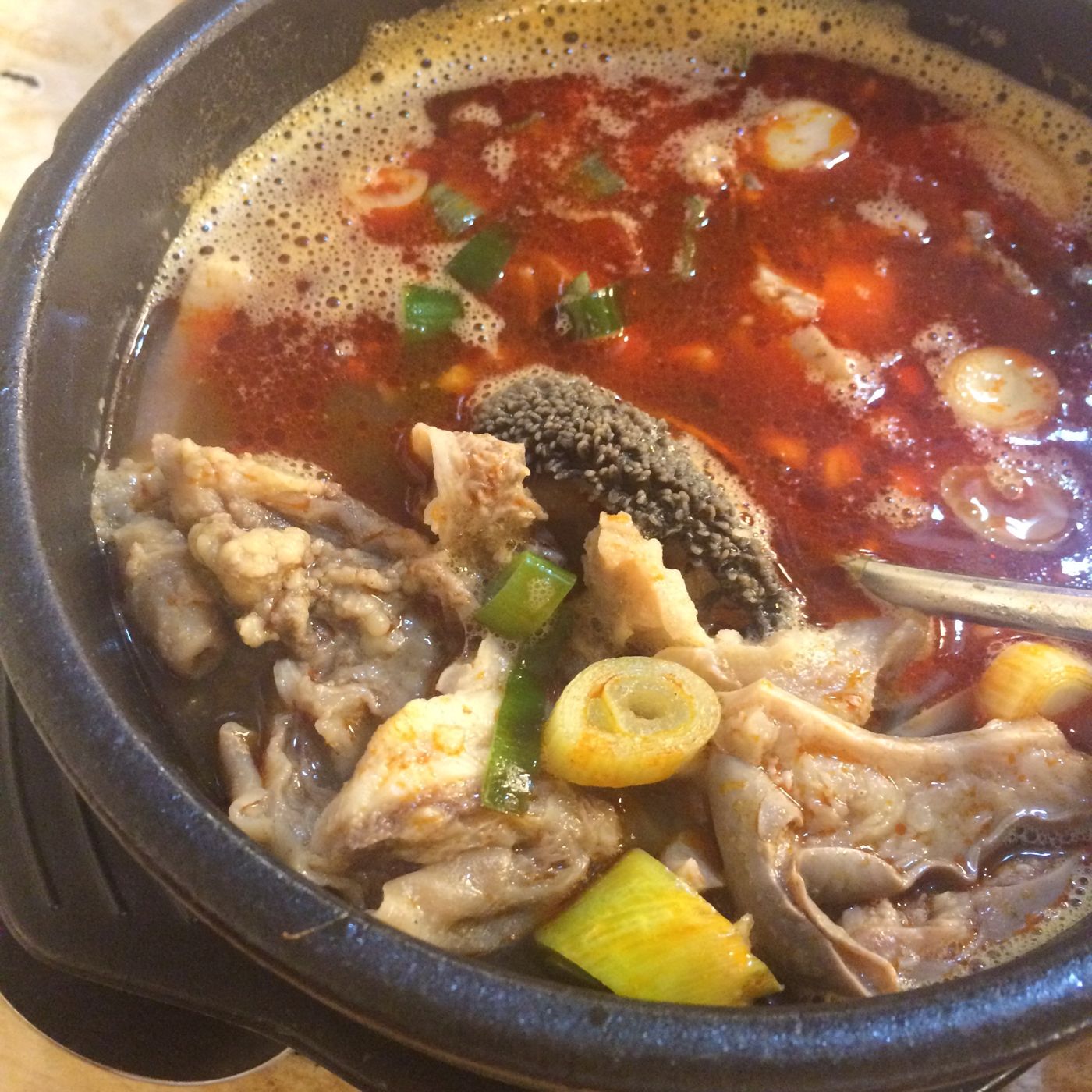 Haejangguk (Hangover Soup)해장국A hot, hearty morning soup — classically beef-bone broth with cabbage greens, bean sprouts and seonji (beef blood curd) — eaten over rice after a night of drinking.
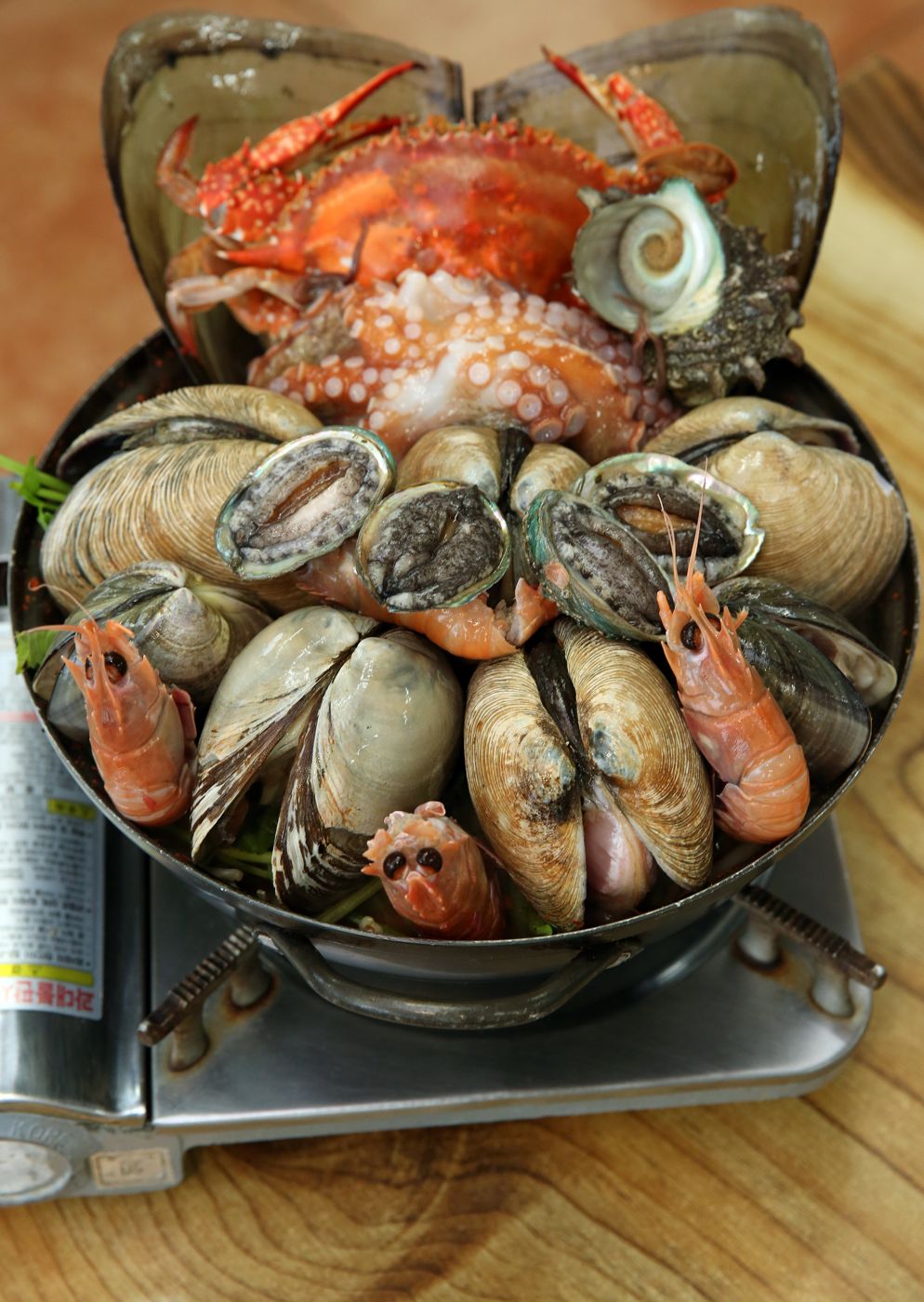 Haemul Tang (Spicy Seafood Hot Pot)해물탕Blue crab, octopus, shrimp, clams and sea squirt simmered with radish and water dropwort in a bright, spicy gochujang broth — a seafood feast in one pot.
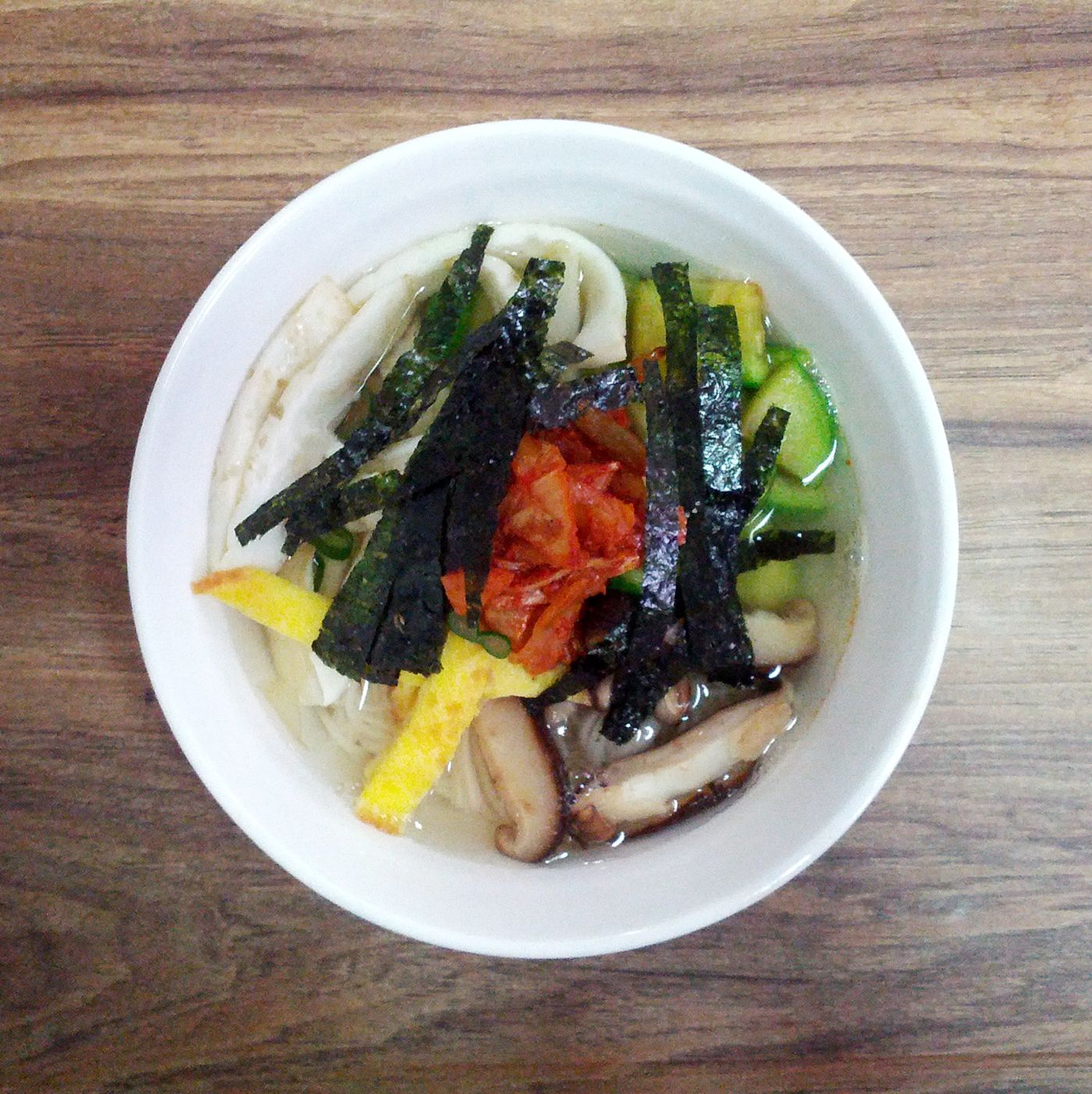 Janchi Guksu (Banquet Noodles)잔치국수Thin wheat noodles in a hot, clear anchovy or beef broth, topped with egg strips, zucchini and kimchi — the long-life noodles served at weddings and birthdays.
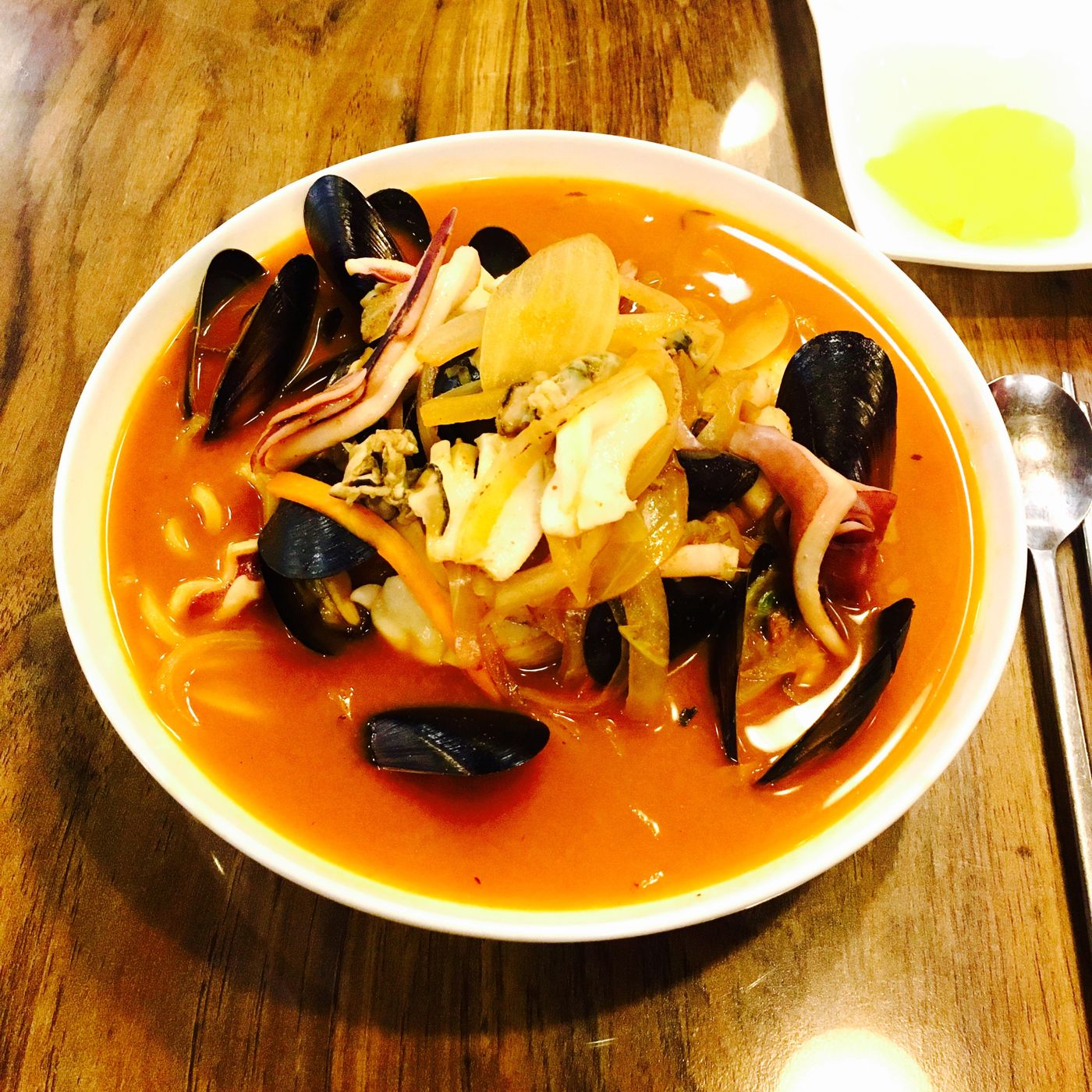 Jjamppong (Spicy Seafood Noodle Soup)짬뽕Thick wheat noodles in a fiery red broth of stir-fried pork, squid, shellfish and vegetables — the Korean-Chinese restaurant's spicy counterpart to jajangmyeon.
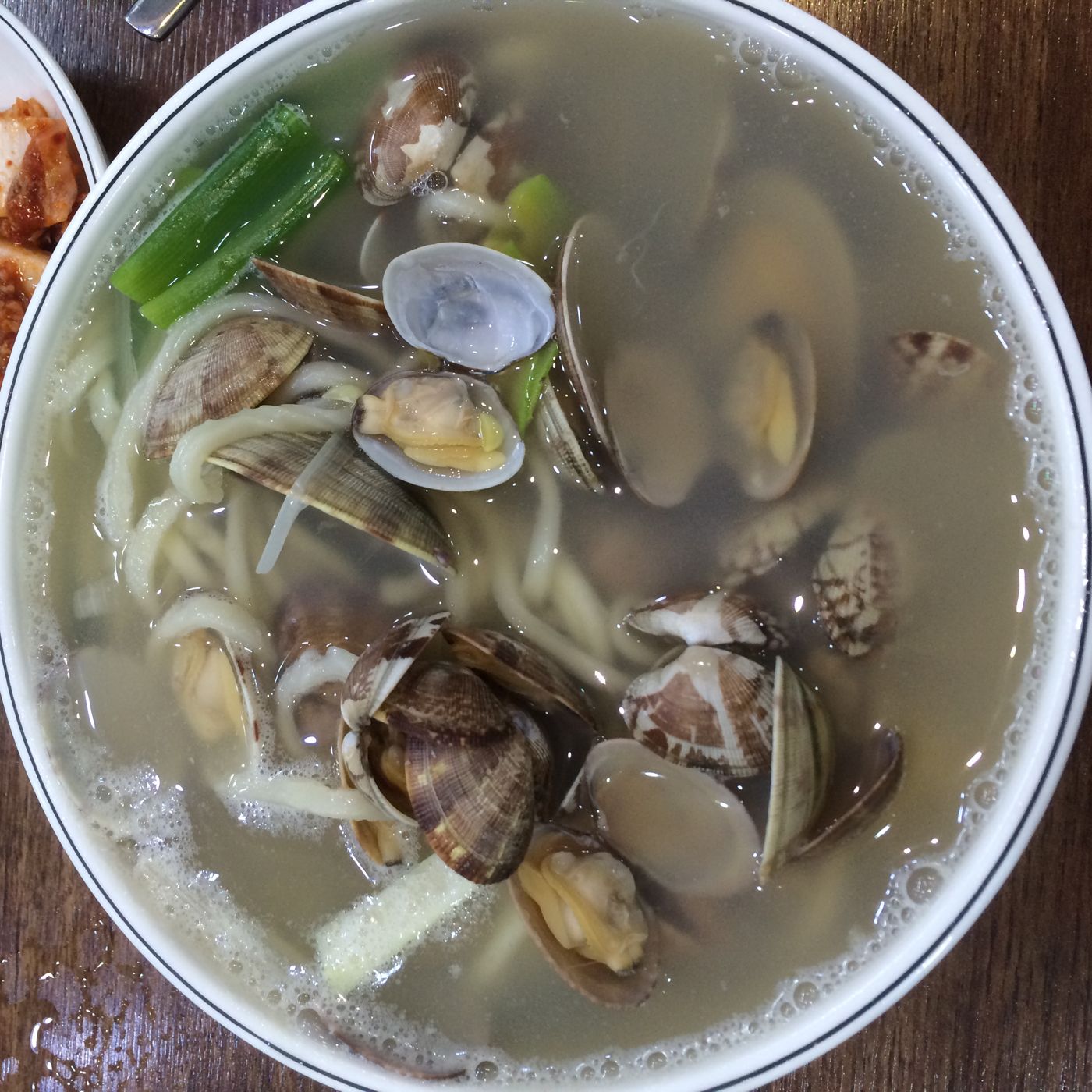 Kalguksu (Knife-Cut Noodle Soup)칼국수Hand-rolled wheat dough cut into ribbons with a knife and cooked right in anchovy, chicken or clam broth with potato and zucchini — Korea's homely noodle soup.
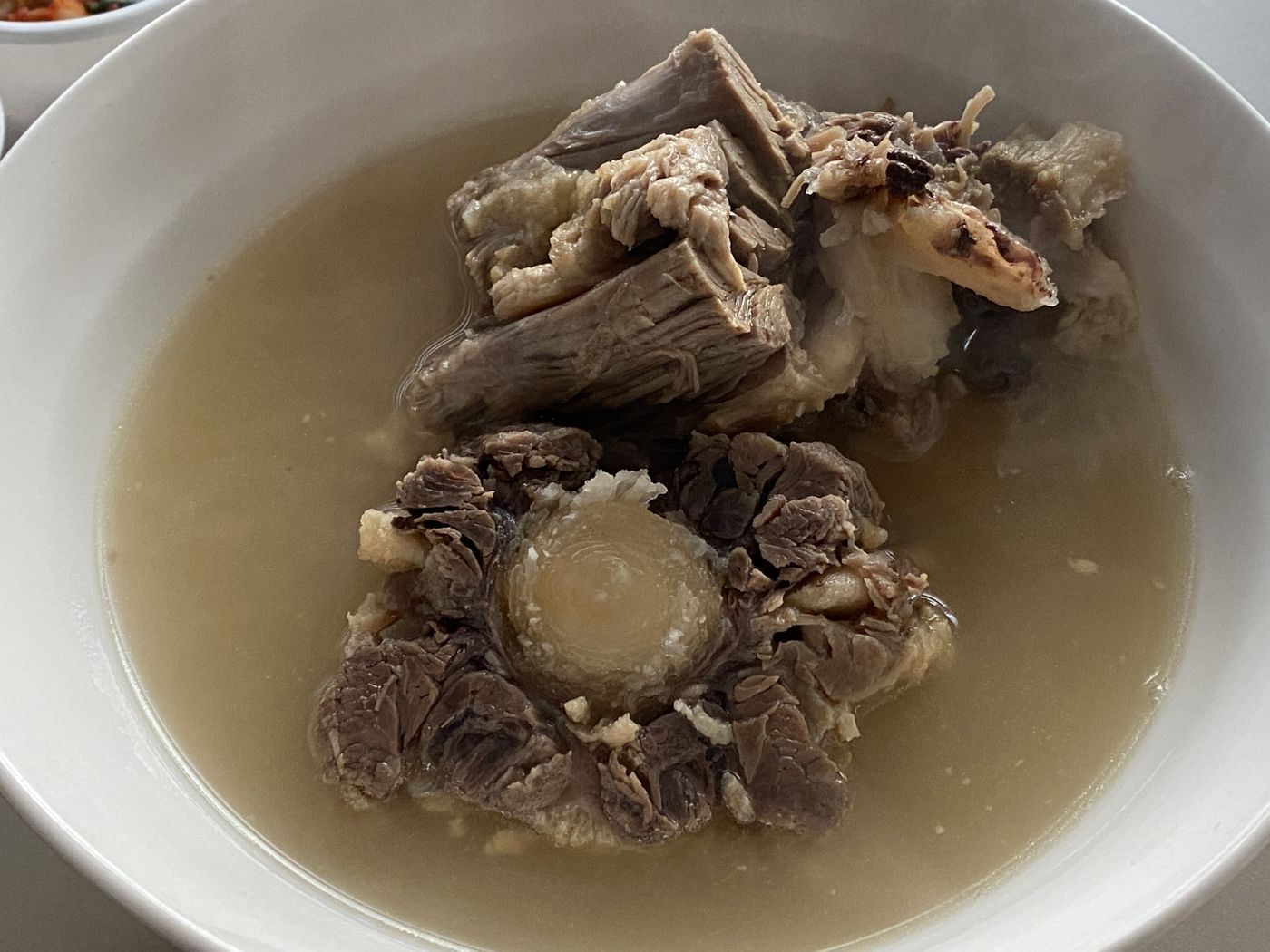 Kkori-gomtang (Oxtail Soup)꼬리곰탕Oxtail simmered for hours until the meat slips from the bone, in a rich, savory broth ladled over rice. A gomtang built on a single cut.
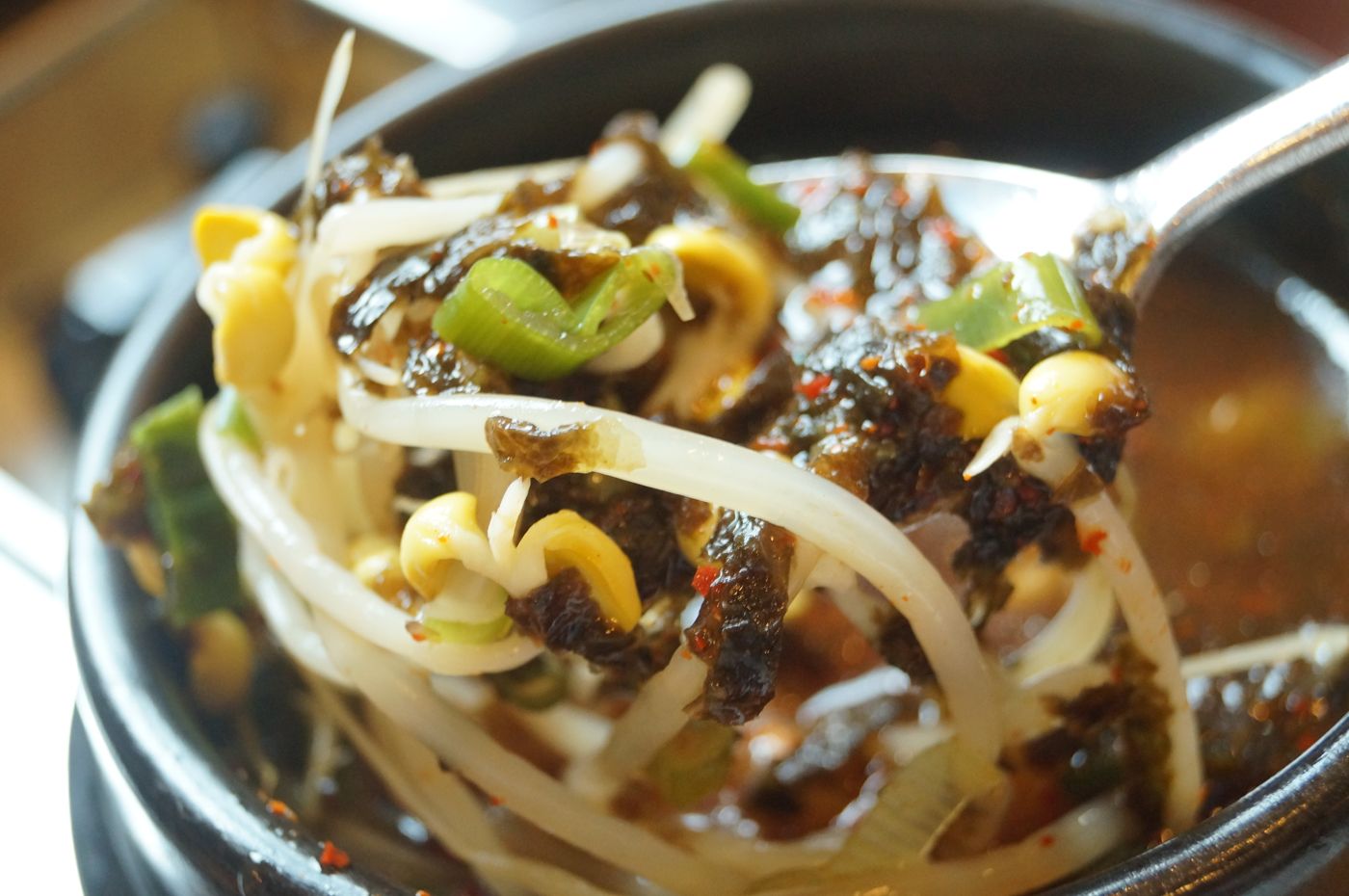 Kongnamul Guk (Soybean Sprout Soup)콩나물국A clear, light soup of soybean sprouts in anchovy-kelp stock, seasoned with salt or soup soy sauce — an everyday guk and a favorite morning-after cure.
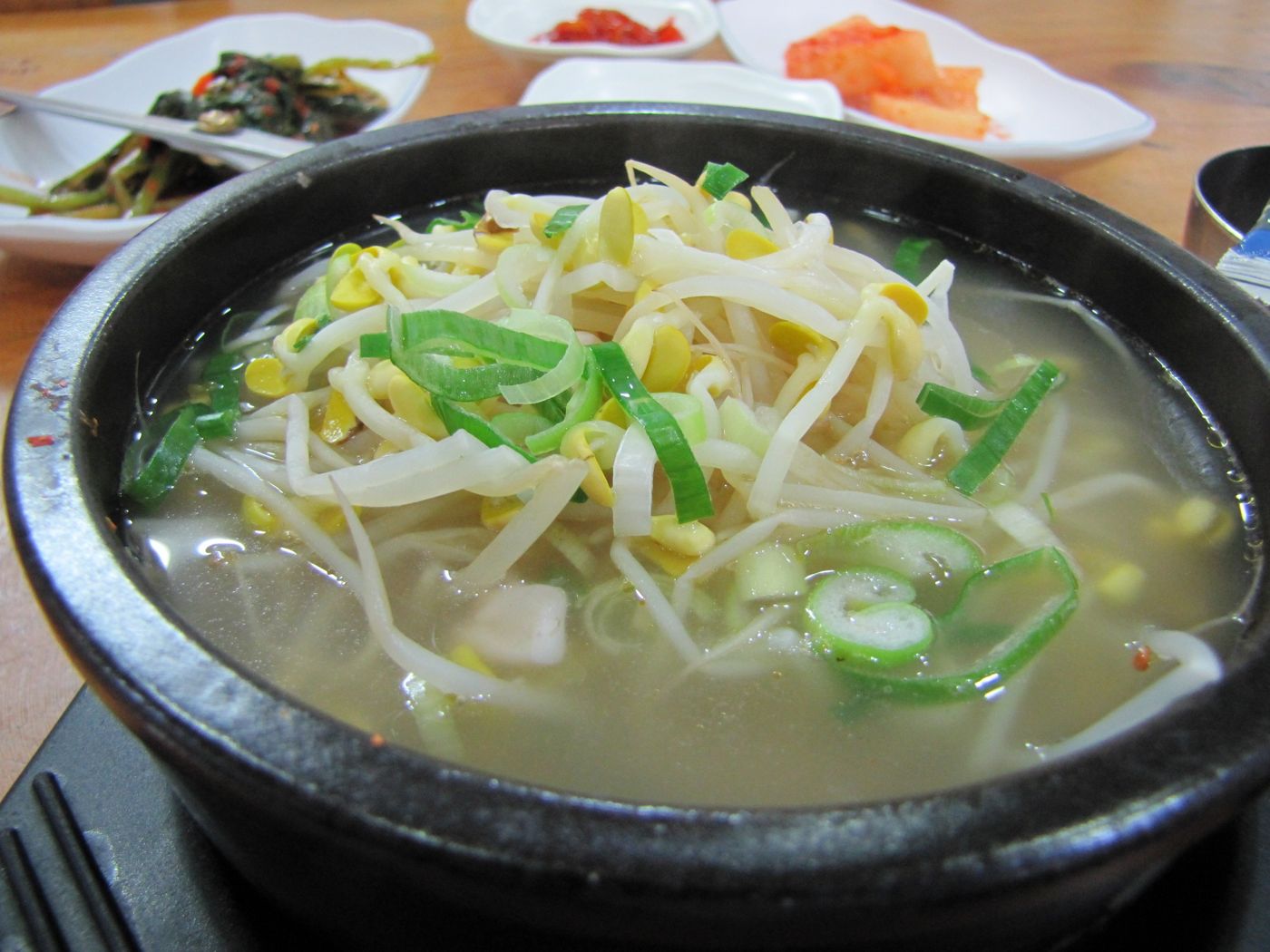 Kongnamul Gukbap (Jeonju Soybean-Sprout Rice Soup)콩나물국밥Rice and crisp soybean sprouts in a clear, savory broth, finished with egg, salted shrimp and kimchi. Jeonju's market breakfast and morning-after bowl.
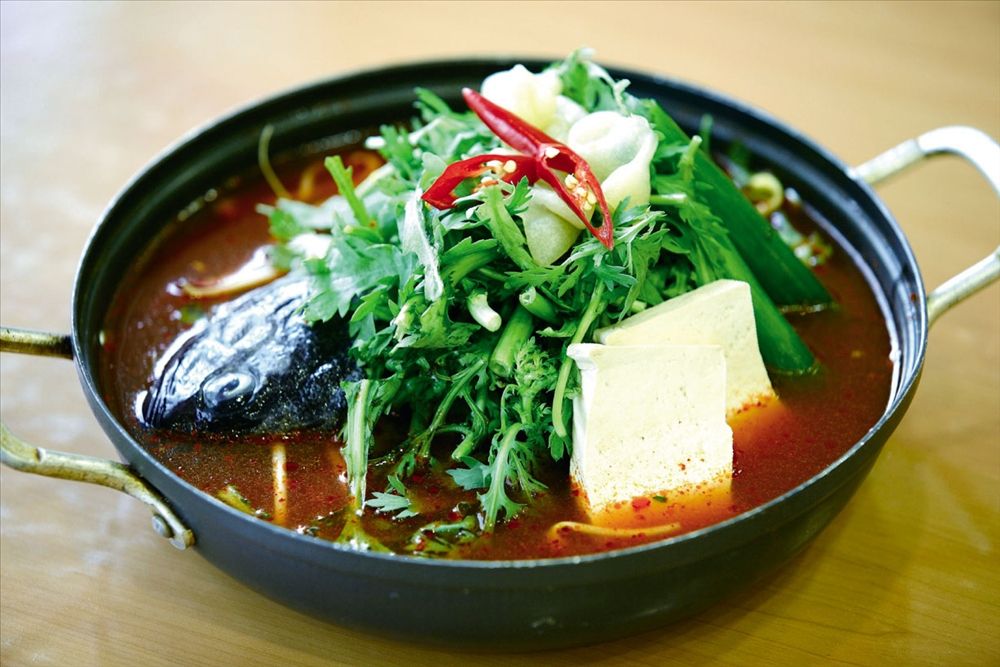 Maeuntang (Spicy Fish Stew)매운탕Fish — freshwater or sea — simmered with radish, tofu and fragrant greens in a fiery gochugaru and gochujang broth; the stew that follows sashimi and fills riverside restaurants.
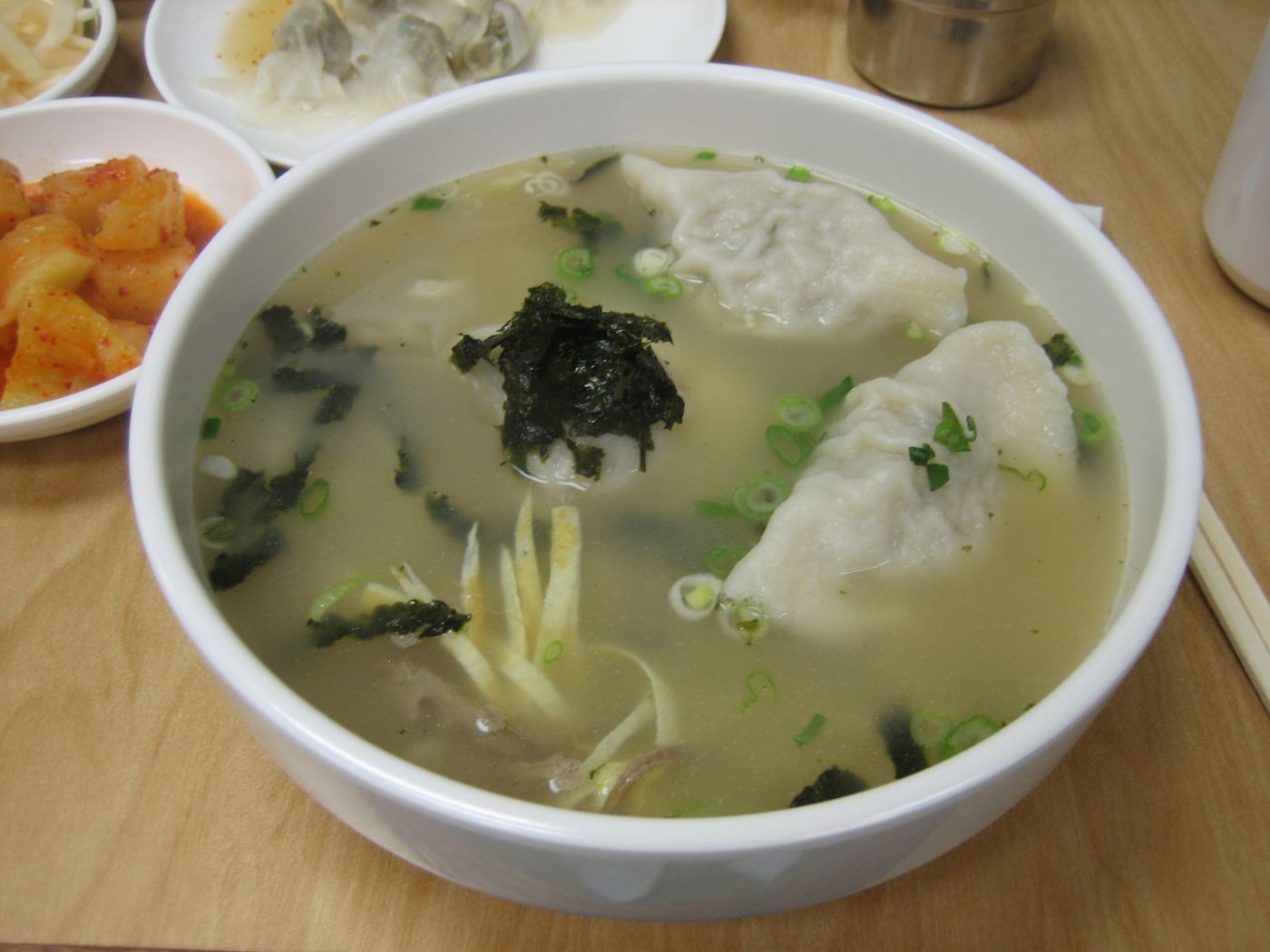 Manduguk (Dumpling Soup)만둣국Stuffed dumplings simmered in a clear, savory broth, usually beef-based and topped with egg strands and green onion. A winter and New Year dish with northern roots.
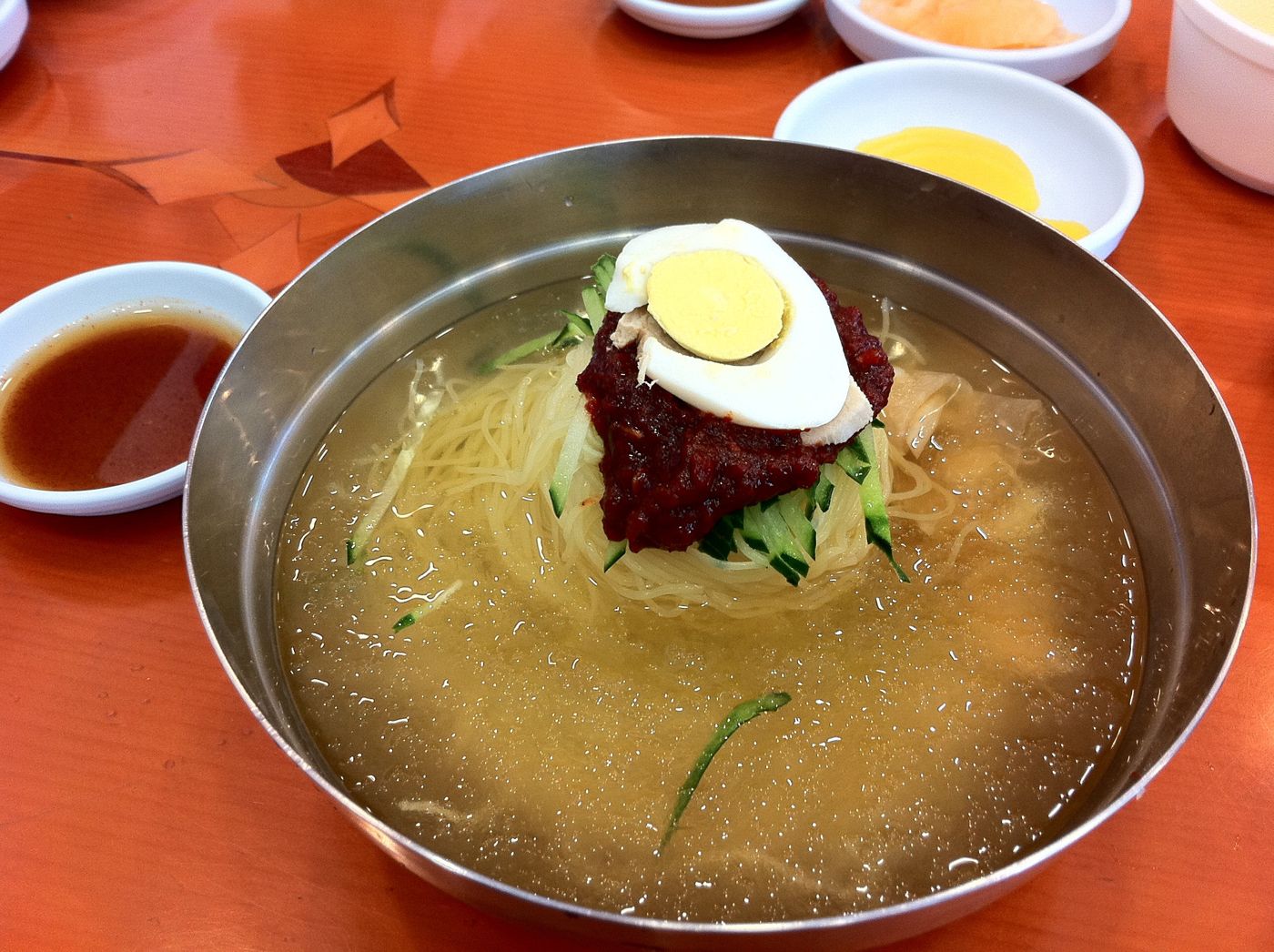 Milmyeon (Busan Wheat Cold Noodles)밀면Chewy wheat-and-starch noodles in an icy, sweet-sour beef broth or tossed in chili paste — Busan's refugee-era answer to northern naengmyeon.
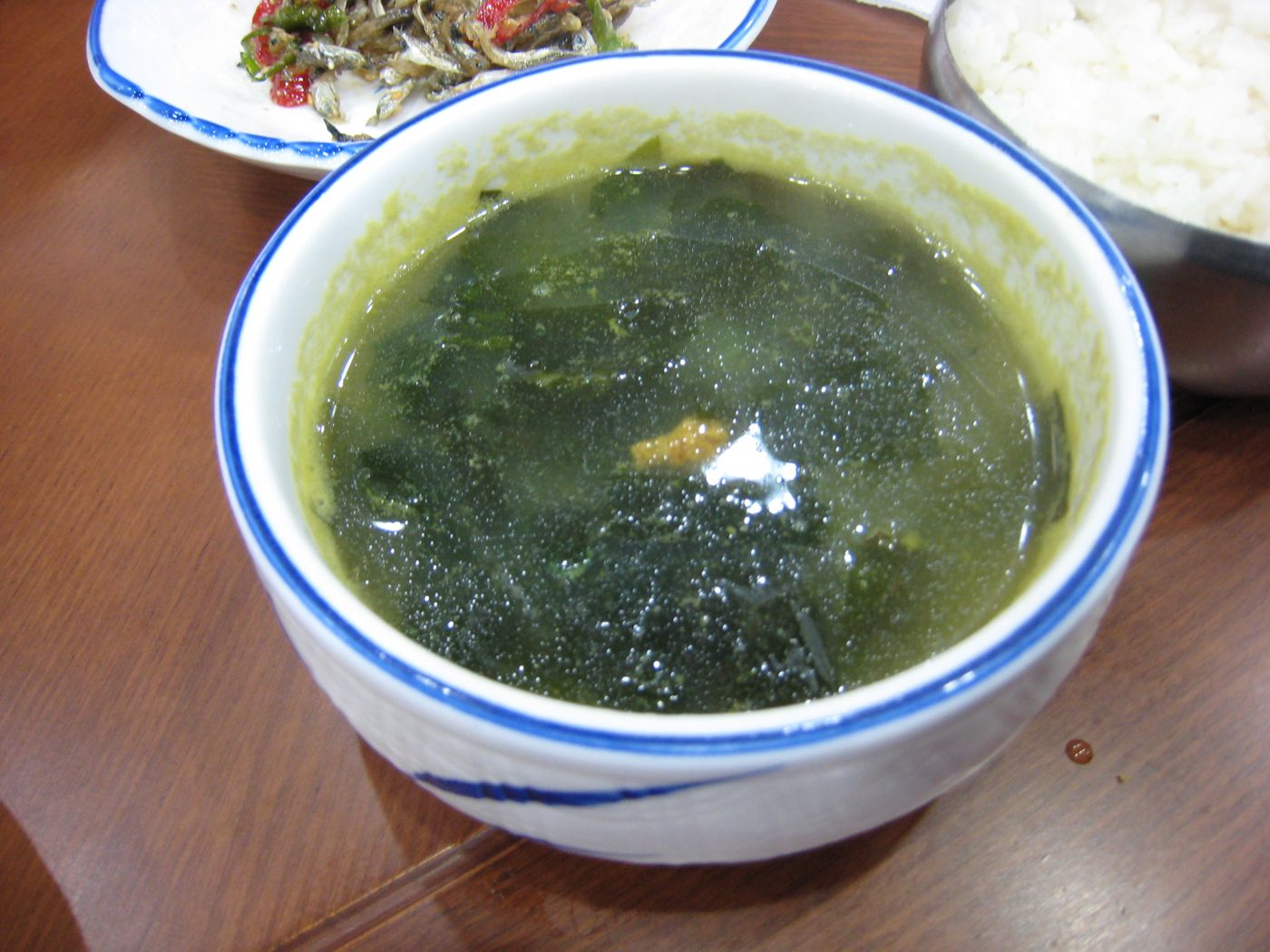 Miyeok Guk (Seaweed Soup)미역국A mild soup of sea mustard and beef seasoned with soup soy sauce and sesame oil — the first meal after childbirth and the soup of every Korean birthday.
- Mu Guk (Beef and Radish Soup)뭇국Thin squares of Korean radish and beef stir-fried in sesame oil, then simmered into a clear, gently sweet broth seasoned with soup soy sauce — a year-round everyday guk.
- Mu Jorim (Braised Radish)무조림Thick rounds of Korean radish simmered in anchovy stock with soy sauce and chili until tender, sweet and amber — humble, warming winter banchan.
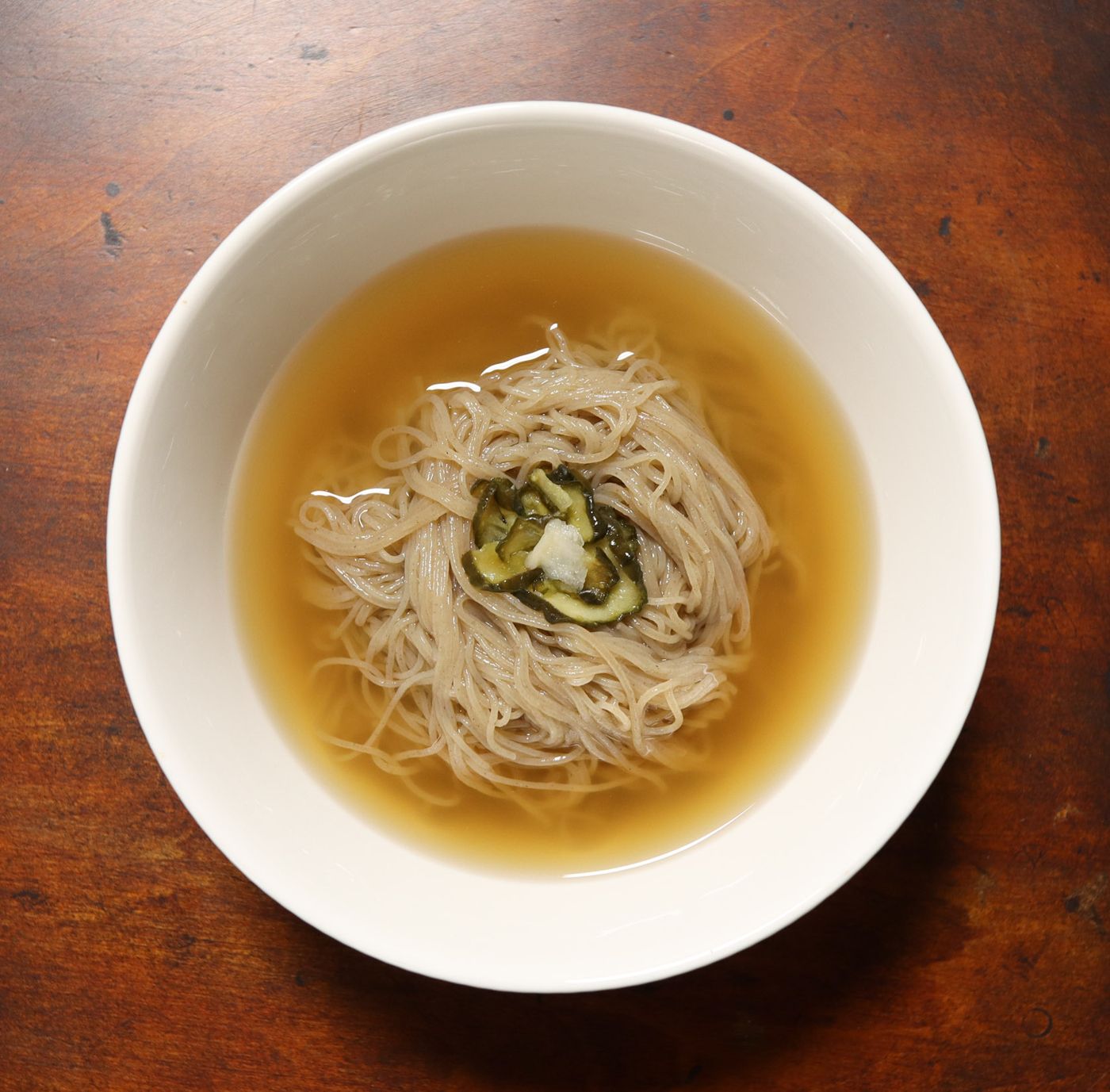 Mul-naengmyeon (Cold Buckwheat Noodles in Broth)물냉면Buckwheat noodles in an icy mix of beef broth and dongchimi, topped with sliced beef, pear, radish and egg — a Pyongyang winter dish now loved in summer.
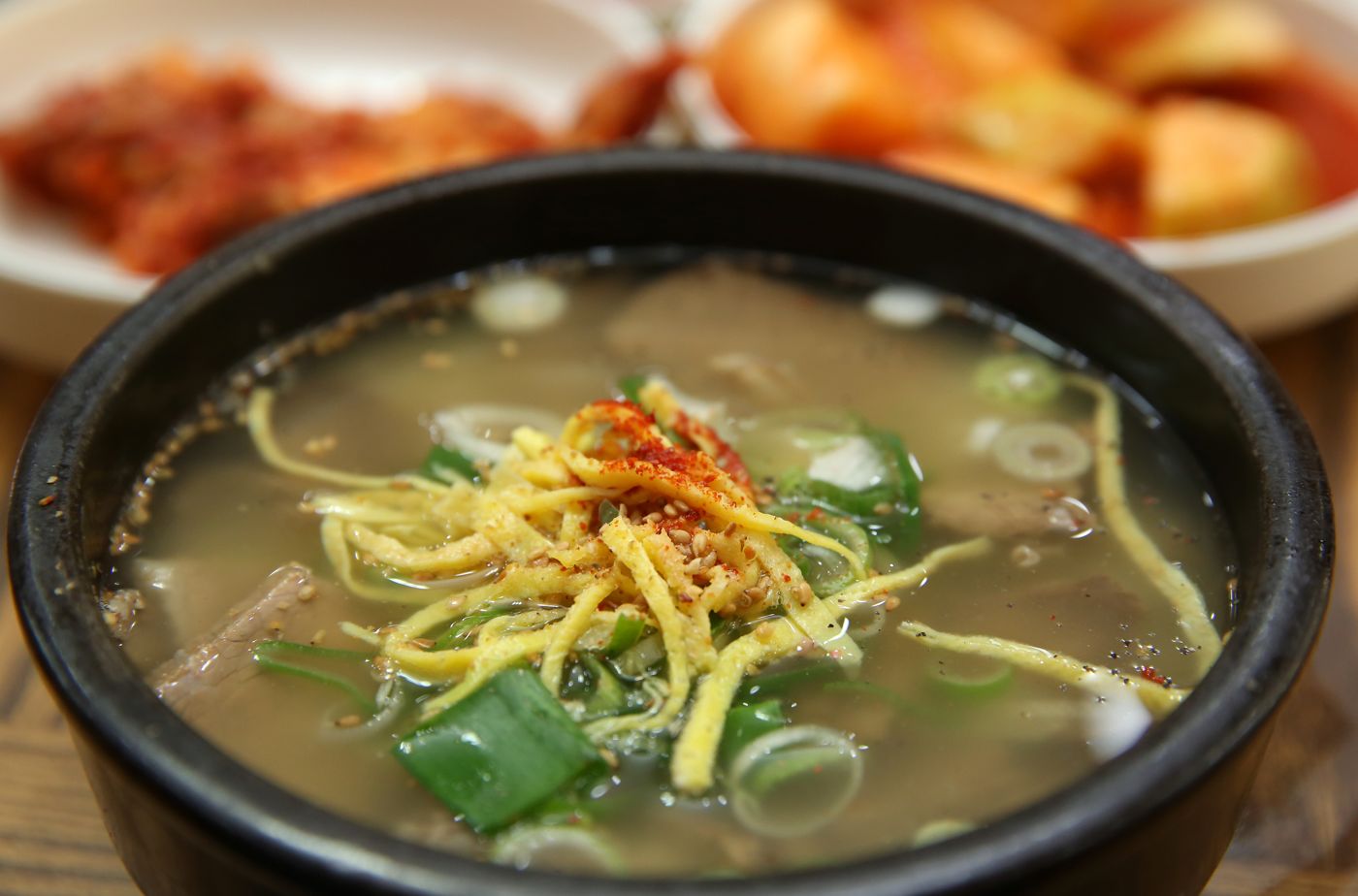 Naju Gomtang (Naju Clear Beef Soup)나주곰탕Brisket, shank and other beef cuts simmered into a clear, gently rich broth, poured over rice and topped with green onion — the market-day soup of Naju in South Jeolla.
- Saengtae Jjigae (Fresh Pollock Stew)생태찌개Chunks of fresh, never-frozen pollock simmered with radish, tofu and a red chili broth, finished with water dropwort and crown daisy — a winter stew prized for its clean, bracing taste.
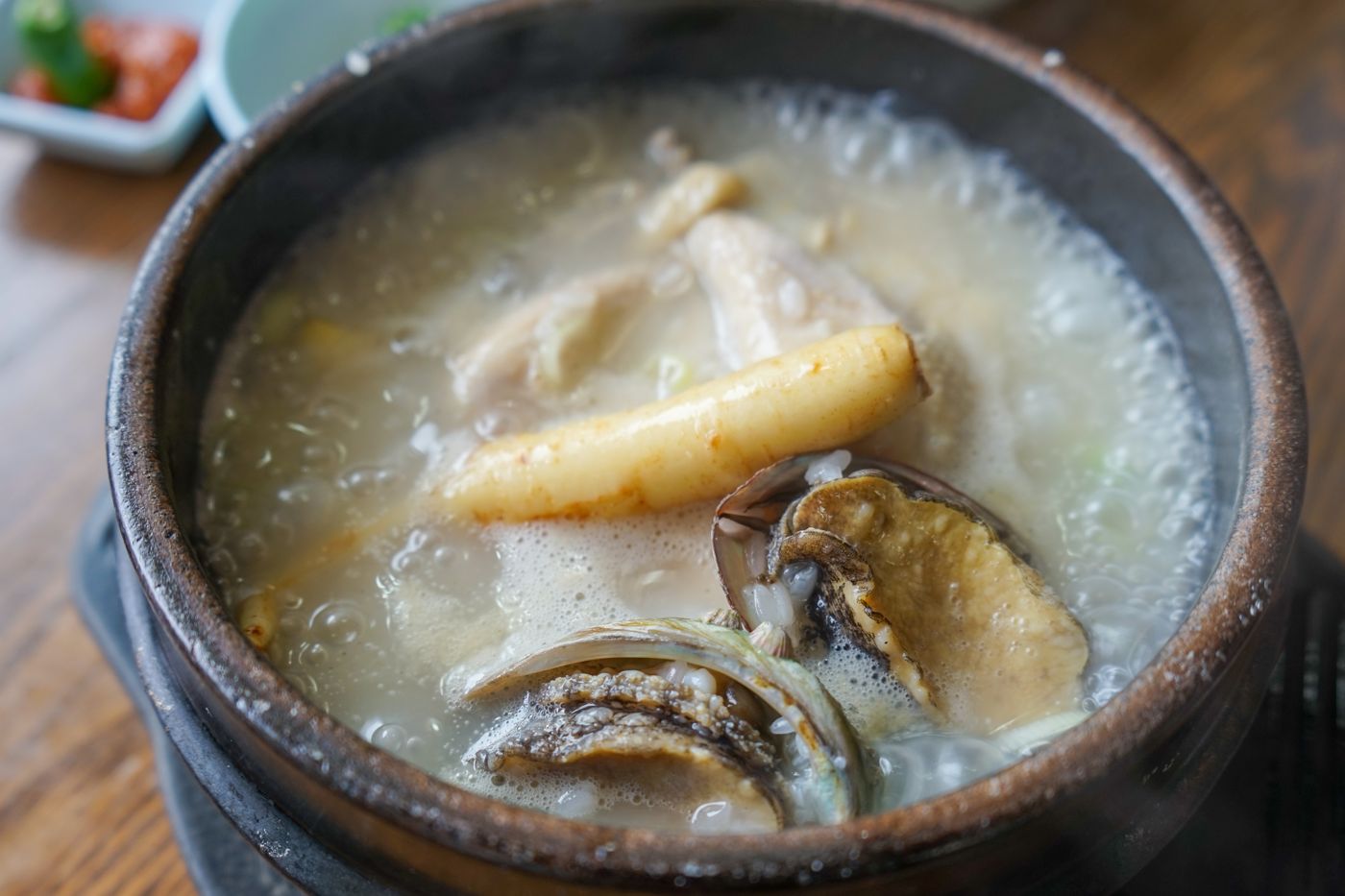 Samgyetang (Ginseng Chicken Soup)삼계탕A whole young chicken stuffed with glutinous rice, ginseng, jujubes and garlic and simmered until tender — the classic hot soup for Korea's dog days of summer.
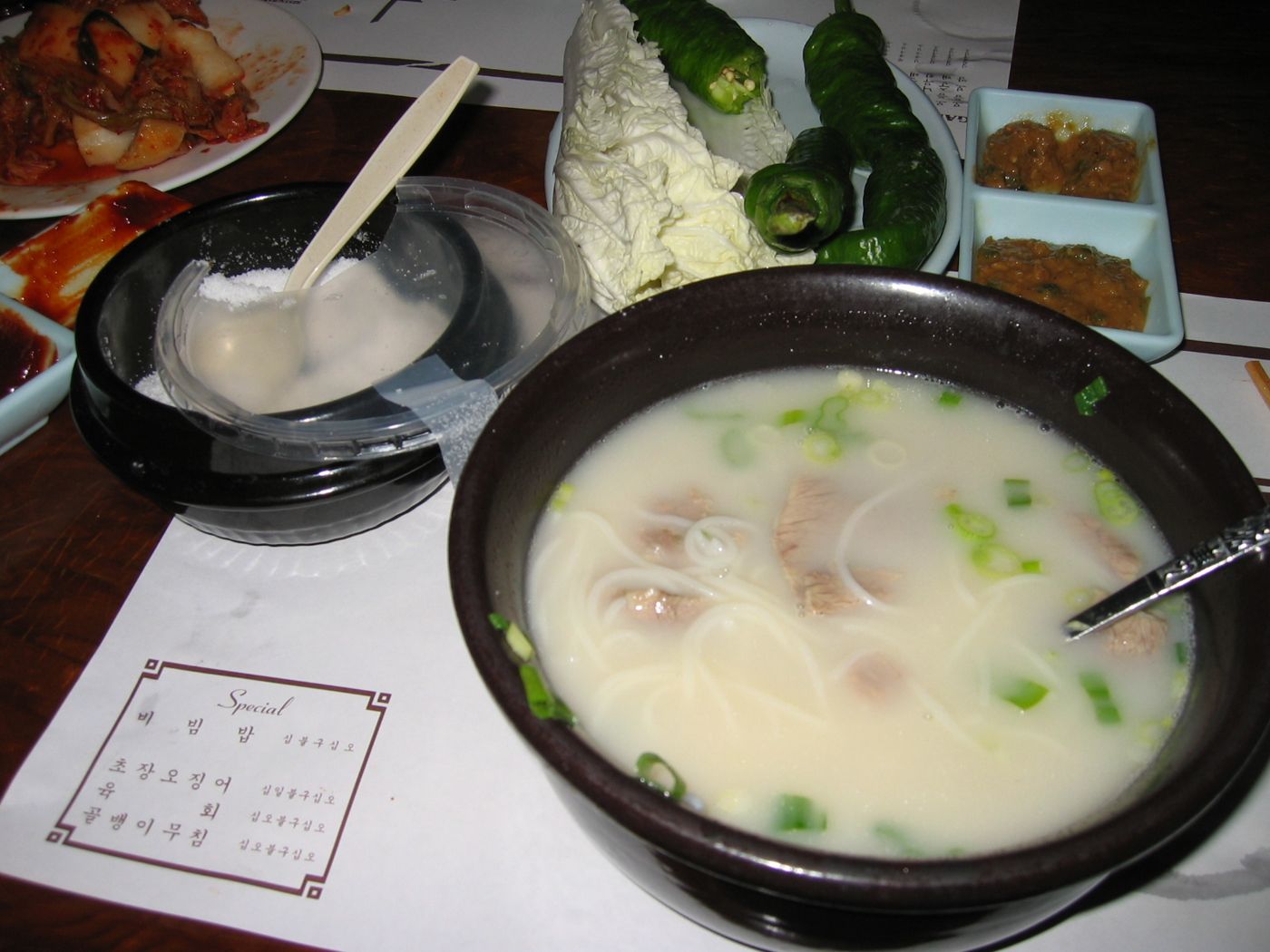 Seolleongtang (Ox Bone Soup)설렁탕Ox bones and beef simmered for hours into a milky-white broth, served unsalted over rice with sliced meat — each diner seasons it at the table.
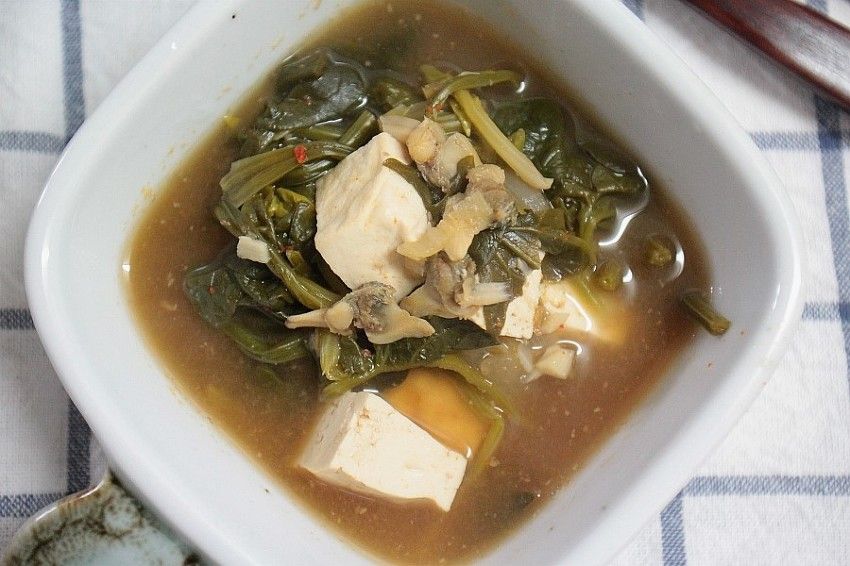 Sigeumchi Doenjang Guk (Spinach Soybean-Paste Soup)시금치된장국Tender spinach simmered in an anchovy broth seasoned with doenjang — a mild, everyday soup that is at its sweetest in winter and early spring.
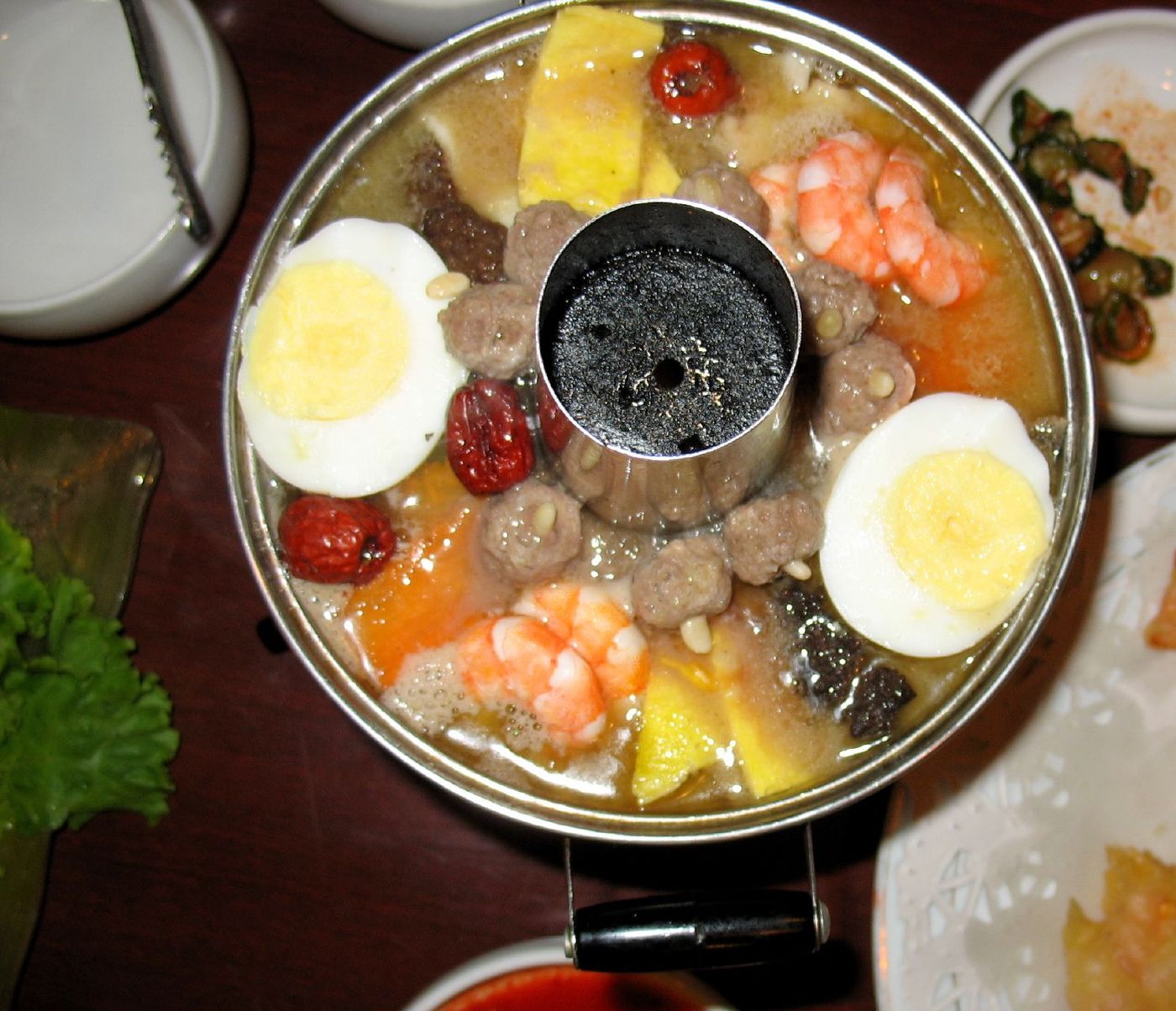 Sinseollo (Royal Hot Pot)신선로A court banquet dish of colorful beef, fish, egg, mushrooms and vegetables arranged in a chimney-centered brazier pot, with hot broth poured over and kept warm at the table.
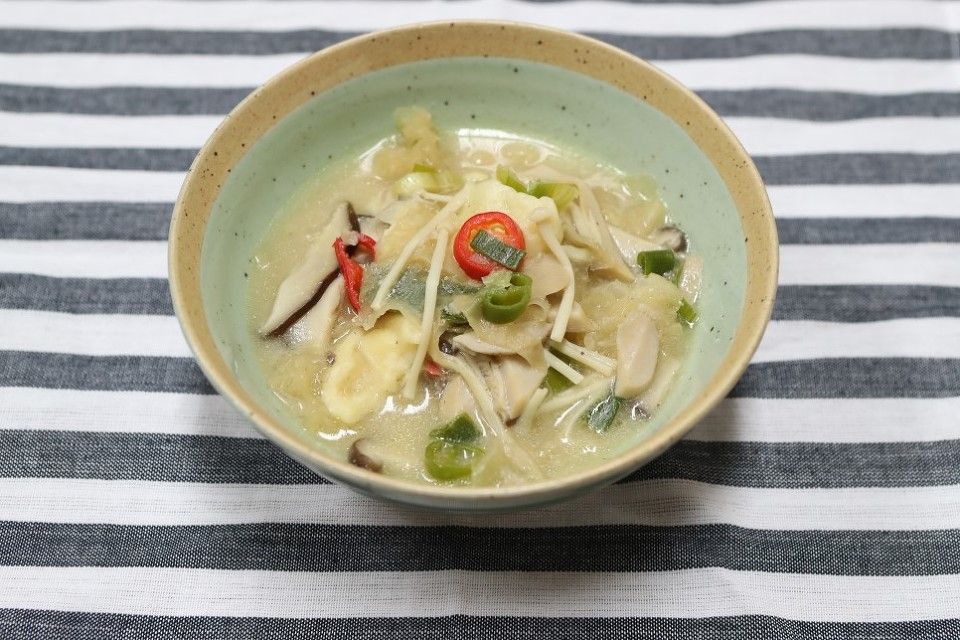 Sujebi (Hand-Torn Dough Soup)수제비Thin pieces of wheat dough pulled by hand into a simmering anchovy broth with zucchini and potato — a cozy, inexpensive one-pot meal, traditionally a summer staple.
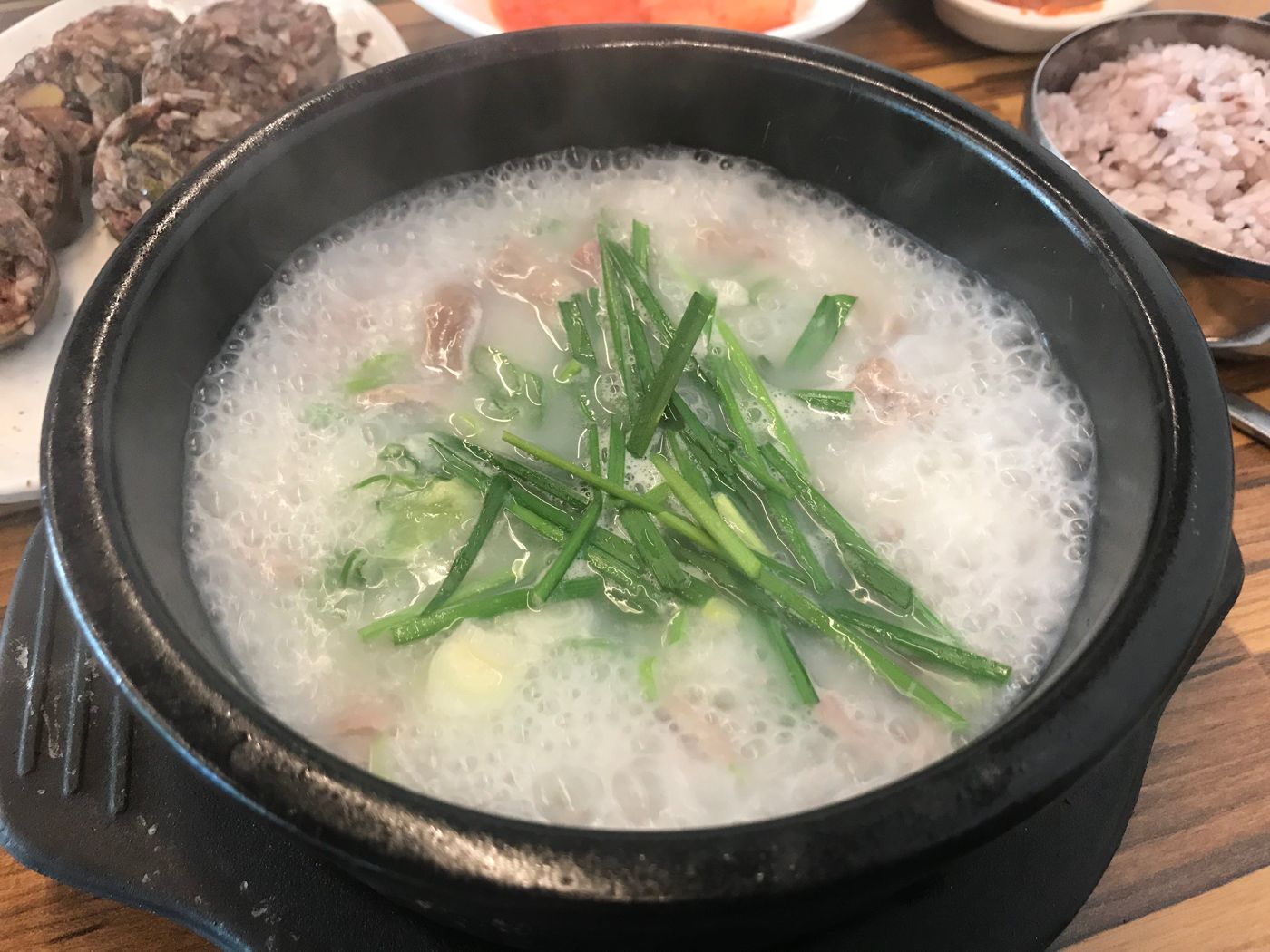 Sundaeguk (Blood Sausage Soup)순댓국Slices of Korean blood sausage and pork offal in a rich pork-bone broth, seasoned at the table with salted shrimp — a cheap, hearty market-day bowl served with rice.
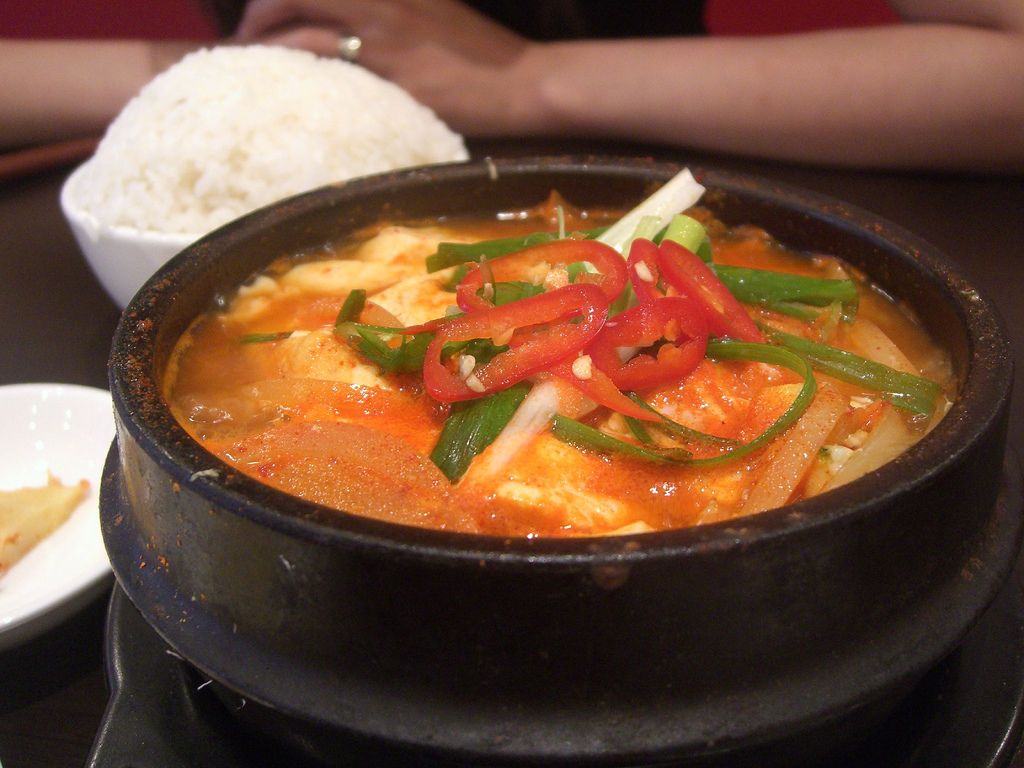 Sundubu Jjigae (Soft Tofu Stew)순두부찌개Silky, unpressed tofu simmered in a fiery chili broth with clams or pork and finished with a raw egg — served still boiling in its earthenware pot.
- Toran Guk (Taro Soup)토란국Parboiled taro simmered in a clear beef-and-kelp broth seasoned with soup soy sauce — a soft, gently slippery soup made for the Chuseok harvest table.
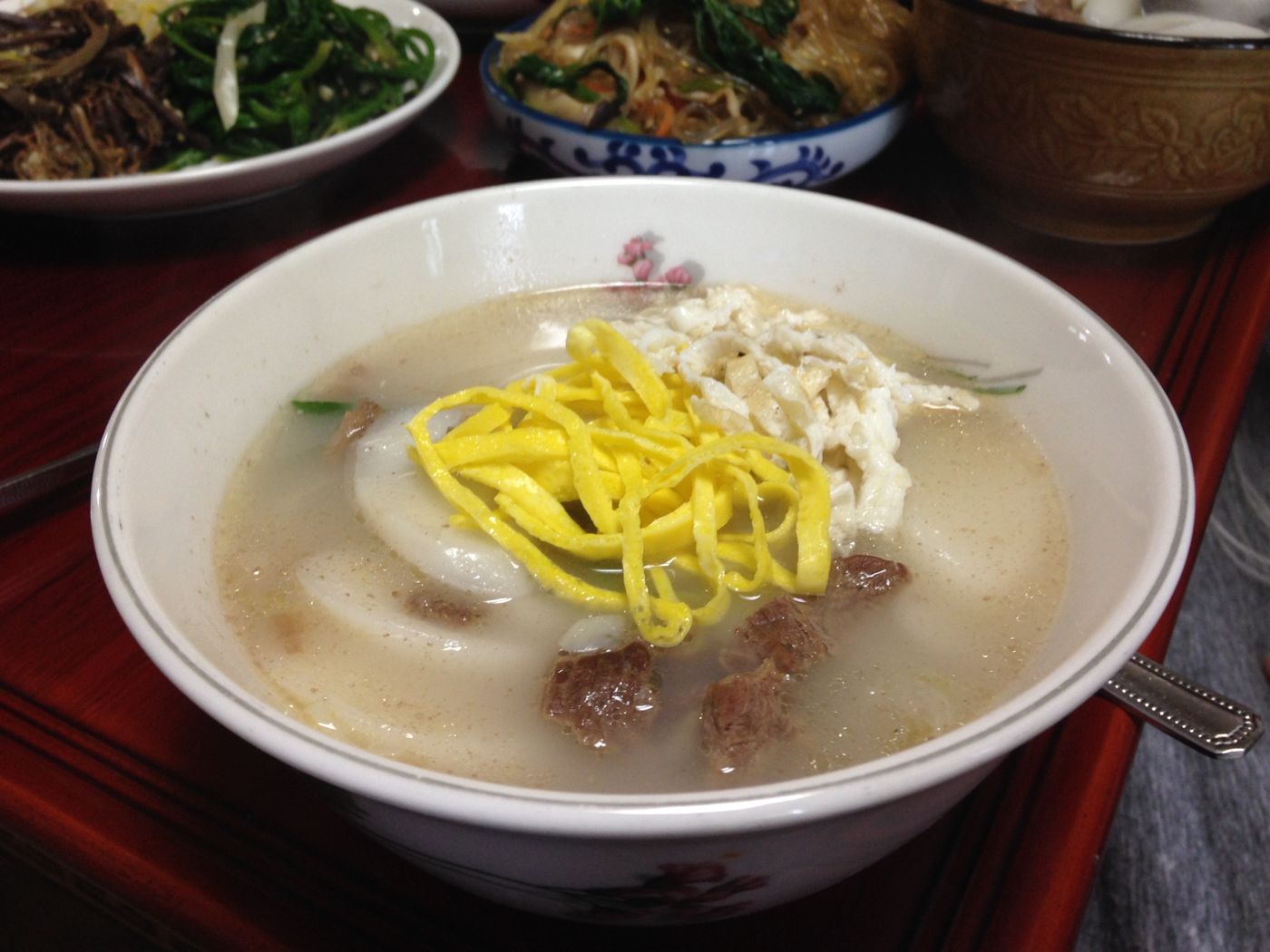 Tteokguk (Rice Cake Soup)떡국Thin ovals of white rice cake in clear beef broth, topped with egg ribbons and seaweed — the soup eaten on Seollal morning to greet the new year.
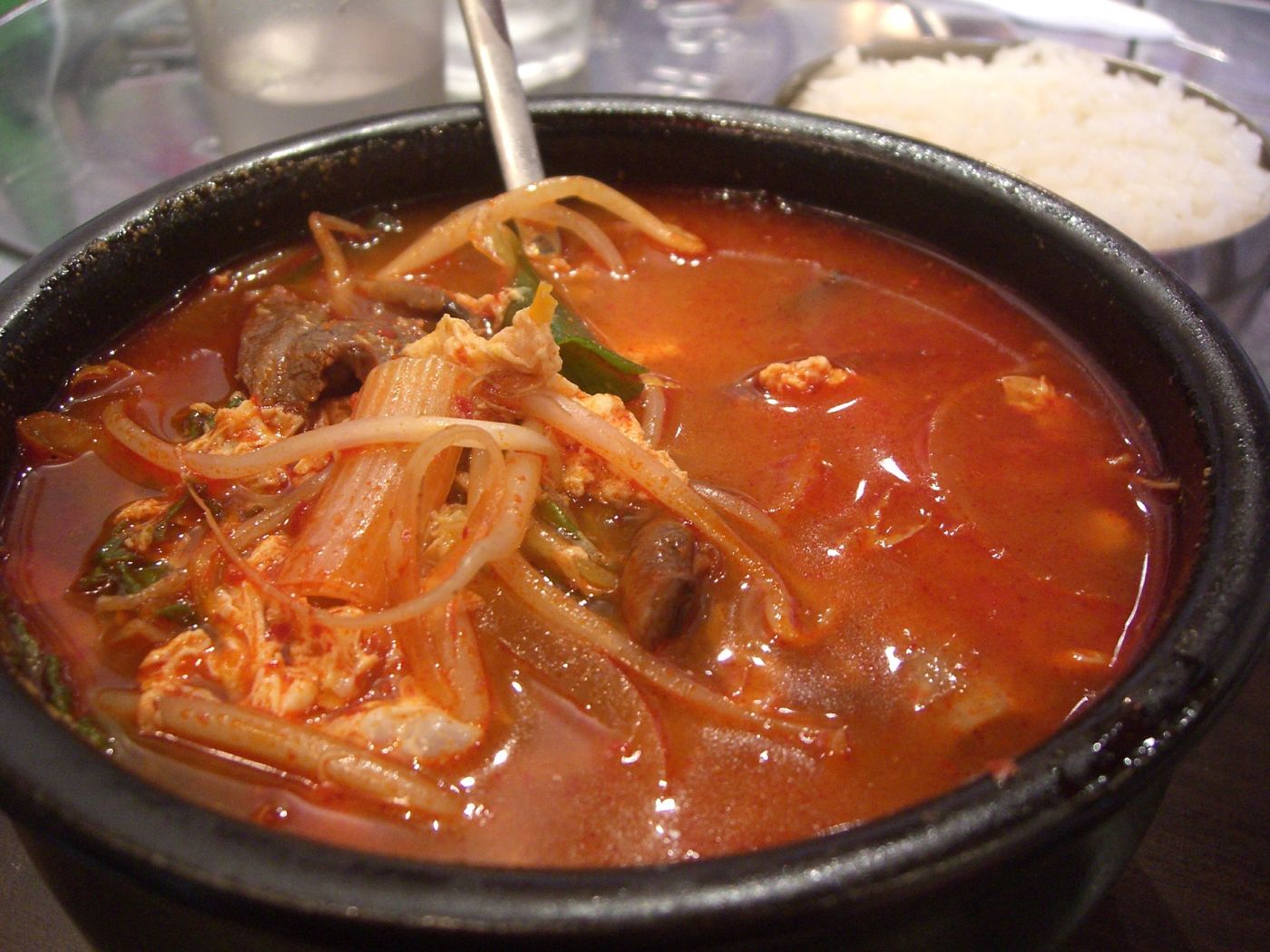 Yukgaejang (Spicy Beef Soup)육개장Shredded beef simmered with bracken, bean sprouts and plenty of green onion in a red, chili-spiked broth — a fiery summer restorative and a gathering-day soup.