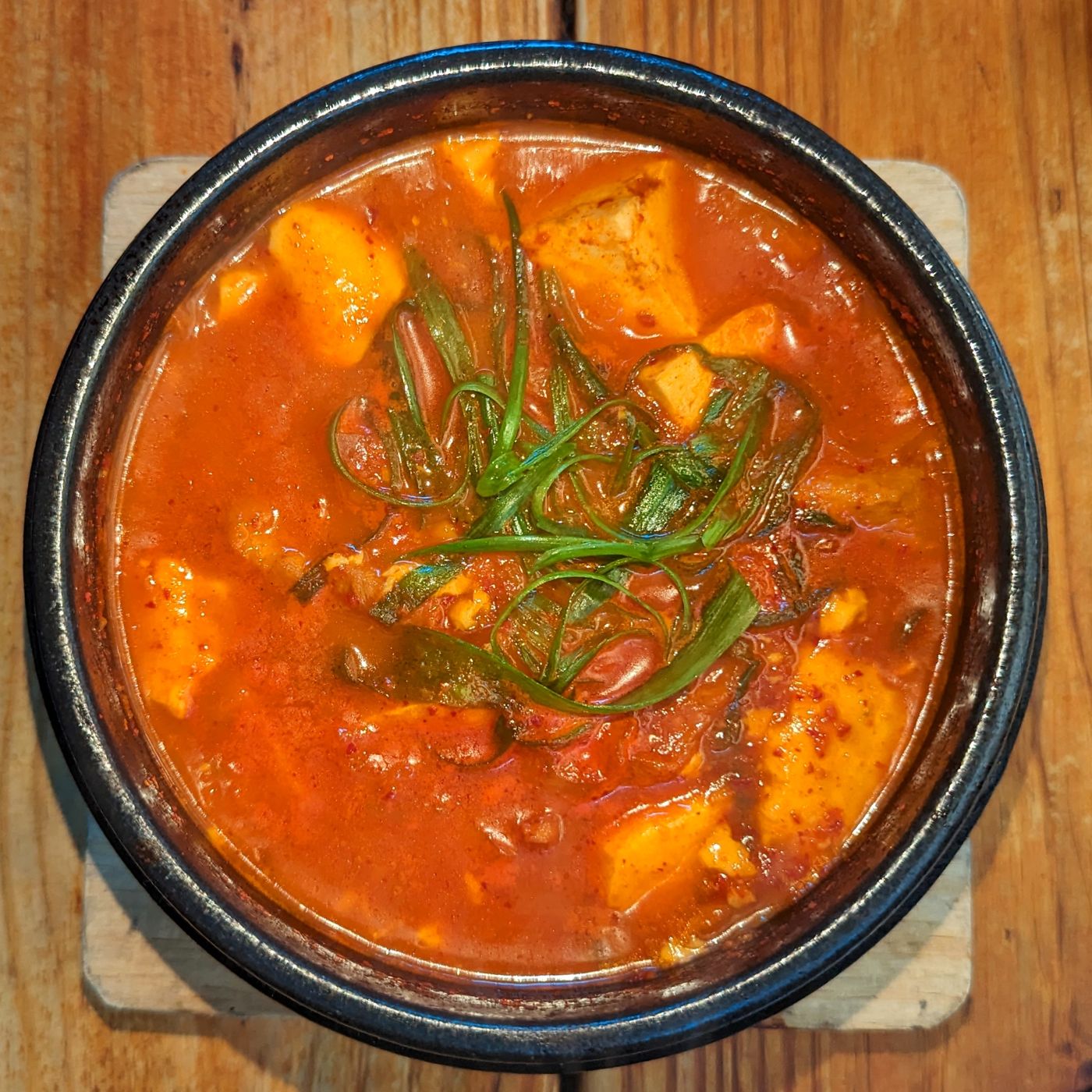
 Photo: Daderot, CC0, via Wikimedia Commons
Jjigae · Stews 찌개
Kimchi Jjigae (Kimchi Stew)
김치찌개
Romanization: kimchi-jjigae
Sour, well-aged napa cabbage kimchi simmered with pork and tofu into a tangy, spicy stew — the classic way to use up kimchi that has gone past its prime.
- Serves
- 4
- Prep
- 10 min
- Cook
- 30 min
Recipe
Ingredients · Serves 4
- 300 gWell-fermented napa cabbage kimchisour kimchi, cut into 3–4 cm pieces
- 60 mlKimchi brinefrom the kimchi container
- 200 gPork shoulder or bellysliced into bite-size pieces
- 200 gFirm tofusliced 1 cm thick
- ½ mediumOnionabout 80 g, sliced
- 2 stalksGreen onionabout 30 g, cut on the diagonal
- 1 tbspGochugaru
- 2 clovesGarlicminced
- 1 tbspNeutral cooking oil
- 1 tspSoup soy sauce (guk-ganjang)only if needed
- 500 mlWater or anchovy-kelp stock
Method
Technique: Making Guk and Jjigae
Step 1: Heat the oil in a heavy pot over medium-high heat. Add the pork and stir-fry until it loses its pink color and renders a little fat.
Step 2: Add the kimchi and stir-fry with the pork for 4–5 minutes, until the kimchi softens and turns translucent at the edges. Frying first keeps the kimchi from going limp in the broth.
Step 3: Add the gochugaru and garlic, stir for 30 seconds, then pour in the kimchi brine and water or stock.
Step 4: Bring to a boil, then lower the heat and simmer, partly covered, for 15–20 minutes, until the kimchi is very tender and the broth has turned deep red.
Step 5: Add the tofu and onion and simmer 5 minutes more. Taste, and season with a little soup soy sauce only if the kimchi has not made it salty enough.
Step 6: Scatter over the green onion, boil for 1 minute and serve in the pot with rice.
Origin & History
Kimchi-jjigae grew out of thrift. The Encyclopedia of Korean Culture suggests it began as a way to use winter kimchi people had tired of eating raw, or leftover kimchi that had turned too sour. Because red-chili kimchi only took shape after chili peppers arrived in the mid-Joseon period, the encyclopedia reasons that the stew in its present form must be younger still.
The court called it kimchi jochi. The recipe preserved in the late-nineteenth-century Siuijeonseo layers sliced kimchi in an earthenware pot with seasoned beef and boiled pork, adds water and soy sauce, then steams it over the rice before a final quick boil — and says nothing about how sour the kimchi should be. The Encyclopedia of Korean Folk Culture notes that by the twentieth century the dish had settled on sour, well-fermented kimchi, usually from the winter kimjang batch; a 1977 magazine guide to kimjang listed it among a dozen dishes for sour kimchi.
Today it is second only to doenjang-jjigae among everyday stews. The folk encyclopedia also points out that pairing kimchi with pork and tofu added protein to a diet built on grains and vegetables.
Key Ingredients
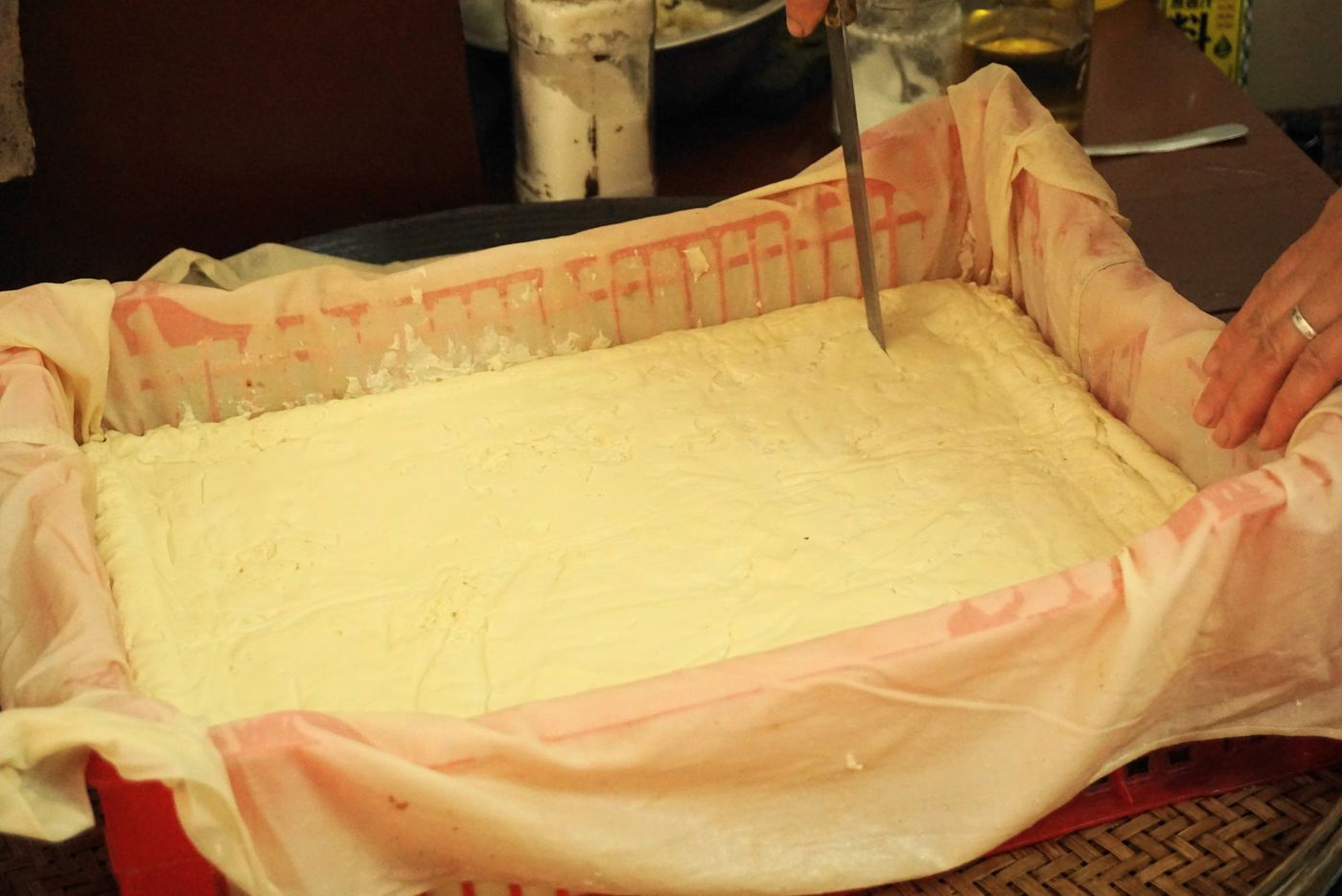 Tofu두부Fresh bean curd made by coagulating soy milk and pressing the curds. A quiet staple of Korean cooking since at least the late Goryeo period, it is pan-fried, braised in spicy soy glaze, or simmered in stews.
 Gochugaru고춧가루Korean red chili powder, made from dried red peppers ground coarse or fine. It gives kimchi, gochujang and countless banchan their color and warmth.
 Garlic마늘Used raw, minced, pickled and roasted, garlic is one of the essential aromatics of Korean food — in seasonings, marinades, kimchi and namul.
 Green onion파Korean green onion (pa), from thick-stemmed daepa to slender scallions — chopped into nearly every seasoning sauce, soup and kimchi, and the star of pa-kimchi.
 Soy sauce간장Korean soy sauce, in two main kitchen forms: pale, salty guk-ganjang (soup soy sauce) brewed the traditional way from meju, and darker, sweeter jin-ganjang for braises and marinades.
 Napa cabbage배추The tall, pale, tightly headed cabbage at the heart of Korea's best-known kimchi. Salted, layered with seasoning and left to ferment, it becomes baechu-kimchi; fresh, it goes into soups, wraps and quick salads.
Nutrition
| Calories | ~225 kcal |
|---|---|
| Protein | ~16.1 g |
| Fat | ~12.5 g |
| Carbohydrates | ~12 g |
| Fiber | ~4.8 g |
| Sodium | ~650 mg |
Notable forProtein · Fiber · Vitamin K
Estimated by summing ingredient values and dividing by four. Kimchi (counted with its brine), soup soy sauce and firm tofu: Korean Food Composition Table (배추김치, F2050070009a; 국간장, R0010030009a; 두부, D0150000009a); pork shoulder: USDA FDC 167849; gochugaru approximated with red pepper, FDC 170932; oil, onion, green onion and garlic from USDA. Kimchi saltiness varies widely, so sodium can be much higher: the MFDS analysis of restaurant kimchi-jjigae (61 kcal and 491 mg sodium per 100 g) would put a bowl this size at about 1,700 mg. Actual values vary with ingredients, portion size and preparation.
Health Benefits
- Pork and tofu make it a protein-rich stew, and the cabbage contributes fiber and vitamin K.
- It turns over-fermented kimchi into a meal rather than waste, a point the folk encyclopedia highlights.
Regional Variations
- Pork: fatty pork belly or shoulder is the usual partner; pork ribs make a heartier winter version.
- Mugeunji-jjigae: kimchi aged six months or more at low temperature (mugeunji) gives a deeper, less sharply sour stew, often with thick chunks of pork.
- With fish: canned or fresh saury and mackerel are popular instead of pork.
- Other kimchi: leftover kkakdugi or dongchimi radish can be used too; the encyclopedia notes that stirring in a little doenjang and gochujang gives a mellower, nutty flavor.
Pairings
 Gyeran Mari (Rolled Omelet)계란말이Beaten egg cooked in thin layers and rolled into a soft, striped log, then sliced — a gentle, everyday banchan and a lunchbox classic.
- Gim Gui (Seasoned Roasted Laver)김구이Sheets of laver brushed with sesame or perilla oil, sprinkled with salt and toasted until crisp — eaten wrapped around spoonfuls of rice.
 Kongnamul Muchim콩나물무침Soybean sprouts cooked under a lid until just tender, then tossed with garlic, green onion and sesame oil — crisp, nutty and on tables across Korea.
 Sigeumchi Namul시금치나물Spinach blanched for a few seconds, squeezed dry and dressed with garlic, soy sauce and sesame — one of the simplest and most familiar namul.
Sources
- 01김치찌개 (Kimchi-jjigae) — Encyclopedia of Korean Culture
- 02김치찌개 (Kimchi-jjigae) — Encyclopedia of Korean Folk Culture (한국의식주생활사전)
- 03찌개 (Jjigae) — Encyclopedia of Korean Folk Culture (한국의식주생활사전)
- 04김치찌개 (Kimchi-jjigae, restaurant, analyzed) — MFDS K-FIND food composition database
- 05Trends in sodium intake and major contributing food groups and dishes in Korea: KNHANES 2013–2017 (Jeong et al., Nutrition Research and Practice, 2021)
- 06Sodium reduction — World Health Organization fact sheet
Last updated