 Photo: Beeniru, CC BY-SA 3.0, via Wikimedia Commons
Guk & Tang · Soups 국·탕
Galbitang (Beef Short Rib Soup)
갈비탕
Romanization: galbitang
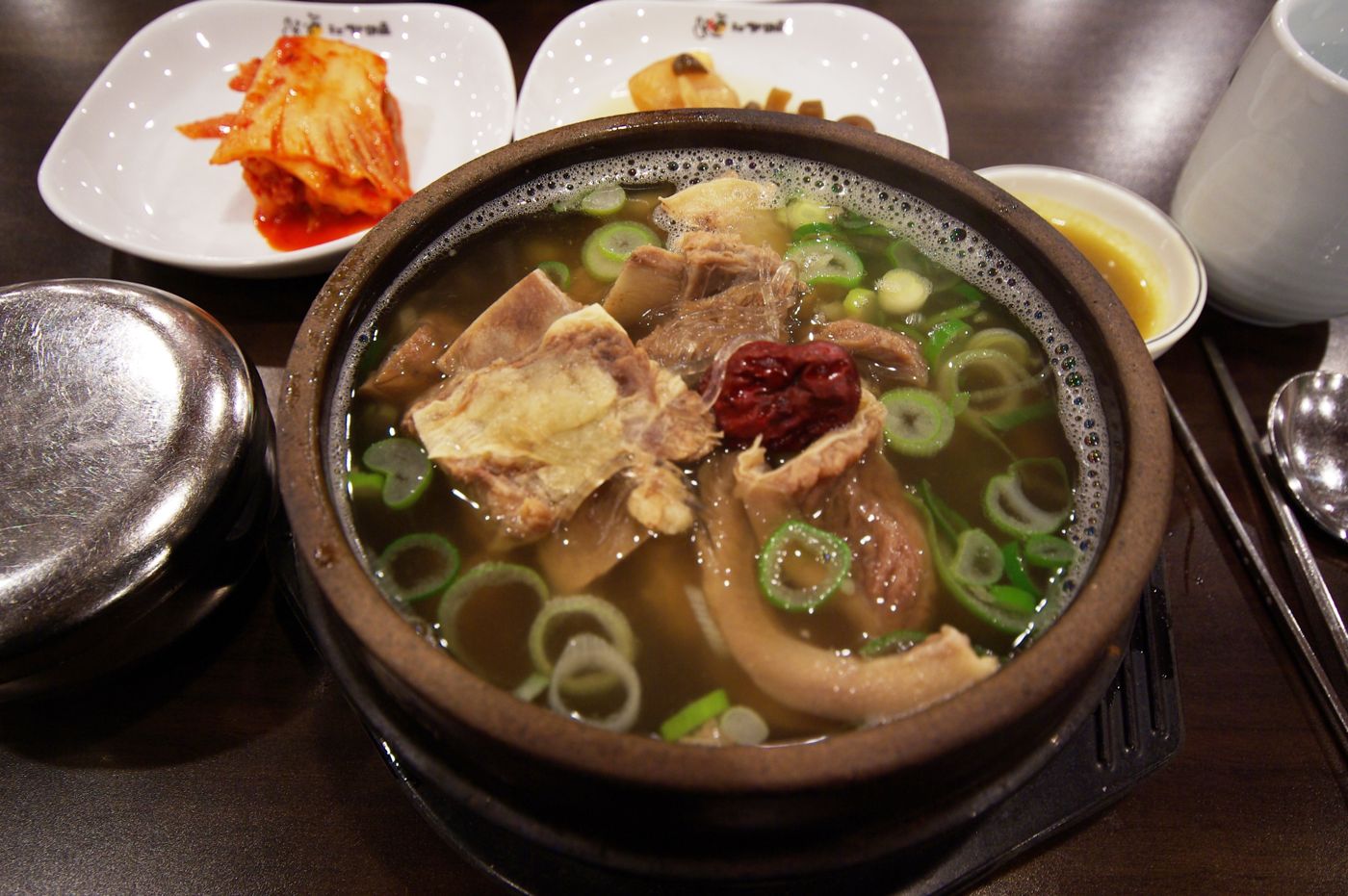
Beef short ribs simmered until the meat slips from the bone, served in a clear, soy-seasoned broth with radish — a court banquet soup turned everyday restaurant bowl.
- Serves
- 4
- Prep
- 70 min
- Cook
- 120 min
Recipe
Ingredients · Serves 4
- 1.2 kgBeef short ribs (galbi)cut into 5–6 cm pieces
- 300 gKorean radish (mu)in one large chunk
- 1 mediumOnionhalved
- 1 stalkLarge green onion (daepa)plus 1 stalk sliced, for serving
- 6 clovesGarlic4 whole, 2 minced
- 3 lWater
- 1 tbspSoup soy sauce (guk-ganjang)plus salt to taste
- 1 tbspSoy saucefor seasoning the meat
- 1 tspToasted sesame oil
- ¼ tspBlack pepper
- 50 gDangmyeon (sweet potato noodles)optional; soaked 30 minutes
- 1 Eggoptional, for egg-sheet strips
Method
Technique: Making Guk and Jjigae, Making Yuksu: Anchovy-Kelp Stock
Step 1: Soak the ribs in cold water for 1 hour, changing the water once, to draw out the blood. Trim off thick pieces of fat.
Step 2: Put the ribs in a large pot, cover with water and boil hard for 5 minutes. Drain, rinse the ribs and the pot.
Step 3: Return the ribs to the pot with the 3 liters of fresh water, the radish, onion, whole garlic and the daepa stalk. Bring to a boil, skim, then simmer gently, partly covered, for 1½–2 hours, until the meat pulls easily from the bone.
Step 4: Lift out the ribs and radish. Strain the broth and skim off the fat (chilling it makes this easy). Slice the radish into thin squares.
Step 5: Toss the ribs with the soy sauce, minced garlic, sesame oil and pepper, as the 1924 recipe suggests, then return them and the radish to the broth. Season with the soup soy sauce and a little salt and simmer 10 minutes.
Step 6: If using, put the soaked dangmyeon in the bowls. Ladle in the ribs, radish and broth, and top with sliced green onion and egg-sheet strips. Serve with rice and kimchi.
Origin & History
Galbitang is beef short ribs, cut into short lengths and simmered in plain water until the meat is soft enough to fall away from the bone, then served in that broth. It is also called garitang (written 㠰伊湯 in court records), from gari, an older word for beef ribs. The Encyclopedia of Korean Culture notes that ribs were probably eaten from the late Goryeo period, but the soup itself is first recorded on royal banquet menus of the 1890s.
Those menus describe something grander than today's bowl. Food historian Kim Sang-bo, writing in the Encyclopedia of Korean Folk Culture, reads the ingredient lists in the court feast records of 1892 and 1901–1902: ribs cooked with tripe, intestines and lung, abalone and sea cucumber, with radish to keep the broth clean-tasting, finished with egg-sheet strips, water dropwort, mushrooms and pine nuts. It was one of the dishes served alongside noodles at celebrations.
The soup reached home cooks through print. Lee Yong-gi's 1924 cookbook Joseon mussang sinsik yori jebeop boils the ribs in plain water until wobbly-tender, tosses them in soy sauce, oil, sesame salt and pepper, and returns them to the pot for a final boil, advising plenty of soy sauce. In the folk encyclopedia's account, this clear soup later became the galbitang eaten with rice that is common today.
Key Ingredients
 Korean radish무A stout, heavy white radish, often tinged pale green near the top. It is cubed for kkakdugi, left whole in the clear brine of dongchimi, shredded into salads and simmered into broths.
 Green onion파Korean green onion (pa), from thick-stemmed daepa to slender scallions — chopped into nearly every seasoning sauce, soup and kimchi, and the star of pa-kimchi.
 Garlic마늘Used raw, minced, pickled and roasted, garlic is one of the essential aromatics of Korean food — in seasonings, marinades, kimchi and namul.
 Soy sauce간장Korean soy sauce, in two main kitchen forms: pale, salty guk-ganjang (soup soy sauce) brewed the traditional way from meju, and darker, sweeter jin-ganjang for braises and marinades.
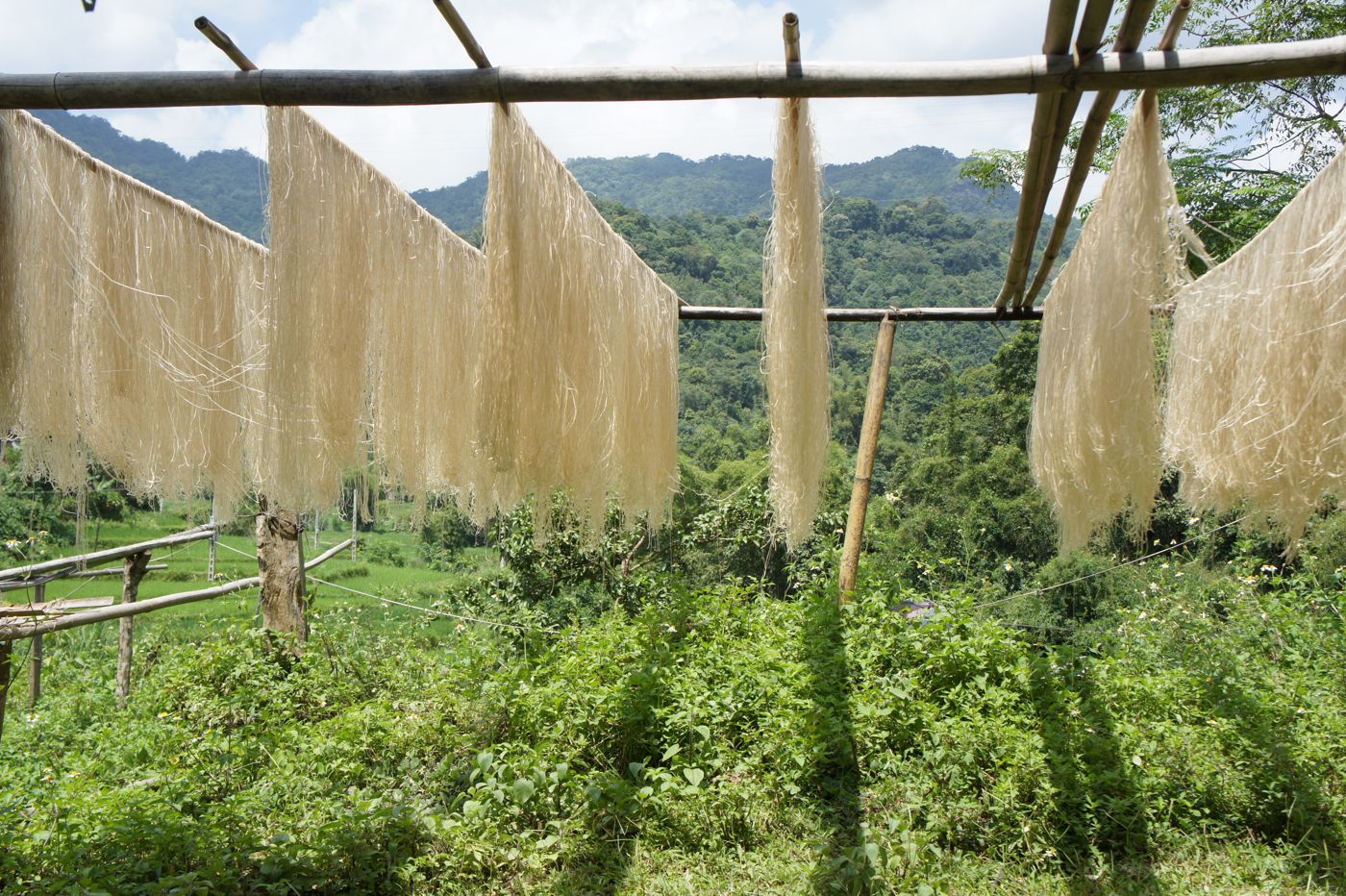 Sweet potato glass noodles당면Chewy, translucent noodles made from sweet potato starch. Introduced from China in the late Joseon period and mass-produced from 1919, they became the heart of modern japchae.
- Egg (gyeran)계란The everyday protein of the Korean table: rolled into gyeran-mari, steamed into puffy gyeran-jjim, simmered in soy for gyeran-jangjorim, and cut into thin yellow and white ribbons of jidan to garnish soups and noodles.
 Sesame참깨Toasted sesame seeds and sesame oil (chamgireum) finish countless Korean dishes, adding a nutty aroma and gloss.
Nutrition
| Calories | ~362 kcal |
|---|---|
| Protein | ~57 g |
| Fat | ~13.8 g |
| Carbohydrates | ~2.7 g |
| Fiber | Not reported |
| Sodium | ~1333 mg |
Notable forProtein · Zinc · Vitamin B12 · Selenium
Bone-in broth cannot be estimated reliably from raw ingredients, so these figures are scaled from the MFDS analysis of home-style galbitang (per 100 g: 54 kcal, 8.51 g protein, 2.06 g fat, 0.40 g carbohydrate, 1.9 g fiber as reported, 199 mg sodium, 2.87 mg zinc, 0.67 µg vitamin B12, 5.73 µg selenium) to the database's 670 g serving. The reported fiber looks high for a meat broth and should be read with caution. The source lists about 12.7 g of fiber per serving, which is implausible for a meat broth, so fiber is shown as not reported. Actual values vary with ingredients, portion size and preparation.
Health Benefits
- As analyzed by MFDS, a bowl is high in protein and supplies a large share of an adult's daily zinc and vitamin B12, plus selenium.
- Simmered radish adds sweetness and a little fiber to the broth without much energy.
- Skimming or chilling the broth removes much of the fat that renders from the ribs.
Regional Variations
- Court garitang: ribs simmered with offal, abalone, sea cucumber and radish, then garnished in five colors for banquet tables, as reconstructed from late-Joseon feast records.
- Seasoned in the pot or at the table: the Encyclopedia of Korean Culture describes two finishes — seasoning the broth with soy sauce, as for gomguk, or ladling it out plain and adding salt and chopped green onion in the bowl.
- With rice: today it is usually eaten as a one-bowl meal, with rice stirred into the broth or served alongside.
Pairings
 Cubed Radish Kimchi깍두기Korean radish cut into neat cubes and tossed with chili, garlic and salted shrimp — crunchy, juicy and a classic partner to rich soups.
 Napa Cabbage Kimchi배추김치Salted napa cabbage layered with a red paste of chili, garlic, ginger and fermented seafood, then left to ripen: the kimchi most people picture first.
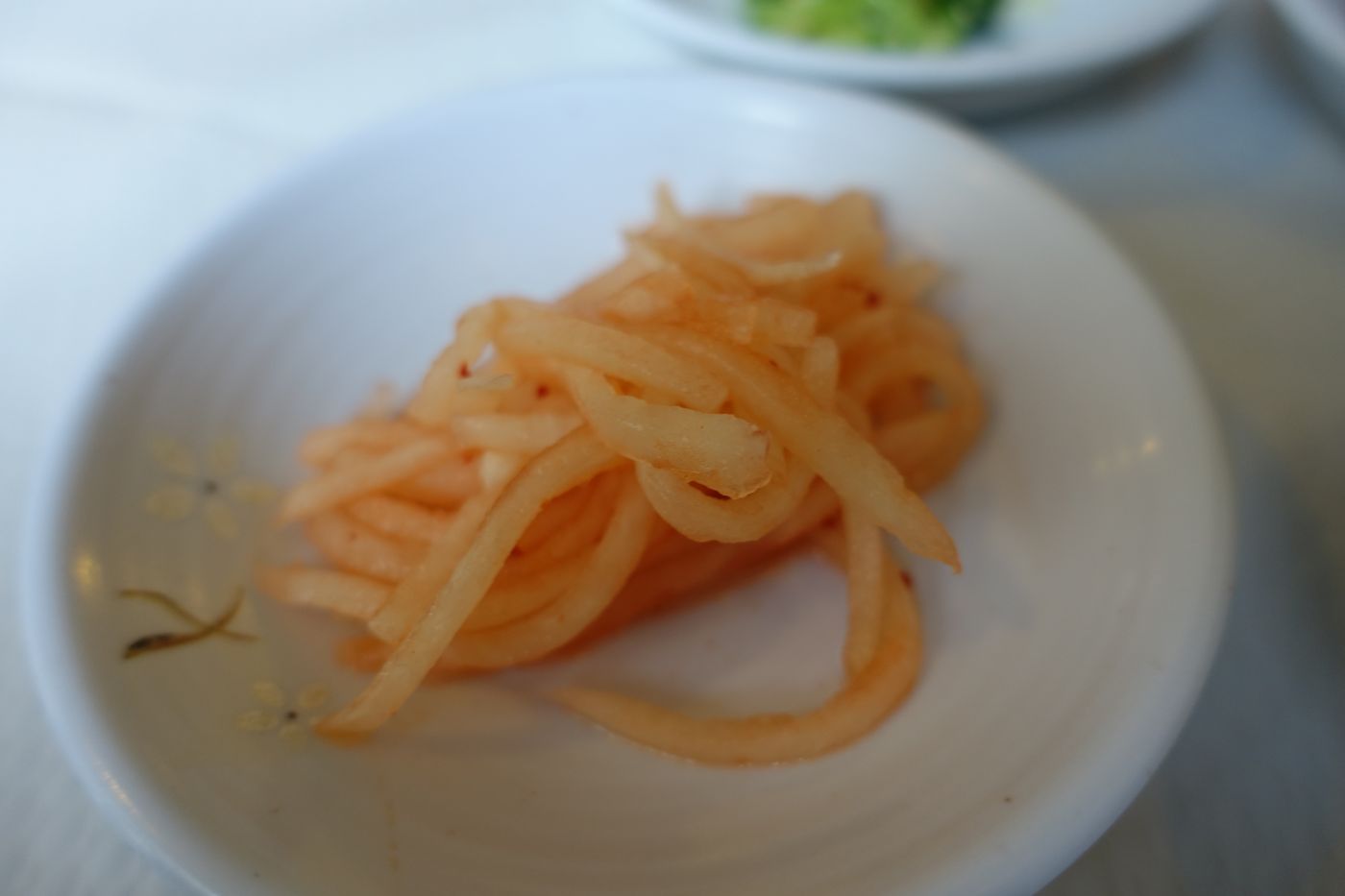 Musaengchae무생채Fine matchsticks of Korean radish dressed raw with chili flakes, a little vinegar and sugar — crisp, sweet-sharp and best made just before the meal.
Sources
- 01갈비탕 (Galbitang) — Encyclopedia of Korean Culture
- 02갈비탕 (Galbitang) — Encyclopedia of Korean Folk Culture (한국의식주생활사전)
- 03갈비탕 (Galbitang, home-style, analyzed) — MFDS K-FIND food composition database
- 04Global Perspectives on Allergen Labeling: Harmonization of Regulations and Practices — Allergy, Asthma & Immunology Research, 2025
- 05Sodium reduction — World Health Organization fact sheet
Last updated