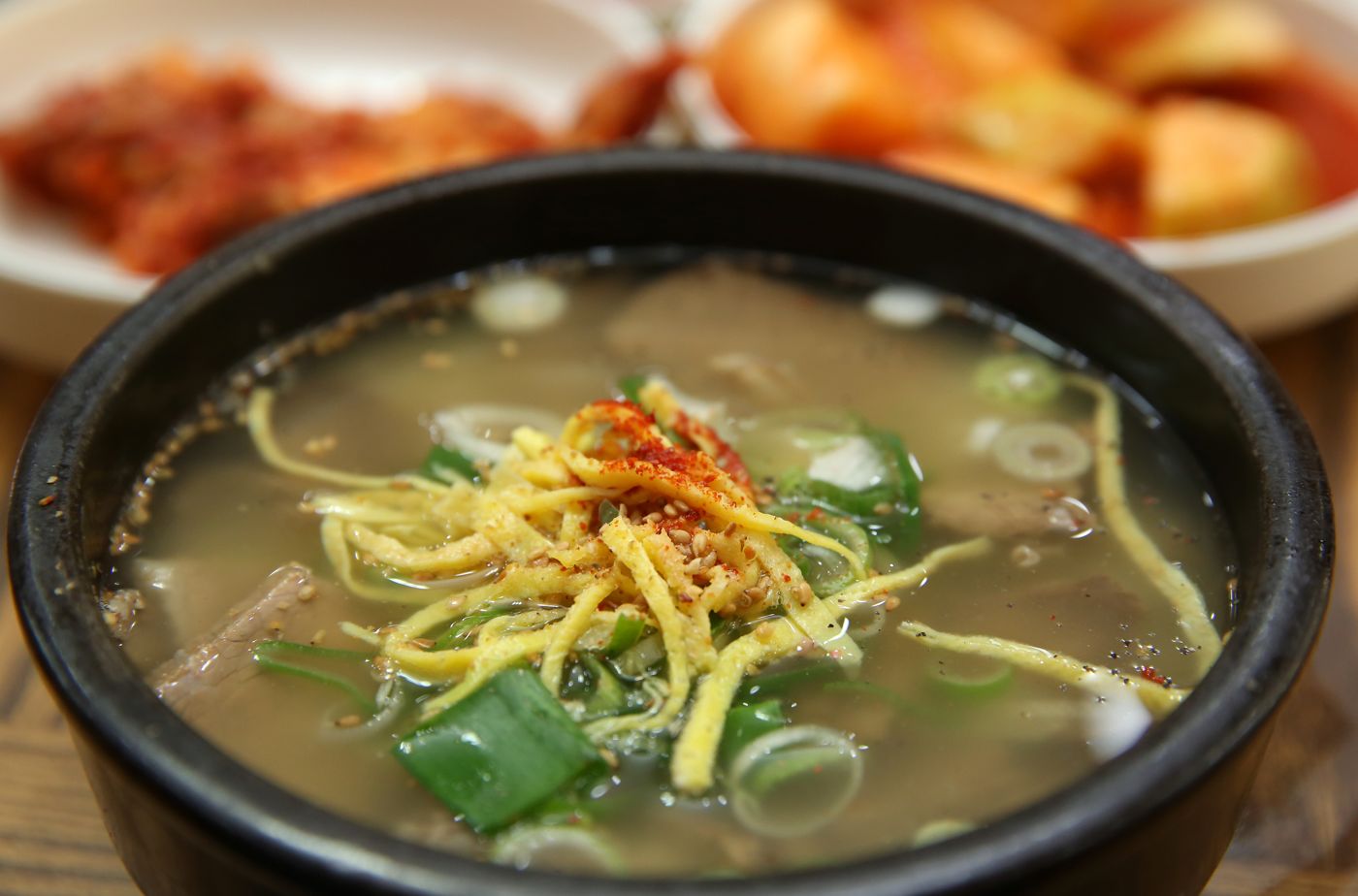
 Photo: Republic of Korea from Seoul, Republic of Korea, CC BY-SA 2.0, via Wikimedia Commons
Guk & Tang · Soups 국·탕
Naju Gomtang (Naju Clear Beef Soup)
나주곰탕
Romanization: naju-gomtang
Brisket, shank and other beef cuts simmered into a clear, gently rich broth, poured over rice and topped with green onion — the market-day soup of Naju in South Jeolla.
- Serves
- 6
- Prep
- 70 min
- Cook
- 240 min
Recipe
Ingredients · Serves 6
- 800 gBeef brisket (yangji)in one or two pieces
- 500 gBeef shank (satae)
- 1 kgBeef leg or knuckle bonesoptional, for body
- 5 lWaterplus more for topping up
- 300 gKorean radish (mu)in one chunk
- 1 largeOnionhalved
- 10 clovesGarlic
- 2 stalksLarge green onion (daepa)1 whole, 1 finely chopped for serving
- 1 tbspSoup soy sauce (guk-ganjang)
- to tasteSea salt (cheonilyeom)
- to tasteBlack pepper
- 6 bowlsCooked rice
Method
Technique: Making Guk and Jjigae, Making Yuksu: Anchovy-Kelp Stock
Step 1: Soak the meat (and bones, if using) in cold water for 1 hour, changing the water once, to draw out blood. Blanch the bones in boiling water for 10 minutes, drain and rinse.
Step 2: Put the bones on the bottom of a large pot with the meat on top, add the 5 liters of water and bring slowly to a boil. Skim thoroughly, then keep at a bare simmer — never a rolling boil, which clouds the broth.
Step 3: After 1 hour, add the radish, onion, garlic and whole daepa. Simmer about 1½ hours more, until the brisket and shank are tender; lift out the meat, radish and vegetables. If using bones, let them simmer another hour, topping up with water.
Step 4: Strain the broth through a fine sieve or cloth, chill if time allows and lift off the fat. Season with soup soy sauce and salt — lightly, so diners can adjust.
Step 5: Slice the meat thinly against the grain or tear the shank along its fibers; slice the radish.
Step 6: To serve, put rice and meat in each bowl. Pour boiling broth over, drain it back into the pot and repeat two or three times (toryeom), then fill the bowl. Top with chopped green onion and pepper and serve with kkakdugi and kimchi.
Origin & History
Gomtang comes from goeum, a Joseon word for meat or fish boiled down into a concentrated broth. The Encyclopedia of Korean Folk Culture traces goeum to the 1795 royal procession records of King Jeongjo, where such broths accompanied thin rice gruels for Lady Hyegyeong, and to the late-nineteenth-century Siuijeonseo, which simmers leg bones, shank, knee, tail, tripe, abalone and sea cucumber in a great cauldron for a thick, white soup. By the end of the 1800s, gomtang had come to mean beef soup served over rice in market eateries.
Naju's version is a market food of the early twentieth century. The Federation of Korean Cultural Centers' regional-culture series describes soup made about a century ago from ox heads and innards and sold over rice at Naju's five-day market, which gathered near Geumseonggwan, the old guesthouse of the Naju magistracy. The oldest surviving restaurant, Hayanjip, traces itself to a market eatery opened in 1910 that first sold bean-sprout and dried-greens soups; gomtang was added around 1940, and the shop became a gomtang specialist in 1960.
The same account links the dish's rise to a Japanese cannery, Takenaka's Naju branch factory, which began operating in 1937 and produced canned beef for the military. With 300 to 400 cattle reportedly slaughtered a day near Geumseonggwan by 1940, the heads, bones and offal left over from the canned meat passed to market cooks and went into the soup pot. Today a gomtang street opposite Geumseonggwan is one of Naju's best-known attractions, and the soup is counted among the city's three signature foods alongside fermented skate and grilled eel.
Key Ingredients
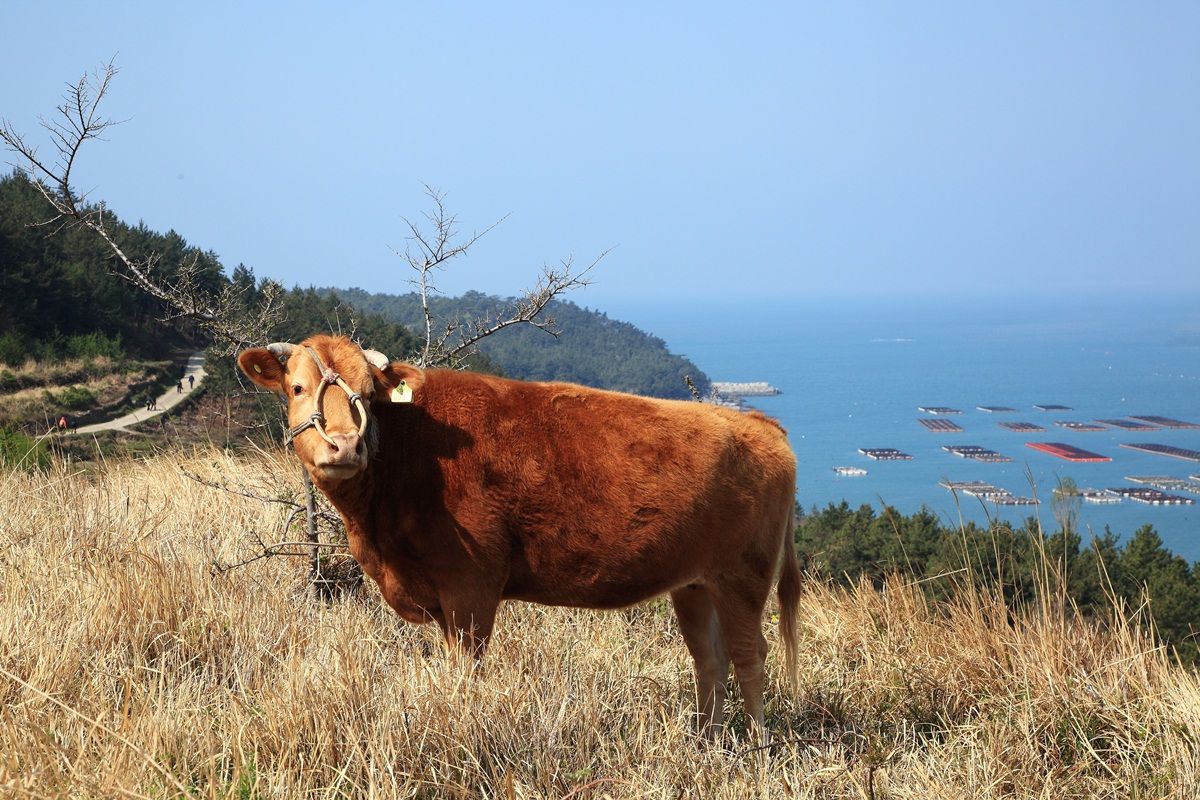 Hanu (Korean native beef)한우Beef from Korea's native cattle, most of them a warm yellow-brown, prized for rich marbling and a deep, beefy flavor. Hanu is the premium beef for grilling, braised galbi-jjim, holiday gift sets and ancestral-rite dishes.
 Korean radish무A stout, heavy white radish, often tinged pale green near the top. It is cubed for kkakdugi, left whole in the clear brine of dongchimi, shredded into salads and simmered into broths.
 Yangpa (onion)양파The bulb onion, literally the "Western scallion." A latecomer to Korea, it is now everywhere: sweetening stir-fries and braises, pickled in soy sauce as yangpa-jangajji, and served raw beside grilled meat.
 Garlic마늘Used raw, minced, pickled and roasted, garlic is one of the essential aromatics of Korean food — in seasonings, marinades, kimchi and namul.
 Green onion파Korean green onion (pa), from thick-stemmed daepa to slender scallions — chopped into nearly every seasoning sauce, soup and kimchi, and the star of pa-kimchi.
 Soy sauce간장Korean soy sauce, in two main kitchen forms: pale, salty guk-ganjang (soup soy sauce) brewed the traditional way from meju, and darker, sweeter jin-ganjang for braises and marinades.
 Sun-Dried Sea Salt천일염Coarse sea salt made by evaporating seawater with sun and wind in tidal-flat salt pans, most of it from Sinan County off Korea's southwest coast. It is the everyday salt for salting cabbage and making jang.
 Rice쌀Short, round grains of japonica rice that cook up glossy, soft and gently clinging. Steamed white rice, bap, is the center of the Korean table: every banchan, soup and stew is planned to be eaten with it.
Nutrition
| Calories | ~144 kcal |
|---|---|
| Protein | ~20.6 g |
| Fat | ~6.7 g |
| Carbohydrates | ~0.7 g |
| Fiber | Not reported |
| Sodium | ~744 mg |
Notable forProtein · Selenium · Zinc · Vitamin B12
MFDS does not analyze Naju gomtang separately, so these figures are scaled from its home-style gomtang (per 100 g: 24 kcal, 3.43 g protein, 1.12 g fat, 0.11 g carbohydrate, 124 mg sodium, 0.43 mg zinc, 8.22 µg selenium, 0.31 µg vitamin B12) to the database's 600 g serving. The source reports 1.1 g fiber per 100 g (about 6.6 g per serving), which is implausible for a meat broth, so fiber is shown as not reported. A bowl of cooked rice adds roughly 300 kcal. Actual values vary with ingredients, portion size and preparation.
Health Benefits
- By the MFDS analysis, a bowl is a lean, high-protein soup and a good source of selenium, zinc and vitamin B12.
- A meat-based broth that is skimmed of fat is lighter than bone-heavy soups, while still filling with rice.
- The broth is traditionally left lightly seasoned so that each diner can salt it to taste.
Regional Variations
- Naju style: known for a clear broth built mainly on meat — brisket, shank and fine intestine (gonjasoni) — rather than the milky bone stock of seolleongtang. Sources disagree on bones: one account says Naju cooks use none at all, while Hayanjip describes layering beef leg bones under brisket, tongue, shank, neck and tail and skimming constantly to keep the broth clear.
- Toryeom: rice in the bowl is warmed by pouring hot broth over it and draining it back several times before the bowl is filled.
- Seoul gomtang and seolleongtang: the folk encyclopedia describes Seoul's late-Joseon soups built on ox head, bones, hide and feet; for the milky bone version, see seolleongtang.
Pairings
 Cubed Radish Kimchi깍두기Korean radish cut into neat cubes and tossed with chili, garlic and salted shrimp — crunchy, juicy and a classic partner to rich soups.
 Napa Cabbage Kimchi배추김치Salted napa cabbage layered with a red paste of chili, garlic, ginger and fermented seafood, then left to ripen: the kimchi most people picture first.
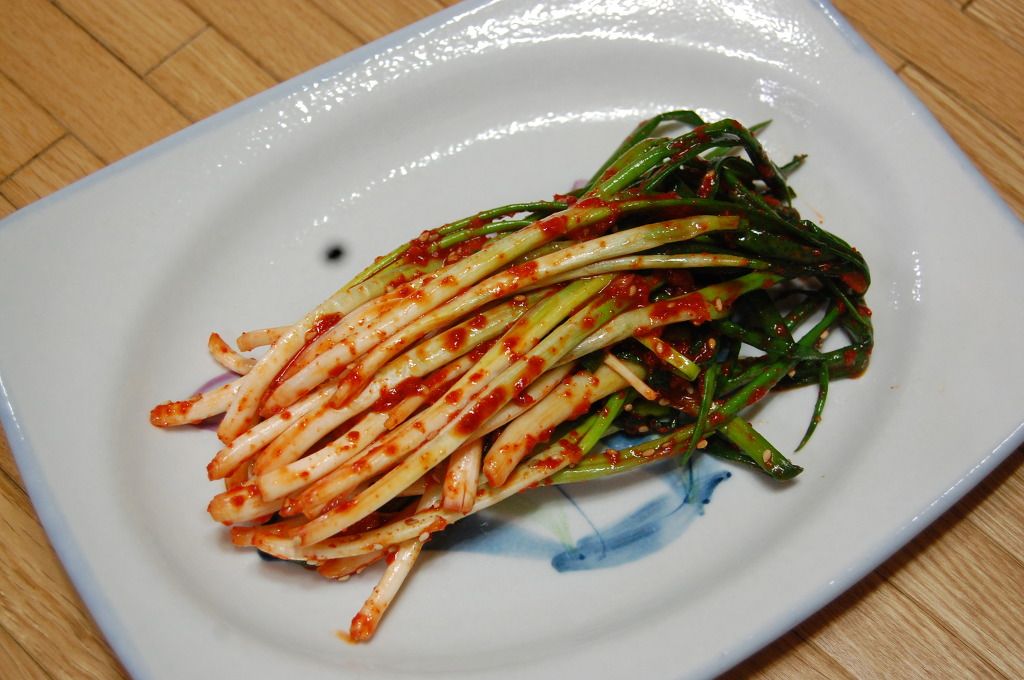 Green Onion Kimchi파김치Slender Korean green onions coated in a thick chili and anchovy-sauce paste — pungent when fresh, mellow and savory once ripe.
Sources
- 01모양은 전주요 맛은 나주라, 나주곰탕 (Naju gomtang) — 지역N문화, Federation of Korean Cultural Centers
- 024대를 잇는 나주곰탕의 원조 명가, 나주 하얀집 (Hayanjip, Naju) — 지역N문화, Federation of Korean Cultural Centers
- 03곰탕 (Gomtang) — Encyclopedia of Korean Folk Culture (한국의식주생활사전)
- 04곰탕 (Gomtang, home-style, analyzed) — MFDS K-FIND food composition database
- 05Global Perspectives on Allergen Labeling: Harmonization of Regulations and Practices — Allergy, Asthma & Immunology Research, 2025
- 06Sodium reduction — World Health Organization fact sheet
Last updated