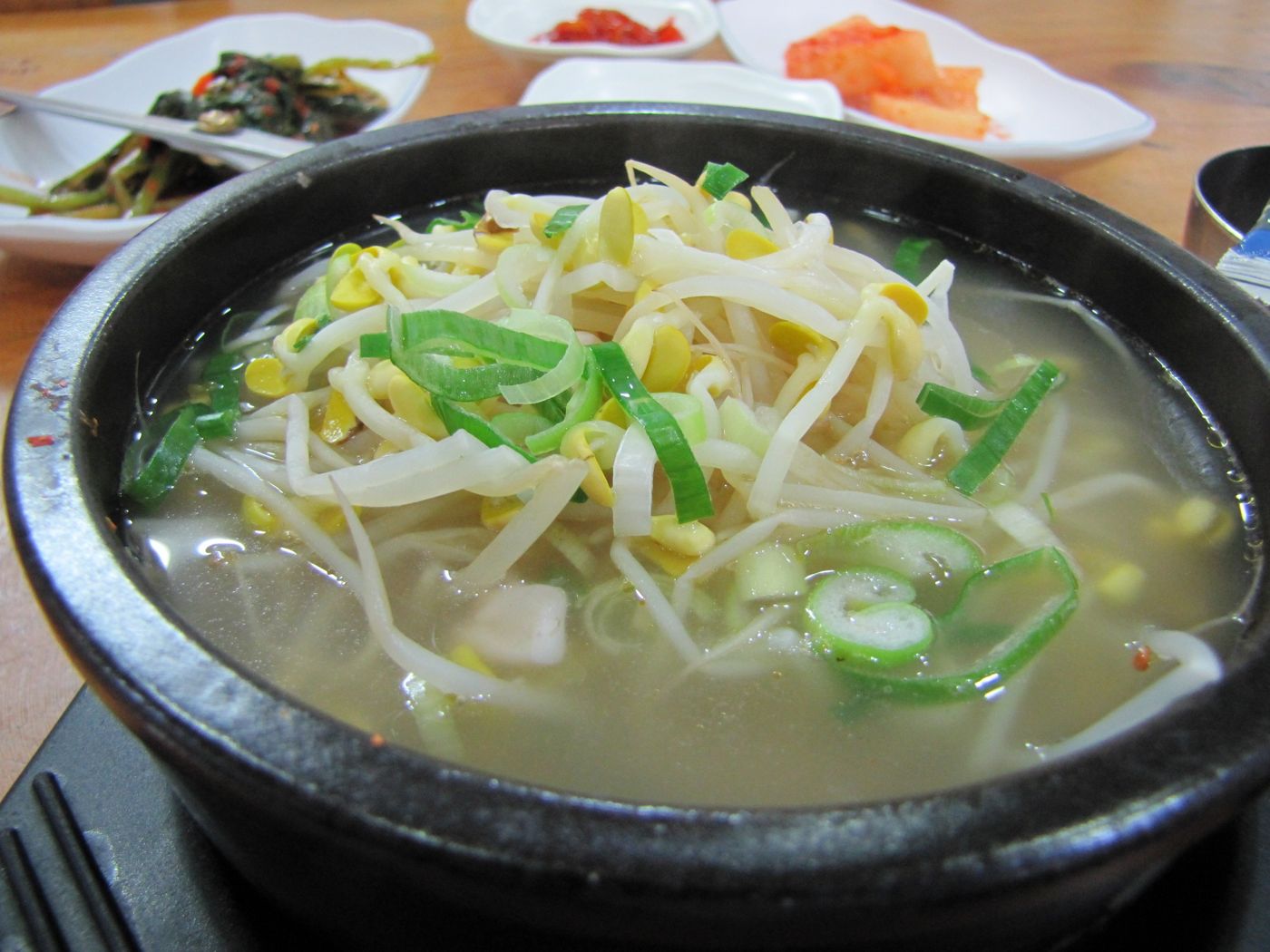
 Photo: Lee Eunyoung, CC0, via Wikimedia Commons
Bap · Rice dishes 밥
Kongnamul Gukbap (Jeonju Soybean-Sprout Rice Soup)
콩나물국밥
Romanization: kongnamul-gukbap
Rice and crisp soybean sprouts in a clear, savory broth, finished with egg, salted shrimp and kimchi. Jeonju's market breakfast and morning-after bowl.
- Serves
- 2
- Prep
- 15 min
- Cook
- 20 min
Recipe
Ingredients · Serves 2
- 10 Dried anchoviesguts and heads removed
- 1 pieceDried kelpabout 10 cm square
- 80 gKorean radishin two chunks
- 700 mlWater
- 200 gSoybean sprouts (kongnamul)rinsed, roots trimmed
- 300 gCooked short-grain riceabout 2 small bowls; day-old is fine
- 2 clovesGarlicminced
- 1 tbspSalted shrimp (saeujeot)plus its brine, to taste; not counted in the nutrition estimate
- ½ tspSaltor to taste
- 30 gGreen onionsliced
- 2 Eggs
- 1 tspGochugaruoptional
- 60 gAged kimchichopped, optional
Method
Technique: Making Guk and Jjigae, Making Yuksu: Anchovy-Kelp Stock
Step 1: Make the stock: simmer the anchovies, kelp and radish in the water for 10 minutes; remove the kelp, then simmer 5 minutes more and strain, keeping the radish.
Step 2: Return the stock to a clean pot, add the garlic and sprouts, cover and bring to a boil. Keep the lid on for the first 5 minutes, which helps keep the grassy smell of raw sprouts out of the soup. Cook 8–10 minutes total.
Step 3: Season the broth with the salted shrimp and its brine and a pinch of salt, tasting as you go.
Step 4: Divide the rice between two earthenware or deep bowls. Ladle the hot broth and sprouts over the rice, pour it back into the pot, and repeat two or three times, to warm the rice and leave the sprouts crisp (*toreom*).
Step 5: Return the bowls to the stove with the broth for a final bubble, add the kimchi, and crack in an egg per bowl. Simmer for 1–2 minutes, until the whites are set; or poach the eggs separately and serve beside the bowl.
Step 6: Scatter with green onion and gochugaru and serve immediately with extra salted shrimp and kimchi.
Origin & History
Jeonju's soybean-sprout gukbap is old enough to have a written reputation. The Encyclopedia of Korean Culture notes that the magazine Byeolgeongon introduced it in December 1929 as a Jeonju specialty, under the name takbaegi-guk and ranked beside Pyongyang's eobokjang-guk and Seoul's seolleongtang. The magazine praised the savory flavor that came from only bean sprouts, credited Jeonju's water for the sprouts' taste, and described it as a morning-after soup. It reports that in those days the soup was taken with takbaegi, a rough rice liquor, and a bowl of rice, all three together for five jeon.
The dish belongs to market life. A Newsis feature describes it as a breakfast of traders and porters, cheap, filling and well suited to cold leftover rice reheated in hot broth. Jeonju was known for sprouts grown with good water, especially around Gyodong, where sprout farming was common. The Encyclopedia of Korean Culture says Jeonju sprouts are grown from small black rat-eye soybeans and taste best at about 5 to 6 cm. The 1929 version was a clear sprout soup; today's has a stock of radish, green onion and dried anchovy.
For the soup that gukbap grew from, see kongnamul-guk; for sprouts in general, see soybean sprouts.
Key Ingredients
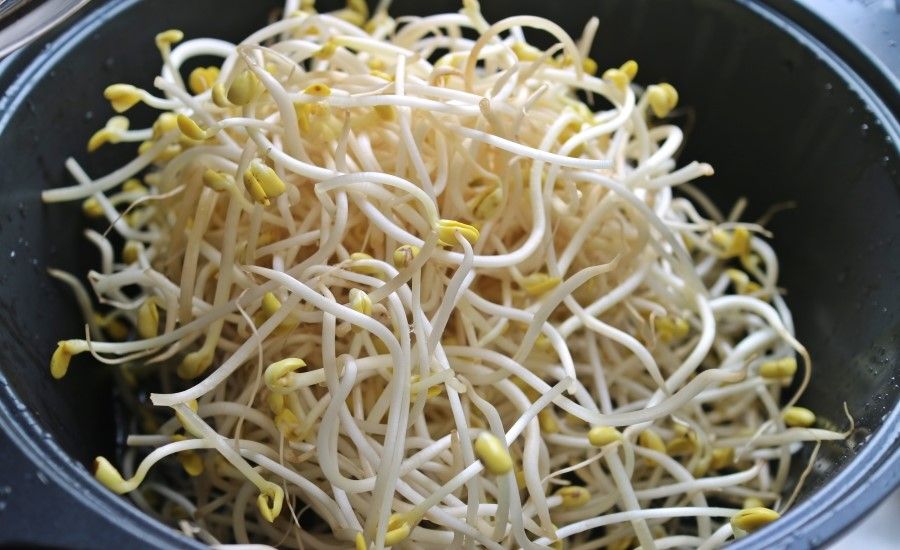 Soybean sprouts콩나물Soybeans sprouted in the dark until they grow long, pale stems topped with a yellow bean. A staple of everyday Korean cooking in kongnamul-muchim, clear sprout soup and sprout rice.
 Rice쌀Short, round grains of japonica rice that cook up glossy, soft and gently clinging. Steamed white rice, bap, is the center of the Korean table: every banchan, soup and stew is planned to be eaten with it.
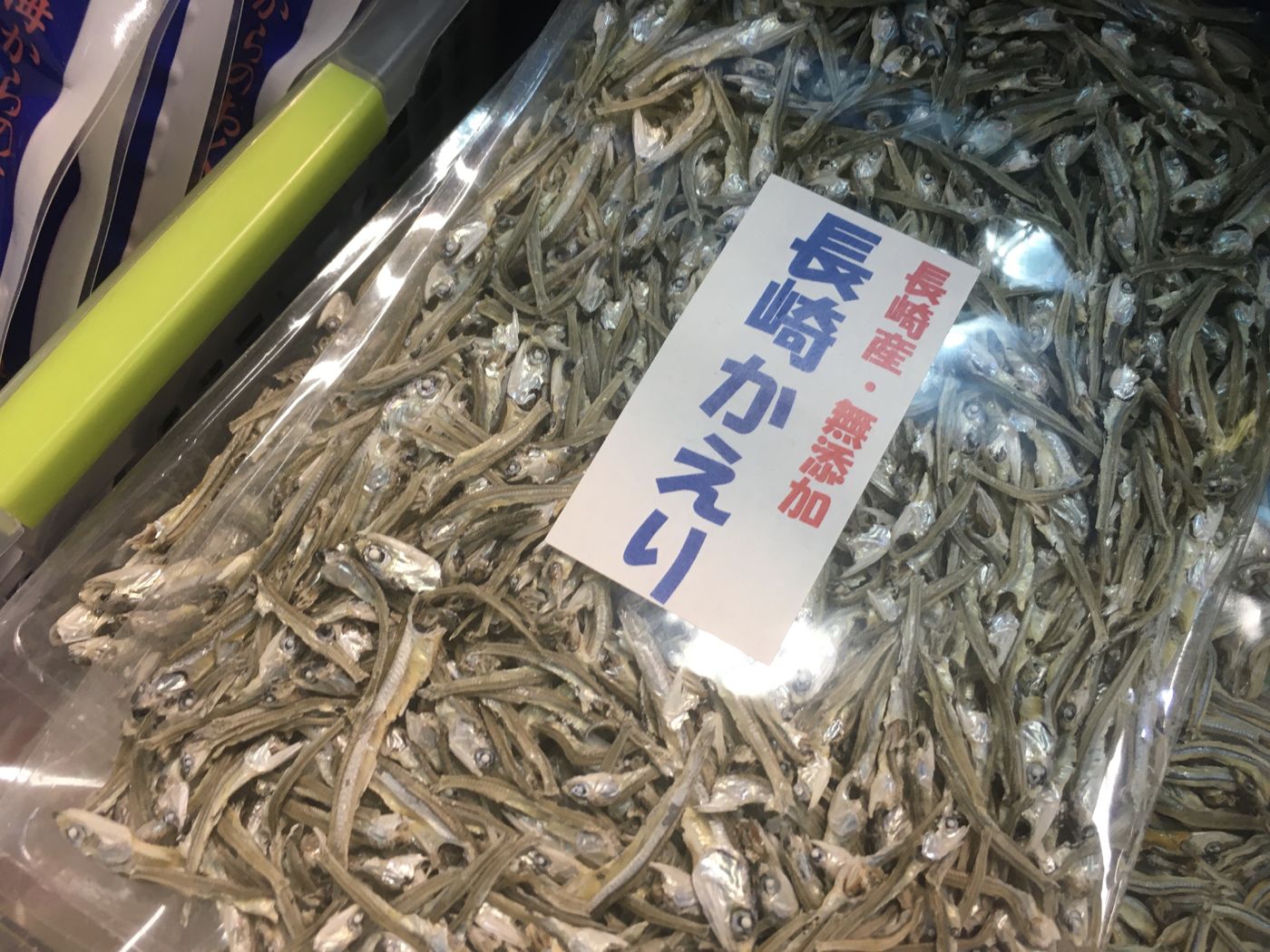 Dried anchovies멸치Small anchovies that are boiled and dried on the coast, then sorted by size. They flavor everyday broths and, stir-fried whole, become the sweet-salty side dish myeolchi-bokkeum.
 Dashima (dried kelp)다시마Thick, dried kelp that gives Korean broths their quiet savory depth. Beyond the stockpot it is fried into crisp twigak, simmered into soy-glazed side dishes and used as a wrap.
 Korean radish무A stout, heavy white radish, often tinged pale green near the top. It is cubed for kkakdugi, left whole in the clear brine of dongchimi, shredded into salads and simmered into broths.
 Garlic마늘Used raw, minced, pickled and roasted, garlic is one of the essential aromatics of Korean food — in seasonings, marinades, kimchi and namul.
 Salted fermented shrimp새우젓Tiny shrimp packed in salt and left to ferment — a jeotgal (salted seafood) that seasons kimchi and stews and accompanies boiled pork with briny, savory depth.
 Green onion파Korean green onion (pa), from thick-stemmed daepa to slender scallions — chopped into nearly every seasoning sauce, soup and kimchi, and the star of pa-kimchi.
- Egg (gyeran)계란The everyday protein of the Korean table: rolled into gyeran-mari, steamed into puffy gyeran-jjim, simmered in soy for gyeran-jangjorim, and cut into thin yellow and white ribbons of jidan to garnish soups and noodles.
 Gochugaru고춧가루Korean red chili powder, made from dried red peppers ground coarse or fine. It gives kimchi, gochujang and countless banchan their color and warmth.
Nutrition
| Calories | ~398 kcal |
|---|---|
| Protein | ~24 g |
| Fat | ~12.6 g |
| Carbohydrates | ~53.5 g |
| Fiber | ~3.2 g |
| Sodium | ~723 mg |
Notable forFolate · Potassium · Protein
Estimated by summing USDA FoodData Central values for raw soybean sprouts (FDC 169284), 100 g raw medium-grain rice (FDC 168879; about 300 g cooked), whole eggs (FDC 171287), scallion, garlic, cabbage kimchi (FDC 170392), table salt, red pepper (FDC 170932, standing in for gochugaru) and sesame seeds, divided by two. USDA lists about 172 µg folate and 484 mg potassium per 100 g of raw soybean sprouts. Anchovy-kelp stock and salted shrimp are not counted, so sodium is a floor; a bowl of broth adds a good deal more. Actual values vary with ingredients, portion size and preparation.
Health Benefits
- Vitamin C in winter: the Encyclopedia of Korean Culture points out that soybean sprouts supplied vitamin C when fresh vegetables were scarce, and advises cooking sprout soup for no more than about 20 minutes because heat destroys vitamin C easily.
- Folate and potassium: USDA lists raw soybean sprouts at about 172 µg of folate and 484 mg of potassium per 100 g.
- Morning-after tradition: it is long associated with hangovers. It is a light, warm, hydrating bowl, but that reputation is traditional, not proven.
Regional Variations
- Toreom style: hot broth is poured over the rice and sprouts in the bowl and drained, again and again, so the sprouts stay crisp and the bowl lands at a comfortable temperature. The Newsis feature credits one restaurant with popularizing this method and notes that it takes more effort than simply boiling.
- Boiled (kkeurineun) style: rice, sprouts and egg are simmered together in the bowl, producing a thicker, hotter soup. The same feature credits one long-running Jeonju restaurant as the first to add egg.
- Egg two ways: the encyclopedia describes a rolling-boil version with the egg stirred in, and a gentler version where the egg is served as a suran (poached egg).
- Sides and drink: salted shrimp (saeujeot), other pickles, seaweed and suran are the usual extras. The encyclopedia says that moju, a spiced drink made from makgeolli, completes the meal in Jeonju.
- Soy-paste or beef-broth soups: the plain kongnamul-guk can be made with beef broth or with doenjang, as the Encyclopedia of Korean Culture notes.
Pairings
 Cubed Radish Kimchi깍두기Korean radish cut into neat cubes and tossed with chili, garlic and salted shrimp — crunchy, juicy and a classic partner to rich soups.
 Myeolchi Bokkeum멸치볶음Small dried anchovies stir-fried until crisp, then glazed in a sweet soy and garlic syrup — a keeping banchan found in refrigerators across Korea.
- Gim Gui (Seasoned Roasted Laver)김구이Sheets of laver brushed with sesame or perilla oil, sprinkled with salt and toasted until crisp — eaten wrapped around spoonfuls of rice.
 Gyeran Mari (Rolled Omelet)계란말이Beaten egg cooked in thin layers and rolled into a soft, striped log, then sliced — a gentle, everyday banchan and a lunchbox classic.
Sources
- 01전주콩나물국밥 (Jeonju kongnamul-gukbap) — Encyclopedia of Korean Culture
- 02콩나물국 (Kongnamul-guk) — Encyclopedia of Korean Culture
- 03[뉴트로 푸드] 100년전 아재도 5전에 전주콩나물국밥·막걸리 한사발 '뚝딱' — Newsis, 2020
- 04Soybeans, mature seeds, sprouted, raw (FDC 169284) — USDA FoodData Central
- 05Food Allergies — U.S. Food and Drug Administration
Last updated