Ingredient
Naengi (shepherd's purse)
냉이
Romanization: naengi
A low, ground-hugging wild green dug up root and all in late winter and early spring. Its nutty, earthy perfume defines naengi-muchim and naengi doenjang-guk, the first taste of spring on many Korean tables.
Flavor
Nutty, earthy and gently bitter, with a distinctive green, almost root-vegetable perfume that intensifies in hot broth. The leaves are tender and the taproot slightly chewy.
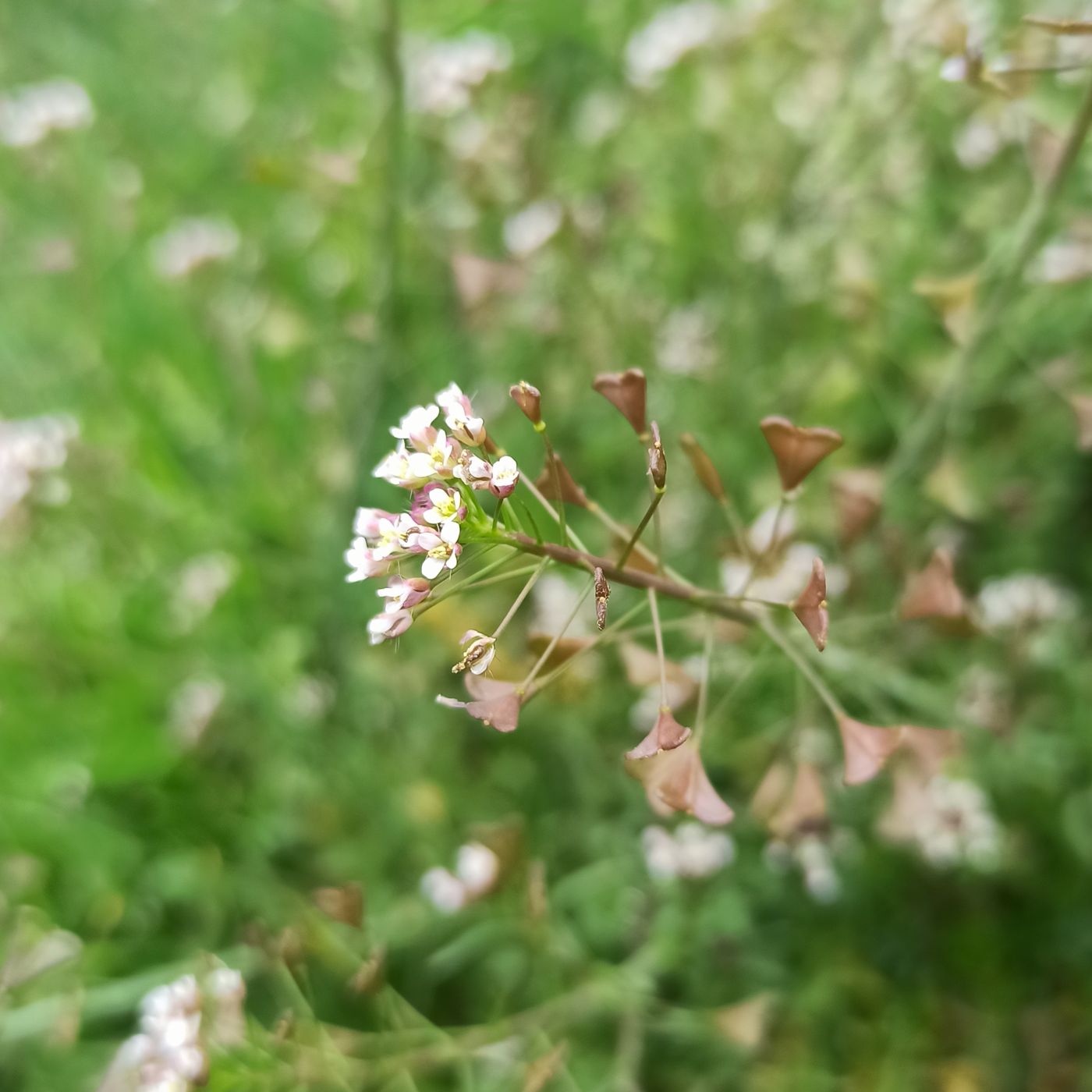 Photo: Juan Carlos Fonseca Mata, CC BY-SA 4.0, via Wikimedia Commons
Origin & History
Naengi is shepherd's purse (Capsella bursa-pastoris), a small biennial of the mustard family (Brassicaceae). It grows wild in fields, along field margins and by roadsides throughout Korea, and across Manchuria, China and Japan. In the cold months it survives as a flat rosette of deeply lobed leaves pressed against the soil, above a straight white taproot; in late spring it sends up a stalk of tiny white four-petaled flowers followed by the flat, heart-shaped seed pods that give the plant its English name. Regional names include naseungi, nasaengi and najungge, and the Sino-Korean term is je or jechae.
The plant has been eaten in East Asia for a very long time. The Chinese Book of Songs already uses it as a byword for sweetness, and later Chinese herbals recommend the leaves for kimchi and porridge. In Korea, the late-Joseon household manual Jeungbo sallim gyeongje describes naengi as warming and good for the organs, best eaten in porridge or when hungry. The song-calendar Nongga wollyeongga names naengi soup among the foods of the second lunar month, and twentieth-century Korean essayists wrote of it as the quintessential soup for welcoming spring.
Naengi is traditionally gathered in early spring, while the plants are still young and small, and it is eaten whole, root included. Country households also dug the roots in winter and stored them in pits, or dried them, for soup later in the season.
Blanched naengi is dressed as namul with doenjang or gochujang, sesame and garlic; simmered in rice-washing water with doenjang and small clams for naengi-guk; added to doenjang-jjigae; and stirred into rice or porridge.
Nutrition
| Calories | 37 kcal |
|---|---|
| Protein | 3.81 g |
| Fat | 0.42 g |
| Carbohydrates | 6.74 g |
| Fiber | 4.5 g |
| Sodium | 8 mg |
Notable forVitamin K · Calcium · Iron · Folate
Korean Food Composition Table entry "Shepherd's purse (Naeng-i), Raw" (냉이, 생것): also 211.29 µg vitamin K, 322 mg calcium, 9.49 mg iron, 117 µg folate, 124 µg RAE vitamin A and 21 mg vitamin C per 100 g. Actual values vary with ingredients, portion size and preparation.
Health Benefits
- Mineral-rich green: Per the Korean Food Composition Table, raw naengi is notably high in calcium and iron for a leafy vegetable, and provides folate, vitamin A (as beta-carotene) and fiber.
- Traditional beliefs: Korean and Chinese herbal texts describe naengi as warming and strengthening; these are traditional ideas, not established health effects.
- Wash thoroughly: Because it is dug with its roots, naengi carries soil. Korea's food-safety ministry advises soaking spring greens such as naengi and then rinsing them under running water at least three times to remove pathogens and pesticide residues.
- Vitamin K and warfarin: Naengi is rich in vitamin K. People taking warfarin are advised to keep their intake of vitamin K–rich greens consistent from week to week and to talk with their doctor before changing their diet.
Informational, not medical advice. Talk to a qualified professional about your own health and diet.