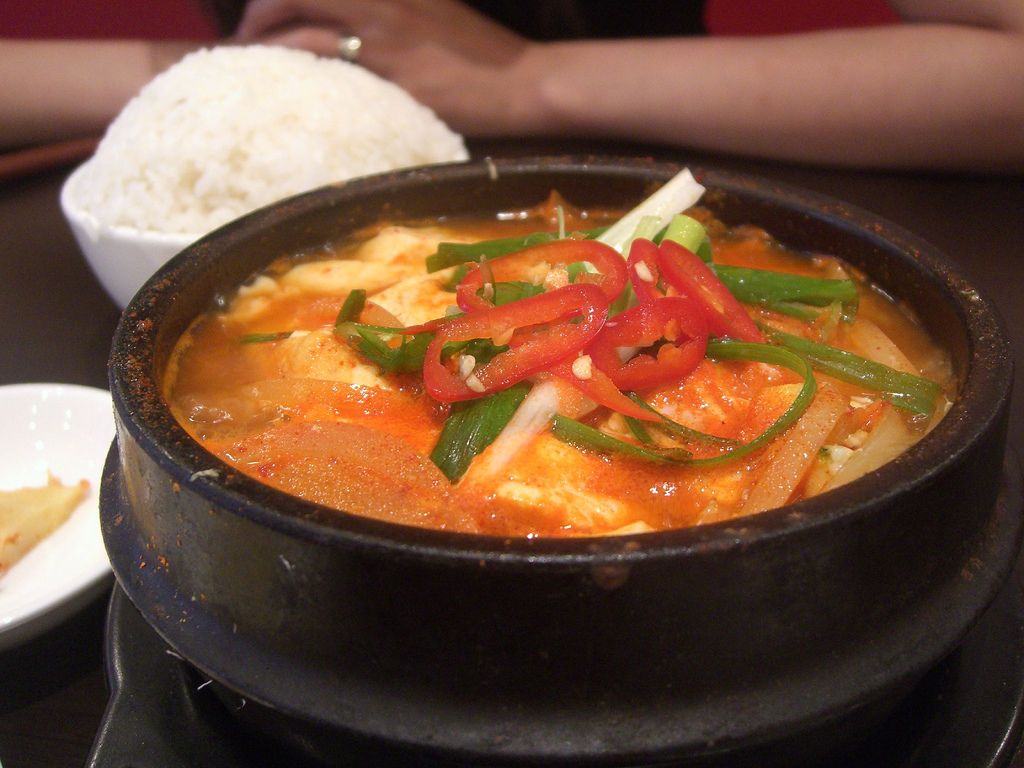
 Photo: avlxyz, CC BY-SA 2.0, via Wikimedia Commons
Jjigae · Stews 찌개
Sundubu Jjigae (Soft Tofu Stew)
순두부찌개
Romanization: sundubu-jjigae
Silky, unpressed tofu simmered in a fiery chili broth with clams or pork and finished with a raw egg — served still boiling in its earthenware pot.
- Serves
- 2
- Prep
- 10 min
- Cook
- 15 min
RegionGangwon
Jump to recipeRecipe
Ingredients · Serves 2
- 350 gSundubu (soft unpressed tofu)1 tube or tub
- 80 gGround or thinly sliced pork
- 100 gLittleneck or Manila clams (bajirak)in the shell, scrubbed and purged
- 1½ tbspGochugaru
- 1 tbspNeutral cooking oil
- 2 clovesGarlicminced
- ¼ mediumOnionabout 50 g, finely chopped
- 2 tspSoup soy sauce (guk-ganjang)
- 300 mlAnchovy-kelp stock or water
- 2 Eggsone per bowl
- 1 stalkGreen onionabout 15 g, sliced
- to tasteSalted shrimp (saeujeot) or saltoptional
Method
Technique: Making Guk and Jjigae, Making Yuksu: Anchovy-Kelp Stock
Step 1: In a *ttukbaegi* or small heavy pot, warm the oil over medium-low heat. Add the gochugaru and garlic and stir for about 1 minute until the oil turns red and fragrant; don't let the chili scorch.
Step 2: Add the pork and onion and stir-fry over medium heat until the pork is no longer pink.
Step 3: Pour in the stock and soup soy sauce and bring to a boil.
Step 4: Add the clams, then spoon the sundubu into the pot in large curds. Simmer 4–5 minutes, until the clams open (discard any that stay closed) and the tofu is heated through. Stir gently so the curds stay in big pieces.
Step 5: Taste and adjust with a little salted shrimp or salt. Add the green onion.
Step 6: Take the pot off the heat, crack an egg into each serving and bring it to the table still bubbling; the egg cooks in the heat of the pot.
Origin & History
Sundubu is tofu as it is when the soy milk first curdles — scooped out before it is pressed into blocks, so it stays soft and custardy. The Encyclopedia of Korean Culture notes that there is no specific early record of eating it this way, but that tofu soups appear in the writings of the Goryeo scholar Yi Saek and that the eighteenth-century Seongho saseol praised the soup made from tofu-making leftovers, so unpressed curd was likely eaten alongside them.
The encyclopedia's classic version is gentle: the curd is heated in an earthenware pot with seasoned clams and green onion, and seasoned with a mix of soy sauce and salt, because soy sauce alone darkens the tofu; salted shrimp firms it. The Encyclopedia of Korean Folk Culture notes that the stew was originally seasoned this way, with soy sauce, salt or salted shrimp, and that the spicy red version made with chili flakes or chili oil, often with an egg cracked in at the end, has since become the norm.
The village of Chodang in Gangneung, on the east coast, is the best-known home of sundubu; there the soy milk is curdled with seawater rather than brine (gansu). A popular story credits the sixteenth-century scholar Heo Yeop, whose pen name was Chodang, but the Encyclopedia of Korean Culture states there is no documentary evidence for it. Spicy sundubu-jjigae has since become one of the best-known Korean dishes abroad, especially in the United States.
Key Ingredients
 Gochugaru고춧가루Korean red chili powder, made from dried red peppers ground coarse or fine. It gives kimchi, gochujang and countless banchan their color and warmth.
 Garlic마늘Used raw, minced, pickled and roasted, garlic is one of the essential aromatics of Korean food — in seasonings, marinades, kimchi and namul.
 Green onion파Korean green onion (pa), from thick-stemmed daepa to slender scallions — chopped into nearly every seasoning sauce, soup and kimchi, and the star of pa-kimchi.
 Soy sauce간장Korean soy sauce, in two main kitchen forms: pale, salty guk-ganjang (soup soy sauce) brewed the traditional way from meju, and darker, sweeter jin-ganjang for braises and marinades.
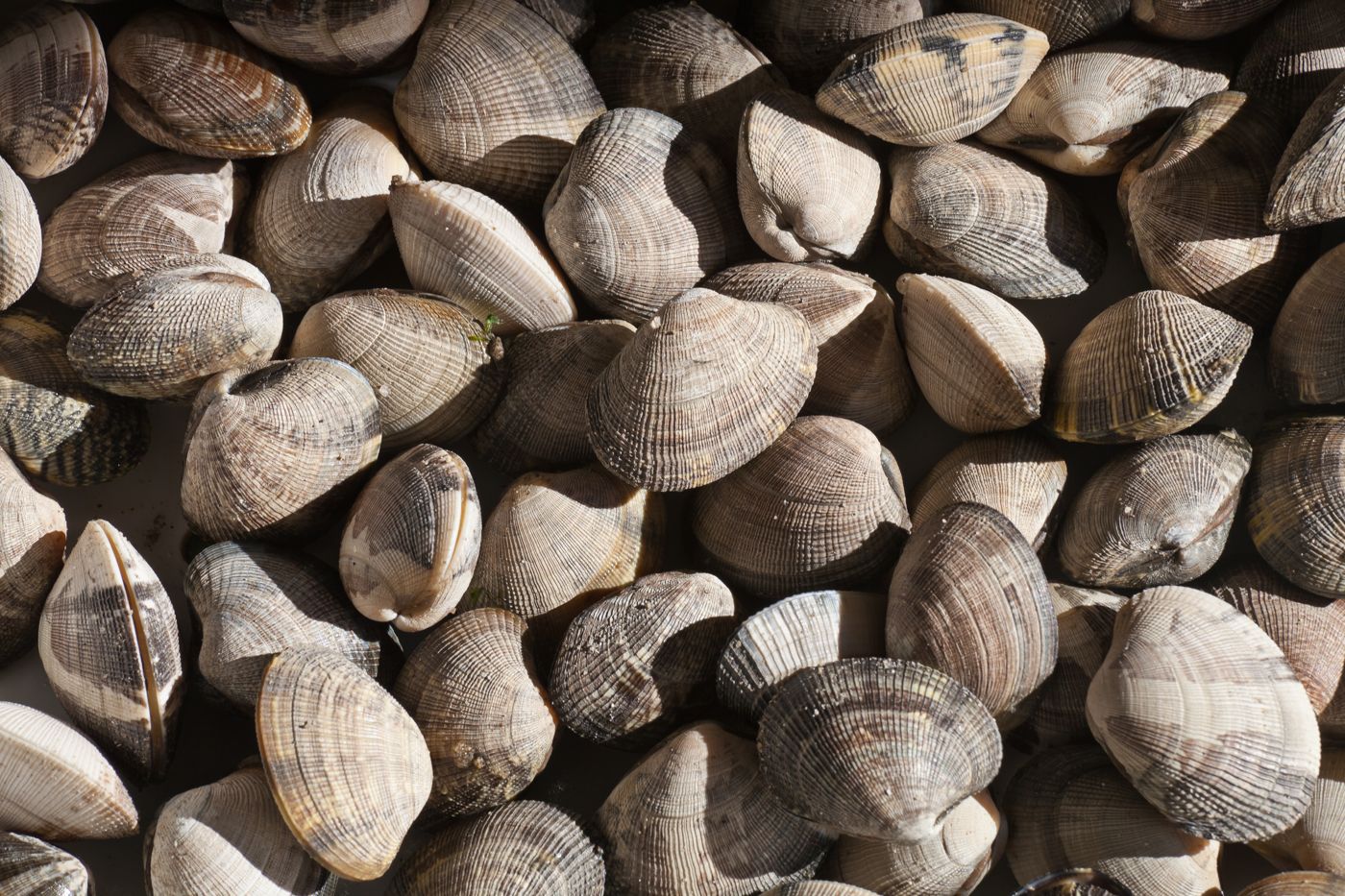 Manila clam (bajirak)바지락Small, ridged tidal-flat clams that give Korean soups and noodle broths their clean, sweet depth. Bajirak are the clams of bajirak-kalguksu, the west coast's clam noodle soup.
 Salted fermented shrimp새우젓Tiny shrimp packed in salt and left to ferment — a jeotgal (salted seafood) that seasons kimchi and stews and accompanies boiled pork with briny, savory depth.
Nutrition
| Calories | ~330 kcal |
|---|---|
| Protein | ~28.8 g |
| Fat | ~19.6 g |
| Carbohydrates | ~9.5 g |
| Fiber | ~2.6 g |
| Sodium | ~660 mg |
Notable forProtein · Vitamin B12 · Selenium
Estimated by summing ingredient values and dividing by two, before any salted shrimp or salt added to taste. Sundubu: Korean Food Composition Table entry for unpressed tofu (D0150020009a); soup soy sauce: Korean table 국간장 (R0010030009a); pork: USDA FDC 167849; clams: FDC 174214, assuming about 25 g edible meat from 100 g in the shell; egg: FDC 171287; gochugaru approximated with red pepper, FDC 170932; oil, onion, garlic and green onion from USDA. Stock was left out, so sodium is a floor. Actual values vary with ingredients, portion size and preparation.
Health Benefits
- Soft tofu, egg, pork and clams together make this a high-protein stew.
- Clams and eggs contribute vitamin B12 and selenium; by USDA figures, one serving covers most of an adult's daily vitamin B12.
- Unpressed tofu holds more water than block tofu, so it is lower in calories by weight, as the Korean food composition table shows.
Regional Variations
- Gangneung Chodang sundubu: curd made with East Sea water and often served mild and white, so the taste of the beans comes through.
- Spicy red: the common restaurant style, with chili oil, pork or seafood and a raw egg cracked in at the table.
- Mild and clear: seasoned only with soy sauce, salt or salted shrimp, closer to the older recipes.
- Additions: clams, oysters, shrimp, kimchi, mushrooms or beef; the folk encyclopedia lists kimchi and even ham-and-cheese versions.
Pairings
 Kongnamul Muchim콩나물무침Soybean sprouts cooked under a lid until just tender, then tossed with garlic, green onion and sesame oil — crisp, nutty and on tables across Korea.
 Napa Cabbage Kimchi배추김치Salted napa cabbage layered with a red paste of chili, garlic, ginger and fermented seafood, then left to ripen: the kimchi most people picture first.
- Gim Gui (Seasoned Roasted Laver)김구이Sheets of laver brushed with sesame or perilla oil, sprinkled with salt and toasted until crisp — eaten wrapped around spoonfuls of rice.
Sources
- 01순두부찌개 (Sundubu-jjigae) — Encyclopedia of Korean Culture
- 02순두부찌개 (Sundubu-jjigae) — Encyclopedia of Korean Folk Culture (한류문화사전)
- 03강릉 초당두부 (Gangneung Chodang tofu) — Encyclopedia of Korean Culture
- 04Tofu, Unpressed (순두부) — Korean Food Composition Table
- 05뚝배기 (Ttukbaegi, earthenware pot) — Encyclopedia of Korean Culture
- 06Trends in sodium intake and major contributing food groups and dishes in Korea: KNHANES 2013–2017 (Jeong et al., Nutrition Research and Practice, 2021)
Last updated