Ingredient
Tofu
두부
Romanization: dubu
Fresh bean curd made by coagulating soy milk and pressing the curds. A quiet staple of Korean cooking since at least the late Goryeo period, it is pan-fried, braised in spicy soy glaze, or simmered in stews.
Flavor
Mild, clean and faintly nutty, with a texture that ranges from custard-soft to dense and meaty; it readily absorbs the flavors it is cooked with.
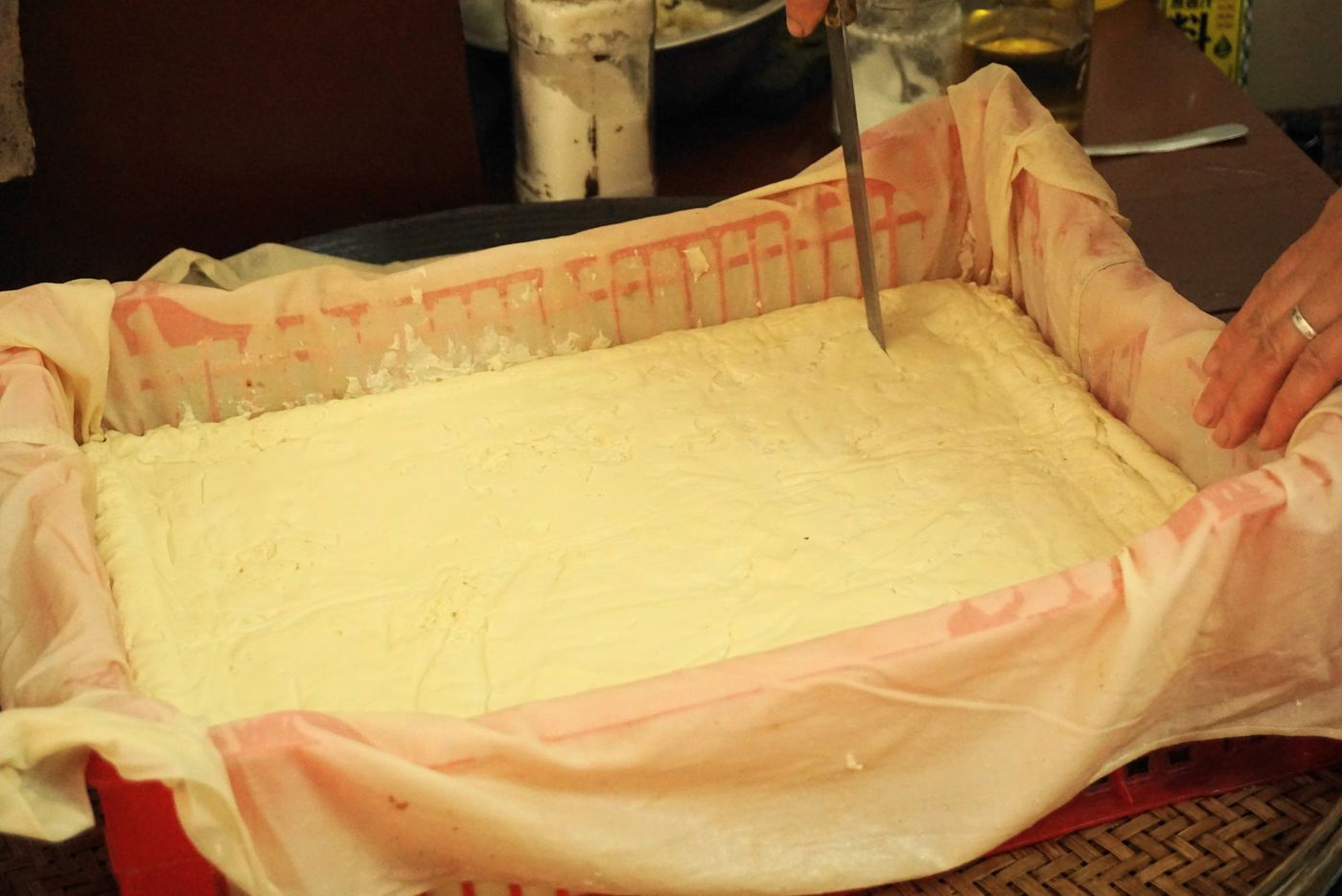 Photo: DragonSamYU, CC BY-SA 4.0, via Wikimedia Commons
Origin & History
Dubu is made by soaking and grinding soybeans, boiling the slurry, straining out the pulp (biji) and then adding a coagulant to the hot soy milk so its protein sets into curds. The curds are ladled into cloth-lined molds and pressed until firm. Common coagulants include magnesium chloride, calcium chloride and calcium sulfate.
Tofu originated in China, and when it reached Korea is uncertain. The word dubu first appears in a poem by the late-Goryeo scholar Yi Saek, which suggests it came from Yuan China during that period of close exchange. Tofu-making flourished in Joseon: the Sejong sillok records a Ming emperor praising Korean women for their tofu, and later texts set down many recipes. It was a fixture at weddings, funerals and ancestral rites, and stone hand mills for making it at home survived in the countryside well into modern times.
Regional traditions remain. In Chodang village in Gangneung, tofu is set with seawater from the East Sea instead of conventional bittern, producing the soft Chodang sundubu the area is known for.
Firm dubu is pan-fried and braised as dubu-jorim, cubed into soups and stews such as doenjang-jjigae, or eaten fresh. Soft, unpressed sundubu is often eaten warm with a little seasoning.
Nutrition
| Calories | 97 kcal |
|---|---|
| Protein | 9.62 g |
| Fat | 4.63 g |
| Carbohydrates | 3.75 g |
| Fiber | 2.9 g |
| Sodium | 1 mg |
Notable forProtein (9.6 g) · Magnesium (80 mg) · Calcium (64 mg) · Iron (1.5 mg)
Values copied from the Korean Food Composition Table (Rural Development Administration / National Institute of Crop Science) for this exact food, per 100 g edible portion. Mineral content, especially calcium, depends on the coagulant used. Actual values vary with ingredients, portion size and preparation.
Health Benefits
- Complete plant protein: Soy protein contains all nine essential amino acids, and tofu also provides minerals such as magnesium, calcium and iron.
- Easier to digest than whole beans: Korean food references note that tofu retains most of the soybean's protein and fat in a far more digestible form than cooked whole soybeans.
- Soy isoflavones: Tofu contains isoflavones, plant compounds with weak estrogen-like activity. Harvard's Nutrition Source describes soy foods as a nutrient-dense protein that can safely be eaten several times a week; research on specific health outcomes is ongoing.
- Considerations: Soy is a major food allergen. Soy may interfere with thyroid medication in some people, so those taking it should discuss their intake with a clinician. Tofu itself is very low in sodium, but braising sauces and stews are not.
Informational, not medical advice. Talk to a qualified professional about your own health and diet.
Dishes with Tofu
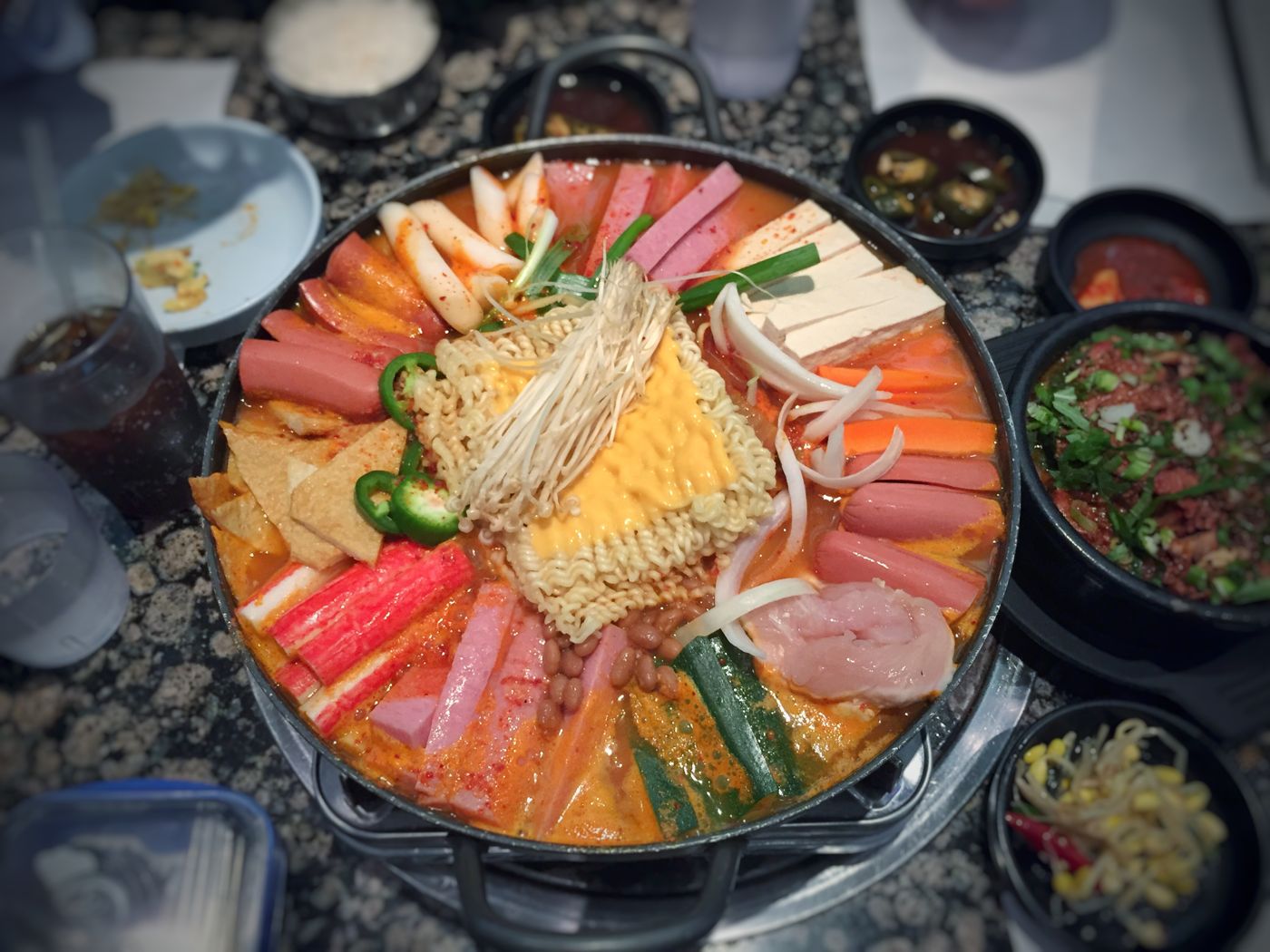 Budae Jjigae (Army Base Stew)부대찌개Ham, sausages and canned beans simmered with kimchi, tofu and a gochujang-chili broth, usually finished with instant noodles — a postwar stew born around US Army bases.
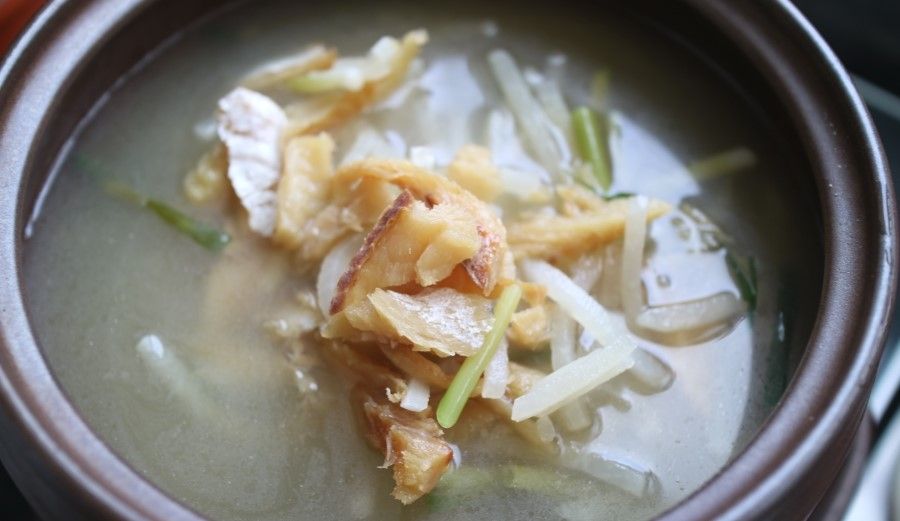 Bugeo Guk (Dried Pollock Soup)북엇국Shredded dried pollock sautéed in sesame oil and simmered into a milky, savory broth with radish, tofu and a ribbon of egg — Korea's favorite morning-after soup.
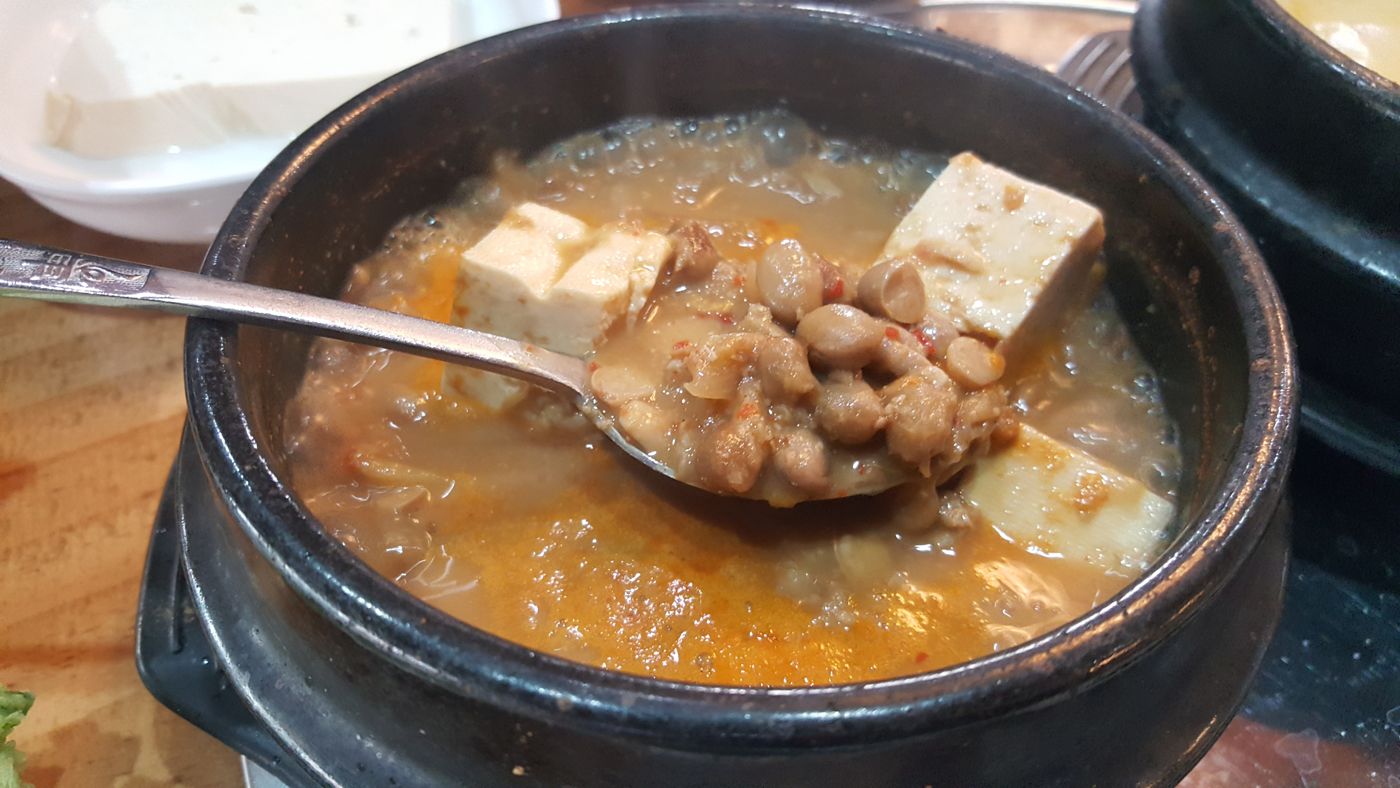 Cheonggukjang Jjigae (Quick-Fermented Soybean Stew)청국장찌개A thick, pungent winter stew of quick-fermented whole soybeans simmered with sour kimchi, tofu and a little pork or beef — loved for its earthy depth, notorious for its smell.
 Doenjang Jjigae (Soybean Paste Stew)된장찌개A thick, savory stew of fermented soybean paste with tofu, zucchini and whatever the season offers — the everyday pot at the center of the Korean table.
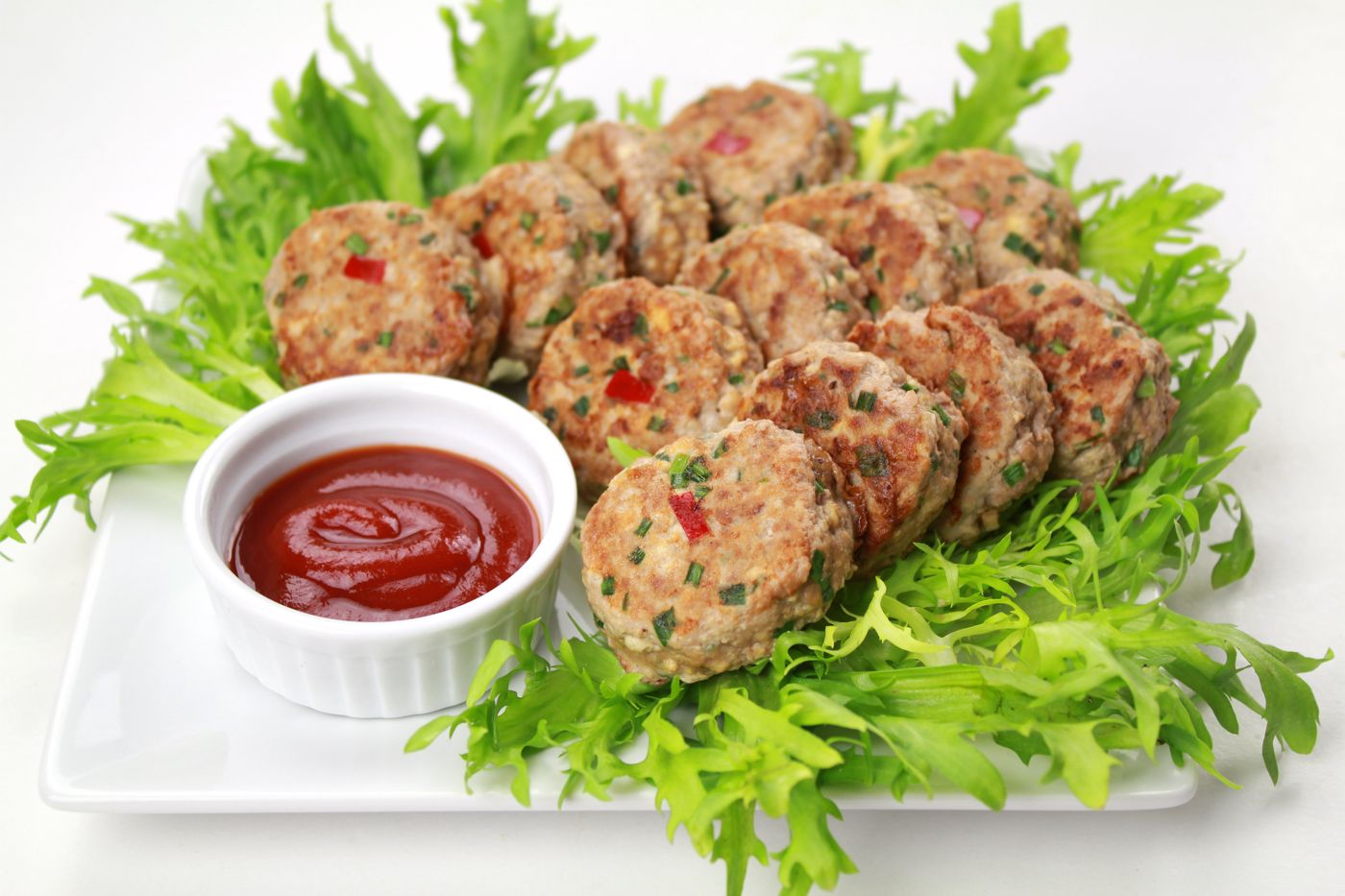 Donggeurang-ttaeng (Meat and Tofu Patties)동그랑땡Coin-sized patties of minced pork or beef and mashed tofu, dipped in flour and egg and pan-fried — a fixture of holiday jeon platters and lunchboxes.
- Dongtae-jjigae (Frozen Pollack Stew)동태찌개A spicy, clean-tasting stew of frozen Alaska pollack with radish, tofu and fresh greens in a gochugaru-and-jang broth — a winter staple at the Korean table.
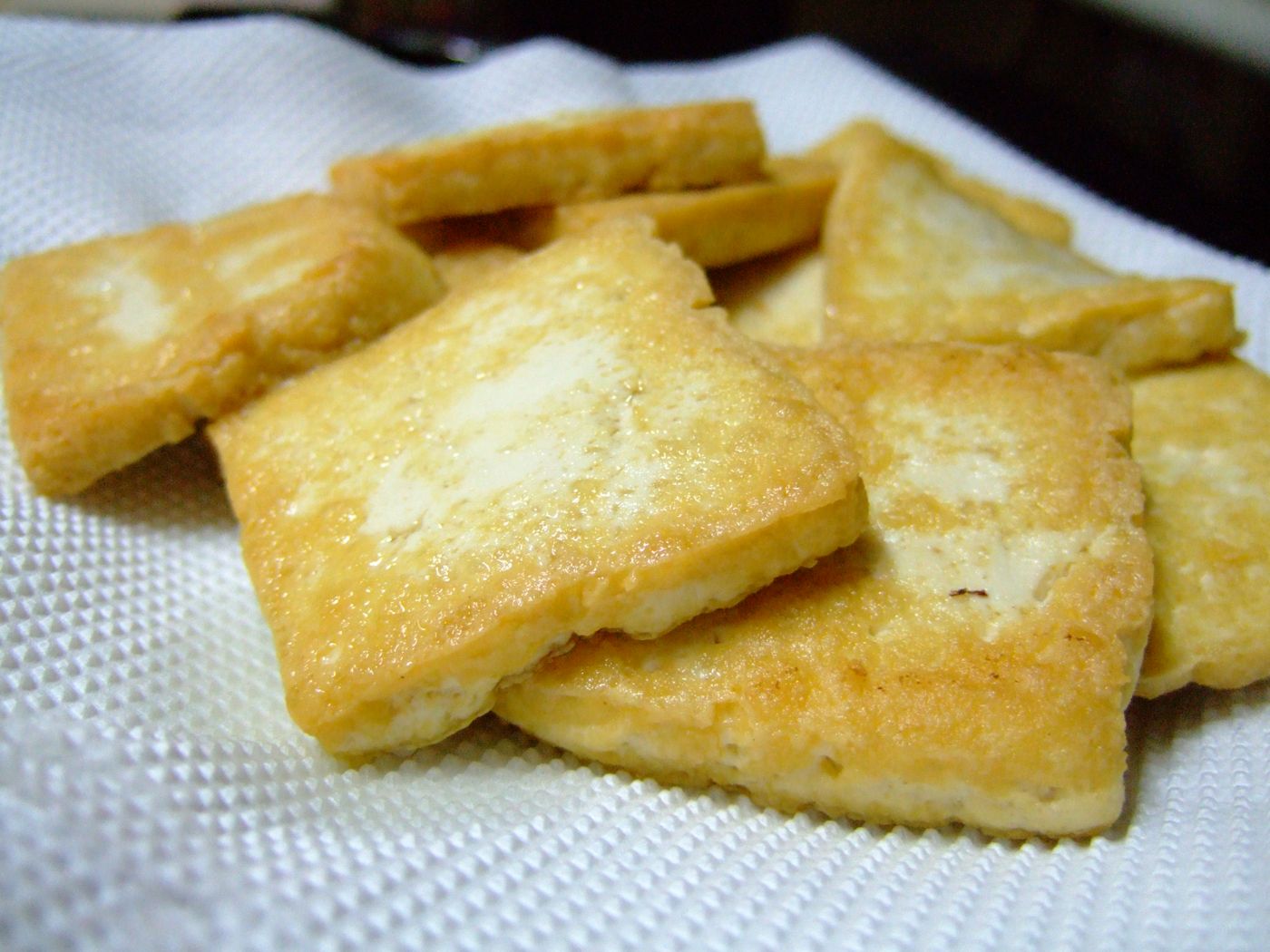 Dubu Buchim (Pan-Fried Tofu with Seasoning Sauce)두부부침Thick slices of firm tofu pan-fried until golden on both sides and spooned with a soy, chili and green-onion sauce — one of the simplest and most loved home banchan.
- Dubu Gangjeong (Crispy Glazed Tofu)두부강정Cubes of tofu coated in starch, fried until crisp and tossed in a sticky soy-gochujang glaze — a sweet, savory banchan built on the fried-chicken gangjeong idea.
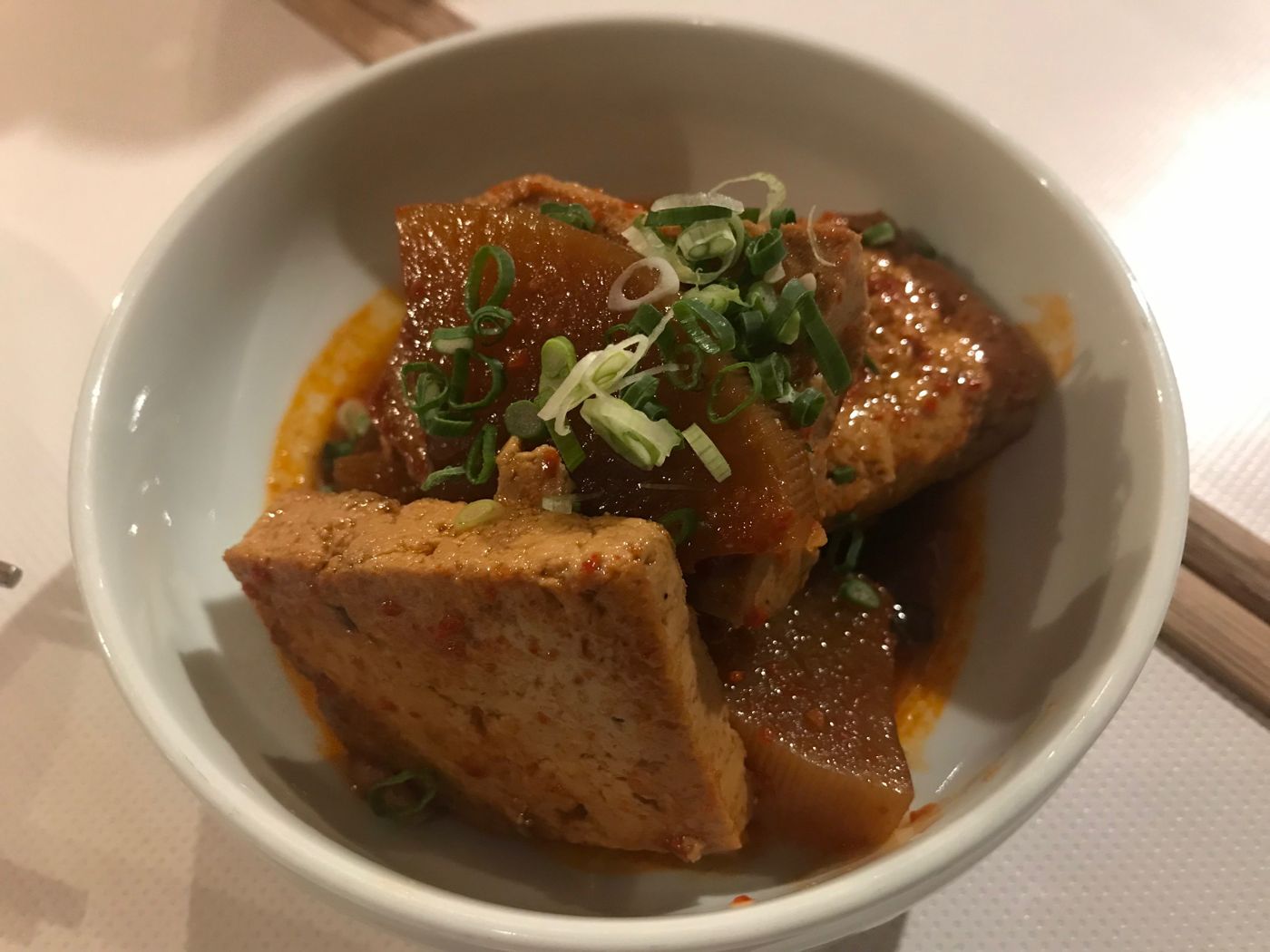 Dubu Jorim두부조림Slices of firm tofu pan-fried until golden, then simmered in a garlicky soy and chili sauce — an inexpensive, protein-rich staple of Korean home cooking.
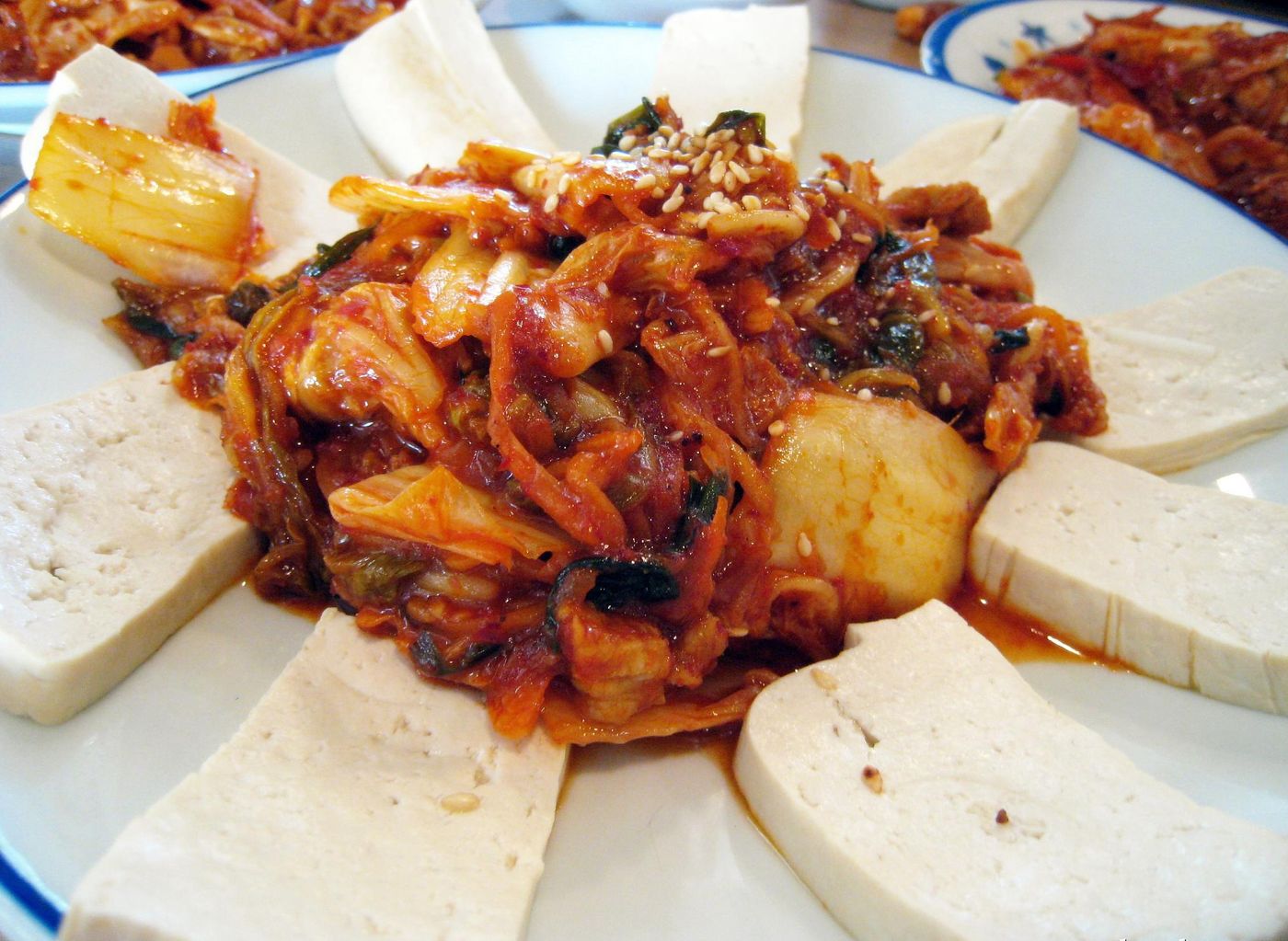 Dubu Kimchi (Tofu with Stir-Fried Kimchi)두부김치Warm slices of plain tofu arranged around kimchi stir-fried with pork — a mild-and-spicy pairing that is a favorite with soju and makgeolli.
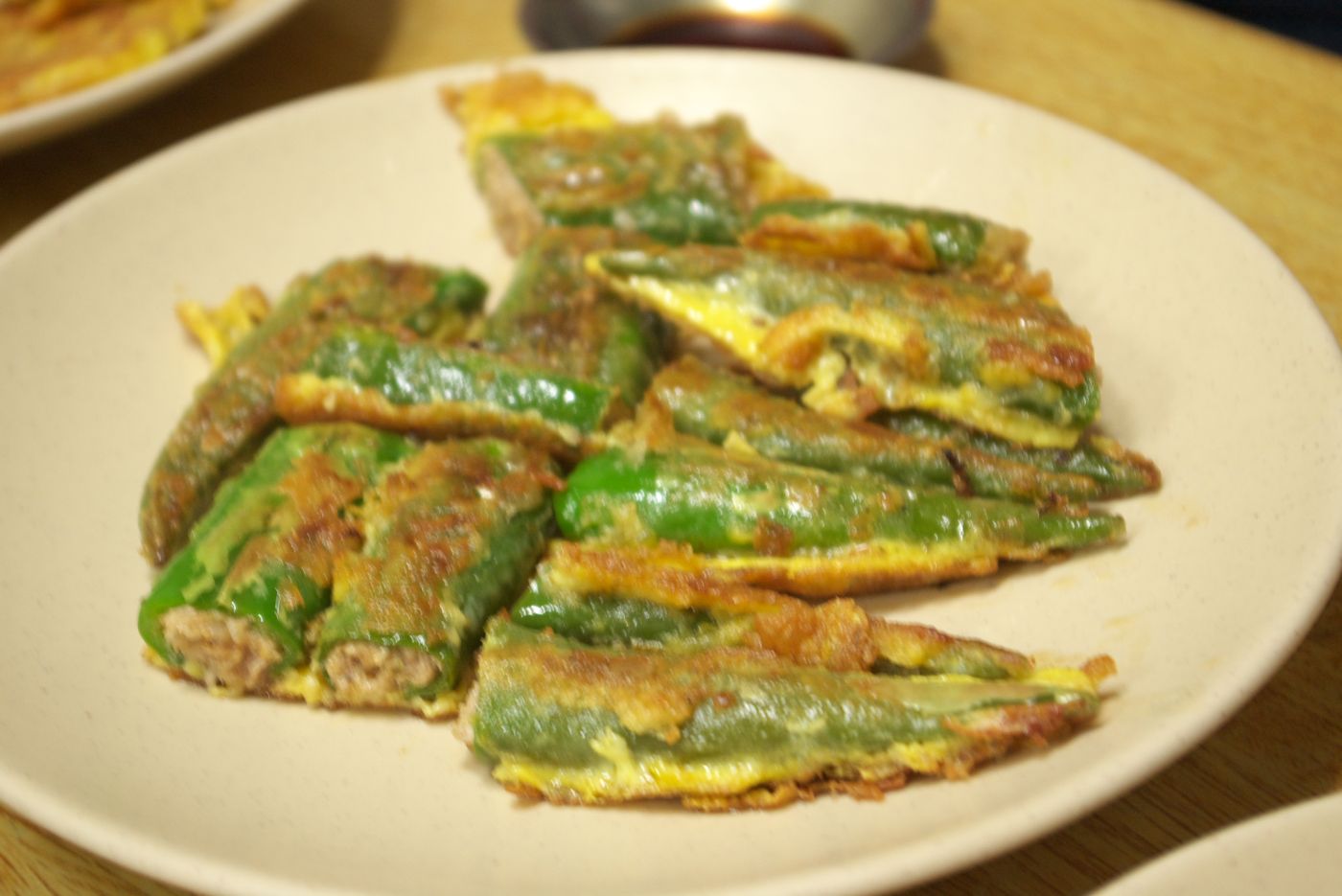 Gochu-jeon (Stuffed Green Chili Peppers)고추전Mild green chili peppers split, filled with seasoned meat and tofu, then coated in flour and egg and pan-fried — a bright green, gently spicy jeon.
- Gul Guk (Oyster Soup)굴국Fresh oysters dropped into a clear radish broth with tofu and green onion and cooked for barely a minute — a delicate cold-season soup of the south and west coasts.
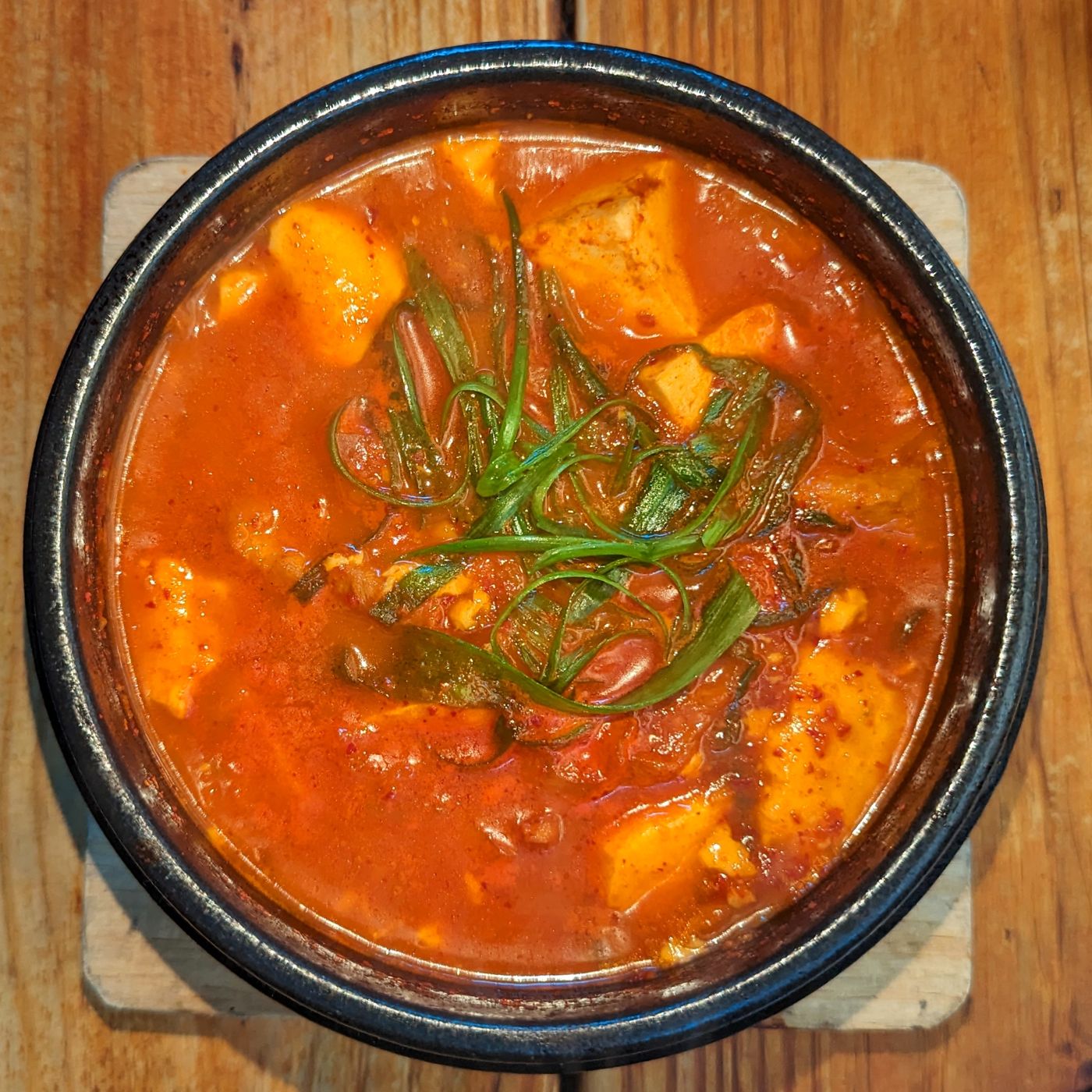 Kimchi Jjigae (Kimchi Stew)김치찌개Sour, well-aged napa cabbage kimchi simmered with pork and tofu into a tangy, spicy stew — the classic way to use up kimchi that has gone past its prime.
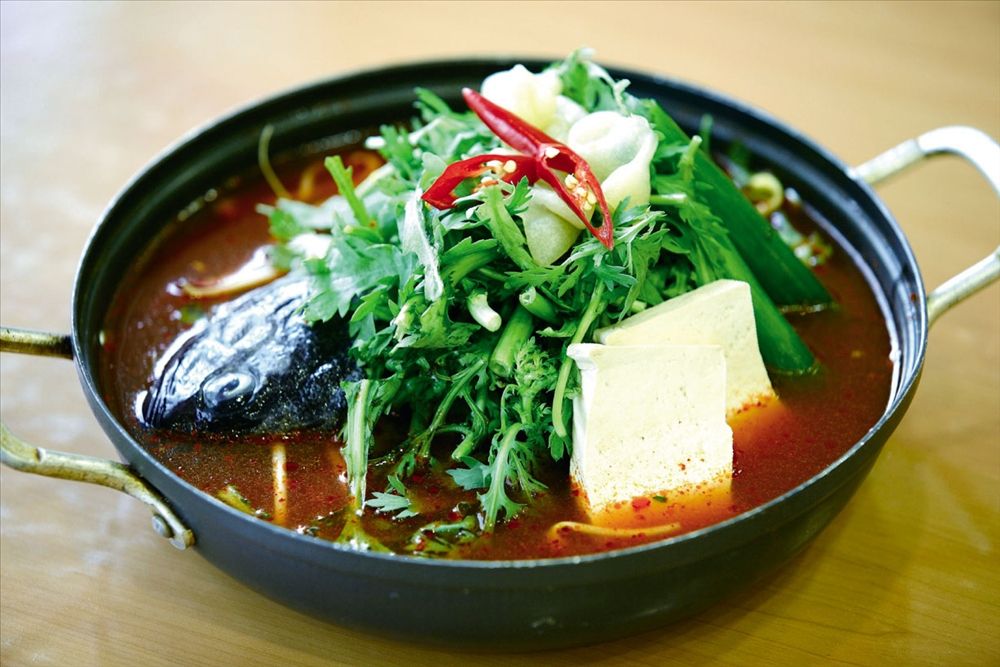 Maeuntang (Spicy Fish Stew)매운탕Fish — freshwater or sea — simmered with radish, tofu and fragrant greens in a fiery gochugaru and gochujang broth; the stew that follows sashimi and fills riverside restaurants.
 Mandu (Korean Dumplings)만두Thin wrappers folded around pork, tofu, kimchi and sprouts, then steamed or boiled — a Goryeo-era arrival from China that became a winter staple of the North.
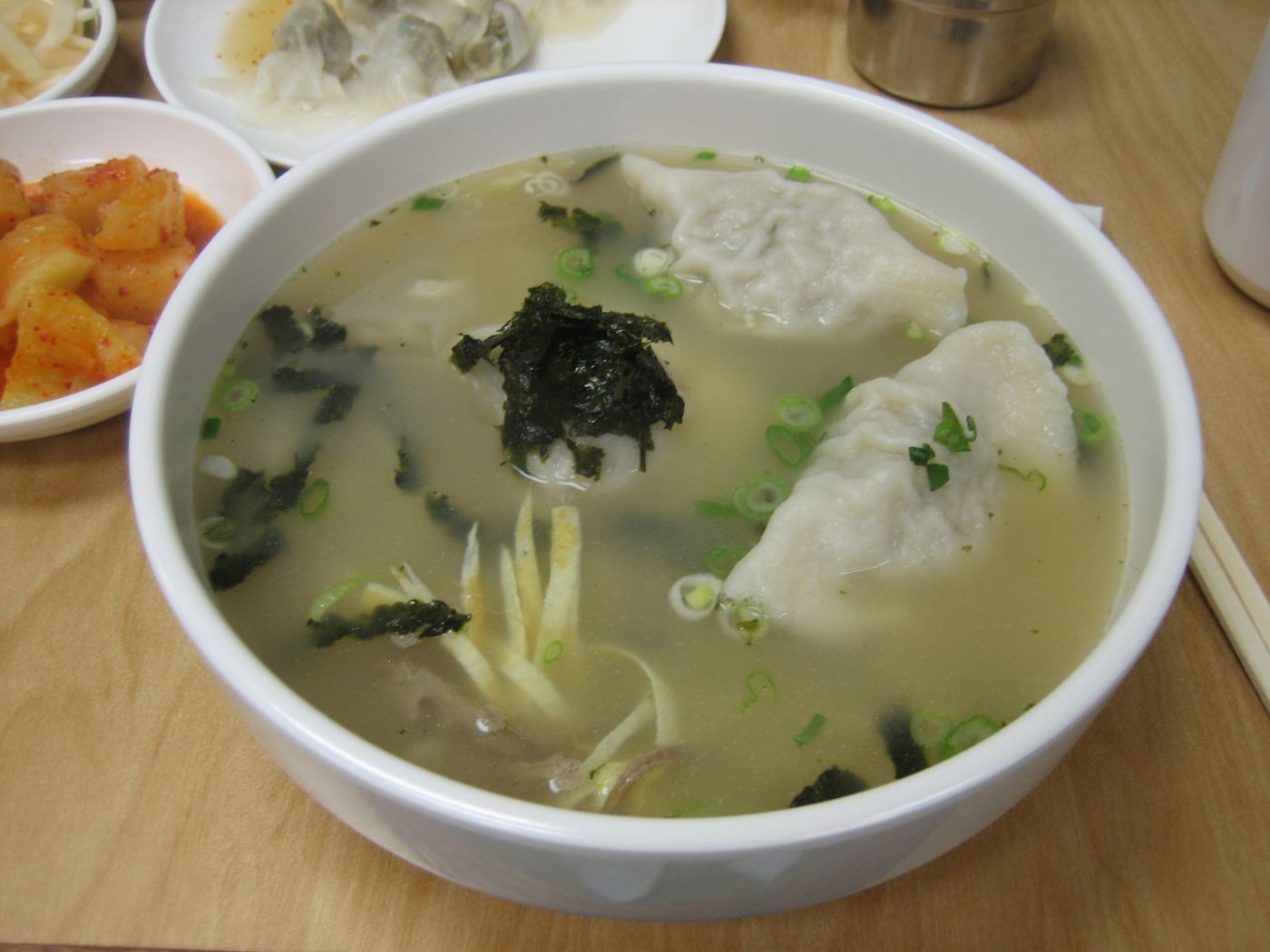 Manduguk (Dumpling Soup)만둣국Stuffed dumplings simmered in a clear, savory broth, usually beef-based and topped with egg strands and green onion. A winter and New Year dish with northern roots.
- Saengtae Jjigae (Fresh Pollock Stew)생태찌개Chunks of fresh, never-frozen pollock simmered with radish, tofu and a red chili broth, finished with water dropwort and crown daisy — a winter stew prized for its clean, bracing taste.
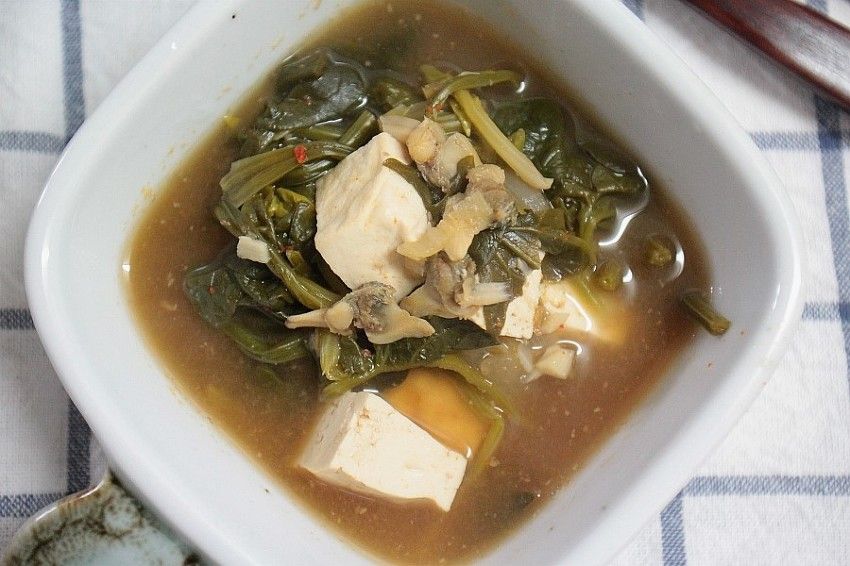 Sigeumchi Doenjang Guk (Spinach Soybean-Paste Soup)시금치된장국Tender spinach simmered in an anchovy broth seasoned with doenjang — a mild, everyday soup that is at its sweetest in winter and early spring.
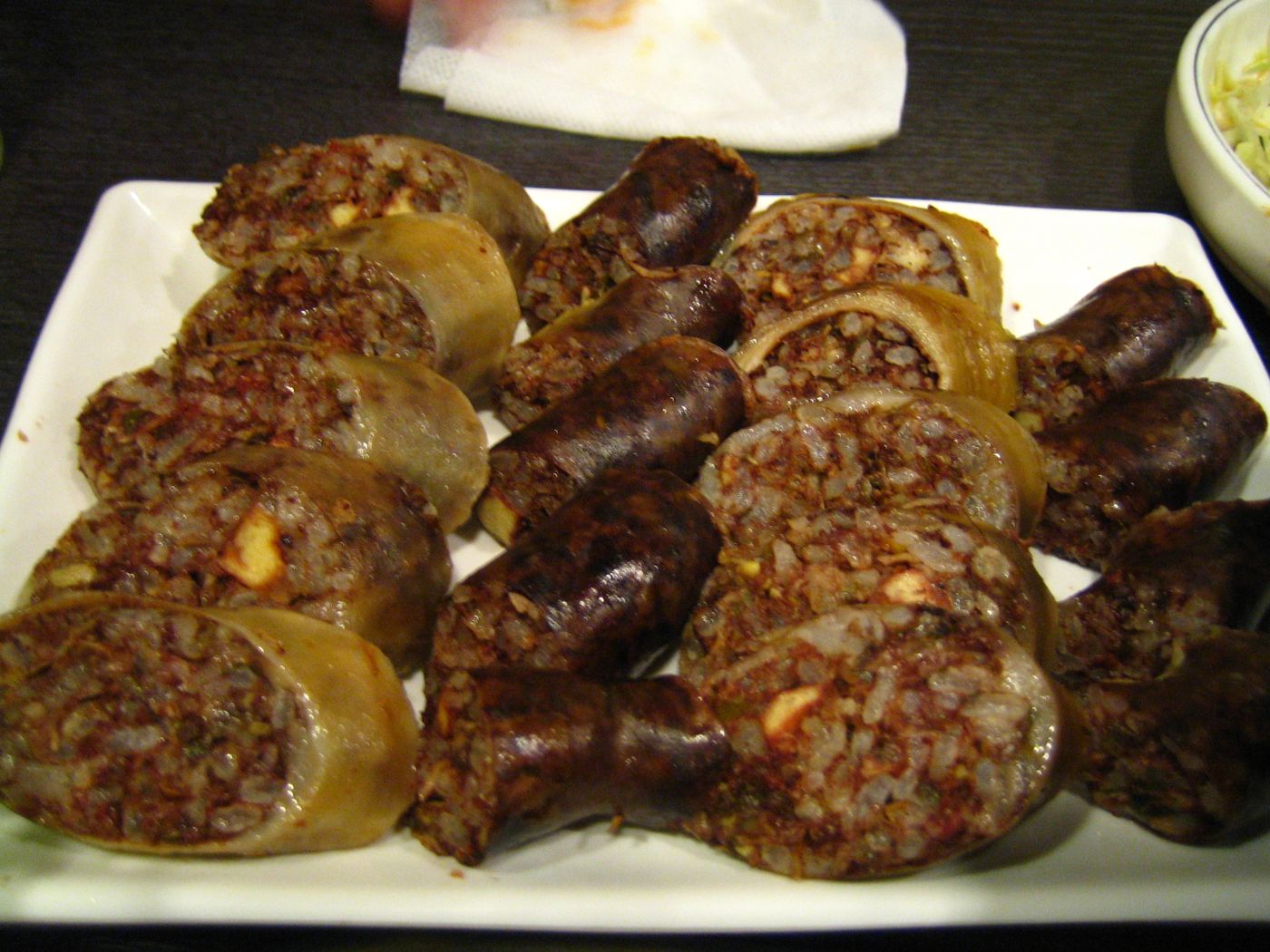 Sundae (Korean Blood Sausage)순대Pork intestine stuffed with pig's blood, glutinous rice, glass noodles and vegetables, then steamed — a northern farmhouse food that became a nationwide street snack.