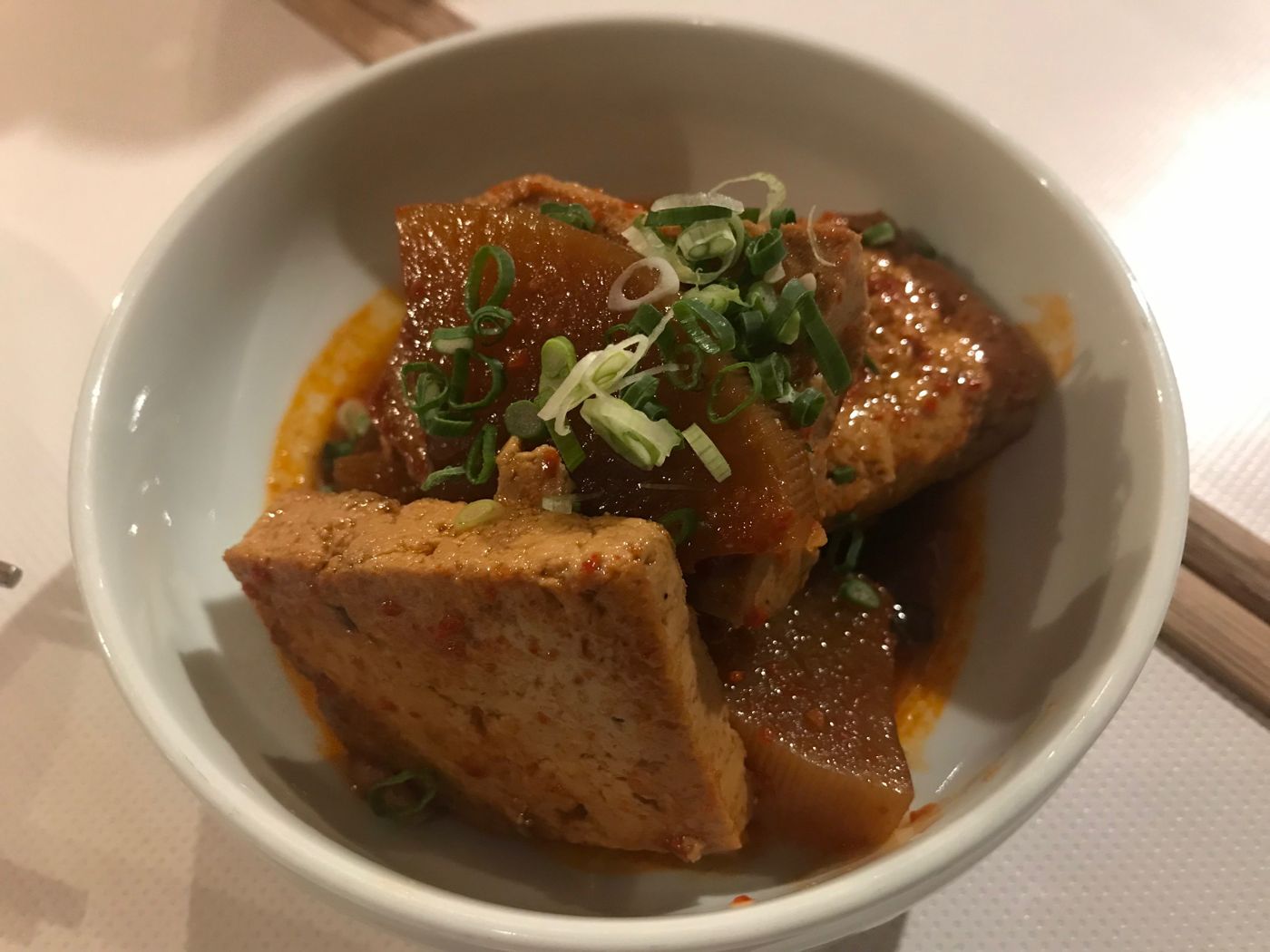
 Photo: lazy fri13th, CC BY 2.0, via Wikimedia Commons
Jorim · Braised 조림
Dubu Jorim
두부조림
Romanization: dubu-jorim
Slices of firm tofu pan-fried until golden, then simmered in a garlicky soy and chili sauce — an inexpensive, protein-rich staple of Korean home cooking.
- Serves
- 4
- Prep
- 10 min
- Cook
- 20 min
Recipe
Ingredients · Serves 4
- 400 gFirm tofu1 block, cut into 1 cm slices
- 1½ tbspNeutral cooking oil
- ¼ mediumOnionabout 50 g, thinly sliced
- 2½ tbspSoy sauce
- 1 tbspGochugaruuse less for a milder dish
- 1 tspSugar
- 2 clovesGarlicminced
- 2 stalksGreen onionabout 30 g, chopped
- 120 mlWater or anchovy-kelp stock
- 1 tspToasted sesame oil
- 1 tspToasted sesame seeds
Method
Technique: Jorim: Braising in Seasoned Liquid
Step 1: Lay the tofu slices on paper towels and pat dry on both sides. A light sprinkle of salt draws out more moisture if you have time.
Step 2: Heat the oil in a wide nonstick pan over medium heat. Pan-fry the tofu for 3–4 minutes per side, until golden. Do not move the slices until they release easily.
Step 3: Meanwhile, mix the soy sauce, gochugaru, sugar, garlic, most of the green onion and the water or stock.
Step 4: Scatter the onion around the tofu in the pan, then spoon the sauce evenly over every slice.
Step 5: Simmer over medium-low heat for 8–10 minutes, basting the tofu with the sauce from time to time, until the liquid has reduced to a thick glaze.
Step 6: Finish with the sesame oil, sesame seeds and remaining green onion. Serve warm.
Origin & History
Tofu (dubu) has a long history in Korea. The word first appears in a poem in the collected works of the late-Goryeo scholar Yi Saek (Mogeunjip), and tofu is thought to have arrived from Yuan-dynasty China, with which Goryeo had close ties. It was also called po in Korean.
By the Joseon period, Korean tofu-making had a reputation abroad: the Annals of King Sejong record that Joseon women sent to the Ming court impressed the emperor with their skill at preparing foods, tofu in particular. Later household manuals describe several ways of making and cooking it, and tofu dishes were expected at important ceremonial tables.
Jorim, simmering an ingredient in seasoned liquid until the sauce reduces and soaks in, suits tofu well. Pan-frying the slices first gives them a skin that holds together during braising. The red-pepper seasoning common today could only have developed after chili peppers arrived in Korea from the sixteenth century onward.
Key Ingredients
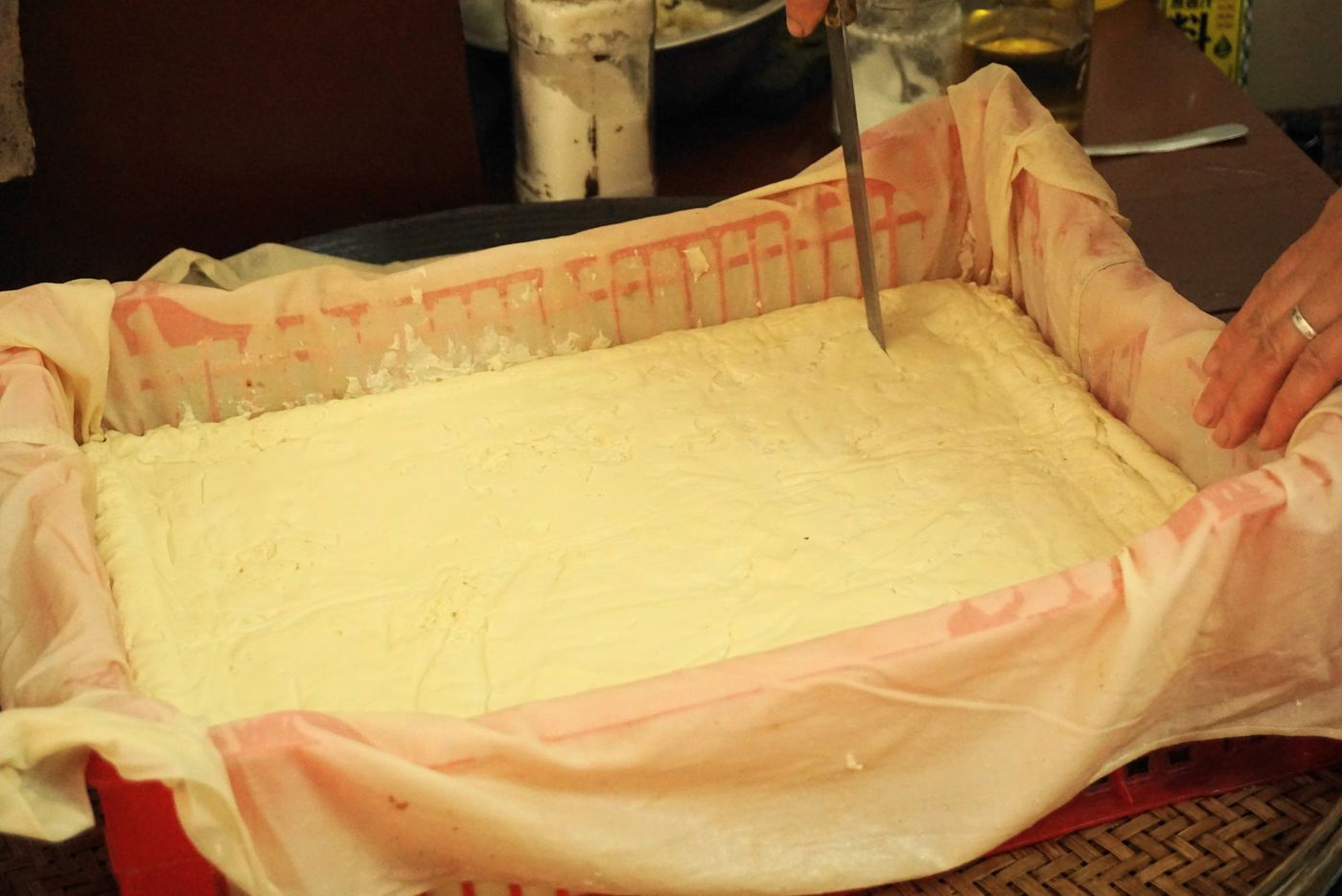 Tofu두부Fresh bean curd made by coagulating soy milk and pressing the curds. A quiet staple of Korean cooking since at least the late Goryeo period, it is pan-fried, braised in spicy soy glaze, or simmered in stews.
 Soy sauce간장Korean soy sauce, in two main kitchen forms: pale, salty guk-ganjang (soup soy sauce) brewed the traditional way from meju, and darker, sweeter jin-ganjang for braises and marinades.
 Gochugaru고춧가루Korean red chili powder, made from dried red peppers ground coarse or fine. It gives kimchi, gochujang and countless banchan their color and warmth.
 Garlic마늘Used raw, minced, pickled and roasted, garlic is one of the essential aromatics of Korean food — in seasonings, marinades, kimchi and namul.
 Green onion파Korean green onion (pa), from thick-stemmed daepa to slender scallions — chopped into nearly every seasoning sauce, soup and kimchi, and the star of pa-kimchi.
 Sesame참깨Toasted sesame seeds and sesame oil (chamgireum) finish countless Korean dishes, adding a nutty aroma and gloss.
Nutrition
| Calories | ~165 kcal |
|---|---|
| Protein | ~11.5 g |
| Fat | ~12.1 g |
| Carbohydrates | ~5.9 g |
| Fiber | ~2 g |
| Sodium | ~560 mg |
Notable forProtein · Calcium · Iron
Estimated by summing USDA FoodData Central values for the raw ingredients (tofu, extra firm, prepared with nigari, FDC 174290; soy sauce, FDC 174277; gochugaru approximated with red/cayenne pepper, FDC 170932; oil, onion, garlic and sesame) and dividing by four servings. Calcium in tofu depends heavily on the coagulant used, so it varies by brand. Actual values vary with ingredients, portion size and preparation.
Health Benefits
- Tofu is a source of plant protein, making this a useful protein dish for vegetarian meals (with water instead of anchovy stock).
- Tofu set with calcium or magnesium salts can be a source of calcium, and tofu also provides iron.
- Soy foods contain isoflavones, compounds whose health effects are an active area of research.
Regional Variations
- Soy or spicy: a plain version is seasoned with soy sauce, green onion and garlic; the more common modern version adds gochugaru for color and heat.
- Fried or not: most cooks pan-fry the tofu first, but some braise it directly in the sauce for a softer, quicker dish.
- With radish or stock: slices of Korean radish may be laid under the tofu, and anchovy-kelp stock is often used in place of water.
Pairings
 Kongnamul Muchim콩나물무침Soybean sprouts cooked under a lid until just tender, then tossed with garlic, green onion and sesame oil — crisp, nutty and on tables across Korea.
 Sigeumchi Namul시금치나물Spinach blanched for a few seconds, squeezed dry and dressed with garlic, soy sauce and sesame — one of the simplest and most familiar namul.
 Napa Cabbage Kimchi배추김치Salted napa cabbage layered with a red paste of chili, garlic, ginger and fermented seafood, then left to ripen: the kimchi most people picture first.
Sources
- 01두부 (Tofu) — Encyclopedia of Korean Culture
- 02조림 (Jorim) — Encyclopedia of Korean Culture
- 03조선 후기에 새로 들어온 채소 (Vegetables newly introduced in late Joseon) — Korean History Online, National Institute of Korean History
- 04Tofu, extra firm, prepared with nigari (FDC 174290) — USDA FoodData Central
- 05Sodium reduction — World Health Organization fact sheet
Last updated