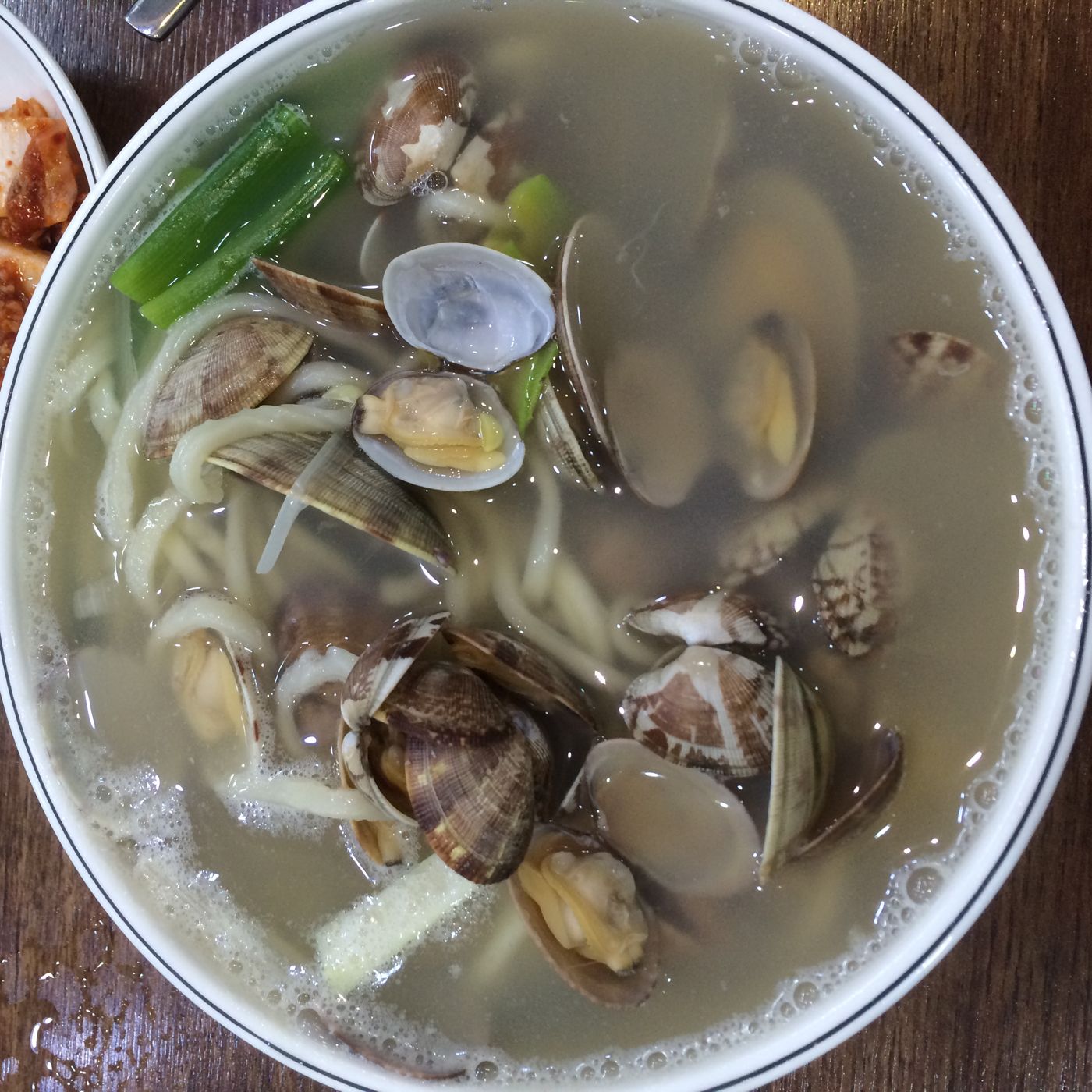
 Photo: chomjong, CC BY 2.0, via Wikimedia Commons
Myeon · Noodles 면
Kalguksu (Knife-Cut Noodle Soup)
칼국수
Romanization: kalguksu
Hand-rolled wheat dough cut into ribbons with a knife and cooked right in anchovy, chicken or clam broth with potato and zucchini — Korea's homely noodle soup.
- Serves
- 4
- Prep
- 50 min
- Cook
- 20 min
RegionJeolla
Jump to recipeRecipe
Ingredients · Serves 4
- 400 gAll-purpose wheat flourplus extra for dusting
- 180 mlWaterfor the dough
- 1 tspSalt½ tsp for the dough, ½ tsp for the broth
- 2 lAnchovy-kelp stockmade with dried anchovies and dashima
- 1 largePotatoabout 200 g, sliced 5 mm thick
- 150 gKorean zucchini (aehobak)julienned
- ½ largeOnionabout 100 g, sliced
- 2 clovesGarlicminced
- 1 tbspSoup soy sauce (guk-ganjang)
- 1 stalkGreen onionabout 20 g, sliced
- 1 sheetGim (laver)optional, toasted and crumbled
Method
Technique: Making Yuksu: Anchovy-Kelp Stock
Step 1: Mix the flour and ½ tsp salt, add the water and knead for about 10 minutes into a firm, smooth dough. Wrap and rest it for 30 minutes.
Step 2: Roll the dough on a floured board into a sheet about 2 mm thick. Dust generously with flour, fold it loosely into a flat stack and cut into strips 3–5 mm wide. Shake the strands apart.
Step 3: Bring the stock to a boil with the potato and onion and simmer 5 minutes.
Step 4: Shake excess flour off the noodles and drop them into the boiling stock, stirring so they don't stick. Add the zucchini and garlic and cook 5–6 minutes, until the noodles are tender; the broth will thicken a little.
Step 5: Season with the soup soy sauce and remaining salt. Add the green onion and serve at once, topped with gim if you like, with kimchi on the side.
Origin & History
Kalguksu means "knife noodles": dough rolled thin with a pin and cut into strands with a knife, rather than pressed through a noodle machine. Korean texts first use a character for noodles in the Goryeo period, but nothing says what kind. The Encyclopedia of Korean Culture identifies the ancestor of cut noodles in Eumsik dimibang (c. 1670), whose jeolmyeon (cut noodles) were made mostly of buckwheat with a little wheat flour to bind them; another early text, Jubangmun, kneads buckwheat with water boiled with glutinous rice.
Buckwheat dominated because wheat was scarce. The encyclopedia quotes the twelfth-century Chinese envoy's account Gaoli tujing, which says Goryeo imported wheat from north China and found flour so expensive that it was eaten only at ceremonies. Recipes using wheat flour appear in the twentieth century: Lee Yong-gi's 1924 cookbook works a little soy sauce into the dough, and Lee Seok-man's 1934 book kneads it with salt, cuts it fine, boils and rinses it and pours clear broth over the top.
According to the Encyclopedia of Korean Folk Culture, kalguksu became the everyday dish it is now after the Korean War, when wheat flour from American aid became cheap and plentiful. Before that it was a summer treat: wheat was harvested around the sixth lunar month, and potato and zucchini — the usual garnishes — were the vegetables of the season. Today, as the Encyclopedia of Korean Culture notes, the noodles are usually cooked directly in the broth, which turns it cloudy but nutty.
Key Ingredients
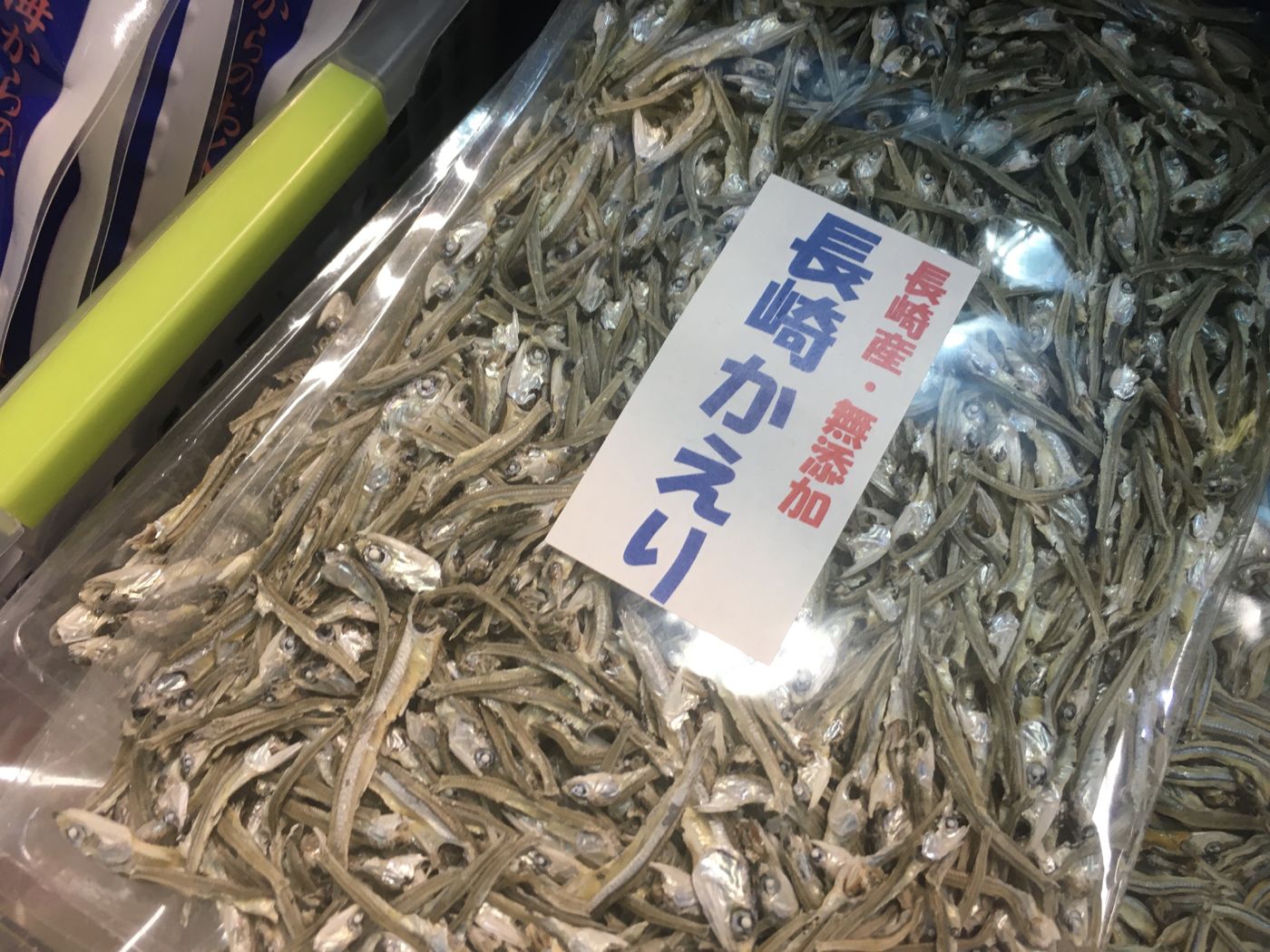 Dried anchovies멸치Small anchovies that are boiled and dried on the coast, then sorted by size. They flavor everyday broths and, stir-fried whole, become the sweet-salty side dish myeolchi-bokkeum.
 Dashima (dried kelp)다시마Thick, dried kelp that gives Korean broths their quiet savory depth. Beyond the stockpot it is fried into crisp twigak, simmered into soy-glazed side dishes and used as a wrap.
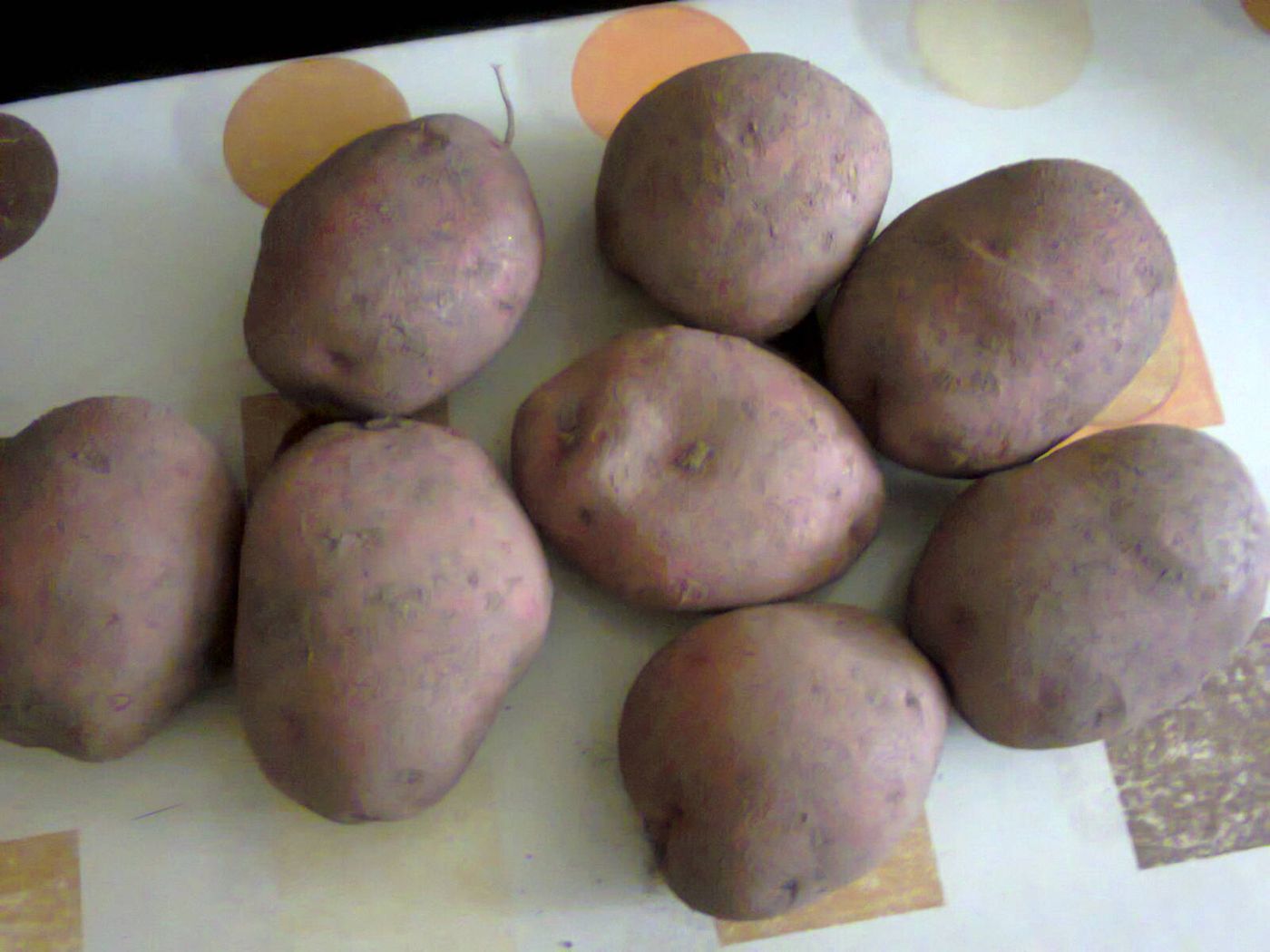 Potato감자A relatively recent arrival that became a mainstay of the mountain provinces. Braised in soy sauce as gamja-jorim, stir-fried in fine matchsticks, grated into crisp gamja-jeon and simmered in countless soups.
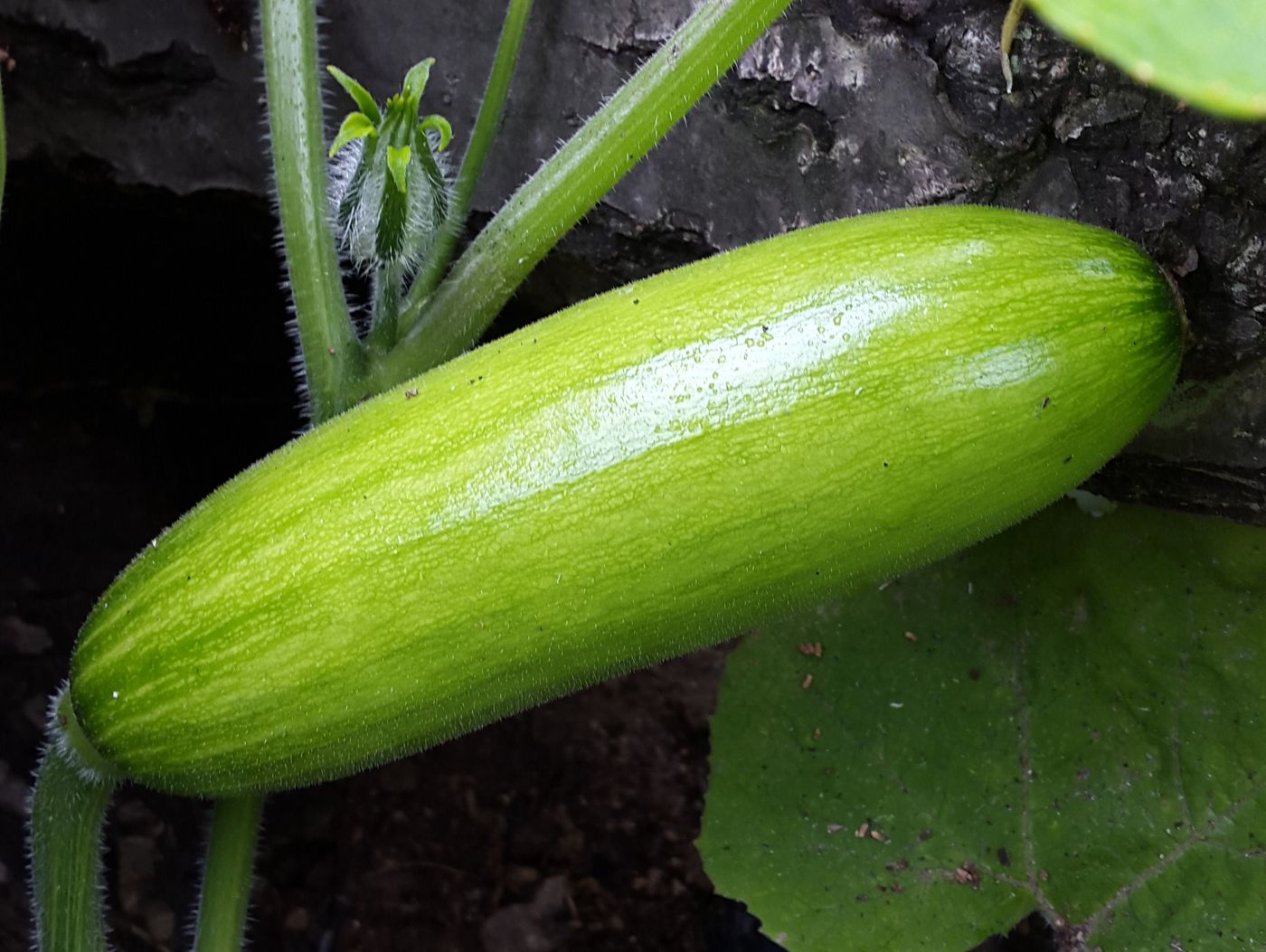 Korean zucchini애호박A pale-green young squash with thin, smooth skin and tender flesh. Sliced into rounds for hobak-jeon, sautéed as namul and added to doenjang stews.
 Garlic마늘Used raw, minced, pickled and roasted, garlic is one of the essential aromatics of Korean food — in seasonings, marinades, kimchi and namul.
 Soy sauce간장Korean soy sauce, in two main kitchen forms: pale, salty guk-ganjang (soup soy sauce) brewed the traditional way from meju, and darker, sweeter jin-ganjang for braises and marinades.
 Green onion파Korean green onion (pa), from thick-stemmed daepa to slender scallions — chopped into nearly every seasoning sauce, soup and kimchi, and the star of pa-kimchi.
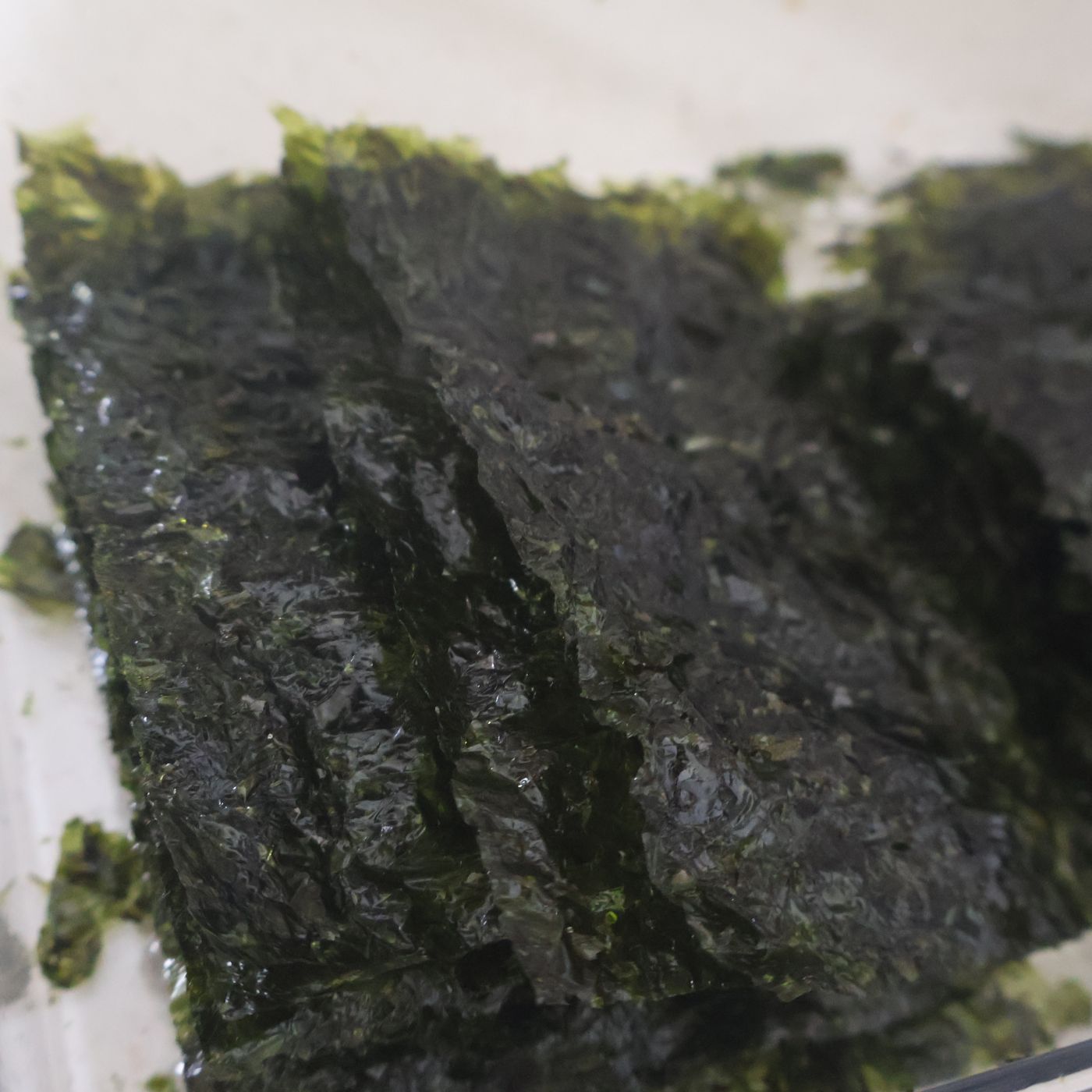 Laver (gim)김Paper-thin sheets of dried red seaweed, toasted until crisp and fragrant. Gim wraps gimbap and rice, crumbles over noodles and soups, and — brushed with oil and salt — becomes the everyday side dish gim-gui.
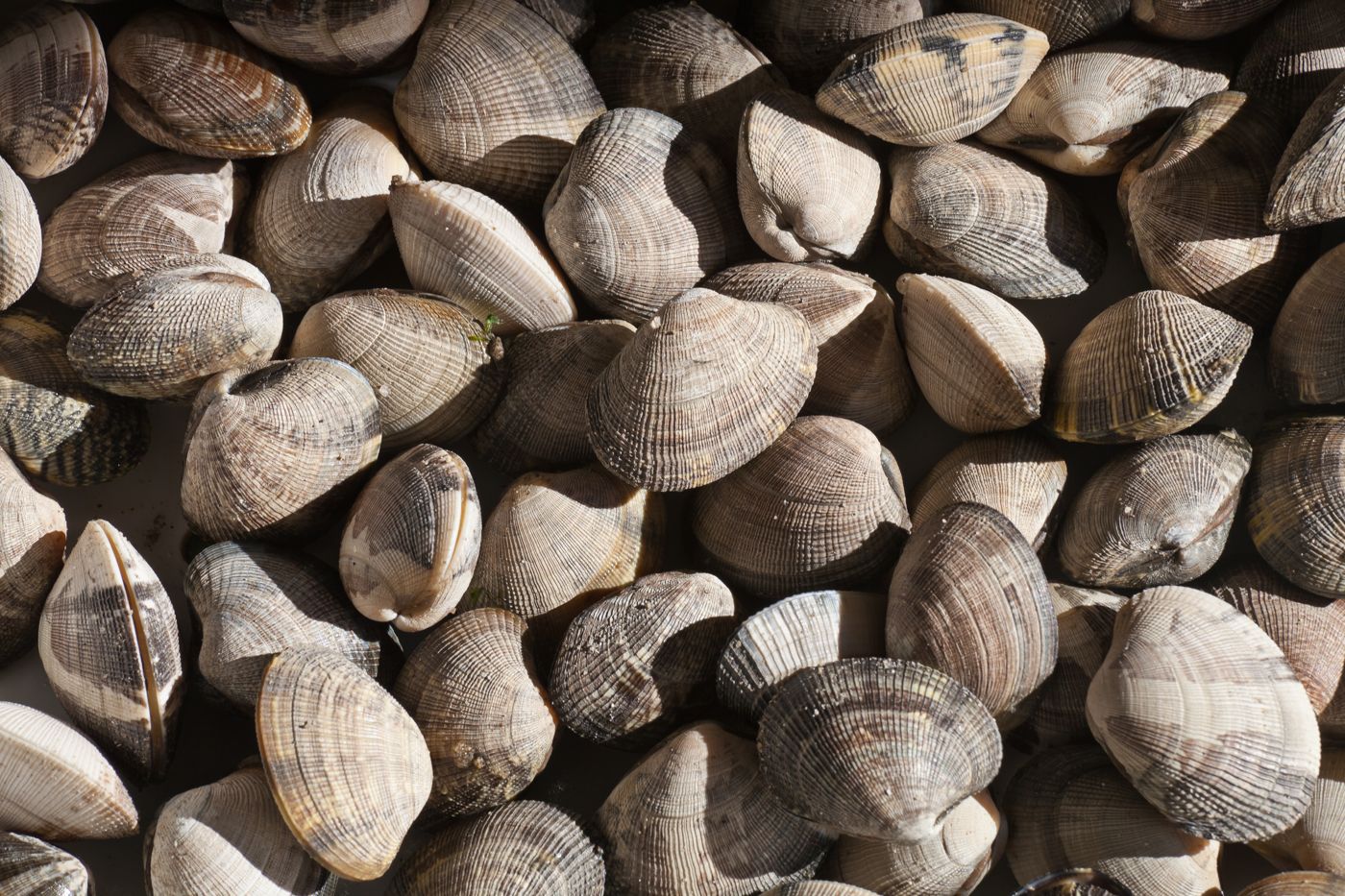 Manila clam (bajirak)바지락Small, ridged tidal-flat clams that give Korean soups and noodle broths their clean, sweet depth. Bajirak are the clams of bajirak-kalguksu, the west coast's clam noodle soup.
Nutrition
| Calories | ~426 kcal |
|---|---|
| Protein | ~12.6 g |
| Fat | ~1.2 g |
| Carbohydrates | ~89.9 g |
| Fiber | ~4.8 g |
| Sodium | ~952 mg |
Notable forCarbohydrate · Selenium
Estimated by summing ingredient values and dividing by four. Flour: USDA FDC 168894; salt: FDC 173468; potato (170026), zucchini (169291), onion (170000), garlic and green onion from USDA; soup soy sauce: Korean Food Composition Table (국간장, R0010030009a). The anchovy stock was not counted, so sodium is a floor. The MFDS analysis of a 700 g home-style bowl (77 kcal and 220 mg sodium per 100 g) gives about 540 kcal, 1,540 mg sodium and 47 µg selenium; its clam version (bajirak-kalguksu) adds about 16 µg vitamin B12 per bowl. Actual values vary with ingredients, portion size and preparation.
Health Benefits
- A filling, low-fat bowl; the noodles supply carbohydrate for energy and the potato and zucchini add vegetables.
- By the MFDS analysis, a bowl supplies most of an adult's daily selenium, and the clam version is an outstanding source of vitamin B12.
Regional Variations
- By broth: the folk encyclopedia names beef-bone, anchovy and chicken (dak-kalguksu) as the three classic broths, and suggests chicken was the farmhouse choice, clams or oysters the coastal one and anchovy the mountain one.
- Bajirak-kalguksu: clam-broth noodles, which the folk encyclopedia lists among the widely loved versions.
- Jemul-kalguksu: noodles cooked in the broth itself, the common modern method, as opposed to boiling them separately and rinsing.
- Pat-kalguksu: in Jeolla, noodles in a thick broth of strained red beans.
- Jang-kalguksu: noodles cooked in broth seasoned with gochujang or doenjang.
Pairings
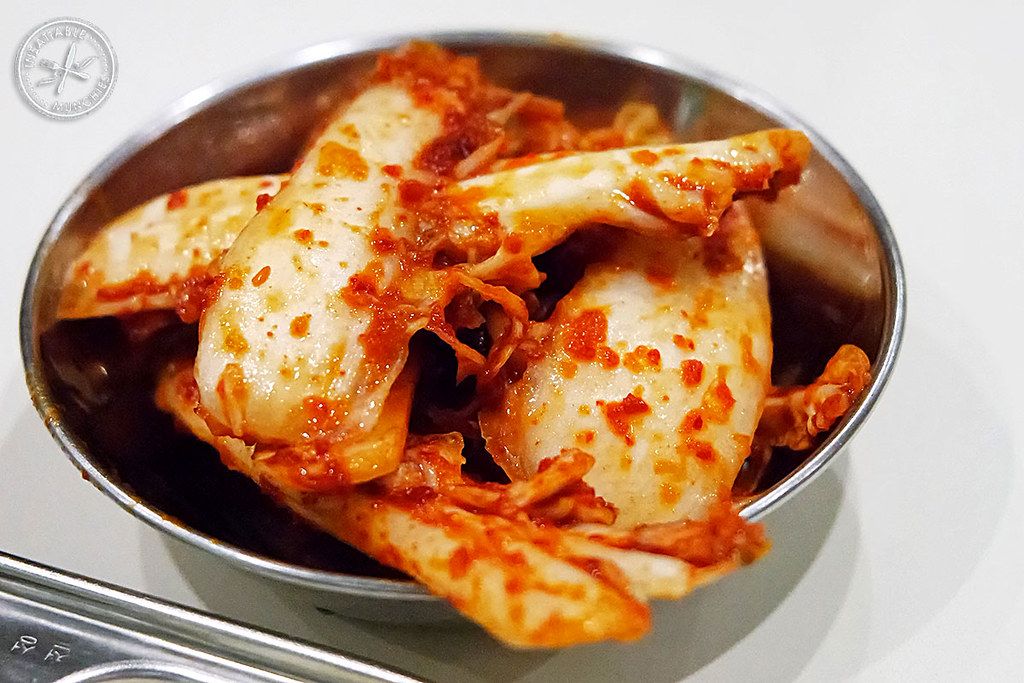 Fresh Cabbage Kimchi겉절이Napa cabbage salted only briefly, then tossed with chili, garlic and fish sauce and eaten the same day — kimchi at its freshest, crisp and bright.
 Napa Cabbage Kimchi배추김치Salted napa cabbage layered with a red paste of chili, garlic, ginger and fermented seafood, then left to ripen: the kimchi most people picture first.
 Cubed Radish Kimchi깍두기Korean radish cut into neat cubes and tossed with chili, garlic and salted shrimp — crunchy, juicy and a classic partner to rich soups.
Sources
- 01칼국수 (Kalguksu) — Encyclopedia of Korean Culture
- 02칼국수 (Kalguksu) — Encyclopedia of Korean Folk Culture (한국의식주생활사전)
- 03칼국수 (Kalguksu, home-style, analyzed) — MFDS K-FIND food composition database
- 04칼국수_바지락 (Bajirak-kalguksu, home-style, analyzed) — MFDS K-FIND food composition database
- 05Wheat flour, white, all-purpose, enriched, bleached (FDC 168894) — USDA FoodData Central
- 06Trends in sodium intake and major contributing food groups and dishes in Korea: KNHANES 2013–2017 (Jeong et al., Nutrition Research and Practice, 2021)
Last updated