 Photo: P1898, CC BY 4.0, via Wikimedia Commons
Jorim · Braised 조림
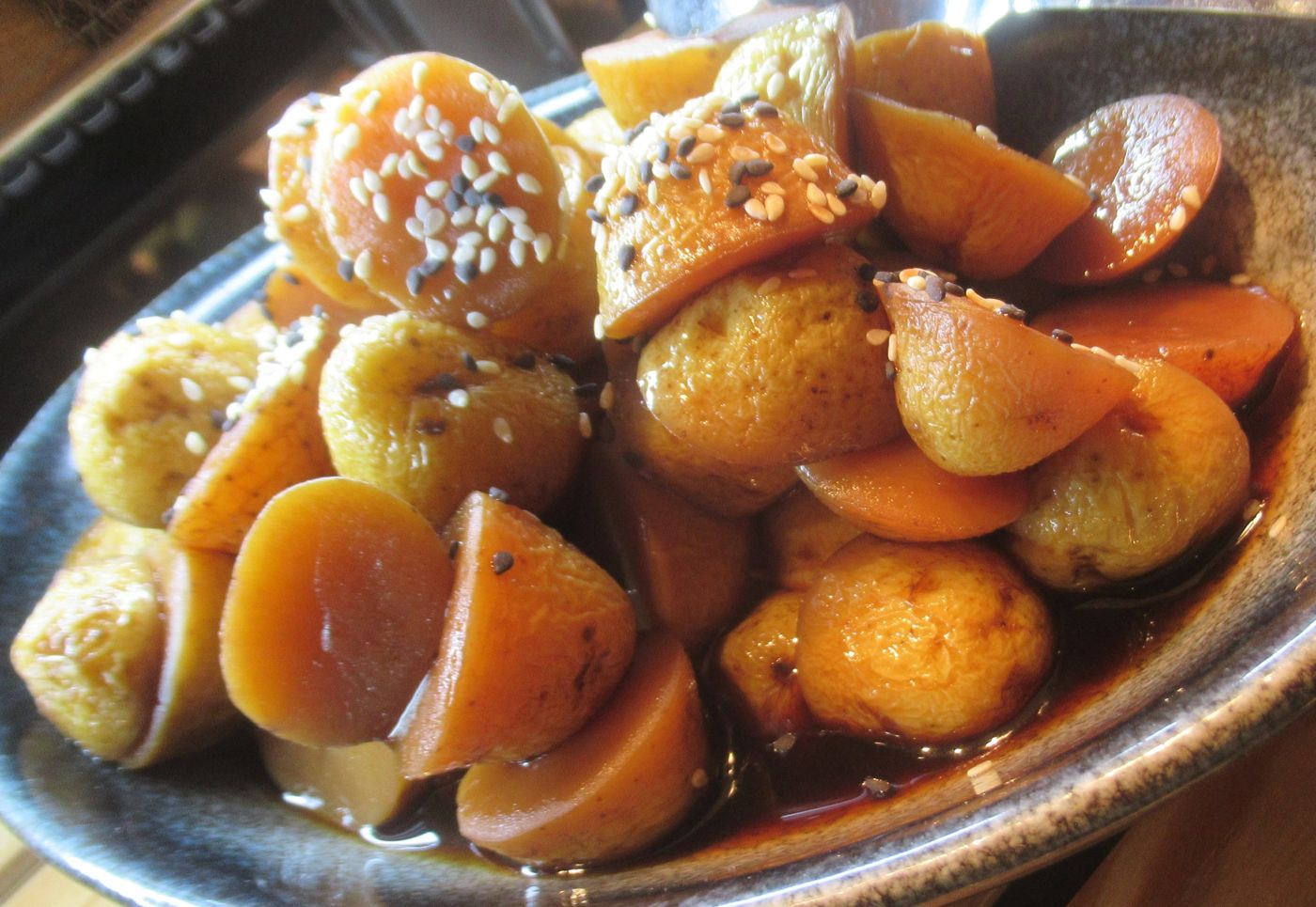
Gamja Jorim
감자조림
Romanization: gamja-jorim
Cubed potatoes simmered in soy sauce, garlic and a touch of sweetness until tender and glossy — a comforting, child-friendly staple of the Korean home table.
- Serves
- 4
- Prep
- 15 min
- Cook
- 25 min
Recipe
Ingredients · Serves 4
- 500 gPotatoes2–3 medium, peeled and cut into 2 cm cubes
- 50 gCarrotcut into 1.5 cm cubes
- ½ mediumOnionabout 100 g, cut into 2 cm pieces
- 1 tbspNeutral cooking oil
- 300 mlWateror anchovy-kelp stock
- 3 tbspSoy sauce
- 1 tbspSugar
- 2 clovesGarlicminced
- 1 tbspMulyeot (rice or corn syrup)
- 1 smallGreen chiliabout 15 g, sliced; optional
- 1 tspToasted sesame oil
- 1 tspToasted sesame seeds
Method
Technique: Jorim: Braising in Seasoned Liquid
Step 1: Soak the potato cubes in cold water for about 10 minutes to rinse off surface starch, which helps them hold their shape. Drain and pat dry.
Step 2: Heat the oil in a wide pan over medium heat and stir-fry the potatoes for 3–4 minutes, until the edges look translucent.
Step 3: Add the water, soy sauce, sugar and garlic. Bring to a boil, then cover and simmer over medium-low heat for 10 minutes.
Step 4: Add the carrot and onion. Simmer uncovered for 8–10 minutes, stirring gently now and then, until the potatoes are tender and the liquid has reduced to a few spoonfuls.
Step 5: Add the syrup and green chili and turn the potatoes gently for 1–2 minutes until they are glazed.
Step 6: Turn off the heat and finish with the sesame oil and sesame seeds. Serve warm or at room temperature.
Origin & History
Jorim means food simmered slowly in a well-seasoned liquid until the flavor soaks in and the sauce cooks down. The method is old, but the word itself was slow to appear in cookbooks; one of its first appearances as a recipe heading is a soy-braised beef method in the late-Joseon cookbook Siuijeonseo.
The potato is a comparatively recent arrival. The nineteenth-century scholar Yi Gyu-gyeong dated its introduction to about 1824–1825, carried overland from China into the northern part of the peninsula, which is why early names for it included bukjeo, or "northern tuber." Agricultural writings on growing potatoes followed within a few decades.
Braising potatoes in soy sauce brings the old jorim technique together with this newer crop. Gamja-jorim is inexpensive, mild and keeps well, and it remains one of the most common homestyle side dishes.
Key Ingredients
 Soy sauce간장Korean soy sauce, in two main kitchen forms: pale, salty guk-ganjang (soup soy sauce) brewed the traditional way from meju, and darker, sweeter jin-ganjang for braises and marinades.
 Garlic마늘Used raw, minced, pickled and roasted, garlic is one of the essential aromatics of Korean food — in seasonings, marinades, kimchi and namul.
 Korean grain syrup물엿A clear, glossy syrup used to sweeten and glaze braised and stir-fried banchan. Its traditional relative, jocheong, is a darker malt syrup made by slowly boiling down saccharified rice.
 Sesame참깨Toasted sesame seeds and sesame oil (chamgireum) finish countless Korean dishes, adding a nutty aroma and gloss.
Nutrition
| Calories | ~190 kcal |
|---|---|
| Protein | ~4.2 g |
| Fat | ~5.2 g |
| Carbohydrates | ~34 g |
| Fiber | ~3.7 g |
| Sodium | ~680 mg |
Notable forPotassium · Vitamin C · Fiber
Estimated by summing USDA FoodData Central values for the raw ingredients (potatoes, flesh and skin, raw, FDC 170026; soy sauce, FDC 174277; corn syrup, light, FDC 168837; vegetables, oil, sugar and sesame) and dividing by four servings. Vitamin C is partly lost during cooking, so the cooked dish likely contains less than the raw-ingredient total. Actual values vary with ingredients, portion size and preparation.
Health Benefits
- Potatoes are a source of potassium and vitamin C, and they provide filling, starchy carbohydrate.
- Carrots and onion add color, fiber and carotenoids.
- Braising uses only a little oil compared with frying, keeping the dish moderate in fat.
Regional Variations
- Cubed or whole: most cooks cut large potatoes into cubes, while algamja-jorim braises small new potatoes whole, often in their skins.
- Spicy: a spicier version adds gochugaru or gochujang to the soy base.
- Add-ins: carrot, onion and green chili are common for color; some cooks add a little anchovy-kelp stock instead of water for depth.
Pairings
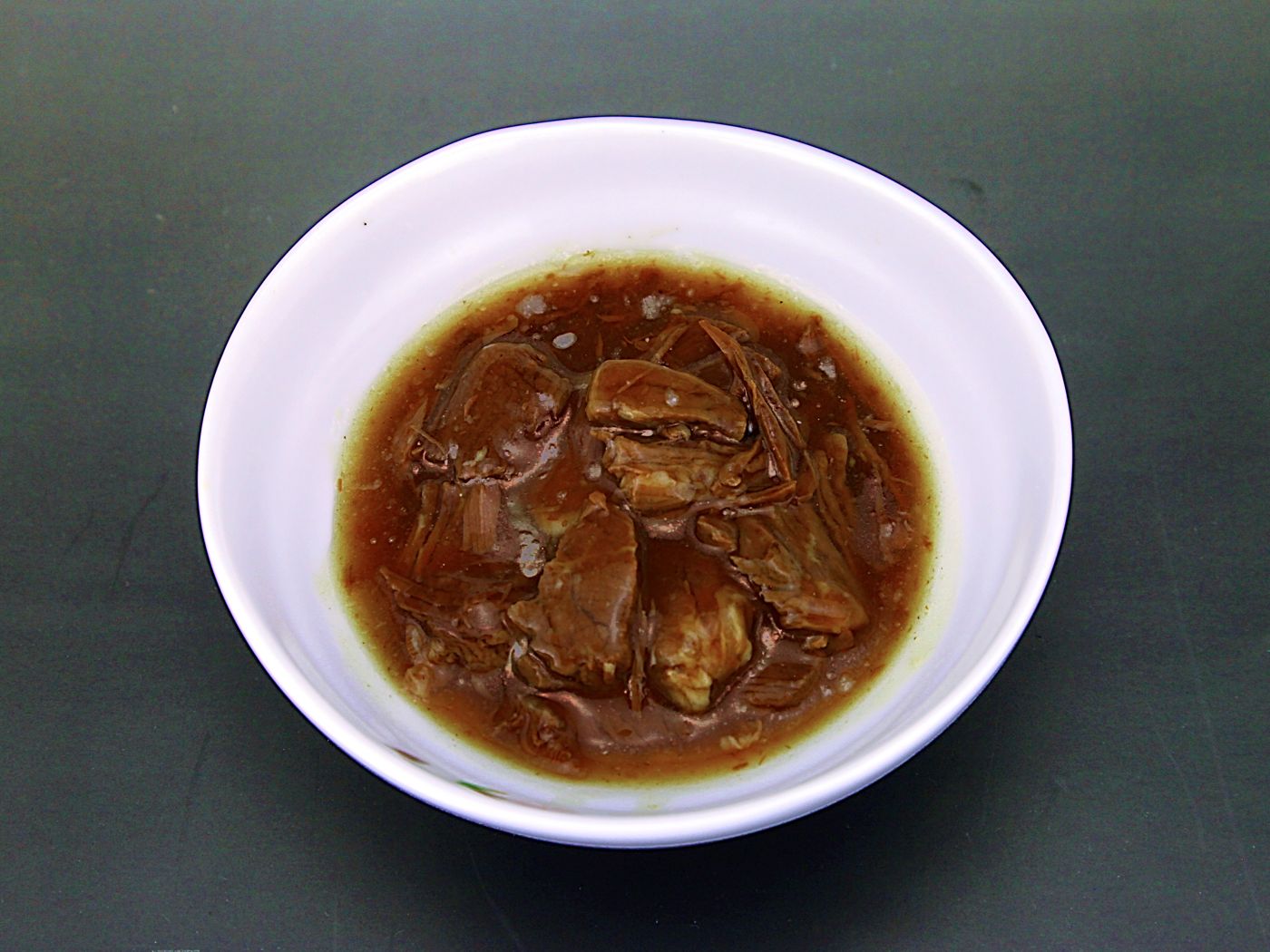 Jangjorim장조림Lean beef simmered in soy sauce until tender, then torn into strands and served in its savory broth, often with eggs, garlic and mild peppers.
 Sigeumchi Namul시금치나물Spinach blanched for a few seconds, squeezed dry and dressed with garlic, soy sauce and sesame — one of the simplest and most familiar namul.
 Napa Cabbage Kimchi배추김치Salted napa cabbage layered with a red paste of chili, garlic, ginger and fermented seafood, then left to ripen: the kimchi most people picture first.
Sources
- 01조림 (Jorim) — Encyclopedia of Korean Culture
- 02조선 후기에 새로 들어온 채소 (Vegetables newly introduced in late Joseon) — Korean History Online, National Institute of Korean History
- 03Potatoes, flesh and skin, raw (FDC 170026) — USDA FoodData Central
- 04Sodium reduction — World Health Organization fact sheet
Last updated