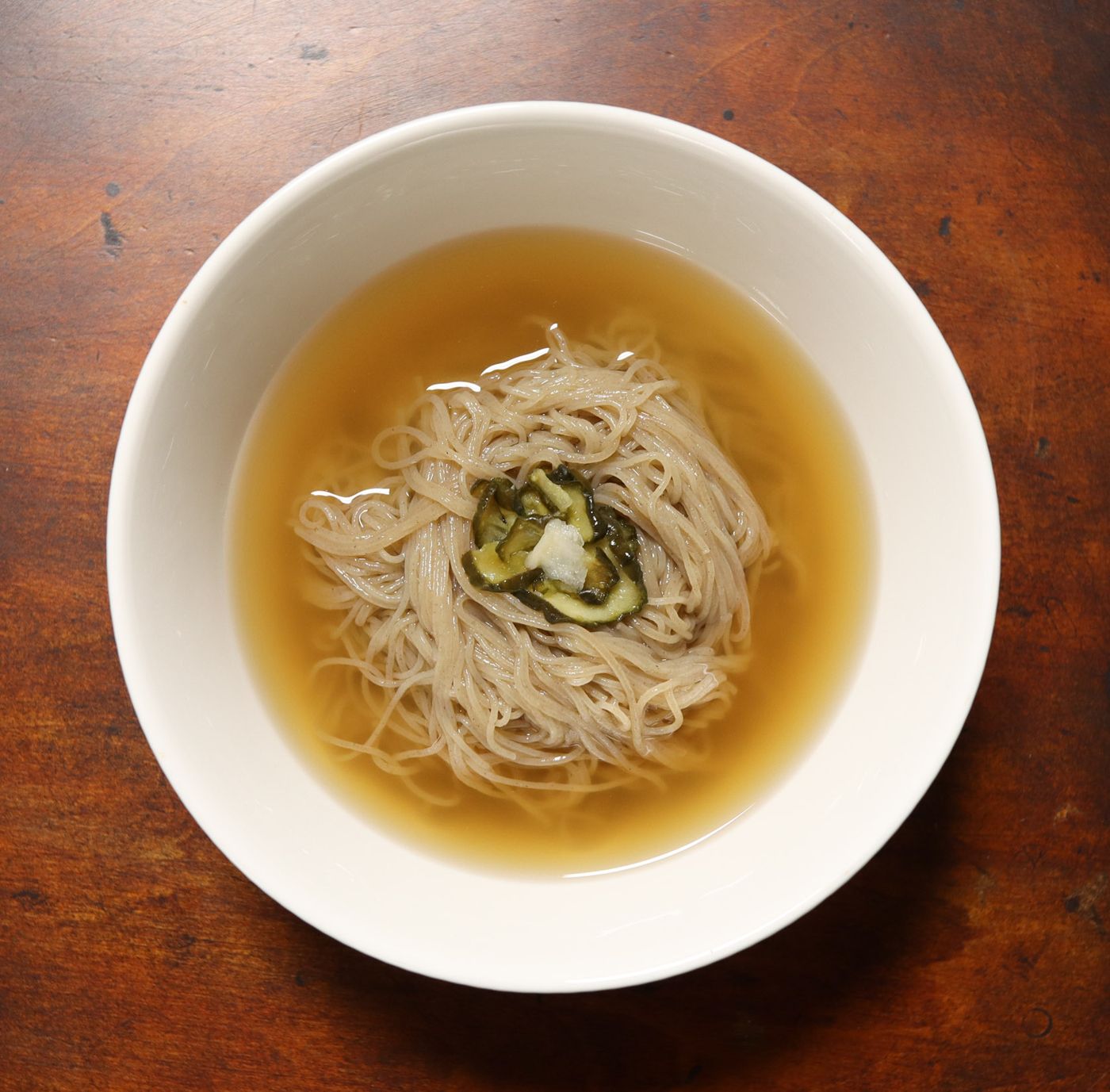
 Photo: Mobius6, CC BY-SA 4.0, via Wikimedia Commons
Myeon · Noodles 면
Mul-naengmyeon (Cold Buckwheat Noodles in Broth)
물냉면
Romanization: mul-naengmyeon
Buckwheat noodles in an icy mix of beef broth and dongchimi, topped with sliced beef, pear, radish and egg — a Pyongyang winter dish now loved in summer.
- Serves
- 4
- Prep
- 30 min
- Cook
- 120 min
RegionNorthern Provinces (Hwanghae, Pyeongan, Hamgyeong)
Jump to recipeRecipe
Ingredients · Serves 4
- 400 gBeef shank or brisketin one piece, soaked 30 minutes to draw out blood
- 2.5 LWaterfor the broth
- 100 gKorean radishfor the broth; plus dongchimi radish for topping
- 2 stalksGreen onionfor the broth
- 5 clovesGarlicfor the broth
- 600 mlDongchimi brine, well chilledhomemade or store-bought; with a few slices of its radish
- 1 tbspClear (light) soy sauce
- ½ tspSaltadjust to taste
- 1 tbspSugar
- 1 tbspRice vinegarplus more at the table
- 400 gDried buckwheat naengmyeon noodlesabout 100 g per person
- 100 gKorean (Asian) pearpeeled, thinly sliced
- 100 gCucumberthinly sliced on the diagonal
- 2 largeEggshard-boiled and halved
- Korean mustard (gyeoja), vinegar and sugarto serve
Method
Technique: Making Yuksu: Anchovy-Kelp Stock
Step 1: Put the beef, radish, green onion and garlic in a large pot with the water. Bring to a boil, skim off the foam, then simmer gently, partly covered, for 1½ hours until the beef is tender.
Step 2: Lift out the beef, wrap it and chill. Strain the broth through a fine sieve or cloth, cool it, and refrigerate until the fat sets on top; lift off and discard the fat. You need about 1 liter of clear broth.
Step 3: Mix the chilled broth with the dongchimi brine, soy sauce, salt, sugar and vinegar. Taste: it should be lightly salty, tangy and refreshing. Put it in the freezer for 30–60 minutes until slushy at the edges.
Step 4: Slice the chilled beef thinly against the grain. Slice some radish from the dongchimi.
Step 5: Cook the noodles in plenty of boiling water according to the package (usually 40 seconds to 1 minute). Drain and rinse vigorously in ice water, rubbing to remove surface starch, then squeeze out the water and twist into four neat nests.
Step 6: Place a noodle nest in each chilled bowl, top with beef, dongchimi radish, pear, cucumber and half an egg, and pour the ice-cold broth gently around the noodles.
Step 7: Serve at once with mustard, vinegar and sugar so each person can season their bowl. Cut the long noodles with scissors if you like.
Origin & History
Naengmyeon means "cold noodles," and mul-naengmyeon is the version served in broth (mul), as opposed to the spicy, dressed bibim-naengmyeon. The Encyclopedia of Korean Culture notes that naengmyeon is recorded in the mid-19th-century almanac Dongguk sesigi, in court banquet records (Jinchan uigwe) and in late-Joseon cookbooks such as Siui jeonseo and Buin pilji, so it was clearly established by the Joseon period. It developed in the north, where buckwheat grows well, using noodles of buckwheat flour with a little starch pressed through a noodle press.
Surprisingly to modern diners, it was a winter food. Dongguk sesigi lists naengmyeon among the seasonal dishes of winter and, the encyclopedia notes, judges the northwestern version the best. The encyclopedia's entry on Pyongyang naengmyeon paints the scene: noodles in ice-cold broth eaten on a heated ondol floor while temperatures outside fell to around −20 °C — fighting cold with cold. The broth was originally made with pheasant; beef and beef bones replaced it as pheasant became hard to find. See noodles in Korean history.
What makes the Pyongyang style, according to the encyclopedia, is the dongchimi: a mild, lightly salted radish water kimchi fermented in large jars buried in the ground, made with more radish than cabbage and little chili, whose ice-cold brine is mixed roughly half and half with skimmed beef broth. The broth is seasoned lightly, in keeping with the region's preference for food that is neither salty nor spicy.
After the Korean War, refugees from the north carried naengmyeon south, and it spread nationwide and became a year-round dish — today mostly a summer one. See making yuksu broth.
Key Ingredients
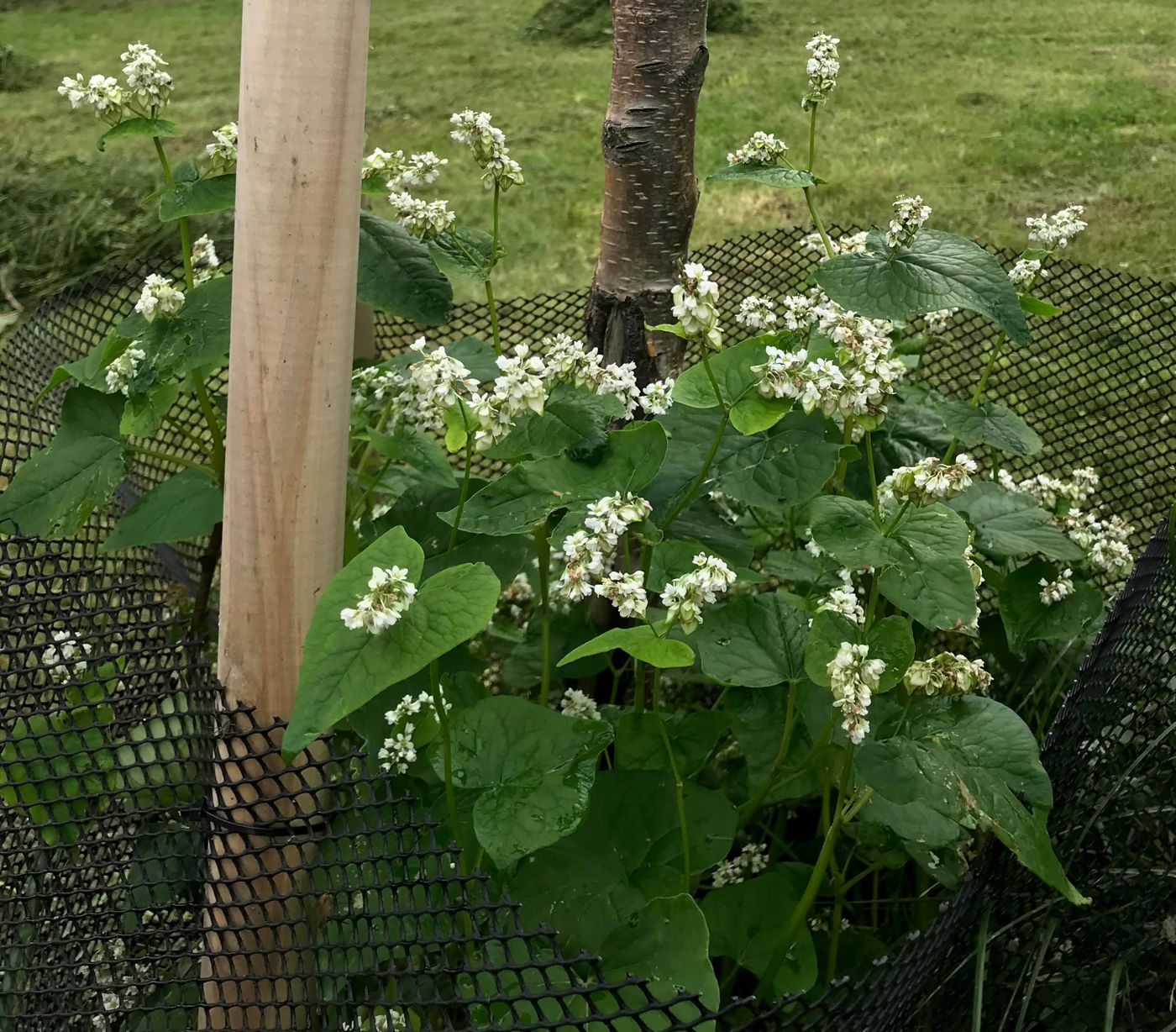 Buckwheat메밀Small, three-cornered seeds ground into a gray, earthy flour for cold noodles, makguksu and silky memil-muk. Buckwheat is the grain of Korea's cool mountain country, above all Gangwon-do.
 Korean radish무A stout, heavy white radish, often tinged pale green near the top. It is cubed for kkakdugi, left whole in the clear brine of dongchimi, shredded into salads and simmered into broths.
- Korean Pear배The large, round, crisp and very juicy Korean pear (bae). Beyond eating fresh, it is grated into meat marinades and sliced into mild kimchi for natural sweetness.
- Cucumber오이Slender, thin-skinned Korean cucumbers, prized for their crunch. Stuffed and fermented as oi-sobagi, dressed quickly as oi-muchim, salted into oiji or floated in chilled summer soup.
 Green onion파Korean green onion (pa), from thick-stemmed daepa to slender scallions — chopped into nearly every seasoning sauce, soup and kimchi, and the star of pa-kimchi.
 Garlic마늘Used raw, minced, pickled and roasted, garlic is one of the essential aromatics of Korean food — in seasonings, marinades, kimchi and namul.
 Soy sauce간장Korean soy sauce, in two main kitchen forms: pale, salty guk-ganjang (soup soy sauce) brewed the traditional way from meju, and darker, sweeter jin-ganjang for braises and marinades.
Nutrition
| Calories | ~570 kcal |
|---|---|
| Protein | ~37 g |
| Fat | ~8 g |
| Carbohydrates | ~84 g |
| Fiber | ~5.4 g |
| Sodium | ~2040 mg |
Notable forProtein · Zinc · Vitamin B12
Estimated from Korean Food Composition Table values for dry buckwheat naengmyeon noodles (A0060000001a) and watery dongchimi (F2050050009a), and USDA FoodData Central (SR Legacy) values for raw beef shank (FDC 169441), Korean radish (FDC 168451), Asian pear (FDC 168177), cucumber (FDC 168409), whole egg (FDC 171287), soy sauce (FDC 174277), sugar and table salt, divided by 4. Assumes the whole beef shank is eaten as topping and the broth itself adds negligible calories after skimming. Dried noodles already contain salt; leaving half the broth in the bowl cuts sodium by roughly a third. Actual values vary with ingredients, portion size and preparation.
Health Benefits
- Buckwheat: traditional noodles are made largely from buckwheat, a whole grain prized in the cold north; the share varies widely in commercial noodles.
- Lean protein: sliced beef shank and egg make the bowl fairly high in protein and low in fat, with zinc and vitamin B12 from the beef.
- Fermented brine: dongchimi adds a clean, lightly sour flavor; see fermented foods.
Regional Variations
- Pyongyang naengmyeon (northern provinces): buckwheat-and-starch noodles in a mix of beef broth (formerly pheasant) and dongchimi, topped with sliced beef, kimchi, pear and boiled egg; mild and lightly seasoned. Vinegar, sugar and mustard are added at the table.
- Hamheung naengmyeon (northern provinces): chewy noodles of potato starch dressed with spicy raw-fish (hoe) and chili paste rather than served in broth — the origin of bibim-naengmyeon and hoe-naengmyeon.
- Jinju naengmyeon (Gyeongsang): pure buckwheat noodles in beef broth with boiled beef, egg-strip garnish and pear; the encyclopedia notes it uses no pork and was eaten more in winter than summer.
- Southern restaurant style: many restaurants serve chewier noodles with more starch and a sweeter, more vinegary broth than the classic northern style.
Pairings
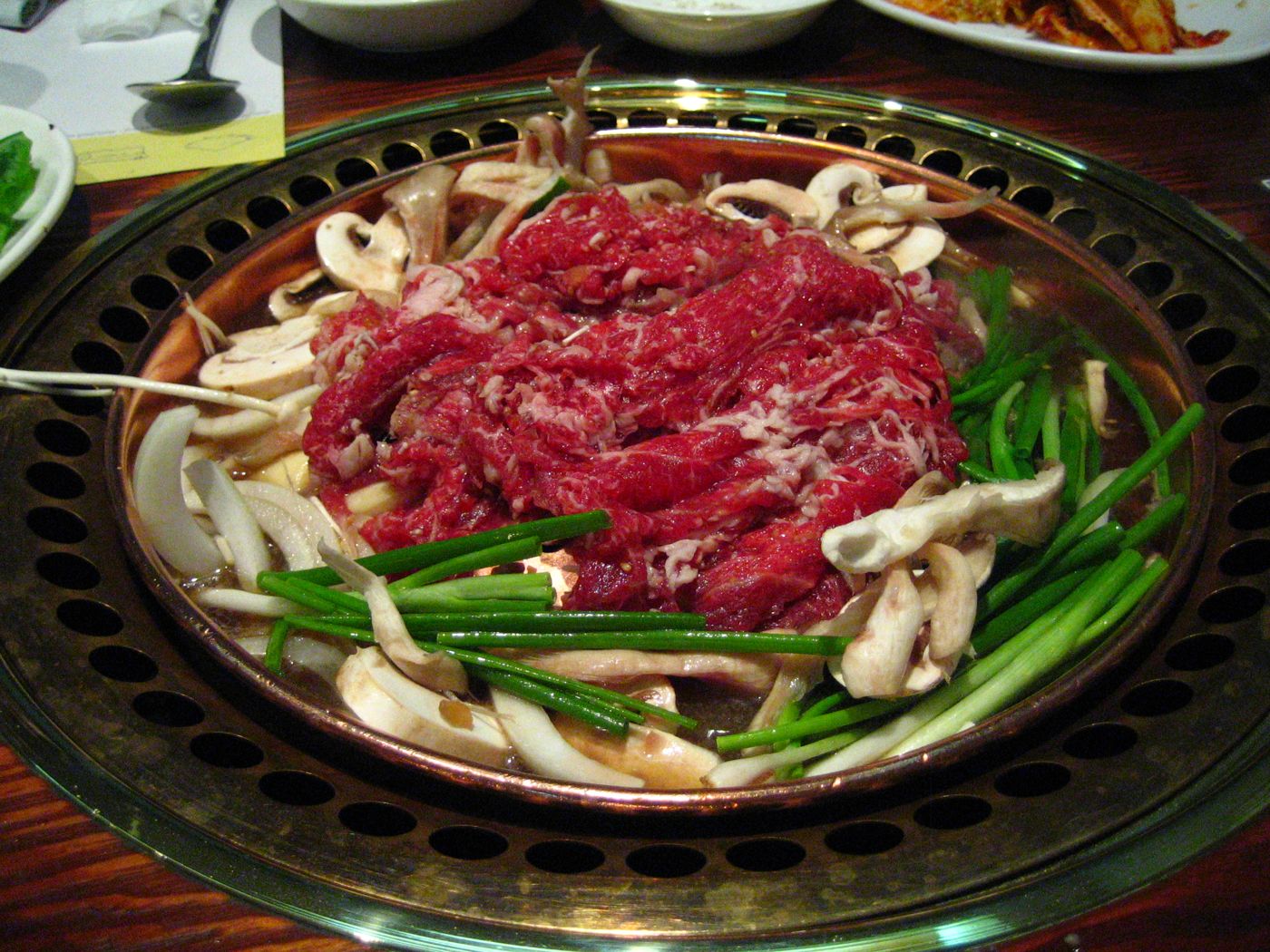 Bulgogi (Marinated Grilled Beef)불고기Thin slices of beef marinated in soy sauce, pear, garlic and sesame, then grilled or seared — descended from the court dish neobiani and Korea's best-known meat dish.
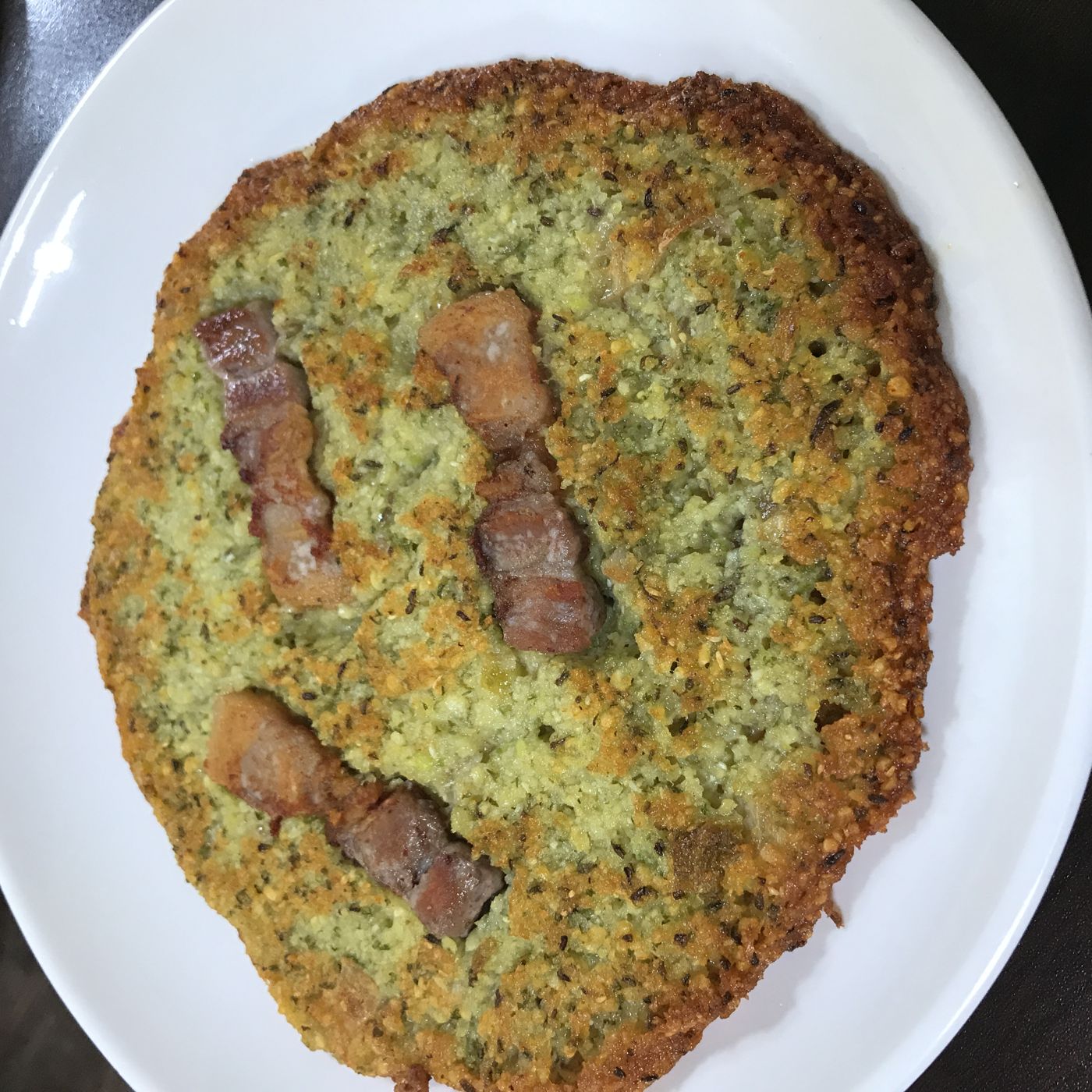 Nokdu Bindaetteok (Mung Bean Pancake)녹두빈대떡Soaked mung beans ground into a thick batter with kimchi, sprouts and pork, then fried crisp in generous oil — a northern specialty and a Seoul market favorite.
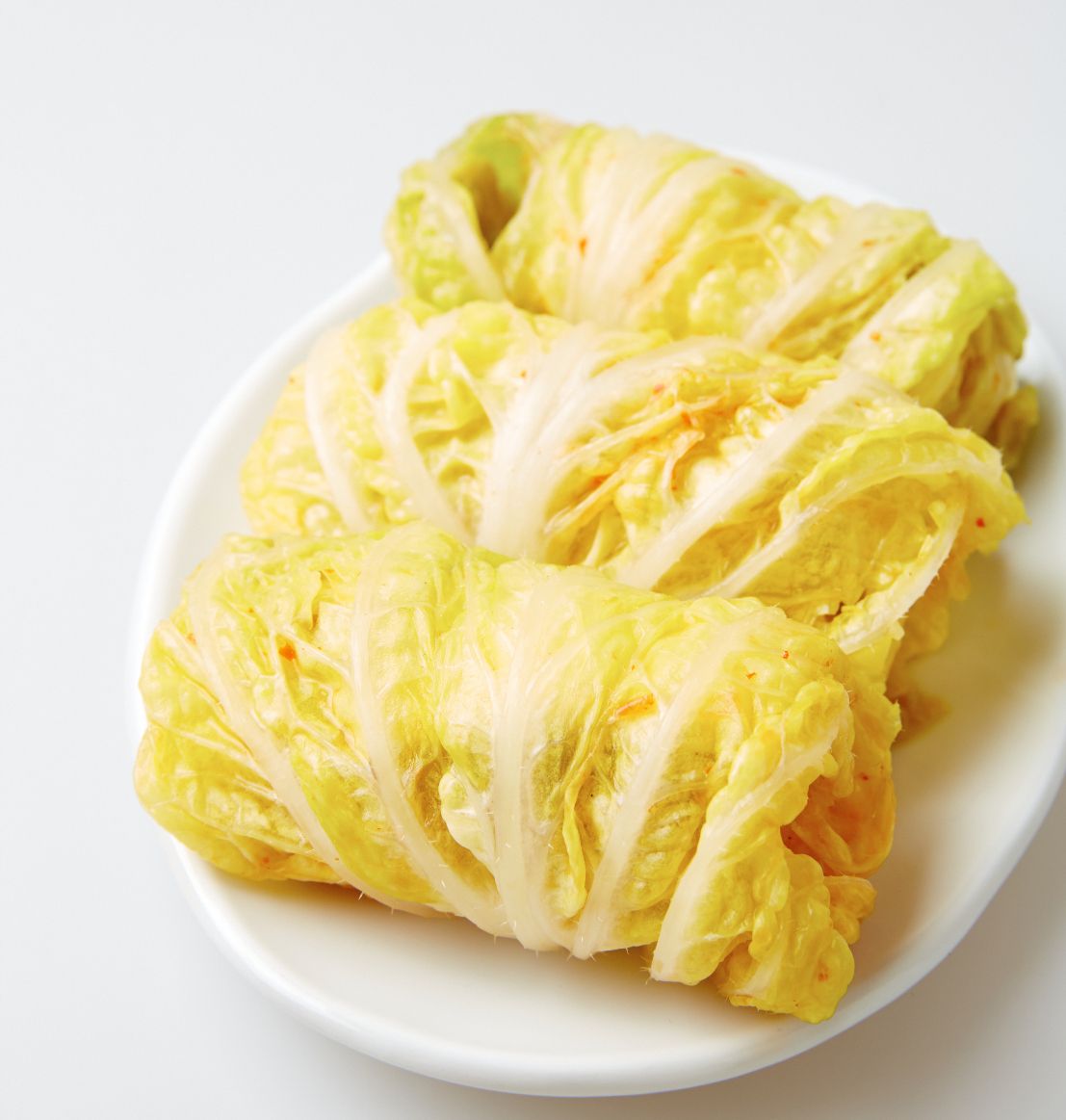 White Kimchi백김치Napa cabbage stuffed with radish, pear, chestnut and jujube and ripened in a clear, cool brine — kimchi with no chili flakes, mild and refreshing.
Sources
- 01냉면 (Naengmyeon) — Encyclopedia of Korean Culture
- 02평양냉면 (Pyongyang Naengmyeon) — Encyclopedia of Korean Culture
- 03한식이야기: 냉면 (Korean Food Story: Naengmyeon) — Korean Food Promotion Institute
- 04Buckwheat noodle, Nangmyeon, Dry noodle (A0060000001a) — Korean Food Composition Table
- 05Kimchi, Dongchimi (F2050050009a) — Korean Food Composition Table
Last updated