Techniques
Jorim: Braising in Seasoned Liquid
조림
Simmering ingredients in a soy-based liquid until it reduces to a glossy glaze: the method behind gamja-jorim, jangjorim and more.
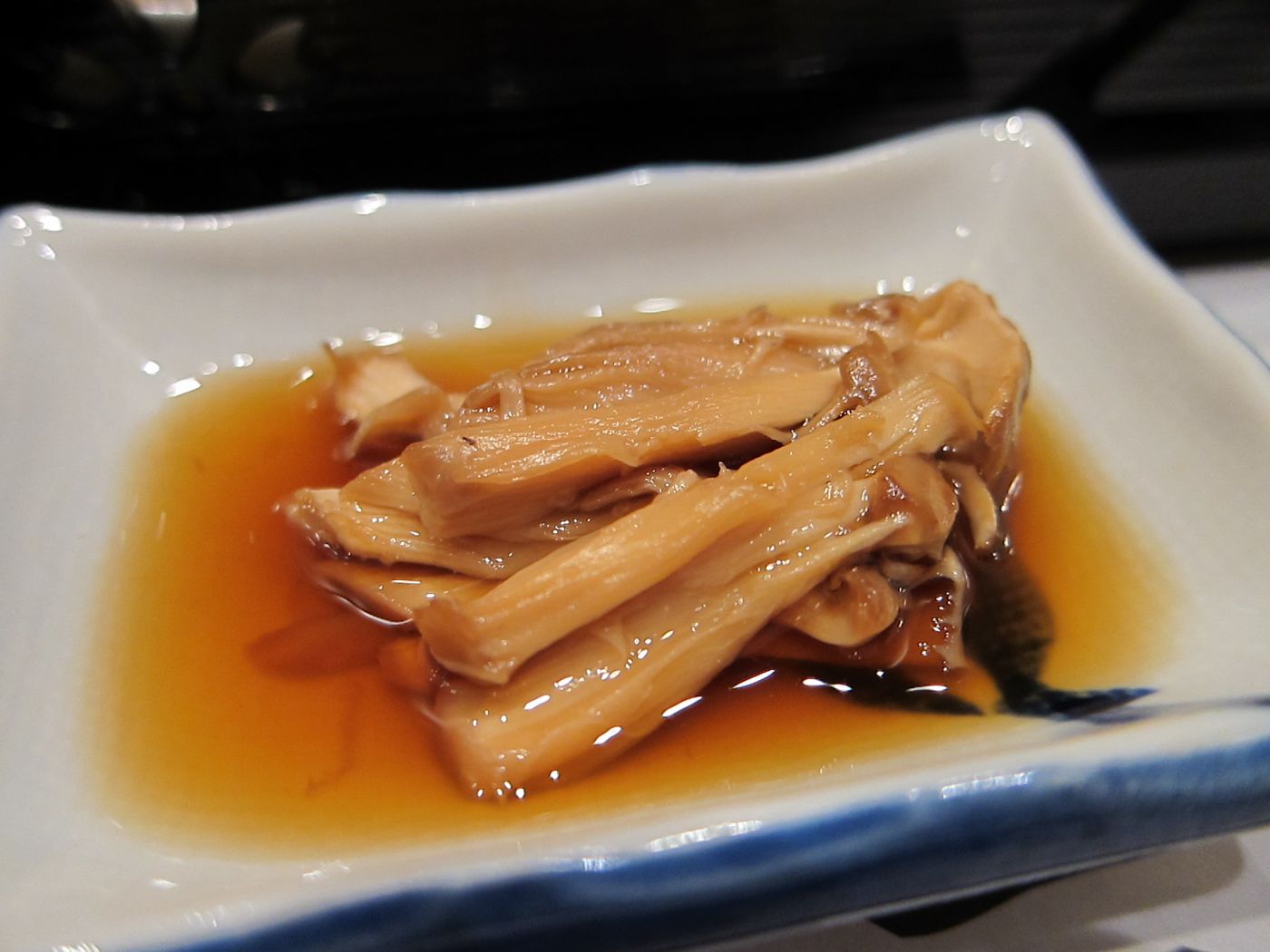 Photo: Eugene Kim, CC BY 2.0, via Wikimedia Commons
Jorim comes from the verb jorida, to boil down. The Encyclopedia of Korean Culture describes it as seafood, meat or vegetables cooked slowly over low heat until the seasoning has fully soaked in. The result is a dish with little or no free liquid, intensely seasoned, and often glossy. Because jorim is salty and comparatively dry, it keeps well, which is one reason it is such a fixture among banchan.
The basic method
- Prepare the main ingredient. Cut it into even pieces so it cooks at the same rate. Potatoes and lotus root are peeled and cut; tofu is sliced and often pan-fried first so it holds together; beef for jangjorim is cut into large chunks. The encyclopedia notes that dried fish should be soaked before braising.
- Pre-cook when needed. For meat, the encyclopedia describes simmering it in plain water first and adding soy sauce afterward; this lets the meat become tender before salt tightens it. Dense roots such as lotus are often parboiled to soften them.
- Add the braising liquid. The base is almost always ganjang, diluted with water or stock and usually sweetened with sugar, honey or mulyeot (rice syrup). Garlic, green onion or dried chilies may go in. For strong-smelling oily fish such as mackerel, the encyclopedia mentions mixing in gochujang to balance the flavor.
- Simmer, then reduce. Cook at a steady simmer, turning or basting the pieces so they color evenly. As the liquid evaporates, salt, sugar and savory compounds concentrate and coat the food.
- Finish. Many cooks add rice syrup near the end for shine, then toss with sesame oil and sesame seeds once the sauce is thick enough to cling.
Why it works
Jorim relies on two things happening at once: the ingredient softens and absorbs seasoning while the liquid around it shrinks. Starting with more liquid than seems necessary gives dense ingredients time to cook through before the sauce is gone. Low, even heat matters most at the end, when a thickening, sugary glaze can scorch quickly.
Common dishes
- Gamja-jorim: small potatoes braised in soy sauce and syrup until glazed.
- Dubu-jorim: pan-fried tofu simmered in a soy and chili sauce.
- Jangjorim: beef (often with eggs or peppers) braised in soy sauce and shredded to serve.
- Yeongeun-jorim: lotus root slices braised until chewy and glossy.
Fish jorim, such as mackerel or hairtail braised with radish, is a popular main dish rather than a banchan, and often uses gochugaru or gochujang alongside soy sauce.
Jorim versus jjim and bokkeum
Jjim also uses seasoned liquid, but finishes with more sauce and is often steamed or braised in a covered pot. Bokkeum starts with oil and high heat and moves quickly; see stir-frying. Jorim sits between them: wet at the start, nearly dry at the end.
History
Braising in soy sauce is old, but the word jorim came into cookbooks late. According to the Encyclopedia of Korean Culture, 18th-century texts did not yet separate these dishes as a category; the first documented use appears in the 19th-century Siui Jeonseo, which gives a method for jangjorim: large pieces of beef braised in soy sauce until they keep without spoiling, with a variant using meatballs studded with walnuts and pine nuts and sweetened with honey. That emphasis on keeping quality reflects jorim's role as a dependable, make-ahead side dish.
Tips
- Season gradually; reduction concentrates salt, so a sauce that tastes right at the start will be stronger at the end.
- Use a wide pan so pieces sit in one layer and the liquid reduces evenly.
- Let jorim cool before refrigerating in a covered container; the glaze firms as it cools and softens again at room temperature.
Dishes using this technique
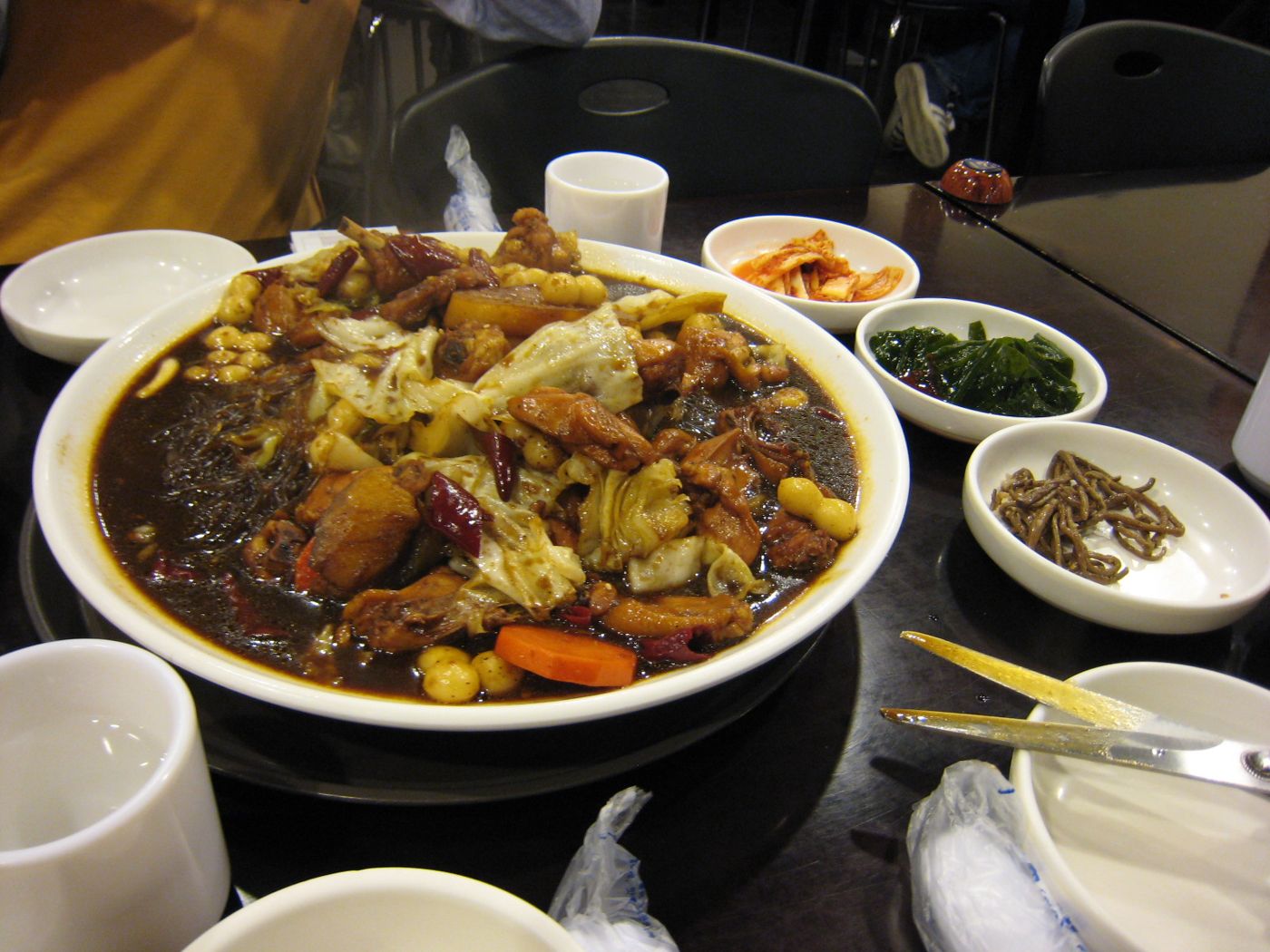 Andong Jjimdak (Soy-Braised Chicken with Glass Noodles)안동찜닭Chicken braised hard in a sweet soy sauce with potatoes, vegetables, dried chilies and glass noodles — a 1980s invention of Andong's old market, not a yangban heirloom.
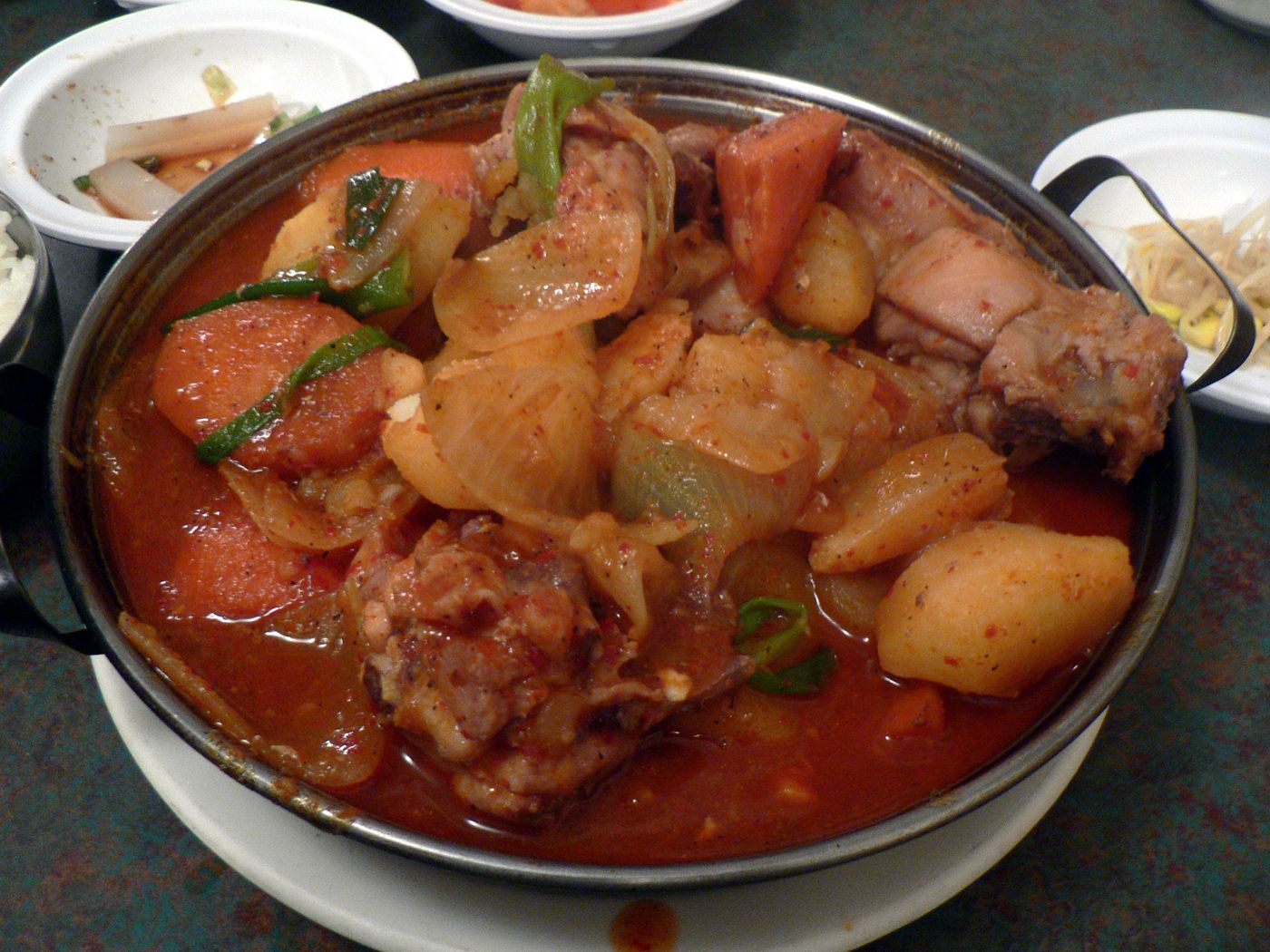 Dak-bokkeumtang (Spicy Braised Chicken)닭볶음탕Bone-in chicken and potatoes braised in a red chili sauce until it thickens and clings — long known as dakdoritang, a name whose origin is still debated.
- Dubu Gangjeong (Crispy Glazed Tofu)두부강정Cubes of tofu coated in starch, fried until crisp and tossed in a sticky soy-gochujang glaze — a sweet, savory banchan built on the fried-chicken gangjeong idea.
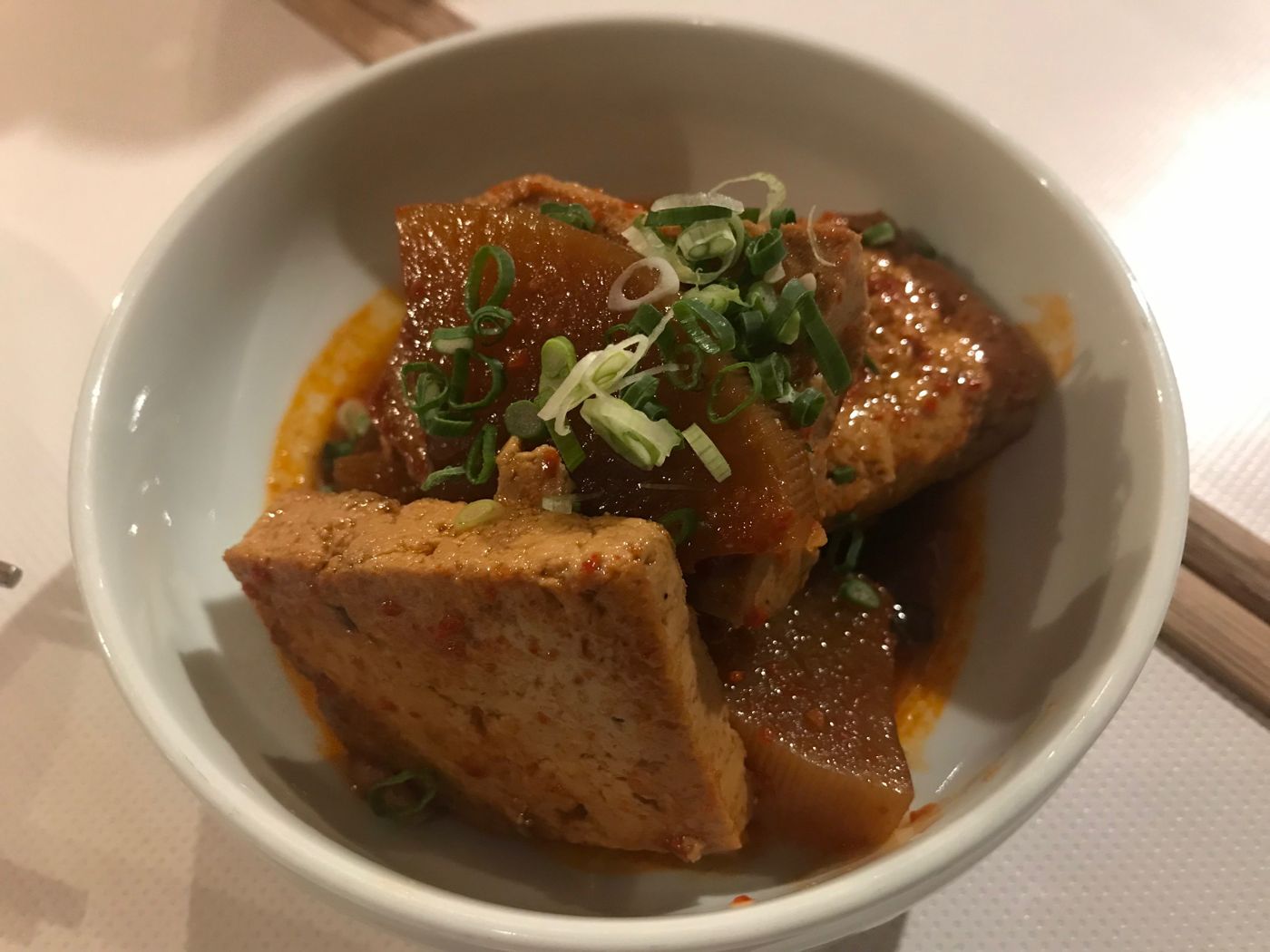 Dubu Jorim두부조림Slices of firm tofu pan-fried until golden, then simmered in a garlicky soy and chili sauce — an inexpensive, protein-rich staple of Korean home cooking.
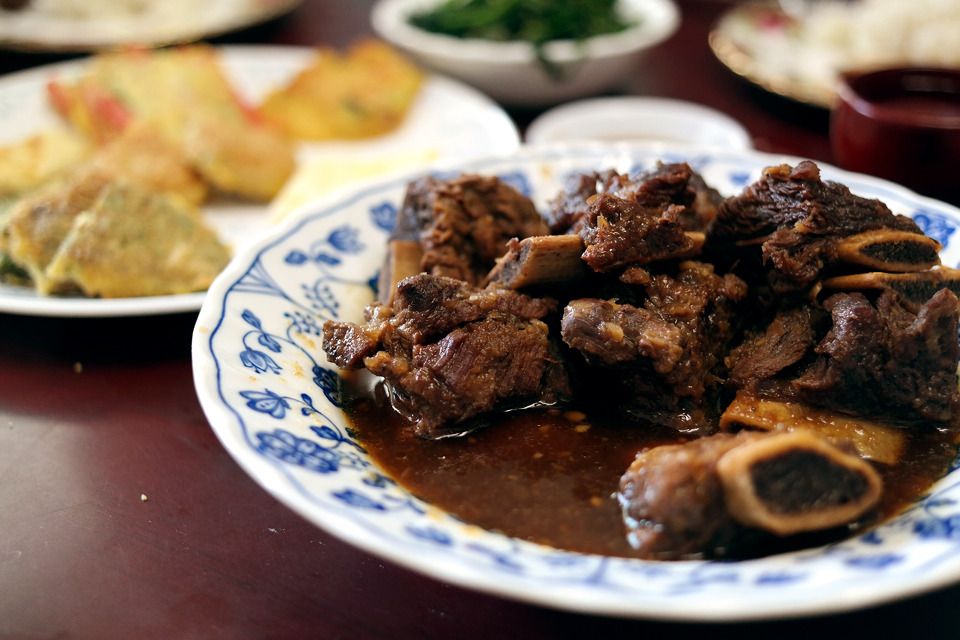 Galbi-jjim (Braised Beef Short Ribs)갈비찜Beef short ribs simmered slowly in soy sauce, pear and garlic with radish, carrot, chestnuts and jujubes until glossy and tender — a dish for holidays and honored guests.
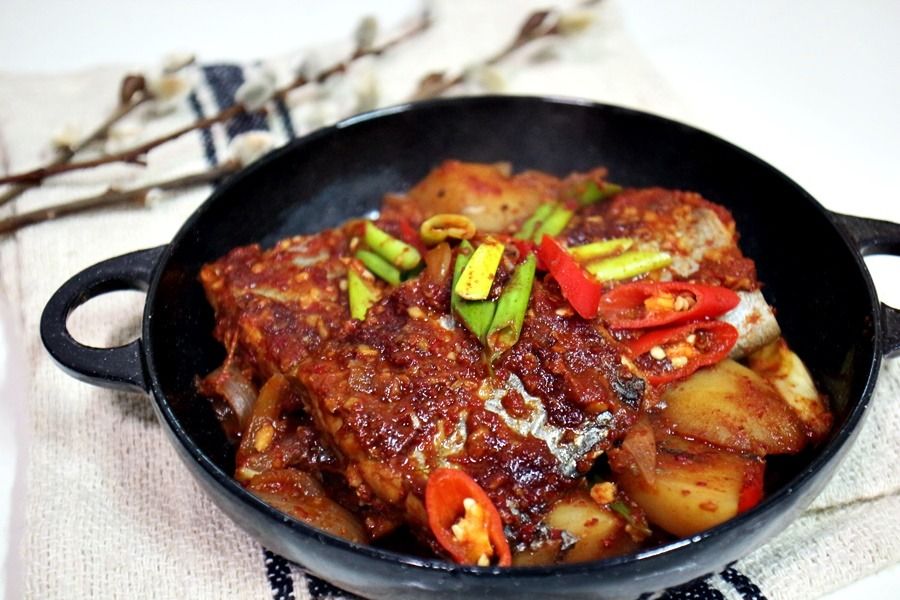 Galchi Jorim갈치조림Silvery hairtail braised with radish in a red, garlicky soy and chili sauce — a Jeju specialty and a favorite across Korea's southern coast.
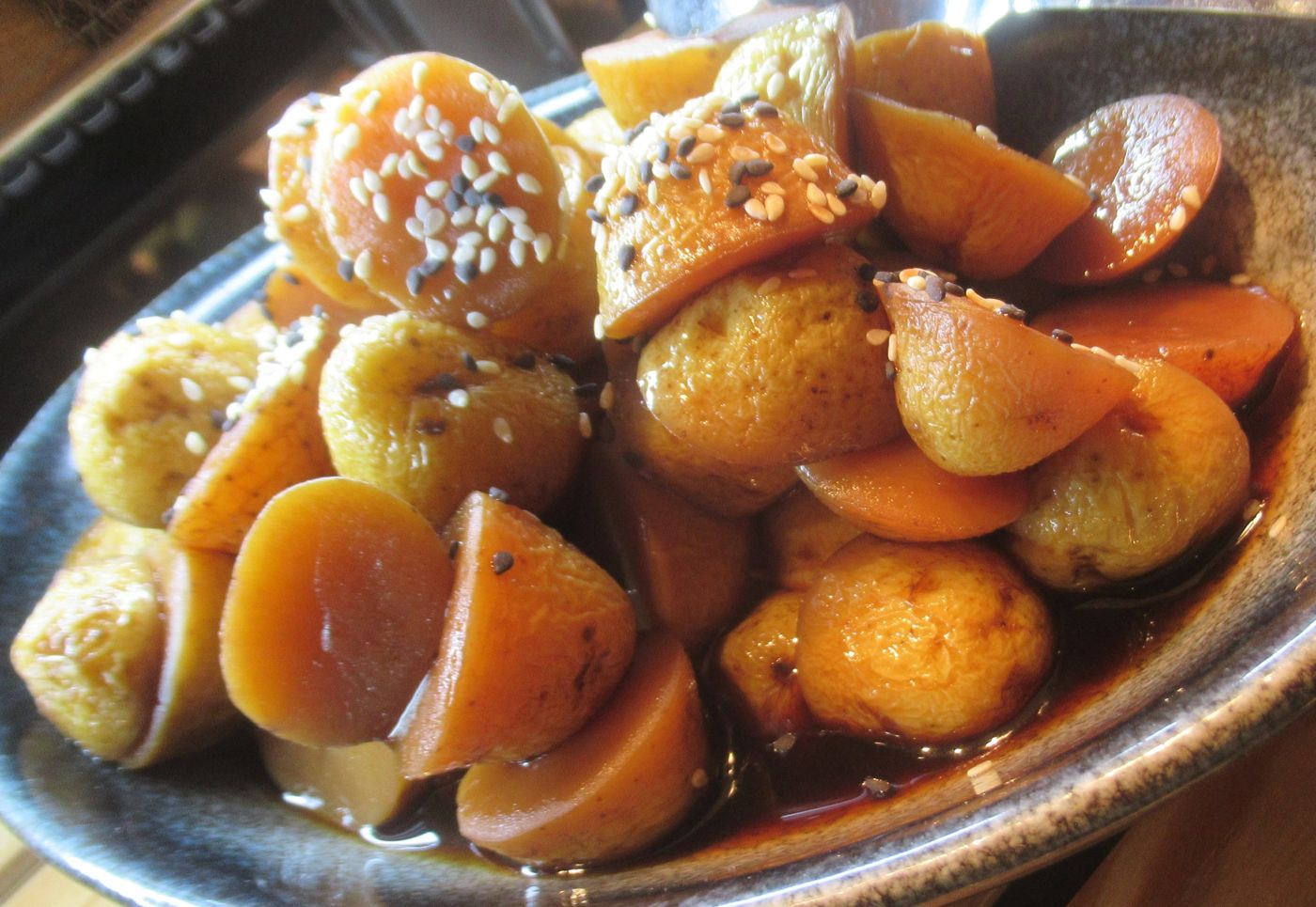 Gamja Jorim감자조림Cubed potatoes simmered in soy sauce, garlic and a touch of sweetness until tender and glossy — a comforting, child-friendly staple of the Korean home table.
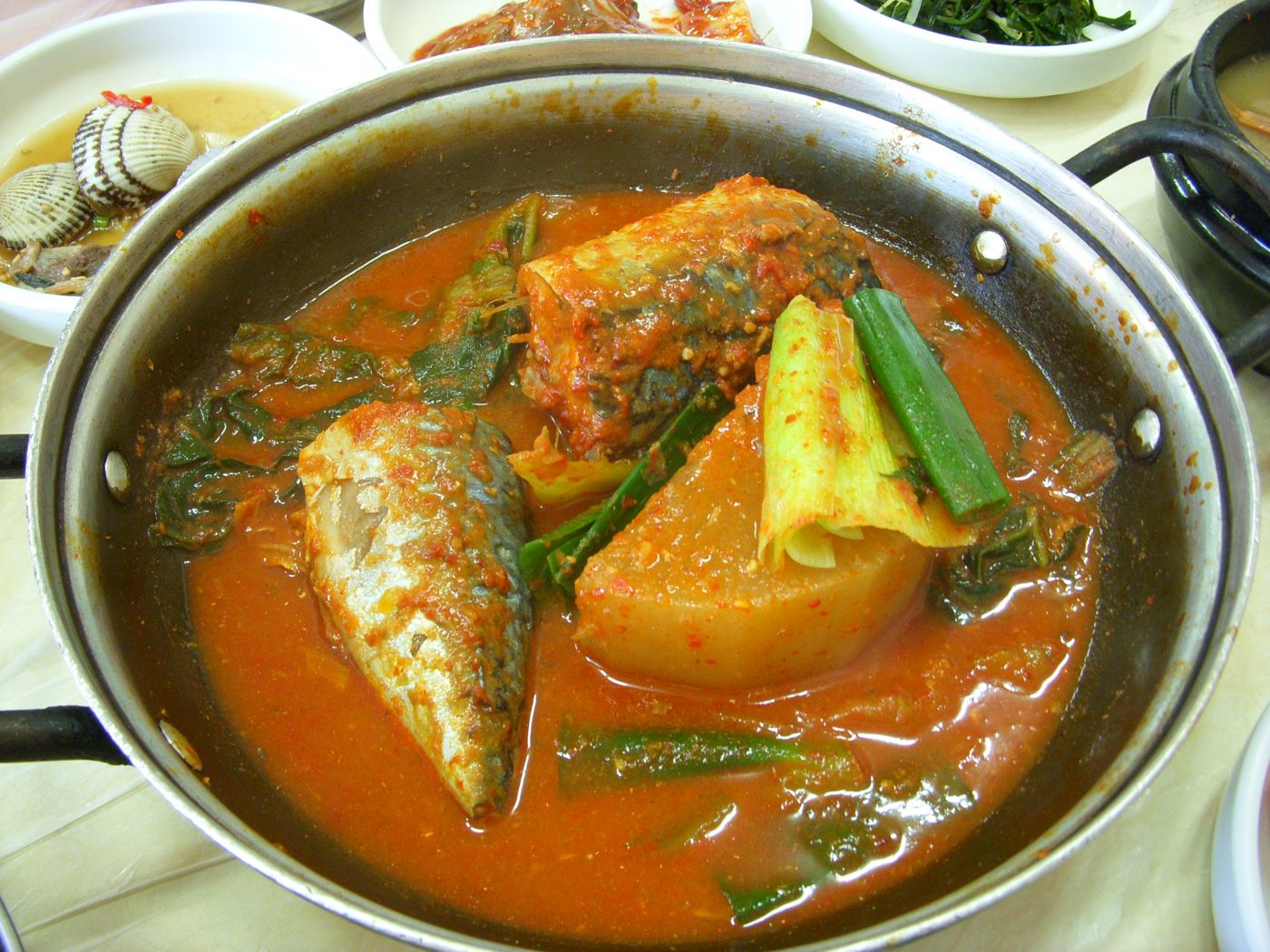 Godeungeo Jorim고등어조림Mackerel braised on a bed of Korean radish in a spicy soy and chili sauce — a warming, rice-friendly dish where the radish is often the best part.
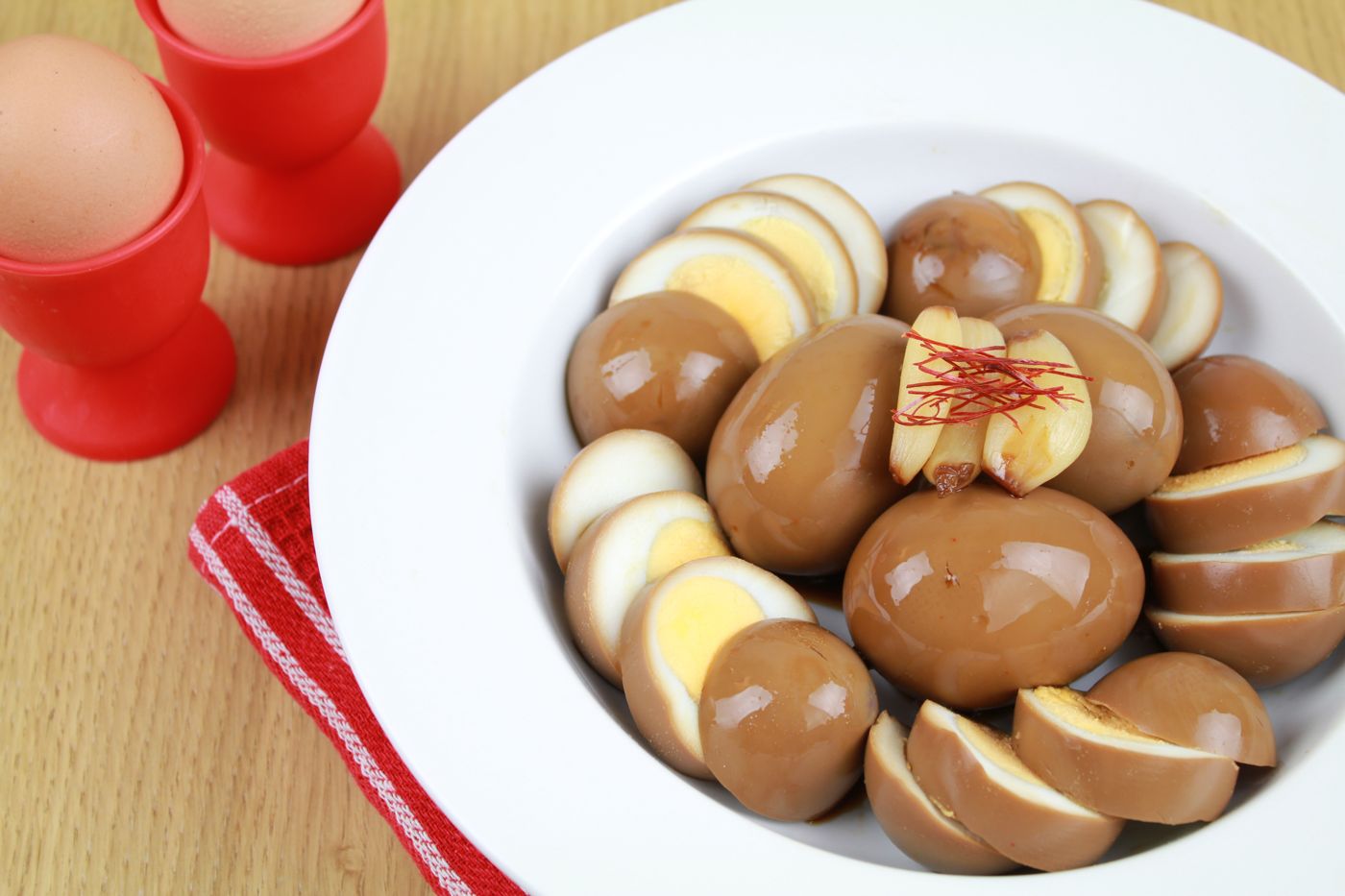 Gyeran Jangjorim (Soy-Braised Eggs)계란장조림Peeled hard-boiled eggs simmered in sweetened soy sauce with garlic and mild peppers until amber — a keep-in-the-fridge banchan for rice and lunchboxes.
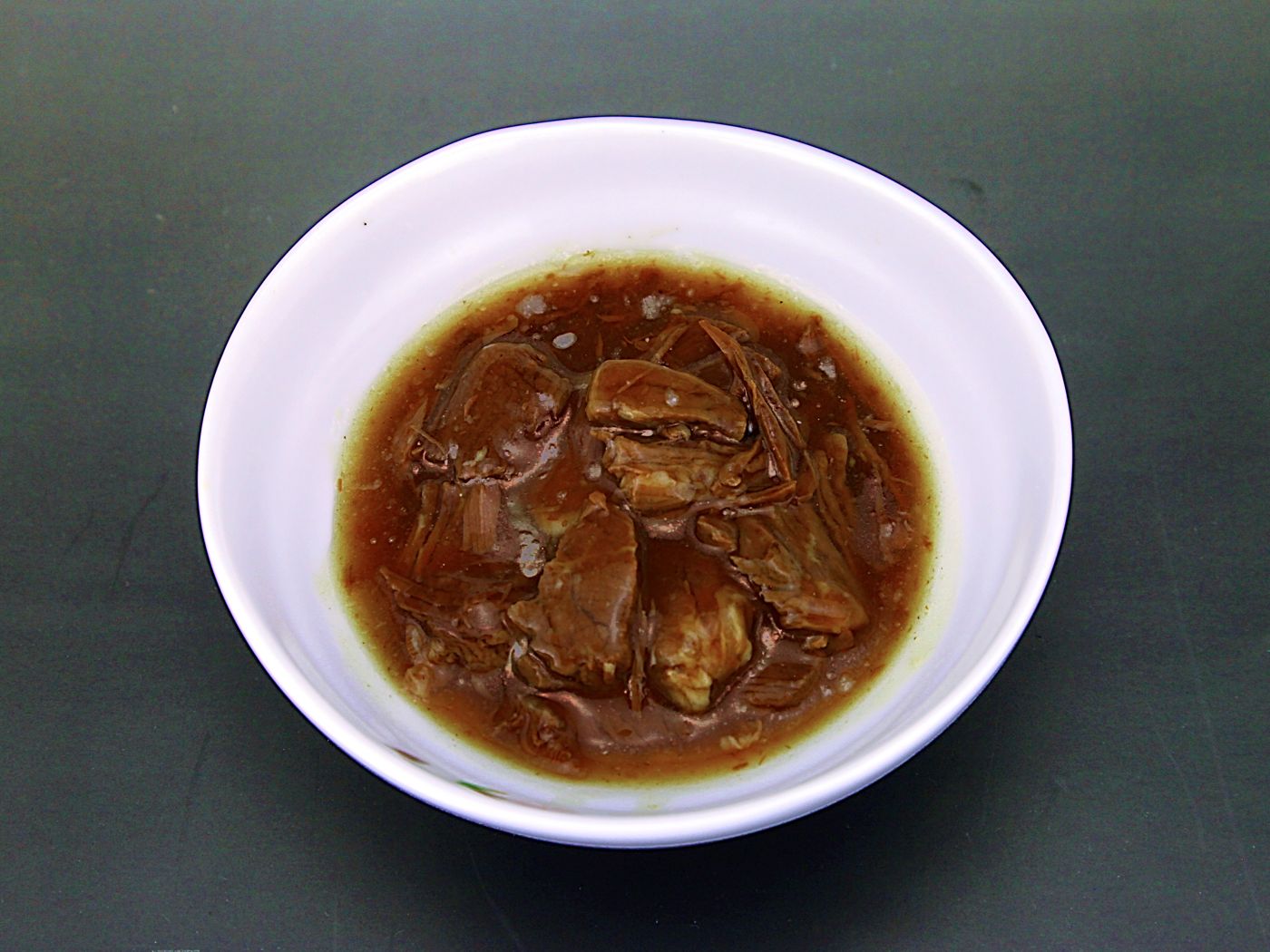 Jangjorim장조림Lean beef simmered in soy sauce until tender, then torn into strands and served in its savory broth, often with eggs, garlic and mild peppers.
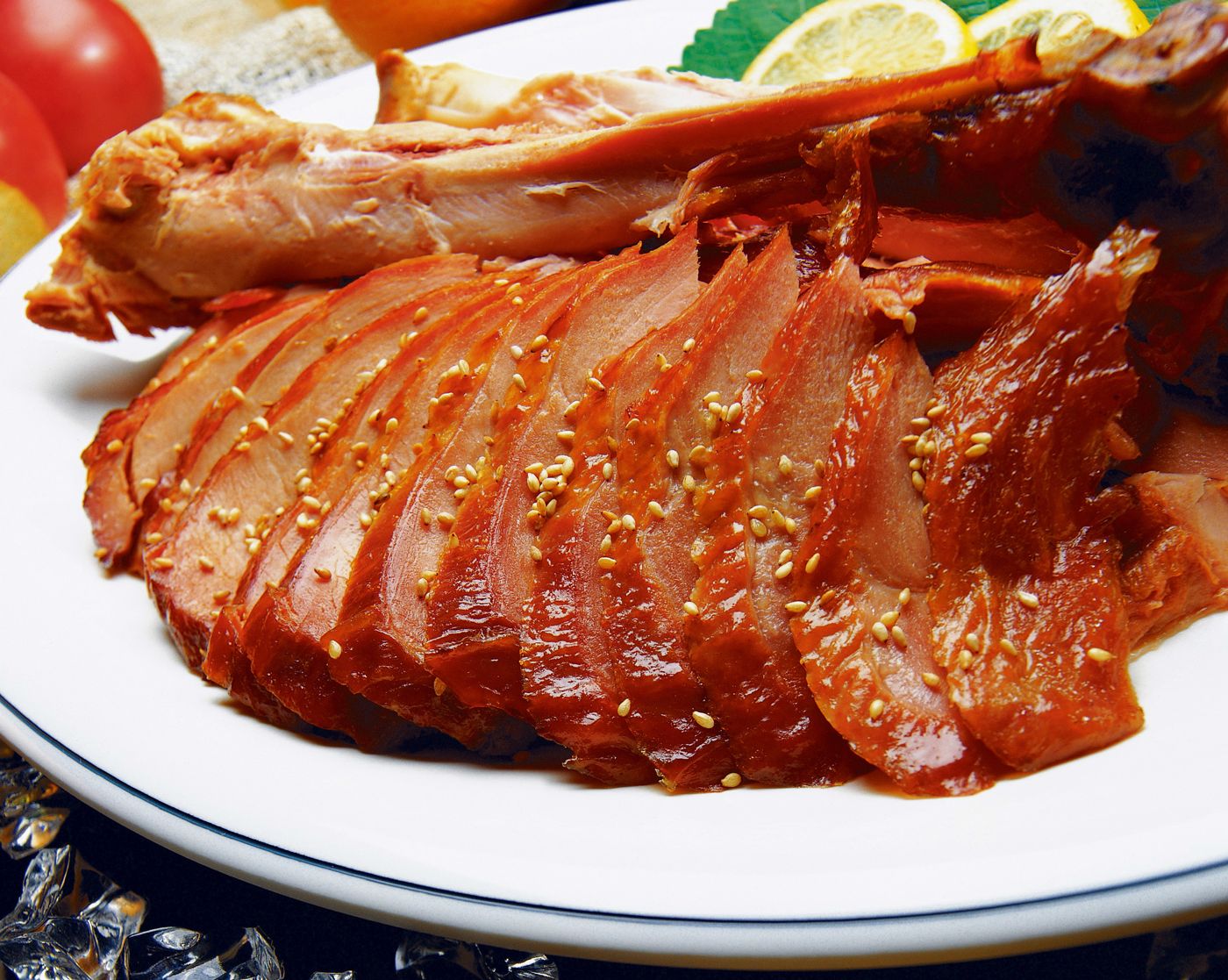 Jokbal (Braised Pig's Trotters)족발Pig's trotters simmered until tender, then braised in soy sauce and spices until glossy and sliced — a postwar Seoul specialty of Jangchung-dong.
- Kodari Jorim (Braised Semi-Dried Pollock)코다리조림Half-dried Alaska pollock braised with radish in a sweet, spicy soy-gochugaru sauce until the chewy flesh soaks up the glaze.
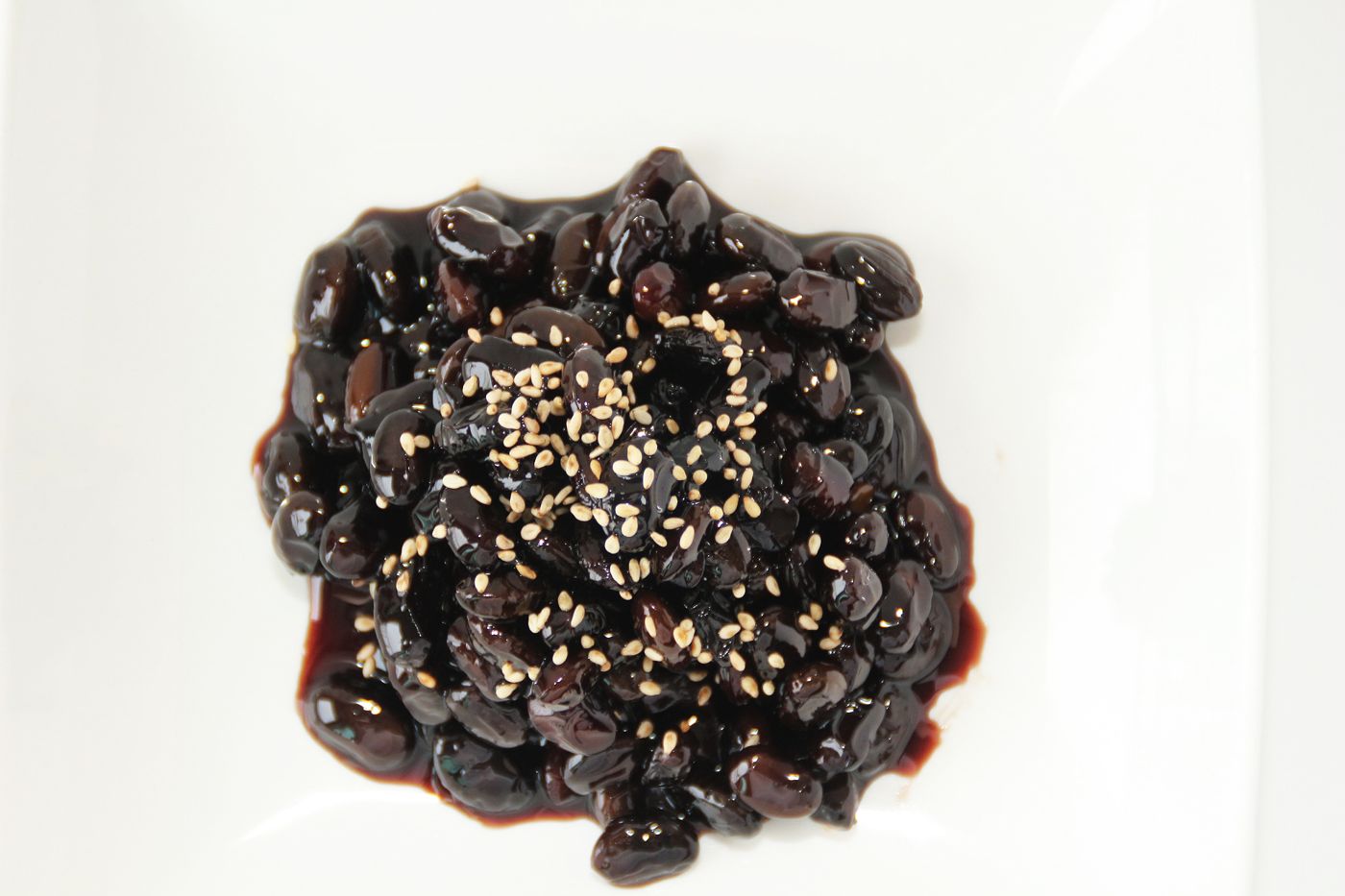 Kongjaban콩자반Black soybeans simmered in soy sauce until wrinkled and glossy, then finished with syrup and sesame — a sweet-salty, chewy keeping banchan.
- Mu Jorim (Braised Radish)무조림Thick rounds of Korean radish simmered in anchovy stock with soy sauce and chili until tender, sweet and amber — humble, warming winter banchan.
- Ueong Jorim우엉조림Thin strips of burdock root braised in soy sauce and glazed with syrup until chewy and dark — an earthy, sweet-salty keeping banchan.
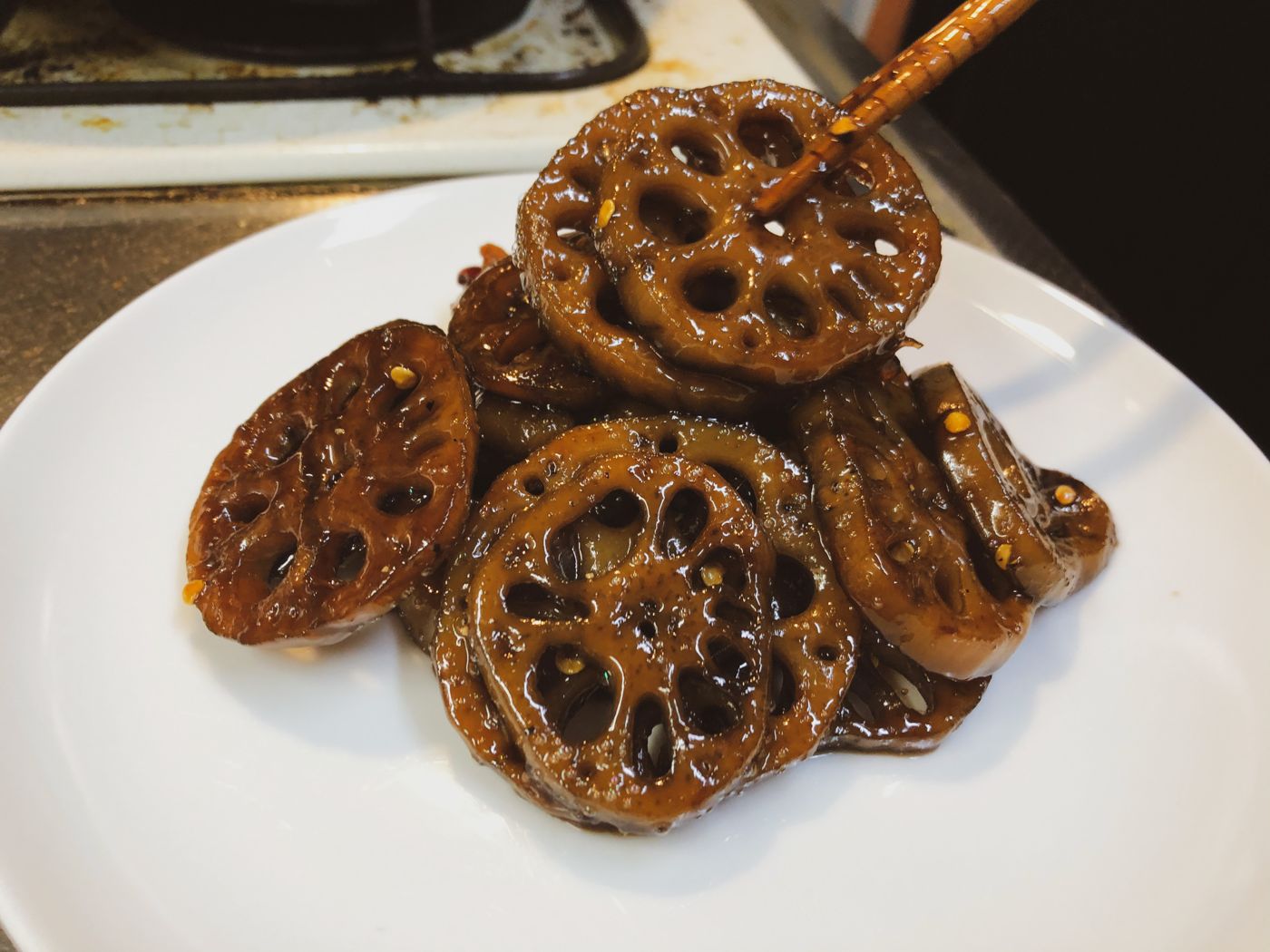 Yeongeun Jorim연근조림Rounds of lotus root simmered in soy sauce and glazed with syrup until glossy and pleasantly chewy, with a crisp bite and lace-like pattern of holes.