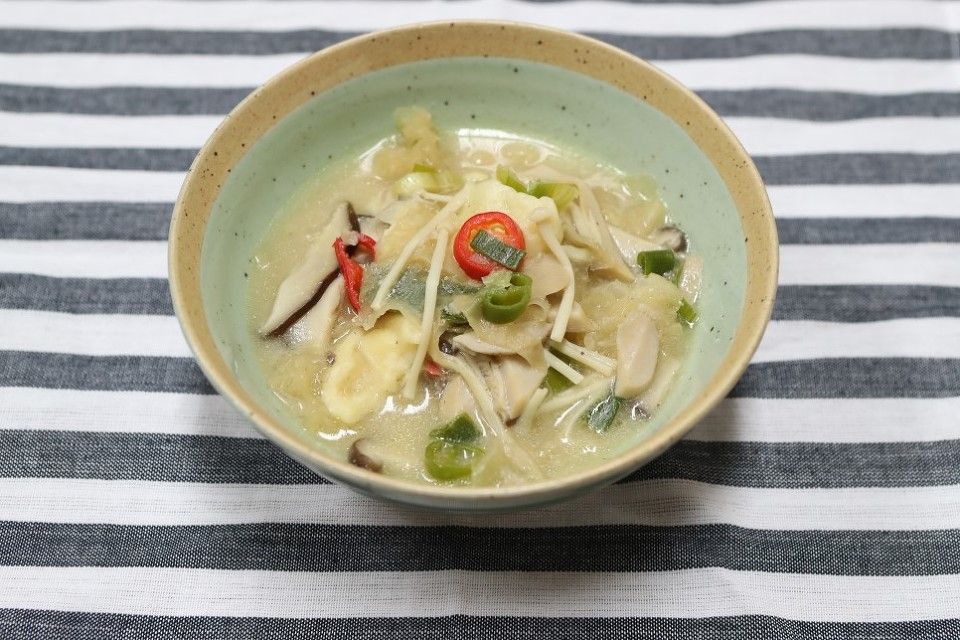
 Photo: Dr 방원장, CC BY 4.0, via Wikimedia Commons
Guk & Tang · Soups 국·탕
Sujebi (Hand-Torn Dough Soup)
수제비
Romanization: sujebi
Thin pieces of wheat dough pulled by hand into a simmering anchovy broth with zucchini and potato — a cozy, inexpensive one-pot meal, traditionally a summer staple.
- Serves
- 2
- Prep
- 45 min
- Cook
- 25 min
RegionGangwon · Jeju · Northern Provinces (Hwanghae, Pyeongan, Hamgyeong) · Tongyeong
Jump to recipeRecipe
Ingredients · Serves 2
- 200 gAll-purpose flourabout 1⅔ cups, plus extra for dusting
- 100 mlWater for the doughplus a spoonful if needed
- ½ tspSaltfor the dough, plus 1 tsp for the soup
- 20 gDried anchoviesheads and guts removed
- 1 pieceDried kelpabout 10 × 10 cm
- 1.2 LWater for the broth
- 150 gPotatocut into half-moons
- 100 gKorean zucchinicut into half-moons
- 60 gOnionsliced
- 1 stalkGreen onionsliced
- 2 clovesGarlicminced
- 1 tbspSoup soy sauce (guk-ganjang)
Method
Technique: Making Yuksu: Anchovy-Kelp Stock
Step 1: Knead the flour with ½ tsp salt and the water until smooth. Cover and rest for at least 30 minutes; the dough should be soft and elastic but not sticky.
Step 2: Simmer the anchovies and kelp in the water for 10 minutes. Remove the kelp, simmer 5 minutes more, then strain.
Step 3: Return the broth to a boil. Add the potato and onion and cook for about 6 minutes, until the potato is nearly tender.
Step 4: Wet your hands. Flatten a piece of dough in your palm and pull it into thin pieces, dropping each directly into the boiling broth. Keep the heat high so the pieces float as they cook.
Step 5: When the dumplings float, add the zucchini, garlic and soup soy sauce and simmer for 3–4 more minutes.
Step 6: Season with the remaining salt, stir in the green onion, and serve immediately while the dough is still chewy.
Origin & History
Sujebi is dough pinched or pulled by hand into boiling broth. The Encyclopedia of Korean Folk Culture describes it as a staple food: a thin batter-like wheat dough torn into a stock traditionally made from anchovy and beef. It was once indispensable in farmhouse summers, and on the seventh day of the seventh lunar month (Chilseok) households traditionally made wheat pancakes and wheat noodles. The encyclopedia dates wheat dough soups and noodles in Korea to at least the Goryeo period, and says the name derives from characters meaning “hand” and “fold.”
Older cookbooks show how varied the dish has been. The 1924 Joseon musang sinsik yori jebeop (as the encyclopedia quotes it) calls it undubyeong and mixes the dough with minced meat and seasoning, to be dropped by spoonful into a stock of chicken or seaweed. The 1939 Joseon yoribeop describes a richer version with a young chicken broth, shredded meat and eggs in the dough. North Korean cookbooks give it names such as tteodeo-guk, stressing a hot, rolling boil so each piece floats up cleanly.
Wheat flour was not always available, so the dish adapts to what each place grew. The folk encyclopedia lists regional versions made from potato starch, cornmeal, buckwheat, acorn or kudzu starch, and several dialect names such as ttukjebi and tteutmeok-guk. In Tongyeong it is called gundung-jip. The dish continues as a comforting, economical meal, often associated with cooler, rainy days in modern Korean life (see also noodles in Korean history).
Key Ingredients
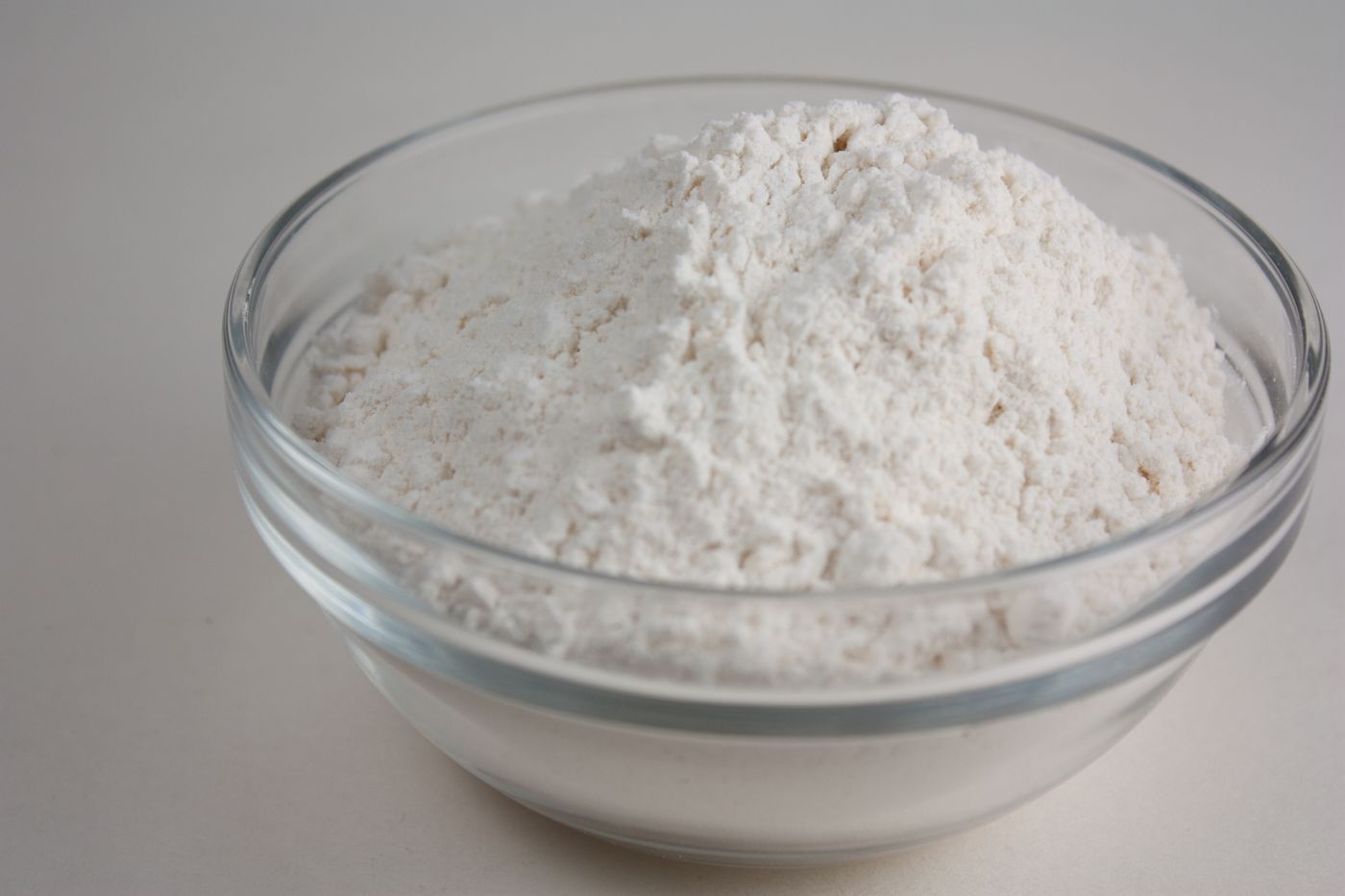 Wheat flour밀가루Finely milled wheat flour, the base of Korean noodles, dumpling wrappers, pancake batters and ramyeon. A luxury for most of Korean history, it became an everyday staple only after the Korean War, when American aid flour flooded the market.
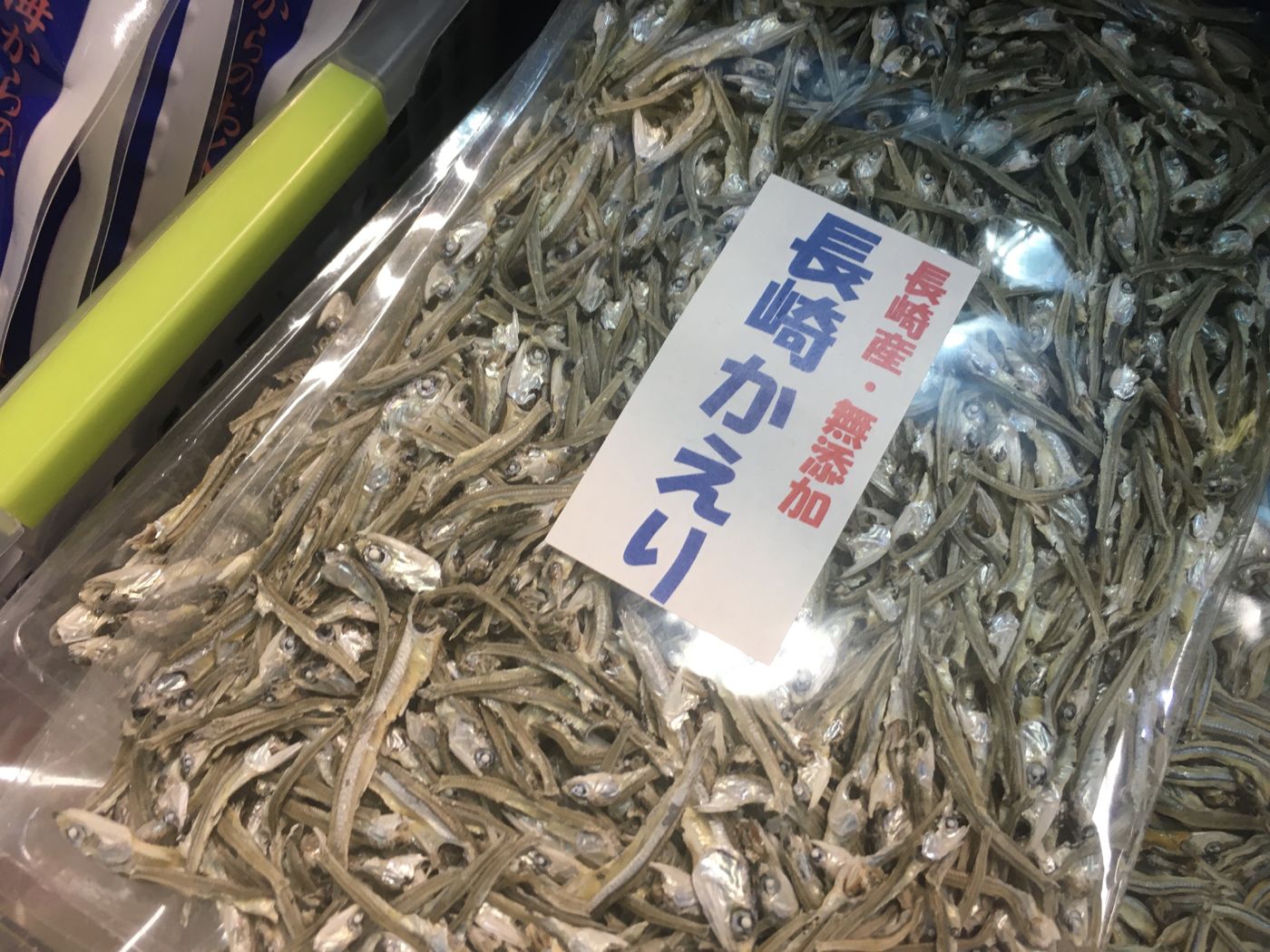 Dried anchovies멸치Small anchovies that are boiled and dried on the coast, then sorted by size. They flavor everyday broths and, stir-fried whole, become the sweet-salty side dish myeolchi-bokkeum.
 Dashima (dried kelp)다시마Thick, dried kelp that gives Korean broths their quiet savory depth. Beyond the stockpot it is fried into crisp twigak, simmered into soy-glazed side dishes and used as a wrap.
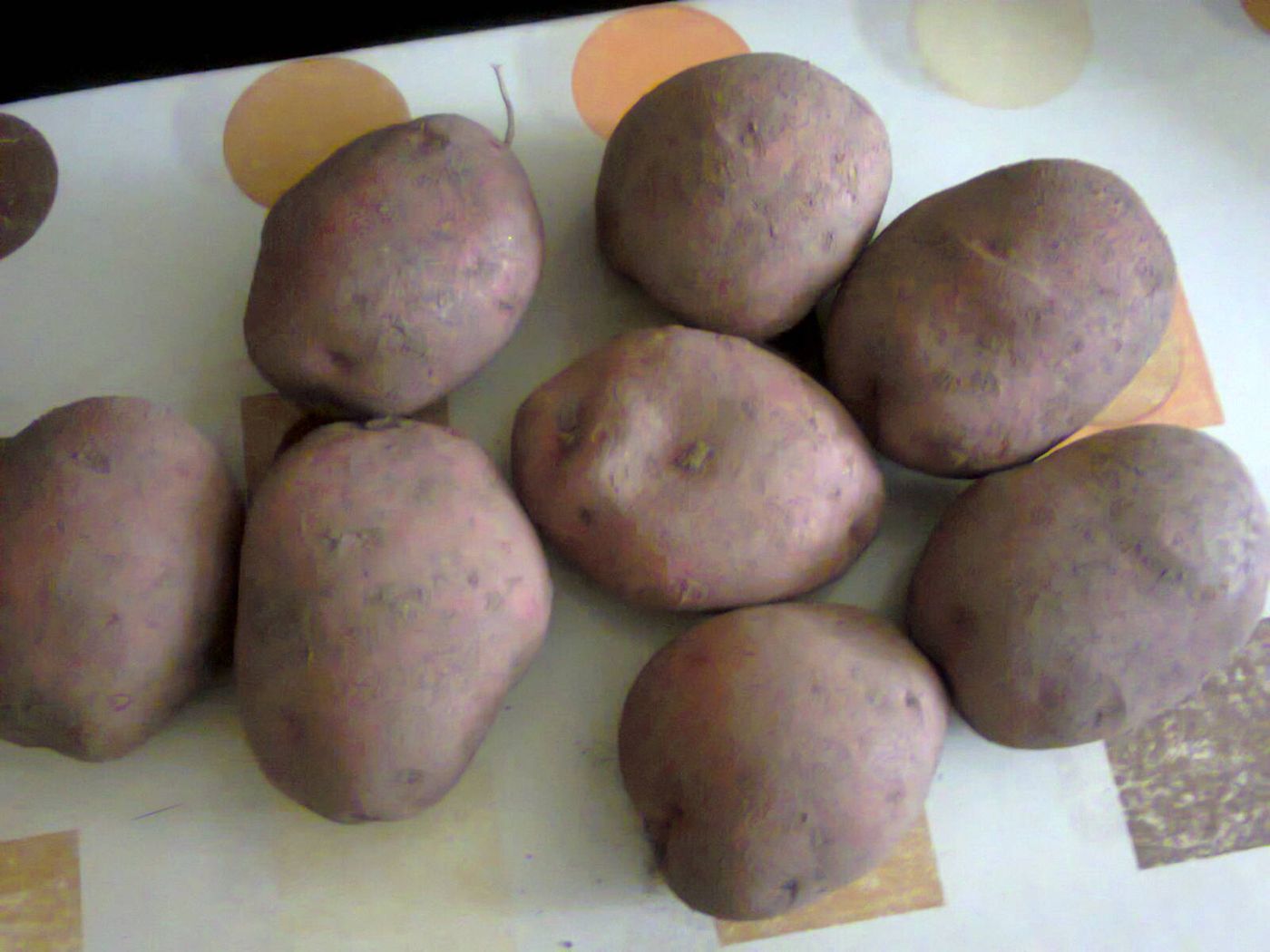 Potato감자A relatively recent arrival that became a mainstay of the mountain provinces. Braised in soy sauce as gamja-jorim, stir-fried in fine matchsticks, grated into crisp gamja-jeon and simmered in countless soups.
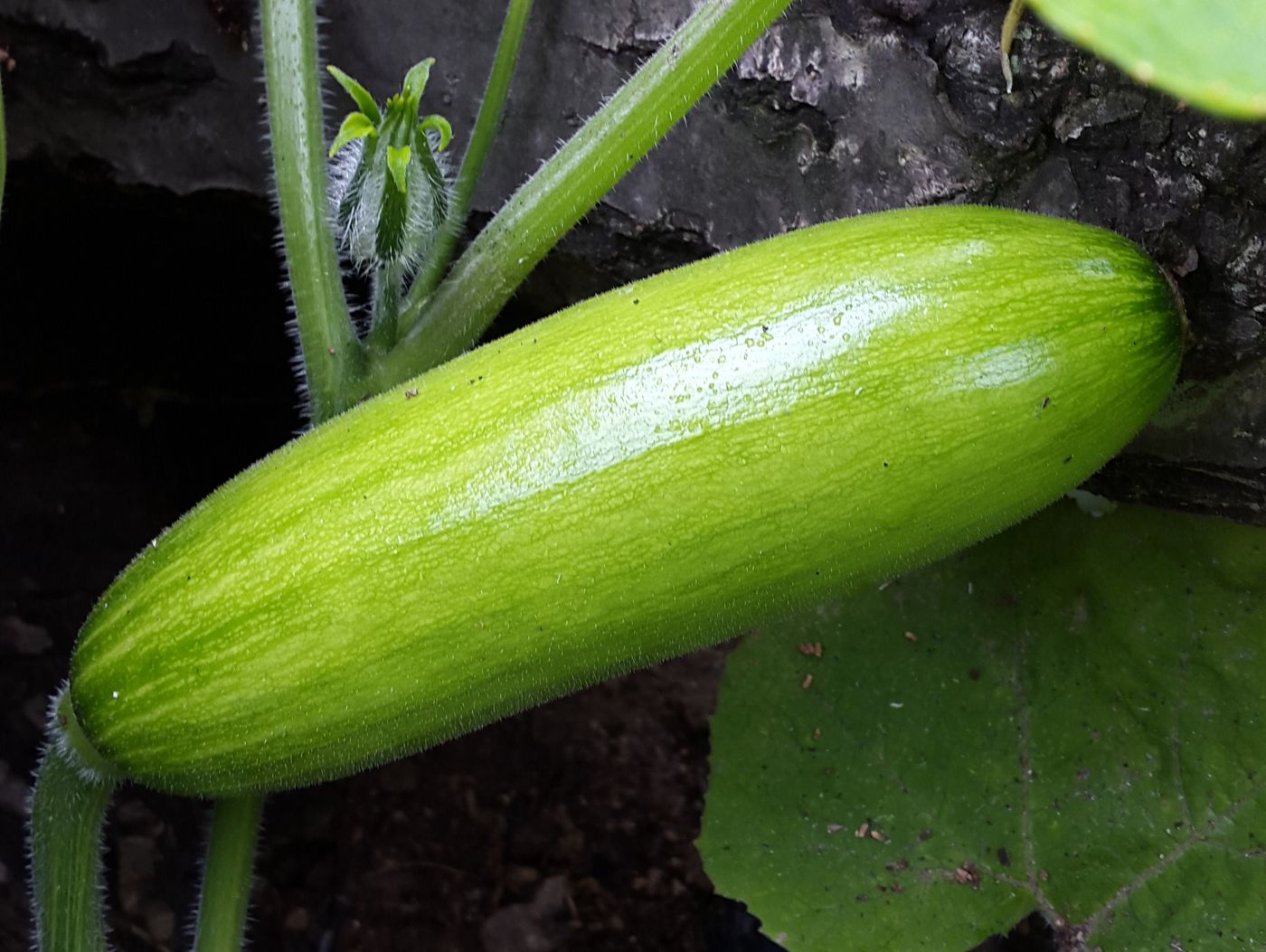 Korean zucchini애호박A pale-green young squash with thin, smooth skin and tender flesh. Sliced into rounds for hobak-jeon, sautéed as namul and added to doenjang stews.
 Yangpa (onion)양파The bulb onion, literally the "Western scallion." A latecomer to Korea, it is now everywhere: sweetening stir-fries and braises, pickled in soy sauce as yangpa-jangajji, and served raw beside grilled meat.
 Green onion파Korean green onion (pa), from thick-stemmed daepa to slender scallions — chopped into nearly every seasoning sauce, soup and kimchi, and the star of pa-kimchi.
 Garlic마늘Used raw, minced, pickled and roasted, garlic is one of the essential aromatics of Korean food — in seasonings, marinades, kimchi and namul.
 Soy sauce간장Korean soy sauce, in two main kitchen forms: pale, salty guk-ganjang (soup soy sauce) brewed the traditional way from meju, and darker, sweeter jin-ganjang for braises and marinades.
Nutrition
| Calories | ~456 kcal |
|---|---|
| Protein | ~13.9 g |
| Fat | ~1.3 g |
| Carbohydrates | ~96.3 g |
| Fiber | ~5.7 g |
| Sodium | ~1090 mg |
Notable forDietary fiber · Protein
Sums USDA FoodData Central values for the raw ingredients (all-purpose flour, potato, zucchini, onion, scallion, garlic, soy sauce and table salt) divided by two. The anchovy-kelp broth is treated as plain water, so its minerals and any salt it releases are not counted; the real total is likely somewhat higher in sodium and in iodine. Actual values vary with ingredients, portion size and preparation.
Health Benefits
- Filling and economical: a complete one-pot meal of grain and vegetables, long a farm staple.
- Vegetables in the broth: potato, zucchini and onion add fiber and potassium-containing vegetables to what is otherwise a flour-based meal.
- Varied doughs: versions made with potato starch, corn or buckwheat show how the dish adapts to local grains.
Regional Variations
- Gangwon: potato dumplings, gamja-ongsimi, in which grated raw potato is strained and its settled starch is combined with the pulp and shaped into small balls dropped into broth.
- Jeju: memil-jeobaegi, buckwheat dough mixed with hot water and boiled with seaweed in anchovy broth.
- Hwanghae: ttodeok-jebi, wheat sujebi in a chicken broth.
- Tongyeong: gundung-jip, the local name for sujebi (see Tongyeong).
- Other doughs: corn, acorn, kudzu and barley bran sujebi were all made where wheat was scarce, as the folk encyclopedia records for Gangwon.
Pairings
 Napa Cabbage Kimchi배추김치Salted napa cabbage layered with a red paste of chili, garlic, ginger and fermented seafood, then left to ripen: the kimchi most people picture first.
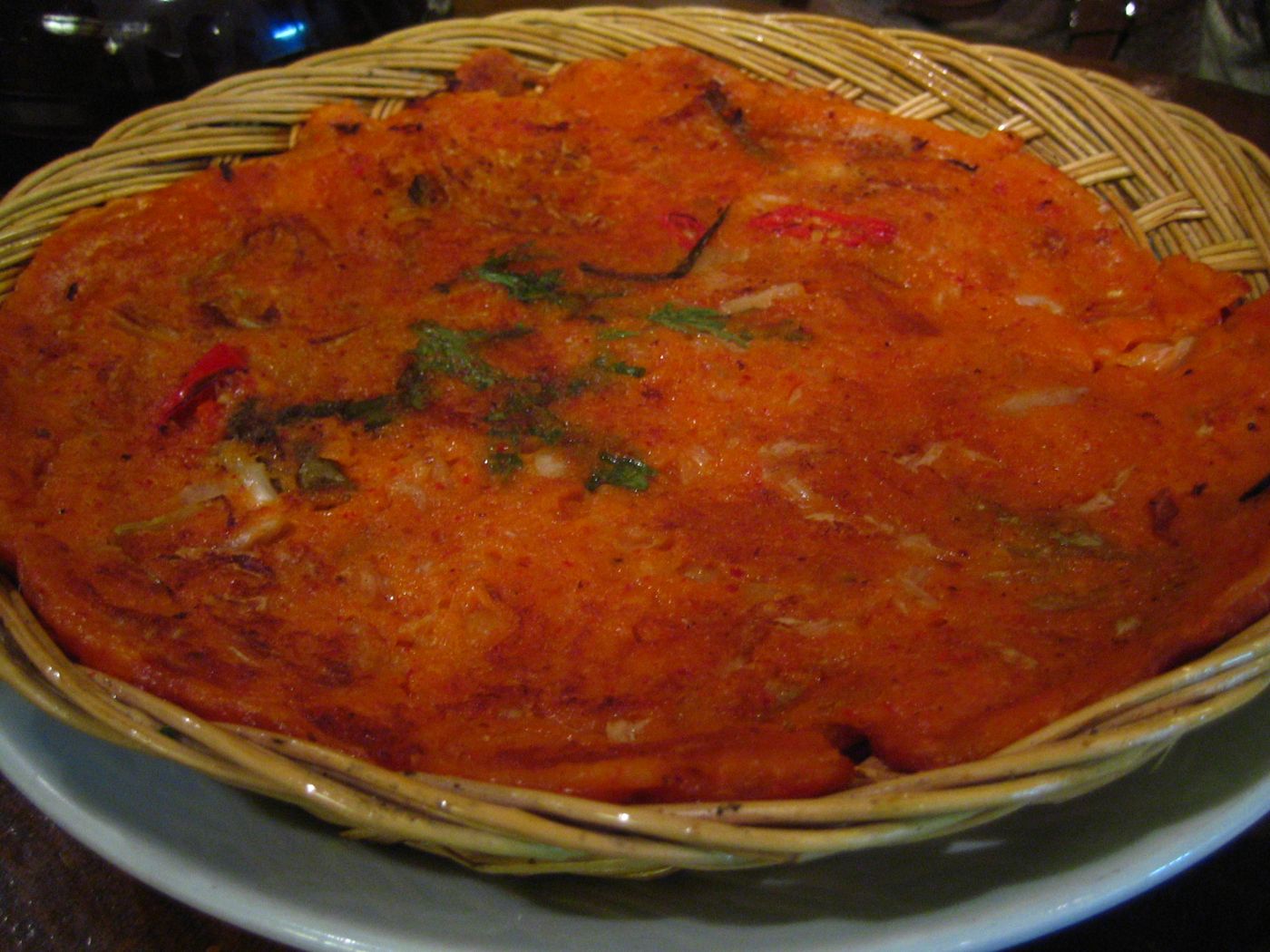 Kimchi Jeon (Kimchi Pancake)김치전Chopped, well-fermented kimchi folded into a thin flour batter and pan-fried until crisp at the edges — tangy, savory and quick to make.
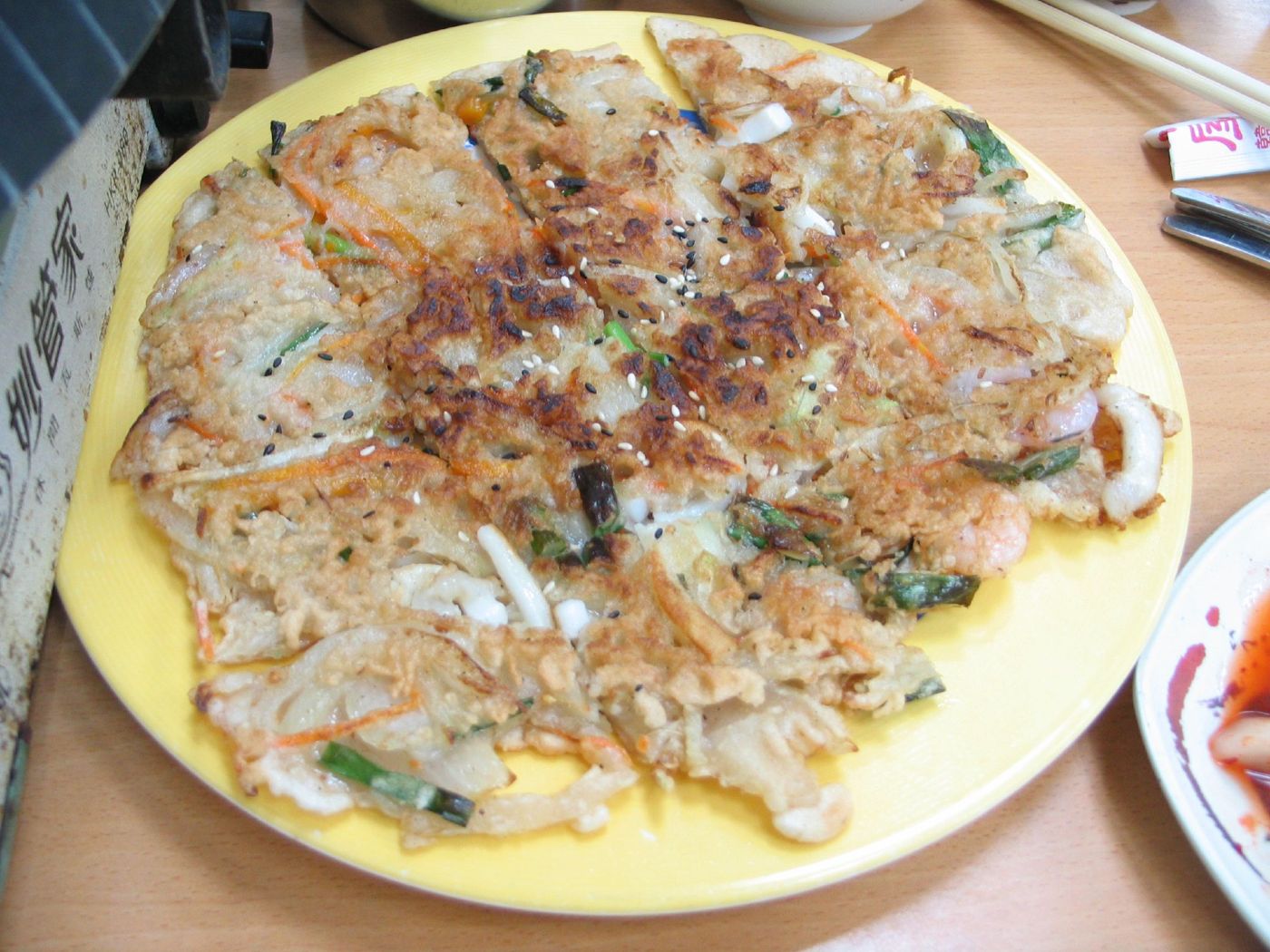 Haemul Pajeon (Seafood and Green Onion Pancake)해물파전Whole green onions bound in a light batter with squid, shrimp and clams, pan-fried until crisp — a generous jeon for sharing, closely tied to Busan's Dongnae.
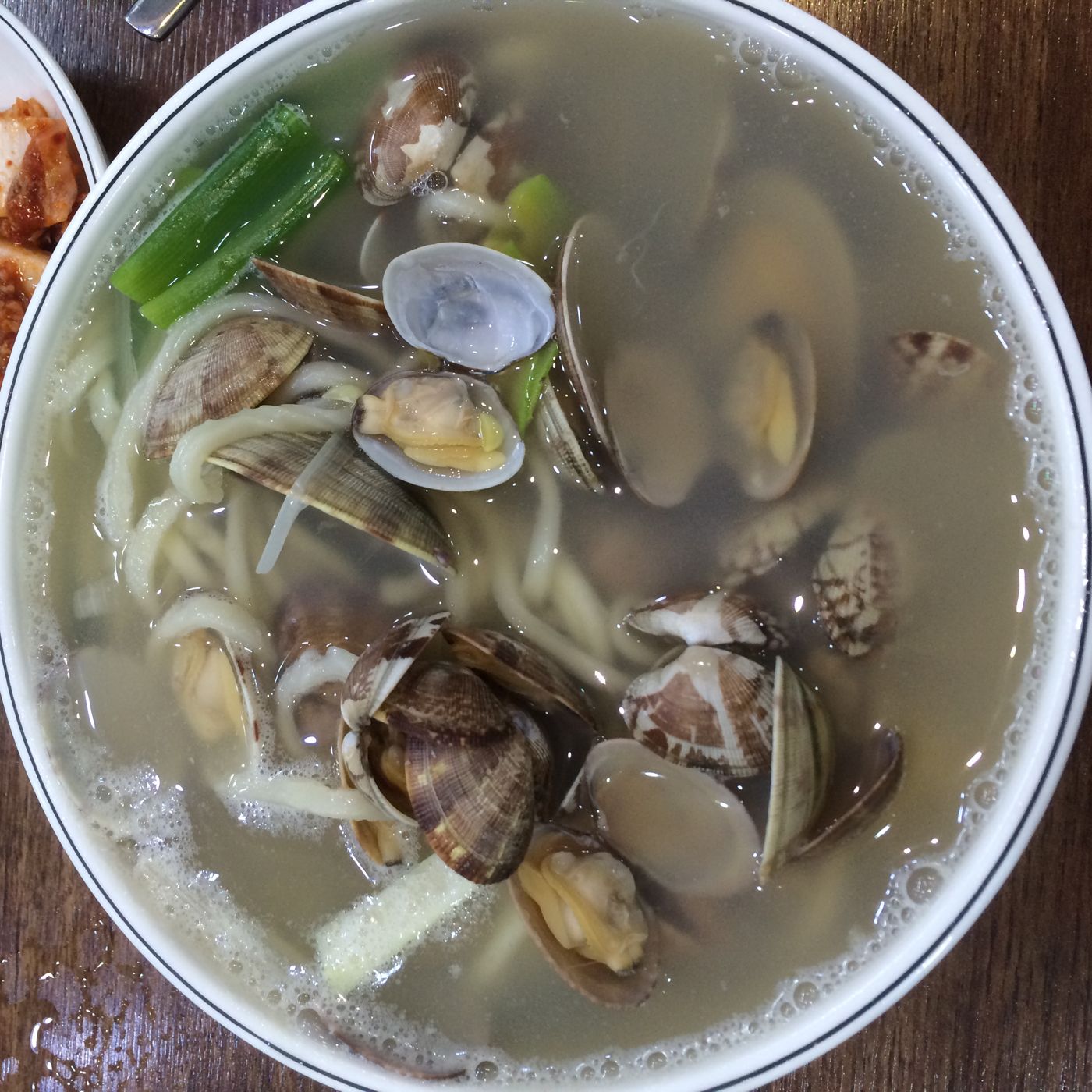 Kalguksu (Knife-Cut Noodle Soup)칼국수Hand-rolled wheat dough cut into ribbons with a knife and cooked right in anchovy, chicken or clam broth with potato and zucchini — Korea's homely noodle soup.