Ingredient
Korean Chili Peppers (Fresh)
고추
Romanization: gochu
Fresh Korean chili peppers, eaten green (putgochu) or red (hong-gochu): from the fiery cheongyang-gochu to the small, wrinkled, mild kkwari-gochu that is braised and stir-fried as banchan.
Flavor
Green peppers are grassy, crisp and juicy, from barely warm to sharply hot. *Cheongyang-gochu* delivers a clean, quick-building heat that lifts stews and dipping sauces; *kkwari-gochu* is mild, slightly sweet and tender, softening into its seasoning when braised. Ripe red peppers are fruitier and sweeter.
Origin & History
Chili peppers (Capsicum annuum) are native to the Americas and reached Korea only in the early 17th century. The Encyclopedia of Korean Culture points to Yi Su-gwang's Jibong yuseol, which calls the pepper a ‘Japanese mustard’ that had come from Japan, while noting that later exchanges with China and local breeding also shaped Korea's peppers. Farmers saved their own seed for generations, so by the 20th century there were roughly a hundred local types, many named for the place they grew, such as Yeongyang, Cheongsong, Imsil and Jeju.
The same plant gives two harvests. Green peppers for eating fresh are picked about two weeks after flowering, before they ripen; peppers for drying are left about fifty days until red. Much of the fresh supply is now grown under plastic in winter, while field crops are dried for gochugaru. Traditional ways with green peppers include eating them raw with a dab of gochujang or doenjang, stuffing halves with tofu or beef for jeon, and pricking whole peppers and pickling them in salted-fish brine for winter, the forerunner of gochu-jangajji.
Cheongyang-gochu, Korea's benchmark hot pepper, is surprisingly young. The Encyclopedia of Korean Culture and the Digital Cheongsong Culture Encyclopedia both credit Jungang Seed Company, with breeder Yu Il-woong, with developing it in 1983 as a hybrid of a Thai landrace and a Jeju landrace. It was first bred to supply capsaicin for curry production; when that proved uneconomic, the leftover seed went to trial farmers in Cheongsong and Yeongyang in North Gyeongsang, who found it excellent in spicy fish stews and sold well. The name joins the first syllable of Cheongsong (靑) with the second of Yeongyang (陽), not the county of Cheongyang in South Chungcheong.
Kkwari-gochu sits at the other end of the scale. Korea's agrifood information service describes it as smaller, paler green and sweeter than other peppers, with a crinkled, glossy skin and few seeds, in season in July and August, with Yeoju, Dangjin, Yeongam and Jangseong among its growing areas. Its folds hold sauce, which is why it is braised with soy sauce and stir-fried with dried anchovies.
Nutrition
| Calories | 29 kcal |
|---|---|
| Protein | 1.71 g |
| Fat | 0.19 g |
| Carbohydrates | 6.42 g |
| Fiber | 4.4 g |
| Sodium | 1 mg |
Notable forVitamin C · Vitamin K · Beta-carotene · Potassium
Values from the Korean Food Composition Table (RDA, 2014 data), which lists about 44 mg vitamin C and 54 µg vitamin K per 100 g. The same table gives cheongyang-gochu (raw) 31 kcal and about 51 mg vitamin C, and kkwari-gochu (raw) 33 kcal and about 57 mg vitamin C per 100 g. Actual values vary with ingredients, portion size and preparation.
Health Benefits
- Vitamin C: Per 100 g, raw green peppers in the Korean Food Composition Table supply roughly 44–57 mg of vitamin C depending on type, along with beta-carotene and potassium.
- Capsaicin: The heat comes from capsaicin, concentrated in the pale ribs that hold the seeds rather than in the seeds themselves. The Encyclopedia of Korean Culture notes that Korean kimchi peppers carry less capsaicin and more sugar than Tabasco-type peppers. Research on capsaicin and health is ongoing.
- How hot is hot: The Encyclopedia of Korean Culture puts cheongyang-gochu at roughly 33,000–37,000 Scoville units on a dry-weight basis, and notes that heat varies with growing conditions: hot, dry seasons make hotter peppers.
- Vitamin K: Green peppers contain vitamin K (about 52–76 µg per 100 g in the Korean table). People taking warfarin are generally advised to keep their intake of vitamin K–rich foods steady rather than avoid them.
- Sensitivity: Hot peppers can aggravate heartburn or digestive discomfort in some people, and capsaicin irritates eyes and skin; wash hands after cutting.
Informational, not medical advice. Talk to a qualified professional about your own health and diet.
Dishes with Korean Chili Peppers (Fresh)
- Aehobak Namul애호박나물Young Korean squash cut into half-moons and stir-fried with garlic and a little salted shrimp — sweet, tender and quick to make.
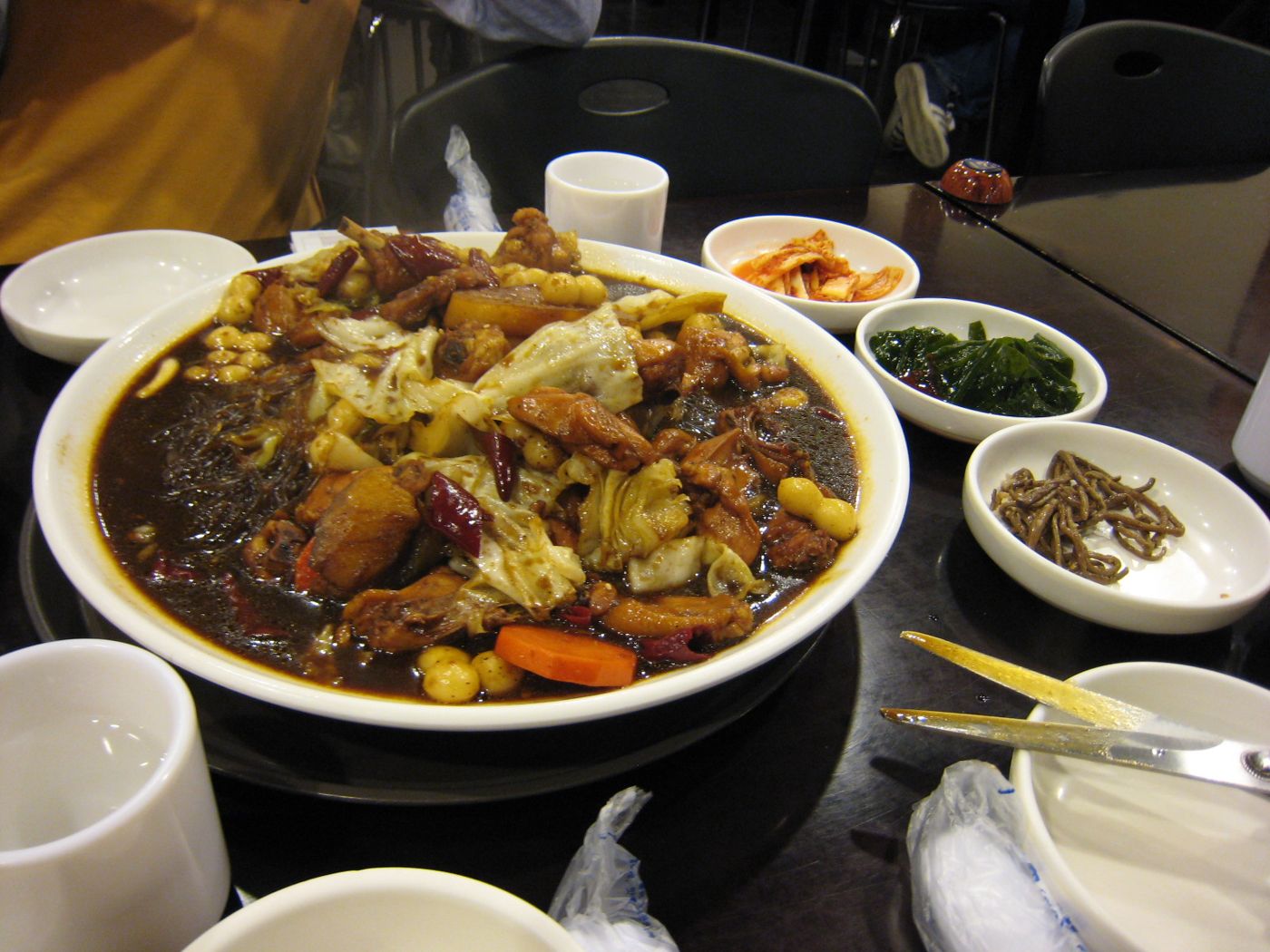 Andong Jjimdak (Soy-Braised Chicken with Glass Noodles)안동찜닭Chicken braised hard in a sweet soy sauce with potatoes, vegetables, dried chilies and glass noodles — a 1980s invention of Andong's old market, not a yangban heirloom.
- Buchu Jeon (Garlic Chive Pancake)부추전Fragrant garlic chives held together by a thin flour batter and fried until crisp — one of the quickest and most common jeon in Korean homes.
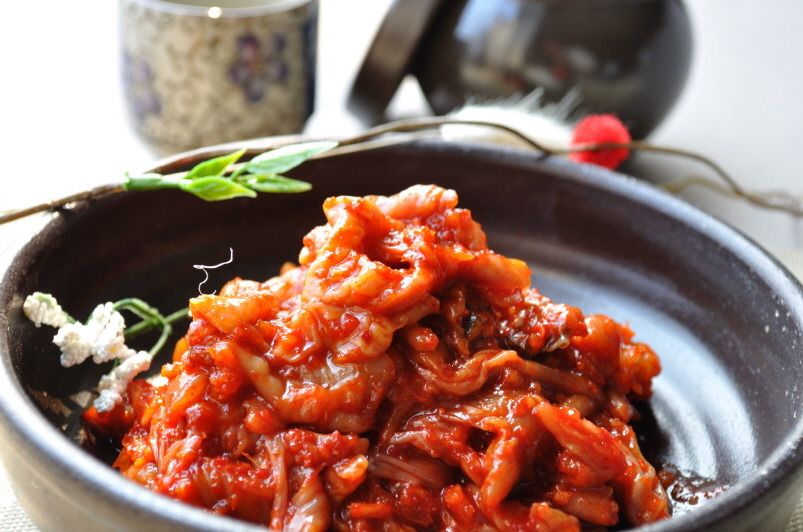 Salted Pollock Tripe창난젓Pollock intestines cured in salt, then cut and dressed with chili, garlic and green onion — a chewy, savory East Sea jeotgal, often mixed with radish.
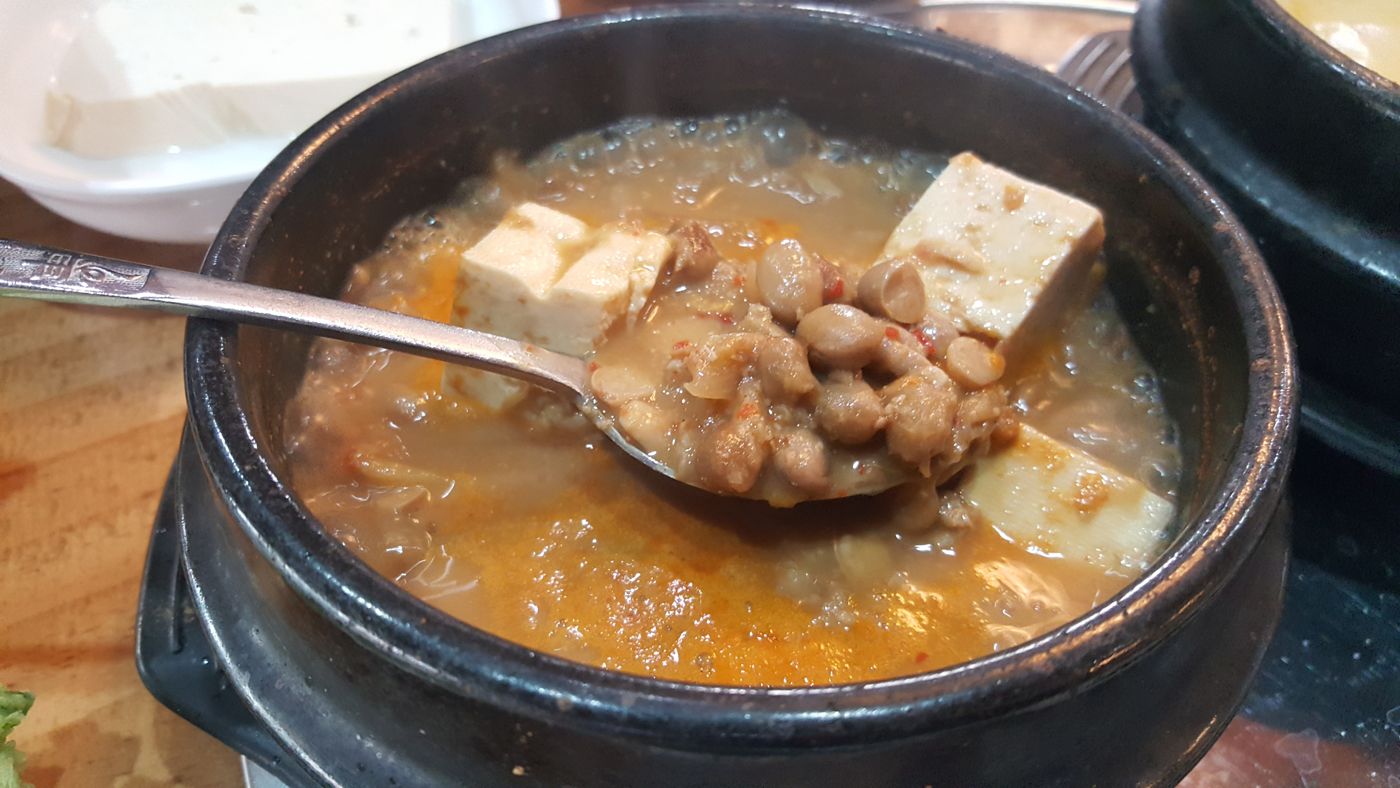 Cheonggukjang Jjigae (Quick-Fermented Soybean Stew)청국장찌개A thick, pungent winter stew of quick-fermented whole soybeans simmered with sour kimchi, tofu and a little pork or beef — loved for its earthy depth, notorious for its smell.
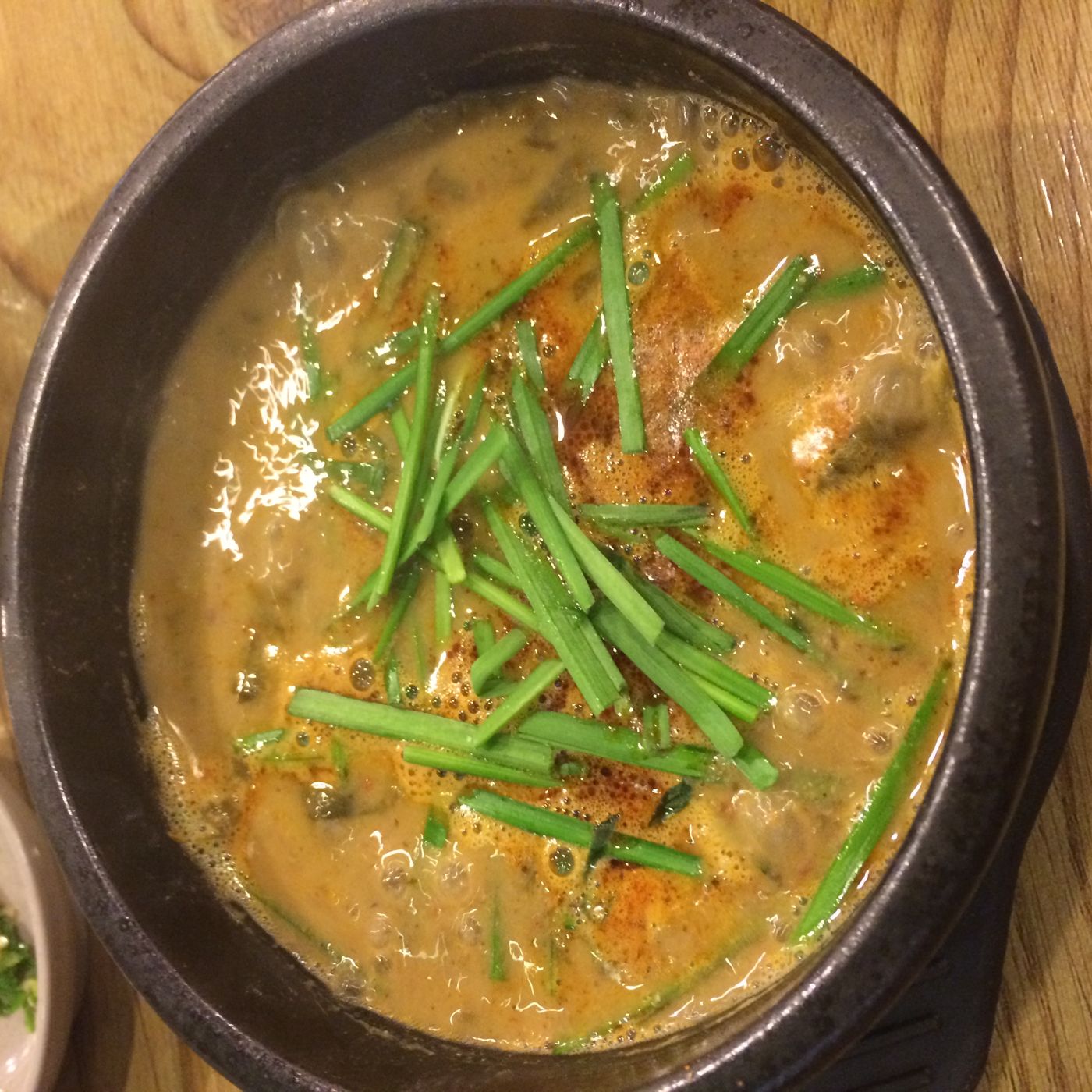 Chueotang (Loach Soup)추어탕Pond loaches simmered and ground into a thick, earthy soup with dried greens, doenjang and perilla, sharpened with chopi pepper — an autumn harvest dish turned year-round restorative.
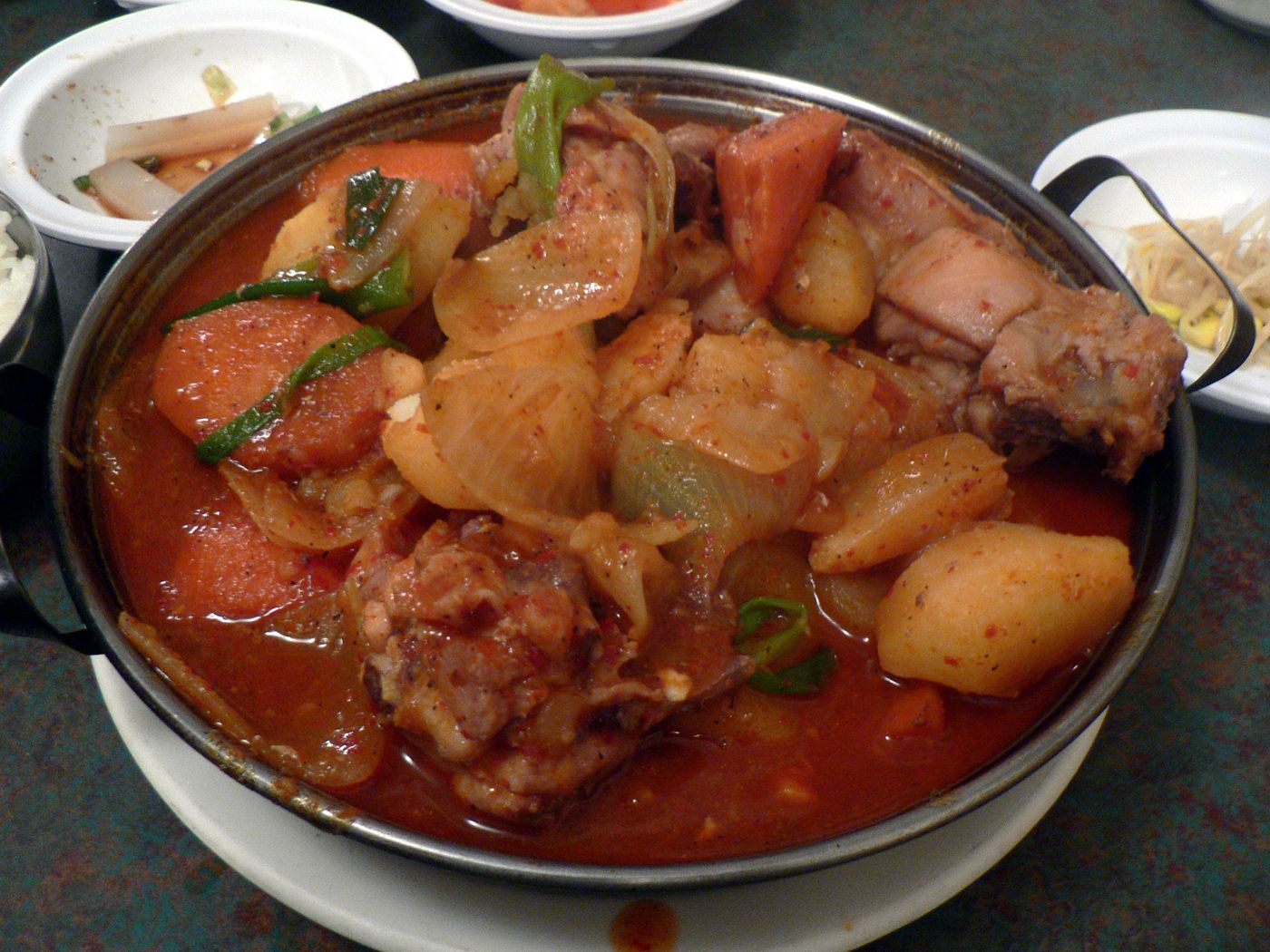 Dak-bokkeumtang (Spicy Braised Chicken)닭볶음탕Bone-in chicken and potatoes braised in a red chili sauce until it thickens and clings — long known as dakdoritang, a name whose origin is still debated.
 Doenjang Jjigae (Soybean Paste Stew)된장찌개A thick, savory stew of fermented soybean paste with tofu, zucchini and whatever the season offers — the everyday pot at the center of the Korean table.
- Dotori Muk Muchim도토리묵무침Slices of soft, faintly bitter acorn jelly tossed with crisp vegetables and a soy–chili–sesame dressing — a cool, light side dish and a favorite with drinks.
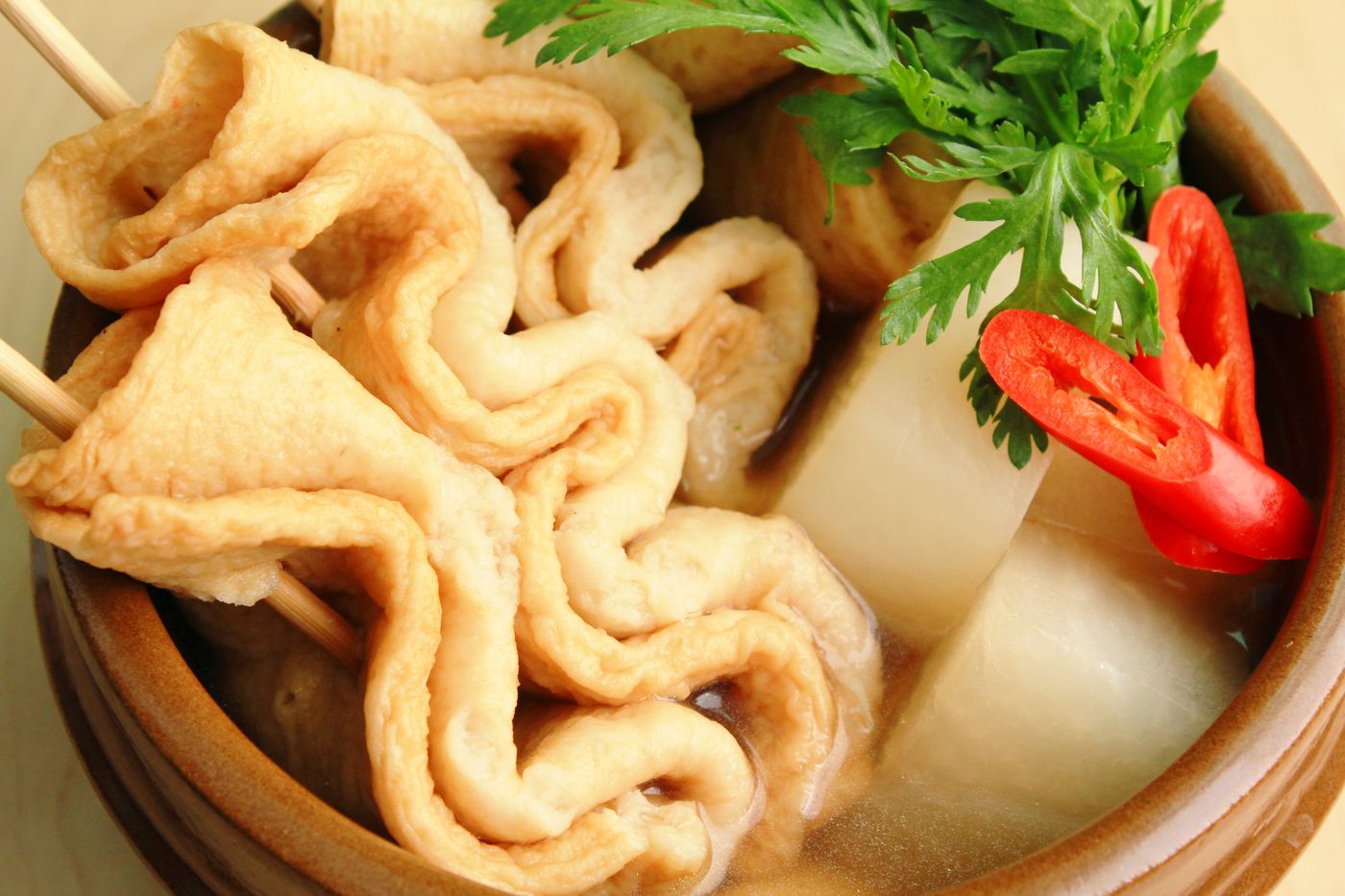 Eomuk Tang (Fish Cake Soup)어묵탕Fish cakes, often threaded on skewers, simmered in a clear anchovy, kelp and radish broth — Busan's winter street-stall soup and a quick home dish.
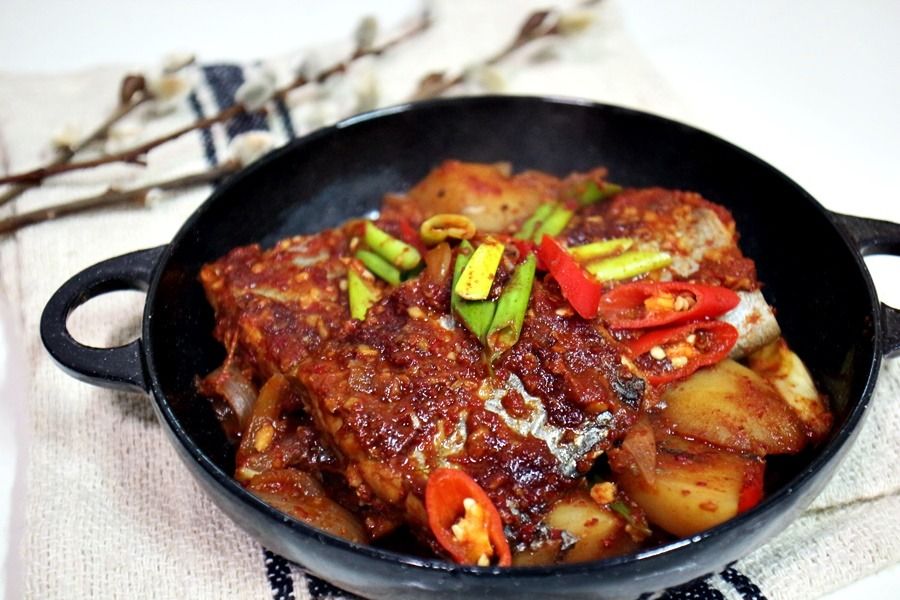 Galchi Jorim갈치조림Silvery hairtail braised with radish in a red, garlicky soy and chili sauce — a Jeju specialty and a favorite across Korea's southern coast.
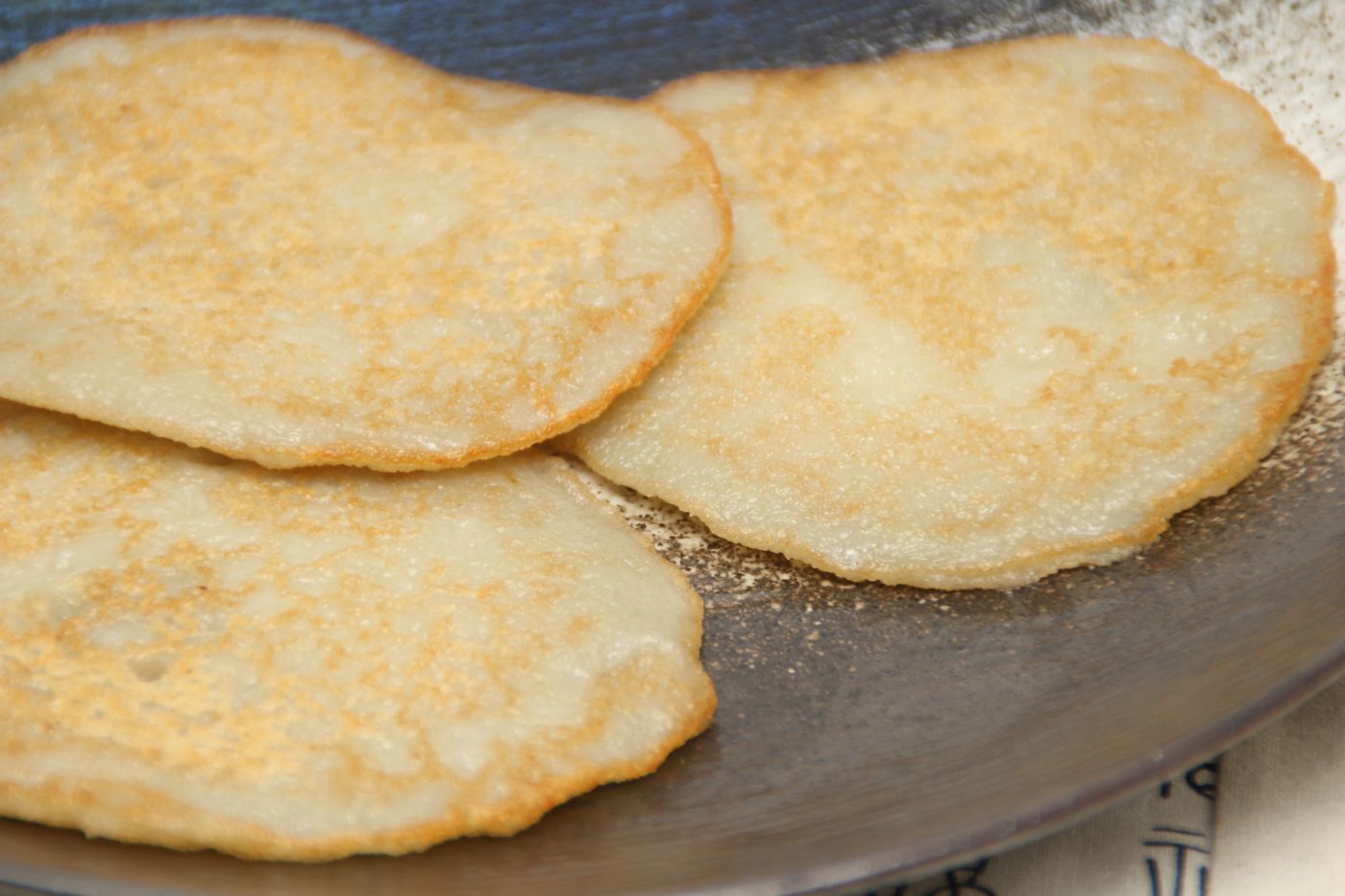 Gamja Jeon (Potato Pancake)감자전Finely grated potato, bound only by its own starch, pan-fried into crisp-edged, chewy rounds — a simple Gangwon-style jeon.
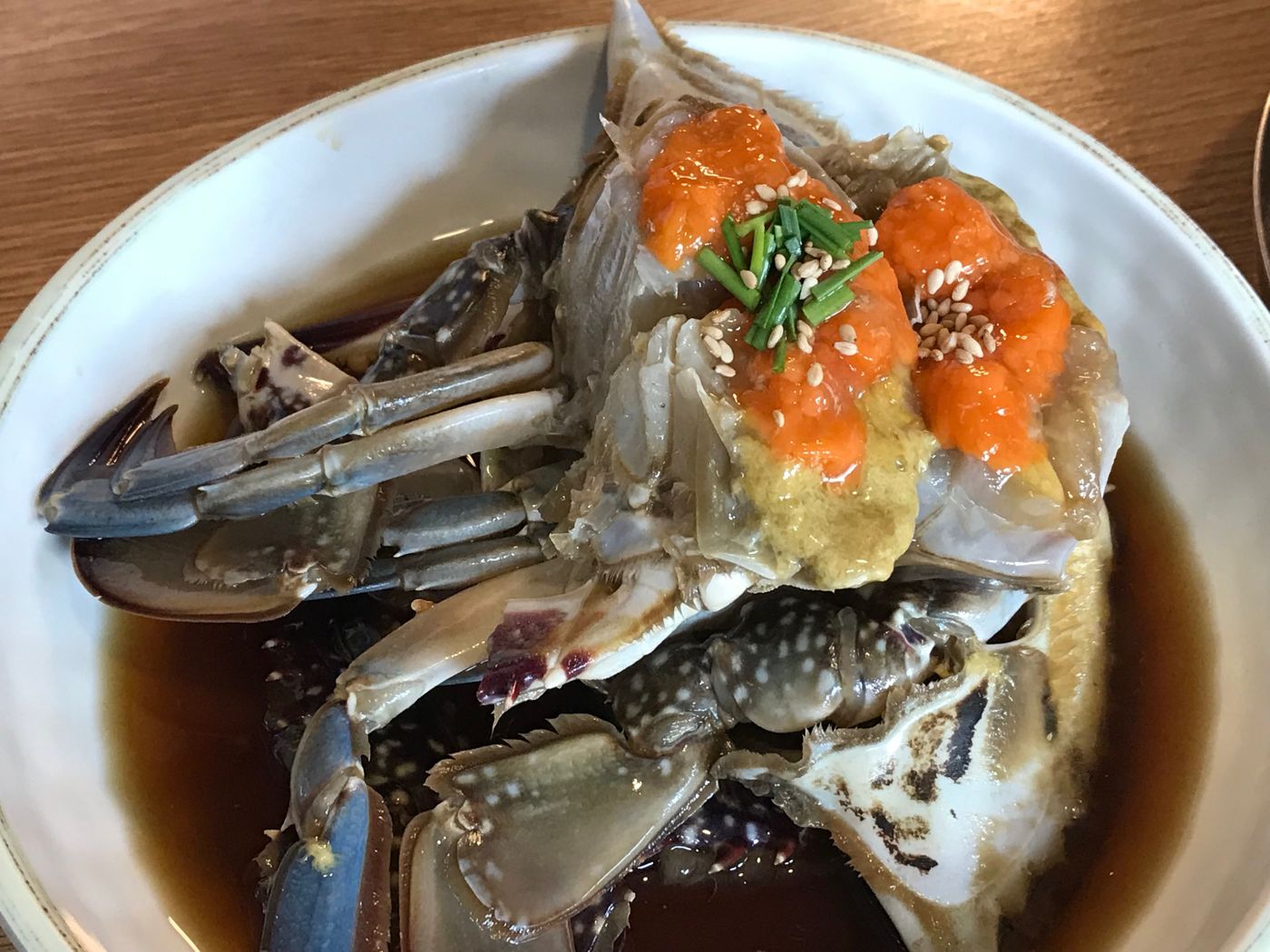 Soy-Marinated Raw Crab간장게장Raw crabs steeped in a boiled-and-cooled soy marinade until silky and savory — a centuries-old preserve, eaten by spooning rice into the shell.
- Gochu Doenjang Muchim (Green Chilies in Doenjang)고추된장무침Crisp, mild green chilies cut into rounds and tossed with doenjang, garlic and sesame oil — a five-minute summer banchan built on the old habit of dipping peppers in jang.
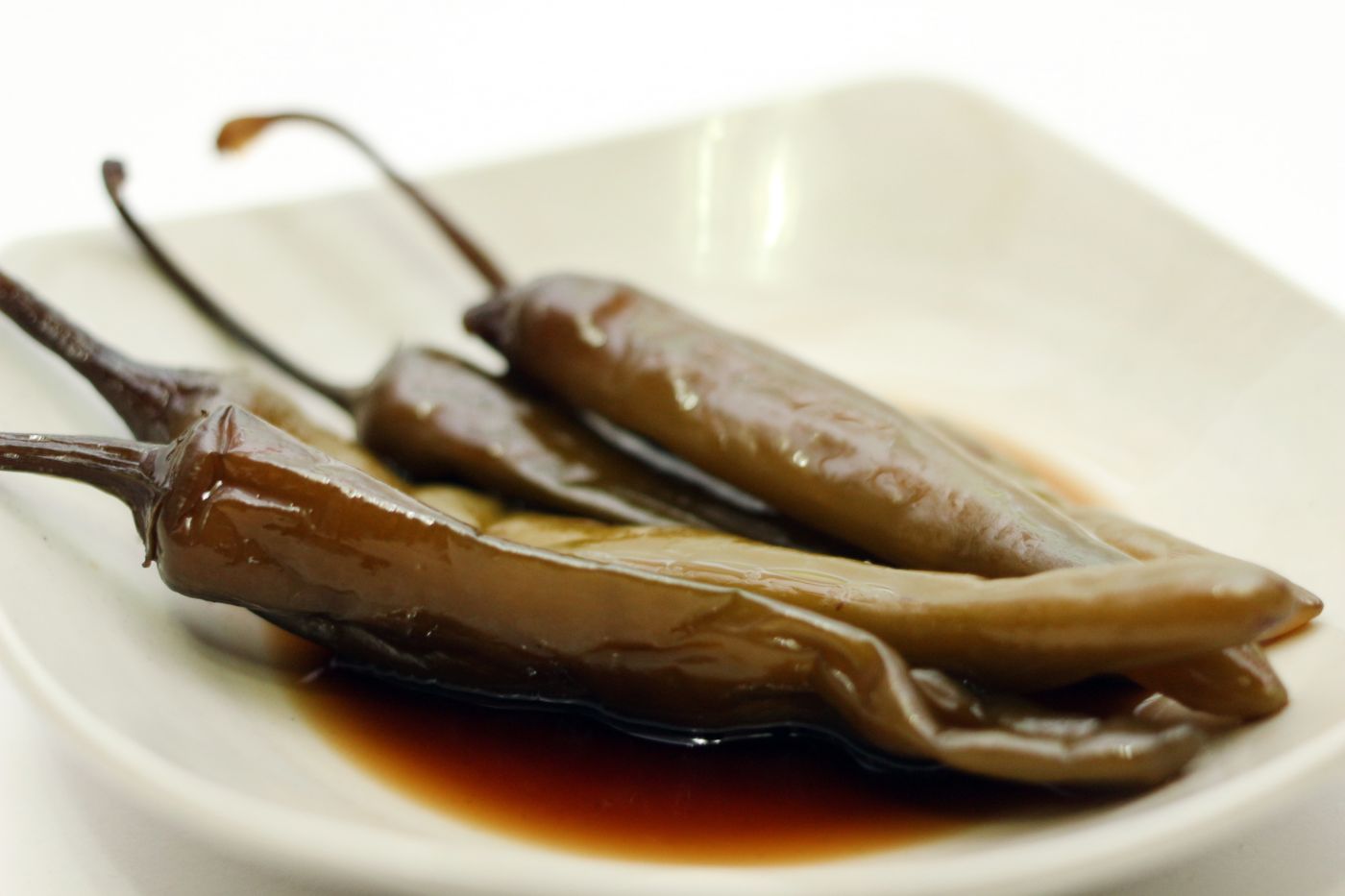 Soy-Pickled Green Chilies고추장아찌Whole green chilies cured in a sweet, tangy soy brine until olive-drab and tender-crisp — a keeping pickle that brings heat and salt to plain rice.
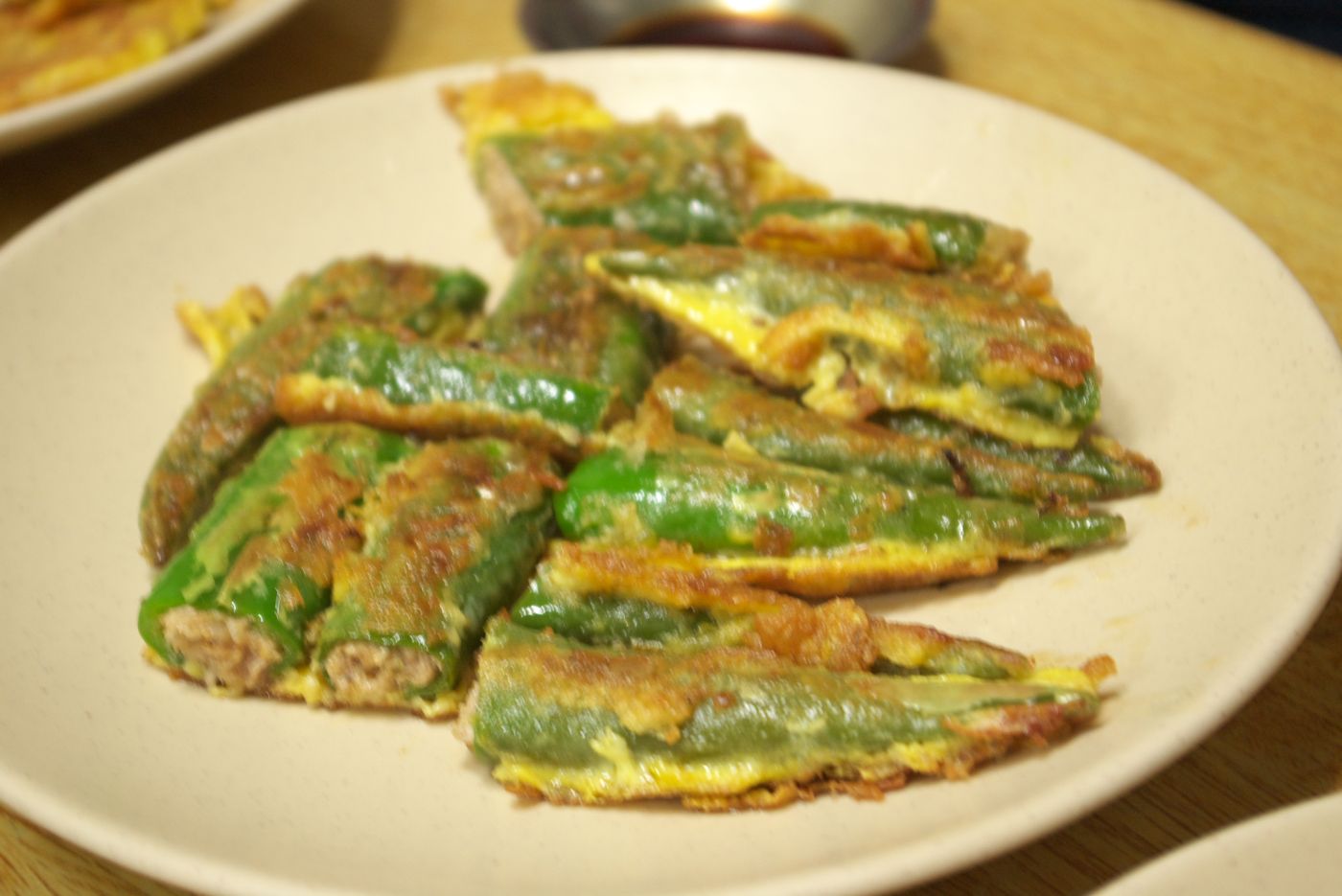 Gochu-jeon (Stuffed Green Chili Peppers)고추전Mild green chili peppers split, filled with seasoned meat and tofu, then coated in flour and egg and pan-fried — a bright green, gently spicy jeon.
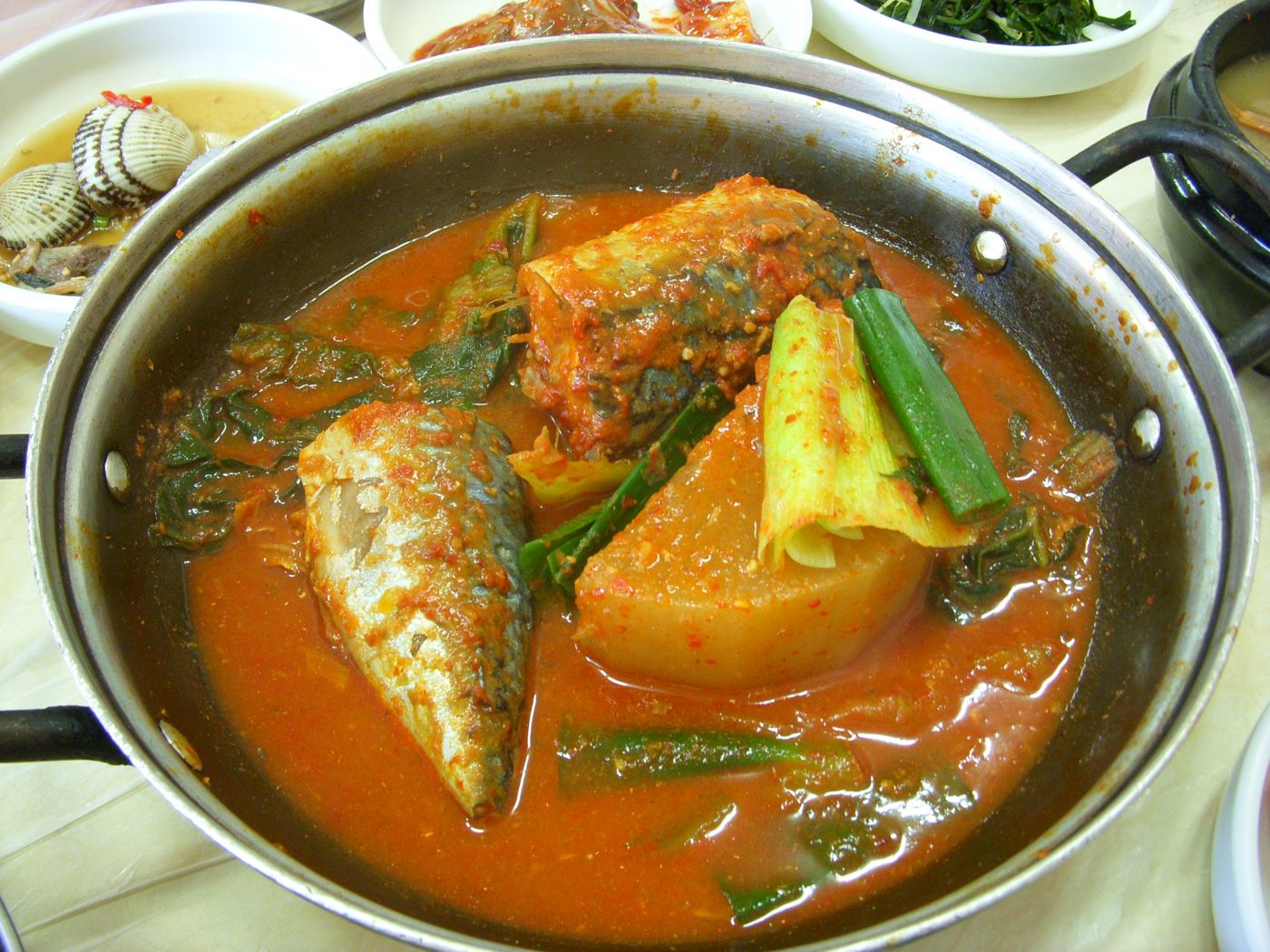 Godeungeo Jorim고등어조림Mackerel braised on a bed of Korean radish in a spicy soy and chili sauce — a warming, rice-friendly dish where the radish is often the best part.
- Gul Guk (Oyster Soup)굴국Fresh oysters dropped into a clear radish broth with tofu and green onion and cooked for barely a minute — a delicate cold-season soup of the south and west coasts.
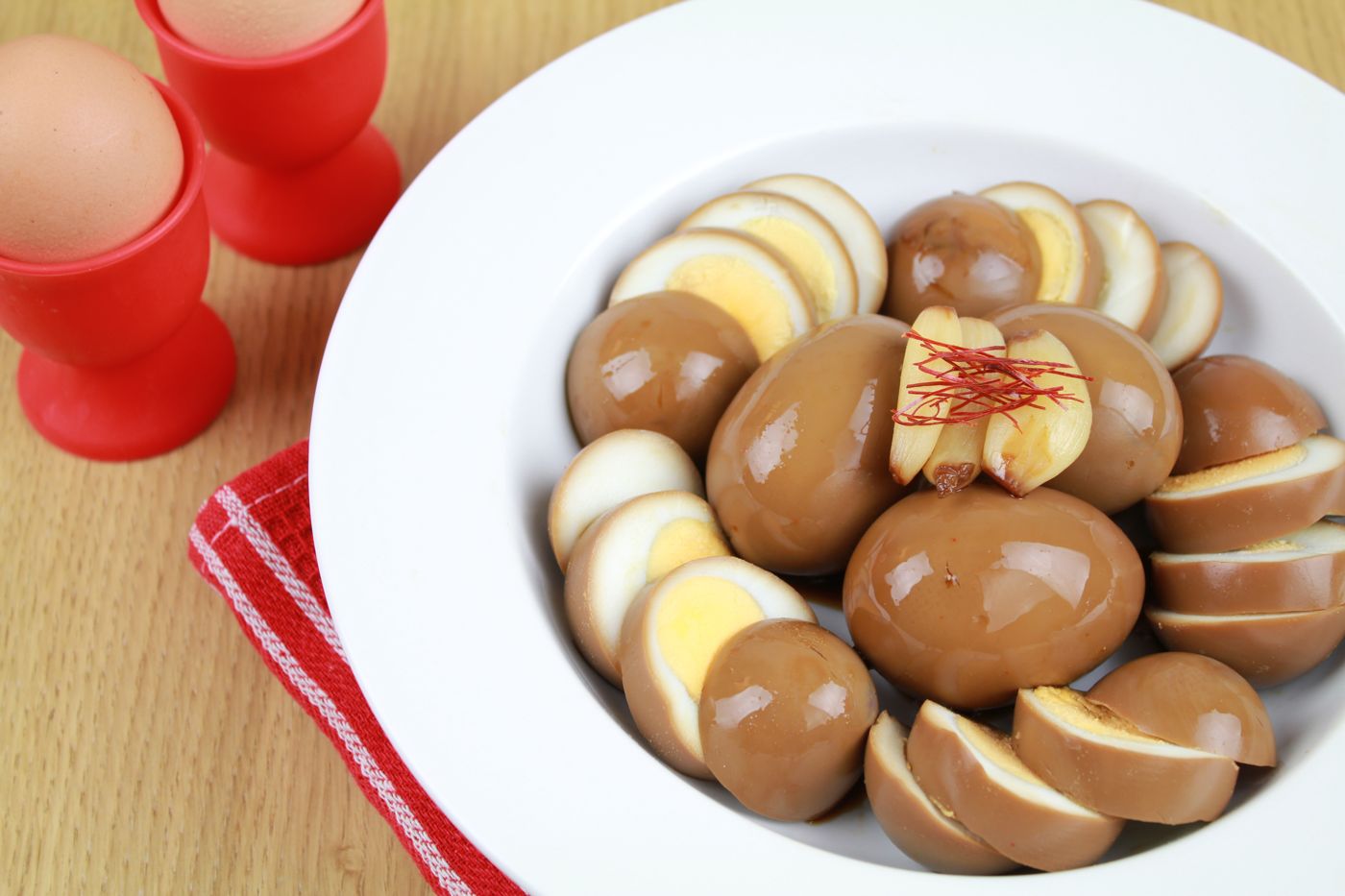 Gyeran Jangjorim (Soy-Braised Eggs)계란장조림Peeled hard-boiled eggs simmered in sweetened soy sauce with garlic and mild peppers until amber — a keep-in-the-fridge banchan for rice and lunchboxes.
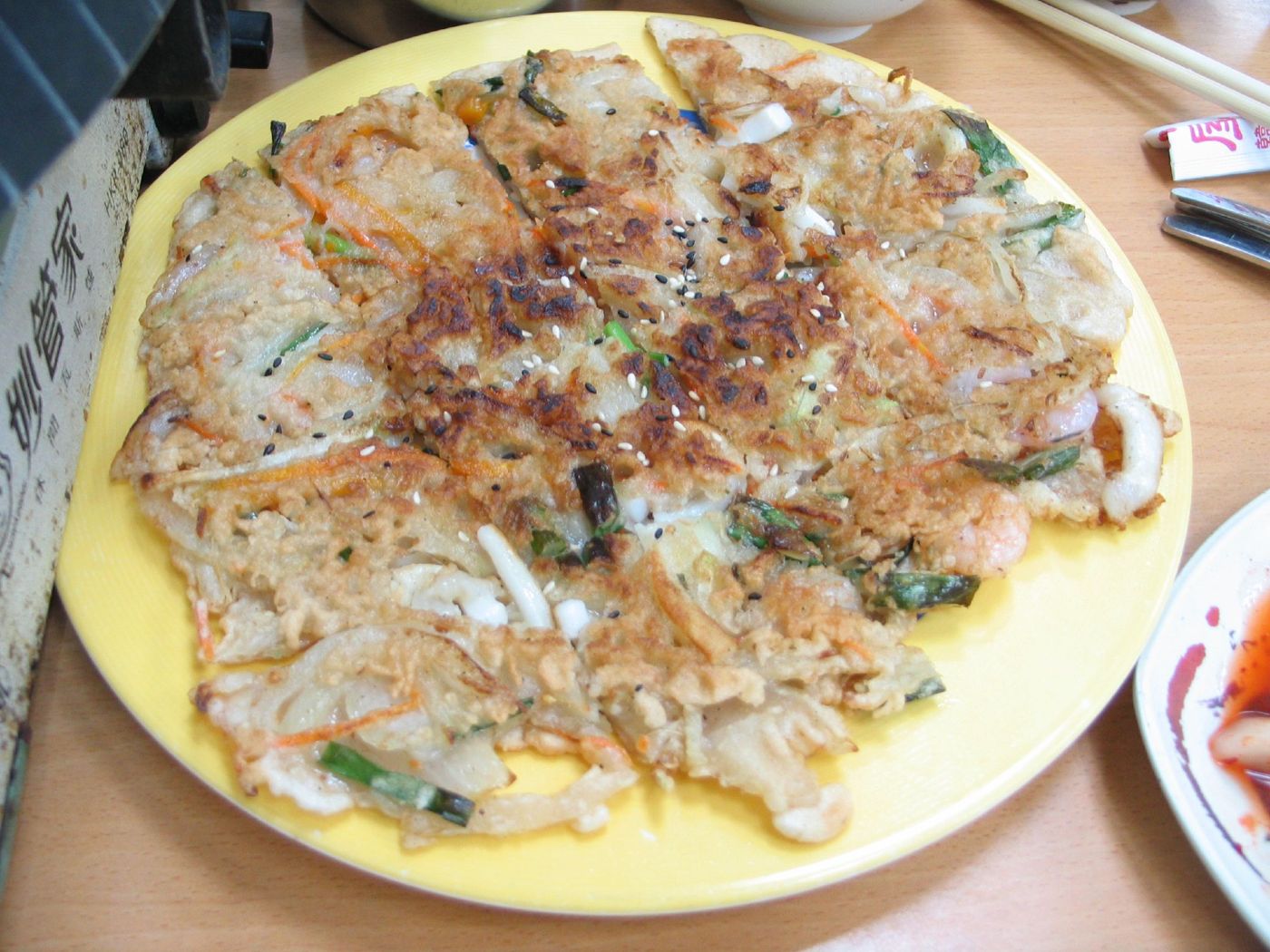 Haemul Pajeon (Seafood and Green Onion Pancake)해물파전Whole green onions bound in a light batter with squid, shrimp and clams, pan-fried until crisp — a generous jeon for sharing, closely tied to Busan's Dongnae.
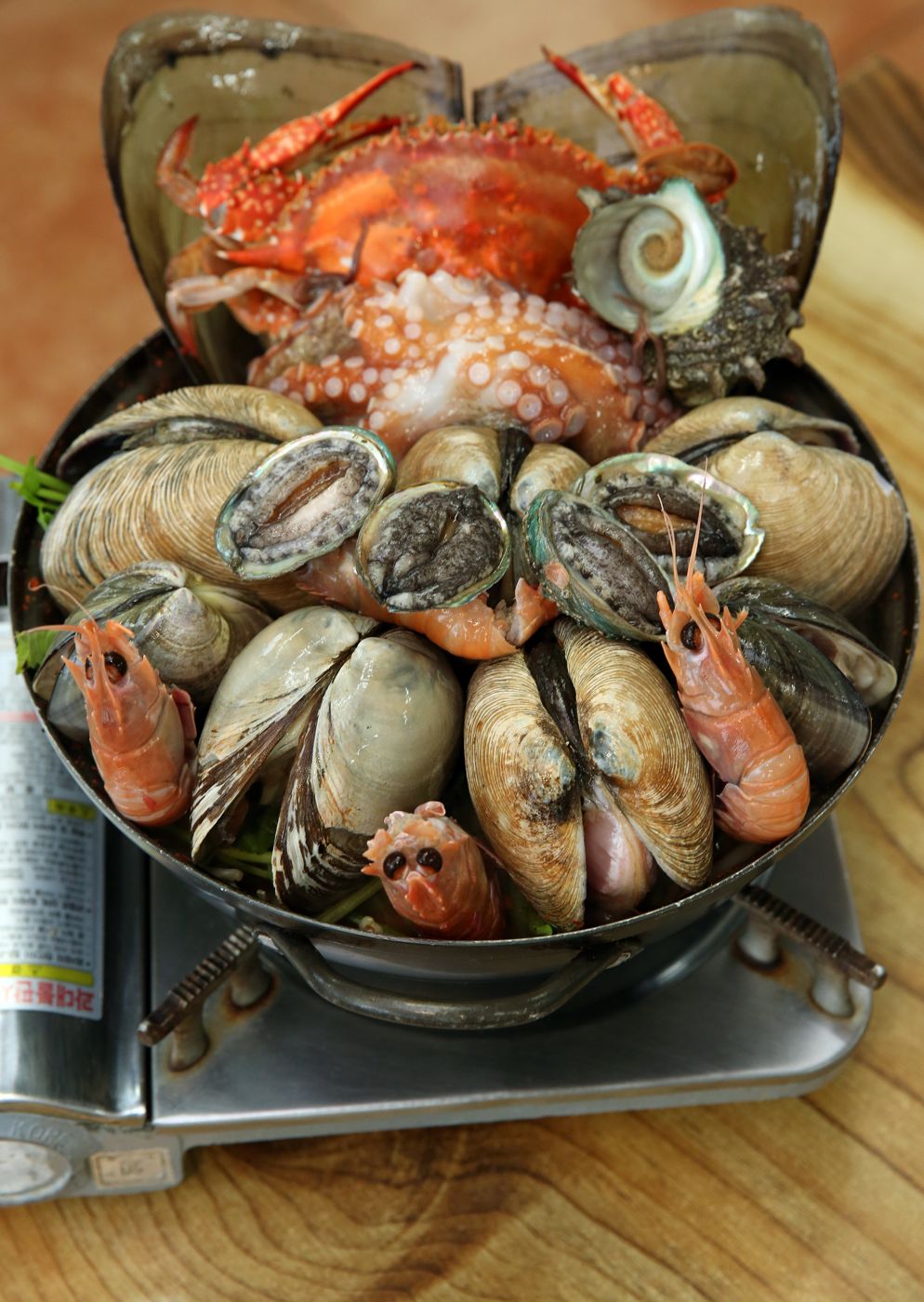 Haemul Tang (Spicy Seafood Hot Pot)해물탕Blue crab, octopus, shrimp, clams and sea squirt simmered with radish and water dropwort in a bright, spicy gochujang broth — a seafood feast in one pot.
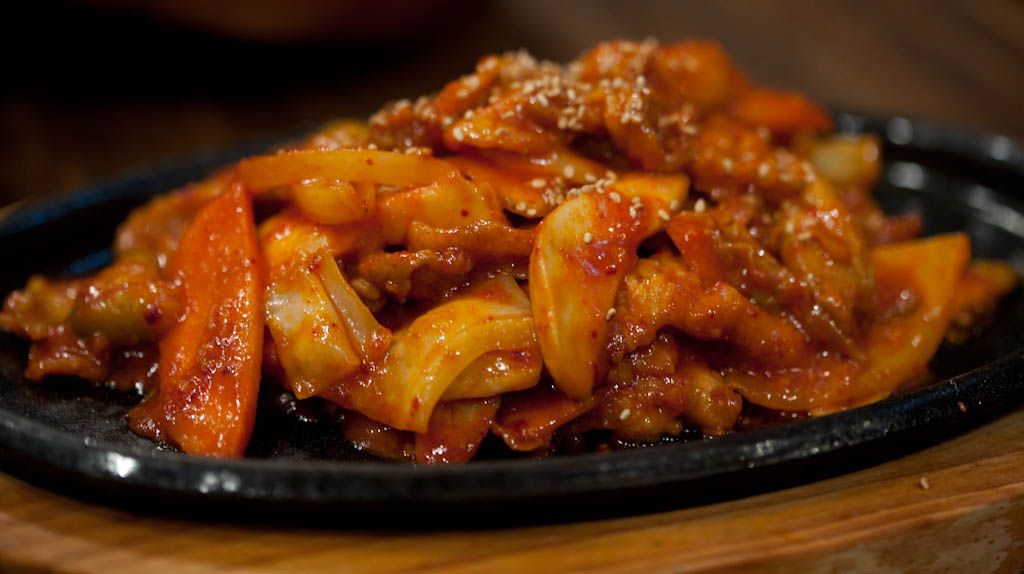 Jeyuk Bokkeum (Spicy Stir-Fried Pork)제육볶음Thin slices of pork marinated in gochujang, garlic and ginger, then stir-fried with onion and green onion — a hearty, spicy staple of home and diner tables.
- Salted Radish Pickle짠지Whole radishes packed in heavy salt over winter and opened in spring — soaked, sliced thin and served in vinegared cold water or dressed with chili.
- Salted Clams조개젓Small shucked clams salted in their own boiled juices for a few weeks, then dressed with chili and green onion — an early-summer rice companion.
- Kkaennip Jjim (Steamed Seasoned Perilla Leaves)깻잎찜Perilla leaves layered with a garlicky soy-chili sauce and steamed until soft — a fragrant banchan for wrapping around spoonfuls of rice.
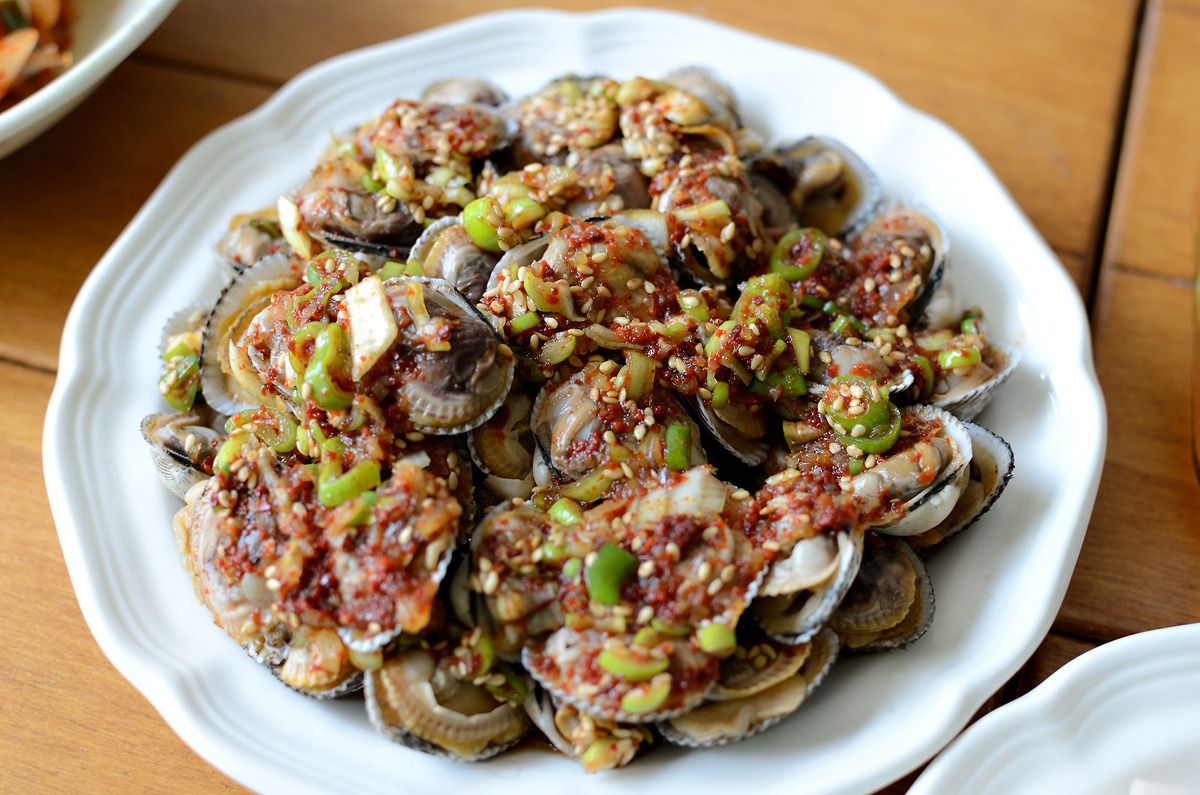 Kkomak Muchim (Seasoned Cockles)꼬막무침Briefly boiled cockles, opened on the half shell and spooned with a garlicky soy-chili sauce — a winter specialty of South Jeolla, above all of Beolgyo.
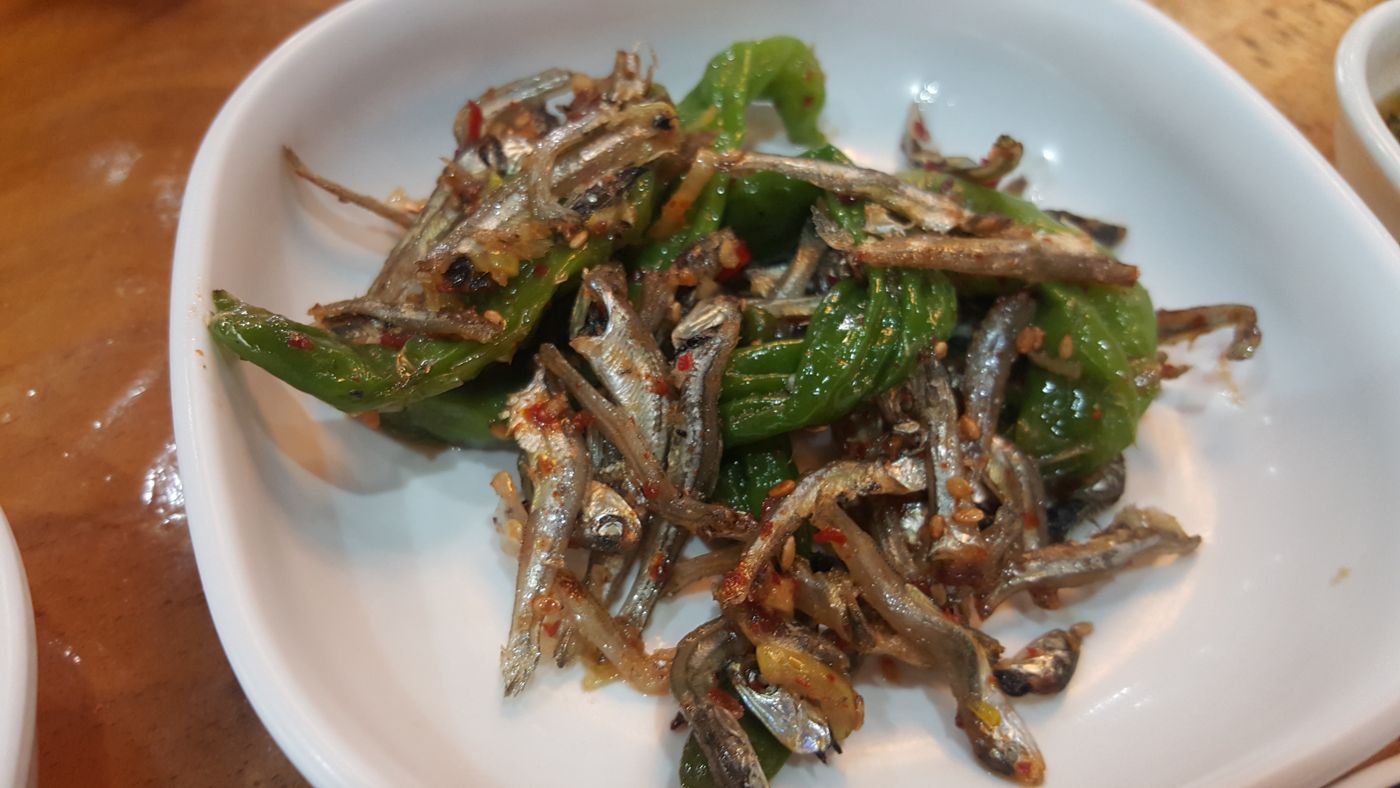 Kkwarigochu Myeolchi Bokkeum (Shishito Peppers with Anchovies)꽈리고추멸치볶음Small dried anchovies and wrinkled shishito-type peppers glazed in soy sauce and rice syrup — a sweet, salty, gently grassy lunchbox staple.
- Kodari Jorim (Braised Semi-Dried Pollock)코다리조림Half-dried Alaska pollock braised with radish in a sweet, spicy soy-gochugaru sauce until the chewy flesh soaks up the glaze.
- Kongbiji Jjigae (Okara Stew)콩비지찌개Soybean pulp left from tofu-making — or freshly ground soaked soybeans — simmered thick with pork and sour kimchi and seasoned with salted shrimp; a nutty, homely winter stew.
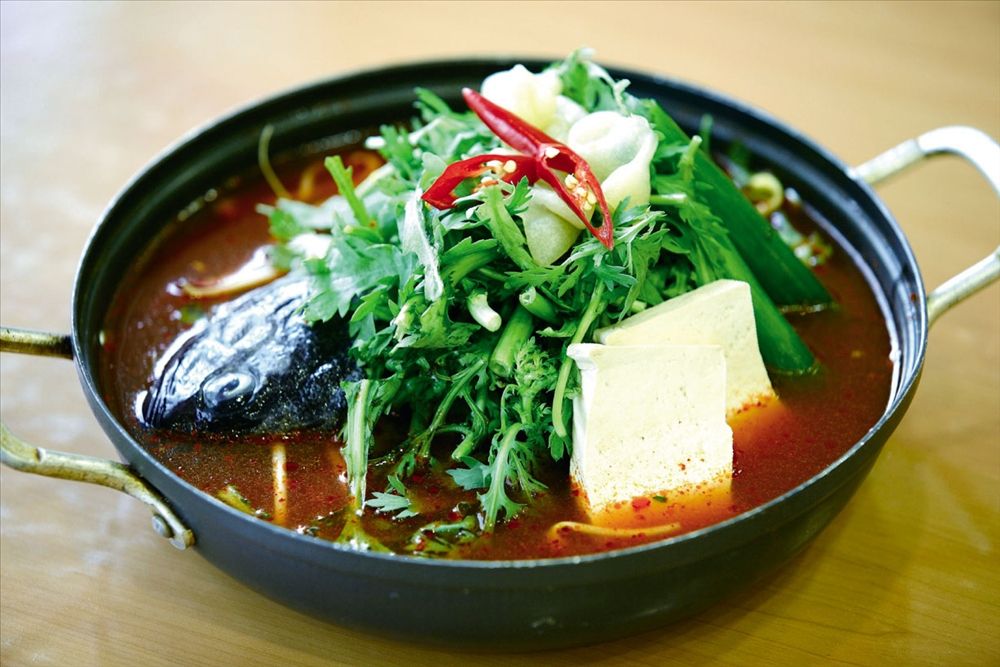 Maeuntang (Spicy Fish Stew)매운탕Fish — freshwater or sea — simmered with radish, tofu and fragrant greens in a fiery gochugaru and gochujang broth; the stew that follows sashimi and fills riverside restaurants.
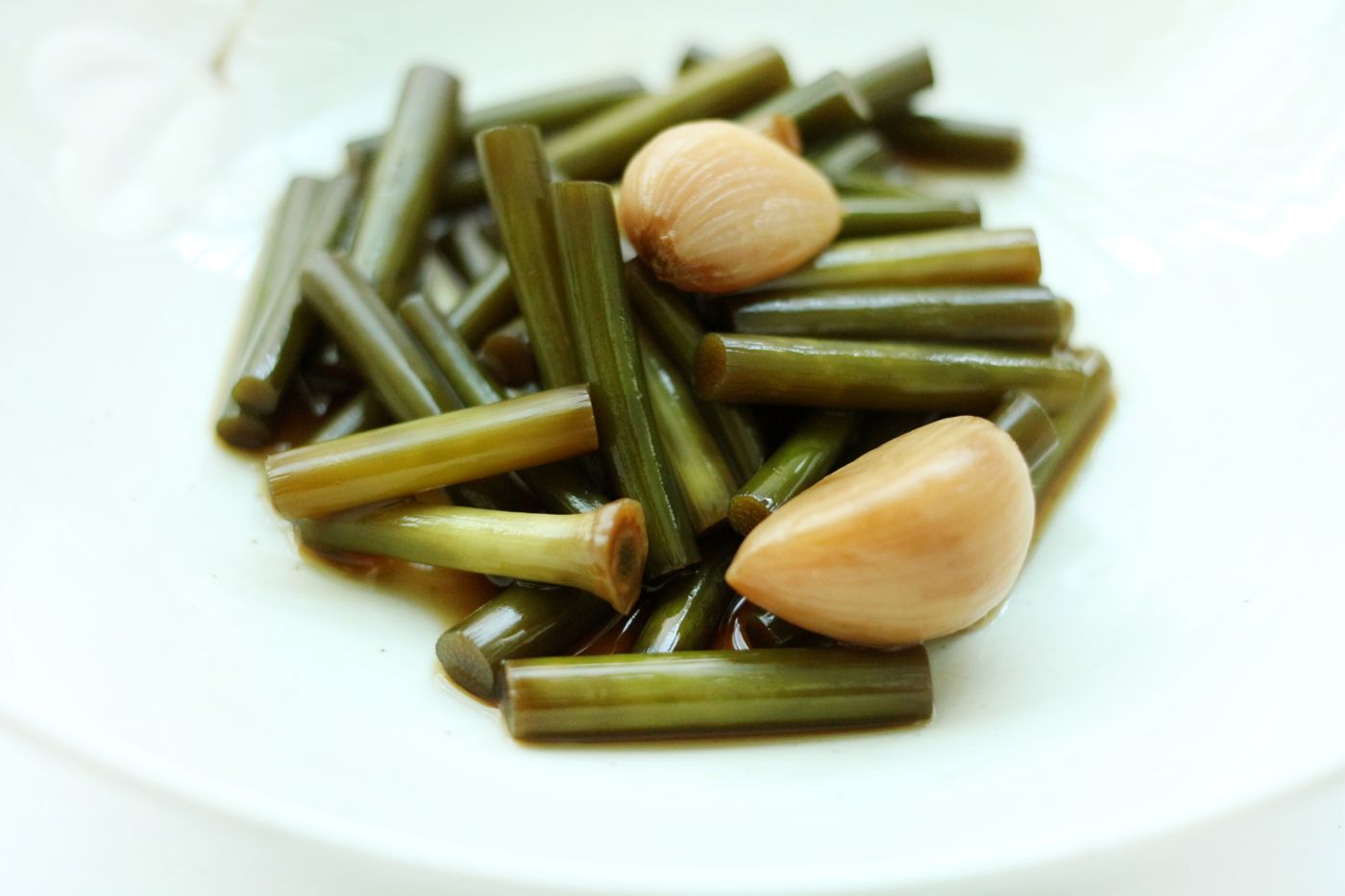 Pickled Garlic Scapes마늘종장아찌Spring garlic scapes cut into short lengths and steeped in a sweet-sour soy brine — crisp, gently garlicky jangajji that keeps for months.
- Salted Anchovies멸치젓Whole anchovies packed in heavy salt and aged for months — the south coast's kimchi jeotgal, also boned, dressed with chili and eaten with rice or in ssam.
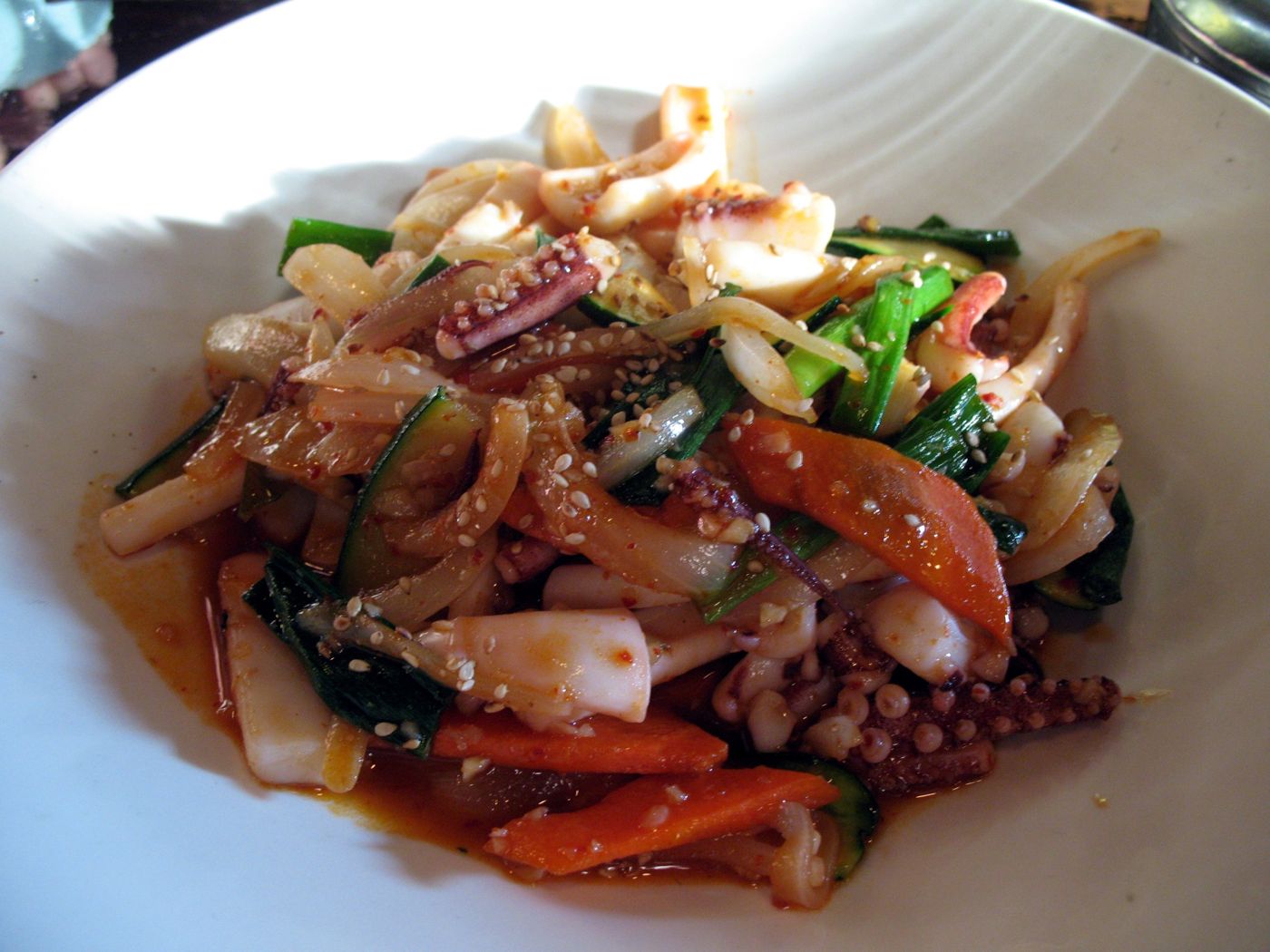 Ojingeo Bokkeum (Spicy Stir-Fried Squid)오징어볶음Scored squid stir-fried over high heat with onion, cabbage and a fiery gochujang-gochugaru sauce — tender, smoky and spicy, eaten with plenty of rice.
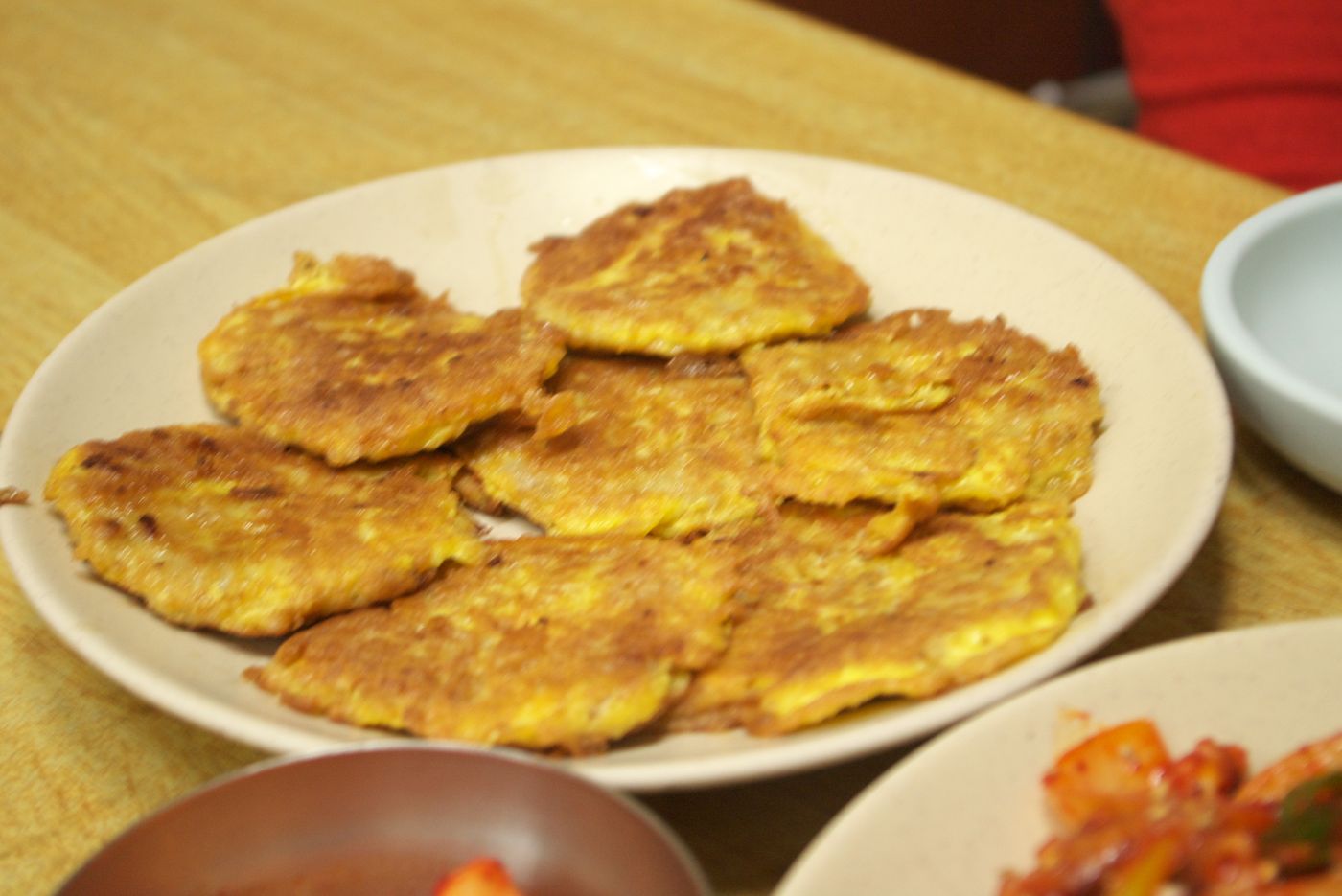 Saengseon Jeon (Pan-Fried Fish)생선전Thin slices of mild white fish dusted with flour, dipped in egg and gently pan-fried — a classic of holiday and ancestral-rite tables.
- Saengtae Jjigae (Fresh Pollock Stew)생태찌개Chunks of fresh, never-frozen pollock simmered with radish, tofu and a red chili broth, finished with water dropwort and crown daisy — a winter stew prized for its clean, bracing taste.
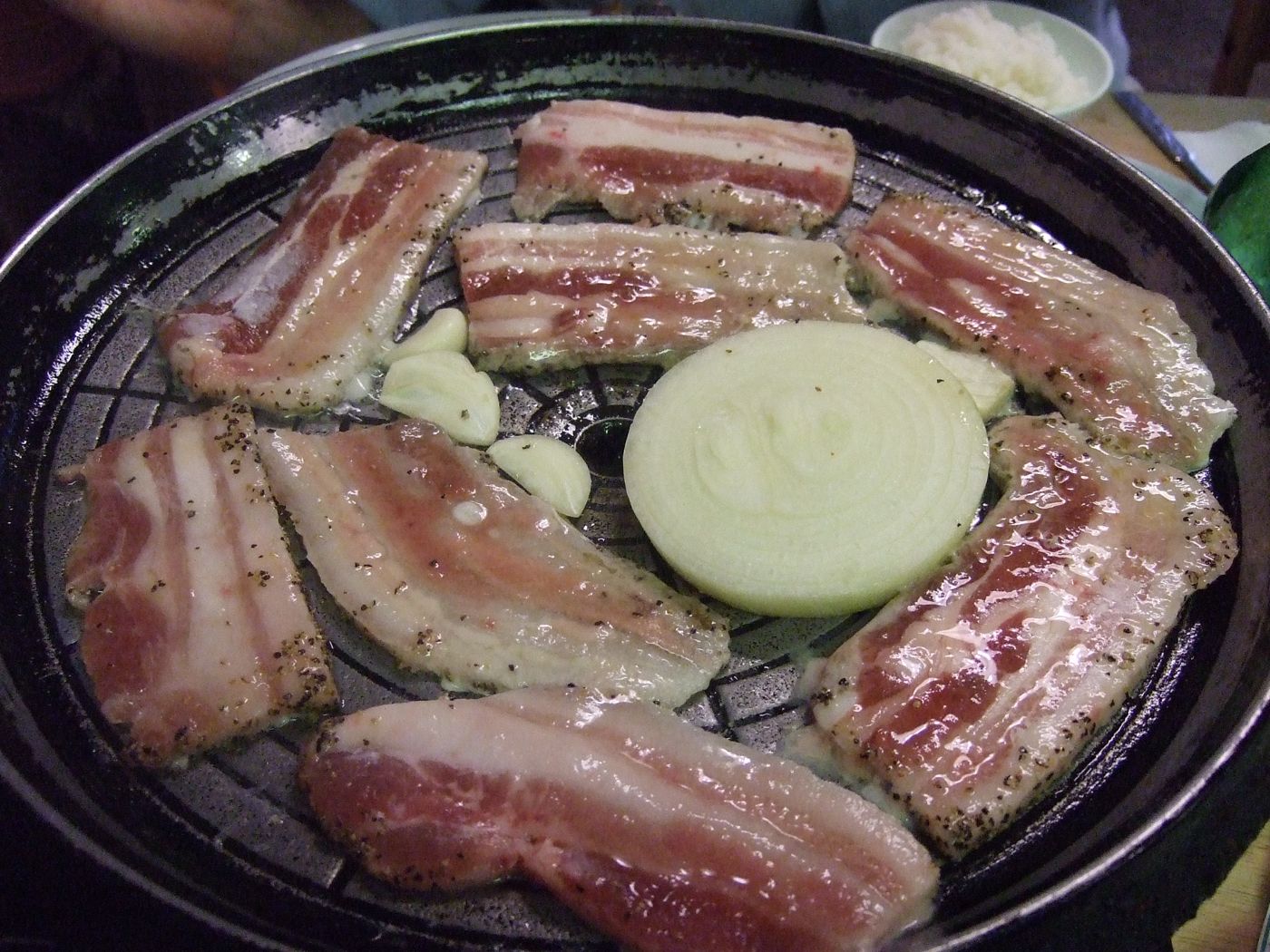 Samgyeopsal-gui (Grilled Pork Belly)삼겹살구이Thick, unseasoned slices of pork belly grilled at the table and wrapped in lettuce with garlic and ssamjang — Korea's favorite barbecue, though only since the late 1970s.
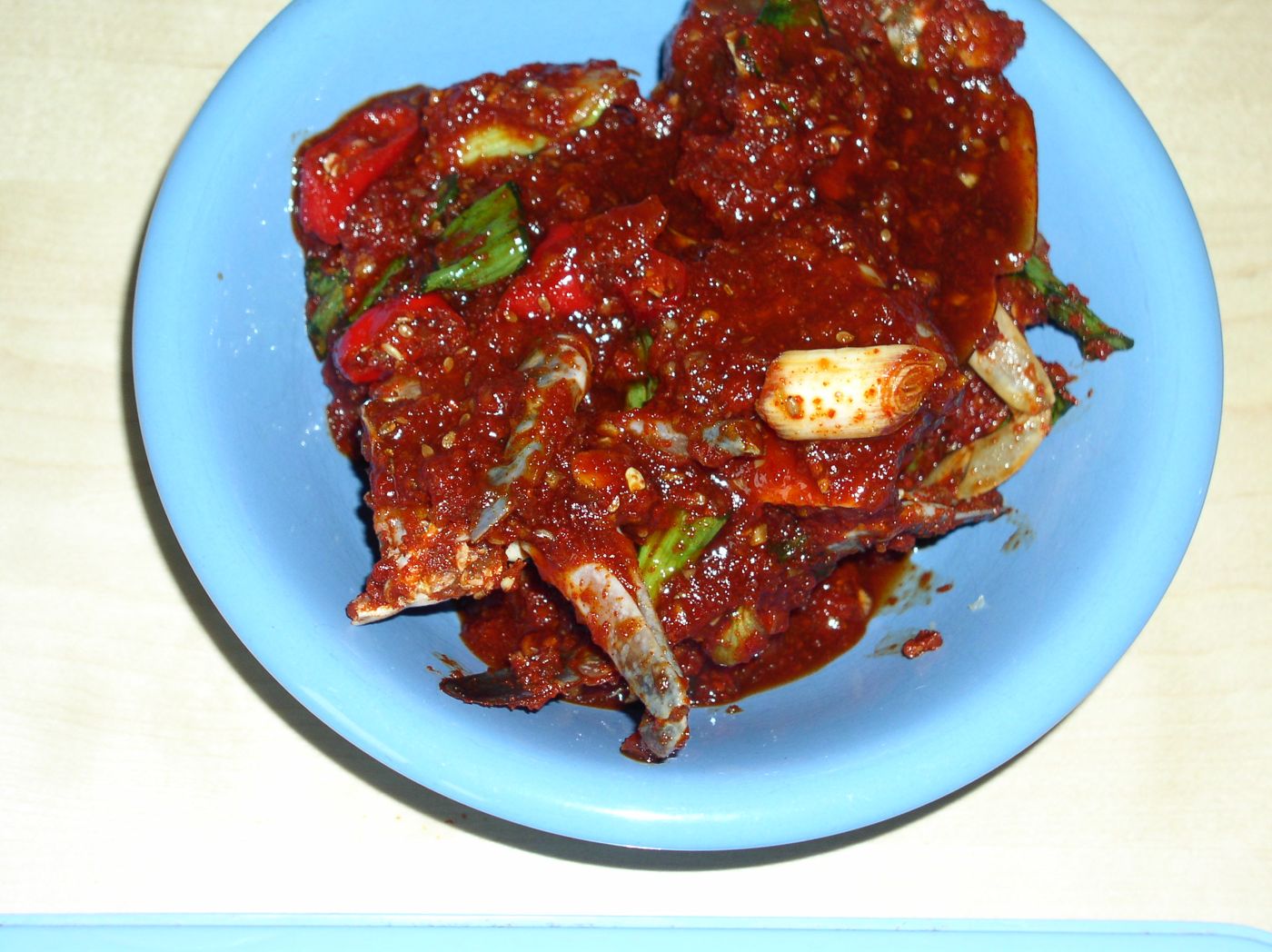 Spicy Marinated Raw Crab양념게장Raw crab pieces tossed in a glossy chili, garlic and soy dressing and eaten within days — sweet, fiery and a specialty of Yeosu's gejang restaurants.
- Soy-Pickled Onions양파장아찌Chunks of onion steeped in a sweet, tangy soy brine until mellow and crunchy — a quick modern jangajji that cuts through grilled meats and fried foods.
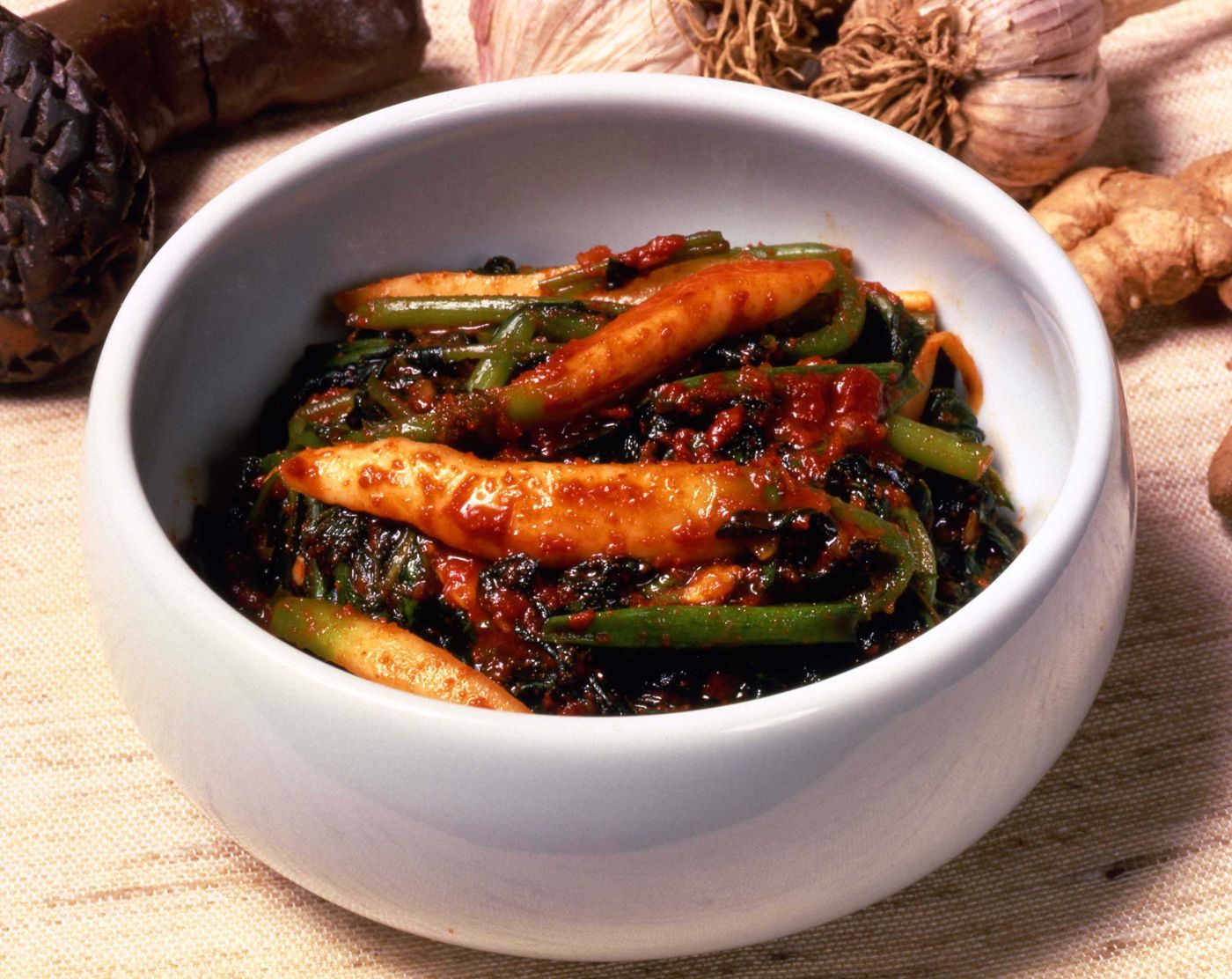 Young Summer Radish Kimchi열무김치Tender young radish greens in a loose, lightly spicy brine thickened with flour or rice paste — the classic summer kimchi, served over noodles and barley rice.
Sources
- 01고추 (Red pepper) — Encyclopedia of Korean Culture
- 02청양고추 (Cheongyang pepper) — Encyclopedia of Korean Culture
- 03청송고추 (Cheongsong pepper) — Digital Cheongsong Culture Encyclopedia
- 04제철농식품: 꽈리고추 (Seasonal produce: kkwari-gochu) — Foodnuri, Korea Agro-Fisheries & Food Trade Corporation
- 05Taking warfarin (Coumadin) — MedlinePlus
- 06Korean Food Composition Table (National Standard Food Composition Table) search — Rural Development Administration