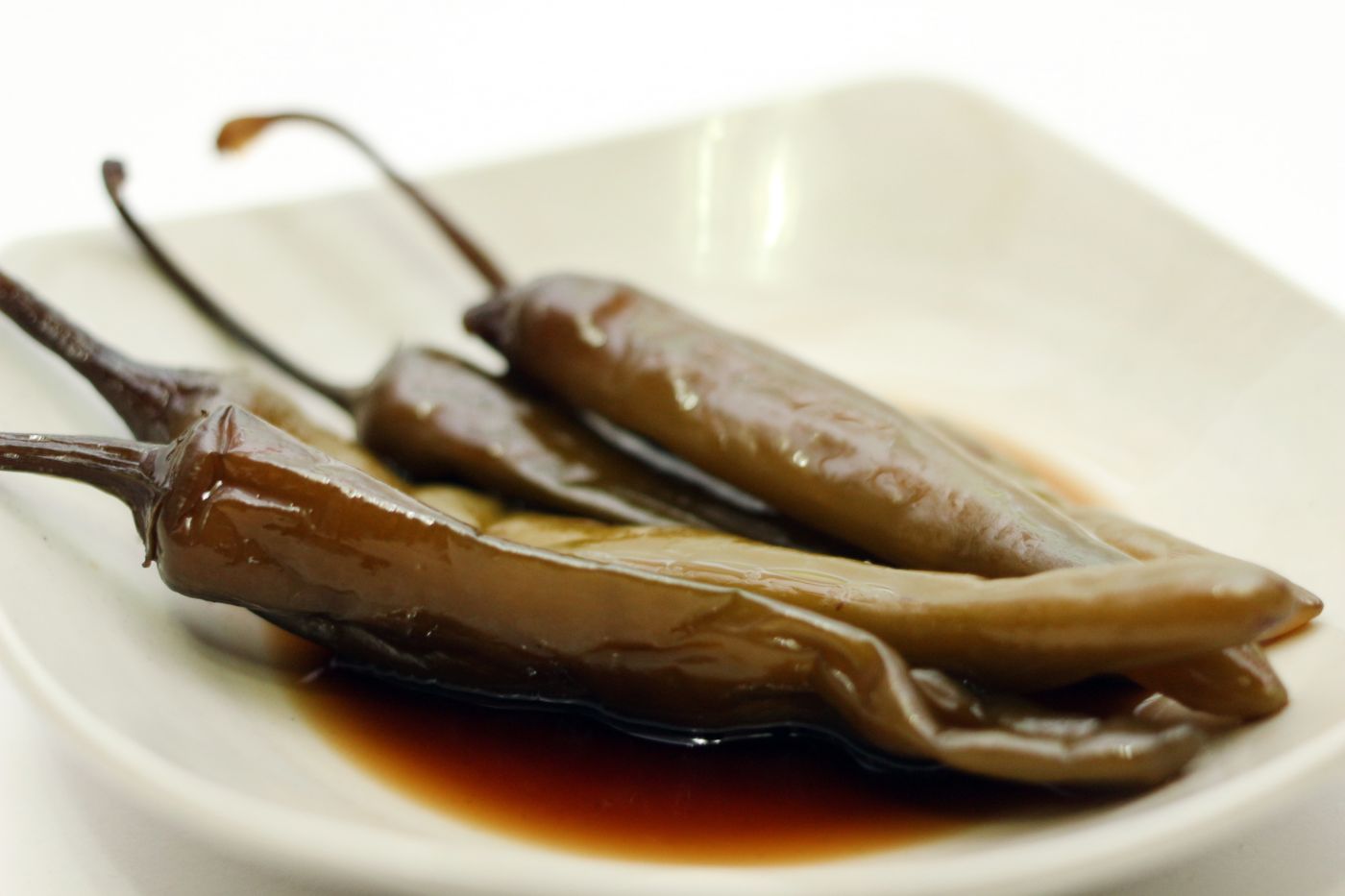
 Photo: Hyeon-Jeong Suk, CC BY 2.0, via Wikimedia Commons
Jangajji · Pickled 장아찌
Soy-Pickled Green Chilies
고추장아찌
Romanization: gochu-jangajji
Whole green chilies cured in a sweet, tangy soy brine until olive-drab and tender-crisp — a keeping pickle that brings heat and salt to plain rice.
- Serves
- 30
- Prep
- 20 min
- Cook
- 15 min
RegionChungcheong · Jeolla
Jump to recipeRecipe
Ingredients · Serves 30
- 500 gFresh green chiliesmedium-hot, firm and unblemished
- 250 mlSoy sauce (ganjang)
- 250 mlWater
- 150 mlVinegar (sikcho)
- 120 gSugarabout ½ cup
Method
Technique: Jangajji: Pickling in Jang
Step 1: Wash the chilies and dry them thoroughly. Trim the stems to about 1 cm.
Step 2: Pierce each chili two or three times with a fork or skewer so the brine can get inside; otherwise they float and stay hollow.
Step 3: Pack the chilies upright or lengthwise into a clean, heatproof glass jar.
Step 4: Bring the soy sauce, water, vinegar and sugar to a boil, stirring until the sugar dissolves. Pour the hot brine over the chilies and press them under the surface with a small plate or weight. Let cool, cover and refrigerate.
Step 5: After 3–4 days, pour the brine into a pot, bring it back to a boil, cool it completely and pour it back over the chilies. Repeat once more about a week later; this reboiling helps the pickle keep.
Step 6: The chilies are ready in about 2 weeks, when they have turned olive-green and the brine has penetrated. Keep refrigerated and use within 2–3 months, lifting them out with clean utensils; discard if mold appears or the brine turns cloudy and off-smelling. Serve whole or chopped, plain or with a few drops of sesame oil.
Origin & History
Jangajji — literally a pickle (ji) put down in jang — is Korea's family of long-keeping preserves in which vegetables are cured in soy sauce, soybean paste, chili paste, salt or vinegar. Vegetable pickling in Korea reaches back at least to the Three Kingdoms period, and as kimchi developed its chili-and-jeotgal identity in the Joseon era, the jang- and salt-cured preserves became a separate category.
Once chilies had become a staple crop, they joined the tradition too. Green chilies picked in late summer and early autumn are pickled in soy brine or vinegar water, or dried a little and buried in doenjang or gochujang. The leaves of the pepper plant were preserved as well: the 19th-century farming song Nongga wollyeongga lists gochu-ip jangajji (pickled pepper leaves) among the dishes of a threshing-day lunch.
Today gochu-jangajji is a common mitbanchan, a side dish kept in the refrigerator and brought out at meal after meal. It is especially associated with chili-growing districts such as Eumseong in North Chungcheong and with the jang town of Sunchang in Jeolla, where it is one of many pickles cured in local soy sauce, soybean paste and chili paste.
Key Ingredients
- Korean Chili Peppers (Fresh)고추Fresh Korean chili peppers, eaten green (putgochu) or red (hong-gochu): from the fiery cheongyang-gochu to the small, wrinkled, mild kkwari-gochu that is braised and stir-fried as banchan.
 Soy sauce간장Korean soy sauce, in two main kitchen forms: pale, salty guk-ganjang (soup soy sauce) brewed the traditional way from meju, and darker, sweeter jin-ganjang for braises and marinades.
- Korean Vinegar식초Vinegar in the Korean kitchen, from naturally fermented grain and fruit vinegars, such as persimmon vinegar, to everyday brewed vinegar. It sharpens muchim, pickles and the dipping sauce chogochujang.
Nutrition
| Calories | 25 kcal |
|---|---|
| Protein | 0.5 g |
| Fat | 0.1 g |
| Carbohydrates | 6.3 g |
| Fiber | 1 g |
| Sodium | 405 mg |
From the Korean Food Composition Table entry “Hot pepper, Pickled, Gochu-jangajji” (per 100 g: 124 kcal, 2,026 mg sodium, 11.4 g total sugars), scaled to the serving size. Homemade batches vary with the brine. Actual values vary with ingredients, portion size and preparation.
Health Benefits
- A little goes a long way: strongly flavored, a single chili can season a bowl of rice, which naturally keeps portions small.
- Chili peppers: fresh green chilies are a source of vitamin C and contain capsaicin, the compound responsible for their heat; long pickling reduces vitamin C, and the measured pickle provides only small amounts.
- Preserving the harvest: jangajji turns a glut of late-season chilies into a side dish that lasts for months.
Regional Variations
- Soy-sauce brine: the version here, using a boiled soy, vinegar and sugar brine; it is ready in about two weeks.
- Vinegar-soured: in Eumseong, mild green chilies picked in early autumn are steeped whole in diluted vinegar for 7–10 days.
- Paste-cured: riper green or red chilies are dried briefly and buried in a doenjang crock (or in gochujang, as in Sunchang), then dressed with chili flakes and sesame seeds when served.
Pairings
 Gyeran Mari (Rolled Omelet)계란말이Beaten egg cooked in thin layers and rolled into a soft, striped log, then sliced — a gentle, everyday banchan and a lunchbox classic.
 Myeolchi Bokkeum멸치볶음Small dried anchovies stir-fried until crisp, then glazed in a sweet soy and garlic syrup — a keeping banchan found in refrigerators across Korea.
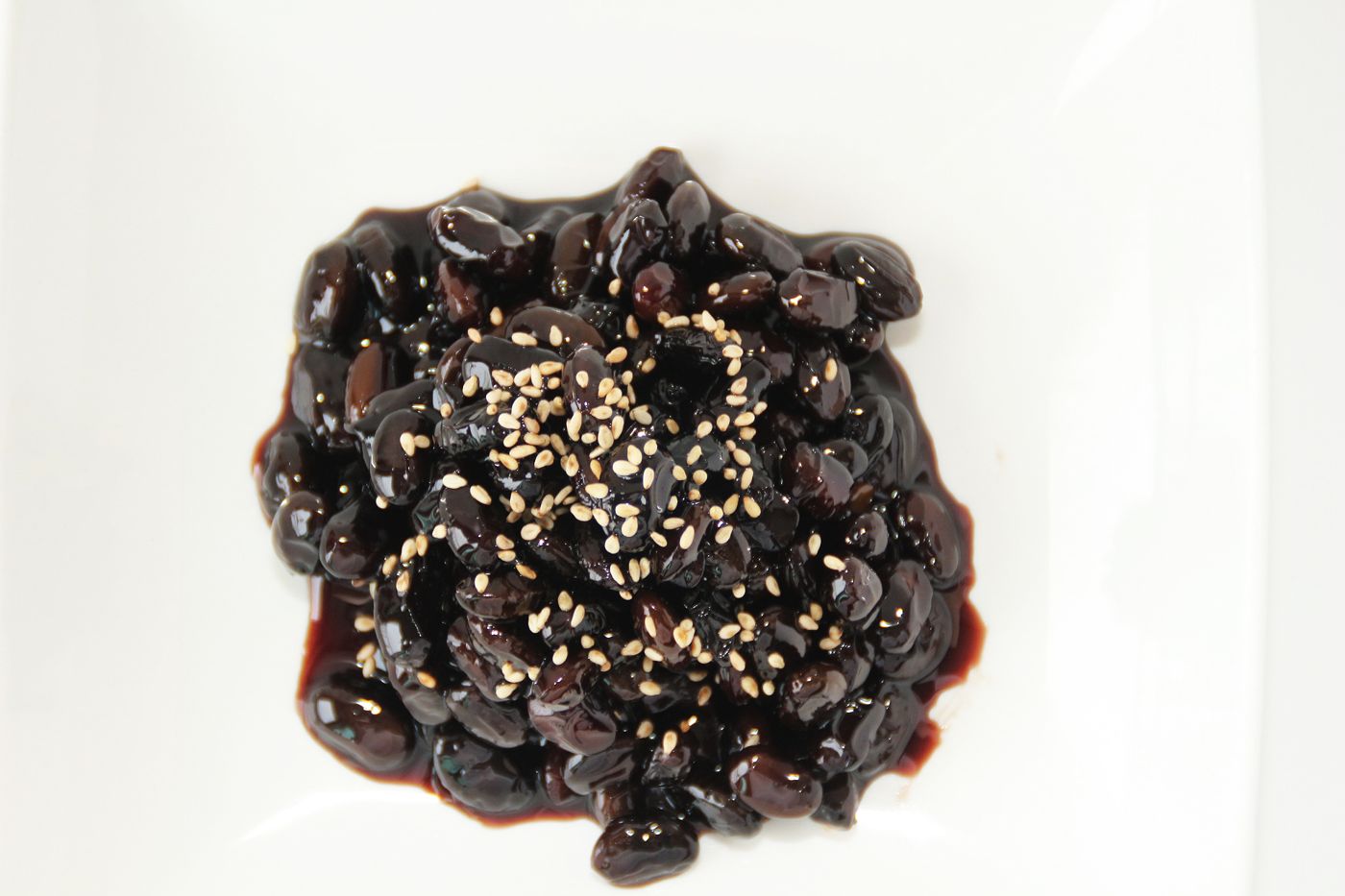 Kongjaban콩자반Black soybeans simmered in soy sauce until wrinkled and glossy, then finished with syrup and sesame — a sweet-salty, chewy keeping banchan.
Sources
- 01Korean Food Composition Table: Hot pepper, Pickled, Gochu-jangajji — National Institute of Agricultural Sciences
- 02장아찌 - 한국민족문화대백과사전 (Encyclopedia of Korean Culture)
- 03장아찌 - 한국민속대백과사전 (Encyclopedia of Korean Folk Culture)
- 04향토음식 - 디지털음성문화대전 (Encyclopedia of Korean Local Culture: Eumseong)
- 05장아찌 - 디지털순창문화대전 (Encyclopedia of Korean Local Culture: Sunchang)
Last updated