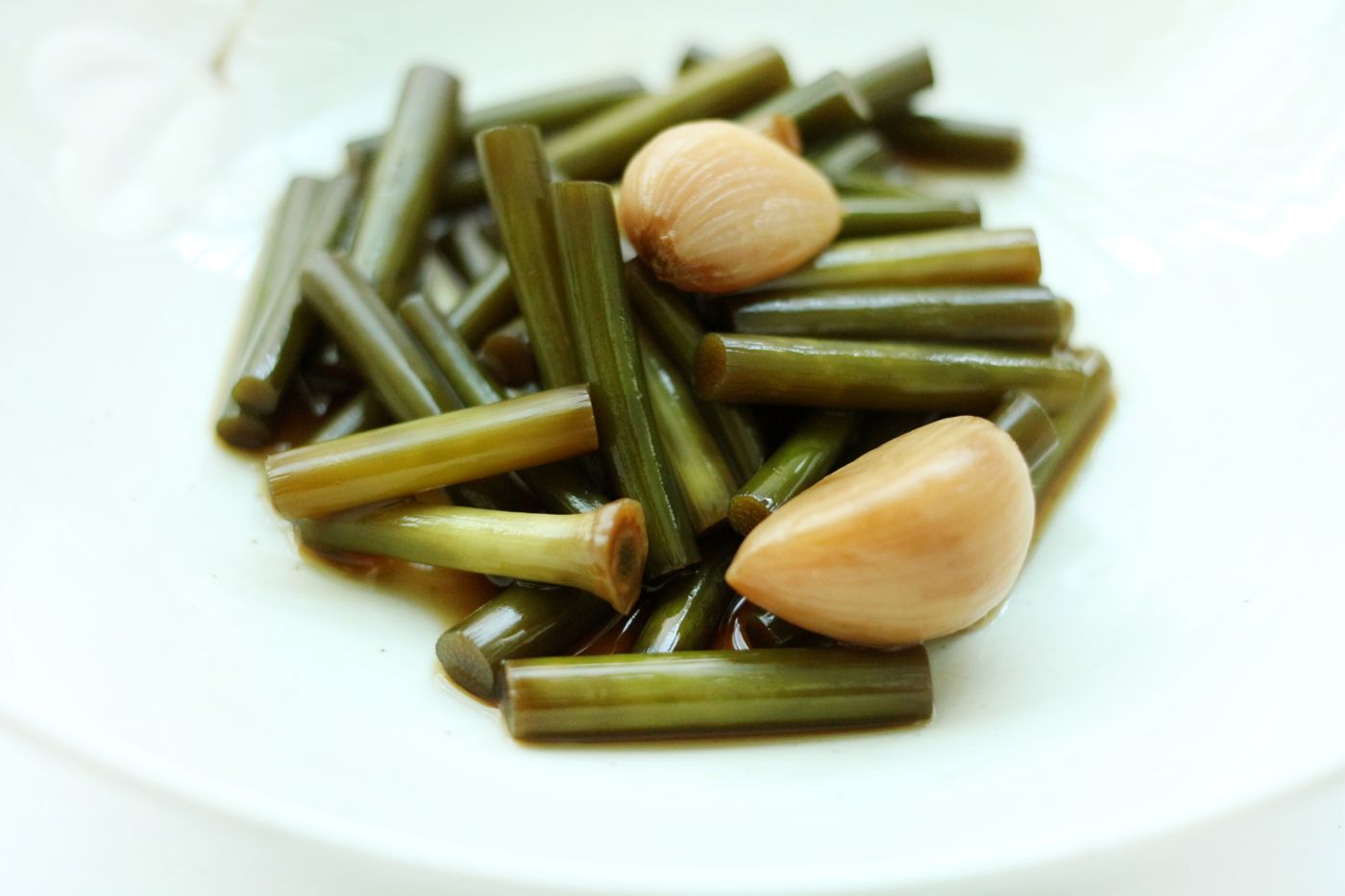
 Photo: Hyeon-Jeong Suk, CC BY 2.0, via Wikimedia Commons
Jangajji · Pickled 장아찌
Pickled Garlic Scapes
마늘종장아찌
Romanization: maneuljong-jangajji
Spring garlic scapes cut into short lengths and steeped in a sweet-sour soy brine — crisp, gently garlicky jangajji that keeps for months.
- Serves
- 25
- Prep
- 20 min
- Cook
- 15 min
RegionJeolla
Jump to recipeRecipe
Ingredients · Serves 25
- 500 gGarlic scapes (maneuljong)firm, fresh scapes with closed buds
- 250 mlSoy sauce (ganjang)
- 250 mlWater
- 150 mlVinegar (sikcho)
- 100 gSugarabout ½ cup
- 2 tbspGreen plum syrup (maesil-cheong)optional
- 2 Dried red chiliesoptional
Method
Technique: Jangajji: Pickling in Jang
Step 1: Trim off the tough bottom ends and the flower buds, rinse the scapes and drain thoroughly. Cut into 4–5 cm lengths and pack snugly into a clean, heatproof glass jar or container.
Step 2: Bring the soy sauce, water, sugar and dried chilies to a boil, stirring to dissolve the sugar. Remove from the heat and stir in the vinegar and plum syrup.
Step 3: Pour the hot brine over the scapes until they are fully covered (weigh them down with a small dish if they float). Let cool, cover and leave at room temperature for 1 day, then refrigerate.
Step 4: After 3–4 days, pour the brine into a pot, bring it back to a boil, cool it completely and pour it back over the scapes. Repeat once more after another 3–4 days; this keeps the scapes crisp and the brine sound.
Step 5: The scapes are ready to eat after about 2 weeks, when they have turned olive-colored and evenly seasoned. Serve a small pile as is, or toss with a little gochugaru, sesame oil and sesame seeds.
Step 6: Keep refrigerated, submerged in the brine, and use clean utensils; they keep for several months. Discard if they turn soft or slimy, or the brine becomes cloudy and smells off.
Origin & History
Garlic scapes (maneuljong) are the tender flower stalks that garlic plants send up in spring. Farmers snap or cut them off in April and May so the plant's energy goes into the bulb, and for a few weeks the markets are full of them. Korea's agricultural food-information service names soaking them in soy sauce and vinegar for jangajji as the main way they are preserved, alongside quick stir-fries such as maneuljong-bokkeum.
Jangajji are vegetables cured in soy sauce, doenjang or gochujang (and, more recently, sweetened vinegar) so they keep through the year. The Encyclopedia of Korean Folk Culture traces the word to jangat-dihi, “ji cured in jang,” and lists garlic and garlic scapes among the vegetables most often pickled this way, noting that the Jeolla provinces are particularly rich in jangajji.
Because the scapes appear only briefly, a jar put up in spring is a way to keep their crunch and mild garlic flavor on the table through the rest of the year. The soy-and-vinegar brine is the most common cure today; gochujang and doenjang versions are also made.
Key Ingredients
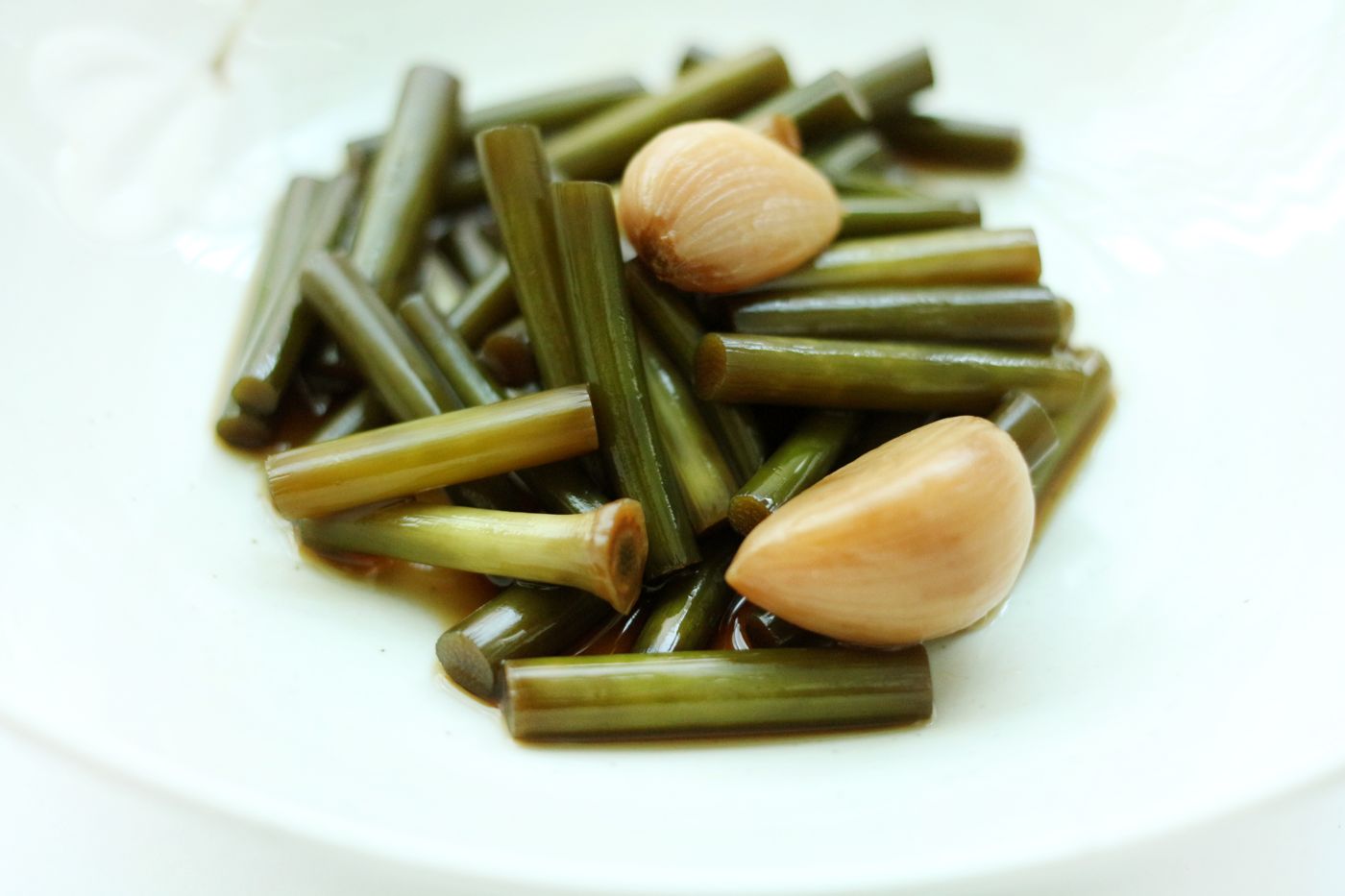 Garlic scapes마늘종The firm green flower stalks of the garlic plant, snapped off in spring. Stir-fried with dried shrimp as maneuljong-bokkeum, or pickled in soy sauce and vinegar.
 Soy sauce간장Korean soy sauce, in two main kitchen forms: pale, salty guk-ganjang (soup soy sauce) brewed the traditional way from meju, and darker, sweeter jin-ganjang for braises and marinades.
- Korean Vinegar식초Vinegar in the Korean kitchen, from naturally fermented grain and fruit vinegars, such as persimmon vinegar, to everyday brewed vinegar. It sharpens muchim, pickles and the dipping sauce chogochujang.
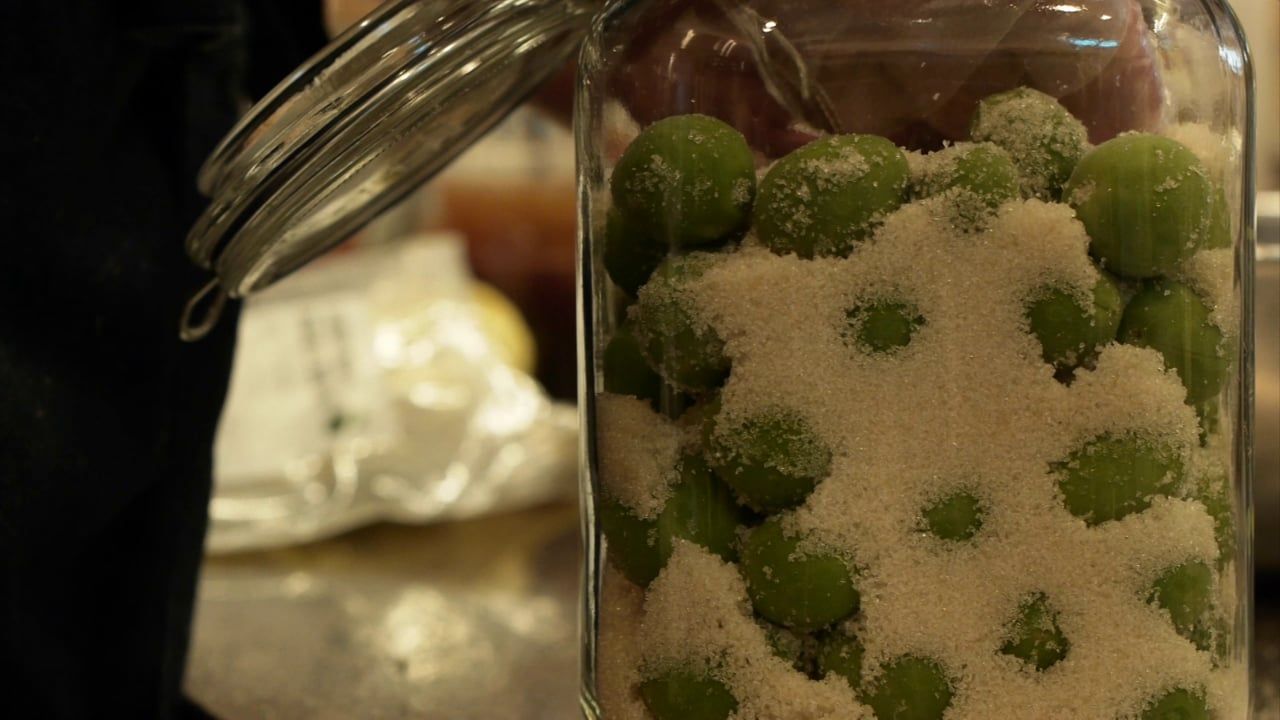 Green Plum Syrup매실청A sweet-tart syrup made by layering green plums (maesil, Prunus mume) with an equal weight of sugar and letting them steep for months. Korean cooks use it in place of sugar in dressings, marinades and drinks.
- Korean Chili Peppers (Fresh)고추Fresh Korean chili peppers, eaten green (putgochu) or red (hong-gochu): from the fiery cheongyang-gochu to the small, wrinkled, mild kkwari-gochu that is braised and stir-fried as banchan.
Nutrition
| Calories | 35 kcal |
|---|---|
| Protein | 0.6 g |
| Fat | 0 g |
| Carbohydrates | 8.2 g |
| Fiber | 1.6 g |
| Sodium | 423 mg |
Notable forDietary fiber
From the Korean Food Composition Table entry “Garlic scape, Pickled, Maneuljong-jangajji” (마늘종 장아찌; per 100 g: 118 kcal, 2.0 g protein, 27.3 g carbohydrate including 13.0 g sugars, 5.2 g fiber, 1,410 mg sodium), scaled to the serving size. Actual values vary with ingredients, portion size and preparation.
Health Benefits
- Fiber: in the composition table, a 30 g serving provides about 1.6 g of dietary fiber.
- A milder garlic: scapes carry garlic's flavor compounds in a gentler form; Korea's agricultural food-information service notes that fresh scapes are rich in fiber and contain B vitamins and vitamin C, though the pickled form in the composition table retains little vitamin C.
- Low in fat: almost all the calories come from the sweet brine rather than the vegetable.
Regional Variations
- Soy-vinegar brine: the everyday modern version — boiled soy sauce, vinegar and sugar poured over the scapes, then drained, reboiled and returned once or twice.
- Gochujang-jangajji: scapes first cured in soy sauce or salt, then packed in gochujang, sometimes with a little syrup.
- Doenjang-jangajji: a more rustic cure in soybean paste.
- Southern garlic country: scapes from warm-climate garlic in the south — Goheung is a major producing area — come to market first each spring.
Pairings
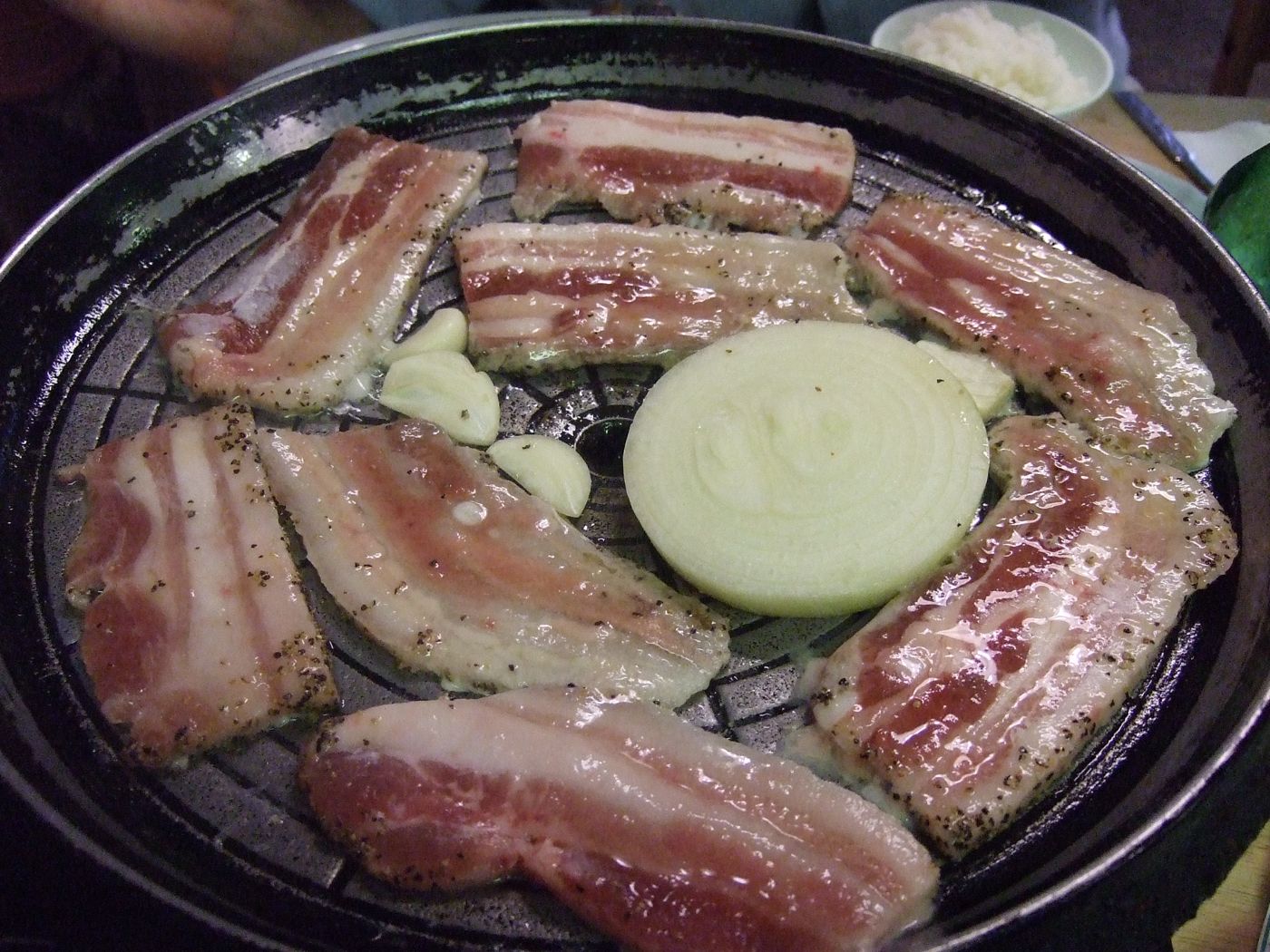 Samgyeopsal-gui (Grilled Pork Belly)삼겹살구이Thick, unseasoned slices of pork belly grilled at the table and wrapped in lettuce with garlic and ssamjang — Korea's favorite barbecue, though only since the late 1970s.
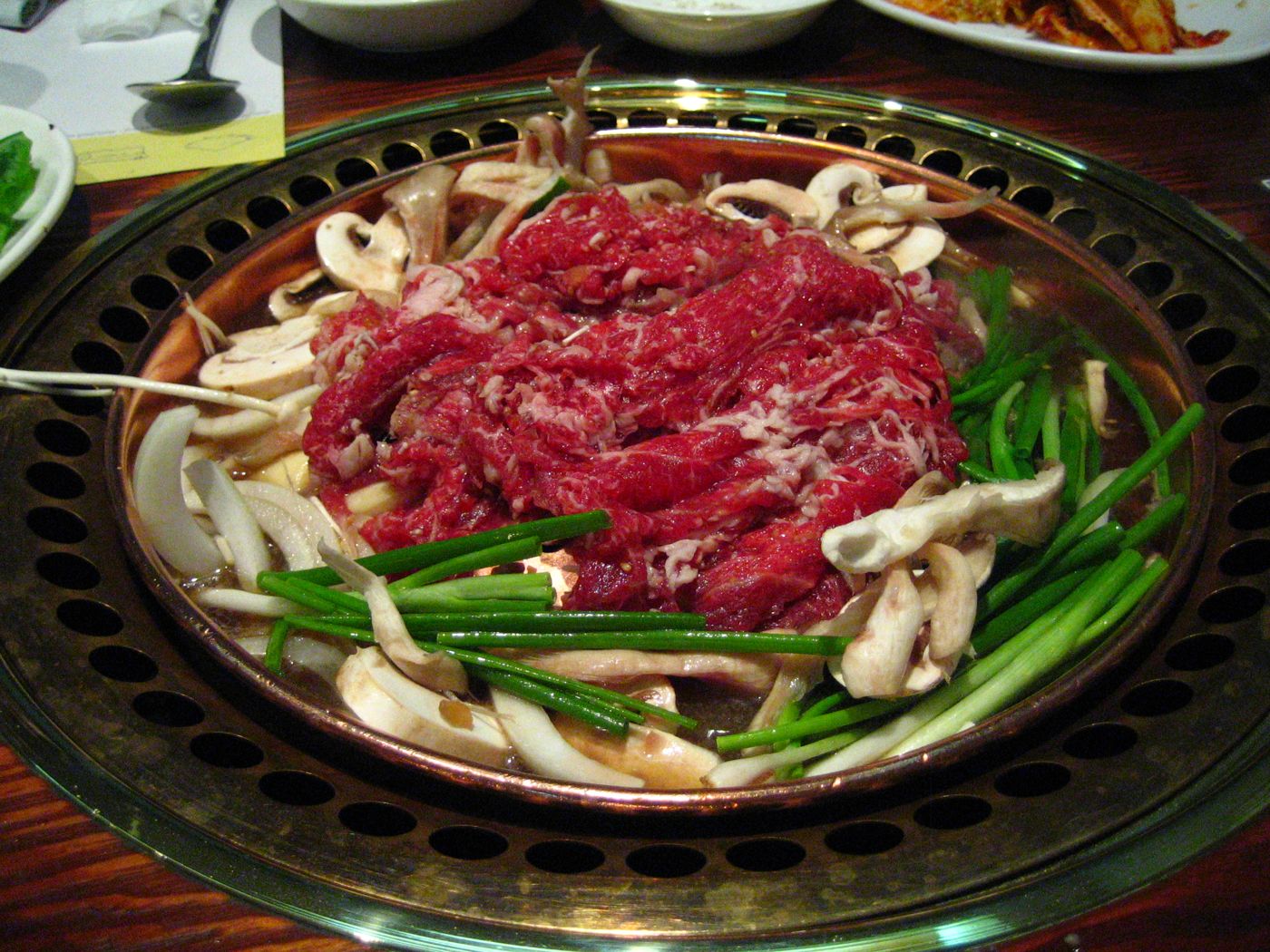 Bulgogi (Marinated Grilled Beef)불고기Thin slices of beef marinated in soy sauce, pear, garlic and sesame, then grilled or seared — descended from the court dish neobiani and Korea's best-known meat dish.
 Doenjang Jjigae (Soybean Paste Stew)된장찌개A thick, savory stew of fermented soybean paste with tofu, zucchini and whatever the season offers — the everyday pot at the center of the Korean table.