Jjim · Steamed 찜
Kkaennip Jjim (Steamed Seasoned Perilla Leaves)
깻잎찜
Romanization: kkaennip-jjim
Perilla leaves layered with a garlicky soy-chili sauce and steamed until soft — a fragrant banchan for wrapping around spoonfuls of rice.
- Serves
- 4
- Prep
- 20 min
- Cook
- 8 min
Recipe
Ingredients · Serves 4
- 40 leavesPerilla leavesabout 80 g
- 2 tbspSoy sauce
- 3 tbspWater
- 2 tspGochugaru
- 2 tspGarlicminced
- 1 stalkGreen onionfinely chopped
- 30 gOnionfinely chopped
- 15 gCarrotfinely chopped
- 1 Green chili pepperfinely chopped
- 1 tspSugar
- 2 tspToasted sesame oil
- 1 tspToasted sesame seeds
Method
Technique: Steaming and Jjim, Yangnyeom: Seasoning Basics
Step 1: Rinse the perilla leaves one by one under running water, shake them dry and trim the stems short.
Step 2: Mix the soy sauce, water, gochugaru, garlic, green onion, onion, carrot, chili, sugar, sesame oil and sesame seeds into a loose sauce.
Step 3: In a shallow heatproof dish, lay down two leaves and spread a teaspoon of sauce over them. Repeat, stacking until all the leaves are used, and pour any remaining sauce over the top.
Step 4: Steam over boiling water for 5–7 minutes, until the leaves are soft and dark green. (Or cook the stack in a covered pan with 3–4 tablespoons of water over low heat for 5 minutes.)
Step 5: Let cool slightly. Serve in the dish, peeling off a leaf or two to wrap around rice.
Step 6: Refrigerate leftovers for up to 4 days; the flavor deepens overnight.
Origin & History
Perilla (deulkkae) is grown in Korea mainly as an oilseed, and its tender leaves (kkaennip) are picked while the plant grows. The Encyclopedia of Korean Folk Culture observes that Korea is almost the only country that eats perilla leaves as a vegetable; Japan favors the related shiso. The leaves owe their sharp, minty-anise aroma to compounds such as perillaldehyde, limonene and perilla ketone, which is why they are paired with meat and fish and turned into everyday preserved banchan — soy- or doenjang-pickled jangajji, kimchi and namul.
Kkaennip-jjim — the dictionary entry is deulkkaennip-jjim — is the quick, gentle member of this family. The National Institute of Korean Language defines it as trimmed perilla leaves brushed with seasoned sauce and either steamed or cooked with a little water. Unlike kkaennip-jangajji, which cures for days, it is ready in minutes and softer, with the leaves going silky and the sauce soaking into every layer.
Steaming leaves before seasoning them is an old practice. The folk-culture encyclopedia describes how the Uiseong Kim head family of Andong steams perilla leaves, squeezes and briefly sun-dries them, and layers them with coarse chili flakes, soy sauce, garlic and sesame to make a perilla kimchi that keeps for months — a close relative of today's steamed banchan. Kkaennip kimchi itself, it notes, was mostly made in the Chungcheong, Jeolla and Gyeongsang regions.
Key Ingredients
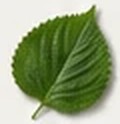 Perilla깻잎Perilla leaves have a bold, minty-herbal scent. They are eaten fresh as a wrap, pickled in soy sauce, or layered with seasoning as kkaennip-jangajji.
 Soy sauce간장Korean soy sauce, in two main kitchen forms: pale, salty guk-ganjang (soup soy sauce) brewed the traditional way from meju, and darker, sweeter jin-ganjang for braises and marinades.
 Gochugaru고춧가루Korean red chili powder, made from dried red peppers ground coarse or fine. It gives kimchi, gochujang and countless banchan their color and warmth.
 Garlic마늘Used raw, minced, pickled and roasted, garlic is one of the essential aromatics of Korean food — in seasonings, marinades, kimchi and namul.
 Green onion파Korean green onion (pa), from thick-stemmed daepa to slender scallions — chopped into nearly every seasoning sauce, soup and kimchi, and the star of pa-kimchi.
 Yangpa (onion)양파The bulb onion, literally the "Western scallion." A latecomer to Korea, it is now everywhere: sweetening stir-fries and braises, pickled in soy sauce as yangpa-jangajji, and served raw beside grilled meat.
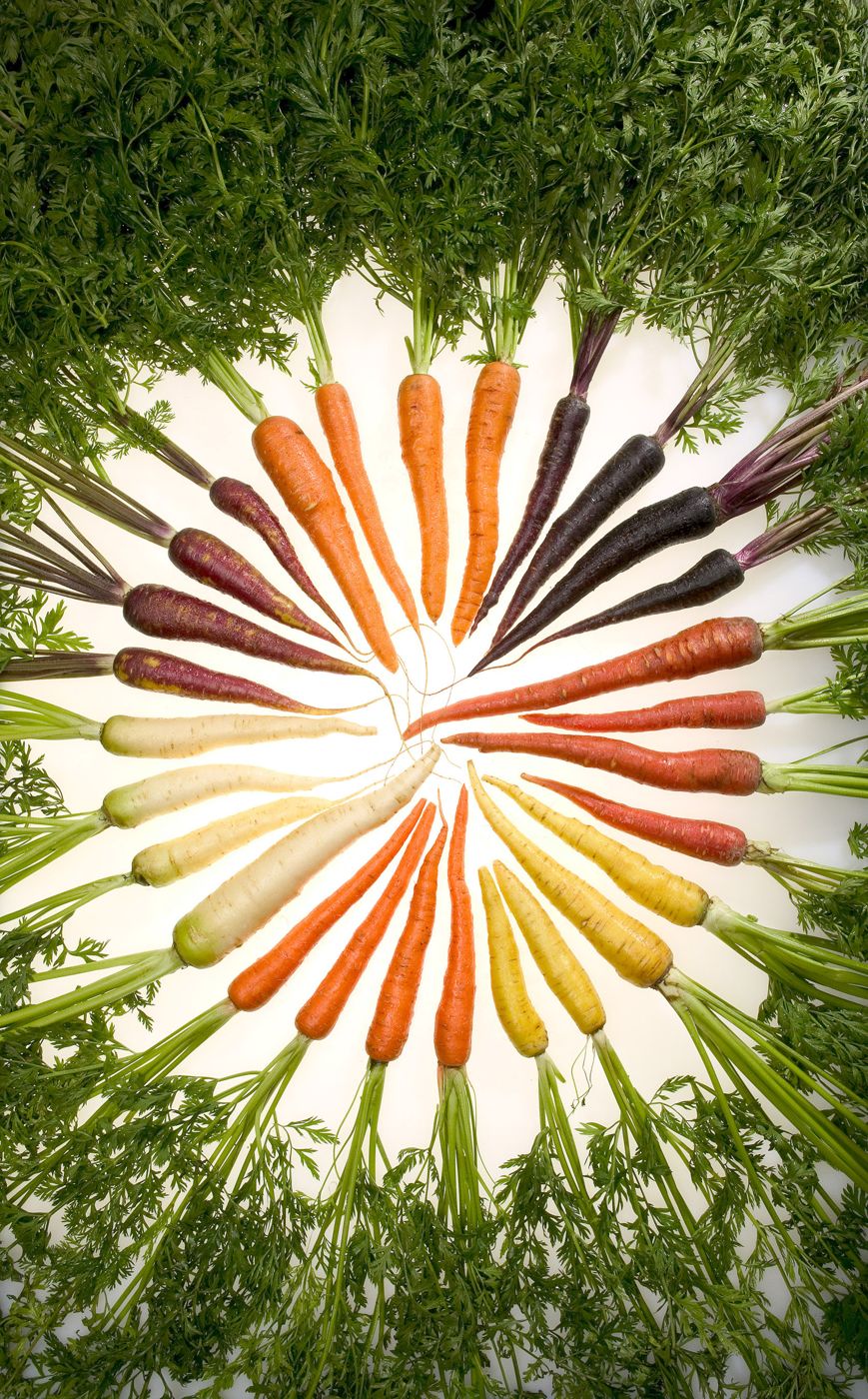 Danggeun (carrot)당근The orange root that brings color to the Korean table: julienned into japchae and gimbap, shredded into jeon batters, stir-fried with dakgalbi. Korea's sweetest winter carrots come from the volcanic fields of eastern Jeju.
- Korean Chili Peppers (Fresh)고추Fresh Korean chili peppers, eaten green (putgochu) or red (hong-gochu): from the fiery cheongyang-gochu to the small, wrinkled, mild kkwari-gochu that is braised and stir-fried as banchan.
 Sesame참깨Toasted sesame seeds and sesame oil (chamgireum) finish countless Korean dishes, adding a nutty aroma and gloss.
Nutrition
| Calories | ~61 kcal |
|---|---|
| Protein | ~2.4 g |
| Fat | ~2.9 g |
| Carbohydrates | ~7.4 g |
| Fiber | ~2.3 g |
| Sodium | ~433 mg |
Notable forVitamin K · Vitamin A · Calcium
Perilla leaves use the Korean Food Composition Table entry “Perilla leaf (Deulkkaennip), Raw” (per 100 g: 47 kcal, 296 mg calcium, 630 µg RAE vitamin A, 787 µg vitamin K); 40 leaves were taken as about 80 g. Soy sauce, gochugaru, green chili and carrot use Korean table values; other seasonings use USDA FoodData Central. Totals divided by four, assuming all the sauce is eaten. Actual values vary with ingredients, portion size and preparation.
Health Benefits
- Vitamin K and vitamin A: perilla leaves are exceptionally rich in vitamin K and in beta-carotene; a serving supplies more than a day's vitamin K.
- Calcium: the folk-culture encyclopedia highlights the calcium in perilla leaves; the Korean Food Composition Table lists 296 mg per 100 g.
- Aromatic compounds: perillaldehyde, rosmarinic acid and related compounds in perilla are being studied for antioxidant and anti-inflammatory activity; research is ongoing and has mostly used extracts, not food portions.
Regional Variations
- Steamed in a basket: leaves stacked two or three at a time with sauce between them and steamed for a few minutes.
- Pan-simmered: the stack is laid in a pan with a splash of water or anchovy stock and cooked covered until wilted — the second method in the dictionary definition.
- With doenjang: some cooks swap part of the soy sauce for soybean paste for a deeper, earthier flavor.
- With anchovies: small dried anchovies or anchovy stock added to the sauce in coastal households.
Pairings
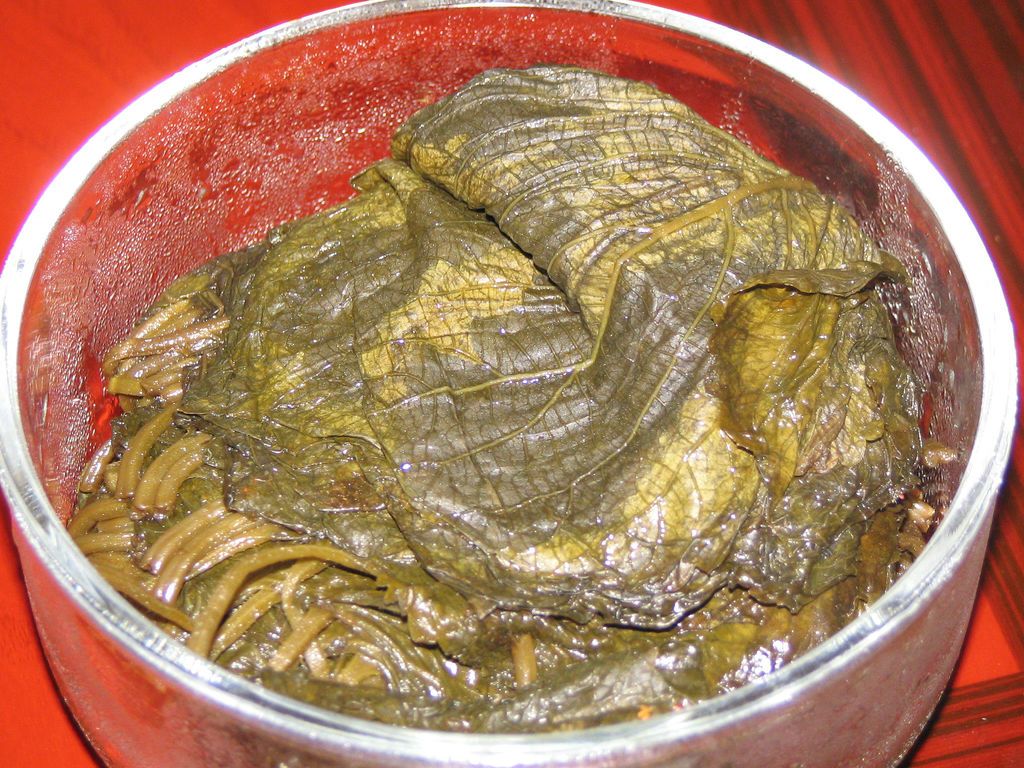 Soy-Pickled Perilla Leaves깻잎장아찌Fragrant perilla leaves steeped in a sweet-salty soy brine — peeled off one at a time and wrapped around a spoonful of rice.
 Gyeran Jjim (Steamed Egg)계란찜Eggs whisked with water or broth and gently steamed into a silky, savory custard, often seasoned with salted shrimp and served bubbling hot.
 Doenjang Jjigae (Soybean Paste Stew)된장찌개A thick, savory stew of fermented soybean paste with tofu, zucchini and whatever the season offers — the everyday pot at the center of the Korean table.
Sources
- 01들깻잎찜 (Deulkkaennip-jjim) — Urimalsaem (National Institute of Korean Language)
- 02깻잎 (Kkaennip, perilla leaf) — Encyclopedia of Korean Folk Culture (National Folk Museum of Korea)
- 03깻잎김치 (Kkaennip-kimchi) — Encyclopedia of Korean Folk Culture (National Folk Museum of Korea)
- 04들깨 (Deulkkae, perilla) — Encyclopedia of Korean Culture
- 05Korean Food Composition Table: Perilla leaf (Deulkkaennip), Raw — National Institute of Agricultural Sciences
- 06Warfarin — MedlinePlus Drug Information (U.S. National Library of Medicine)
Last updated