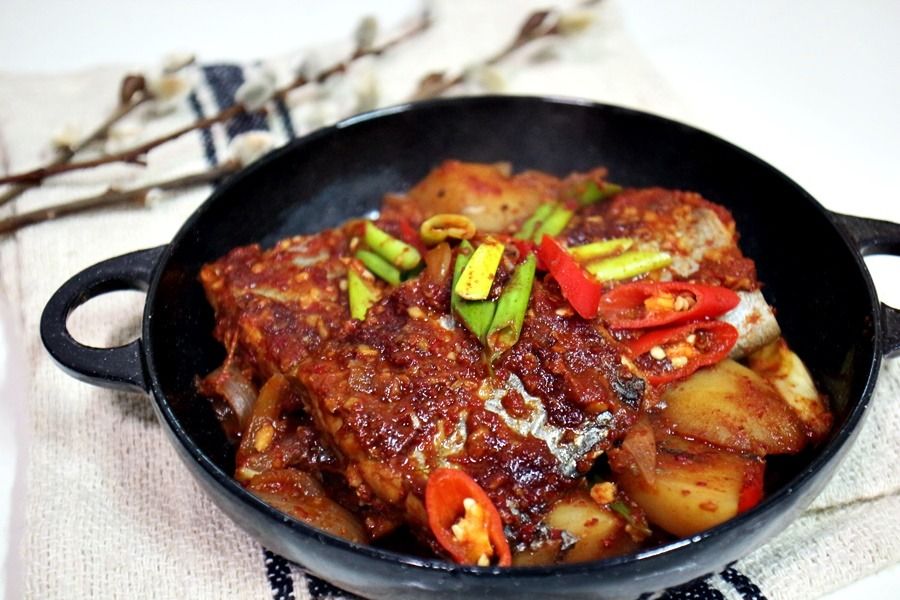
 Photo: 세미짱, CC BY 4.0, via Wikimedia Commons
Jorim · Braised 조림
Galchi Jorim
갈치조림
Romanization: galchi-jorim
Silvery hairtail braised with radish in a red, garlicky soy and chili sauce — a Jeju specialty and a favorite across Korea's southern coast.
- Serves
- 4
- Prep
- 15 min
- Cook
- 30 min
Recipe
Ingredients · Serves 4
- 500 gHairtail (galchi)cleaned, fins snipped off, cut into 8 cm pieces (about 400 g edible)
- 300 gKorean radish (mu)cut into 1 cm slabs
- ½ mediumOnionabout 100 g, sliced
- 2 smallGreen and red chiliesabout 30 g total, sliced
- 2 stalksGreen onionabout 30 g, chopped
- 300 mlWateror rice-rinsing water
- 3 tbspSoy sauce
- 2 tbspGochugaru
- 5 clovesGarlicminced
- 2 tbspCooking rice wine
- 1 tspSugar
- 1 pinchGround black pepper
Method
Technique: Jorim: Braising in Seasoned Liquid
Step 1: Rinse the hairtail gently under cold water. Snip off the dorsal fin with scissors, since its fine bones run along the back, and pat the pieces dry. Keep cold until cooking.
Step 2: Mix the soy sauce, gochugaru, garlic, rice wine, sugar and pepper with 3 tablespoons of the water to make a sauce.
Step 3: Lay the radish in a wide, shallow pot, add the remaining water and a spoonful of the sauce, and simmer for 8–10 minutes, until the radish begins to soften.
Step 4: Lay the hairtail on top of the radish, scatter the onion over and spoon the remaining sauce evenly over the fish.
Step 5: Simmer over medium heat for 12–15 minutes, basting the fish with the sauce rather than stirring, so the delicate pieces stay whole. The sauce should reduce by about half.
Step 6: Add the chilies and green onion and cook 2 minutes more. Serve hot from the pan with rice.
Origin & History
Hairtail (galchi, Trichiurus lepturus) is a long, ribbon-shaped, scaleless fish with a bright silver body. Its name is usually traced to kal, "knife," for its blade-like shape, and the Encyclopedia of Korean Culture notes that people in the old Silla area say galchi while others say kalchi. Earlier names include gundaeeo ("skirt-ribbon fish") in Jasan eobo.
Galchi is caught around much of the peninsula, but especially in the southwestern seas. It has long been an inexpensive, abundant fish: a nineteenth-century source quoted by the encyclopedia says salted, dried hairtail was sent to Seoul and was both tasty and cheap. It is eaten mostly grilled or braised, and in Gyeongsang it also goes into soup.
Jeju has made braised hairtail one of its signature dishes. Jeju's eungalchi, "silver hairtail," is caught at night by hook and line under bright lamps, which keeps its silvery skin intact; the autumn catch is considered the best. Braised with thick slices of radish in a soy and chili sauce, it is one of the dishes visitors most associate with the island.
Key Ingredients
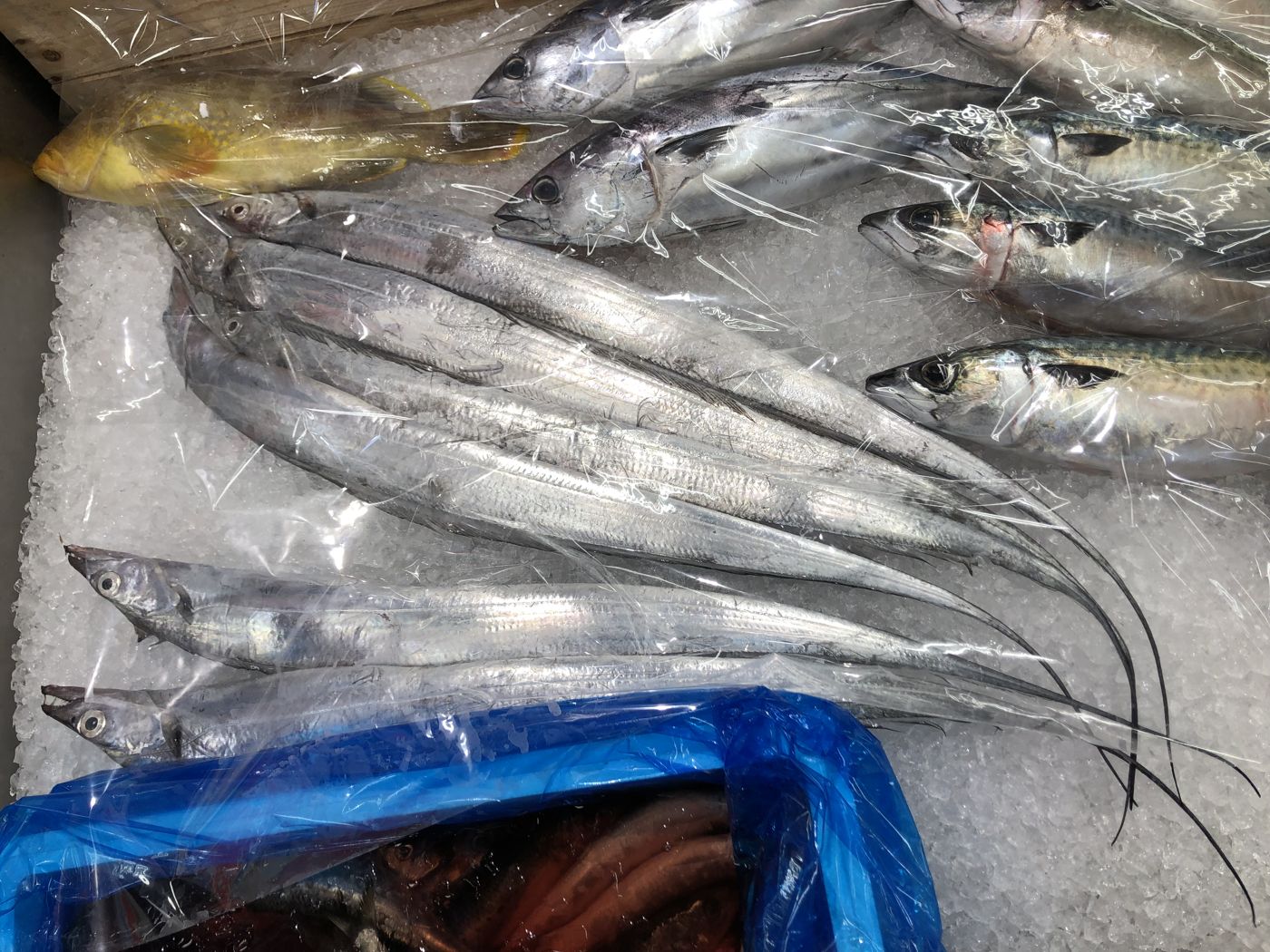 Hairtail (cutlassfish)갈치A long, scaleless, ribbon-like fish with a mirror-bright silver skin. Its soft, sweet flesh is grilled, braised with radish and chili, or — on Jeju — simmered into a clear soup with pumpkin.
 Korean radish무A stout, heavy white radish, often tinged pale green near the top. It is cubed for kkakdugi, left whole in the clear brine of dongchimi, shredded into salads and simmered into broths.
 Soy sauce간장Korean soy sauce, in two main kitchen forms: pale, salty guk-ganjang (soup soy sauce) brewed the traditional way from meju, and darker, sweeter jin-ganjang for braises and marinades.
 Gochugaru고춧가루Korean red chili powder, made from dried red peppers ground coarse or fine. It gives kimchi, gochujang and countless banchan their color and warmth.
 Garlic마늘Used raw, minced, pickled and roasted, garlic is one of the essential aromatics of Korean food — in seasonings, marinades, kimchi and namul.
 Green onion파Korean green onion (pa), from thick-stemmed daepa to slender scallions — chopped into nearly every seasoning sauce, soup and kimchi, and the star of pa-kimchi.
- Korean Chili Peppers (Fresh)고추Fresh Korean chili peppers, eaten green (putgochu) or red (hong-gochu): from the fiery cheongyang-gochu to the small, wrinkled, mild kkwari-gochu that is braised and stir-fried as banchan.
Nutrition
| Calories | ~205 kcal |
|---|---|
| Protein | ~21.1 g |
| Fat | ~8.2 g |
| Carbohydrates | ~11.4 g |
| Fiber | ~2.9 g |
| Sodium | ~780 mg |
Notable forProtein · Potassium · Vitamin C
Estimated by summing ingredient values and dividing by four servings, assuming all the sauce is eaten. Hairtail: Korean Food Composition Table entry 갈치, 생것 (via the MFDS K-FIND database), assuming about 400 g edible flesh; Korean radish: USDA FDC 168451; soy sauce: FDC 174277; gochugaru approximated with red pepper, FDC 170932; other vegetables and sugar from USDA. Rice wine was left out as negligible. Vitamin C is partly lost during braising. Actual values vary with ingredients, portion size and preparation.
Health Benefits
- Hairtail is a good source of protein, and a serving of the braise provides a substantial share of a day's protein needs.
- The radish, onion and chilies add fiber, potassium and some vitamin C.
- Braising uses no added frying oil, keeping the dish moderate in fat for a fish dish.
Regional Variations
- Jeju silver hairtail: line-caught eungalchi from Jeju is prized for its intact silver skin; besides braising, Jeju cooks make galchi-guk, a clear hairtail soup with pumpkin or napa cabbage, as well as grilled and raw preparations.
- Mokpo "black" hairtail: hairtail caught by net off Mokpo in South Jeolla loses much of its silver coating and looks darker, so it is sold as meokgalchi; it is braised in much the same way.
- Add-ins: radish is standard, usually with onion and green and red chilies; the sauce is built on soy sauce and gochugaru.
Pairings
 Kongnamul Muchim콩나물무침Soybean sprouts cooked under a lid until just tender, then tossed with garlic, green onion and sesame oil — crisp, nutty and on tables across Korea.
- Gim Gui (Seasoned Roasted Laver)김구이Sheets of laver brushed with sesame or perilla oil, sprinkled with salt and toasted until crisp — eaten wrapped around spoonfuls of rice.
 Napa Cabbage Kimchi배추김치Salted napa cabbage layered with a red paste of chili, garlic, ginger and fermented seafood, then left to ripen: the kimchi most people picture first.
Sources
- 01갈치 (Hairtail) — Encyclopedia of Korean Culture
- 02검은 밤바다, 빛나는 은빛 유혹, 제주 은갈치 대령이오 (Jeju silver hairtail) — VisitKorea (Korea Tourism Organization)
- 03[김준의 맛과 섬] [164] 제주 은갈치 (Kim Jun, Jeju silver hairtail) — Chosun Ilbo, via Daum News
- 04제주도 명물 은갈치의 정석, 갈치조림 — 대한급식신문 (Korea Foodservice News), 2022
- 05갈치, 생것 (Hairtail, raw) — MFDS K-FIND / Korean Food Composition Table
- 06Sodium reduction — World Health Organization fact sheet
Last updated