 Photo: Hyeon-Jeong Suk, CC BY 2.0, via Wikimedia Commons
Jeon · Pan-fried 전
Gamja Jeon (Potato Pancake)
감자전
Romanization: gamja-jeon
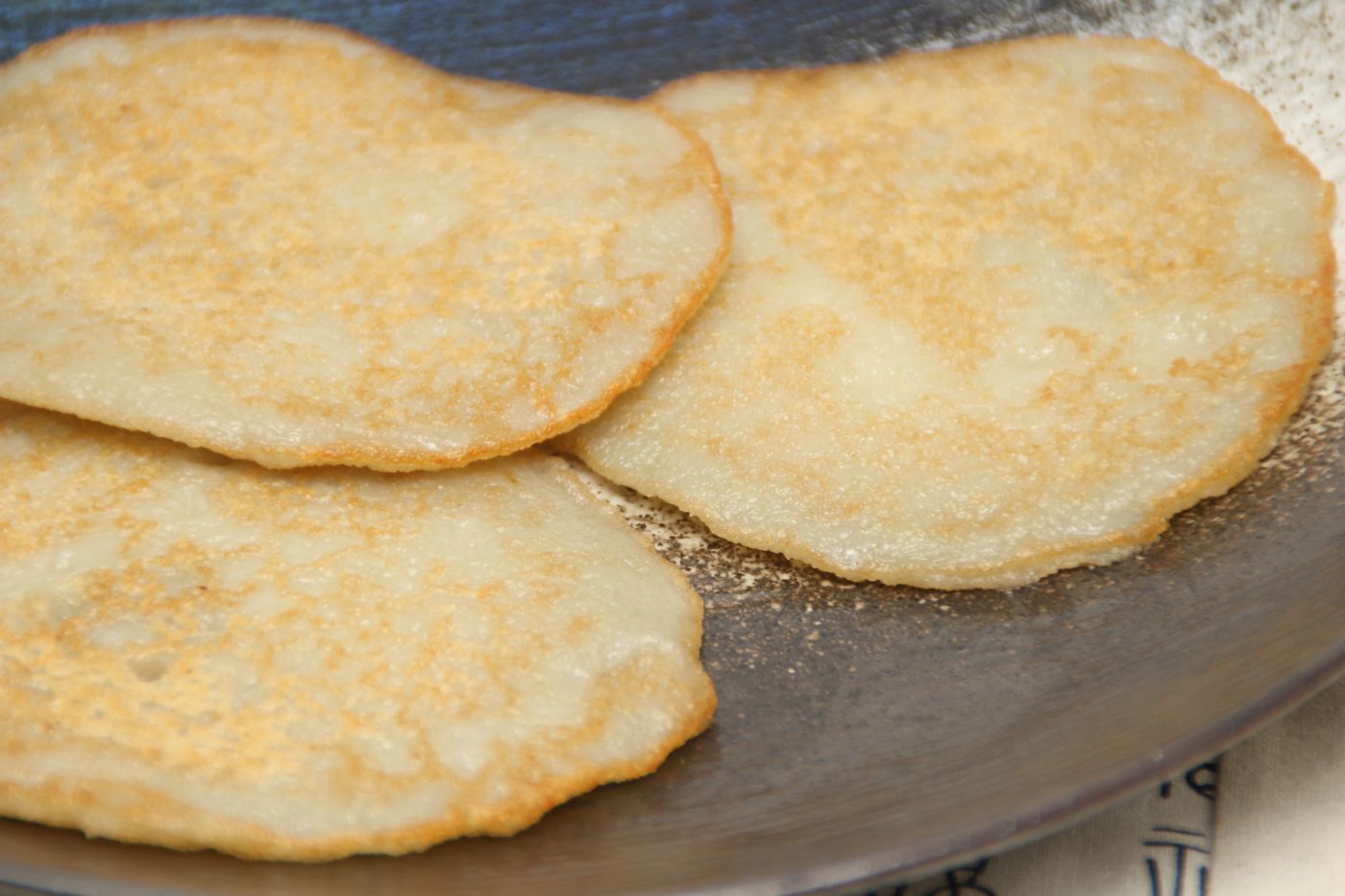
Finely grated potato, bound only by its own starch, pan-fried into crisp-edged, chewy rounds — a simple Gangwon-style jeon.
- Serves
- 4
- Prep
- 20 min
- Cook
- 20 min
RegionGangwon
Jump to recipeRecipe
Ingredients · Serves 4
- 600 gStarchy potatoesabout 4 medium, peeled
- 40 gOnionabout ¼ small, optional
- ½ tspSalt
- 1 Green or red chilithinly sliced, for garnish
- 3 tbspNeutral cooking oilfor frying, added as needed
- 1 tbspSoy saucefor the dipping sauce
- 1 tbspRice vinegarfor the dipping sauce
Method
Technique: Jeon: Pan-Frying in Flour and Egg
Step 1: Finely grate the potatoes and onion (or blend them with as little water as possible). Work quickly so the potato does not darken.
Step 2: Tip the grated potato into a fine sieve set over a bowl and press firmly to drain the liquid into the bowl. Let the liquid stand for 5–10 minutes until a white layer of starch settles at the bottom.
Step 3: Carefully pour off and discard the watery liquid, keeping the starch. Stir the starch back into the grated potato with the salt.
Step 4: Heat 1–2 tbsp oil in a nonstick skillet over medium heat. Drop in heaped spoonfuls of the mixture and flatten them into rounds about 8 cm wide and 5 mm thick. Press a slice of chili onto each.
Step 5: Cook for 3–4 minutes, until the underside is crisp and golden, then flip and cook another 3 minutes. The centers should turn slightly translucent. Add oil between batches as needed.
Step 6: Mix the soy sauce and vinegar for dipping and serve the pancakes immediately, while the edges are crisp.
Origin & History
Potatoes (gamja) are a relatively recent arrival in Korea. The Encyclopedia of Korean Culture cites the 19th-century scholar Yi Gyu-gyeong's Oju yeonmun jangjeon sango, which says potatoes first came in from the far northeast around 1824–1825, and a separate account of seed potatoes handed out by a missionary aboard a British ship off the Jeolla coast in 1832. Unlike sweet potatoes, they spread across the country within a few decades and became an important famine food in places such as Wonju and Cheorwon.
The mountainous province of Gangwon became the heartland of Korean potato cooking. The encyclopedia lists potatoes, corn, buckwheat and acorns as the province's signature products, notes that its potatoes are floury rather than waxy, and singles out a distinctive local habit: grating potatoes and drawing out their starch rather than cooking them whole, which gives dishes a pleasantly chewy texture. Gamja-buchimgae (potato pancake) appears in its list of Gangwon dishes.
The Korean Food Promotion Institute says Gangwon people have long made gamja-jeon as a snack and that the classic Gangwon version contains nothing but grated potato — no wheat flour or pancake mix. It also describes an older rural method in which potatoes were left to rot in water for days on end, with frequent changes of water, until only the starch remained, which was then fried into an especially chewy jeon; the smell was so strong the work was done beside streams. Today's version, made from fresh grated potato, takes minutes.
Key Ingredients
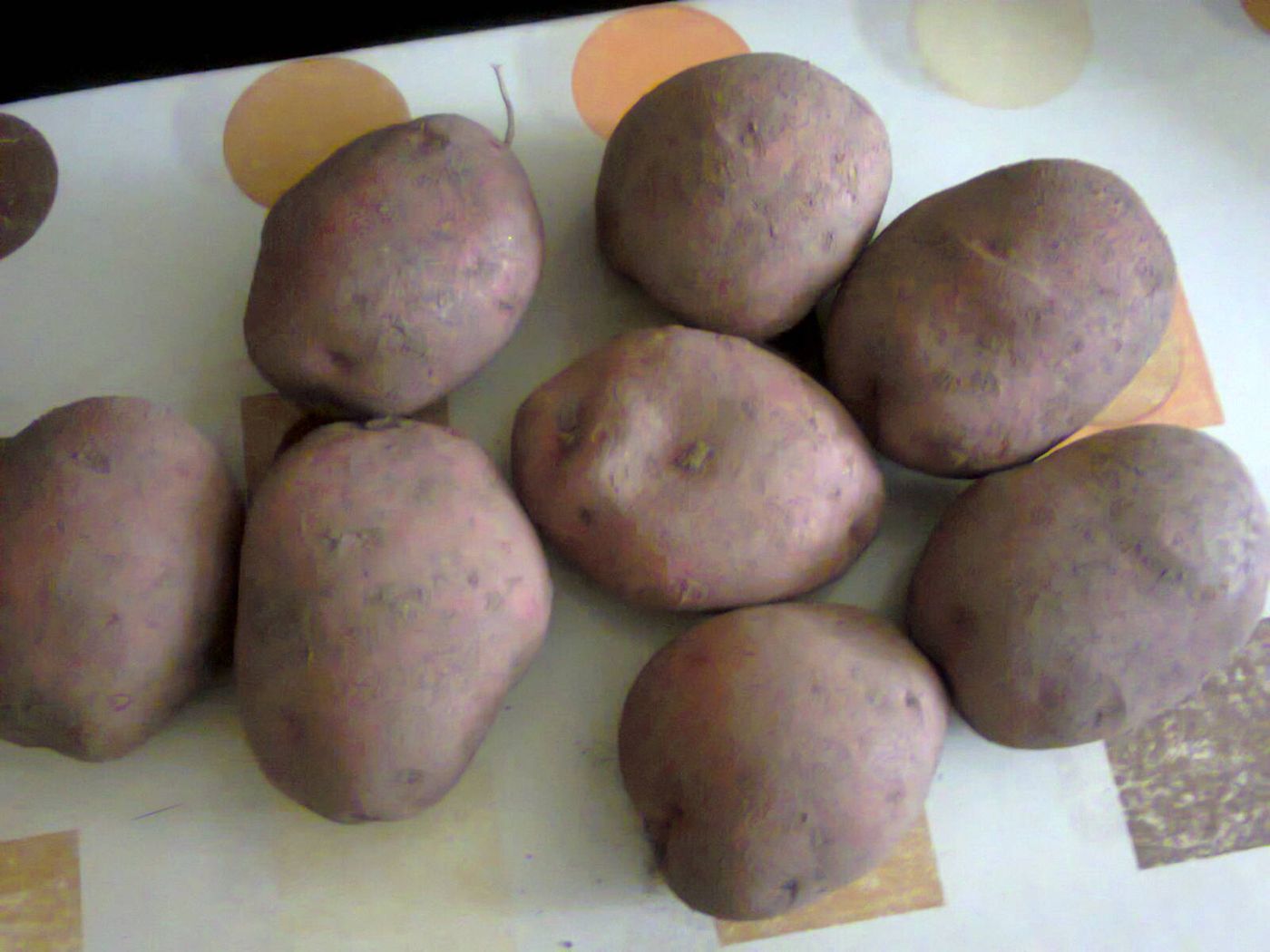 Potato감자A relatively recent arrival that became a mainstay of the mountain provinces. Braised in soy sauce as gamja-jorim, stir-fried in fine matchsticks, grated into crisp gamja-jeon and simmered in countless soups.
- Korean Chili Peppers (Fresh)고추Fresh Korean chili peppers, eaten green (putgochu) or red (hong-gochu): from the fiery cheongyang-gochu to the small, wrinkled, mild kkwari-gochu that is braised and stir-fried as banchan.
 Soy sauce간장Korean soy sauce, in two main kitchen forms: pale, salty guk-ganjang (soup soy sauce) brewed the traditional way from meju, and darker, sweeter jin-ganjang for braises and marinades.
Nutrition
| Calories | ~210 kcal |
|---|---|
| Protein | ~3.3 g |
| Fat | ~10.2 g |
| Carbohydrates | ~27.5 g |
| Fiber | ~3.4 g |
| Sodium | ~300 mg |
Notable forPotassium · Vitamin C · Vitamin B6
Estimated by summing USDA FoodData Central (SR Legacy) values for raw potatoes, flesh and skin (FDC 170026), raw onion, raw green chili, table salt and soybean oil, divided by 4. Assumes all the oil is absorbed and that only water is discarded with the potato liquid (some potassium and vitamin C are lost with it, and vitamin C also declines with cooking). Excludes the dipping sauce, about 220 mg sodium per serving if all of it is used. Actual values vary with ingredients, portion size and preparation.
Health Benefits
- Potassium: potatoes are a good source of potassium, and a serving of gamja-jeon supplies a meaningful share of daily needs.
- Vitamin C and B6: potatoes also contribute vitamin C and vitamin B6, though some vitamin C is lost when the liquid is drained and the pancakes are cooked.
- Naturally wheat-free: made the Gangwon way, with potato alone, the pancake contains no flour or egg — useful for people avoiding wheat or egg (check the dipping sauce).
Regional Variations
- Gangwon style: grated potato and its settled starch only, sometimes with a little salt and a slice of chili pressed on top.
- With onion or flour: many home cooks grate in some onion for sweetness, or add a spoonful of flour or starch to make the batter easier to handle.
- Shredded potato jeon: julienned potato bound with a little starch gives a lacy, crisp version, sometimes mixed with buchu (garlic chives).
- Fermented-starch jeon: the traditional Gangwon method of fermenting potatoes in water until only starch is left, now rarely made at home.
Pairings
- Dotori Muk Muchim도토리묵무침Slices of soft, faintly bitter acorn jelly tossed with crisp vegetables and a soy–chili–sesame dressing — a cool, light side dish and a favorite with drinks.
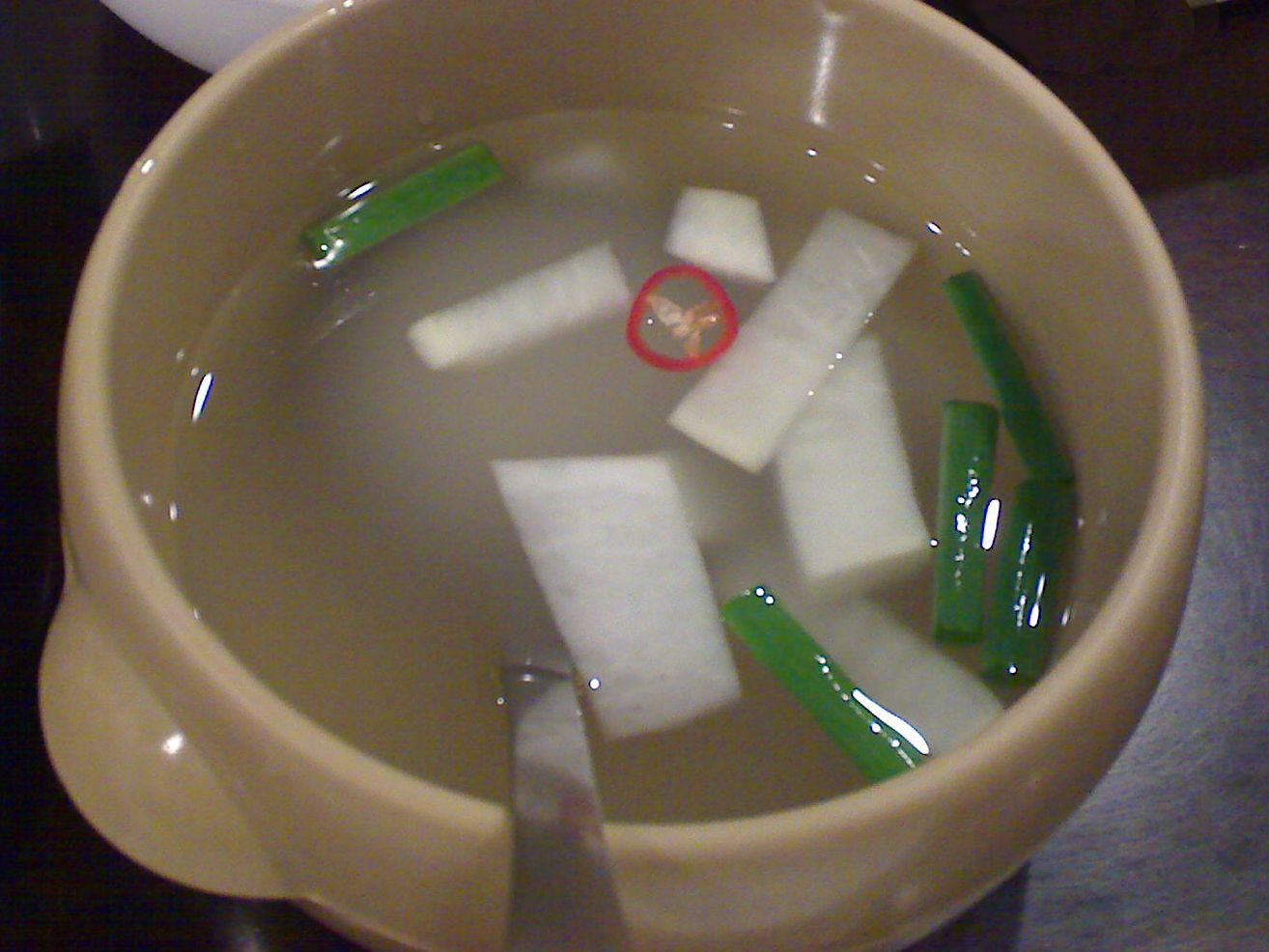 Radish Water Kimchi동치미Whole radishes steeped in a clear salt brine with pear, ginger and green chili — a winter water kimchi whose tangy broth is prized on its own.
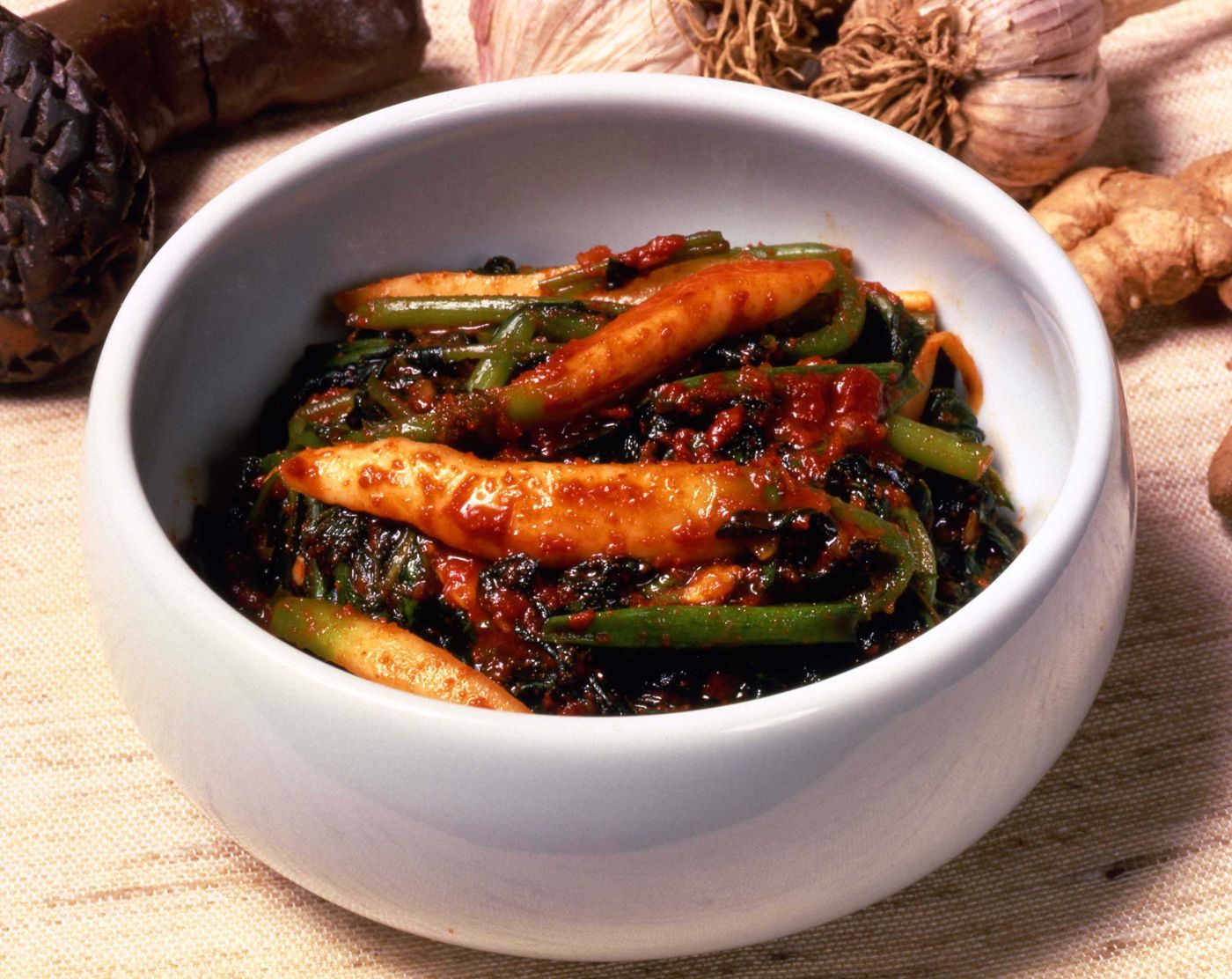 Young Summer Radish Kimchi열무김치Tender young radish greens in a loose, lightly spicy brine thickened with flour or rice paste — the classic summer kimchi, served over noodles and barley rice.