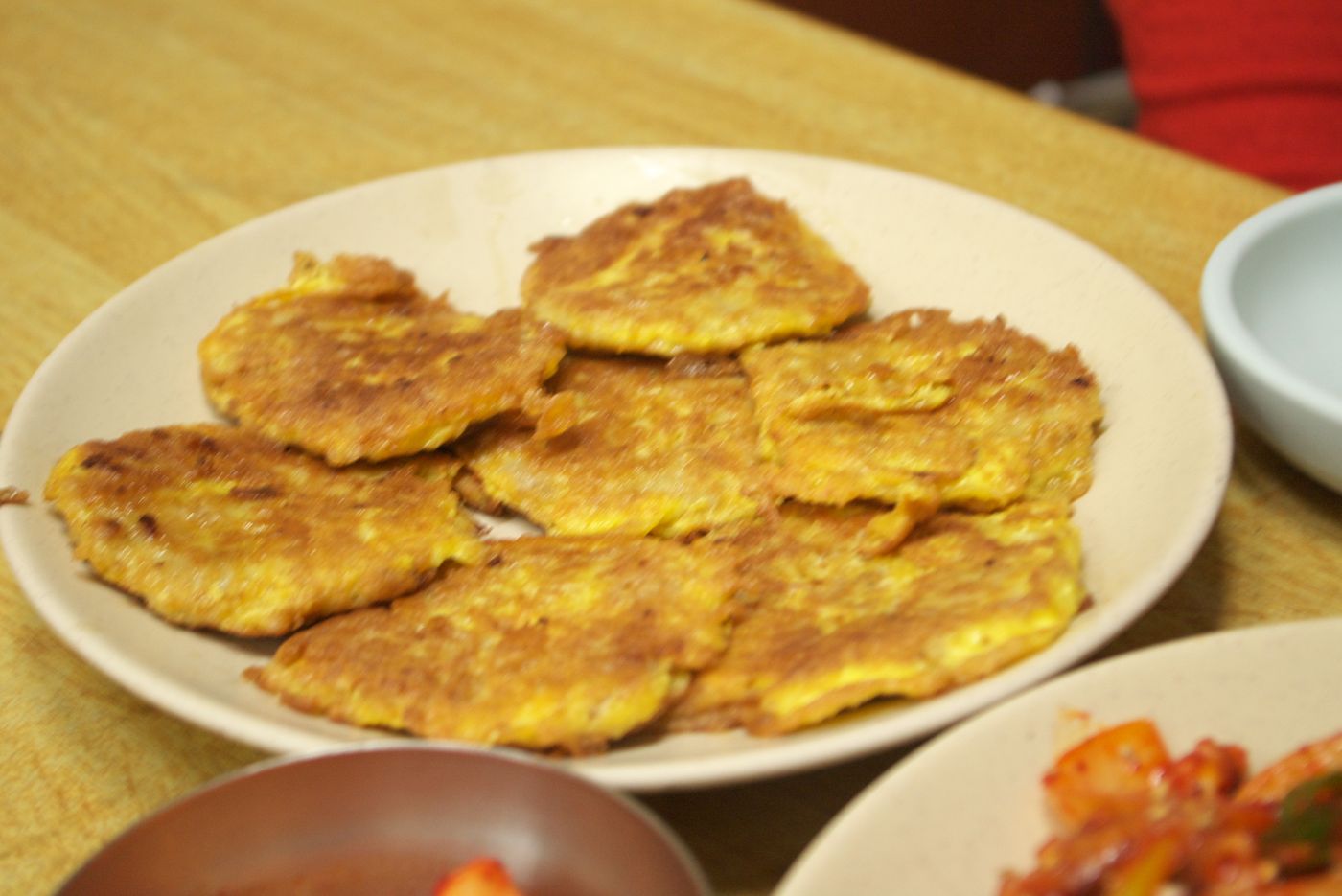
 Photo: 南宮博士, CC BY-SA 2.0, via Wikimedia Commons
Jeon · Pan-fried 전
Saengseon Jeon (Pan-Fried Fish)
생선전
Romanization: saengseon-jeon
Thin slices of mild white fish dusted with flour, dipped in egg and gently pan-fried — a classic of holiday and ancestral-rite tables.
- Serves
- 4
- Prep
- 20 min
- Cook
- 15 min
Recipe
Ingredients · Serves 4
- 400 gSkinless white fish fillets (cod, pollock or similar)thawed if frozen
- ½ tspSalt
- 1 pinchGround white pepper
- 30 gAll-purpose flourabout ¼ cup, for dusting
- 2 largeEggs
- 2 tbspNeutral cooking oilfor frying, added as needed
- Red chili or crown daisy leavesoptional garnish
- 1 tbspSoy saucefor the dipping sauce
- 1 tbspRice vinegarfor the dipping sauce
Method
Technique: Jeon: Pan-Frying in Flour and Egg
Step 1: Pat the fish very dry with paper towels. Cut it on a slight angle into thin pieces about 5 × 6 cm and 7 mm thick.
Step 2: Lay the pieces on a tray, sprinkle evenly with the salt and white pepper, and leave for 10 minutes. Pat dry again.
Step 3: Beat the eggs with a pinch of salt in a shallow bowl. Put the flour in a shallow dish or a zip-top bag and coat the fish lightly, shaking off the excess.
Step 4: Heat a little oil in a large skillet over medium-low heat. Dip each piece in egg, let the excess drip off, and lay it in the pan. Press on a garnish if using.
Step 5: Cook for 2–3 minutes per side, until the egg is pale golden and the fish is opaque and flakes easily. Keep the heat low so the egg does not brown before the fish is cooked; add oil between batches.
Step 6: Drain on a rack. Mix the soy sauce and vinegar for dipping and serve warm or at room temperature.
Origin & History
Saengseon-jeon ("fresh-fish jeon") is the textbook example of jeon in its classic form: a thin slice of fish, salted, dusted with flour, dipped in beaten egg and fried in oil. The Encyclopedia of Korean Culture records the category's many names — jeonyuhwa, written that way at court but read jeonyueo, and jeonya or jijimgae in everyday speech — and notes that the late-Joseon cookbook Siui jeonseo calls jeon ganam when they are offered at ancestral rites, because they are set to the south of the grilled-liver dish on the ritual table.
Fish has always been among the prestige ingredients for jeon. The encyclopedia lists the fish best suited to it as white-fleshed, relatively lean species such as croaker (minyeo), cod, pollock, sea bream, flounder and butterfish, and notes that jeon appear on everyday rice tables, noodle tables, banquet tables and drinking tables, served with soy sauce or vinegared soy sauce.
Fish jeon remains a fixture of holiday and jesa (ancestral rite) tables, usually made in large batches alongside meat, zucchini and other jeon. See also jesa food and jeon pan-frying.
Key Ingredients
- Korean Chili Peppers (Fresh)고추Fresh Korean chili peppers, eaten green (putgochu) or red (hong-gochu): from the fiery cheongyang-gochu to the small, wrinkled, mild kkwari-gochu that is braised and stir-fried as banchan.
 Soy sauce간장Korean soy sauce, in two main kitchen forms: pale, salty guk-ganjang (soup soy sauce) brewed the traditional way from meju, and darker, sweeter jin-ganjang for braises and marinades.
Nutrition
| Calories | ~205 kcal |
|---|---|
| Protein | ~21.7 g |
| Fat | ~9.9 g |
| Carbohydrates | ~5.9 g |
| Fiber | ~0.2 g |
| Sodium | ~380 mg |
Notable forProtein · Selenium · Vitamin B12 · Choline
Estimated by summing USDA FoodData Central (SR Legacy) values for raw Atlantic cod (FDC 171955), enriched all-purpose flour (FDC 168894), raw whole egg (FDC 171287), table salt and soybean oil, divided by 4. Assumes all the salt stays on the fish and all the oil is absorbed. Excludes the dipping sauce, about 220 mg sodium per serving if all of it is used. Values will differ slightly for pollock or other white fish. Actual values vary with ingredients, portion size and preparation.
Health Benefits
- Lean protein: white fish is high in protein and low in fat, and a serving of this jeon provides more than 20 g of protein.
- Selenium and B12: cod and similar fish, along with the egg coating, are sources of selenium, vitamin B12 and choline.
- Light frying: compared with batter pancakes, the thin flour-and-egg coating absorbs relatively little oil.
Regional Variations
- Choice of fish: any of the lean white fish on the encyclopedia's list works — pollock, cod, croaker (minyeo), sea bream, flounder, butterfish or olive flounder.
- Holiday platter: fish jeon is often arranged by color with hobak-jeon, meat patties and other jeon on a single platter (modeum-jeon).
- Garnishes: a crown daisy leaf, a slice of red chili or a strip of egg pressed onto each piece before frying adds color.
- Shellfish jeon: the same flour-and-egg method is used for oysters (gul-jeon), clams and scallops.
Pairings
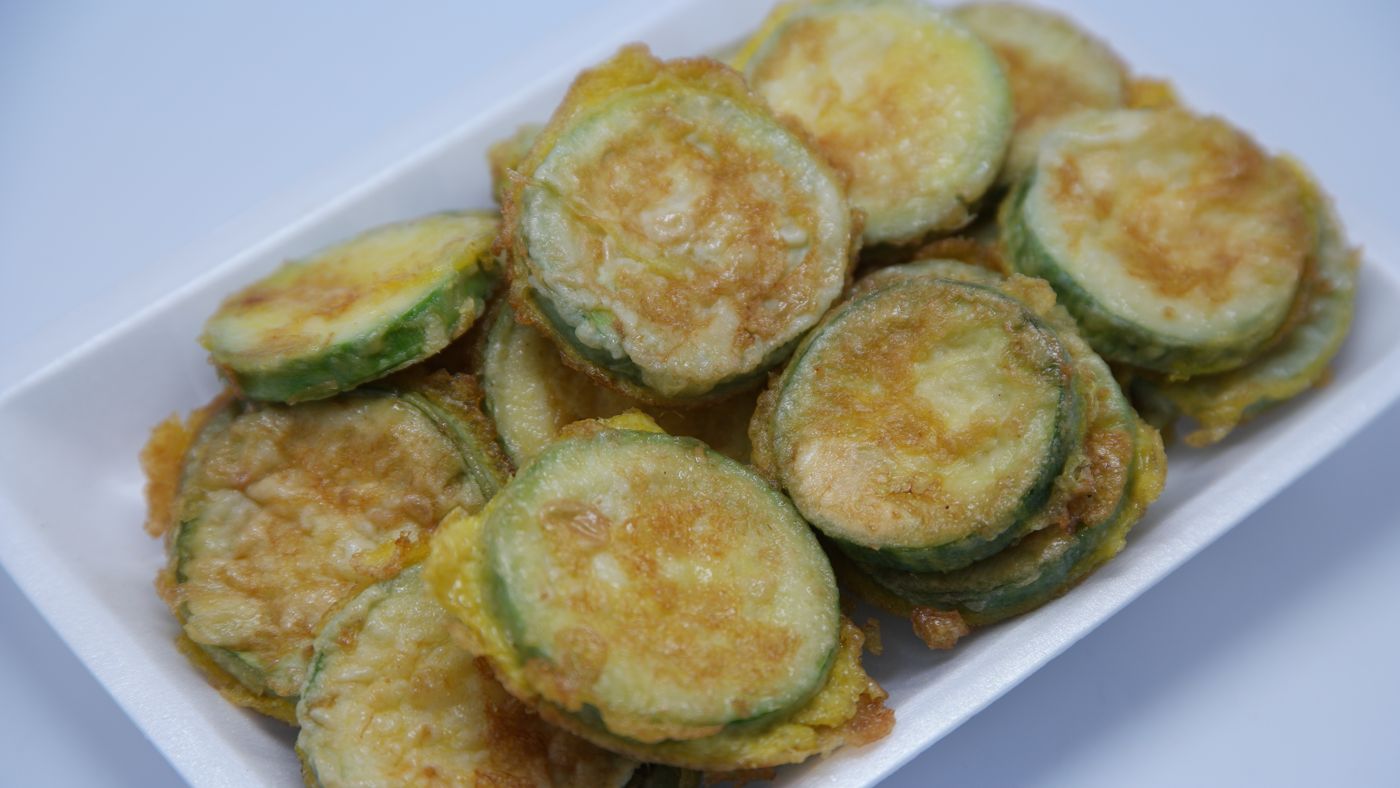 Hobak Jeon (Pan-Fried Zucchini)호박전Rounds of Korean zucchini dusted with flour, dipped in egg and pan-fried until golden — a soft, sweet jeon for holidays and everyday meals.
 Sigeumchi Namul시금치나물Spinach blanched for a few seconds, squeezed dry and dressed with garlic, soy sauce and sesame — one of the simplest and most familiar namul.
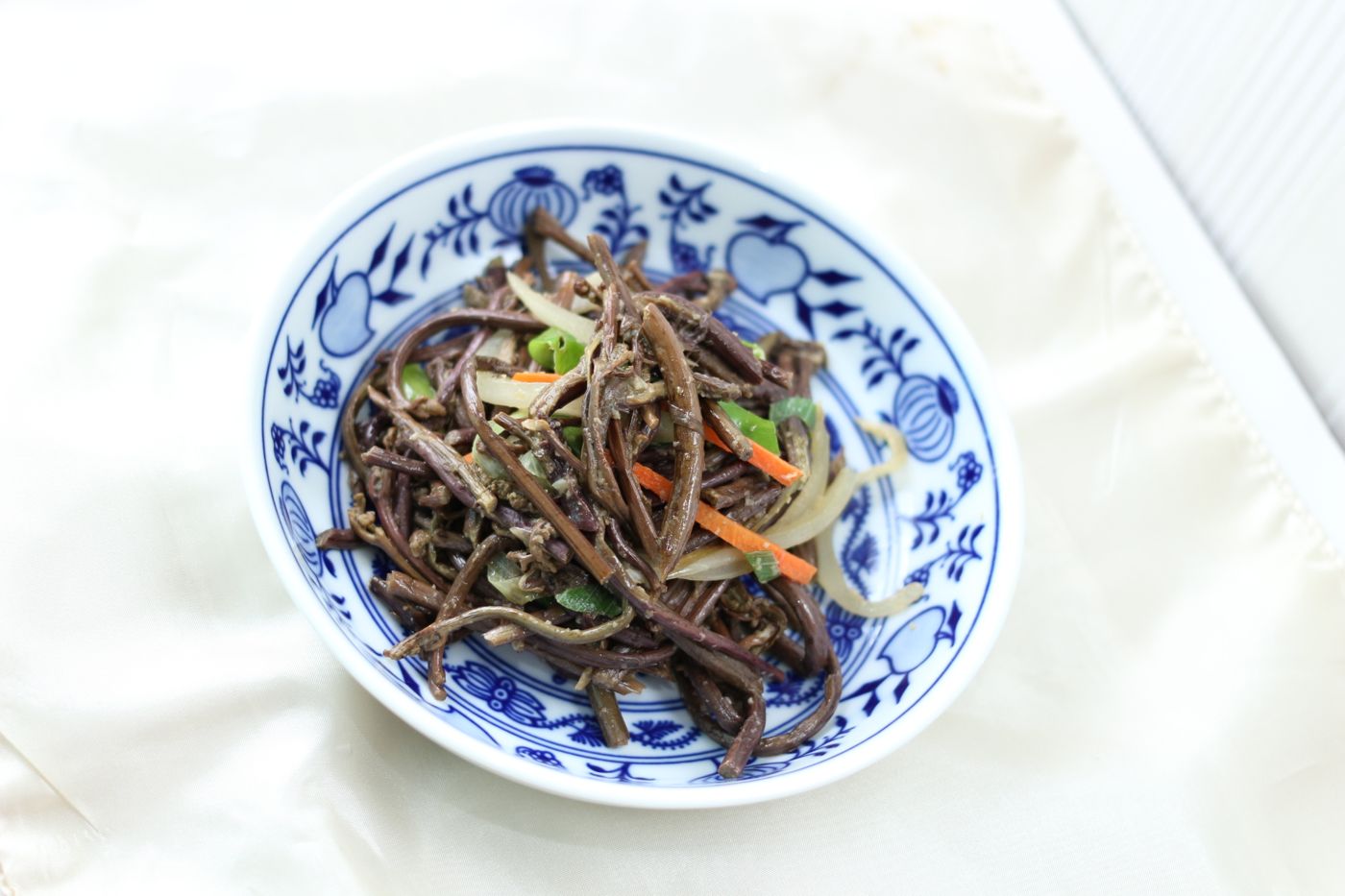 Gosari Namul고사리나물Dried bracken fern soaked, boiled and slowly stir-fried with soup soy sauce, garlic and perilla oil — chewy, earthy and central to holiday tables.
 Japchae (Glass Noodles with Vegetables)잡채Chewy sweet potato glass noodles tossed with stir-fried vegetables, mushrooms and beef in soy sauce and sesame oil — Korea's essential celebration dish.