Muchim · Dressed side dish 무침
Gochu Doenjang Muchim (Green Chilies in Doenjang)
고추된장무침
Romanization: gochu-doenjang-muchim
Crisp, mild green chilies cut into rounds and tossed with doenjang, garlic and sesame oil — a five-minute summer banchan built on the old habit of dipping peppers in jang.
- Serves
- 4
- Prep
- 10 min
- Cook
- 0 min
Recipe
Ingredients · Serves 4
- 200 gMild green chili peppers (such as asagi-gochu or oi-gochu)about 6–8 peppers
- 2 tbspDoenjang
- 1 tspMulyeot (rice syrup) or honey
- 1 tspGarlicminced
- 1 tbspGreen onionfinely chopped
- 1 tbspToasted sesame oil
- 1 tspToasted sesame seeds
Method
Technique: Yangnyeom: Seasoning Basics
Step 1: Wash the peppers and dry them thoroughly; any water left on them will thin the dressing.
Step 2: Trim the stems and cut the peppers into 1–1.5 cm rounds or diagonal pieces. Shake out loose seeds if you want them milder.
Step 3: In a bowl, mix the doenjang, mulyeot, garlic, green onion and sesame oil into a smooth paste. Taste; home-made doenjang is saltier than most store-bought kinds, so adjust the amount.
Step 4: Add the peppers and toss, pressing lightly with your hands so the paste works into the cut surfaces.
Step 5: Sprinkle with sesame seeds and serve soon after mixing — as it sits, the peppers release water and lose their crunch.
Origin & History
Chili peppers came to Korea from the Americas by way of Japan around the time of the Imjin War of the 1590s. The Encyclopedia of Korean Folk Culture notes that their first mention in Korean writing is Yi Su-gwang's Jibong yuseol of 1614, and that by the eighteenth century chili had been absorbed into kimchi and gochujang. Long before they are dried and ground into gochugaru, though, chilies are eaten green.
The same encyclopedia describes the simplest summer use of green chilies: eaten raw, dipped into doenjang, gochujang or whatever jang the household prefers. Doenjang, the thick fermented soybean paste left after soy sauce is drawn off from fermented soybean blocks (meju), has been the everyday partner for fresh vegetables at the Korean table, and a raw pepper with a dab of doenjang is still a standard accompaniment to rice, grilled meat and cold noodles.
Gochu-doenjang-muchim is that pairing made into a ready-dressed side dish: chilies cut into bite-size pieces and coated in doenjang seasoned with garlic, sesame oil and a little sweetener. It is a modern home recipe rather than a dish with a recorded history, and it became easier to make in quantity with the spread of mild, crunchy pepper varieties such as asagi-gochu.
Key Ingredients
- Korean Chili Peppers (Fresh)고추Fresh Korean chili peppers, eaten green (putgochu) or red (hong-gochu): from the fiery cheongyang-gochu to the small, wrinkled, mild kkwari-gochu that is braised and stir-fried as banchan.
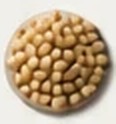 Doenjang된장Fermented soybean paste — the savory foundation of doenjang-jjigae, many soups and dressings for namul. It is one of Korea's core jang, or fermented sauces.
 Korean grain syrup물엿A clear, glossy syrup used to sweeten and glaze braised and stir-fried banchan. Its traditional relative, jocheong, is a darker malt syrup made by slowly boiling down saccharified rice.
 Garlic마늘Used raw, minced, pickled and roasted, garlic is one of the essential aromatics of Korean food — in seasonings, marinades, kimchi and namul.
 Green onion파Korean green onion (pa), from thick-stemmed daepa to slender scallions — chopped into nearly every seasoning sauce, soup and kimchi, and the star of pa-kimchi.
 Sesame참깨Toasted sesame seeds and sesame oil (chamgireum) finish countless Korean dishes, adding a nutty aroma and gloss.
Nutrition
| Calories | ~74 kcal |
|---|---|
| Protein | ~2.3 g |
| Fat | ~4.5 g |
| Carbohydrates | ~7 g |
| Fiber | ~3.3 g |
| Sodium | ~392 mg |
Notable forVitamin C · Vitamin K · Fiber
Green chilies use the Korean Food Composition Table entry “Hot pepper (Gochu), Green, Raw” (per 100 g: 29 kcal, 4.4 g fiber, 44 mg vitamin C, 54 µg vitamin K) as a stand-in for mild varieties, which the table does not list separately. Doenjang uses the Korean table's doenjang entry (4,339 mg sodium per 100 g); mulyeot also uses the Korean table; garlic, green onion, sesame oil and sesame seeds use USDA FoodData Central. Totals divided by four. Doenjang brands vary widely in sodium. Actual values vary with ingredients, portion size and preparation.
Health Benefits
- Vitamin C: fresh green chilies are a good source of vitamin C, and eating them raw avoids losses from cooking.
- Fiber and vitamin K: the peppers also contribute dietary fiber and vitamin K for few calories.
- Fermented soybeans: doenjang adds savory depth and some protein; research on fermented soybean foods is active but their specific health effects in people are still being studied.
Regional Variations
- Mild pepper version: the most common today, made with crisp, barely hot peppers so the dish can be eaten by the spoonful.
- Spicy: a few cheongyang chilies mixed in for heat.
- Doenjang-gochujang blend: some cooks use half gochujang or ssamjang for a sweeter, redder coating.
- Simplest form: one published test-kitchen version uses only peppers, doenjang, sesame oil and sesame seeds.
Pairings
 Doenjang Jjigae (Soybean Paste Stew)된장찌개A thick, savory stew of fermented soybean paste with tofu, zucchini and whatever the season offers — the everyday pot at the center of the Korean table.
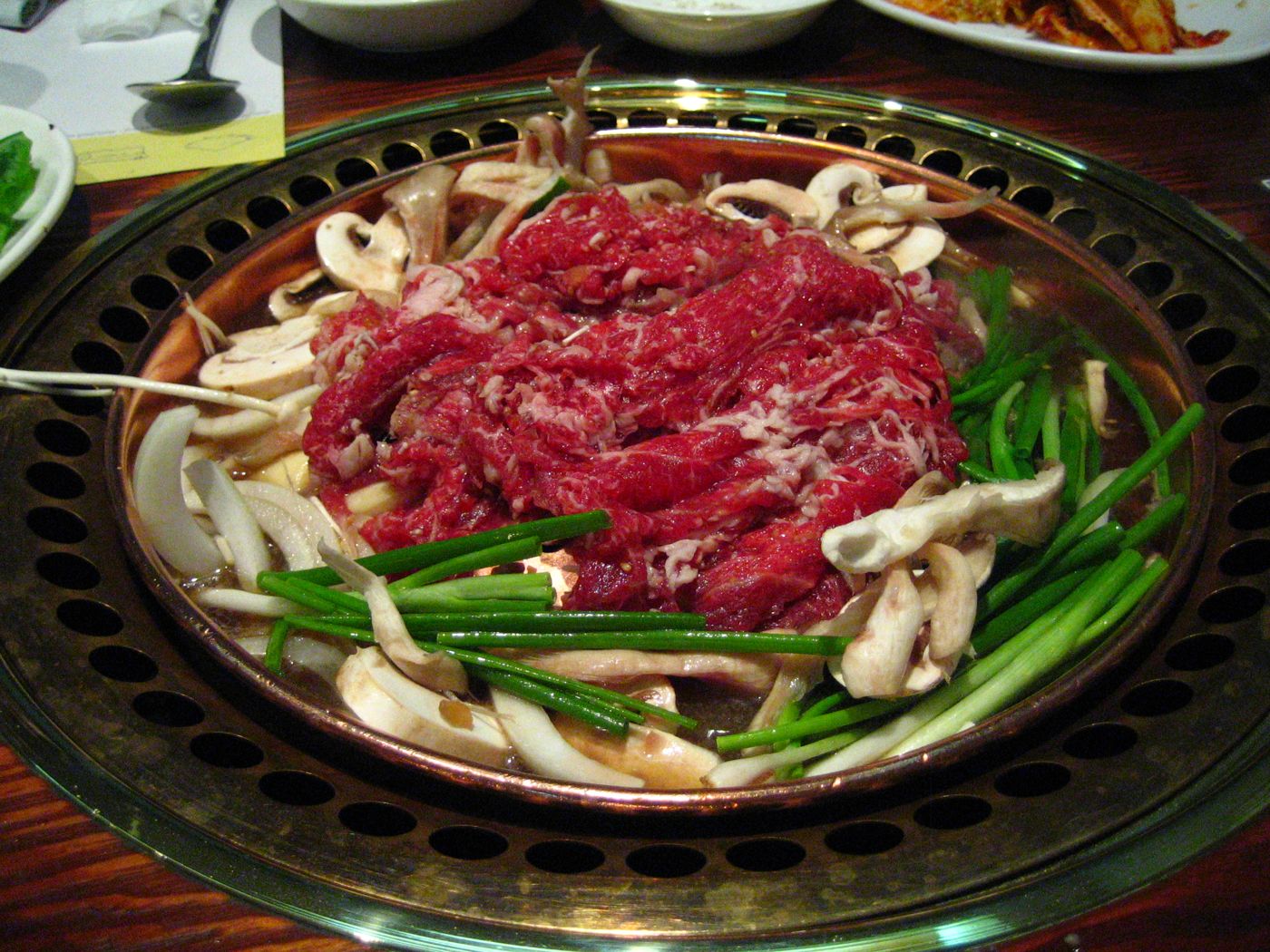 Bulgogi (Marinated Grilled Beef)불고기Thin slices of beef marinated in soy sauce, pear, garlic and sesame, then grilled or seared — descended from the court dish neobiani and Korea's best-known meat dish.
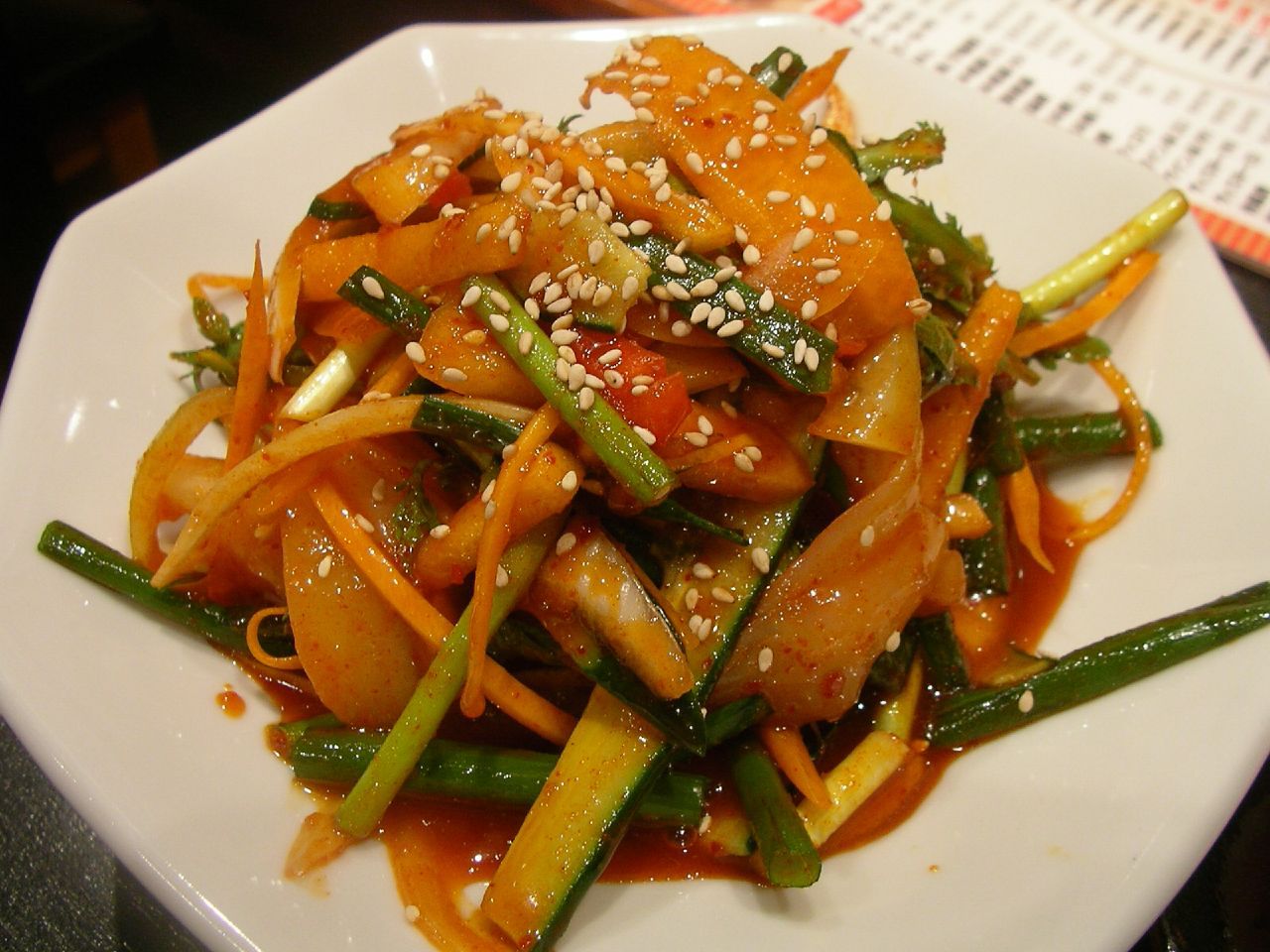 Oi Muchim오이무침Thin-sliced cucumber, briefly salted and tossed with chili flakes, vinegar and garlic — a cool, crunchy quick salad made in minutes, especially in summer.
Sources
- 01고추 (Chili pepper) — Encyclopedia of Korean Folk Culture (National Folk Museum of Korea)
- 02된장 (Doenjang) — Encyclopedia of Korean Folk Culture (National Folk Museum of Korea)
- 03아삭이고추 된장무침 — Saemine Bueok recipe site
- 04Korean Food Composition Table: Hot pepper (Gochu), Green, Raw — National Institute of Agricultural Sciences
- 05Korean Food Composition Table: Doenjang — National Institute of Agricultural Sciences
Last updated