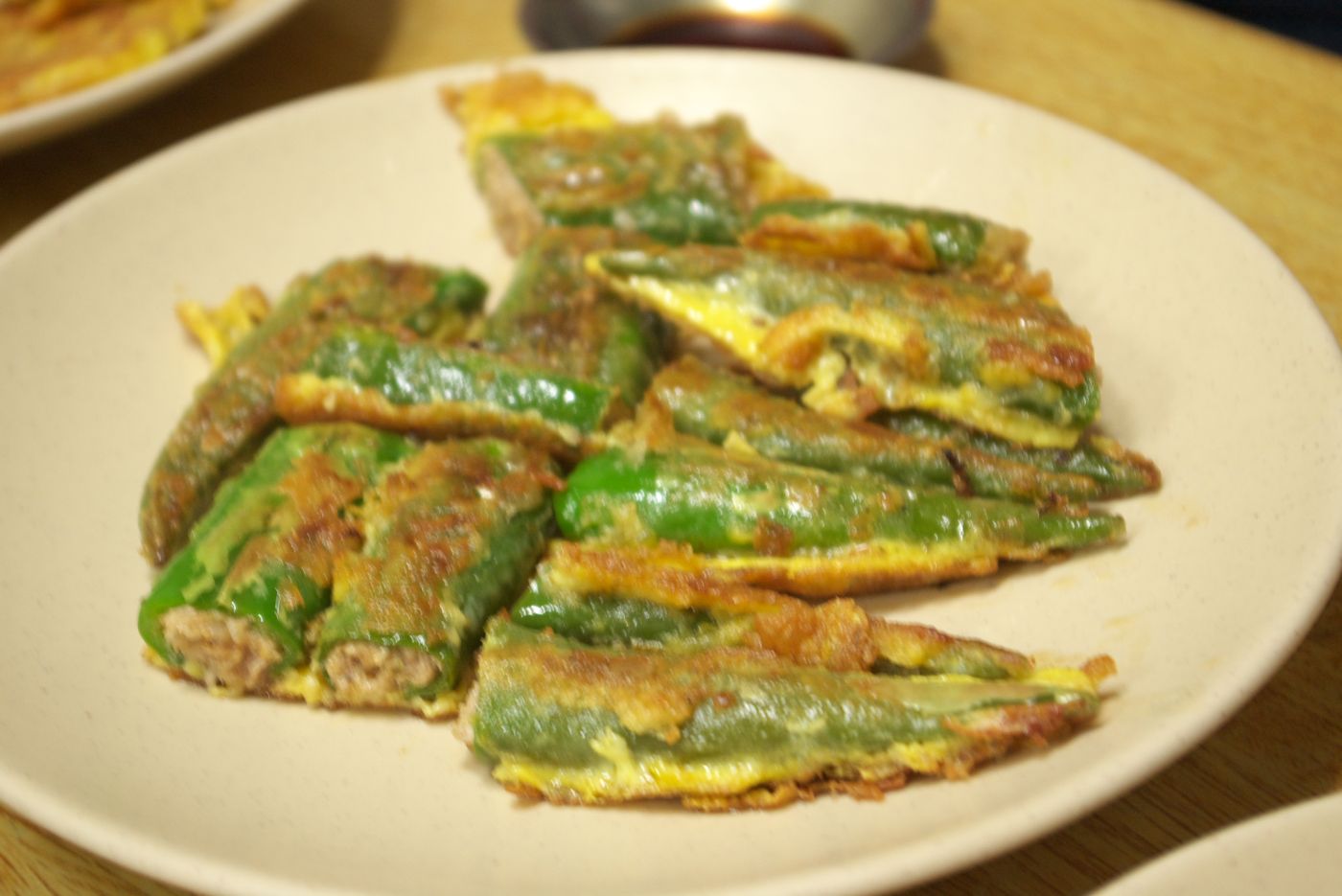
 Photo: 南宮博士, CC BY-SA 2.0, via Wikimedia Commons
Jeon · Pan-fried 전
Gochu-jeon (Stuffed Green Chili Peppers)
고추전
Romanization: gochu-jeon
Mild green chili peppers split, filled with seasoned meat and tofu, then coated in flour and egg and pan-fried — a bright green, gently spicy jeon.
- Serves
- 4
- Prep
- 30 min
- Cook
- 20 min
Recipe
Ingredients · Serves 4
- 8 mediumMild green chili peppers (putgochu), or Anaheim-type peppersabout 160 g
- 150 gGround pork or beef
- 60 gFirm tofusqueezed dry and mashed
- 1 stalkGreen onionfinely chopped
- 1 cloveGarlicminced
- 1 tspSoy sauce
- ¼ tspSaltplus a pinch for the egg
- 1 tspToasted sesame oil
- 1 pinchBlack pepper
- 3 tbspAll-purpose flour
- 2 largeEggsbeaten
- 2 tbspNeutral cooking oil
Method
Technique: Jeon: Pan-Frying in Flour and Egg
Step 1: Halve the peppers lengthwise (leave the stems on for looks if you like) and scrape out the seeds and pith.
Step 2: Mix the meat, tofu, green onion, garlic, soy sauce, salt, sesame oil and pepper, and knead until sticky.
Step 3: Dust the inside of each pepper half with a little flour so the filling sticks, then press in the filling level with the edges.
Step 4: Dip the filled side lightly in flour, then coat the whole pepper in beaten egg seasoned with a pinch of salt.
Step 5: Fry filling-side down in a lightly oiled skillet over medium-low heat for 3–4 minutes until the meat is golden, then turn and cook the skin side 1–2 minutes. Check that the filling is cooked through (160 °F / 71 °C).
Step 6: Serve warm with vinegar soy sauce.
Origin & History
Gochu-jeon, often called putgochu-jeon ("green chili jeon"), is one of the vegetable jeon that fill out a Korean holiday platter. The Encyclopedia of Korean Folk Culture describes the method plainly: green chilies are halved lengthwise, seeded, packed with seasoned minced meat and then coated in flour and egg before frying, in the same way that zucchini rounds, lotus root and rehydrated shiitake caps are filled or coated for jeon.
The Encyclopedia of Korean Culture lists green chili (putgochu) among the standard vegetables for jeon, alongside zucchini, eggplant, green onion and tofu, and gives the key technique: because the egg coating sets at a low temperature, jeon should be fried over gentle heat with enough oil that the egg does not scorch. The Korean Food Promotion Institute likewise names green chili jeon, with zucchini jeon, as one of the most familiar vegetable jeon on mixed platters (modeum-jeon).
The filling is essentially the mixture for donggeurang-ttaeng, so households making a holiday spread often stuff peppers, mushrooms and lotus root from one bowl of meat and tofu. Mild Korean green chilies are used so the heat stays gentle; the meat and egg soften it further. See jeon pan-frying and chili peppers in Korea.
Key Ingredients
- Korean Chili Peppers (Fresh)고추Fresh Korean chili peppers, eaten green (putgochu) or red (hong-gochu): from the fiery cheongyang-gochu to the small, wrinkled, mild kkwari-gochu that is braised and stir-fried as banchan.
 Pork (dwaeji-gogi)돼지고기Korea's most widely eaten meat, prized cut by cut: fatty belly for samgyeopsal, neck for the grill, lean legs for boiled suyuk and stir-fried jeyuk. Pork also anchors Jeju Island's feast cooking.
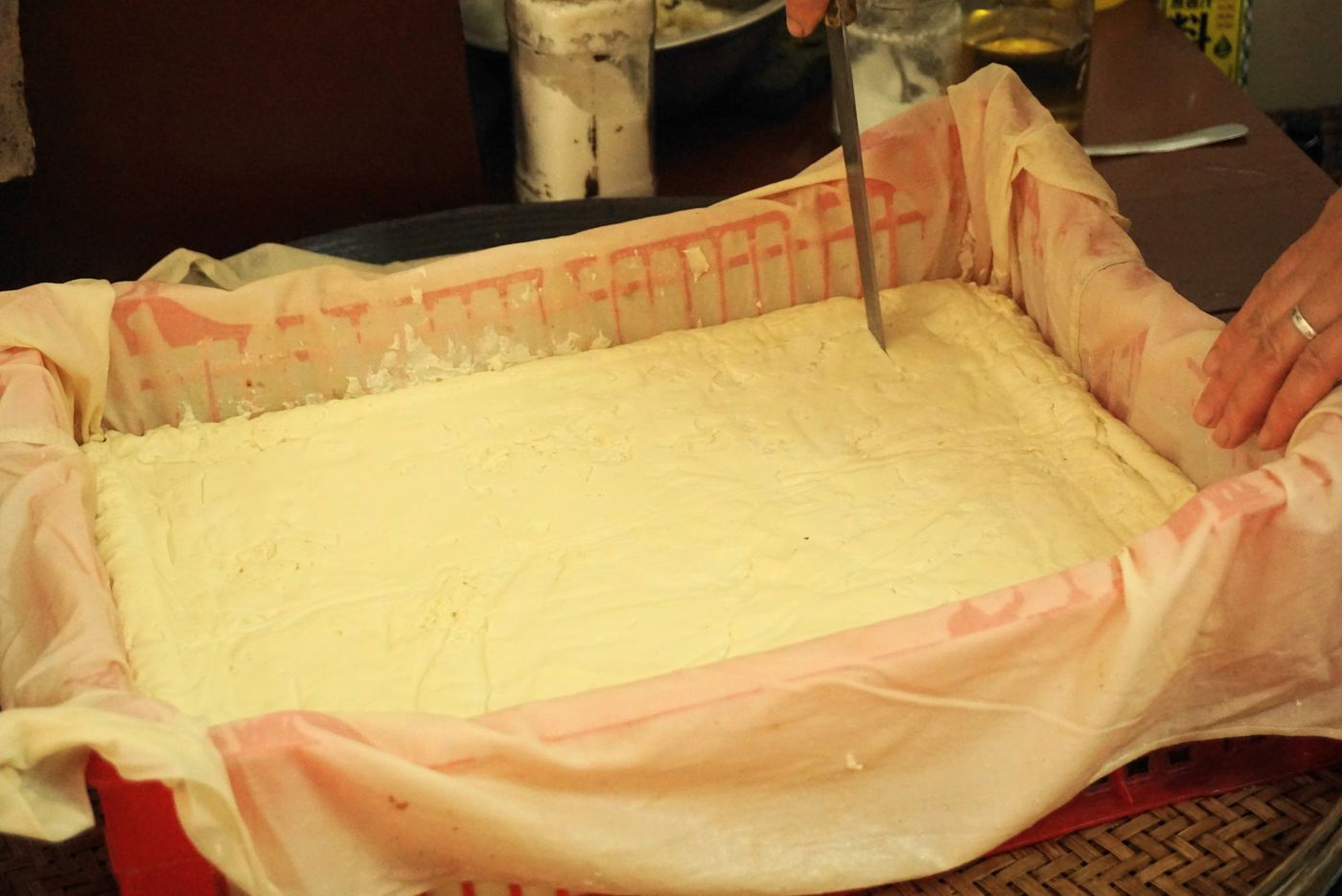 Tofu두부Fresh bean curd made by coagulating soy milk and pressing the curds. A quiet staple of Korean cooking since at least the late Goryeo period, it is pan-fried, braised in spicy soy glaze, or simmered in stews.
- Egg (gyeran)계란The everyday protein of the Korean table: rolled into gyeran-mari, steamed into puffy gyeran-jjim, simmered in soy for gyeran-jangjorim, and cut into thin yellow and white ribbons of jidan to garnish soups and noodles.
 Green onion파Korean green onion (pa), from thick-stemmed daepa to slender scallions — chopped into nearly every seasoning sauce, soup and kimchi, and the star of pa-kimchi.
 Garlic마늘Used raw, minced, pickled and roasted, garlic is one of the essential aromatics of Korean food — in seasonings, marinades, kimchi and namul.
 Soy sauce간장Korean soy sauce, in two main kitchen forms: pale, salty guk-ganjang (soup soy sauce) brewed the traditional way from meju, and darker, sweeter jin-ganjang for braises and marinades.
 Sesame참깨Toasted sesame seeds and sesame oil (chamgireum) finish countless Korean dishes, adding a nutty aroma and gloss.
Nutrition
| Calories | ~230 kcal |
|---|---|
| Protein | ~14 g |
| Fat | ~17 g |
| Carbohydrates | ~8 g |
| Fiber | ~1.1 g |
| Sodium | ~325 mg |
Notable forVitamin C · Protein · Thiamin (vitamin B1)
Estimated by summing USDA FoodData Central (SR Legacy) values for raw green hot chili peppers (FDC 170497, as the nearest match for mild Korean green chilies), ground pork (FDC 167902), firm tofu (FDC 172475), whole egg (FDC 171287), flour (FDC 168894), soy sauce (FDC 174277), scallions, garlic, sesame oil, table salt and soybean oil (assuming 15 g absorbed), divided by 4. Excludes the dipping sauce. Vitamin C comes from the peppers and is partly lost in cooking. Actual values vary with ingredients, portion size and preparation.
Health Benefits
- Vitamin C: fresh green chilies are a rich source; a short pan-fry keeps some of it.
- Capsaicin, gently: mild green chilies carry a little of the compound behind chili heat. See capsaicin and spicy food.
- Vegetable as vessel: using the pepper as the casing gives a jeon with more vegetable and less batter than most.
Regional Variations
- Halved and stuffed: the classic form — split peppers filled flat with meat, floured on the cut side, dipped in egg and fried filling-side down first.
- Whole stuffed: peppers slit along one side, seeded and filled whole, then floured and egged; plumper and juicier.
- Part of the mixed platter: on modeum-jeon platters it is arranged with zucchini, fish and meat jeon for contrasting color.
Pairings
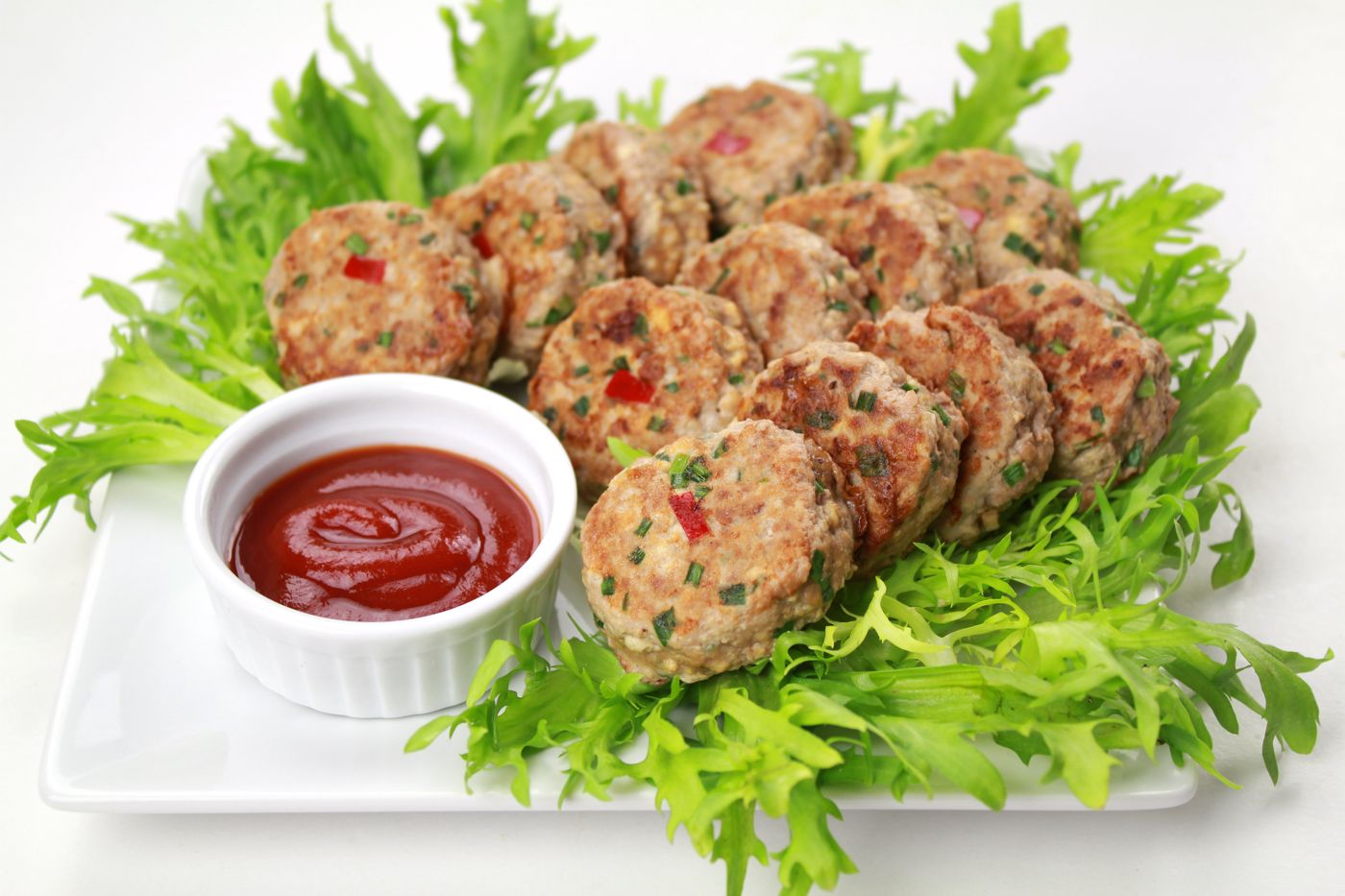 Donggeurang-ttaeng (Meat and Tofu Patties)동그랑땡Coin-sized patties of minced pork or beef and mashed tofu, dipped in flour and egg and pan-fried — a fixture of holiday jeon platters and lunchboxes.
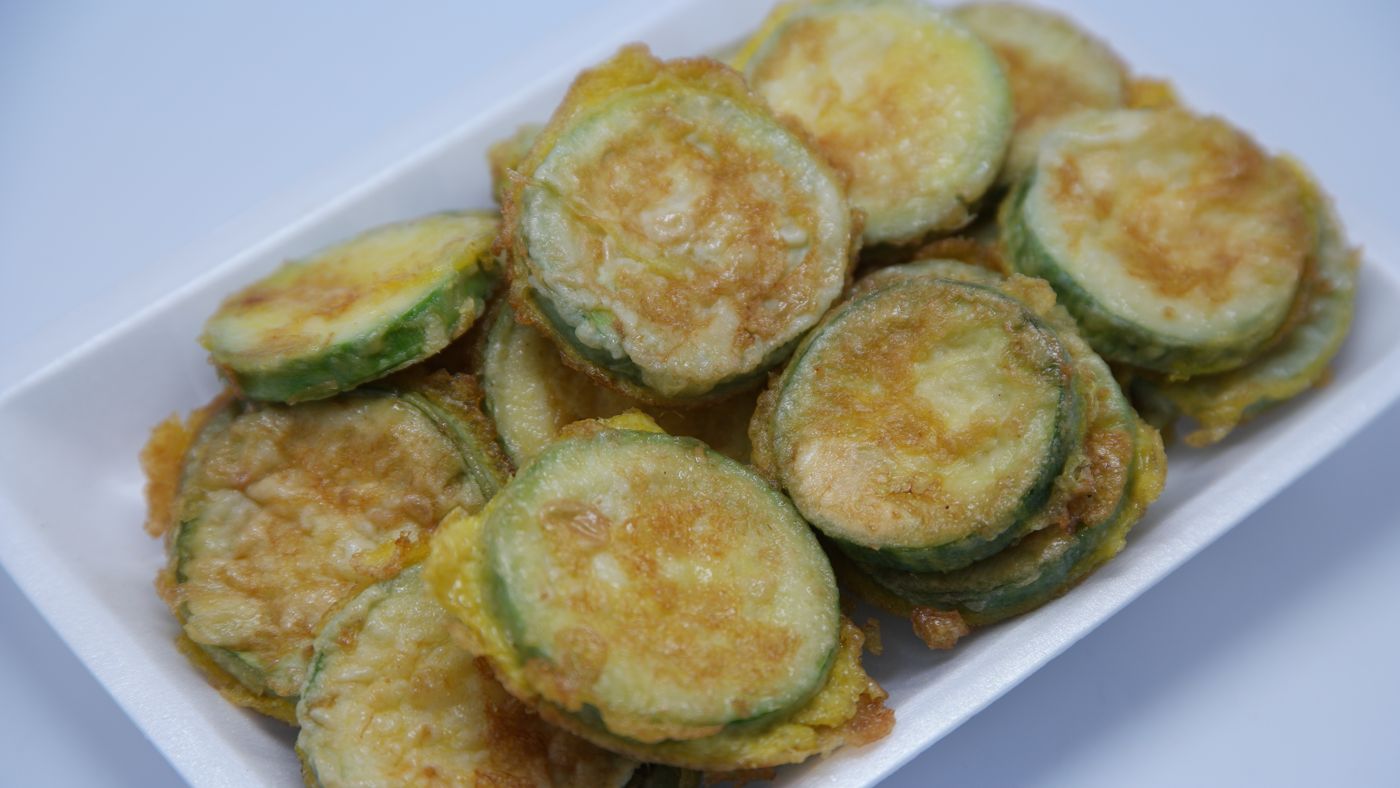 Hobak Jeon (Pan-Fried Zucchini)호박전Rounds of Korean zucchini dusted with flour, dipped in egg and pan-fried until golden — a soft, sweet jeon for holidays and everyday meals.
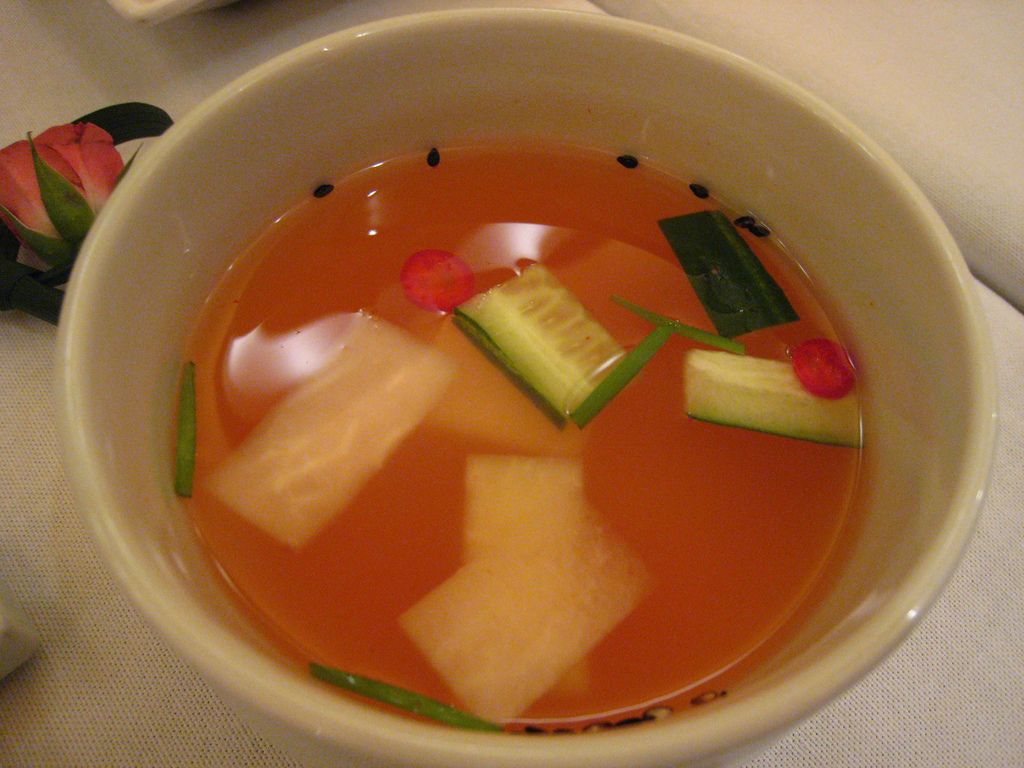 Radish and Cabbage Water Kimchi나박김치Thin squares of radish and napa cabbage in a lightly salted, pink-tinted broth — a mild, refreshing water kimchi eaten by the spoonful.
Sources
- 01전 (Jeon) — Encyclopedia of Korean Folk Culture, National Folk Museum of Korea
- 02전 (煎, Jeon) — Encyclopedia of Korean Culture
- 03한식이야기: 모듬전 (Korean Food Story: Mixed Jeon) — Korean Food Promotion Institute
- 04Peppers, hot chili, green, raw (FDC 170497) — USDA FoodData Central
- 05Safe Food Handling — U.S. Food and Drug Administration
Last updated