 Photo: 박家상민, CC BY 4.0, via Wikimedia Commons
Muchim · Dressed side dish 무침
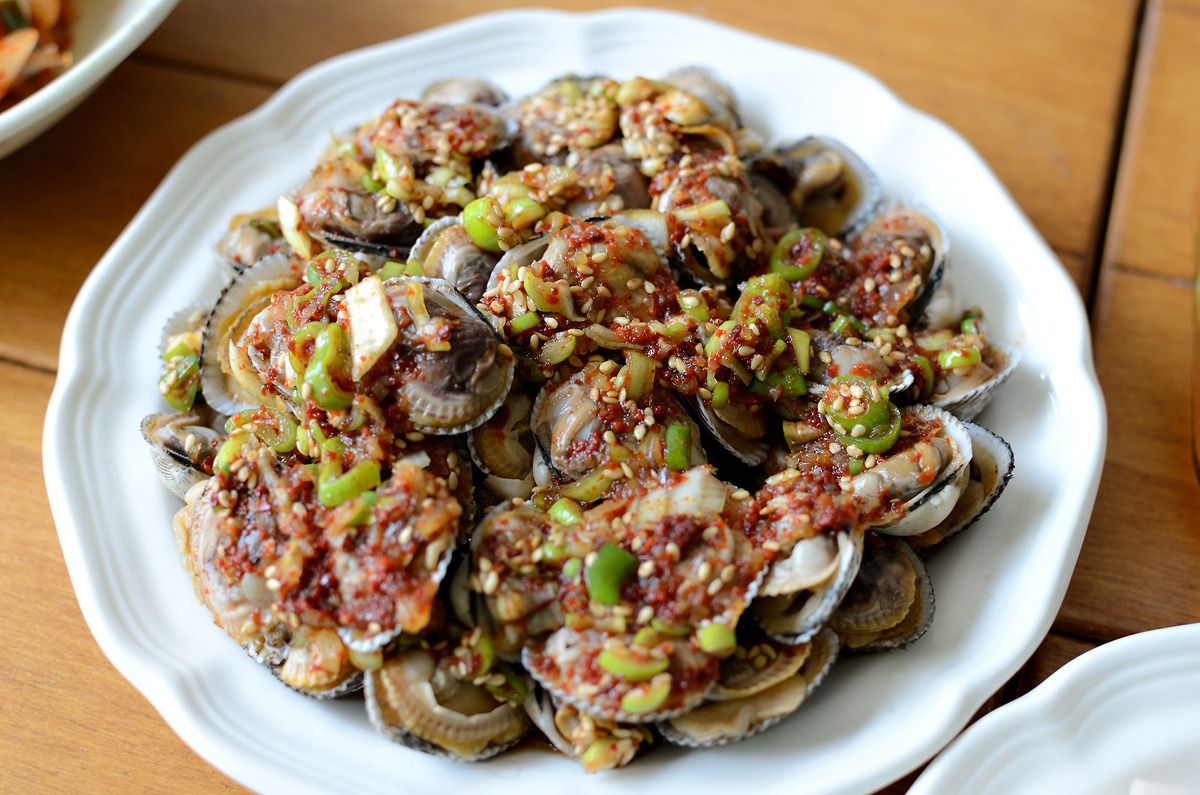
Kkomak Muchim (Seasoned Cockles)
꼬막무침
Romanization: kkomak-muchim
Briefly boiled cockles, opened on the half shell and spooned with a garlicky soy-chili sauce — a winter specialty of South Jeolla, above all of Beolgyo.
- Serves
- 4
- Prep
- 70 min
- Cook
- 10 min
RegionJeolla
Jump to recipeRecipe
Ingredients · Serves 4
- 1 kgLive cockles in the shellabout 250 g meat
- 1 tbspCoarse saltfor purging, in 1 L water
- 2 tbspSoy sauce
- 1 tbspWater
- 1 tbspGochugaru
- 1 tspSugar
- 1 tbspGarlicminced
- 2 tbspGreen onionfinely chopped
- 1½ Green and red chili peppers1 green and ½ red, finely chopped
- 1 tbspToasted sesame oil
- 1 tspToasted sesame seeds
Method
Technique: Yangnyeom: Seasoning Basics
Step 1: Scrub the cockles against each other under running water to clean the ridged shells. Discard any with cracked shells or that stay open when tapped.
Step 2: Soak them in salted water (about 3%) in a dark, cool place for about an hour so they purge mud, then rinse.
Step 3: Bring a large pot of water to a boil, add the cockles and stir constantly in one direction, which helps the meat come away from the shell evenly. Cook for 2 minutes after the water returns to a boil, add a cup of cold water and cook 2 minutes more, until the shells begin to gape. Drain.
Step 4: Mix the soy sauce, water, gochugaru, sugar, garlic, green onion, chopped chilies, sesame oil and sesame seeds.
Step 5: Twist off and discard the empty top shell of each cockle, leaving the meat on the other half. Discard any that stayed tightly closed.
Step 6: Arrange the cockles on a platter and spoon a little sauce over each. Serve warm or at room temperature the same day.
Origin & History
Kkomak is the granular ark cockle (Tegillarca granosa), a small, thick-shelled clam with deep radiating ribs and reddish flesh that lives in the soft mudflats of Korea's west and south coasts. Old texts call it gomak, and the Uhae ieobo named it warongja for ribs that resemble rows of roof tiles. Jeong Yak-jeon's Jasan eobo describes its flesh as yellowish and sweet, and the fifteenth-century gazetteer Dongguk yeoji seungnam lists cockles as a local product of Jangheung, Haenam, Boseong and Heungyang in Jeolla.
No cockle is more famous than Beolgyo's. The Encyclopedia of Korean Culture singles out this town in Boseong County, on the tidal flats of Suncheon Bay, as the heart of Korean cockle production; Beolgyo households traditionally set out cockles at large feasts and on the ancestral-rite table. The Boseong–Suncheon mudflats became a Ramsar wetland in 2006 and in 2021 were inscribed with three other west-coast flats as the UNESCO World Natural Heritage site "Getbol, Korean Tidal Flats." The wooden mud sled (ppeolbae) that gatherers kneel on to cross the flats is designated a National Important Fishery Heritage. The spelling kkomak itself spread widely in the 1980s through a popular novel by Jo Jung-rae.
The folk-culture encyclopedia notes that no old cookbook records a recipe for kkomak-muchim; it was presumably an everyday dish of coastal families long before it was written down. Cockles are briefly boiled so that the meat stays plump and juicy, one shell is pried off, and the cockles are lined up on a plate and dressed with seasoned soy sauce. In North Jeolla the same dish is called kkomak-hoe, and it also goes by kkomak-jjim.
Key Ingredients
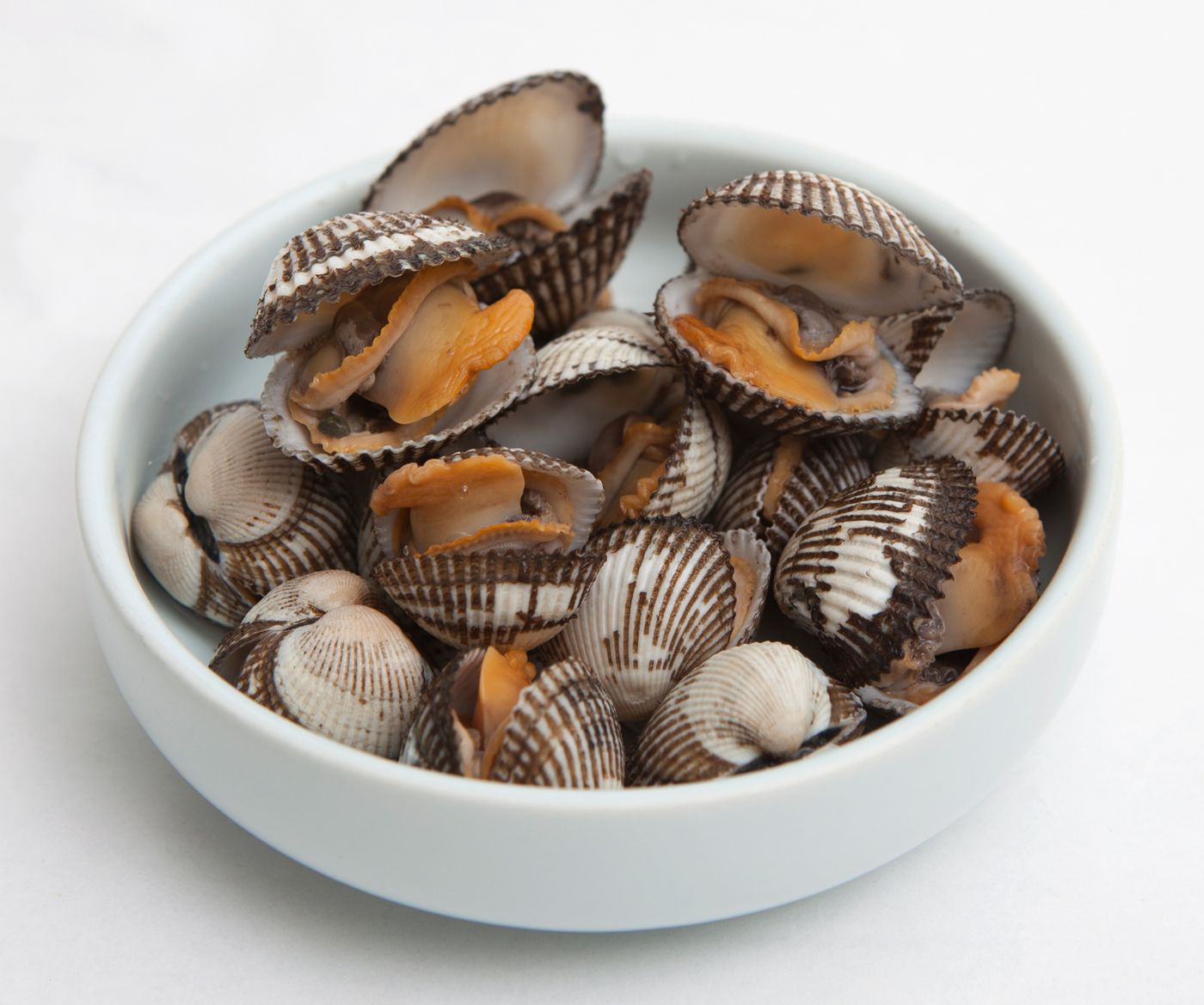 Cockles (kkomak)꼬막Small, deeply ribbed ark clams with red, briny flesh, gathered from the winter mudflats of South Jeolla. Beolgyo in Boseong County is the name every Korean connects with them.
 Soy sauce간장Korean soy sauce, in two main kitchen forms: pale, salty guk-ganjang (soup soy sauce) brewed the traditional way from meju, and darker, sweeter jin-ganjang for braises and marinades.
 Gochugaru고춧가루Korean red chili powder, made from dried red peppers ground coarse or fine. It gives kimchi, gochujang and countless banchan their color and warmth.
 Garlic마늘Used raw, minced, pickled and roasted, garlic is one of the essential aromatics of Korean food — in seasonings, marinades, kimchi and namul.
 Green onion파Korean green onion (pa), from thick-stemmed daepa to slender scallions — chopped into nearly every seasoning sauce, soup and kimchi, and the star of pa-kimchi.
- Korean Chili Peppers (Fresh)고추Fresh Korean chili peppers, eaten green (putgochu) or red (hong-gochu): from the fiery cheongyang-gochu to the small, wrinkled, mild kkwari-gochu that is braised and stir-fried as banchan.
 Sesame참깨Toasted sesame seeds and sesame oil (chamgireum) finish countless Korean dishes, adding a nutty aroma and gloss.
Nutrition
| Calories | ~99 kcal |
|---|---|
| Protein | ~9.3 g |
| Fat | ~4.3 g |
| Carbohydrates | ~6.1 g |
| Fiber | ~1 g |
| Sodium | ~615 mg |
Notable forIron · Protein · Niacin
Cockle meat uses the Korean Food Composition Table entry “Granulated ark shell, Raw” (per 100 g: 63 kcal, 12.6 g protein, 6.8 mg iron, 3.4 mg niacin), assuming about 250 g of meat from 1 kg of cockles in the shell. That entry does not report sodium, so the table's “Ark shell, Farm-raised, Raw” value (292 mg per 100 g) was used as a stand-in. Soy sauce and green chili use Korean table values; gochugaru uses the USDA cayenne entry as a stand-in; other seasonings use USDA FoodData Central. Totals divided by four, assuming all the sauce is eaten. Actual values vary with ingredients, portion size and preparation.
Health Benefits
- Iron: the Korean Food Composition Table lists cockle meat at 6.8 mg of iron per 100 g, so a serving supplies a meaningful share of daily needs. The folk-culture encyclopedia notes cockles were traditionally valued for growing children and for "thin blood."
- Lean protein: cockles are high in protein and almost fat-free; most of the fat in this dish comes from sesame oil.
- B vitamins: the table also lists niacin and riboflavin in cockle meat.
Regional Variations
- Half-shell with soy sauce (Beolgyo style): cockles left on one shell, each topped with a spoonful of soy sauce seasoned with chili flakes, green and red chili, garlic, green onion and sesame.
- Kkomak-hoe with chogochujang: the Encyclopedia of Korean Culture describes larger cockles dressed in, or served with, vinegared gochujang; with this sauce cooks usually pick out the meat and toss it with water dropwort (minari) or onion.
- With vegetables: the National Institute of Korean Language's dictionary records shelled cockles tossed with blanched minari and mung bean sprouts.
- Kkomak-bibimbap: the vinegar-chili version is used as a topping for rice bowls.
- Other cockle dishes: the folk-culture encyclopedia also lists cockle pancakes (kkomak-pajeon), fried cockles and steamed cockles.
Pairings
- Gim Gui (Seasoned Roasted Laver)김구이Sheets of laver brushed with sesame or perilla oil, sprinkled with salt and toasted until crisp — eaten wrapped around spoonfuls of rice.
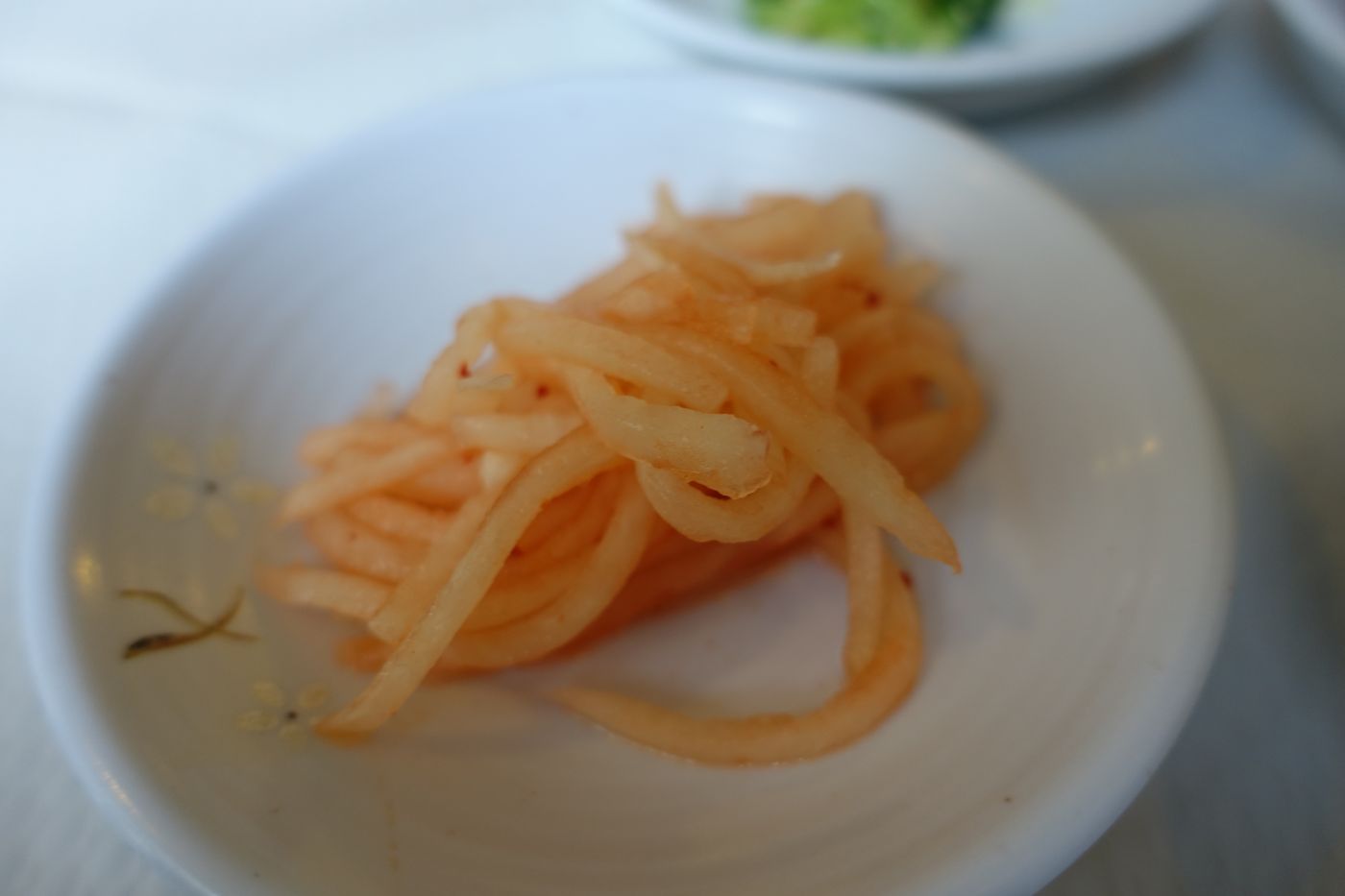 Musaengchae무생채Fine matchsticks of Korean radish dressed raw with chili flakes, a little vinegar and sugar — crisp, sweet-sharp and best made just before the meal.
 Doenjang Jjigae (Soybean Paste Stew)된장찌개A thick, savory stew of fermented soybean paste with tofu, zucchini and whatever the season offers — the everyday pot at the center of the Korean table.
Sources
- 01꼬막무침 (Kkomak-muchim) — Encyclopedia of Korean Folk Culture (National Folk Museum of Korea)
- 02꼬막회 (Kkomak-hoe) — Encyclopedia of Korean Culture
- 03장도 (Jangdo, Beolgyo) — Encyclopedia of Korean Culture
- 04Korean Food Composition Table: Granulated ark shell, Raw — National Institute of Agricultural Sciences
- 05Food Allergies — U.S. Food and Drug Administration
- 06Selecting and Serving Fresh and Frozen Seafood Safely — U.S. Food and Drug Administration
Last updated