Jeon · Pan-fried 전
Buchu Jeon (Garlic Chive Pancake)
부추전
Romanization: buchu-jeon
Fragrant garlic chives held together by a thin flour batter and fried until crisp — one of the quickest and most common jeon in Korean homes.
- Serves
- 4
- Prep
- 10 min
- Cook
- 15 min
Recipe
Ingredients · Serves 4
- 150 gGarlic chives (buchu)cut into 4–5 cm lengths
- 50 gOnionabout ¼ medium, thinly sliced
- 1 Red or green chilithinly sliced, optional
- 100 gAll-purpose flourabout ¾ cup
- 160 mlCold water
- ¼ tspSalt
- 3 tbspNeutral cooking oilfor frying, divided
- 1 tbspSoy saucefor the dipping sauce
- 1 tbspRice vinegarfor the dipping sauce
Method
Technique: Jeon: Pan-Frying in Flour and Egg
Step 1: Wash the chives, shake them dry well and cut into short lengths.
Step 2: Whisk the flour, salt and cold water into a smooth, thin batter. Add the chives, onion and chili and fold until every piece is lightly coated; there should be just enough batter to hold the vegetables together.
Step 3: Heat 1½ tbsp oil in a large skillet over medium-high heat. Add half the mixture and spread it into a thin, even round.
Step 4: Cook for 3 minutes, until the underside is golden and crisp. Flip, press gently with a spatula, add a little more oil around the edge, and cook another 2–3 minutes.
Step 5: Repeat with the remaining oil and mixture.
Step 6: Mix the soy sauce and vinegar for dipping. Cut into wedges and serve hot.
Origin & History
Buchu is garlic chive (Allium tuberosum), a hardy perennial with flat, garlicky leaves. The Encyclopedia of Korean Culture notes that it is also called sol or jeongguji, that it is native to western and northern China, and that it probably reached Korea in the Three Kingdoms period, although its first Korean written record is in the Goryeo-era medical text Hyangyak gugeupbang. It can be harvested repeatedly from spring to autumn, which made it a dependable kitchen-garden vegetable.
Buchu-jeon uses the same batter method as pajeon: rather than coating individual pieces in flour and egg, the cook mixes cut chives into a loose batter so the starch binds the leaves into a thin pancake. The Encyclopedia of Korean Culture groups such pressed, battered pancakes with the jijimgae or buchimgae, and its entry on jeon includes green onions and other vegetables among the standard ingredients.
Because it needs little more than a bunch of chives, flour and water, buchu-jeon is an everyday dish rather than a holiday one — something made on a whim, as a snack or a side dish, or to go with a drink. See also jeon pan-frying.
Key Ingredients
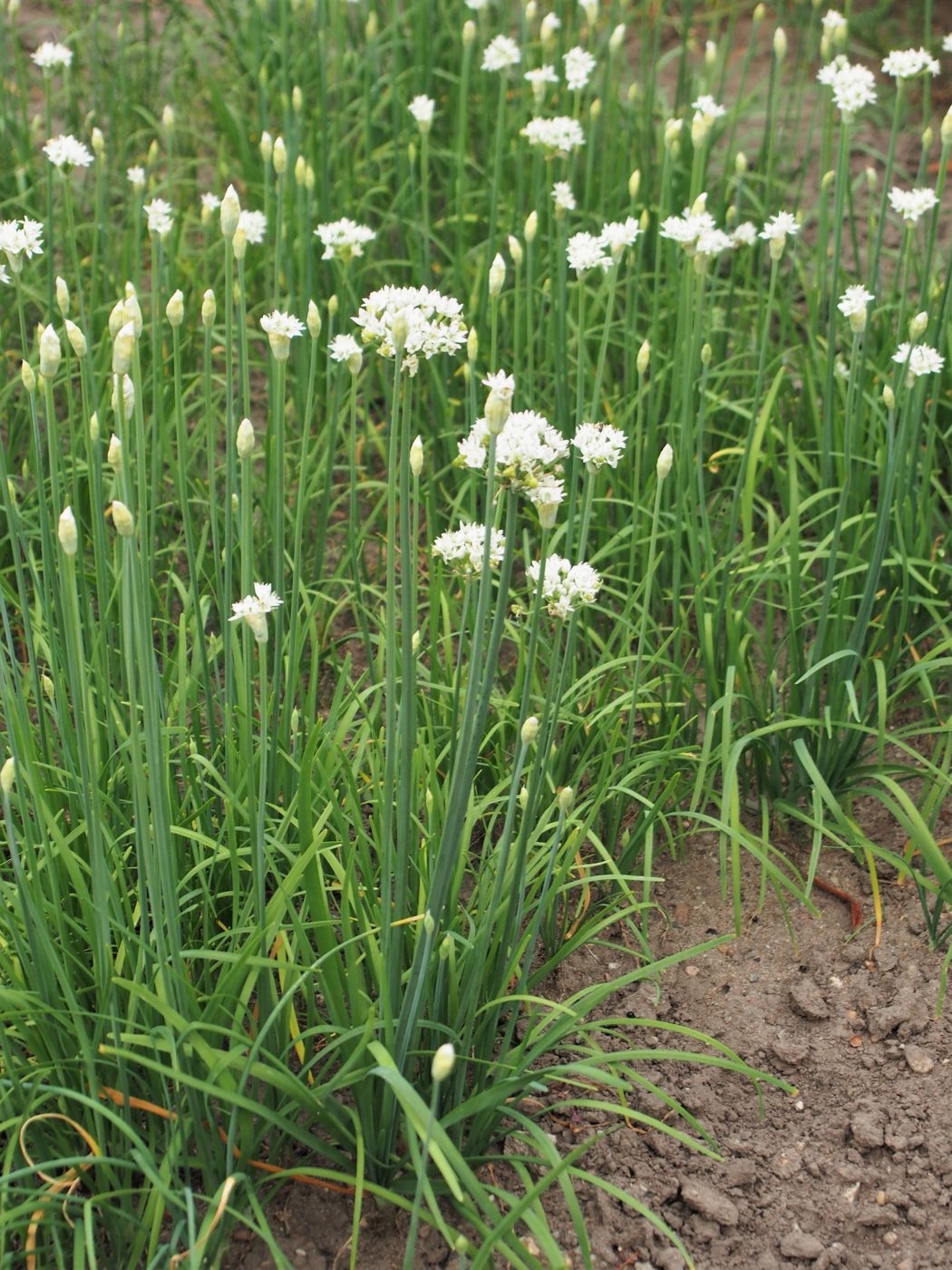 Garlic chives (buchu)부추Flat-leaved garlic chives with a bright, garlicky perfume. Tossed raw into buchu-muchim, folded into savory pancakes and tucked into cucumber kimchi.
- Korean Chili Peppers (Fresh)고추Fresh Korean chili peppers, eaten green (putgochu) or red (hong-gochu): from the fiery cheongyang-gochu to the small, wrinkled, mild kkwari-gochu that is braised and stir-fried as banchan.
 Soy sauce간장Korean soy sauce, in two main kitchen forms: pale, salty guk-ganjang (soup soy sauce) brewed the traditional way from meju, and darker, sweeter jin-ganjang for braises and marinades.
Nutrition
| Calories | ~195 kcal |
|---|---|
| Protein | ~4 g |
| Fat | ~10.5 g |
| Carbohydrates | ~22 g |
| Fiber | ~1.9 g |
| Sodium | ~150 mg |
Notable forVitamin K · Folate · Vitamin C
Estimated by summing USDA FoodData Central (SR Legacy) values for raw chives (FDC 169994, used as a stand-in because USDA has no entry for garlic chives), enriched all-purpose flour (FDC 168894), raw onion, raw chili, table salt and soybean oil, divided by 4. The Korean Food Composition Table lists native garlic chives at 22 kcal per 100 g, close to the USDA chive value. Assumes all the oil is absorbed and excludes the dipping sauce (about 220 mg sodium per serving if all of it is used). Folate comes partly from enriched flour. Actual values vary with ingredients, portion size and preparation.
Health Benefits
- Leafy allium: garlic chives contribute vitamin K, vitamin C, carotenoids and folate, and a pancake uses a whole bunch.
- Low in sodium as written: with only a pinch of salt in the batter, most of the sodium comes from the dipping sauce, which is easy to control.
- Adaptable: adding shrimp, squid or an egg raises the protein and turns it into a light meal.
Regional Variations
- Plain chive pancake: chives, sometimes onion and chili, in a thin wheat-flour batter — the most common home version.
- With seafood: small shrimp, chopped squid or clams turn it into a heartier pancake similar to haemul-pajeon.
- With potato or zucchini: shredded potato or aehobak is sometimes mixed in for sweetness and bulk.
- Batter choices: some cooks use ready-mixed buchim-garu, add an egg for a softer pancake, or blend in rice flour or potato starch for crispness.
Pairings
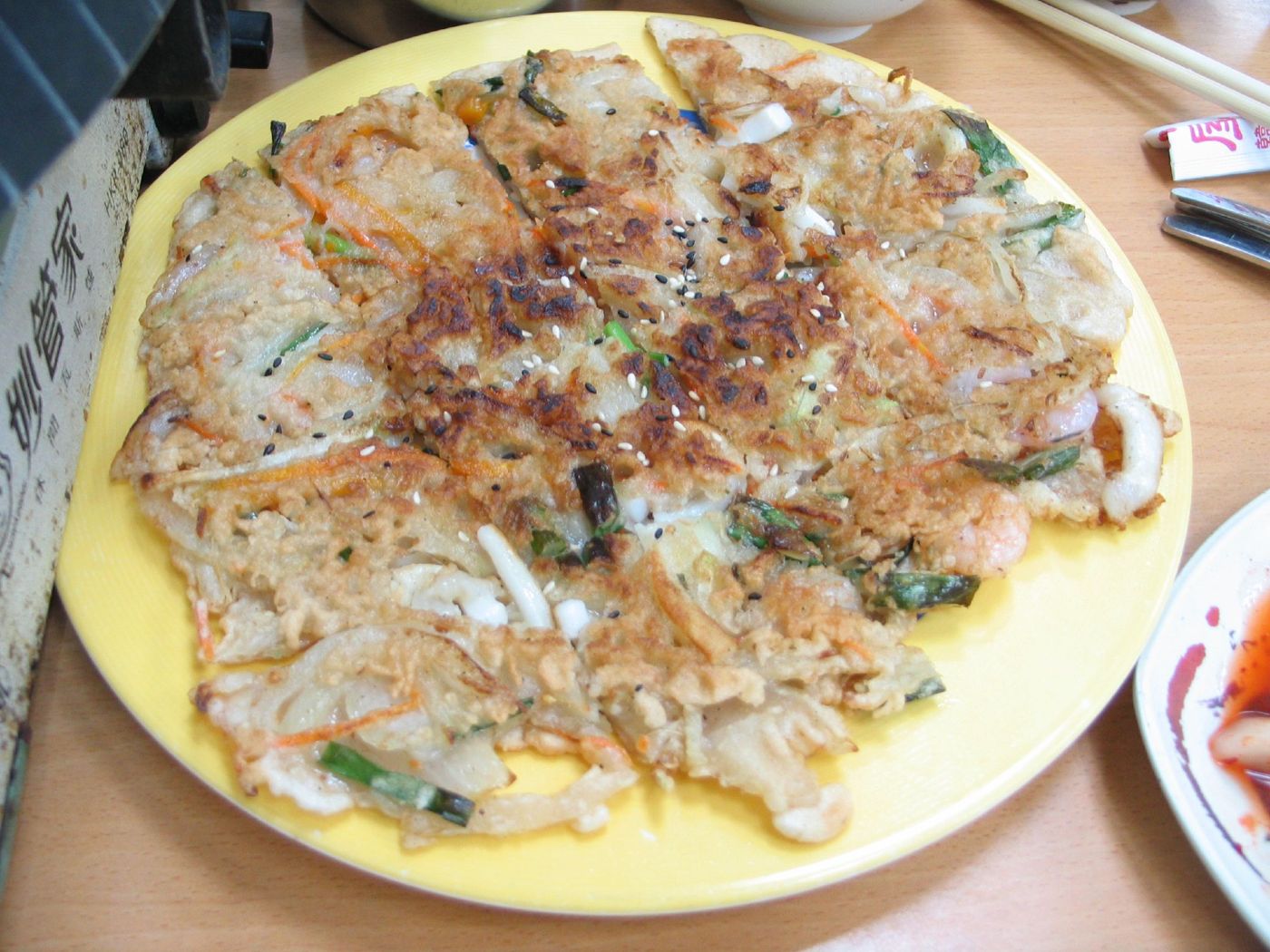 Haemul Pajeon (Seafood and Green Onion Pancake)해물파전Whole green onions bound in a light batter with squid, shrimp and clams, pan-fried until crisp — a generous jeon for sharing, closely tied to Busan's Dongnae.
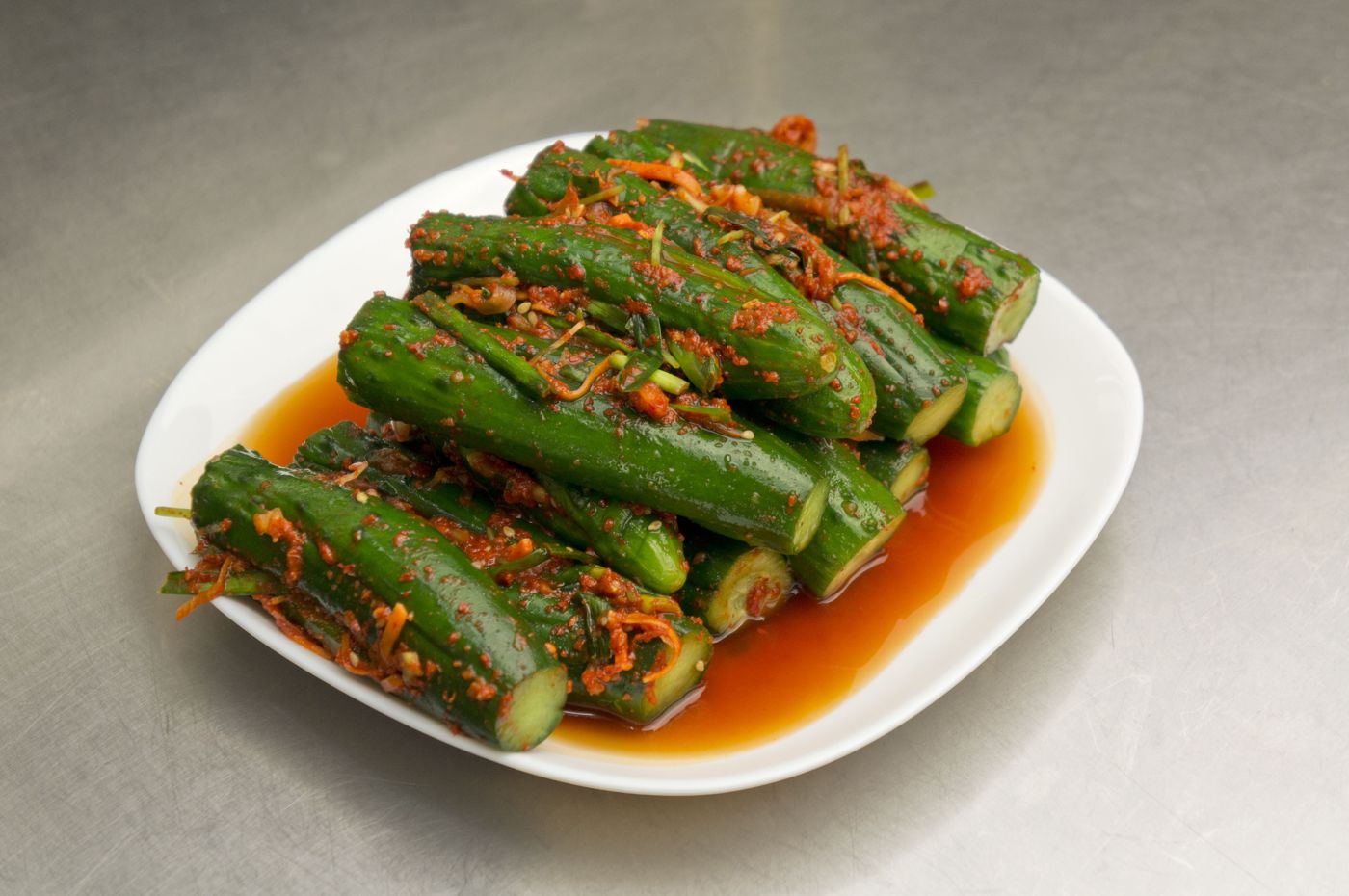 Stuffed Cucumber Kimchi오이소박이Cucumbers slit and stuffed with garlic chives, chili and garlic — a crisp, refreshing summer kimchi meant to be eaten young.
 Kongnamul Muchim콩나물무침Soybean sprouts cooked under a lid until just tender, then tossed with garlic, green onion and sesame oil — crisp, nutty and on tables across Korea.
Sources
- 01부추 (Buchu) — Encyclopedia of Korean Culture
- 02전 (Jeon) — Encyclopedia of Korean Culture
- 03Korean Food Composition Table: Chinese chive, Native, Raw — National Institute of Agricultural Sciences
- 04Chives, raw (FDC 169994) — USDA FoodData Central
- 05Vitamin K — The Nutrition Source, Harvard T.H. Chan School of Public Health
Last updated