Techniques
Yangnyeom: Seasoning Basics
양념
What yangnyeom means, the core seasonings of the Korean kitchen, and the everyday sauces built from them: yangnyeomjang, chogochujang, gireumjang and ssamjang.
Yangnyeom is the Korean word for seasoning in the broadest sense. The National Institute of Korean Language's standard dictionary defines it as a collective term for ingredients used to bring out the taste of food, naming oil, sesame salt, green onion, garlic, soy sauce, soybean paste, salt and sugar. It also has a figurative sense, something added to make an occasion livelier. The Encyclopedia of Korean Culture describes its purpose in two parts: to keep the good aroma and taste an ingredient already has, and to cancel out the bad, especially the gamey smell of meat and the fishy smell of seafood.
You will often read that yangnyeom comes from the characters 藥念, "thinking of it as medicine." That explanation is widely repeated, but the standard dictionary records the word without any Chinese-character origin, so treat it as a popular etymology rather than an established one.
The core seasonings
The encyclopedia's list of everyday yangnyeom reads like an inventory of the Korean pantry:
- Salt: the most basic seasoning. Coarse sea salt for salting and kimchi, finer refined salt at the table. See cheonilyeom.
- Jang: ganjang (soy sauce), whose light, newly drawn form seasons soups while dark, long-aged soy sauce goes into braises and jerky; doenjang for soups and stews; and gochujang, which the encyclopedia dates to the mid-Joseon period and credits with taming fishiness. See making jang.
- Jeotguk: the liquid of salted seafood such as saeujeot or anchovy sauce, used in stews, namul, salads and kimchi.
- Aromatics: green onion and garlic appear in almost everything, minced fine or cut in strips. Ginger is the encyclopedia's choice for pork.
- Oils and sesame: sesame oil for namul and soups, perilla oil for stir-fries and pan-frying, and toasted, crushed sesame (kkaesogeum). See sesame and perilla oils.
- Sweet, sour and hot: sugar today, but honey, grain syrup and mulyeot in the past; brewed vinegar (sikcho); and gochugaru, black pepper and mustard for heat.
Balancing the flavors
The encyclopedia's entry on gomyeong sums up yangnyeom as what adds sweetness, saltiness, sourness and heat. Korean cooks rarely use one of these alone. A soy-based sauce wants a little sugar to round out the salt; a gochujang sauce takes vinegar and sugar to lift its heaviness; sesame oil and seeds bring a nutty finish to almost everything. The encyclopedia's closing advice is the real rule: seasoning works best not in large amounts but blended to suit the ingredient and the cooking method. A dish of namul needs a light hand, a braise a deeper one.
Recipes often call simply for gajeun yangnyeom, "assorted seasonings." In practice that usually means minced green onion and garlic, sesame oil, sesame salt and black pepper, with soy sauce or salt, the base of countless recipes.
Four everyday sauces
- Yangnyeomjang (양념장): literally "seasoned jang." The encyclopedia's entry on grilled dishes gives the classic formula: soy sauce or gochujang with minced green onion, garlic and ginger, plus sesame oil, sesame salt and sugar. Brushed on near the end of grilling, it gives a glossy finish. A soy-based version is also the usual sauce for kongnamul-bap. See grilling gui.
- Chogochujang (초고추장): gochujang thinned with vinegar, also called chojang. Sweet, sour and hot, it is the usual sauce for raw and lightly blanched seafood; the encyclopedia notes that gochujang has long seasoned raw-fish dishes. In Gwangju, duck stew is eaten with chogochujang mixed with perilla powder. See chogochujang.
- Gireumjang (기름장): the dictionary's definition is sesame or perilla oil with salt. It is the simplest dip of all, used where the main ingredient should taste of itself. Daegu's thick-cut raw beef, mungtigi, is dipped in a sauce built on sesame oil.
- Ssamjang (쌈장): gochujang or doenjang mixed with seasonings and eaten with leaf wraps. See ssamjang and making ssam and wraps.
Seasoning with care
Jang, salted seafood and salt all carry a lot of sodium, and a few spoonfuls of sauce add up quickly. Season gradually and taste as you go, and serve dipping sauces on the side so each diner can choose; see sodium in Korean food. Soy sauce and most jang contain soy and often wheat, and seafood sauces contain fish or shellfish; see allergens in Korean food.
Dishes using this technique
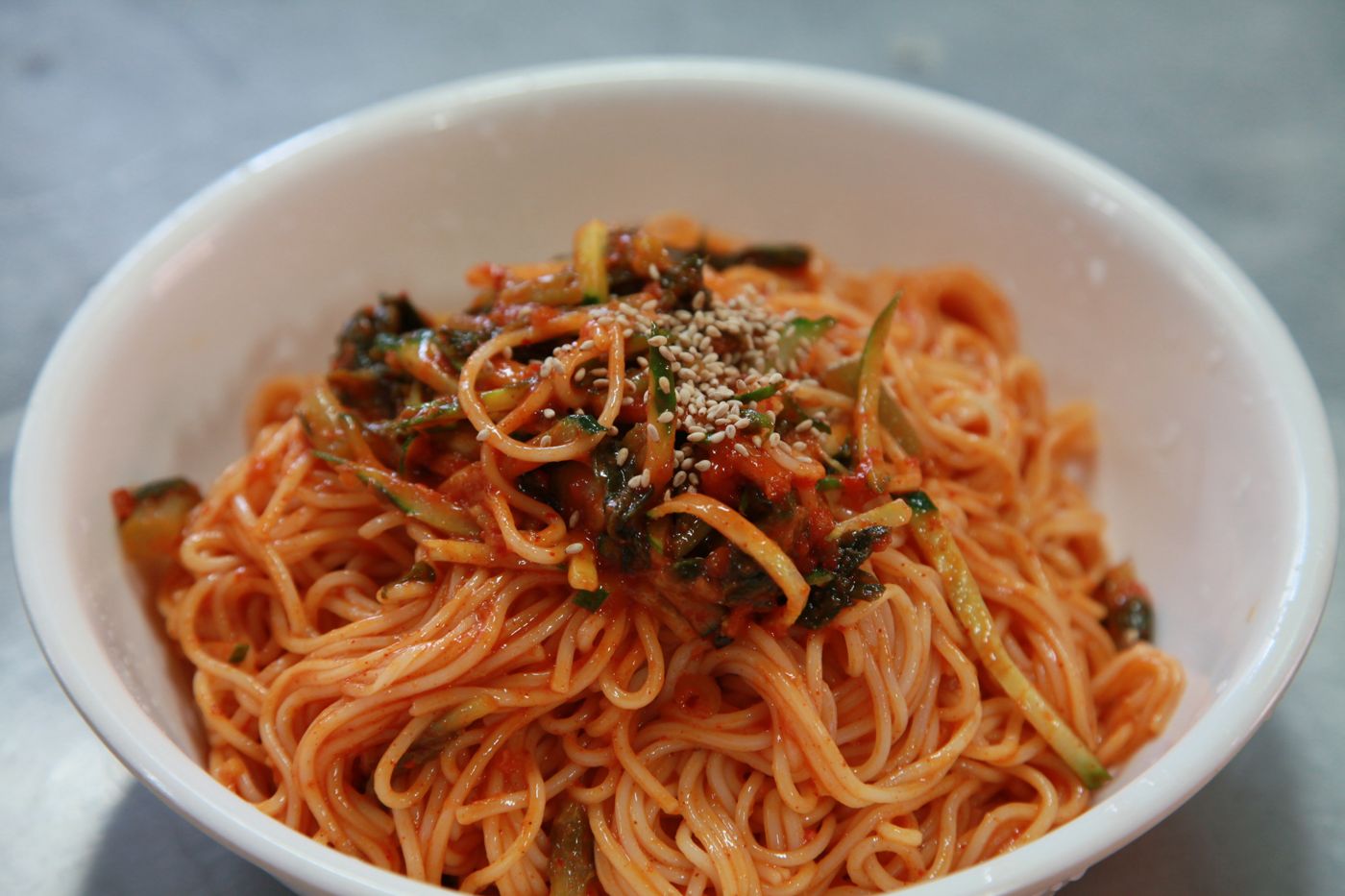 Bibim-guksu (Spicy Mixed Noodles)비빔국수Thin wheat noodles tossed cold in a sweet, sour and spicy gochujang dressing with cucumber, kimchi and egg — a modern turn on the soy-dressed goldongmyeon of Joseon.
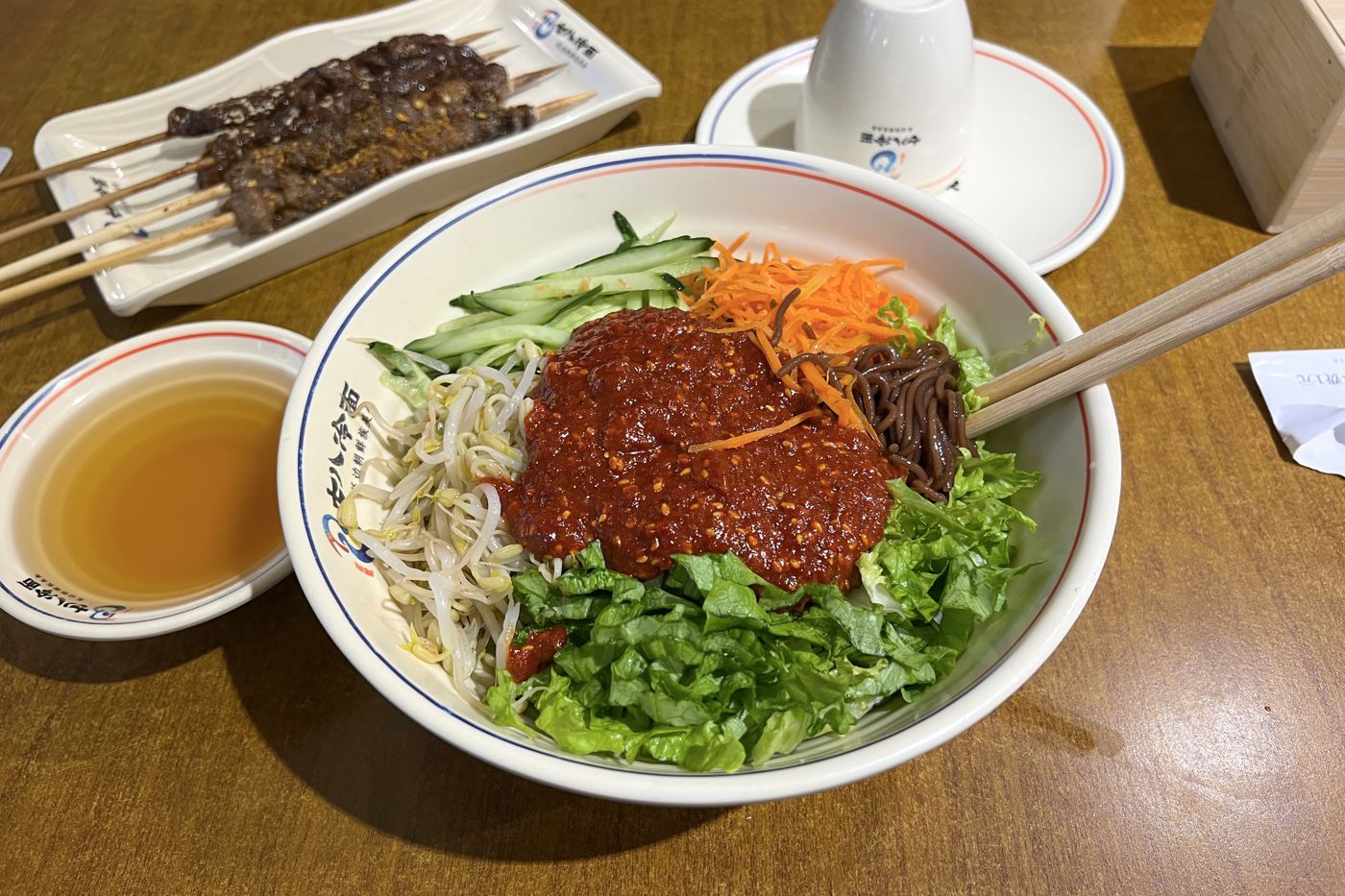 Bibim-naengmyeon (Spicy Mixed Cold Noodles)비빔냉면Chewy starch noodles tossed in a sweet, vinegary chili sauce, topped with cucumber, pear and egg — the Hamheung tradition of hoe-naengmyeon, carried south by refugees.
- Bugeo Muchim (Shredded Dried Pollock Salad)북어무침Shredded dried pollock softened with a splash of water and tossed in a sweet, spicy gochujang dressing — a chewy, protein-rich banchan that keeps for days.
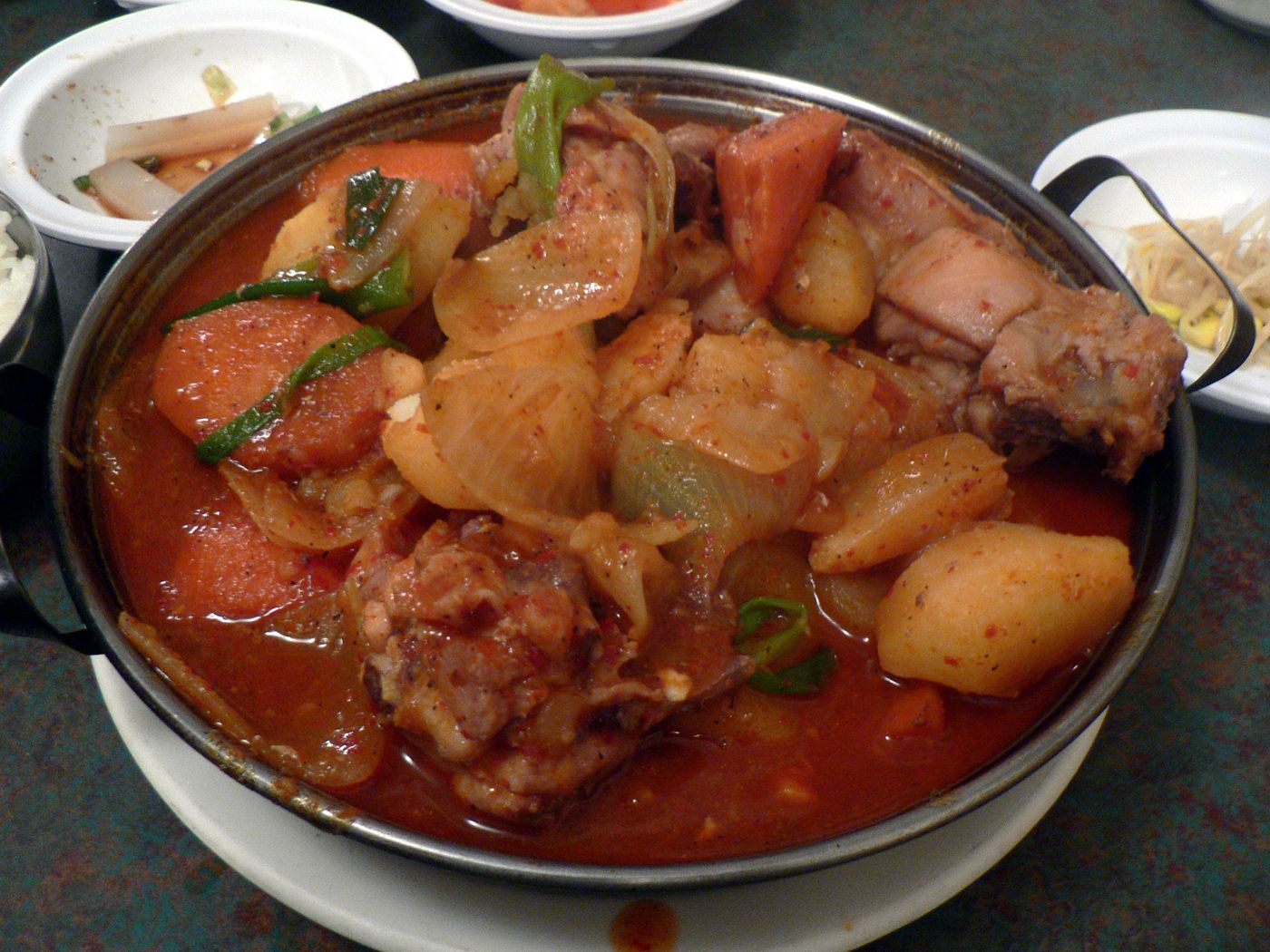 Dak-bokkeumtang (Spicy Braised Chicken)닭볶음탕Bone-in chicken and potatoes braised in a red chili sauce until it thickens and clings — long known as dakdoritang, a name whose origin is still debated.
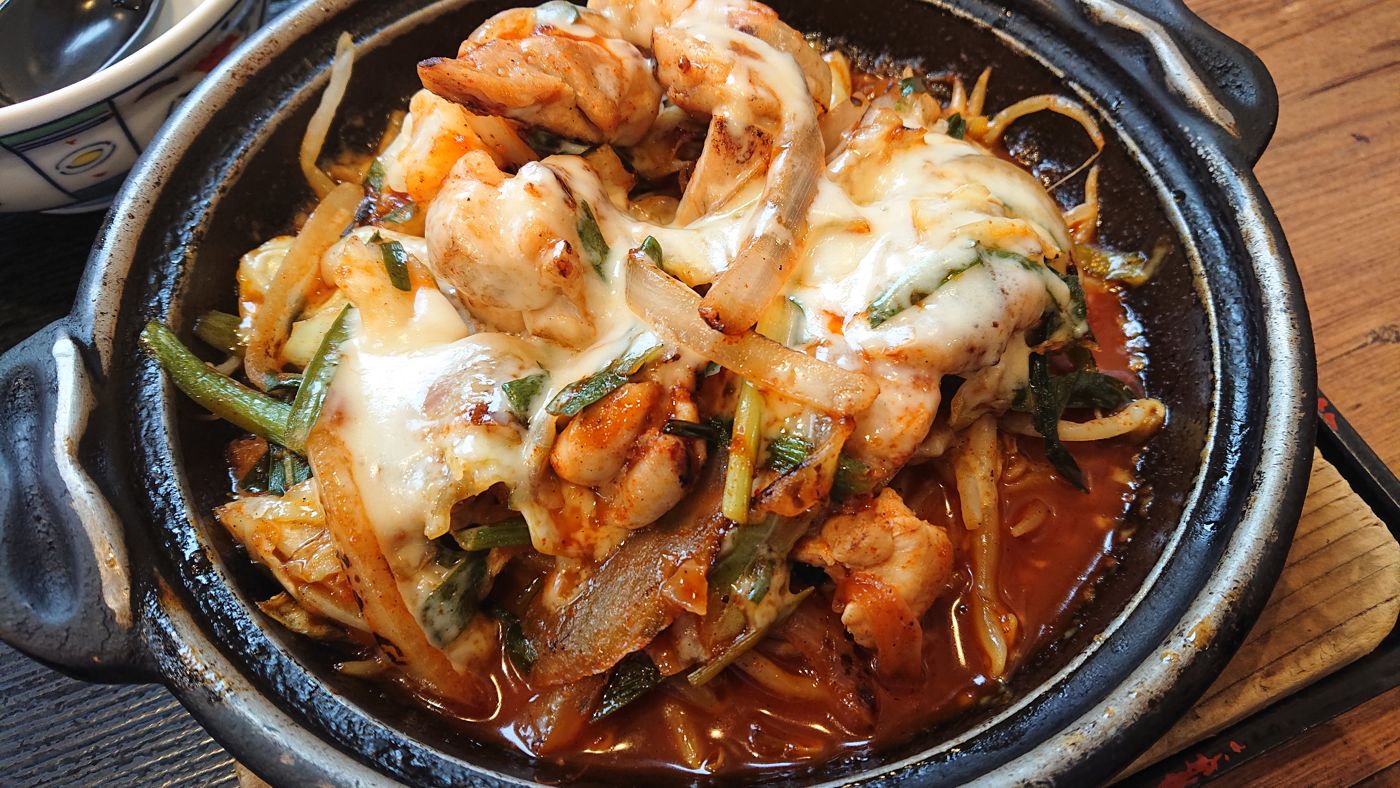 Dakgalbi (Spicy Stir-Fried Chicken)닭갈비Chicken marinated in a fiery gochujang sauce and cooked on a big iron pan with cabbage, sweet potato and rice cakes — Chuncheon's signature dish, finished with fried rice.
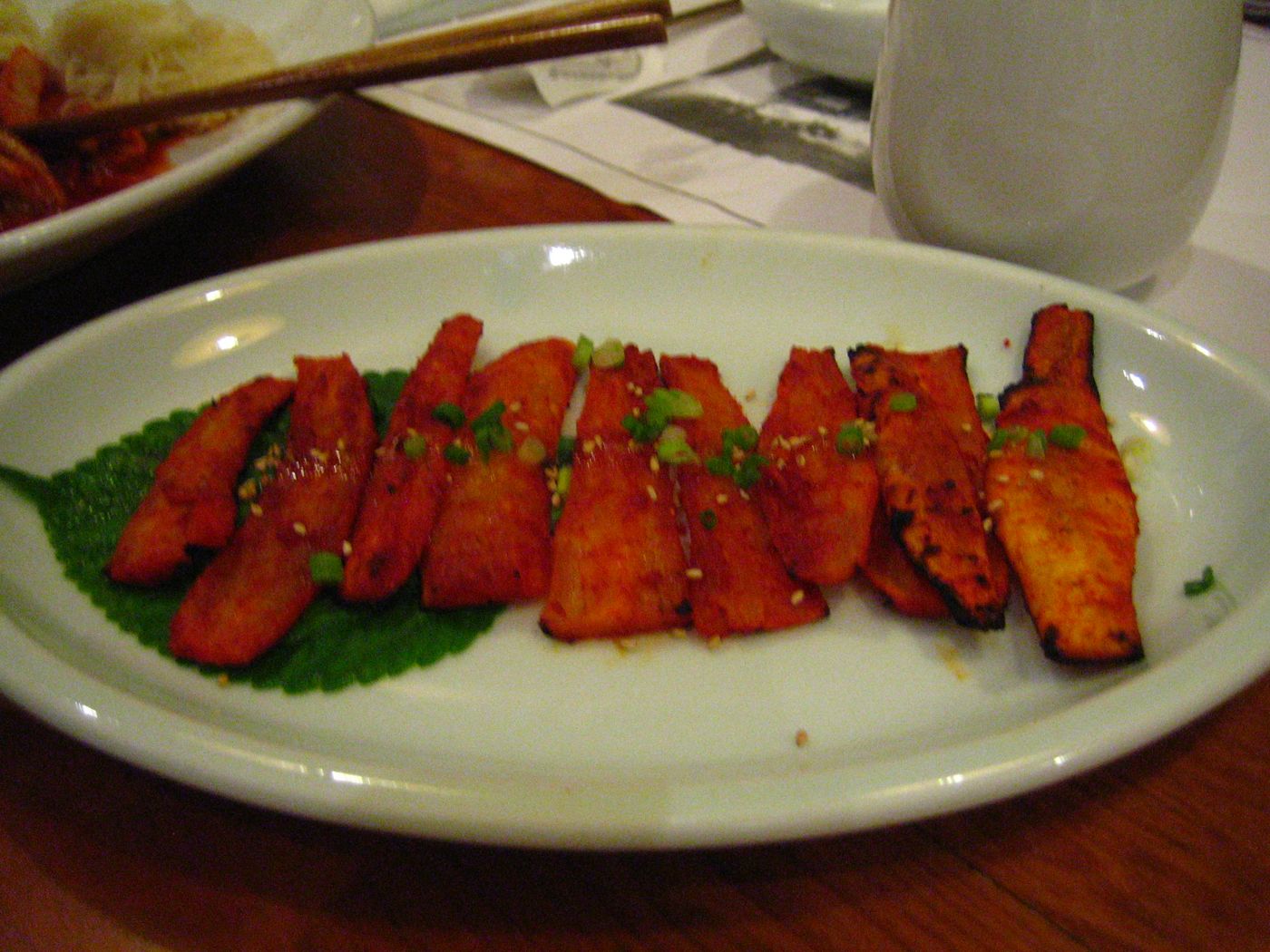 Deodeok Gui (Grilled Seasoned Deodeok)더덕구이Deodeok root pounded flat, brushed with sesame oil and soy, then grilled under a sweet gochujang glaze — chewy, fragrant and slightly bitter, often called meat from the mountains.
- Doraji Muchim (Spicy Raw Bellflower Root Salad)도라지무침Raw bellflower root, shredded and salt-rubbed to tame its bitterness, then dressed with gochugaru, gochujang, vinegar and sugar — crunchy, sweet, sour and hot.
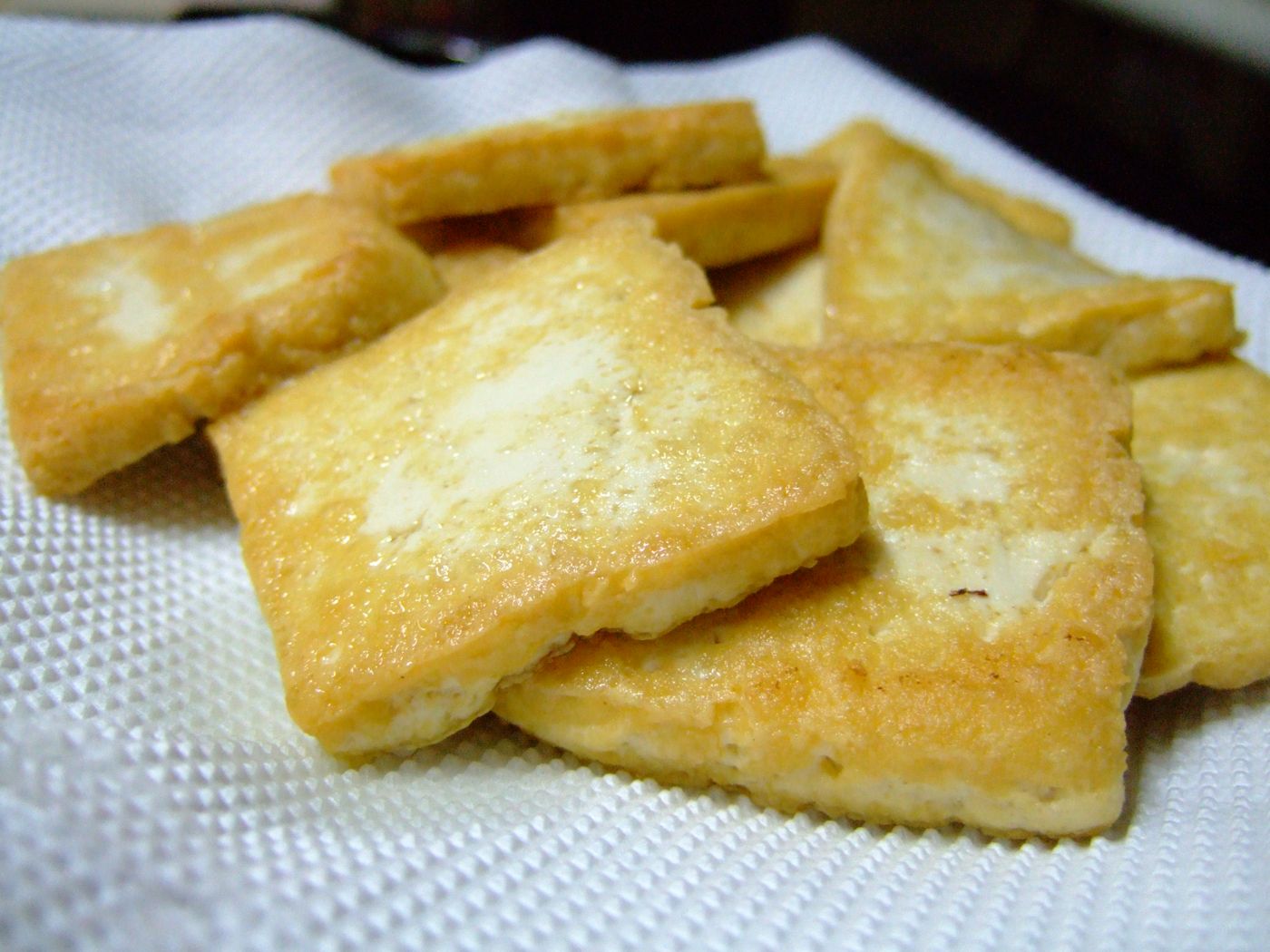 Dubu Buchim (Pan-Fried Tofu with Seasoning Sauce)두부부침Thick slices of firm tofu pan-fried until golden on both sides and spooned with a soy, chili and green-onion sauce — one of the simplest and most loved home banchan.
- Gim Muchim (Seasoned Laver Flakes)김무침Toasted laver crumbled into flakes and tossed with soy sauce, garlic, green onion and sesame oil — a savory, five-minute banchan that tastes of the sea.
- Gochu Doenjang Muchim (Green Chilies in Doenjang)고추된장무침Crisp, mild green chilies cut into rounds and tossed with doenjang, garlic and sesame oil — a five-minute summer banchan built on the old habit of dipping peppers in jang.
- Hwangtae Gui (Grilled Seasoned Dried Pollock)황태구이Winter-cured dried pollock softened, opened flat and grilled with a glossy gochujang glaze — tender, savory and a specialty of Gangwon's mountain drying yards.
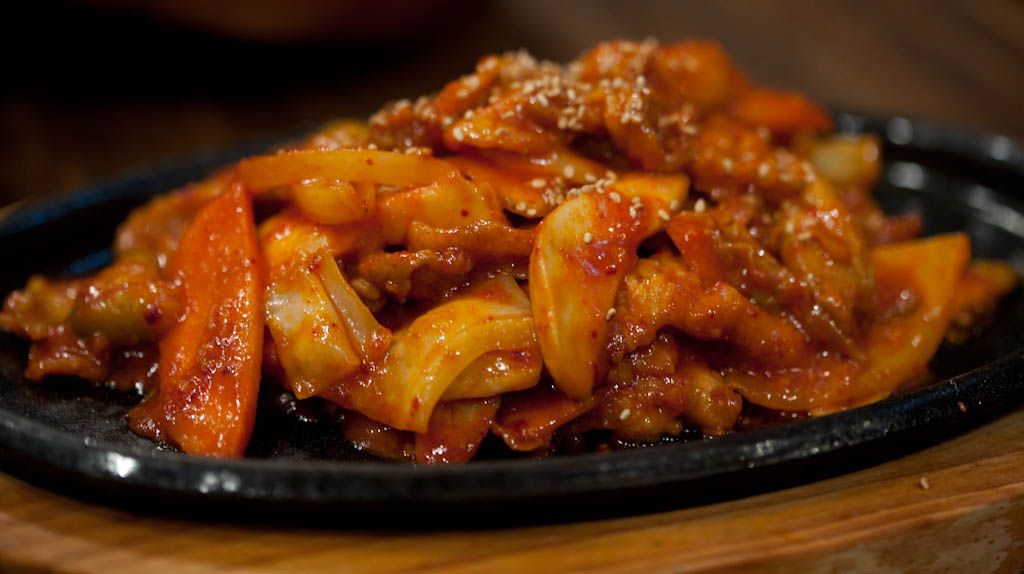 Jeyuk Bokkeum (Spicy Stir-Fried Pork)제육볶음Thin slices of pork marinated in gochujang, garlic and ginger, then stir-fried with onion and green onion — a hearty, spicy staple of home and diner tables.
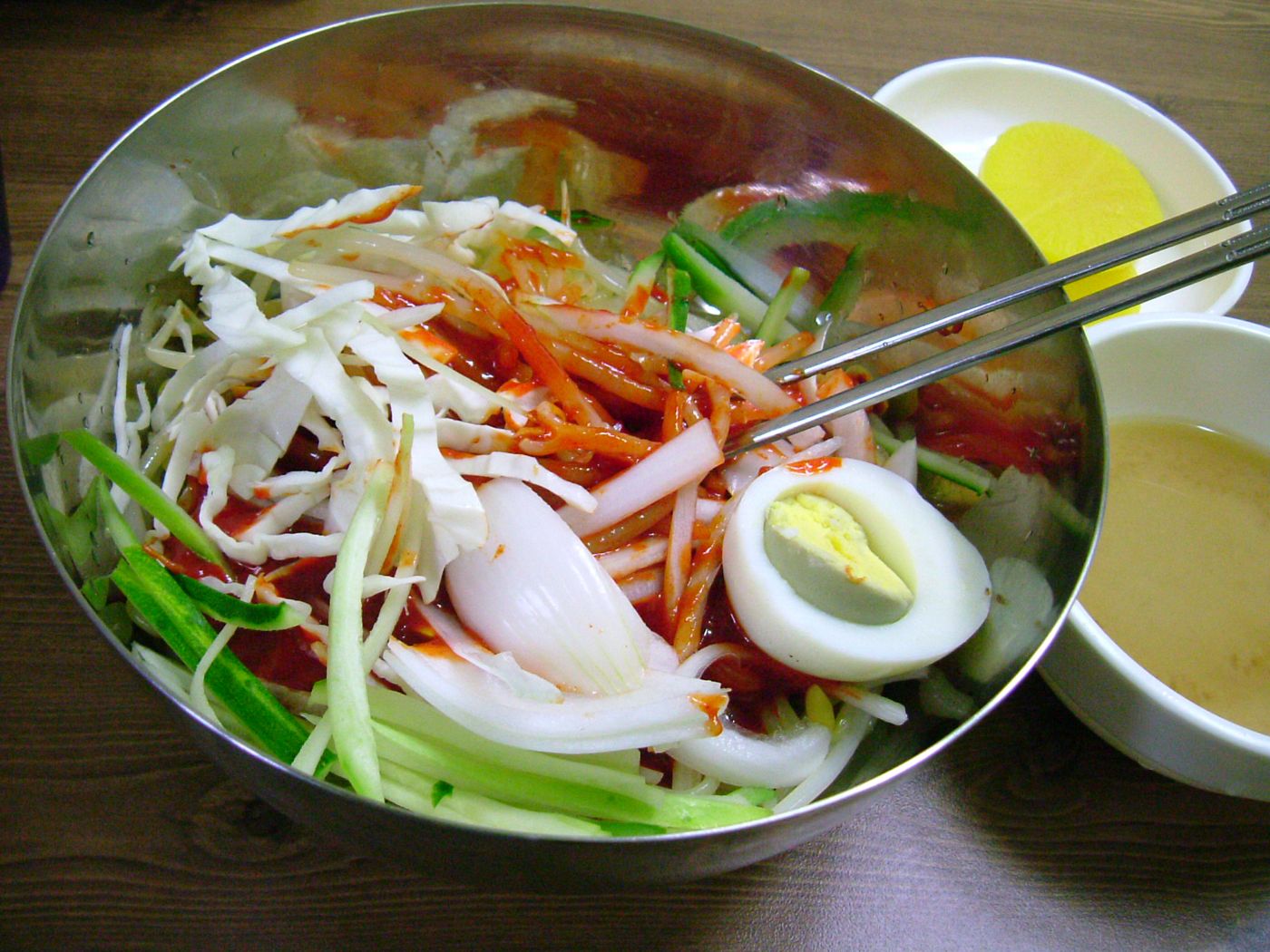 Jjolmyeon (Chewy Spicy Noodles)쫄면Thick, rubbery-chewy wheat noodles tossed cold in a sweet-sour gochujang sauce with cabbage, sprouts and egg — a snack-bar classic invented in 1970s Incheon.
- Kkaennip Jjim (Steamed Seasoned Perilla Leaves)깻잎찜Perilla leaves layered with a garlicky soy-chili sauce and steamed until soft — a fragrant banchan for wrapping around spoonfuls of rice.
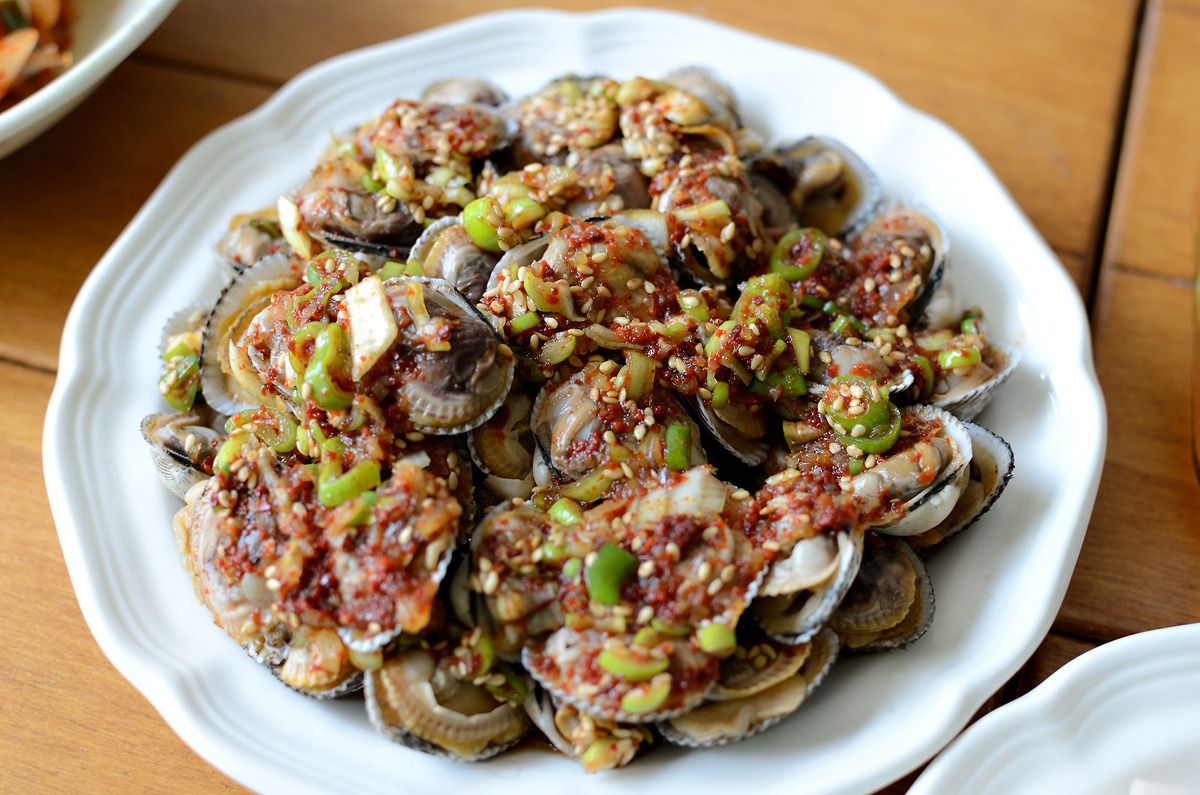 Kkomak Muchim (Seasoned Cockles)꼬막무침Briefly boiled cockles, opened on the half shell and spooned with a garlicky soy-chili sauce — a winter specialty of South Jeolla, above all of Beolgyo.
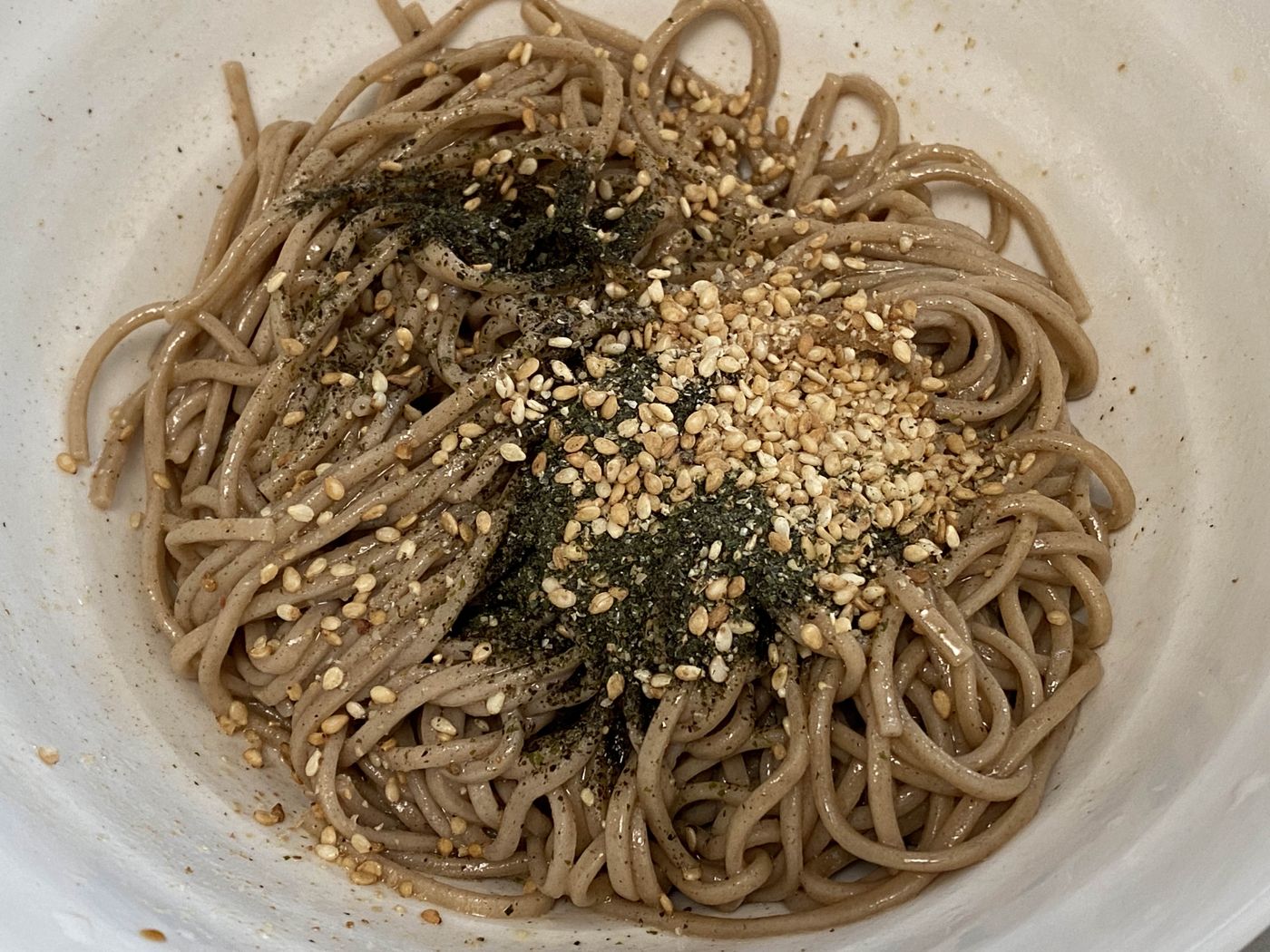 Makguksu (Gangwon Buckwheat Noodles)막국수Coarse, grayish buckwheat noodles served in cold dongchimi broth or tossed with spicy sauce — a Gangwon mountain dish most famously eaten in Chuncheon.
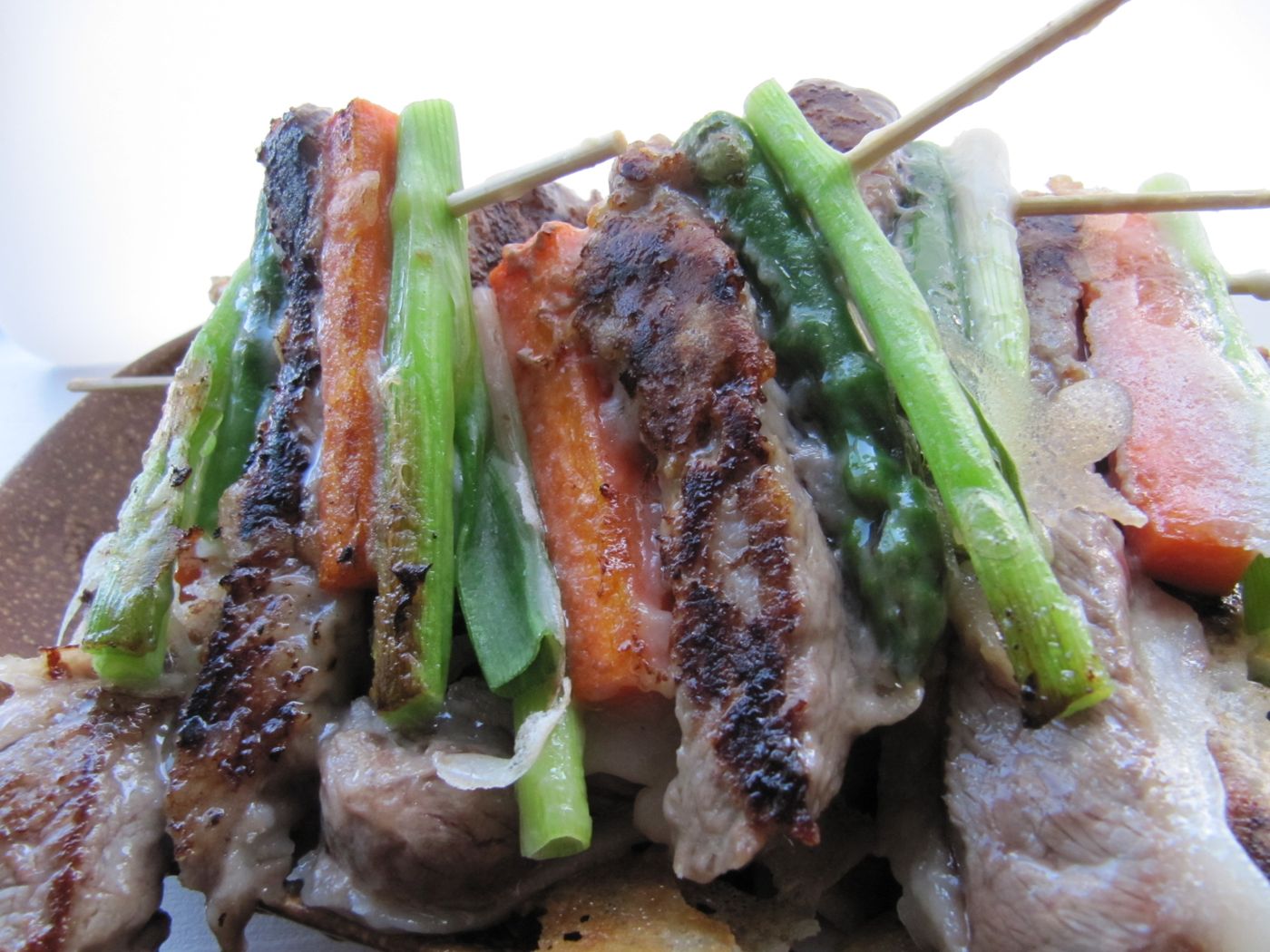 Pa-sanjeok (Green Onion and Beef Skewers)파산적Batons of marinated beef threaded on skewers with lengths of green onion and grilled — a classic sanjeok for holiday and ancestral-rite tables.
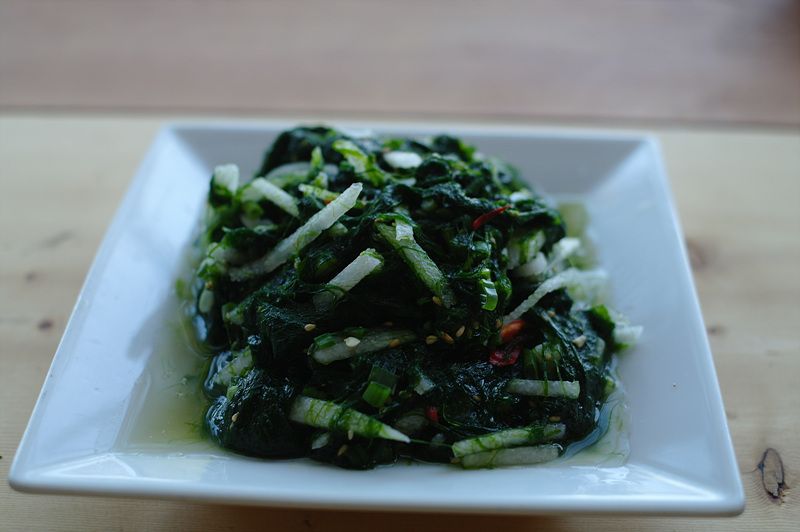 Parae Muchim (Green Laver Salad)파래무침Fresh green laver rinsed, squeezed and tossed with salted radish in a sweet-sour dressing — a bright, briny winter banchan from Korea's southwest coast.
- Sangchu Geotjeori (Fresh Lettuce Salad, Kimchi-Style)상추겉절이Tender leaf lettuce dressed at the last minute with soy sauce, chili flakes, green onion and sesame — the crisp, spicy salad served beside grilled pork.
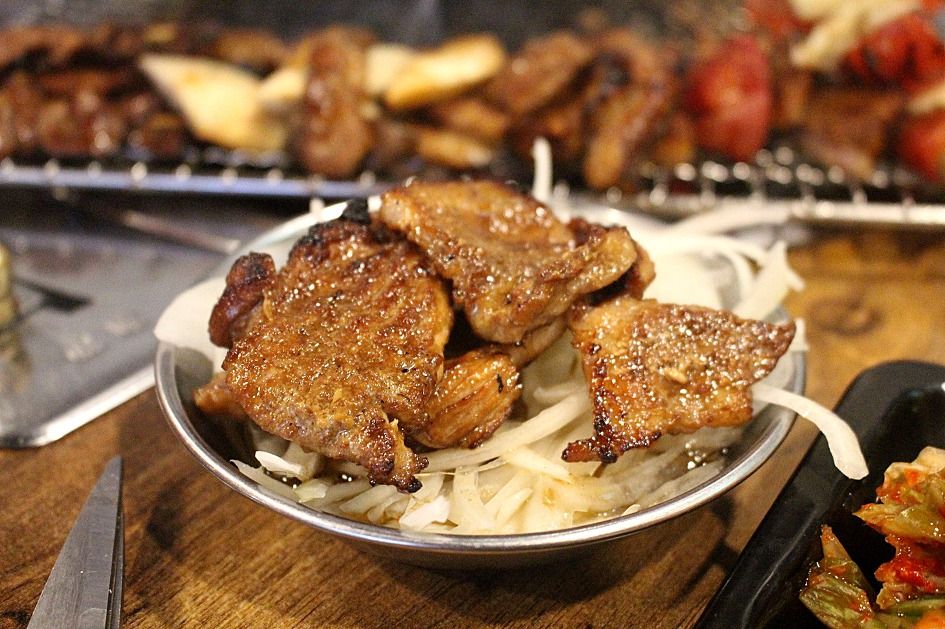 So-galbi-gui (Grilled Beef Short Ribs)소갈비구이Beef short ribs scored to the bone, marinated with soy, pear, garlic and sesame and grilled over charcoal — Korea's celebration barbecue, best known in Suwon's salt-seasoned style.
Sources
- 01양념 (Yangnyeom) — Encyclopedia of Korean Culture
- 02양념 — Standard Korean Language Dictionary, National Institute of Korean Language
- 03고명 (Gomyeong) — Encyclopedia of Korean Culture
- 04구이 (Gui) — Encyclopedia of Korean Culture
- 05초고추장 (Chogochujang) — Standard Korean Language Dictionary, National Institute of Korean Language
- 06기름장 (Gireumjang) — Standard Korean Language Dictionary, National Institute of Korean Language