Ingredient
Sun-Dried Sea Salt
천일염
Romanization: cheonilyeom
Coarse sea salt made by evaporating seawater with sun and wind in tidal-flat salt pans, most of it from Sinan County off Korea's southwest coast. It is the everyday salt for salting cabbage and making jang.
Flavor
Clean and briny, with a faint mineral bitterness that sets it apart from refined salt. The large, slightly damp crystals dissolve slowly, which suits salting vegetables and making brines.
 Photo: MOHAMMAD SHAJAHAN Bangladesh, CC BY-SA 4.0, via Wikimedia Commons
Origin & History
For most of Korean history, salt was not sun-dried at all. According to the Encyclopedia of Korean Culture, almost all salt before the 20th century was jayeom, boiled salt: on the west and south coasts, workers raked and dried tidal-flat mud, ran seawater through it to make a strong brine, and boiled the brine down in iron or shell-lime pans; on the east coast, without tidal flats, seawater was boiled directly. Joseon-era writers already had opinions about quality, recommending tidal-flat salt from the southwest for making jang.
Solar salt arrived in 1907, when the first sun-evaporation salt field was built at Juan in Incheon under Japanese direction, using a method brought from Taiwan. A cheonilyeom field is a series of shallow ponds: a reservoir takes in seawater, two stages of evaporation ponds concentrate it, and salt crystallizes in the final pan, where it is raked up. The method needs no fuel and far less labor than boiling, and boiled salt had all but disappeared by the 1960s. Korea's traditional salt-making — both boiled and sun-dried — was designated a national intangible heritage in 2018.
Today the salt flats of Sinan, a county of islands in South Jeolla, dominate production. Sinan County's own 2025 figures count 693 of the country's 865 salt-field operations and about 70 percent of national output (170,746 of 243,534 tonnes). Korean cooks distinguish coarse salt (gulgeun sogeum) for salting napa cabbage and brining, finer grinds for seasoning, and refined salt (jeongjeyeom), which is made from seawater by ion-exchange membrane and is nearly pure sodium chloride.
Nutrition
| Calories | 20 kcal |
|---|---|
| Protein | 0.03 g |
| Fat | 0 g |
| Carbohydrates | 4.95 g |
| Fiber | 0 g |
| Sodium | 33811 mg |
Notable forSodium
Values from the Korean Food Composition Table (RDA, 2015 data); salt equivalent about 86 g per 100 g, with about 3 g moisture, 128 mg calcium and 437 mg potassium. The small energy and carbohydrate figures are as published in the table and are not nutritionally meaningful. For comparison, the same table lists refined salt (정제염) at 36,025 mg sodium per 100 g. Actual values vary with ingredients, portion size and preparation.
Health Benefits
- Still salt: Sun-dried sea salt carries trace calcium, potassium and magnesium, but by weight it is still mostly sodium chloride — about 34 g of sodium per 100 g in the Korean Food Composition Table versus about 36 g for refined salt.
- Sodium limits: The FDA notes that the Dietary Guidelines for Americans recommend adults keep sodium below 2,300 mg a day, about one teaspoon of table salt. Switching salt types does little for sodium intake; using less does.
- Coarse crystals measure differently: Because coarse salt packs loosely, a spoonful weighs less than the same spoonful of fine salt. Weigh salt for brining when precision matters.
- Research claims: Some Korean studies compare sun-dried, boiled and bamboo salts with refined salt in laboratory settings; these do not show that any salt is healthful in larger amounts.
Informational, not medical advice. Talk to a qualified professional about your own health and diet.
Dishes with Sun-Dried Sea Salt
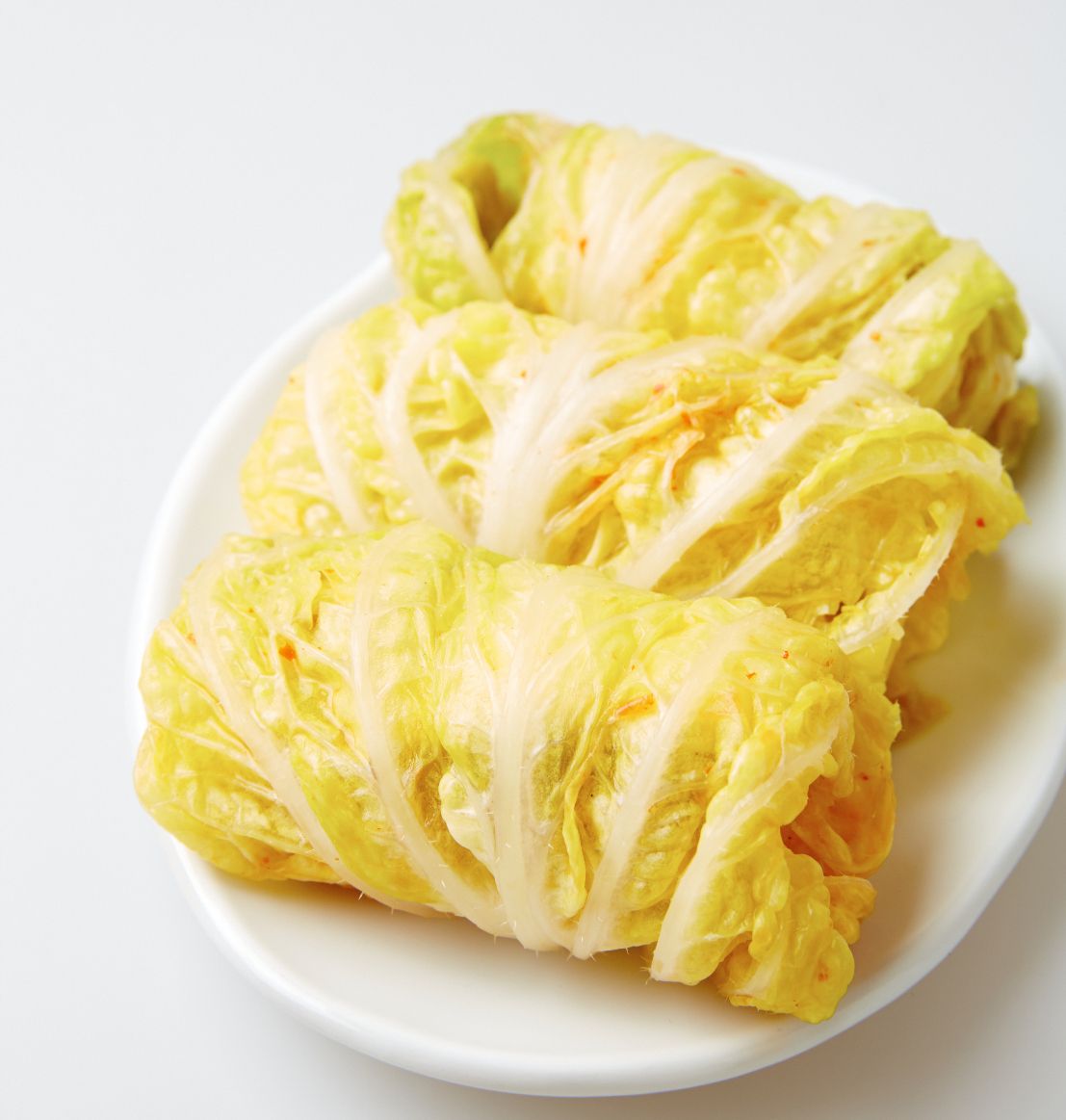 White Kimchi백김치Napa cabbage stuffed with radish, pear, chestnut and jujube and ripened in a clear, cool brine — kimchi with no chili flakes, mild and refreshing.
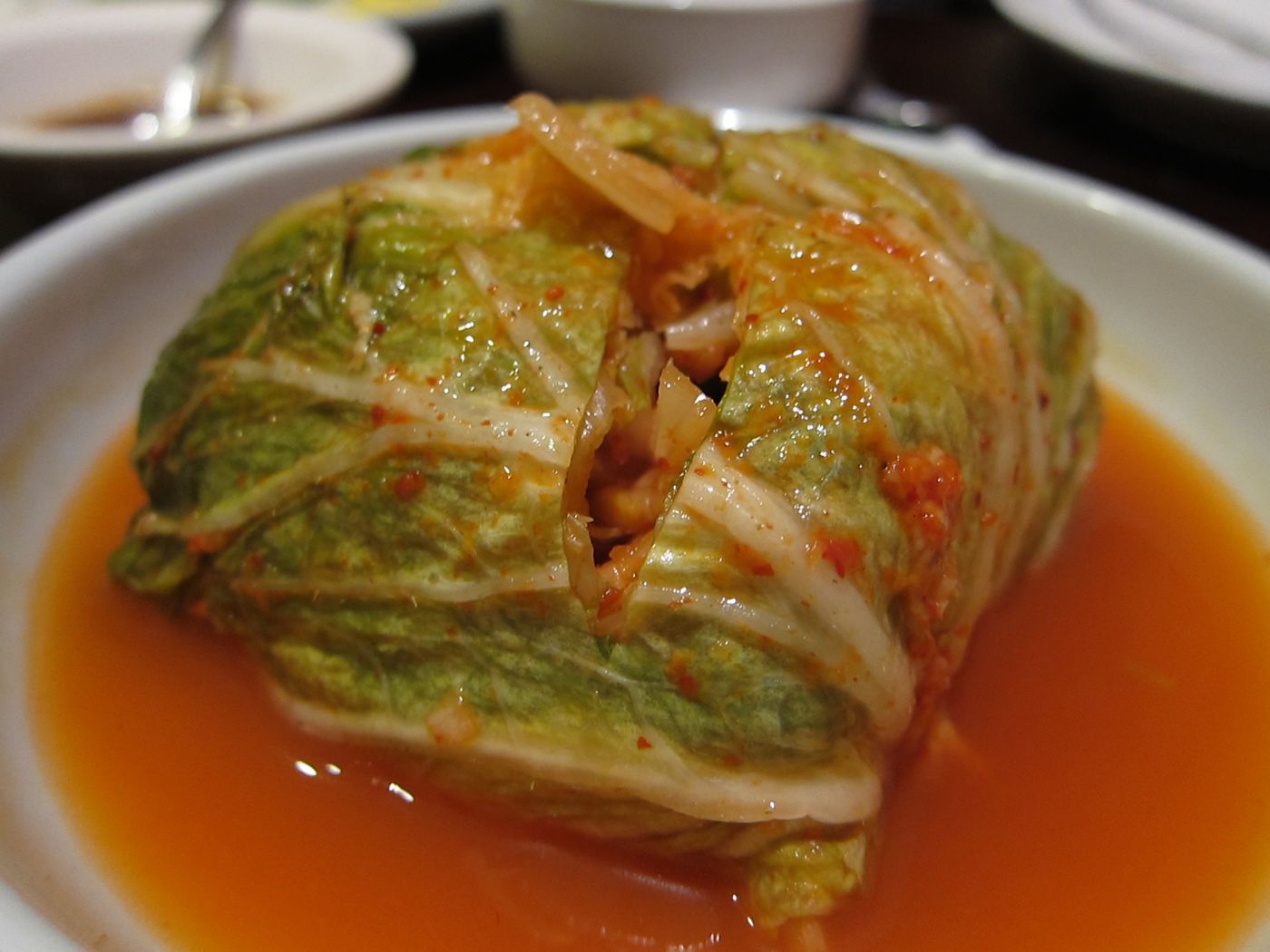 Wrapped Kimchi보쌈김치Cabbage, radish, fruit, nuts and seafood bundled inside whole cabbage leaves — the lavish wrapped kimchi of Gaeseong, made for honored guests.
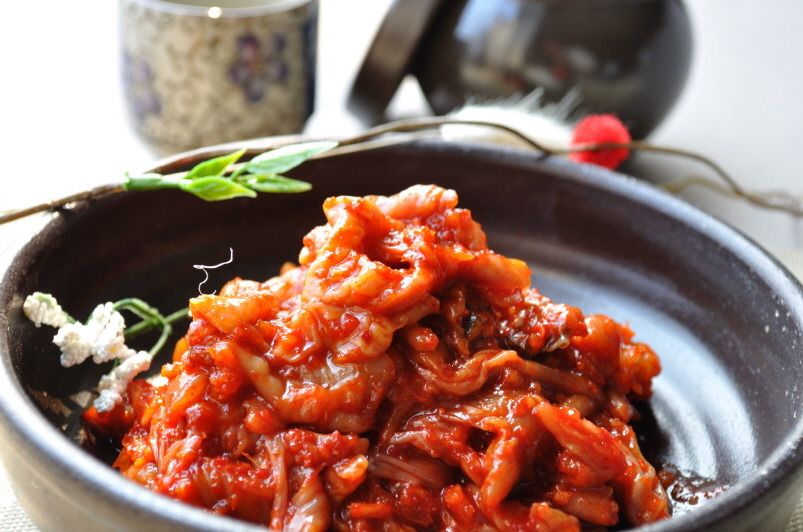 Salted Pollock Tripe창난젓Pollock intestines cured in salt, then cut and dressed with chili, garlic and green onion — a chewy, savory East Sea jeotgal, often mixed with radish.
- Ponytail Radish Kimchi총각김치Small, firm radishes kimchi'd whole with their green tops in a chili and salted-shrimp paste — crunchy, juicy and a fixture of the winter kimjang.
- Spicy Lightly Salted Oysters어리굴젓Fresh oysters lightly salted and ripened with chili — a short-keeping winter jeotgal famous in Seosan and Ganwoldo in South Chungcheong.
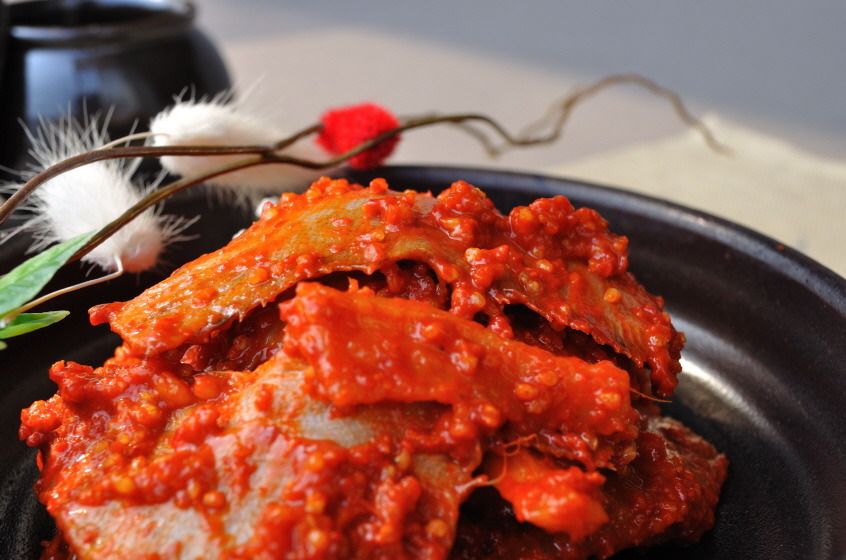 Fermented Flatfish with Millet가자미식해Salted flatfish fermented with foxtail millet, malt, radish and chili — the tangy, spicy sikhae of Hamgyeong, carried south to the Gangwon coast.
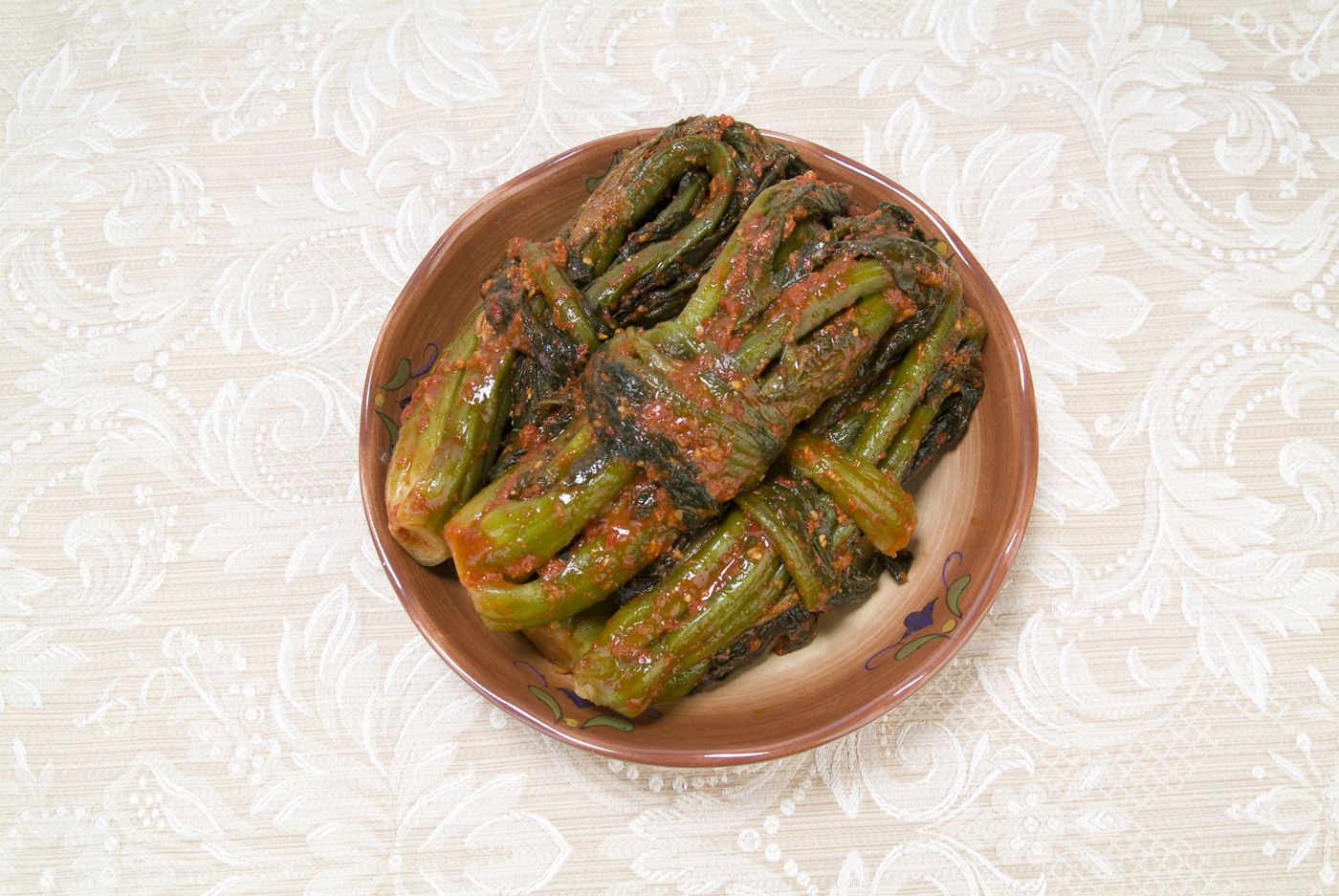 Mustard Leaf Kimchi갓김치Leaf mustard rolled in a chili and anchovy paste and fermented until its nose-tingling bite mellows — a Jeolla specialty, famously from Dolsan in Yeosu.
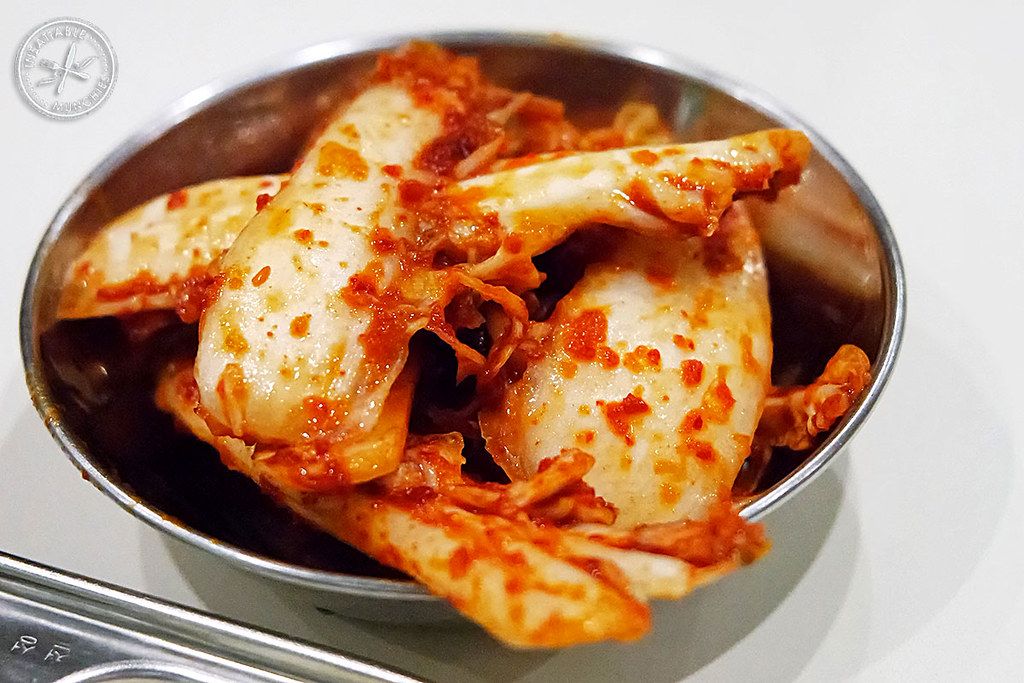 Fresh Cabbage Kimchi겉절이Napa cabbage salted only briefly, then tossed with chili, garlic and fish sauce and eaten the same day — kimchi at its freshest, crisp and bright.
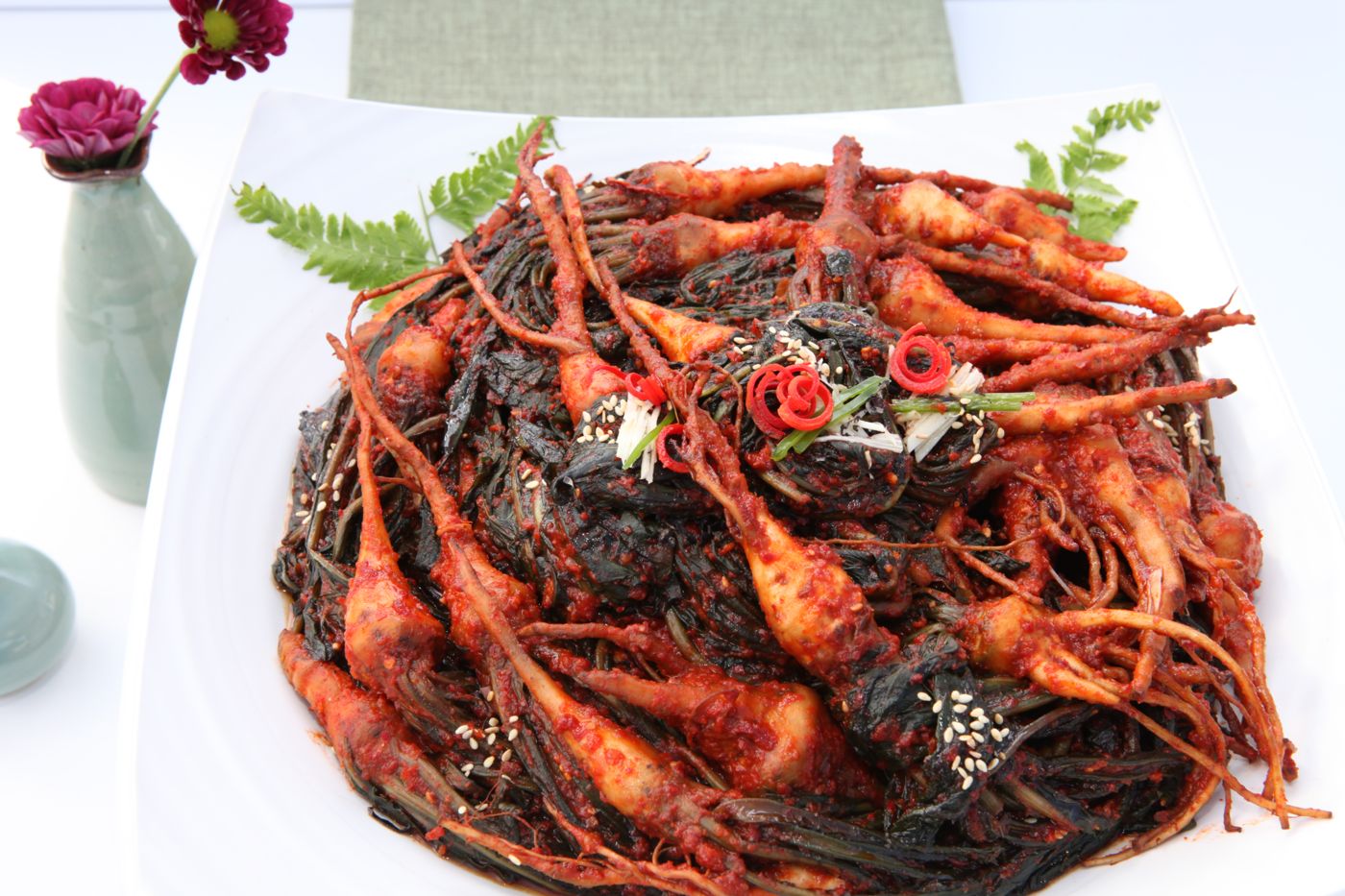 Bitter Godeulppaegi Kimchi고들빼기김치A bittersweet Jeolla kimchi of whole godeulppaegi greens and roots, soaked for days to tame the bitterness and dressed with anchovy jeotgal and chili.
- Oyster Radish Kimchi굴깍두기Cubed radish kimchi folded through with fresh raw oysters — a short-lived winter kimchi, eaten within days while the oysters are still sweet.
- Pumpkin Kimchi for Stew호박김치Thick slices of pumpkin fermented with cabbage or young radish greens, then simmered into a mellow stew — a Hwanghae and Chungcheong cooking kimchi.
- Salted Radish Pickle짠지Whole radishes packed in heavy salt over winter and opened in spring — soaked, sliced thin and served in vinegared cold water or dressed with chili.
- Salted Clams조개젓Small shucked clams salted in their own boiled juices for a few weeks, then dressed with chili and green onion — an early-summer rice companion.
- Cut Cabbage Kimchi막김치Napa cabbage cut into bite-size pieces before salting and tossed with the seasoning all at once — the quick, everyday way to make cabbage kimchi.
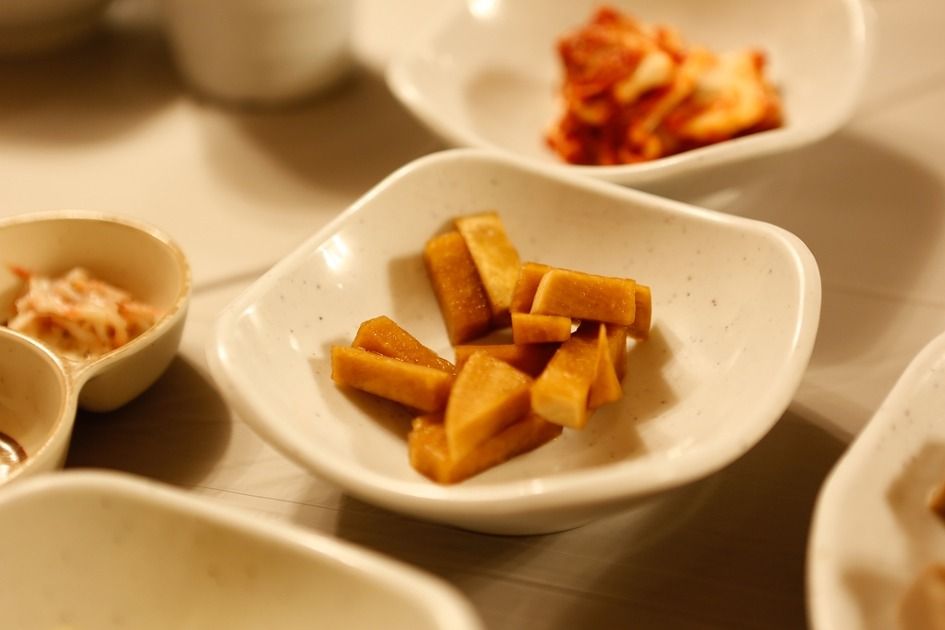 Chili Paste–Cured Radish무장아찌Korean radish salted, dried until leathery and buried in gochujang for weeks, then sliced thin with sesame oil — chewy, savory and deeply seasoned.
- Mu Namul (Stir-Fried Radish Namul)무나물Julienned Korean radish stir-fried in perilla oil, then steamed in a splash of water until sweet and translucent — a soft, mild namul for rites and everyday rice.
- Salted Anchovies멸치젓Whole anchovies packed in heavy salt and aged for months — the south coast's kimchi jeotgal, also boned, dressed with chili and eaten with rice or in ssam.
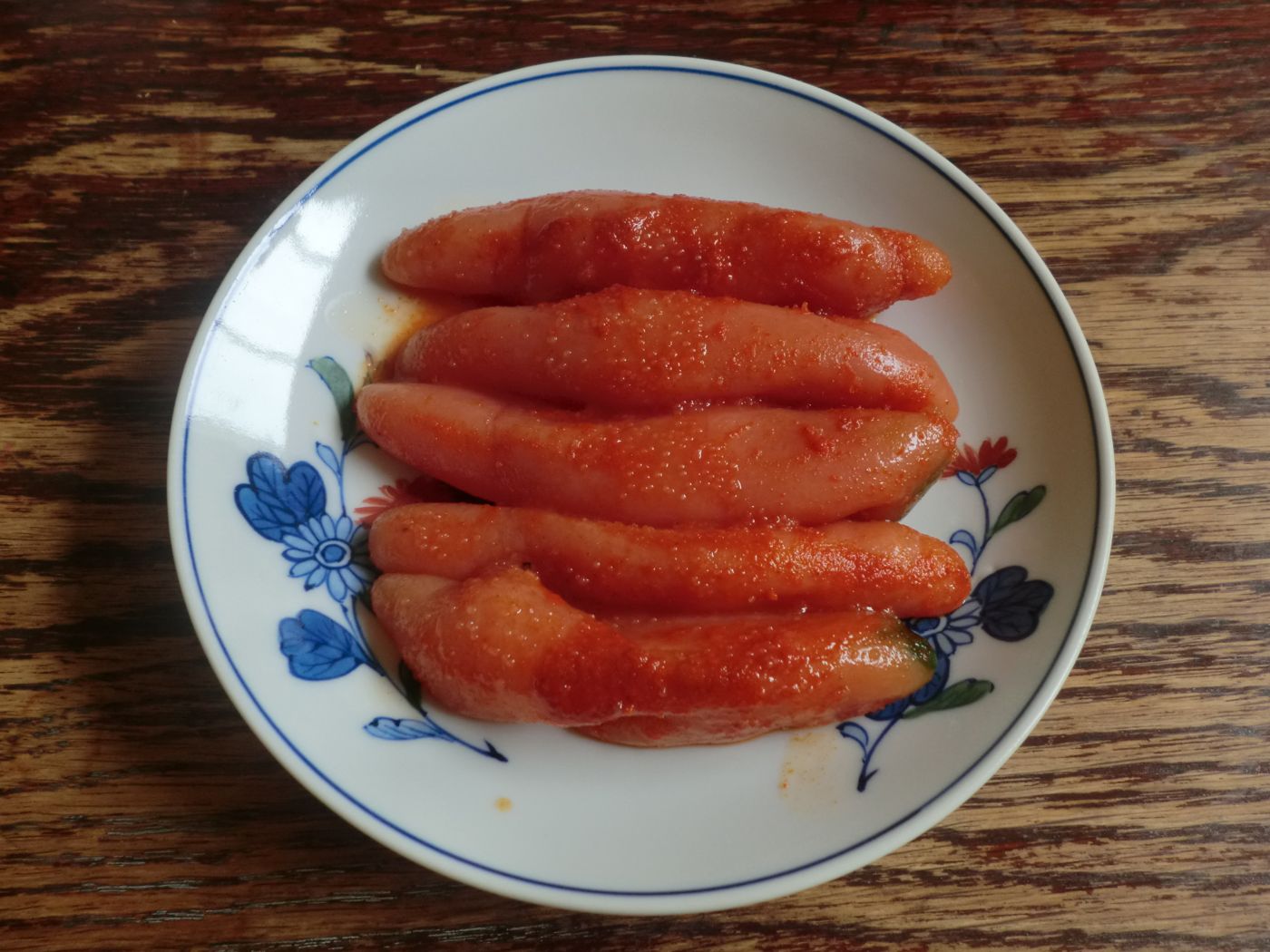 Salted Pollock Roe명란젓Whole sacs of Alaska pollock roe cured in salt and coated with chili and garlic — briny, savory and eaten in small amounts with rice and sesame oil.
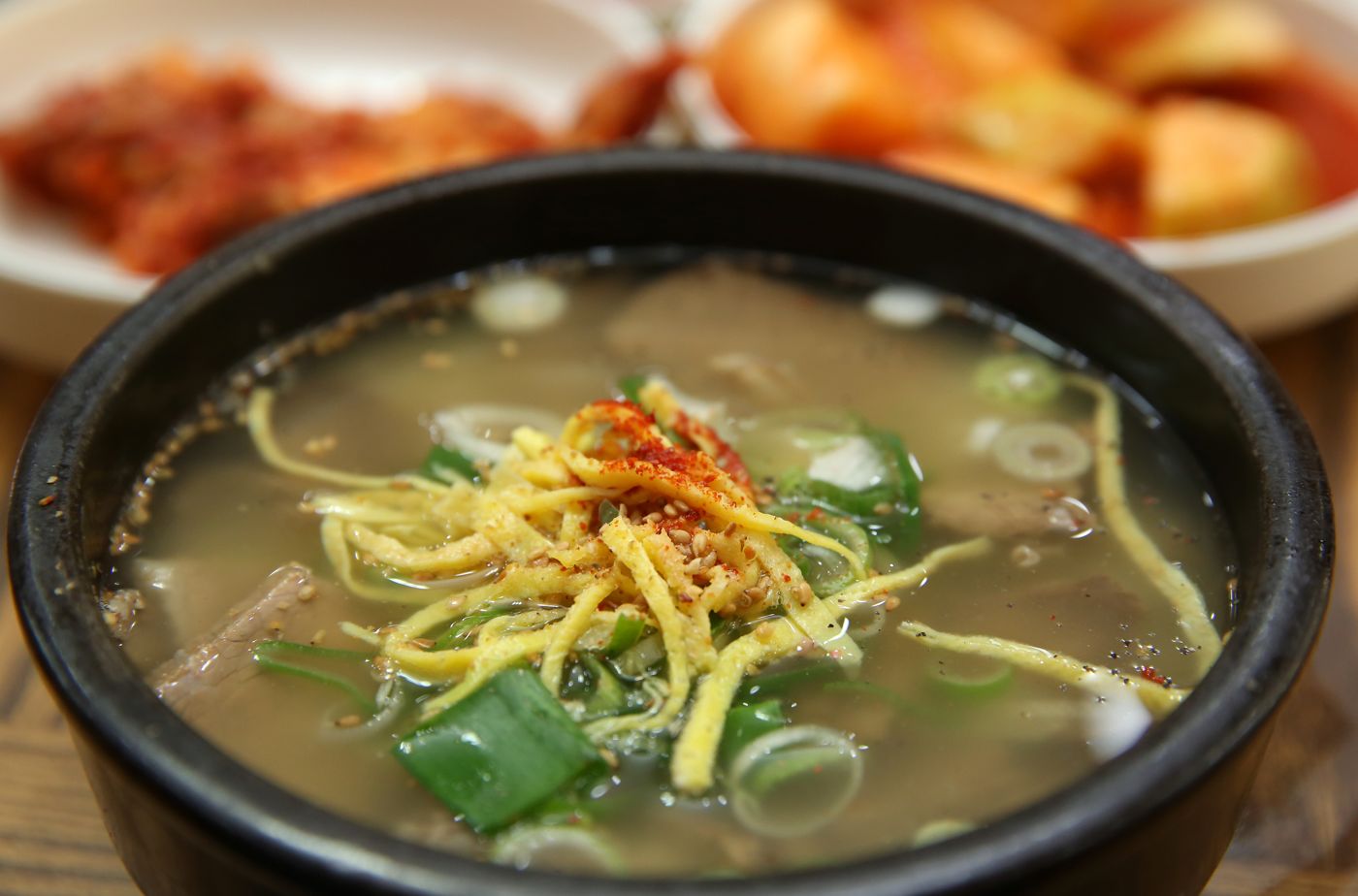 Naju Gomtang (Naju Clear Beef Soup)나주곰탕Brisket, shank and other beef cuts simmered into a clear, gently rich broth, poured over rice and topped with green onion — the market-day soup of Naju in South Jeolla.
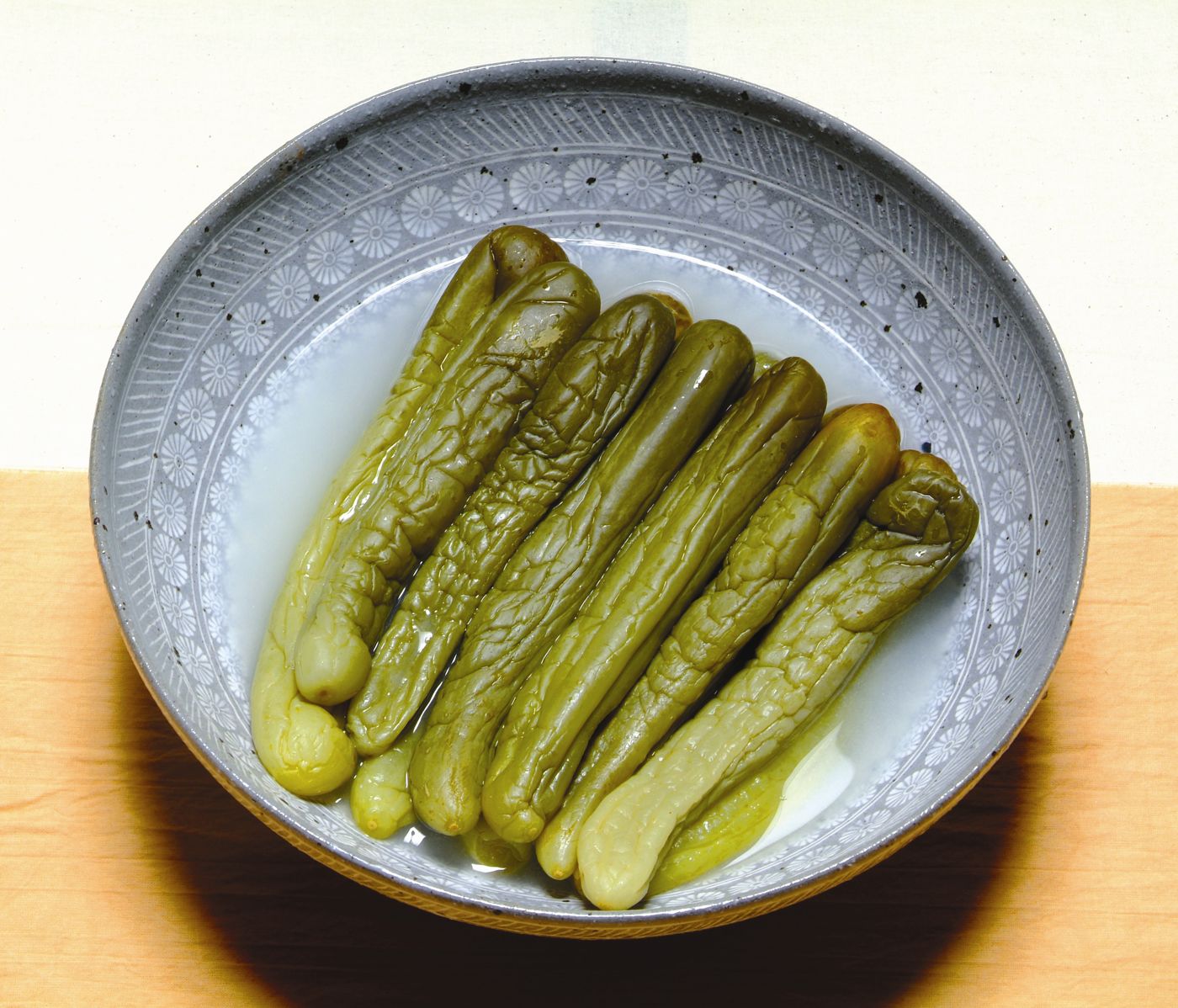 Salt-Brined Pickled Cucumbers오이지Whole cucumbers cured in a strong salt brine until golden and wrinkled — a summer staple that is soaked, sliced and served in cold water or dressed as oiji-muchim.
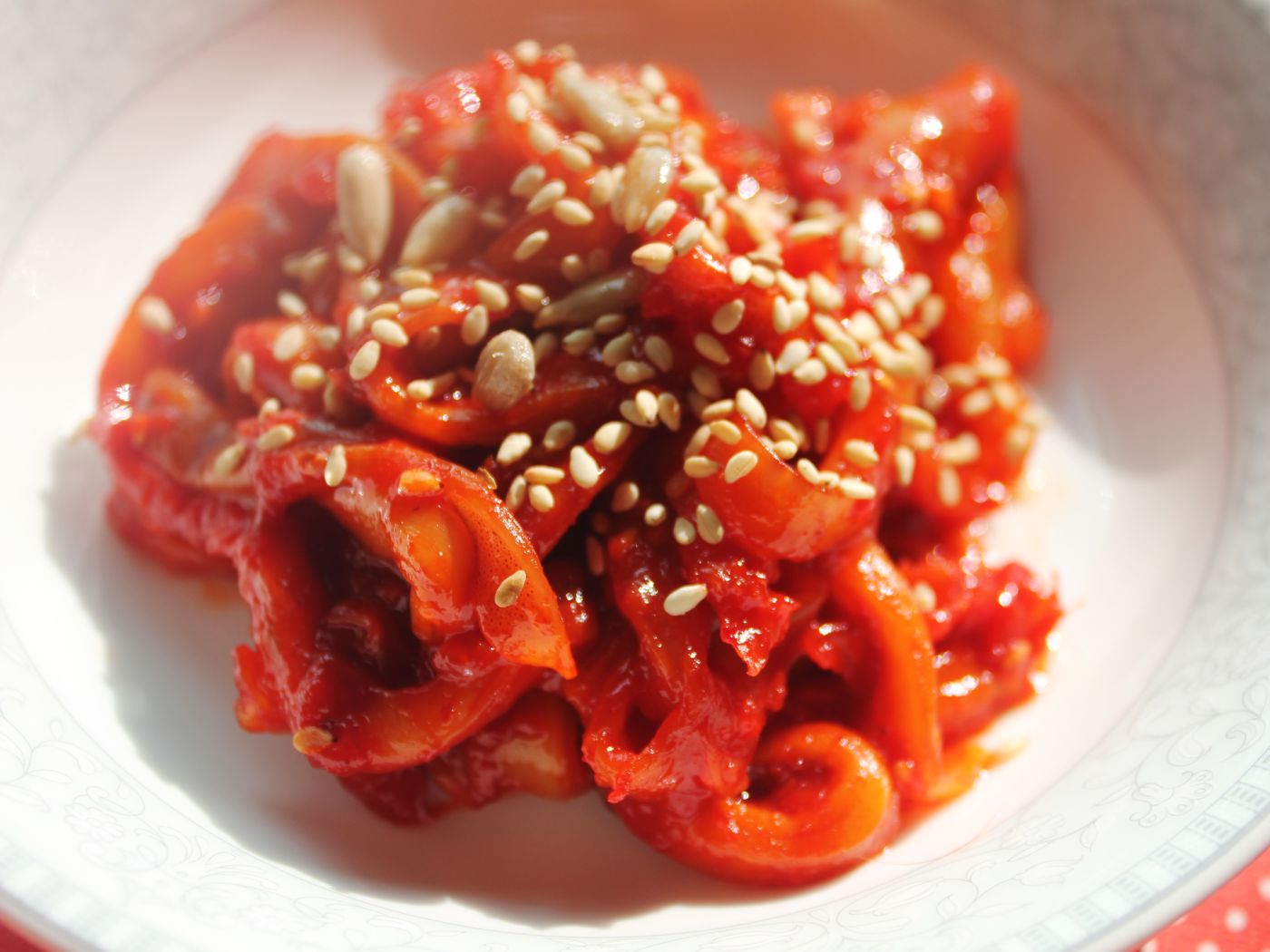 Salted Squid오징어젓Squid cured in salt, then sliced and tossed with chili, garlic and a touch of syrup — chewy, sweet-savory jeotgal from the East Sea coast.
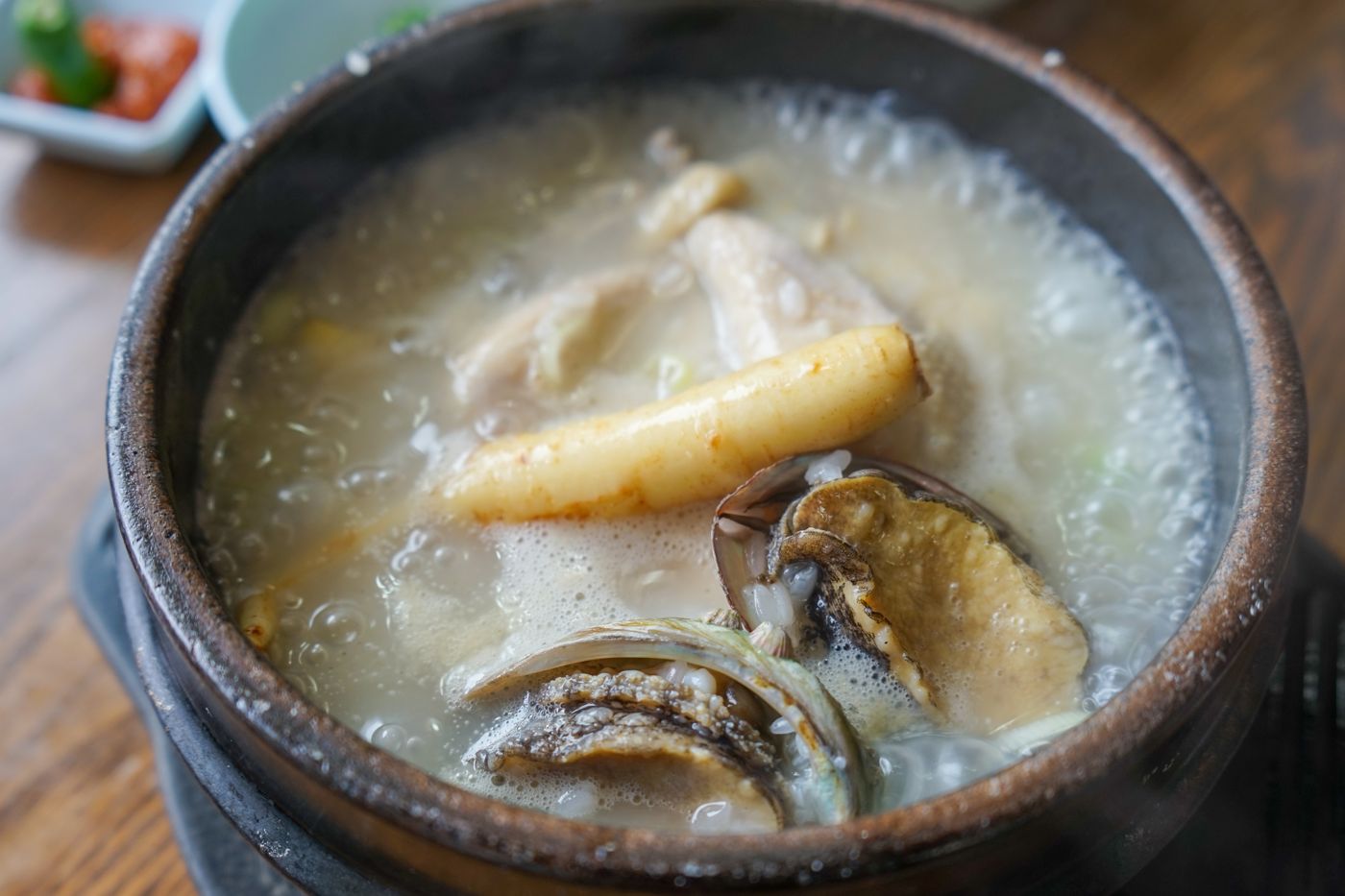 Samgyetang (Ginseng Chicken Soup)삼계탕A whole young chicken stuffed with glutinous rice, ginseng, jujubes and garlic and simmered until tender — the classic hot soup for Korea's dog days of summer.
- Chunky Radish and Cabbage Kimchi섞박지Big, flat-cut pieces of radish and cabbage mixed in one chili and jeotgal seasoning — a late-autumn “mixed” kimchi, and the name for big radish kimchi today.
- Green Cabbage Kimchi양배추김치Crisp, quick kimchi of round green cabbage — once South Korea's stand-in when napa ran short, and still an everyday summer kimchi in North Korea.
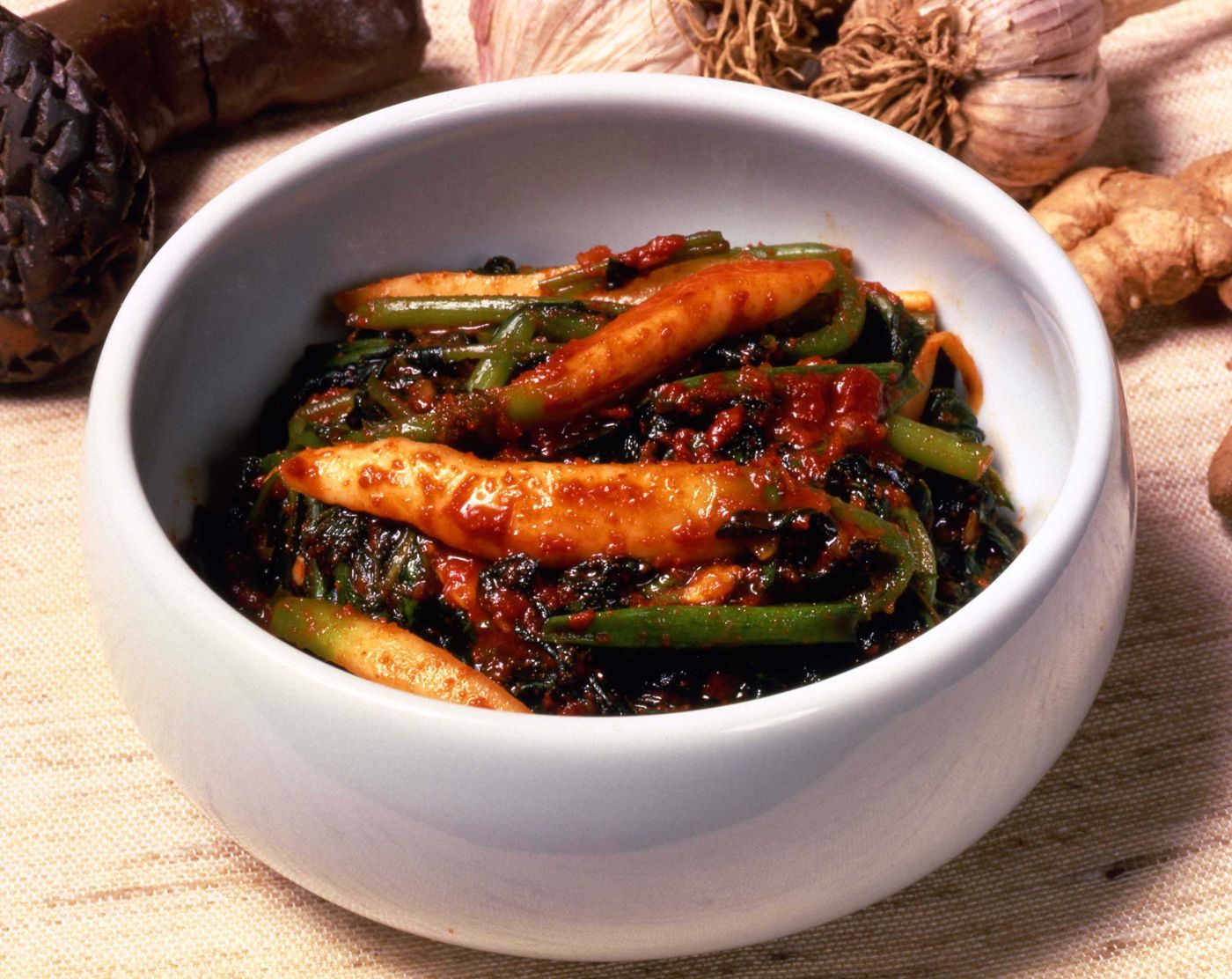 Young Summer Radish Kimchi열무김치Tender young radish greens in a loose, lightly spicy brine thickened with flour or rice paste — the classic summer kimchi, served over noodles and barley rice.